What to Do in Maiori
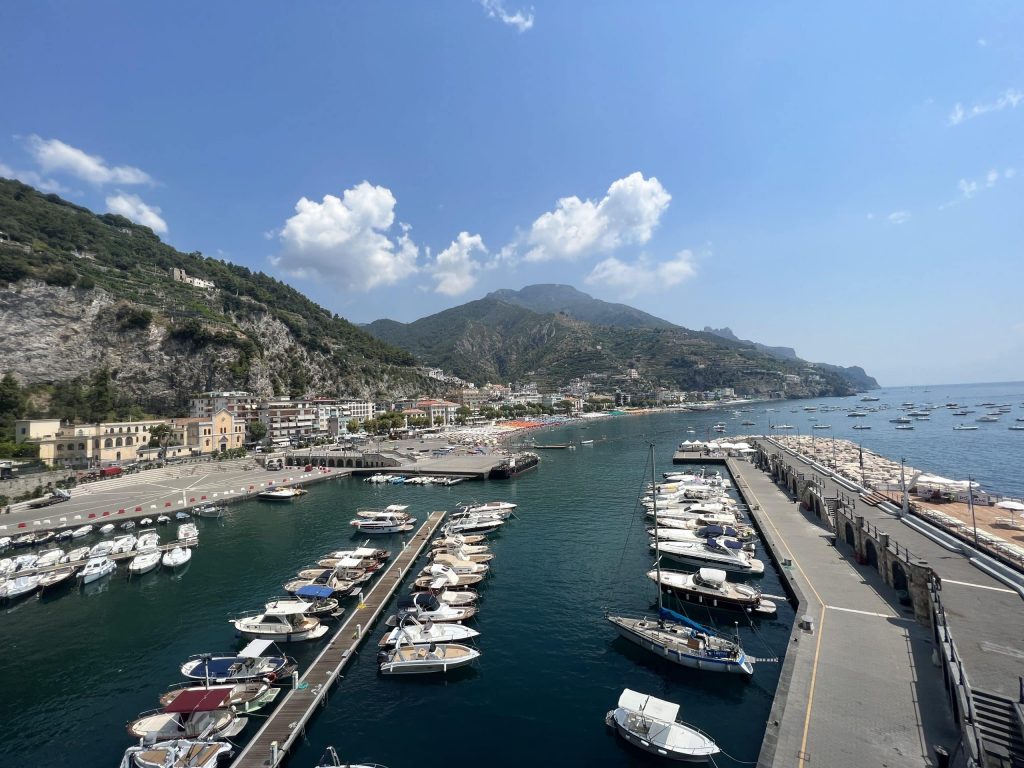
Maiori is one of the towns along the Amalfi Coast, though far less crowded than the famous, lively Positano or Capri — and one of the few towns with an actual beach boardwalk. You’ll pay to use almost the entire beach, and despite being less busy, prices stay just as high as the rest of the region.
We were on our way to Salerno, and Maiori is the next town over, just under 2 km past Minori. It has the longest beach on the entire Amalfi Coast, stretching about 1 kilometer.
Fun fact: during the Middle Ages, Maiori served as the main port of the Amalfi Republic.
When to visit Maiori
The best time to visit Maiori is between June and September, during summer, when temperatures rise and you can really enjoy the beach. For milder weather, aim for May through October, though you won’t get as much use out of the coastline.
Getting to Maiori
There are several ways to reach Maiori — by plane, boat, or car. We drove down from Rome, taking our time along the way.
By plane
There are two airport options: Rome or Salerno-Pontecagnano, with the closer one, Salerno-Pontecagnano, just 40 km from downtown. From there, you can reach Maiori by taxi, bus, or rental car.
By boat
You can also arrive from other Amalfi Coast towns, like Amalfi, Positano, and Sorrento, by boat, arranging the timing with the boat operator.
Boat trips are actually faster than driving, since the coastal road is full of curves that add real distance.
By car
We rented a car and drove from Positano, about 24 km away, roughly 35 minutes, though it depends on traffic at the time.
What to do in Maiori
Beaches in Maiori
Most of the beach is private, so you’ll need to pay to sit or swim — around €35 per person during high season, plus €0.50 each time you want to use the shower.
There are beach kiosks if you want a quick bite, along with more upscale restaurants along the waterfront.
Via Giovanni Amendola
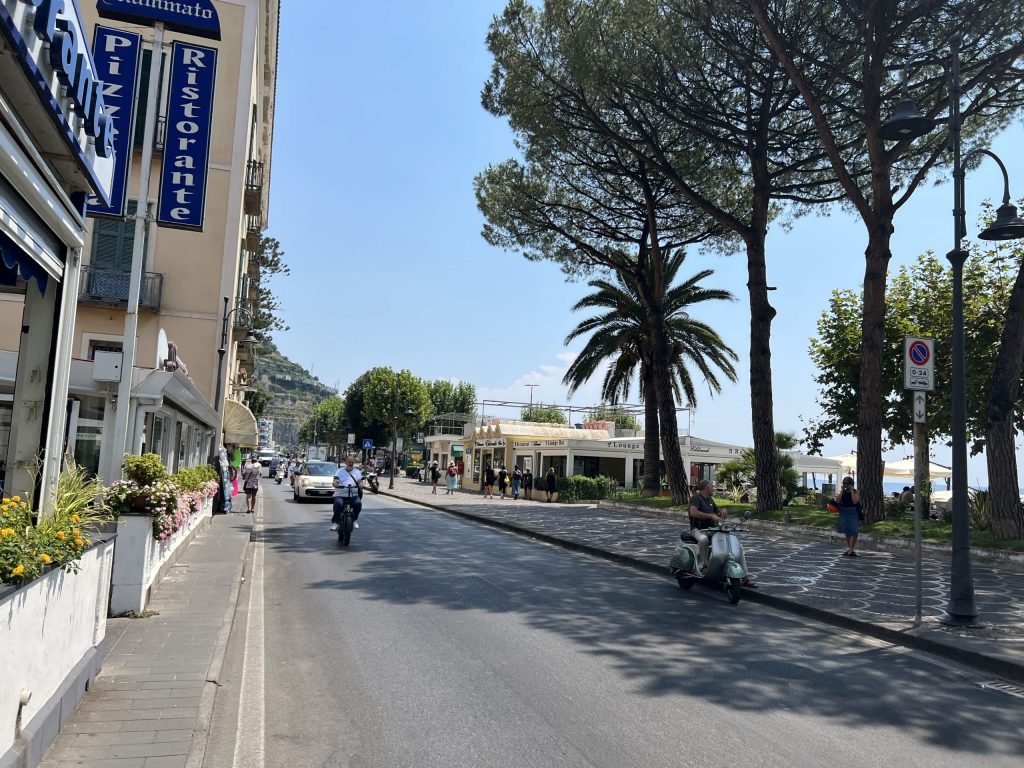
Via Giovanni Amendola, a seafront avenue with a pleasant boardwalk, is home to several restaurants and bars.
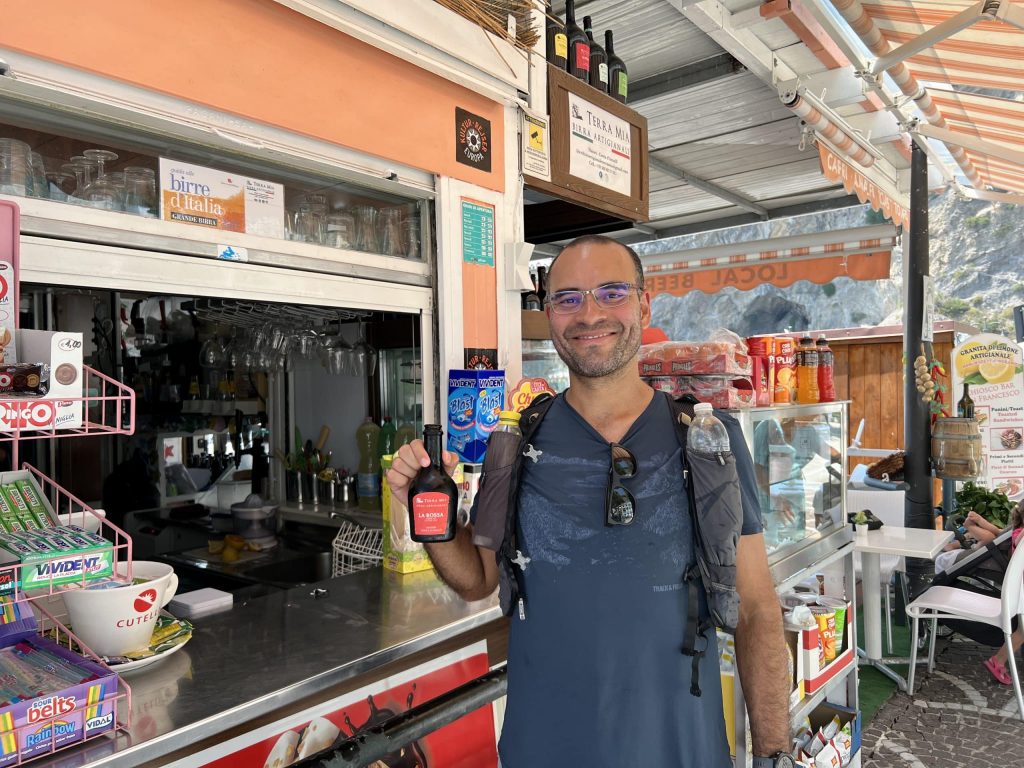
While you’re on the avenue, stop by the Terra Mia craft brewery — Andrey loved it.
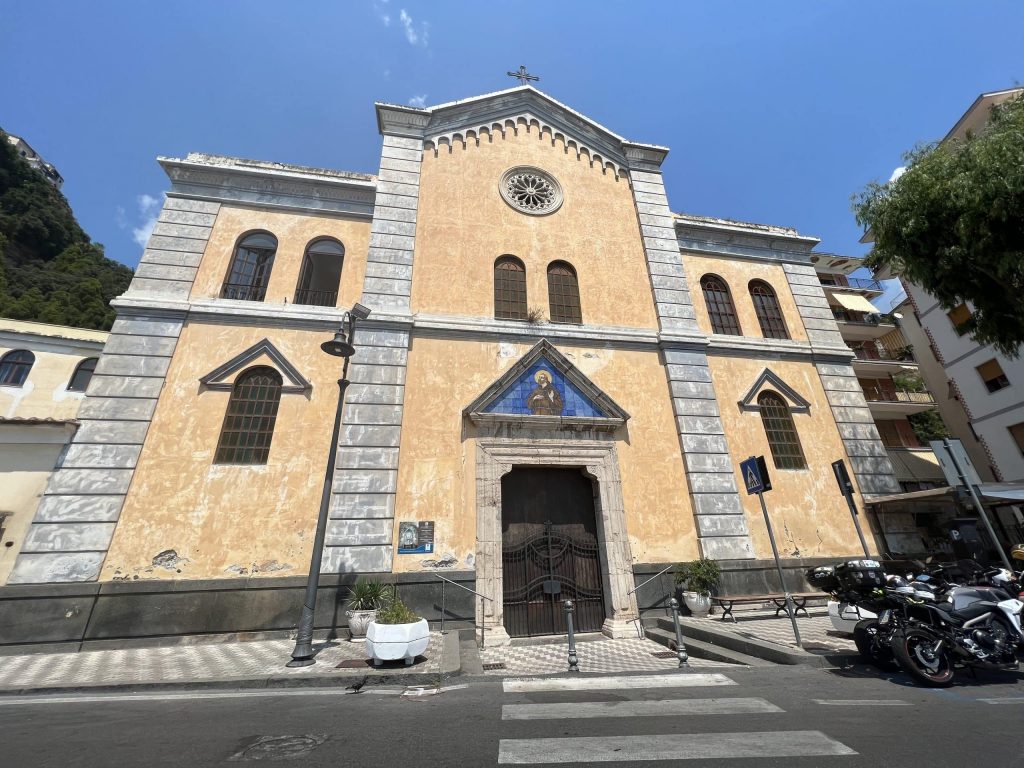
Chiesa di San Francesco
The Church of San Francesco was built alongside the Franciscan convent in 1405. Throughout the 1500s, the convent was expanded and the church was rebuilt in its current location, with construction finishing in 1590.
In the 16th and 17th centuries, the convent served as a school and seminary for young clergy, largely thanks to its enviable, pleasant setting.
In the first half of the 1700s, it underwent a series of changes that gave it its current structure, after being badly damaged by a catastrophic hurricane in 1631 and another storm in 1674 — its current look reflects an 18th-century, Rococo-influenced style.
Palazzo Mezzacapo
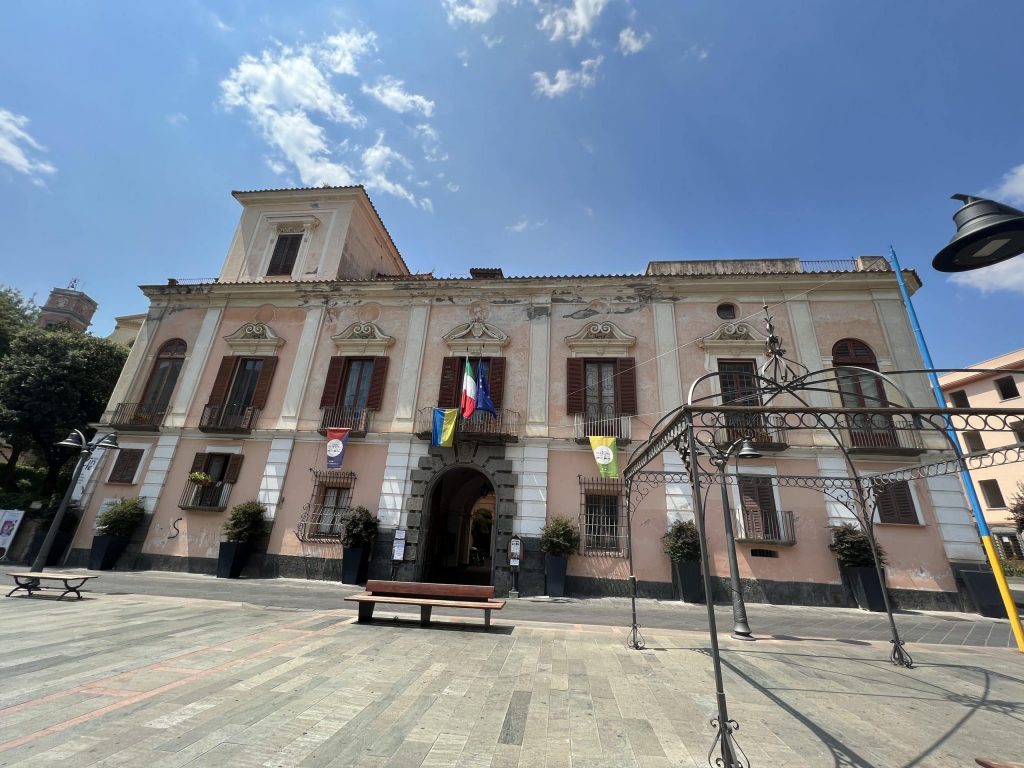
This building once housed the residence of the Marquises of Mezzacapo, and today it’s home to the municipal library, historical archive, a cultural lab, and a few municipal offices — located right in the middle of Corso Regina, Maiori’s “main” street.
Next to the palace are the Mezzacapo gardens, laid out in the shape of a Maltese cross.
Parrocchia di Santa Maria a Mare
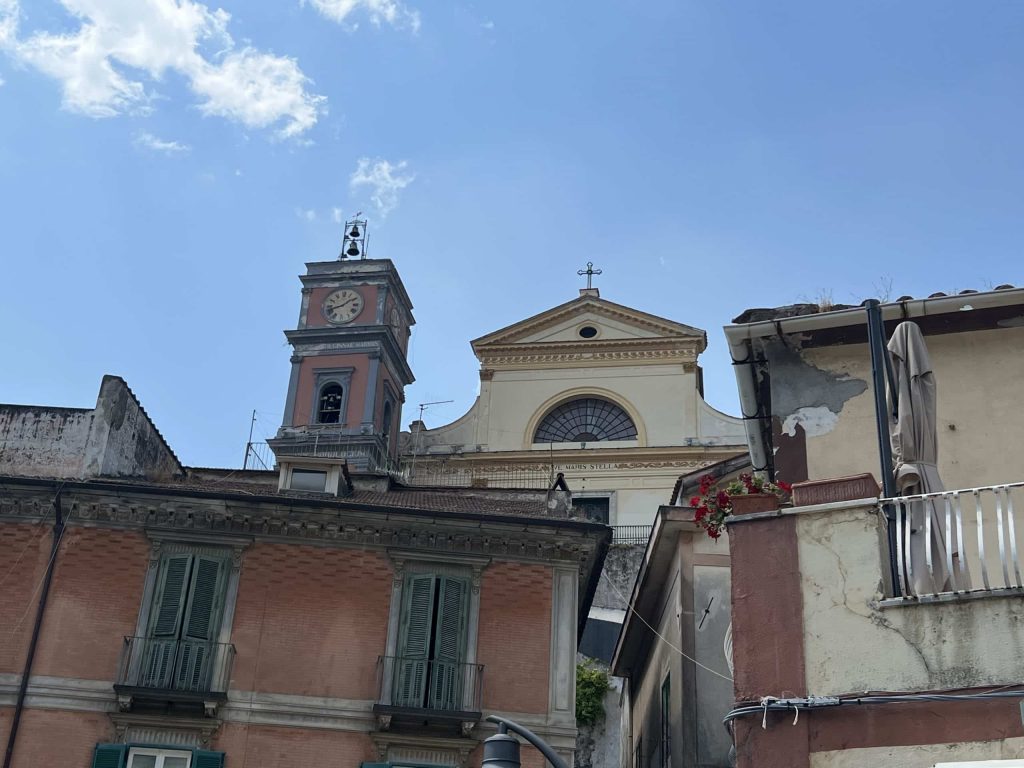
The Collegiate Church of Santa Maria a Mare sits high above town — you’ll need to climb a long staircase to reach it, though it rewards you with a beautiful view over central Maiori. It also has a small museum with several sacred artworks, including a miraculous statue of the Virgin that, according to legend, arrived floating on the water, along with a crypt — both free to visit.
Unfortunately, everything was closed when we visited. We only managed to see the church’s façade from partway up the stairs, since the gate at the top was locked.
Chiesa di San Domenico
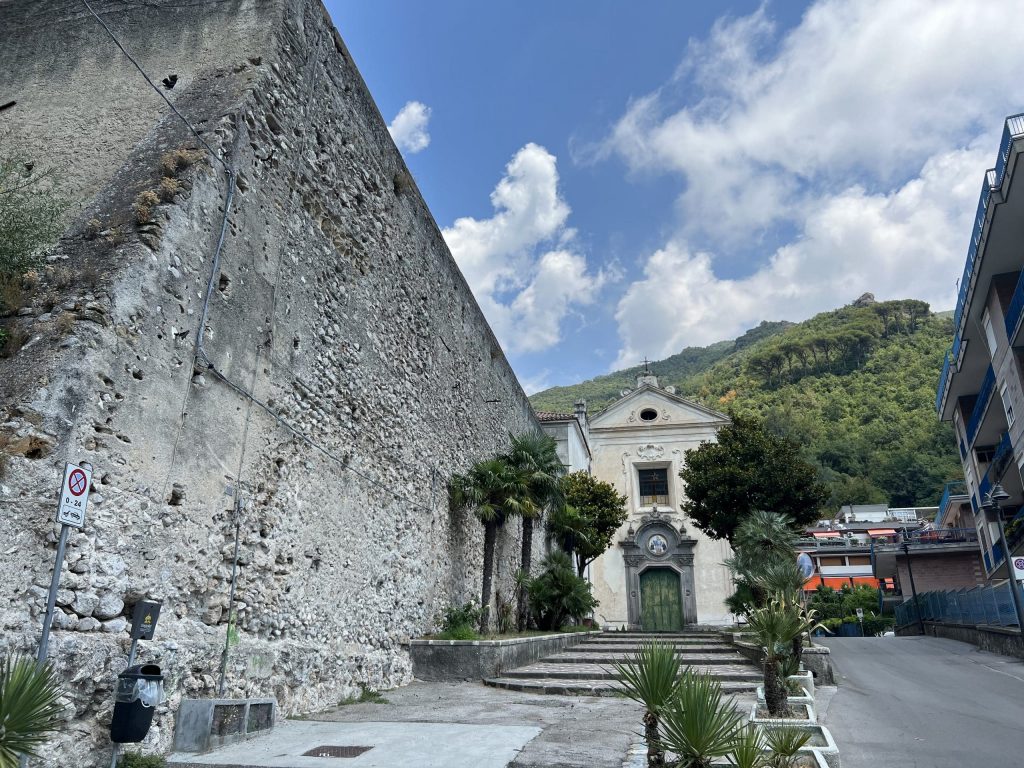
Founded in the second half of the 17th century, at the request of local patrician mayor Leonardo Russo, shortly after losing his wife Angela Mostaccioli and their children to the plague. He himself miraculously survived the 1656 outbreak.
He decided to donate part of his estate to the Order of San Domenico to found a convent in Maiori, named after the Holy Rosary.
Run by Dominican friars, it once served as a center for teaching philosophy, theology, mathematics, and philology. In 1809, all teaching was suspended, and unfortunately, the convent’s rich library was lost. In the years that followed, Allied forces used the building as a prison, courthouse, and hospital in 1943.
An earthquake damaged the site in 1980, leading to its closure. Today it functions as a church, in Baroque style, though it was closed when we visited.
Sentiero dei Limoni (Lemon Trail)
A roughly 30-minute trail connecting Maiori to Minori — despite the name, there aren’t actually lemon trees along the way. From what we read, it involves plenty of stairs, but offers beautiful coastal views. We ended up driving between the two towns instead, since they’re very close together.
We only skipped the trail due to time, but we’d genuinely like to do it next time. It’s well marked with signs the whole way, starting the climb near the Parrocchia di Santa Maria a Mare.
Castello di San Nicola de Thoro-Plano
The Castello di San Nicola de Thoro-Plano (Facebook) is a UNESCO-listed building. It’s currently maintained by the family who owns it, and they open it up for visits, happy to share its history. Construction dates back to the mid-9th century, with modifications made in the 1400s.
Unfortunately, it was closed during our visit, with no reopening date announced.
Check out Atrani too.
Read the original version in Portuguese on A Bela e o Bigode.