What to Do in Rome: 30 Tips
Rome will win you over from the moment you arrive — a city full of astounding history, ancient, well-preserved buildings, museums scattered across every corner, and excellent restaurants throughout the Italian capital.
It also has solid public transportation, making it easy to get around and reach the main sights.
In Europe, it’s common for the present to walk hand in hand with the past. As you wander the streets, you’ll spot the finest cars and clothing stores — Dolce & Gabbana, Yves Saint Laurent — tucked into centuries-old buildings, blending the old with the ultra-modern.
We chose to explore on foot and use public transportation, though renting a car is also an option. Worth keeping in mind: parking is tough in the city, private lots are extremely expensive, and traffic is chaotic.
We’d recommend a weekend, or 2 to 3 days, especially since most of the city is very walkable, even with so much to see.
When to visit Rome
Rome is a city you can visit year-round, since its attractions stay open regardless of season. The seasons are distinct — winters are quite cold, summers quite hot, while spring and fall bring milder temperatures.
European summer (July and August) is considered high season, since it coincides with school holidays. It’s also festival season, so the streets get busier, and if a heat wave hits, temperatures can climb past 40°C (104°F). Since we had the Amalfi Coast on our itinerary too, we chose to travel during this period.
May and September are considered great months, with milder temperatures and less inflated prices. During winter (December, January, February), it’s cold and rarely snows, though the wind is bitterly cold, so pack warm layers.
Rome’s main attractions
1. Colosseum
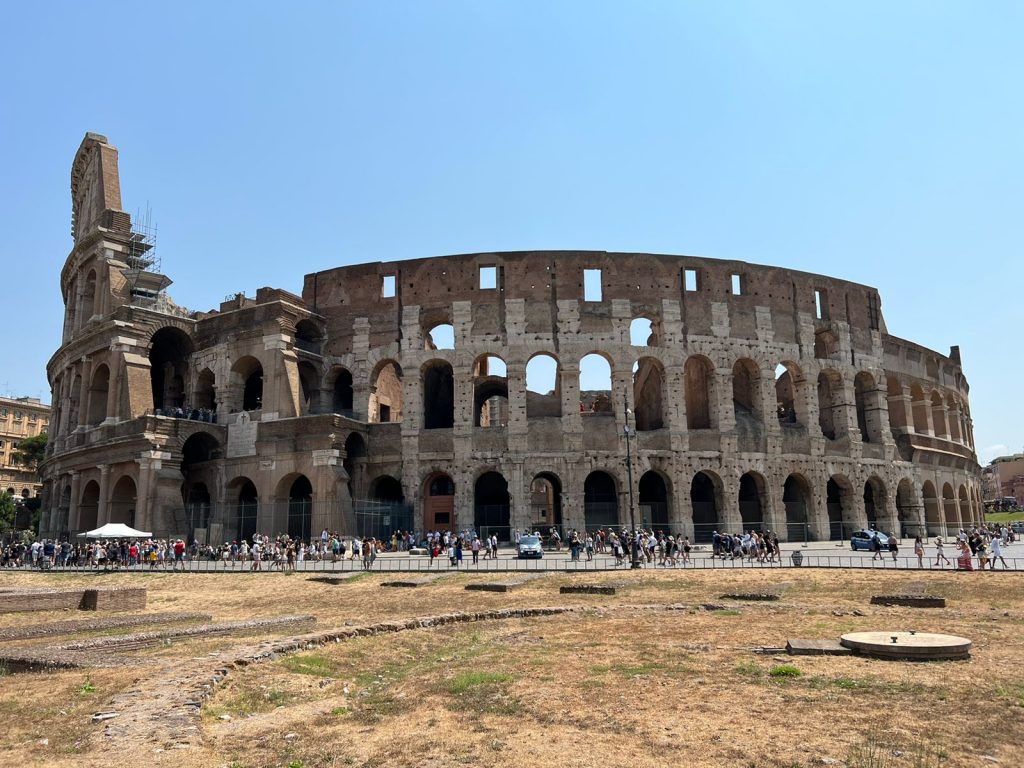
The Colosseum is an essential stop, and even if you don’t want to go inside, you have to see the building up close and snap a photo.
This ancient Roman arena, where gladiators once fought, is also known as the Flavian Amphitheater and stands as an enduring symbol of Imperial Rome.
Construction began in 72 AD and finished in 80 AD. The building hosted gladiator combat and public spectacles — simulated naval battles, wild animal hunts, executions, and reenactments of famous battles and classical mythology.
The arena is believed to have held up to 80,000 spectators, drawing every social class, though only a handful of women, like the Vestal Virgins, were allowed to attend.
The Vestal Virgins were beautiful, wealthy women who remained unmarried but held land and rights comparable to men in terms of influence.
Inside, you can picture where the senators once sat, in a restored section, along with half of the arena floor. Below, animals and gladiators waited before entering.
You can visit independently or with a guide. We’d recommend a guide, both to learn more about the site’s history and to skip the lines — guided groups get direct access, though it obviously costs more.
If you’d rather go without a guide, we’d recommend buying tickets online in advance, by credit card, to avoid the ticket lines. And yes, there are lines for everything here — buying tickets and getting in.
Night visits
You can also book a guided night visit, when the crowds are far smaller, and you get access to the arena’s lower level, a more restricted area. The night-visit ticket is called La Luna sul Colosseo.
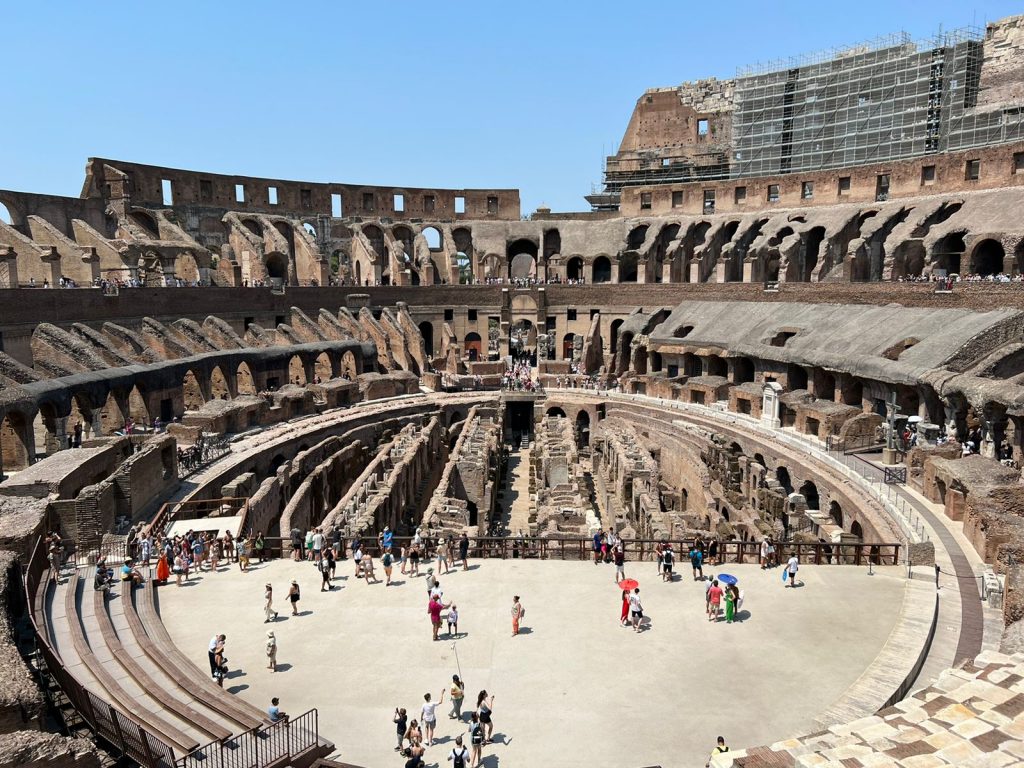
The Colosseum ticket comes as a combo including the Roman Forum and Palatine Hill, and the full guided tour of the complex takes about 2:30 to 3 hours.
2. Roman Forum and Palatine Hill
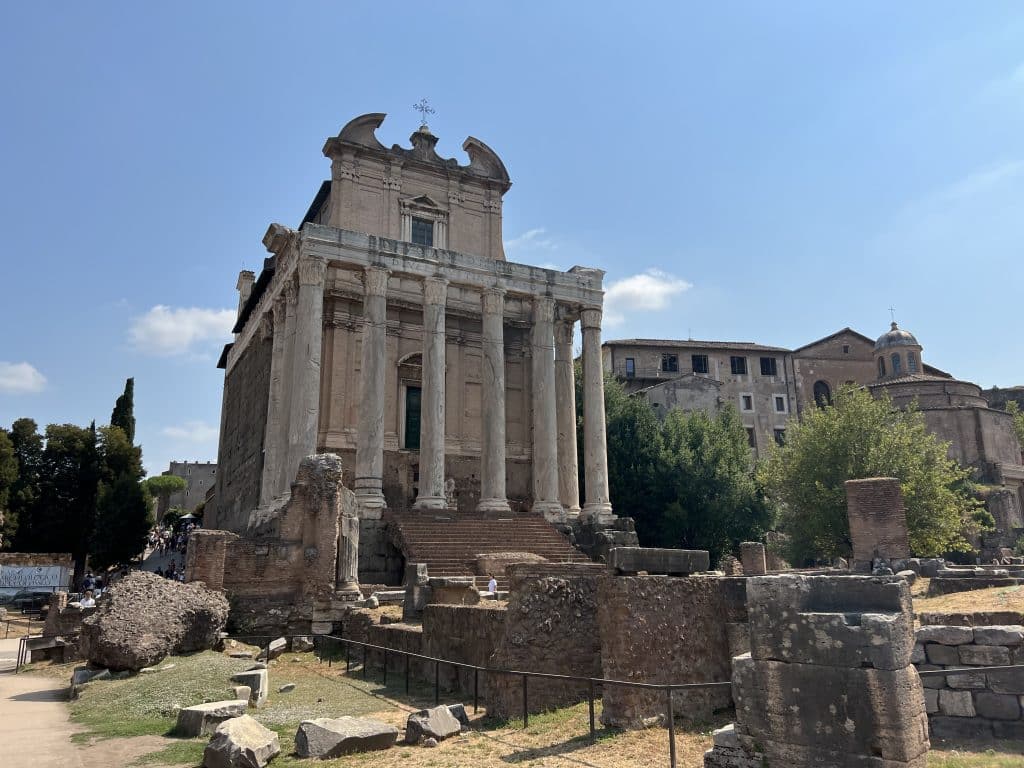
The Roman Forum was built at the end of the 7th century BC and served as the center of Roman public life — political, administrative, religious, and economic — for over a thousand years. Located in central Rome, right next to the Colosseum, it’s a rectangular plaza surrounded by the ruins of major public buildings of huge cultural importance.
This was the main commercial hub of Imperial Rome, where the key moments of both Republican and Imperial Roman society played out, making it a symbol of Roman power at the time.
Public and religious buildings once stood here, hosting speeches and official ceremonies. Today the area lies mostly in ruins, though some buildings remain well preserved and open to visitors. Key sights within the Roman Forum include the Temple of Saturn, the Basilica Aemilia, the Arch of Septimius Severus, and the Via Sacra.
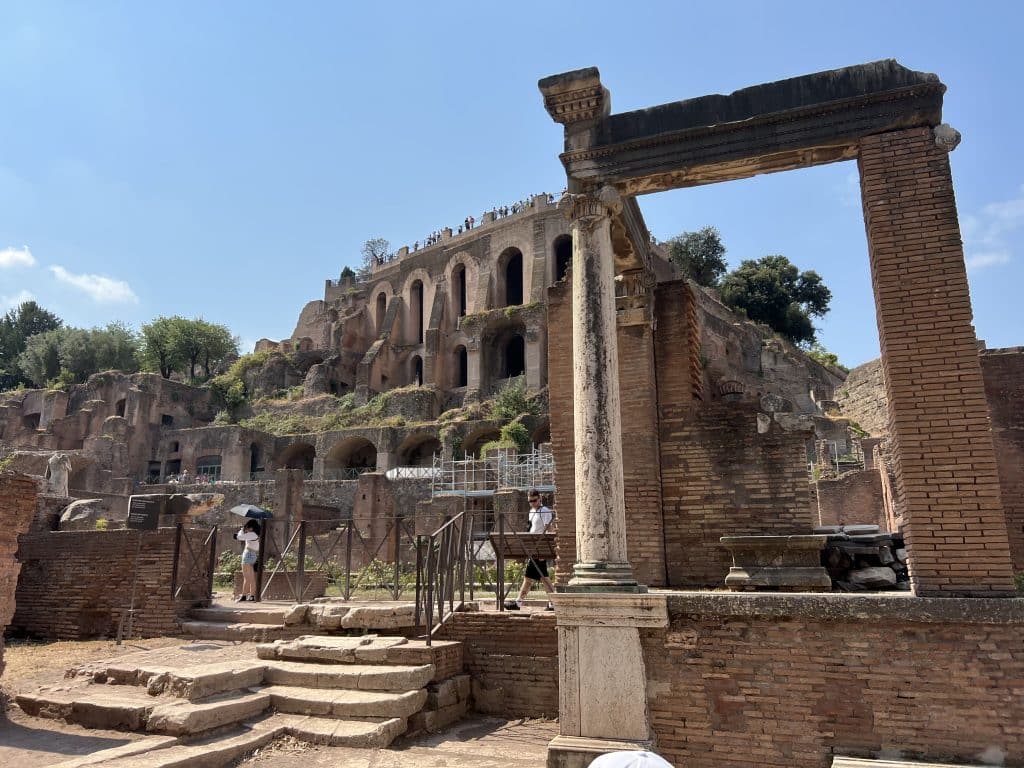
Palatine Hill is one of the hills surrounding Rome, close to the Forum but about 40 meters higher, offering a beautiful view over the archaeological site. It’s also believed to be where the city of Rome itself was founded, around the 8th century BC — excavations show people were already living there as far back as 1000 BC.
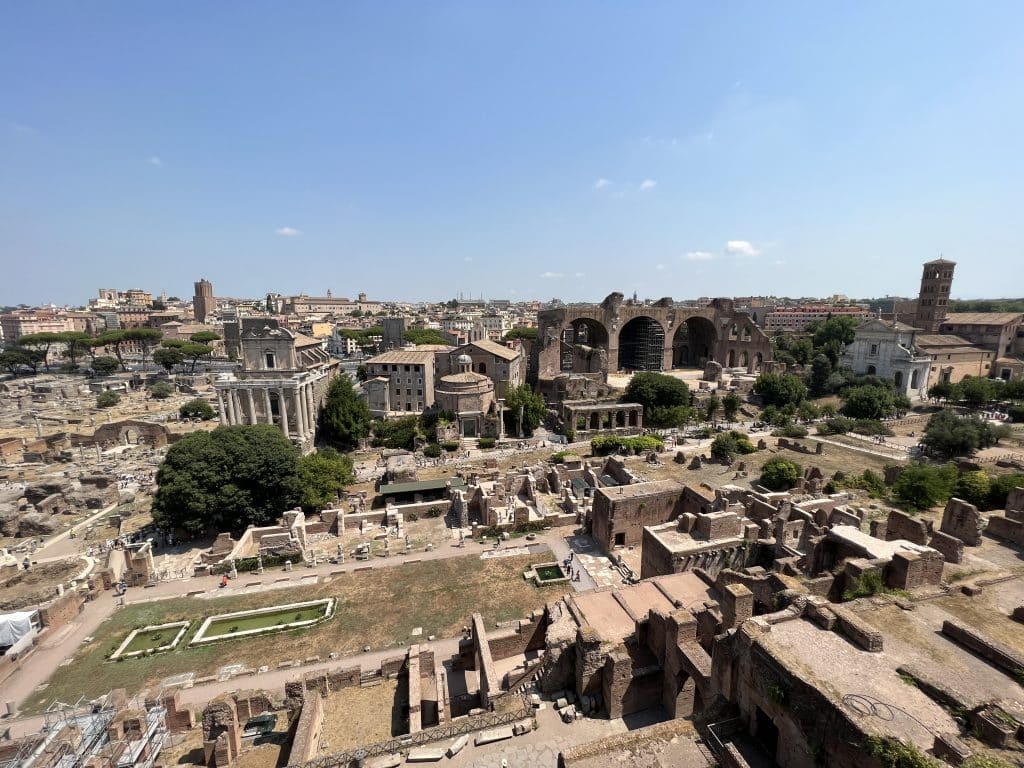
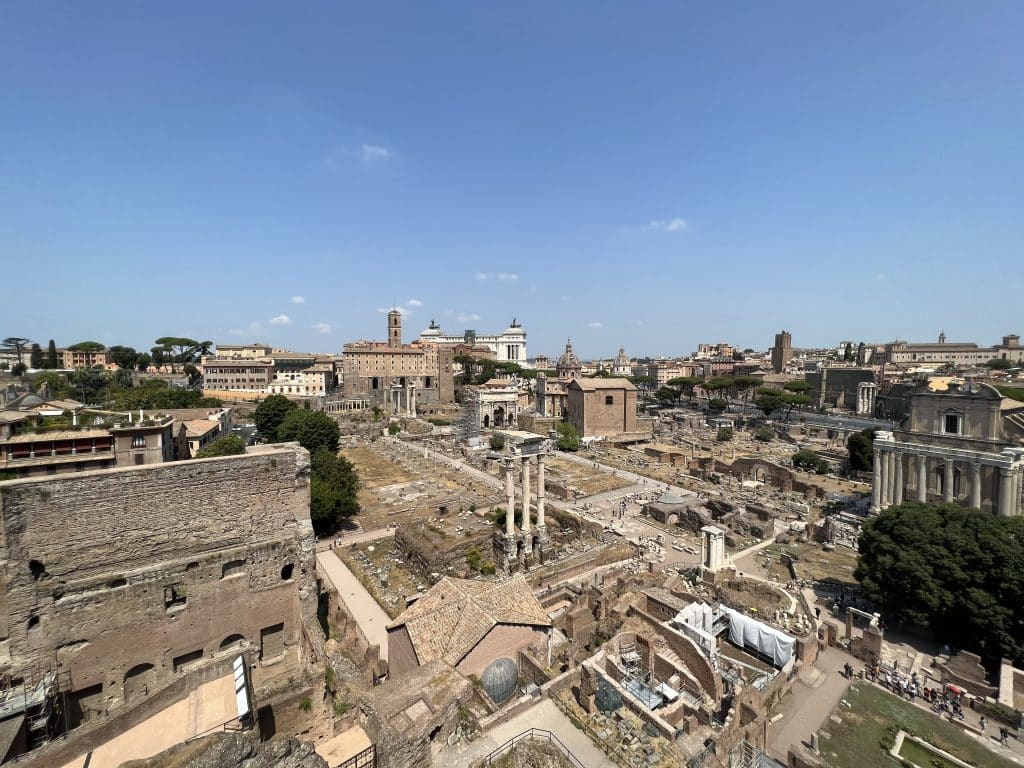
The Colosseum, Roman Forum, and Palatine Hill are covered by a combined ticket, valid across 2 days, though a guided tour will typically cover all three in one day. You can visit them in whatever order you or your guide prefers.
3. Trevi Fountain
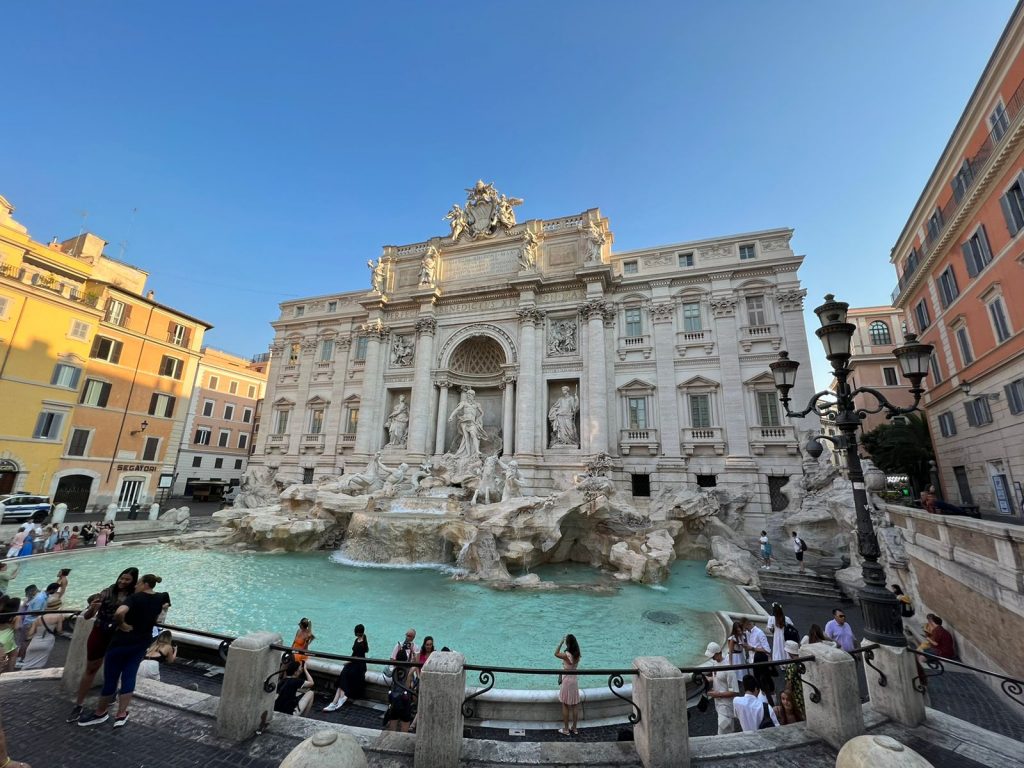
The Trevi Fountain is Italy’s most ambitious Baroque fountain, standing 26 meters tall and 20 meters wide — an unmissable stop in Rome, worth visiting either by day or at night, since it’s beautifully lit after dark. It forms part of the façade of the Palazzo Poli and was designed by Nicola Salvi. Tip: go early for a good photo, since the area gets packed.
Local legend says tossing a coin into the water brings good luck — and if you toss it over your shoulder into the fountain, you’re guaranteed to return to Rome one day. The coins collected are donated to Caritas, a network of Catholic humanitarian organizations.
The coin-tossing tradition became famous following the success of the 1954 romantic comedy Three Coins in the Fountain.
4. Pantheon and Piazza della Rotonda
The Pantheon sits in Rome’s historic center, on Piazza della Rotonda. Originally a pagan temple, it was converted into a church in the 7th century under the name Santa Maria dei Martiri. The word “Pantheon,” from Greek, means “all the gods.”
The first Pantheon was built by Marcus Vipsanius Agrippa, general under Emperor Augustus, in 27 BC, and was destroyed by fire in 80 AD.
In 118 AD, Hadrian ordered a new temple built in Agrippa’s name on the same site, designed by architect Apollodorus of Damascus.
It remains, to this day, the largest unreinforced concrete dome in the world. The height to the oculus and the diameter of the interior circle are identical — 43.3 meters — and it features a central opening that lets in both light and, occasionally, rain.
The dome’s most striking feature is its clever oculus, letting in natural light (and rain) — with any water that enters drained through a subtle system built into the floor.
Inside are the tombs of important Italian figures, including Raphael and two Italian kings, Umberto I and Vittorio Emanuele II, a symbol of Italian unification.
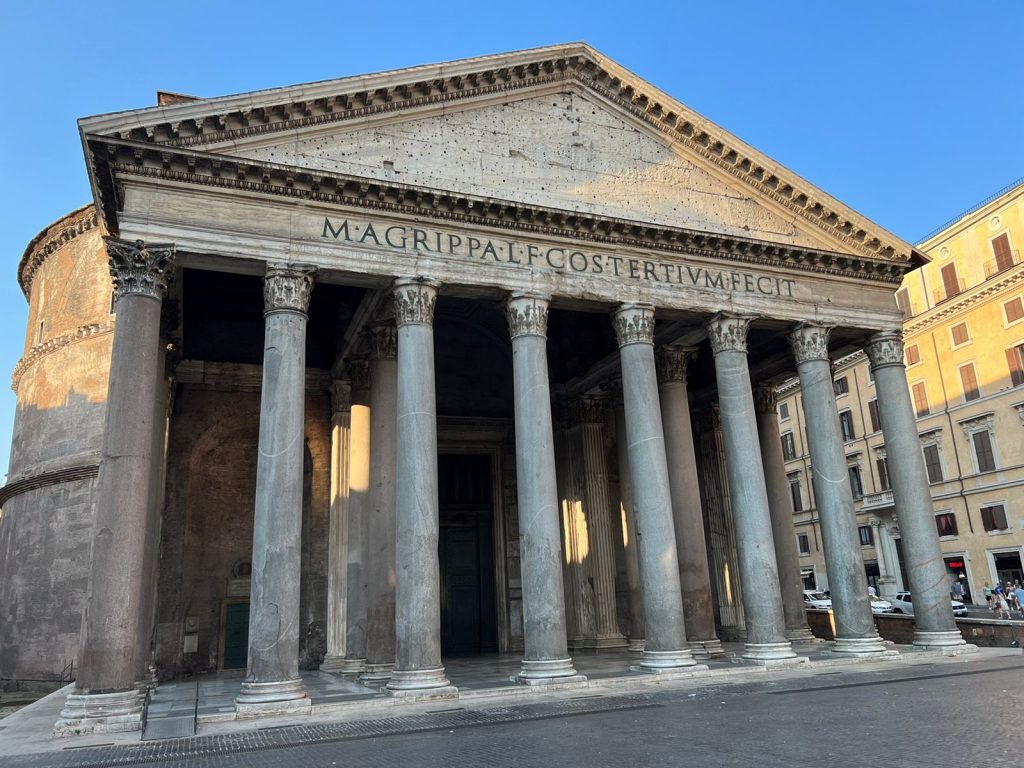
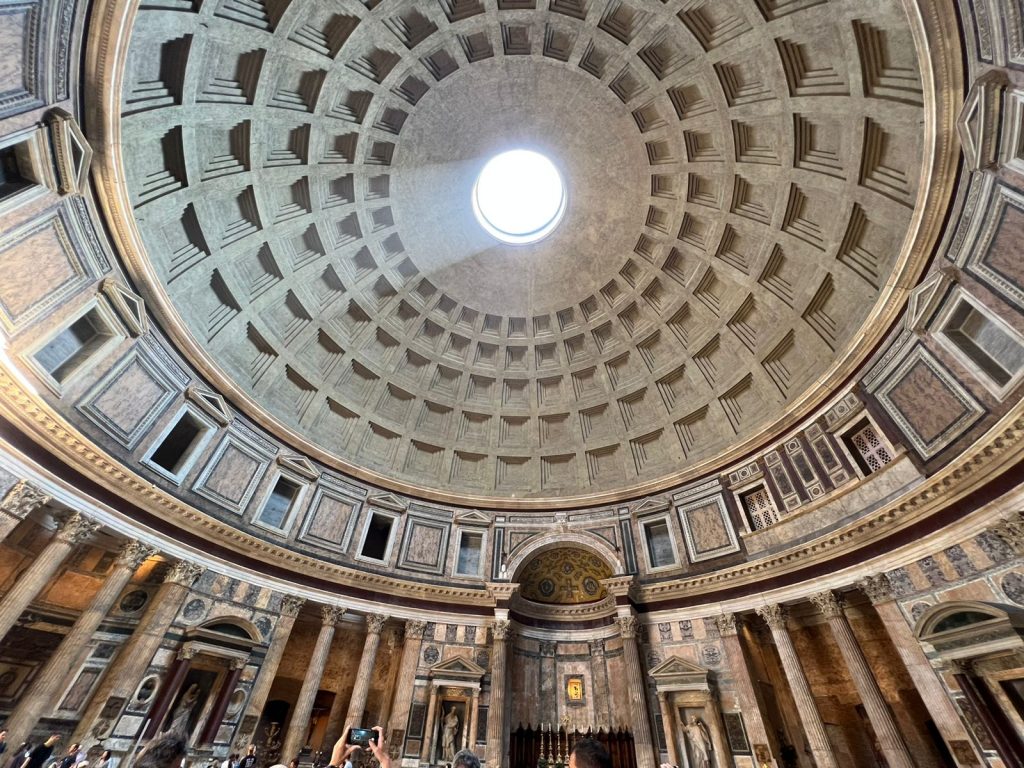
The Pantheon holds free, public Mass on Saturdays at 5 PM and Sundays at 10:30 AM.
Important note: shoulders must be covered inside, so bring a scarf or an extra layer.
5. St. Peter’s Square
Vatican City, a city-state entirely surrounded by Rome, Italy, is the seat of the Roman Catholic Church, home to the Pope, and packed with artistic and architectural treasures. It’s also the smallest sovereign state in the world.
Visiting the Vatican is a wonderful experience, regardless of your own faith.
St. Peter’s Square, a Baroque-style plaza, impresses with its sheer scale, open to worshippers from around the world — it’s the gateway to the Basilica, designed to let the largest possible crowd see the Pope.
Two colonnades surround the square, made up of nearly 280 columns and 145 statues of saints. At the center of St. Peter’s Square stands an Egyptian obelisk, flanked by two large fountains.
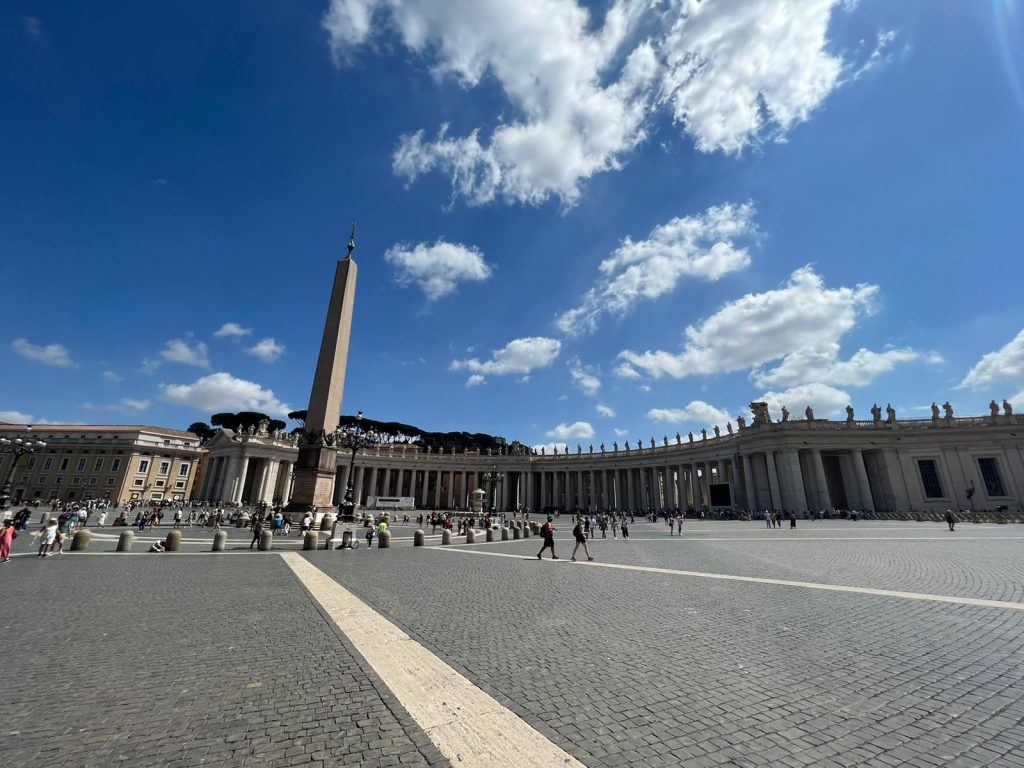
Fun fact: the Pope’s guards are exclusively Swiss, must be Catholic, and swear an oath of loyalty directly to the Pope. This tradition dates back to the Sack of Rome in 1527, when the Swiss Guard protected the Pope during his escape to Castel Sant’Angelo.
6. St. Peter’s Basilica
St. Peter’s Basilica is, without question, the largest and most important religious building in Catholicism and one of the most visited Christian sites in the world, covering 23,000 square meters.
Its construction drew contributions from some of history’s greatest artists, including Bramante, Michelangelo, Raphael, and Bernini.
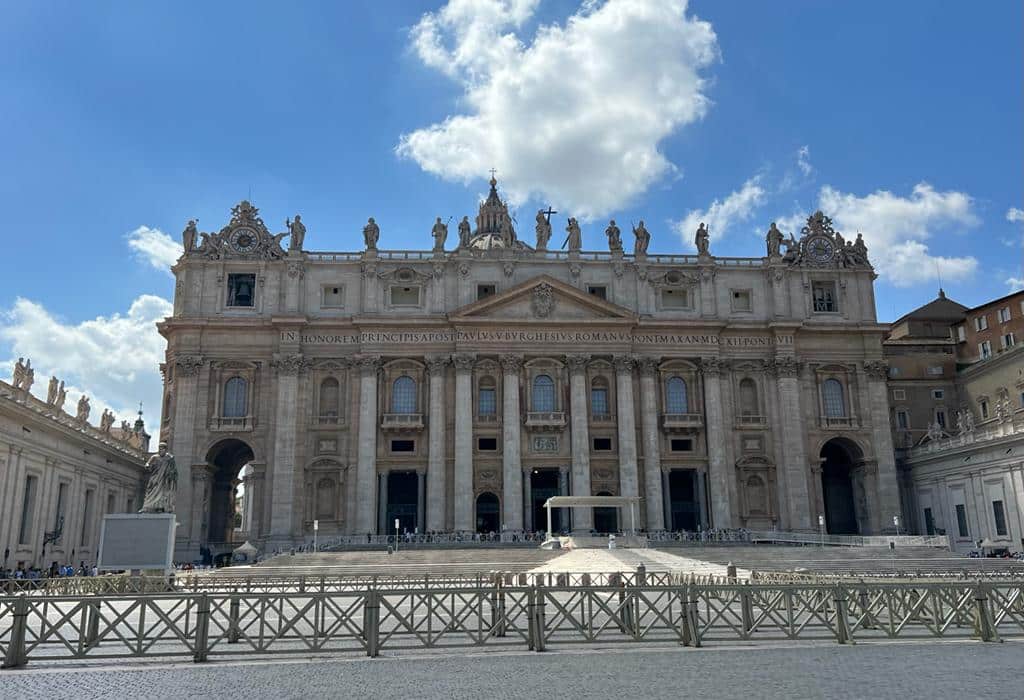
A UNESCO World Heritage Site, it’s possible to visit Pope John Paul II’s tomb, as well as the dome, which is open to the public and offers a beautiful view over the city.
The lines to enter the basilica are enormous, so come prepared to take your time — we entered through the museum with a guide, which let us skip the line.
Wednesdays bring the Papal Audience, with Mass and the Pope riding through in the Popemobile — we’d recommend arriving early to grab a seat. When we visited, the Pope was traveling outside Rome, so there was no Mass that day.
Entry to the Basilica is free, but climbing to the dome costs €8 by stairs only (551 steps) or €10 with stairs plus elevator partway up.
7. Vatican Museums
The Vatican Museums are a collection of museums within Vatican City, holding an enormous collection of artwork.
The most famous and sought-after stop is the Sistine Chapel, painted by Michelangelo — one of the most iconic works in the world, and truly stunning, though photography and filming aren’t allowed.
The Vatican Museums are split into several sections holding pieces from around the world, including the Egyptian Museum, the Etruscan Museum, and the Vatican Picture Gallery.
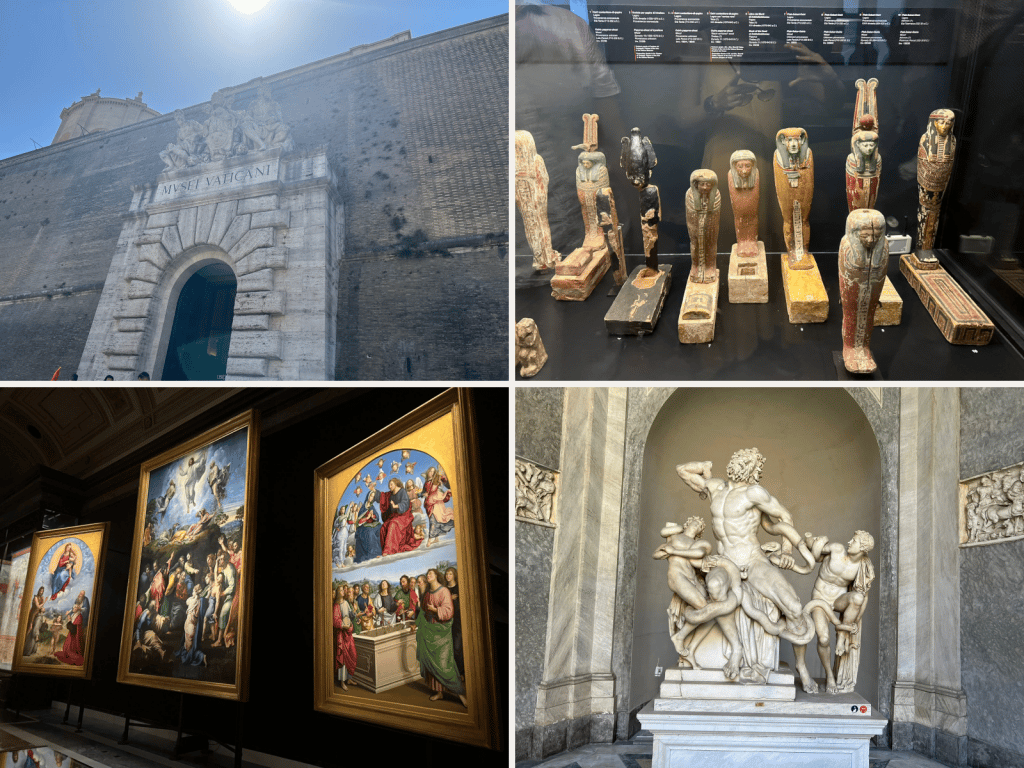
Worth emphasizing: this attraction has massive lines, so again, we’d recommend buying tickets ahead of time or booking a guide.
8. Piazza Venezia
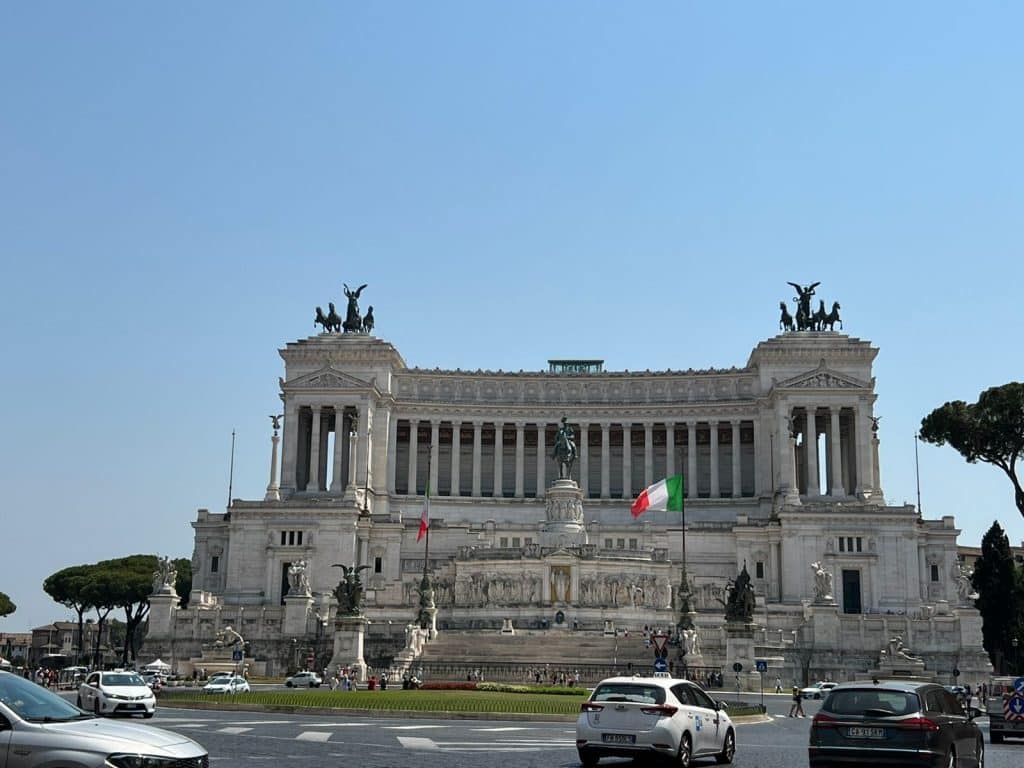
This beautiful square will leave you unsure where to look first. Piazza Venezia marks the meeting point of 5 major roads in the Italian capital and is surrounded by impressive buildings, including the Victor Emmanuel II National Monument, built to honor Victor Emmanuel II, the first king of unified Italy in the 19th century, considered the father of the nation.
The Victor Emmanuel monument, also known as the “Altar of the Fatherland” or Vittoriano Museum, was built between 1885 and 1911 in neoclassical style using white marble, and is one of the largest museums in the world.
The Museum of the Risorgimento, named after Italy’s unification movement, has a rooftop terrace with panoramic city views, including the Roman Forum, and houses the Tomb of the Unknown Soldier, honoring those who died in World War II. Admission is completely free, and the visit takes about 2 hours.
Piazza Venezia is also home to Rome’s first Renaissance-style building, Palazzo Venezia, once used as a papal residence between 1564 and 1797. This is also where Benito Mussolini once gave his fascist-era speeches, which is part of why the building isn’t especially beloved by Italians today.
Today, the building houses the Museo del Palazzo di Venezia, with an extensive collection of ceramics, tapestries, and statues spanning from the early Christian era to the Renaissance.
9. Capitoline Hill and Capitoline Museums
Capitoline Hill is another of the 7 hills on which Rome was founded in the 16th century. After a visit from Emperor Charles I in 1536, Pope Paul III Farnese was embarrassed by the hill’s condition and commissioned Michelangelo to design a new square: Piazza del Campidoglio, or Capitoline Square.
The square, which hosted the city’s civic activity through the end of the Middle Ages, was designed by Michelangelo to face St. Peter’s Basilica, the city’s political center at the time. He also proposed a new building (Palazzo Nuovo) and redesigned the Palazzo dei Conservatori, giving both great visual harmony with the Palazzo Senatorio.
At the center of the square stands an imposing bronze equestrian statue of Marcus Aurelius, now kept safe inside the Palazzo dei Conservatori — the one you see in the square today is a replica.
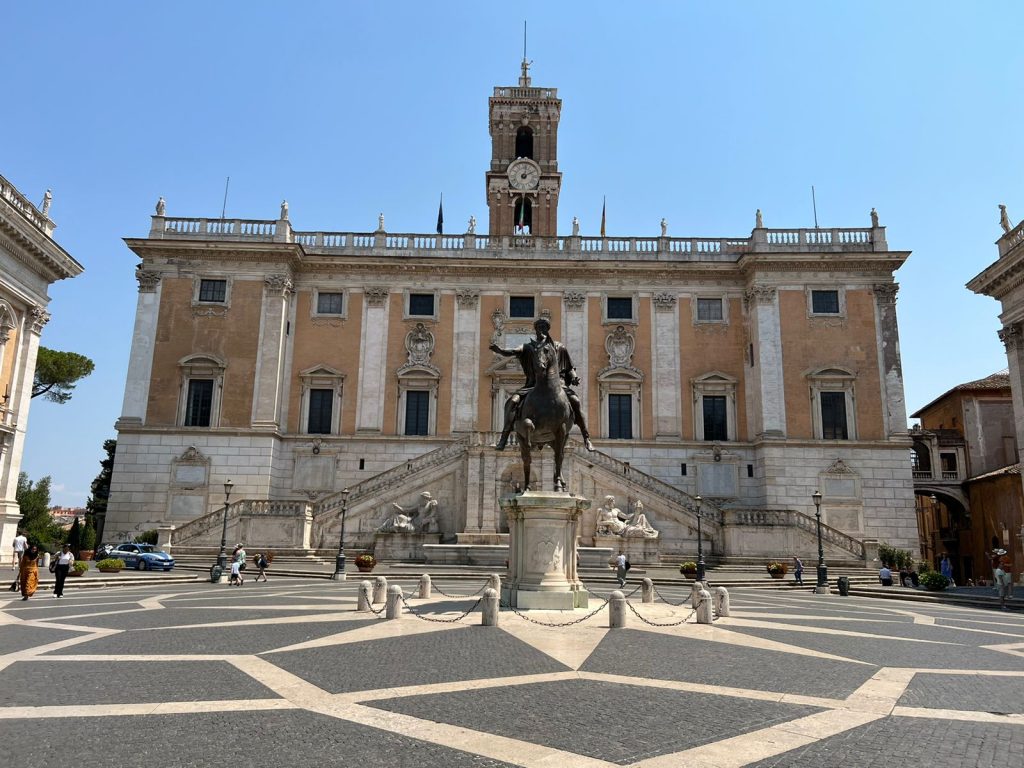
The Palazzo Nuovo and Palazzo dei Conservatori together house the Capitoline Museums, along with an iconic staircase that’s a popular photo spot, and on the corner between the Palazzo Senatorio and Palazzo Nuovo stands the Capitoline Wolf sculpture, tied to the legend of Romulus and Remus.
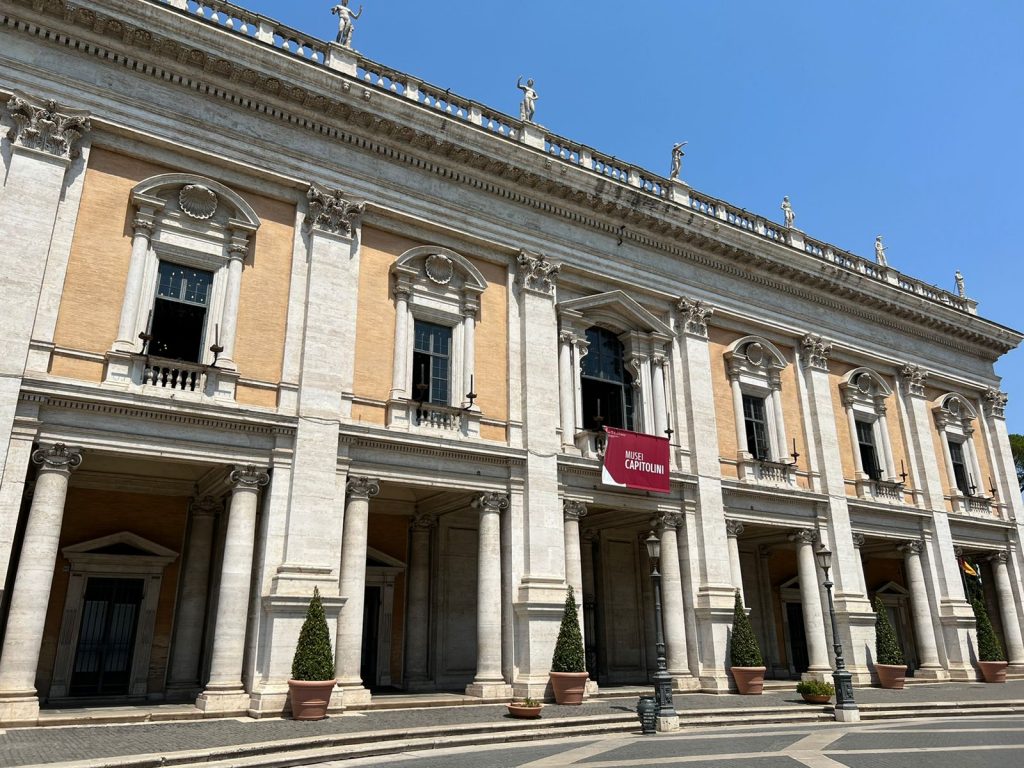
The Capitoline Museums were founded in 1471, making them one of the oldest museums in the world.
10. Piazza Navona
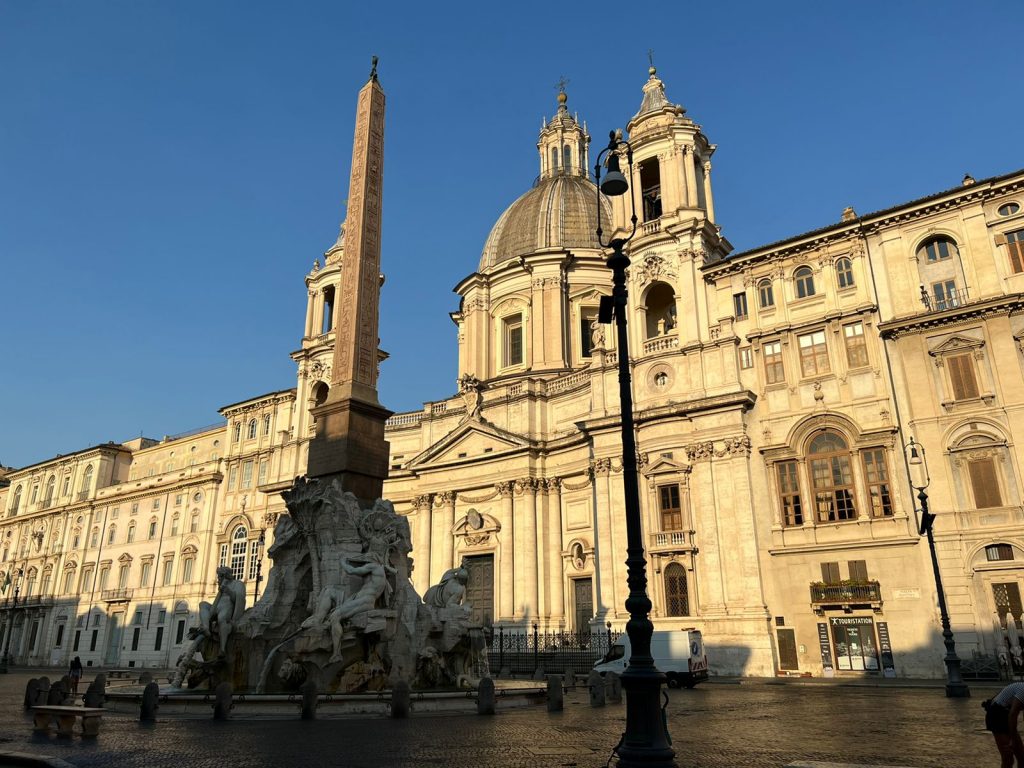
Another unmissable stop is Piazza Navona. The square was built over the site of an ancient Roman stadium, and the buildings surrounding it are beautiful. It’s a lively spot for local shopping and street painters.
Today’s name traces back through the earlier forms in agone, then nagone, and finally navona — which, by pure coincidence, also means “big ship” in Italian.
The square holds 3 grand fountains — the Fontana dei Quattro Fiumi, the Fontana del Moro, and the Fontana del Nettuno — plus the Palazzo Pamphilj, notable for its scale, home to the Brazilian embassy.
11. Piazza di Spagna (Spanish Steps)
Piazza di Spagna was once known as Piazza di Francia, though it later took its current name from the nearby Spanish embassy.
It features a Baroque fountain, the Fontana della Barcaccia, created by Pietro Bernini for Pope Urban VIII, completed in 1627 by his famous son, Gian Lorenzo Bernini.
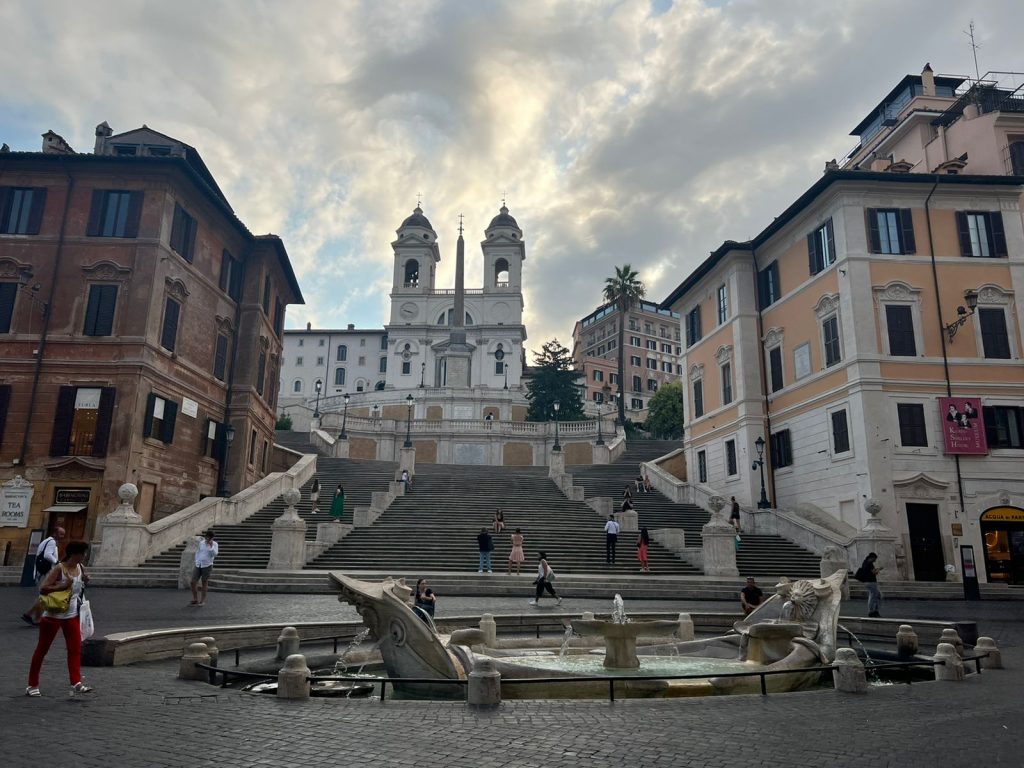
Shaped like a boat, the fountain bears the Bernini family’s emblems of suns and bees, sitting at the base of the staircase leading up to the church of Trinità dei Monti.
Fun fact about the staircase: it has 135 steps, and hosts the Donne Sotto le Stelle fashion show. The event happens in mid-July, dressing up the whole square for the occasion, and you’ll notice plenty of people resting here after a long day of walking the city.
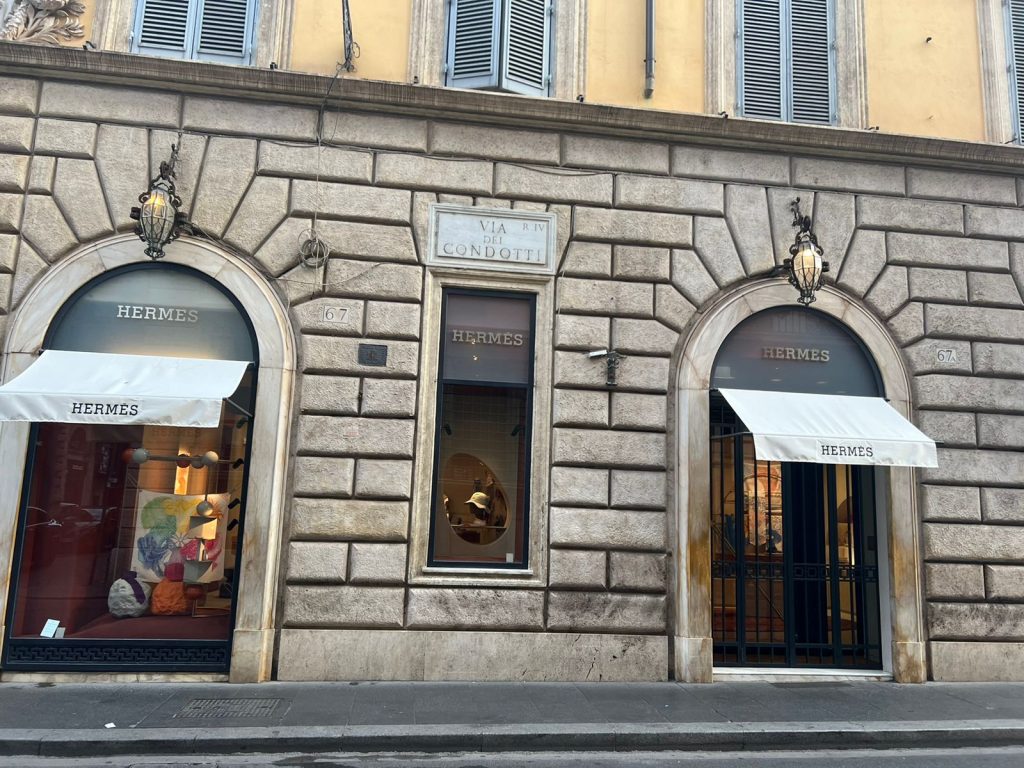
In front of the square lies one of Rome’s best shopping districts: Via dei Condotti (famous for shopping), Via Frattina, and Via del Babuino (lined with 17th- and 18th-century palazzos) — making this one of the liveliest streets in the city.
Following Via del Babuino, you’ll reach Piazza del Popolo, home to the 24-meter Flaminio Obelisk, marking the location of the Circus Maximus. Climbing the stairs from there takes you to Terrazza del Pincio, one of the best lookout points in the city.
A visit to Castel Sant’Angelo is well worth it — the lower floors preserve the original Roman-era mausoleum structure, while the upper floors hold ornate halls and Renaissance-era pieces, from when the fortress belonged to the Popes. The top floor has a terrace café with panoramic views over central Rome.
12. Catacombs of San Callisto
The Catacombs of San Callisto (website) are an underground burial complex used by the Church of Rome starting in the 3rd century, located on the Appian Way, in the Ardeatino district, best known for housing the Crypt of the Popes. The catacombs and crypt were rediscovered in 1854 by pioneering Italian archaeologist Giovanni Battista de Rossi.
These are underground tunnels spanning 15 hectares, reaching depths of up to 20 meters. Around 500,000 people were buried across this labyrinth of tunnels, though only a small portion is open to the public through guided tours.
Visits to the Catacombs of San Callisto are always guided, with tours offered in Italian, French, Spanish, German, and English. The guide explains the site’s history and its burials. Tickets cost €10 and can be purchased on-site — photography and filming aren’t allowed.
13. Temple of Hadrian
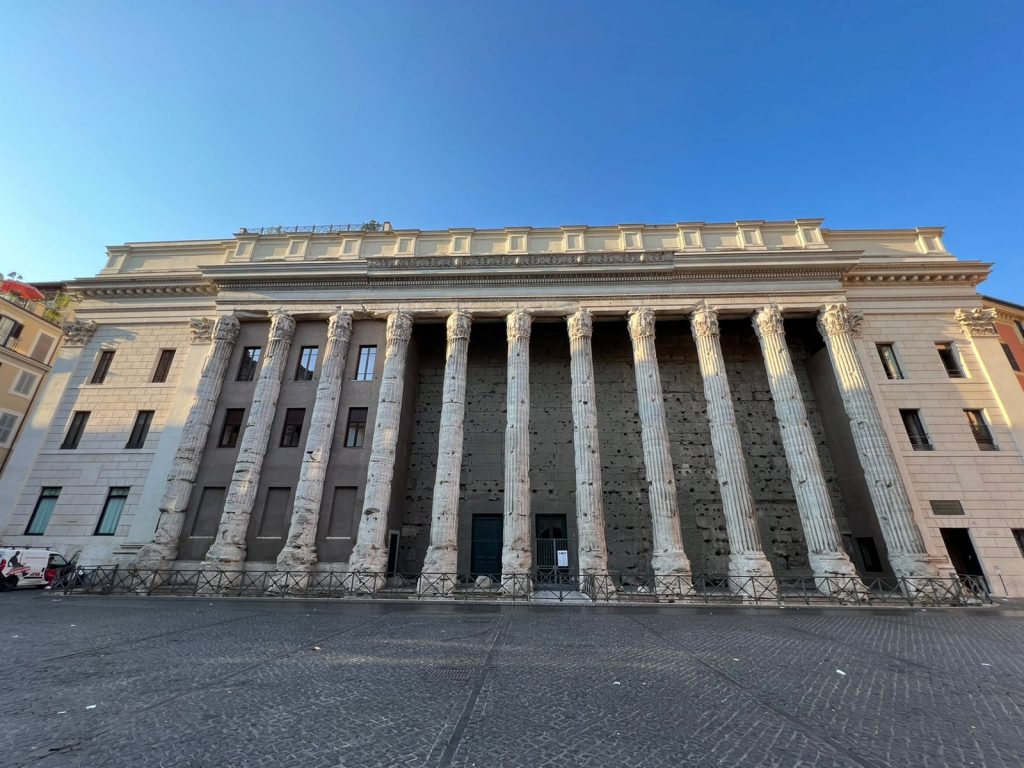
The Temple of Hadrian was dedicated to Emperor Hadrian, built by his son and successor Antoninus Pius in 145 AD, and today it’s incorporated into a later building on Piazza di Pietra.
The structure features 11 Corinthian marble columns, each 14 meters tall and 1.5 meters in diameter.
Today, the 2nd-century façade fronts a building that houses the Rome Stock Exchange. At night, the site is beautifully lit, making for great photos!
14. Mercato Centrale Roma
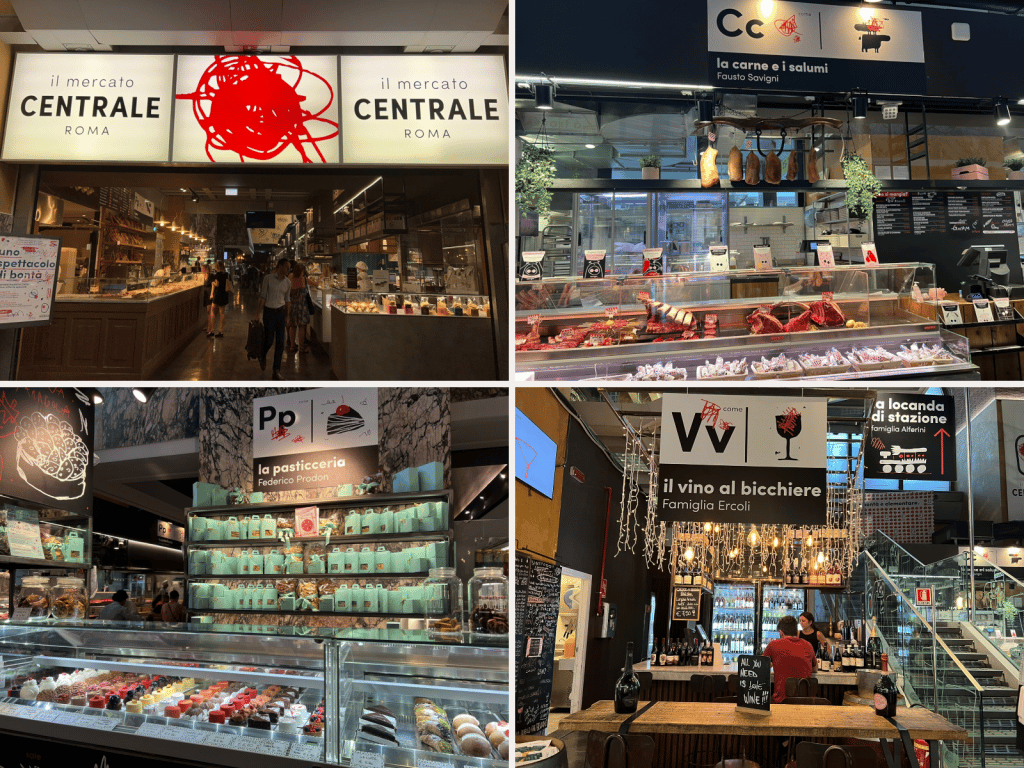
Mercato Centrale Roma, located inside Termini Station, is a fantastic place to taste and learn about Italian food, culture, and tradition.
The restaurants here use top-quality ingredients, service is good, and we really enjoyed our time there. Great artisanal food gathered in one space, with sweets, savory bites, bread, drinks, snacks, meat dishes, seafood, pasta, and even Japanese food, alongside Roman, Italian, and international recipes.
Despite the name, the market’s very first location actually opened in Florence, back in 2014.
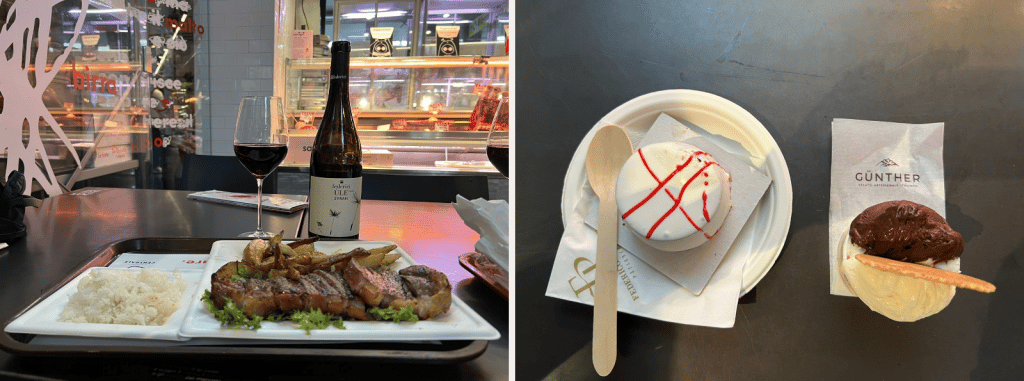
There are 21 restaurant options here — one tip is “La carne e i salumi” from Chef Fausto Savigni. On the first floor, we had wine at “Il vino al bacchieri” from the Ercoli family, and picked up two different sweets: gelato from “Gunther” and a treat from “La pasticceria” by Federico Prodon — everything was delicious.
There’s also Spazio Fare, which we didn’t try, featuring refined recipes from Mercato Centrale’s food artisans, occupying the entire second floor.
15. Bocca della Verità (Mouth of Truth)
This sculpture originally sat in Piazza della Bocca della Verità until 1632, when it was moved to the walls of the Church of Santa Maria in Cosmedin, where it remains today.
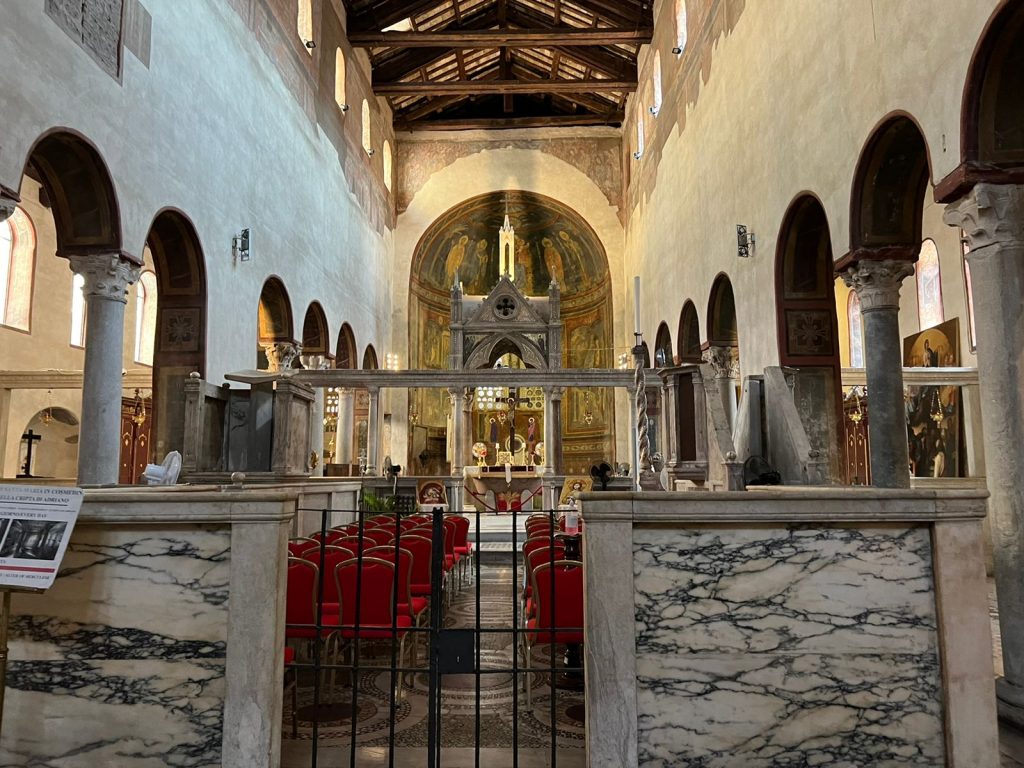
With a diameter of 1.75 meters, it’s dedicated to the God of the Sea, depicted as a bearded male face, with holes for the eyes, nose, and mouth.
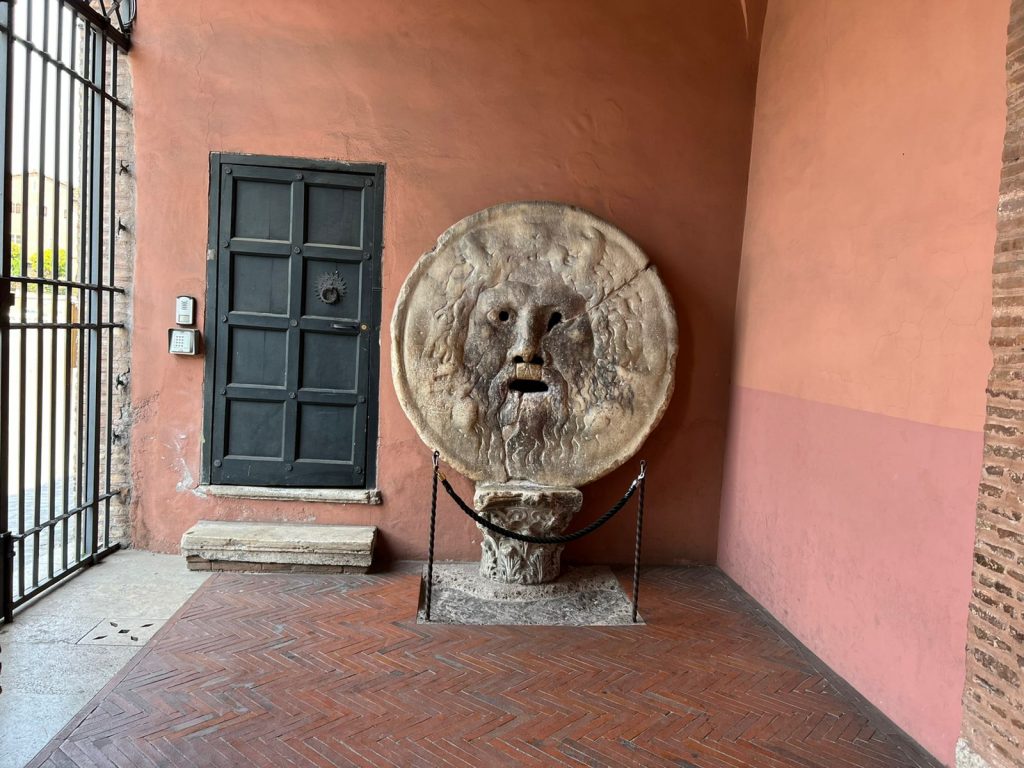
Legend has it a husband who suspected his wife of infidelity brought her before the Bocca della Verità to test her faithfulness.
The wife pretended to faint, and her secret lover caught her in his arms. Afterward, she swore before the Bocca della Verità that she had only ever been held by her husband — and the man who had just caught her.
16. Castel Sant’Angelo
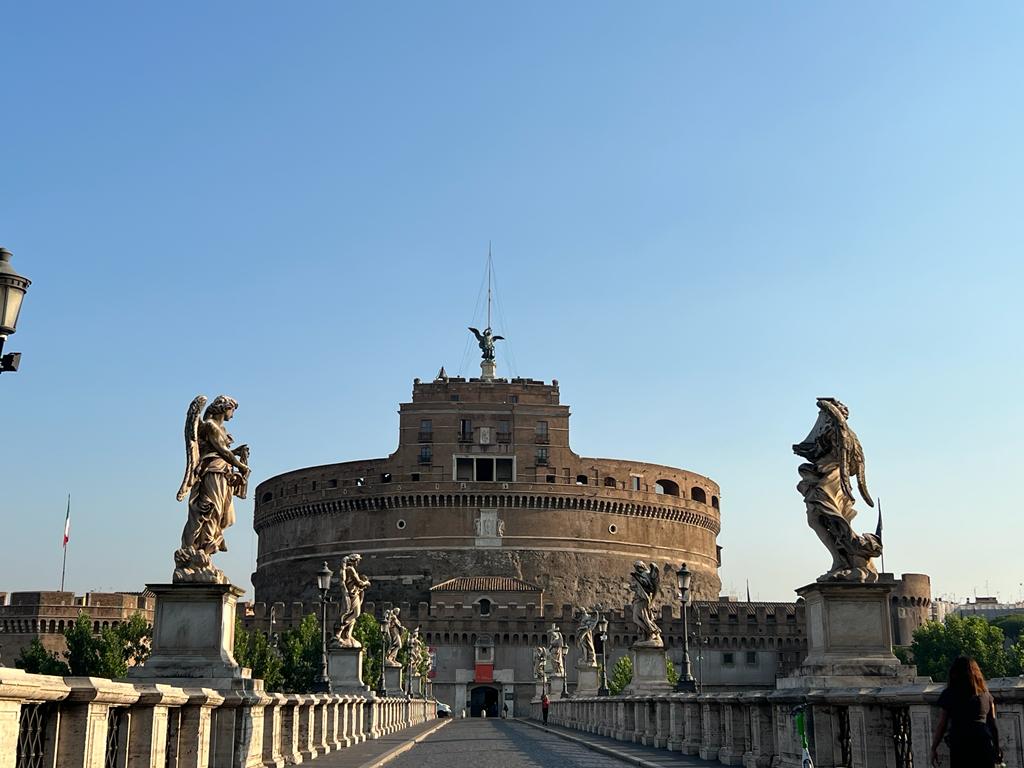
This is the only building that has followed Rome’s fate, and its development, across nearly two thousand years.
It’s undergone several transformations, both architecturally and structurally, and in purpose: built in 123 AD as a mausoleum for Emperor Hadrian and his family. Hadrian, however, died in 138 AD, before construction was complete.
In 403 AD, it became a defensive outpost for Rome, and by the early 11th century, it had taken on the role of state prison. Throughout the 14th century, it changed hands repeatedly among Roman noble families.
In the 19th century, it once again served as a prison, until 1906, when it finally became the museum it is today — one we genuinely loved visiting, tracing all these different chapters through time.
The bridge leading to it is decorated with 10 angel statues, all designed by Bernini.
17. Napoleonic Museum of Rome
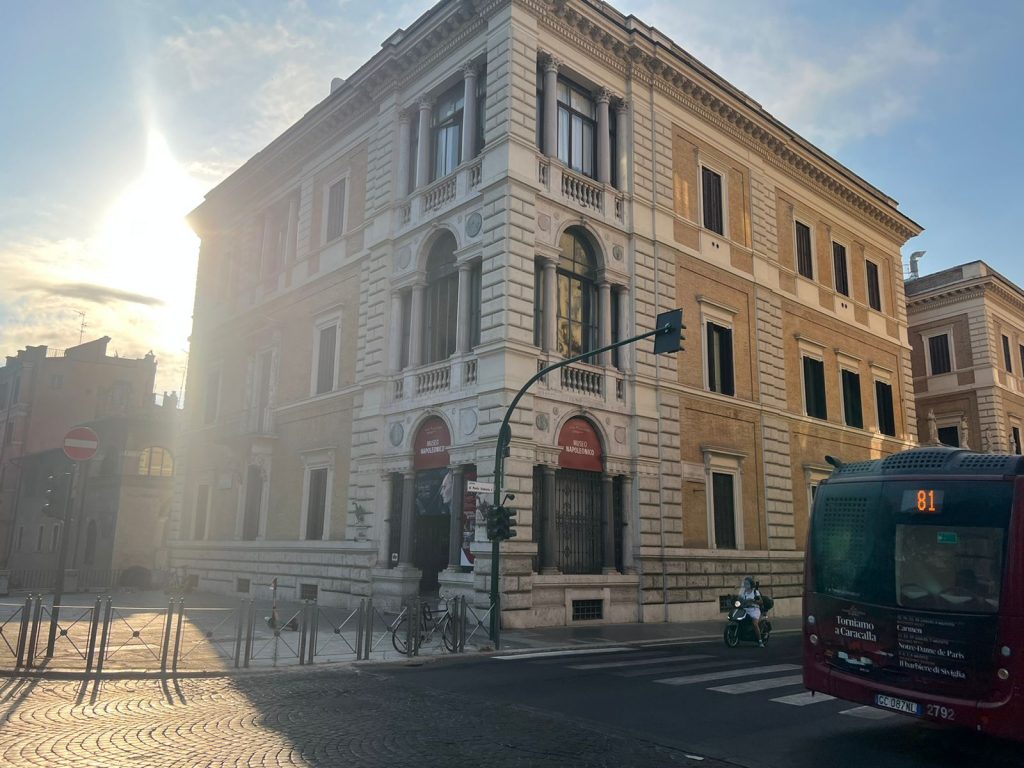
The Napoleonic Museum of Rome is a historical museum dedicated to Napoleonic relics, largely drawn from the collection of Count Giuseppe Primoli, donated to the city of Rome in 1927.
18. Piazza della Repubblica
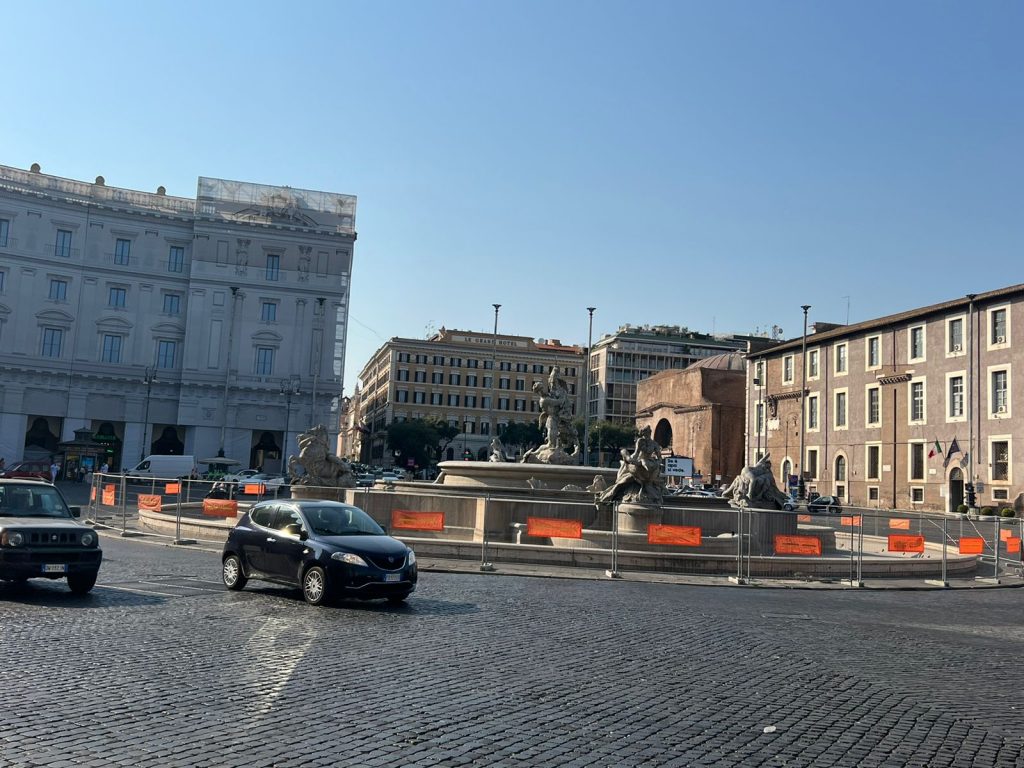
Piazza della Repubblica sits just a few steps from Termini Station, facing the Baths of Diocletian. One of Rome’s most important streets, Via Nazionale, also begins right here.
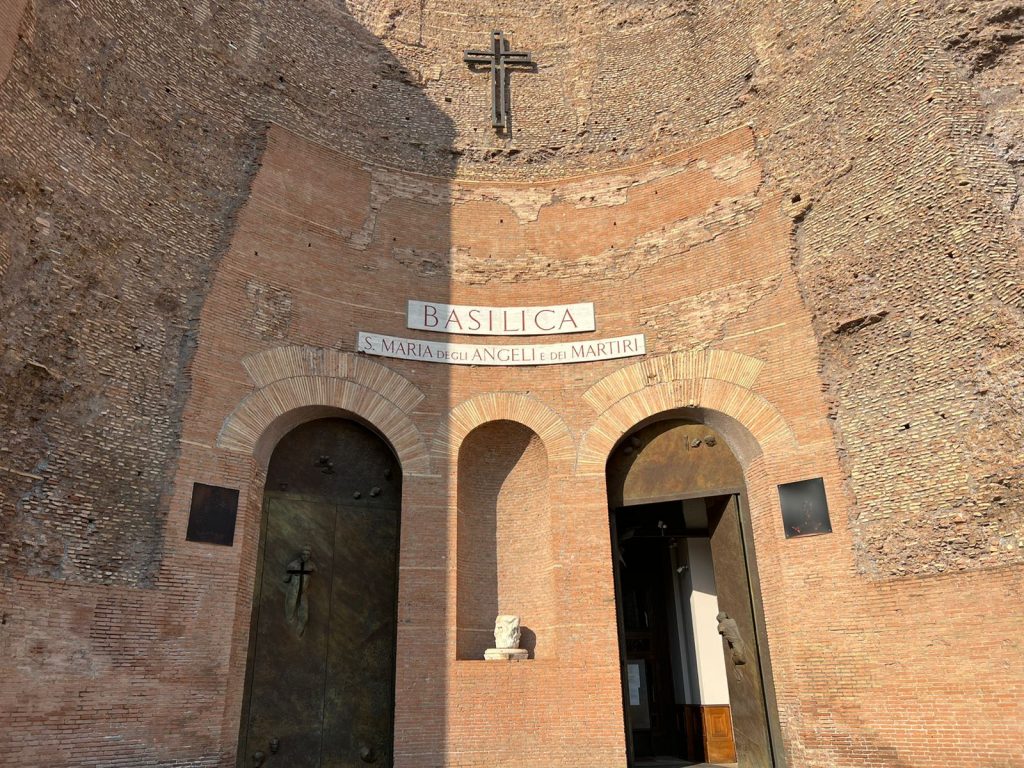
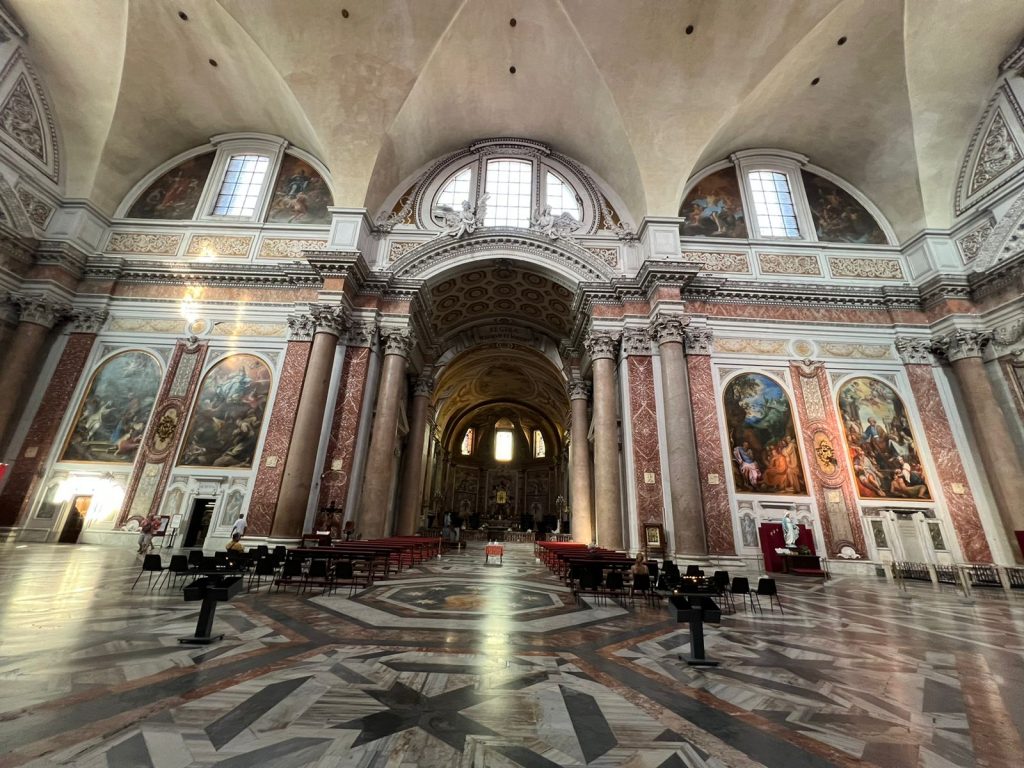
19. Santa Maria degli Angeli e dei Martiri
This titular church and minor basilica was built inside the frigidarium of the Baths of Diocletian, on Piazza della Repubblica.
It draws attention for its striking relief-carved door and imposing presence.
20. Church of St. Ignatius of Loyola
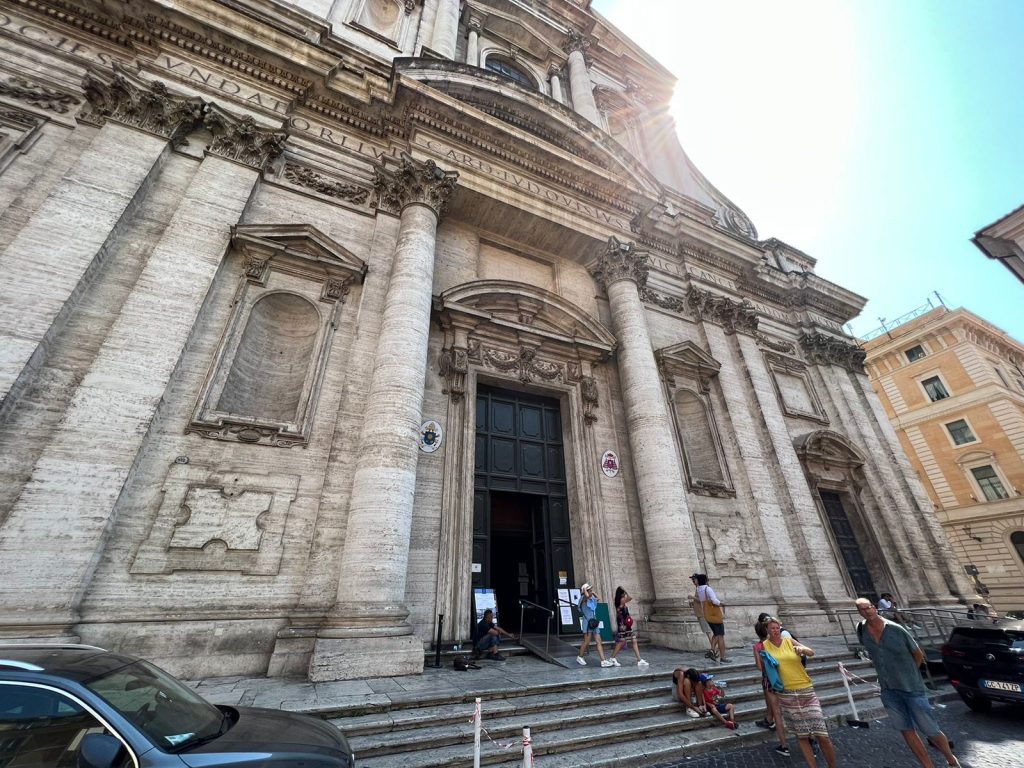
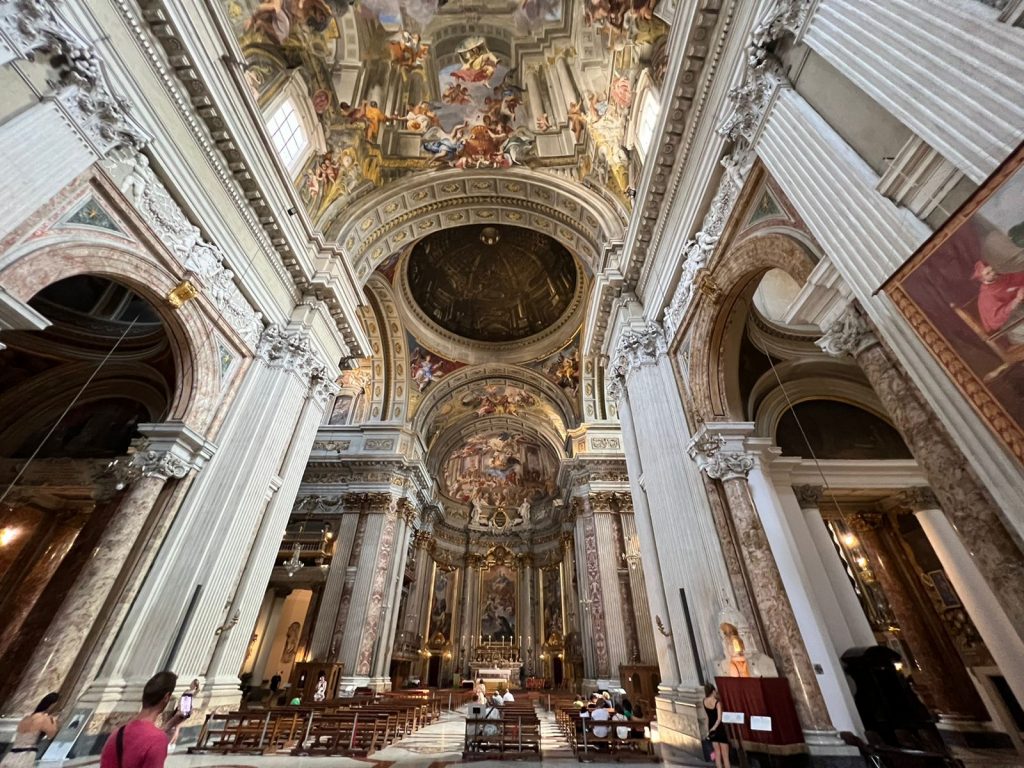
The most interesting part of this church is the ceiling — there’s even a mirror set up so you can see it properly and get a photo, and the fresco itself spans 36 by 16 meters.
Andrea Pozzo, a Jesuit brother, painted the stunning trompe-l’oeil fresco (1685) on the nearly flat vault of the nave, depicting St. Ignatius’s entrance into Paradise and an allegory of the Jesuits’ missionary work.
21. Basilica of Santa Maria Maggiore
This was the first church in the West dedicated to Mary in honor of Jesus Christ, and it holds a special place in Catholic liturgy.
The gilded ceiling uses South American materials, brought over from Brazil by the Spanish, though the mosaics on the main altar, floor, and chapel paintings are equally beautiful — along with the stained glass. Bernini’s body was buried on the right side of the altar, adjacent to the basilica.
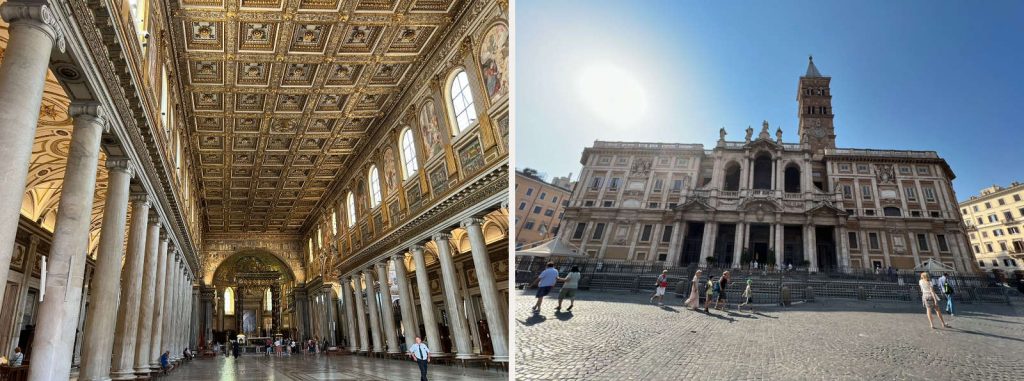
Open daily from 7 AM to 7 PM, sometimes with a line since bags are checked at entry.
22. More church tips in Rome
- Santa Maria in Trastevere: its architectural highlight is the medieval mosaic façade, though it was the golden interior that won me over, in the Trastevere neighborhood. Free entry, open daily from 7:30 AM to 9 PM.
- Church of San Luigi dei Francesi: Caravaggio fans flock to this church, named for King Louis IX. It houses 3 of the master’s works, all in the Contarelli Chapel. Open Monday through Friday, 9:30 AM–12:45 PM and 2:30–6:30 PM. Saturday mornings it closes 30 minutes earlier, and Sundays it’s open 11:30 AM–12:45 PM and 2:30–6:30 PM.
- Basilica of San Pietro in Vincoli (“St. Peter in Chains”): one of Rome’s oldest churches, home to the relic believed to be the chains that bound Peter in the Mamertine Prison. It’s also famous for housing Michelangelo’s celebrated statue of Moses. Open daily 8 AM–12:30 PM and 3–7 PM.
23. Trastevere
A neighborhood packed with restaurants and bars, along the banks of the Tiber River. The buildings are beautiful, alongside sights like Porta Portese and the Basilica of Santa Maria in Trastevere. Narrow, maze-like cobblestone streets, lined with great restaurants. We’d recommend having dinner at one of the charming spots in the area.
24. Piazza del Popolo
The square and its gate are a great example of the architectural “layering” so common in the Eternal City, shaped by centuries of papal interventions and modifications.
In 1572, Pope Gregory XIII commissioned a fountain by Giacomo della Porta for the center of the square.
In 1589, Pope Sixtus V added a grand obelisk to the square’s center, the 24-meter Flaminio Obelisk, originally built during the reign of Pharaohs Ramesses II and Merneptah (1232–1220 BC).
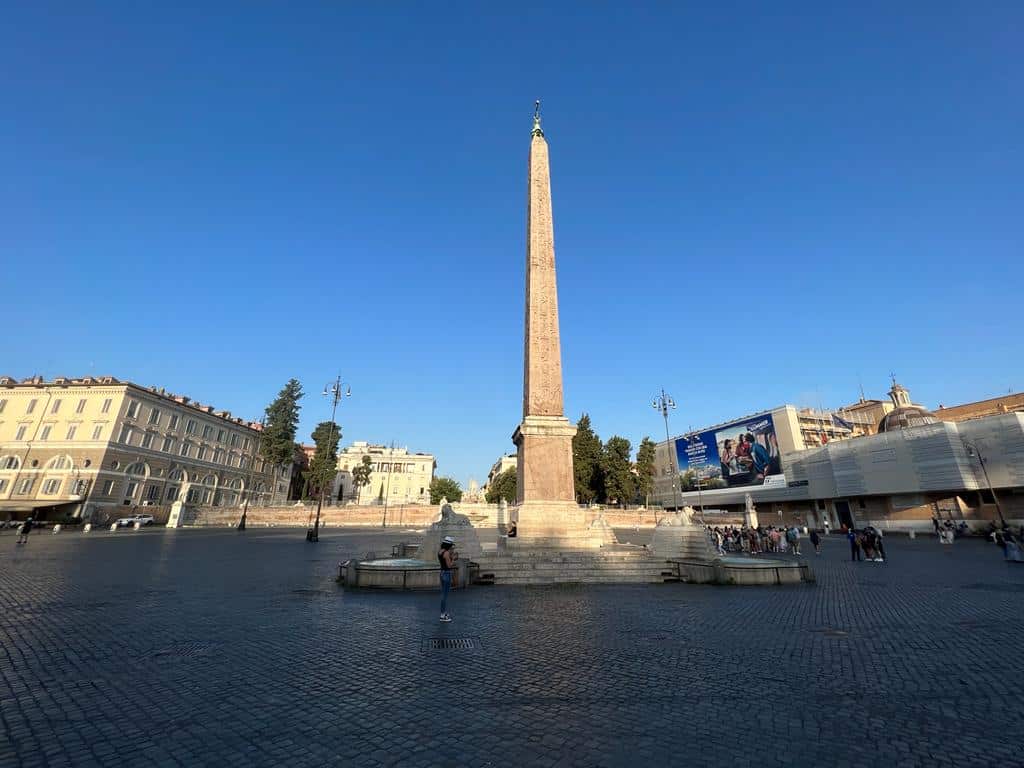
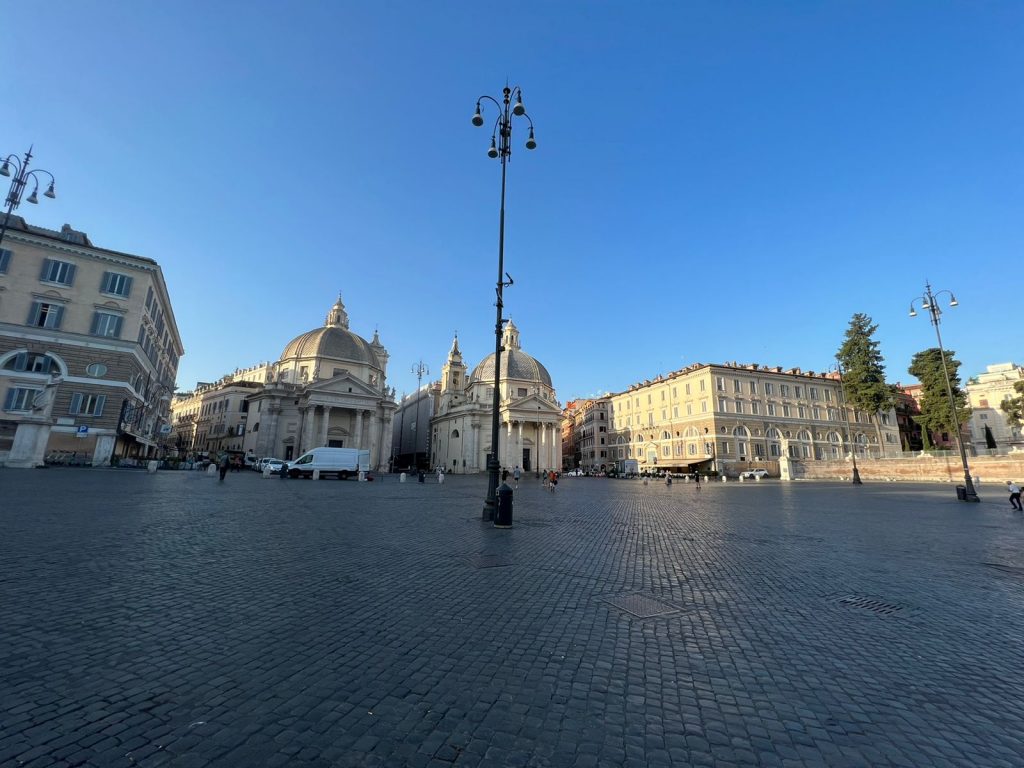
The two twin churches, Santa Maria in Montesanto (1675) and Santa Maria dei Miracoli (1678), are symmetrical by design, built at the request of Alexander VII. Both were started by Carlo Rainaldi and completed by Bernini, with help from Carlo Fontana.
The complex also includes the Basilica of Santa Maria del Popolo, a titular Augustinian minor basilica on the north side of Piazza del Popolo, one of the city’s most famous squares. It holds artwork from Raphael, Gian Lorenzo Bernini, Caravaggio, Alessandro Algardi, Pinturicchio, Andrea Bregno, Guillaume de Marcillat, and Donato Bramante.
Among other changes made over the centuries.
25. Try a Gelato in Rome
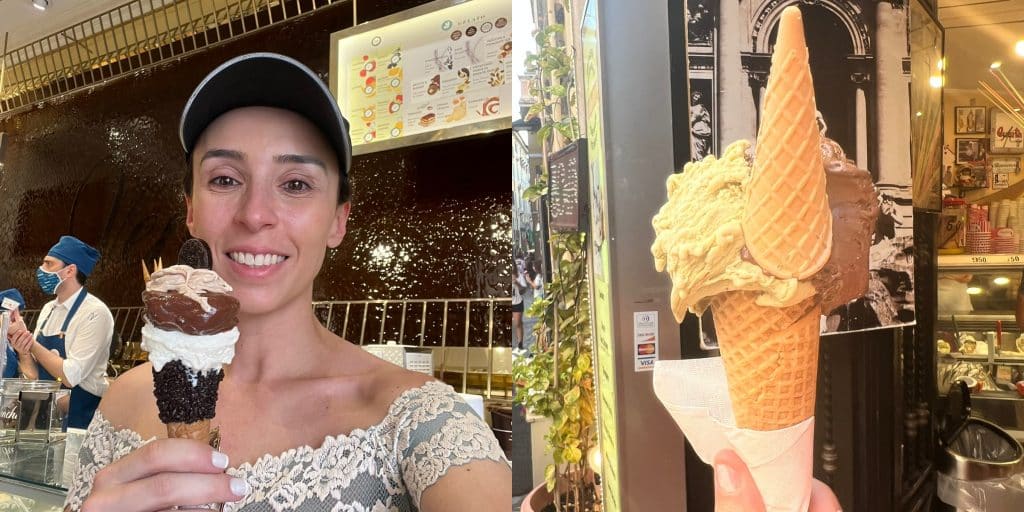
Wherever you look, there’s another spot to grab ice cream — but my favorite, without a doubt, was Venchi, an absolute must.
Their best location has a literal chocolate waterfall running down the wall — yes, there’s a line, and you’ll probably wait about 30 minutes for your ice cream, but it’s completely worth it.
There’s also Gelateria Valentino near the Trevi Fountain, but Venchi is still my top pick.
26. Dinner at an Italian Trattoria
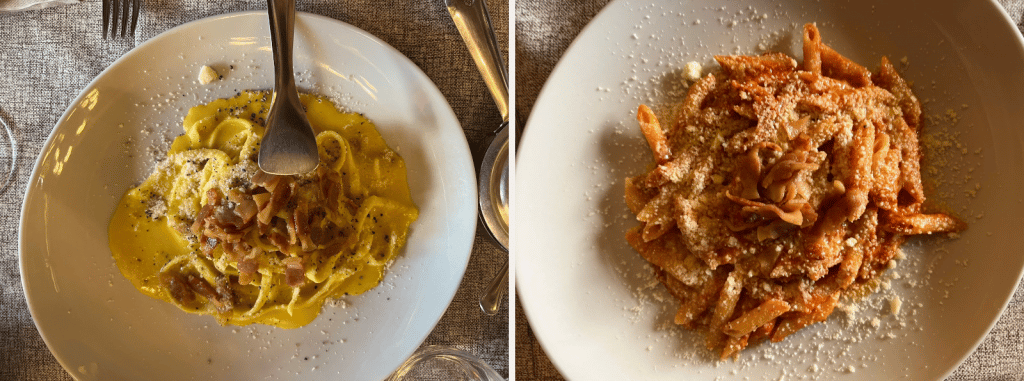
Having dinner at an Italian trattoria, trying perfectly al dente pasta or pizza, is always a wonderful thing to do in the city — in Rome, we chose Nerone Restaurante, right downtown next to our hotel.
We tried Pasta alla Carbonara and Pasta all’Amatriciana (tomato, cheese, and bacon) — we found it a bit spicy, but the pasta was cooked perfectly al dente and it was good. The city has thousands of restaurants to explore beyond this one.
Important tips for Rome
All across Italy, you’ll find nasoni — public drinking-water fountains (the nickname for the small fountains scattered throughout the city). Refill your water bottle as you go, save some euros, and stay hydrated.
If you’re visiting during European summer, pack plenty of sunscreen, a hat, and even an umbrella for sun protection while walking. Wear light, breathable clothing too, since you’ll be doing a lot of walking around the city.
Read more about other Italian cities in Naples.
Read the original version in Portuguese on A Bela e o Bigode.