What to Do in Naples
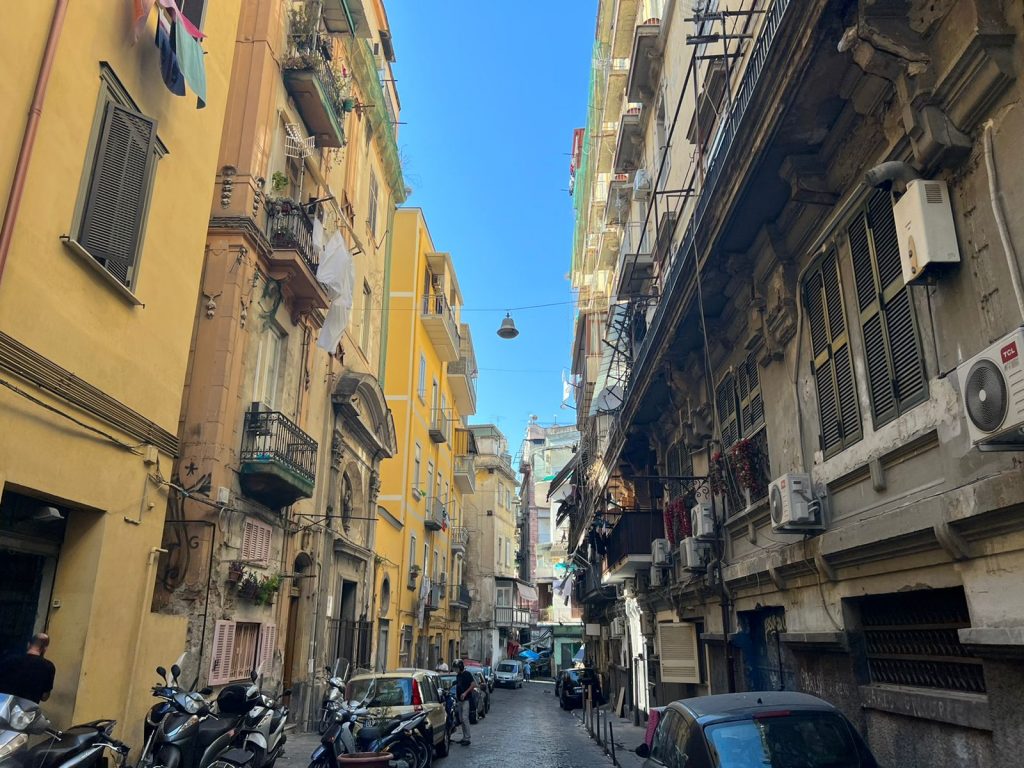
Naples is a city in southern Italy, capital of the Campania region, on the shores of the Tyrrhenian Sea, with a population of around 1 million as of the 2001 census — making it the third-largest city in Italy after Rome and Milan.
At its core, the city feels lively, informal, full of wonderful cafés and pastry shops, and packed with monuments and history.
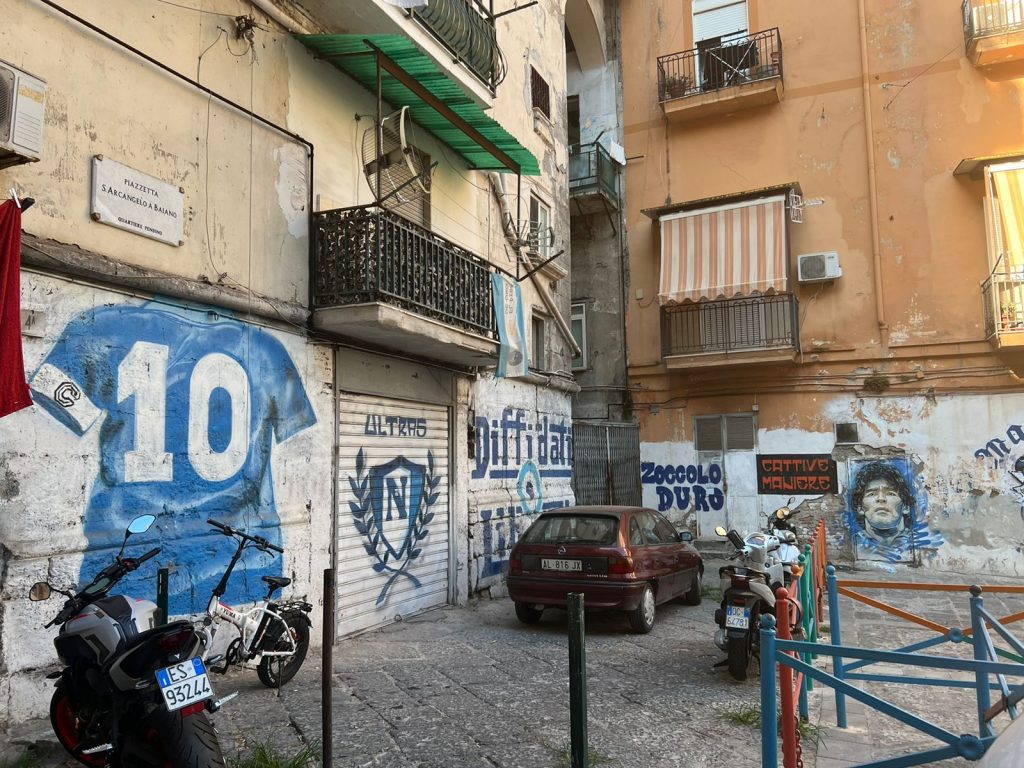
Walking through the narrow streets is genuinely fascinating — clothes hanging from seemingly endless lines strung between windows, graffiti-covered stone walls competing for attention with statues, palaces, and monuments. You’ll also spot tributes to Maradona all over town, a huge local icon after playing for Napoli from 1984 to 1991, earning him the nickname “King of Naples.”
Getting to Naples
There are two airport options: the closer one is Rome, followed by a car, train, or bus onward, or you can fly directly into Capodichino Airport (website), just 7 km from downtown, where you can rent a car or take a direct shuttle bus (Anm).
If you’d rather drive, take the E45 highway, then the A1 — about 230 km, roughly 2 hours and 20 minutes.
Trains from Rome arrive at Napoli Centrale station. Circumvesuviana trains connect Naples to Sorrento, Herculaneum, and Pompeii. The same routes are also covered by Sita buses (website), which arrive at Piazza Garibaldi.
When to visit Naples
Generally, both spring (March to June) and fall (September to December) are pleasant, with moderate temperatures and more affordable prices.
During summer (July and August), though, temperatures climb and prices rise along with school holiday season.
Winter, from January to March, brings cooler temperatures, less ideal for walking around the city.
What to do in Naples
Historic Center of Naples
A polarizing area — some people love it, others aren’t fans — but this UNESCO World Heritage-listed district is where everything happens in Naples. Gritty, authentic, and fascinating; come see it and form your own opinion.
Naples Cathedral (Duomo)
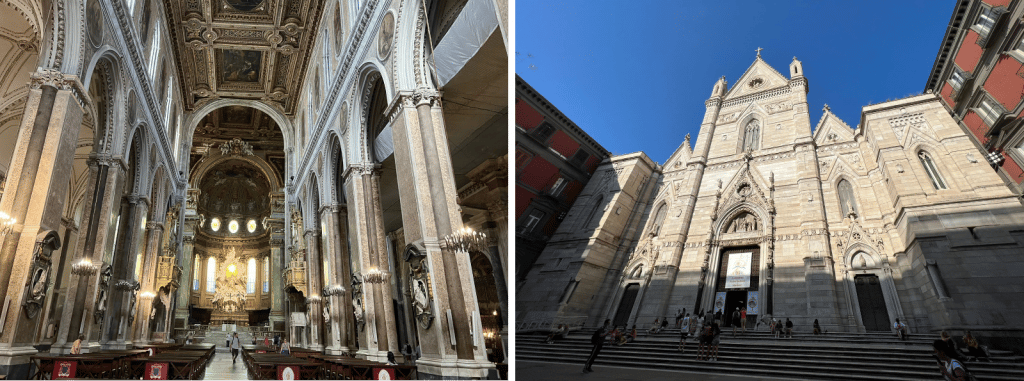
The city’s main religious building, known as the “Cattedrale di San Gennaro.” It holds real historical weight, likely built on the site of an ancient temple dedicated to Apollo.
Built in 1294, it’s undergone several renovations over the centuries, including after being bombed during World War II.
San Gennaro was a Christian martyr, beheaded in the 300s, and is Naples’s patron saint, known for the miracle of the liquefying blood. A woman named Eusebia collected his blood in vials, which, according to legend, solidified over time — and on certain holy days, the blood turns liquid again.
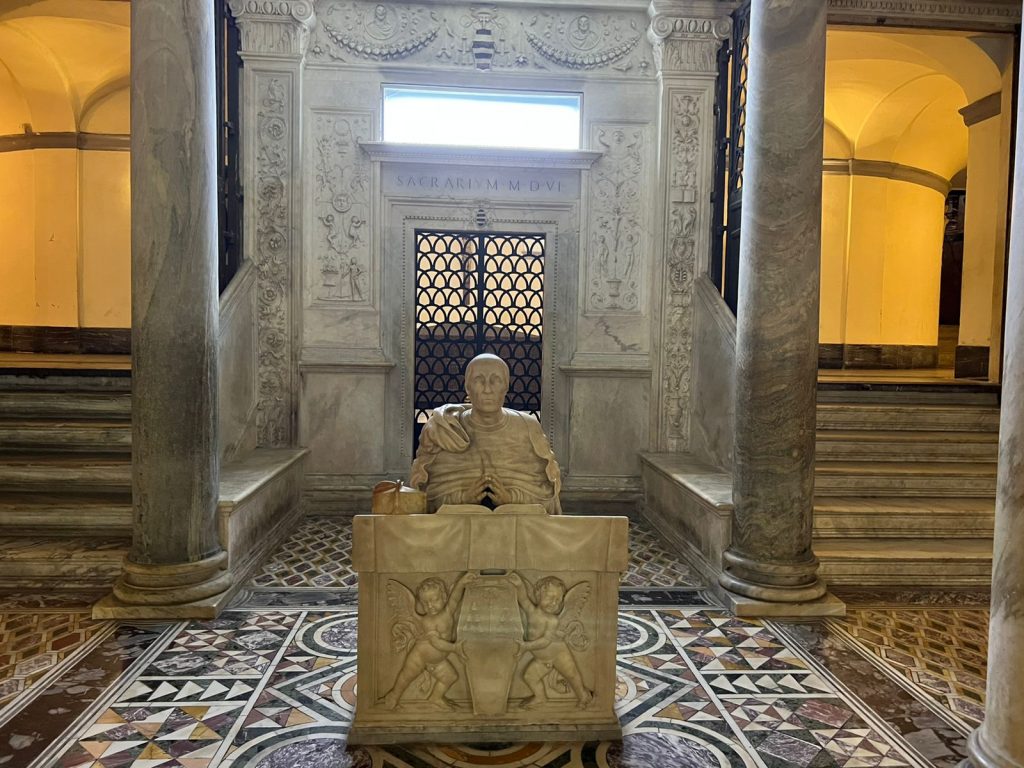
San Gennaro’s crypt sits beneath the altar, and his remains were brought to the city in the 16th century after centuries hidden away at the Sanctuary of Montevergine.
Galleria Umberto I
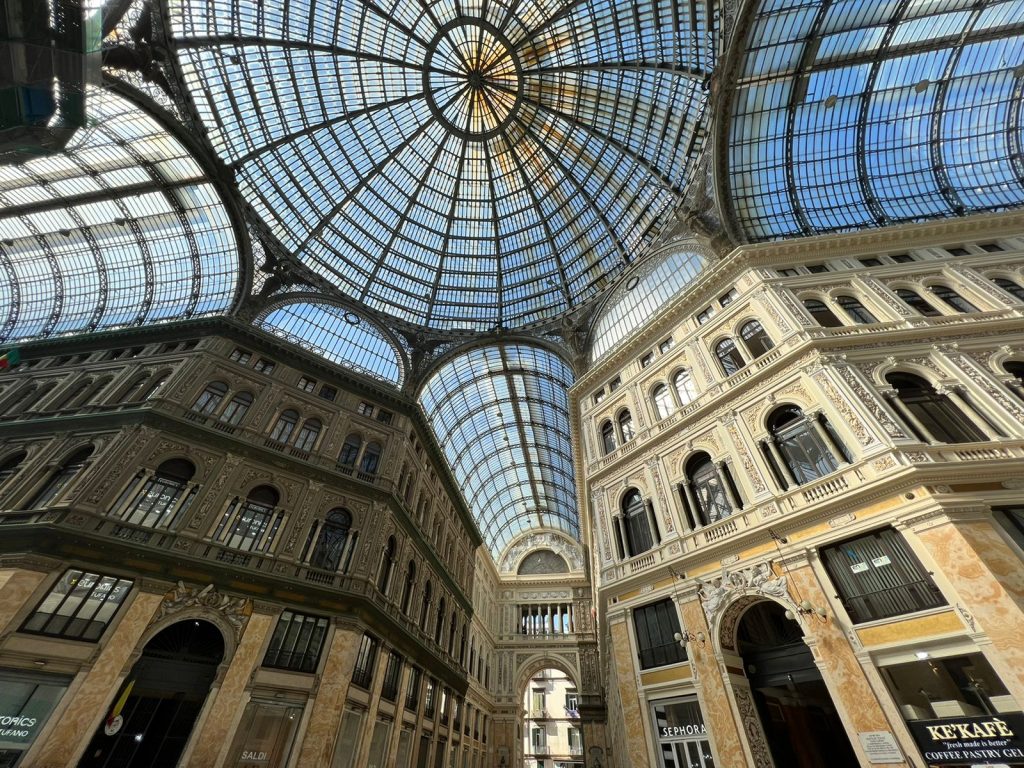
Designed by Emanuele Rocco in the late 19th century, as part of the city’s risanamento (urban renewal) following Italian unification, completed in 1871.
Located on Via Toledo, right next to the Teatro San Carlo opera house and Piazza del Plebiscito, with its glass dome and mosaic floors!
Despite being home to Mary, the “queen of sfogliatella” in Naples, Galleria Umberto I ends up being more of a tourist draw than a shopping spot locals actually use.
Chiesa del Gesù Nuovo
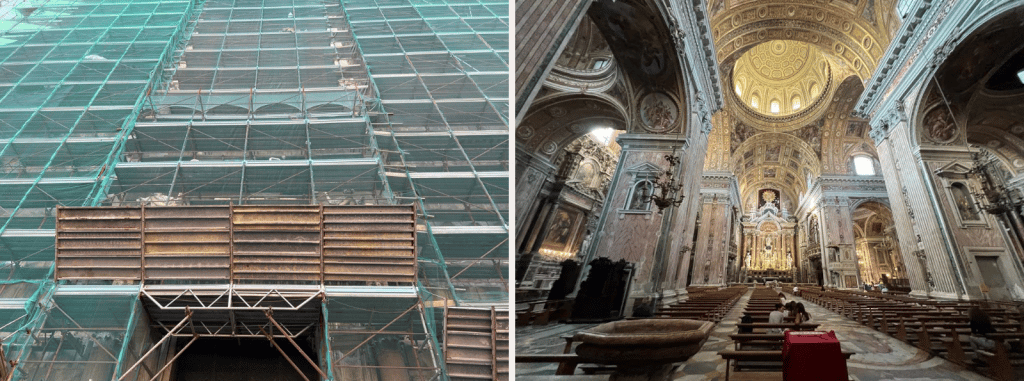
The Church of Gesù Nuovo sits in Naples’s historic center, along a long, straight road that literally splits the city’s urban core in two.
Originally a palace built in 1470, it was later converted into a place of worship by the Jesuits, and today it’s considered one of Naples’s most historically significant churches. Inside, you’ll find both Gothic and Baroque architectural elements, alongside Italian sacred art, including frescoes and sculptures.
When we visited, the façade was under renovation, but we were still able to go inside — and the interior is beautiful, well worth the visit.
Piazza del Gesù Nuovo
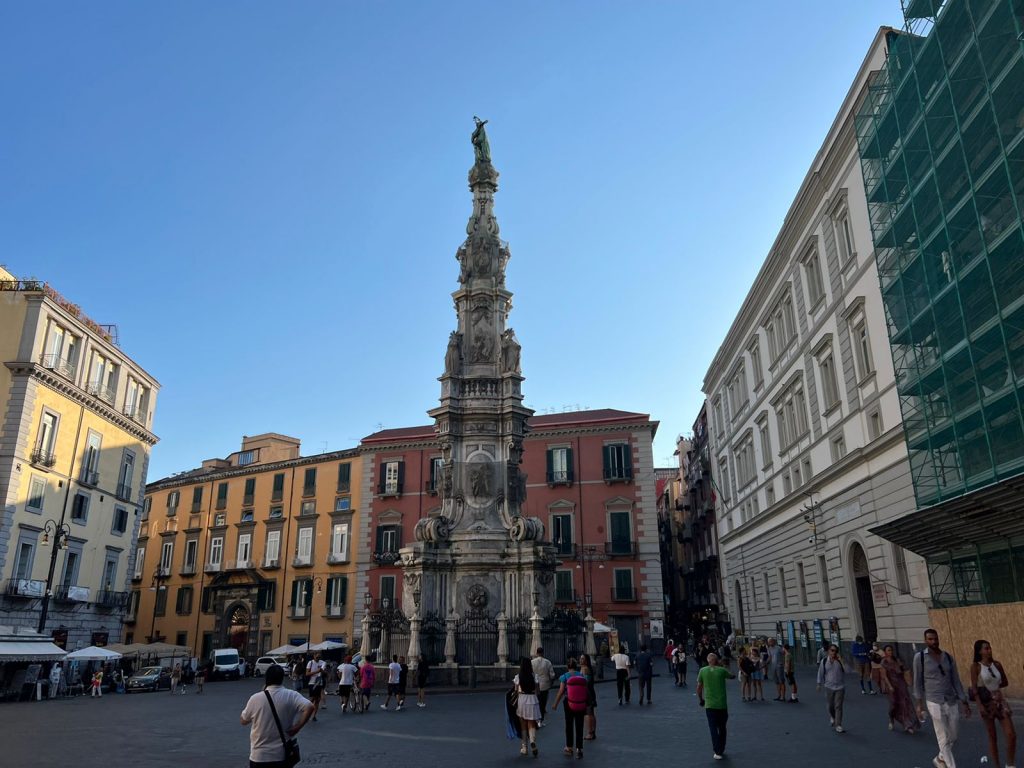
The Spire of the Immaculate Virgin stands out in the square, right outside the church. This 34-meter-tall structure was completed in 1750, celebrating the city’s protection from the Black Death.
Napoli Sotterranea (Underground Naples)
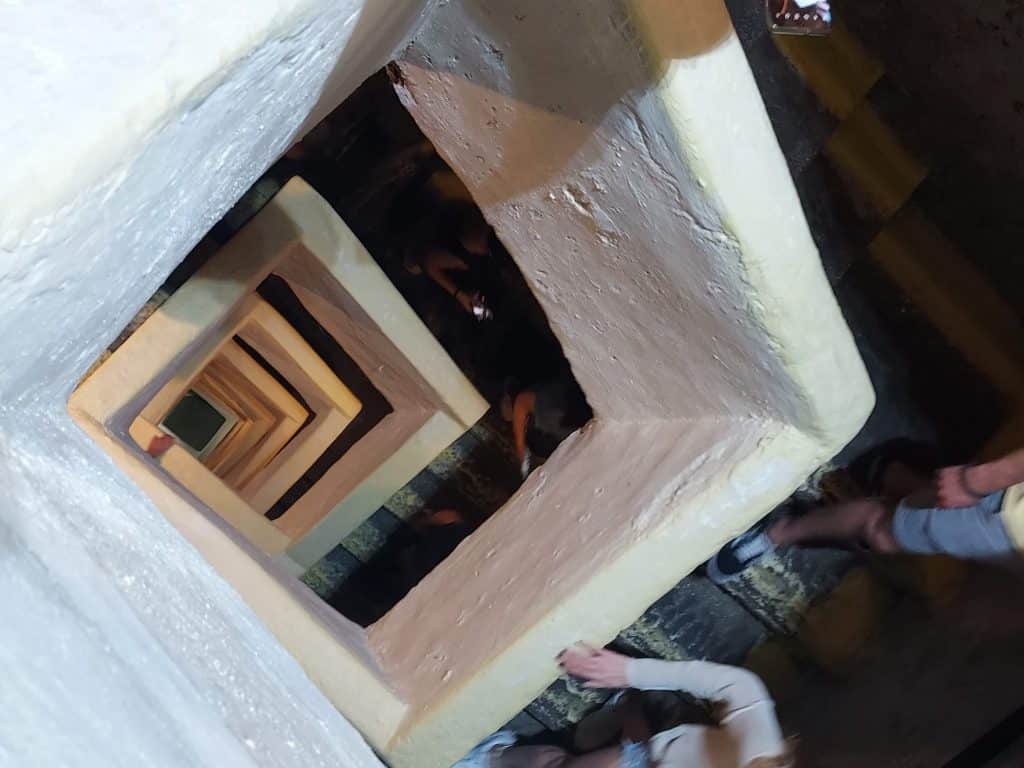
A tour showing the city’s layered development. After the fall of the Roman Empire, a new city was built on top of and around the older buildings, so today there’s a whole hidden Naples underneath the chaotic traffic above.
During World War II, this space served as an air-raid shelter and military hospital. Today, it’s used for plant-growing experiments under artificial light.
The guided tour runs about 2 hours. The most famous section is the Galleria Borbonica (Bourbon Tunnel), an underground maze of long stone corridors and halls typical of a bunker, where you’ll spot old cars and Italian Vespas, along with a few WWII-era relics.
To avoid lines, don’t forget to buy tickets in advance.
Naples Metro Stations
The stops along Lines 1 and 6 form an artistic-functional complex, featuring over 200 works from roughly 90 international artists.
Toledo station, on Line 1, is essentially just a staircase, but it’s worth a visit purely for how stunning it is — widely considered the most beautiful metro station in Europe, sitting 50 meters underground.
Toledo station was renovated as part of “The Art Stations” project, aimed at bringing more light and beauty to some of Naples’s metro stops. Designed by Spanish architect Óscar Tusquets Blanca, built around the theme of “water and light.”
There are other notable stops on Line 1 too, like Università, Dante, and Museo — the main thing worth mentioning here is that these are worth stepping into even if you’re not actually taking the train.

Naples’s Many Castles
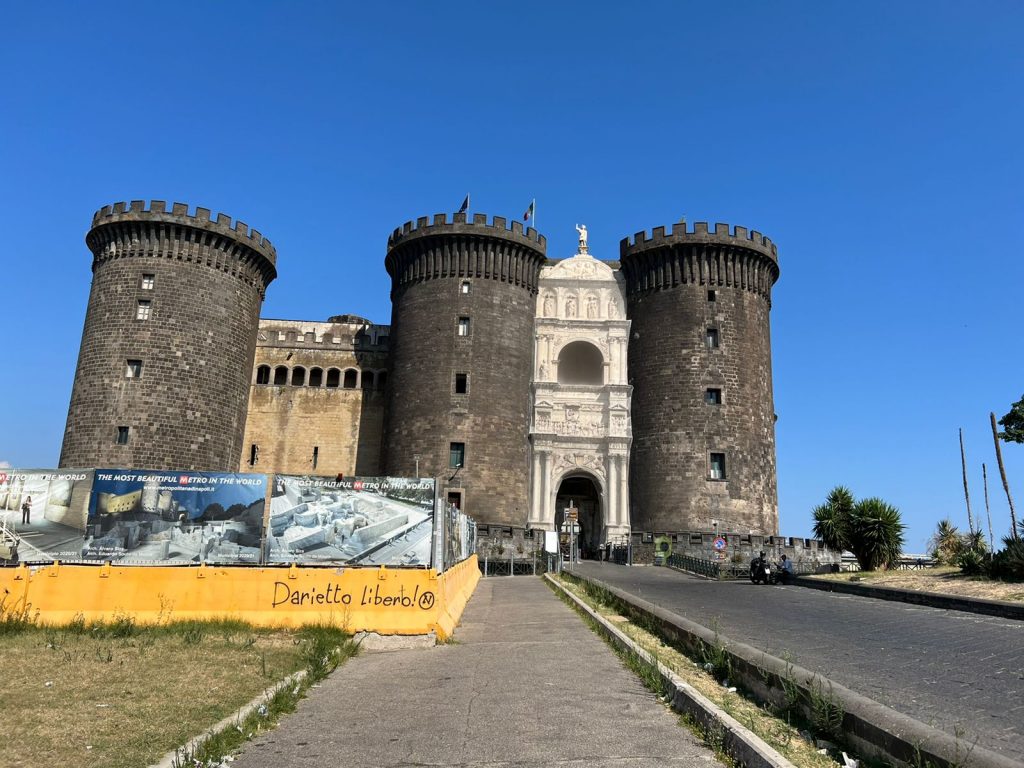
There are three castles scattered around the city: Castel Nuovo, Castel dell’Ovo, and Castel Sant’Elmo.
Castel Nuovo: built in 1279 at the request of Charles I of Anjou, remodeled in the 15th century, and still in use today as government offices, though open for visits.
Castel dell’Ovo: the oldest castle in the city, built on the small island of Megaride, connected to Via Partenope. Local legend holds that the poet Virgil hid a magic egg somewhere in the structure. Entry is free, though some rooms remain closed to visitors.
Finally, Castel Sant’Elmo: built in 1340, sitting atop a hill in the Vomero district, about 250 meters above sea level — the only castle in the world built in the shape of a six-pointed star, offering an exceptional view over the entire city.
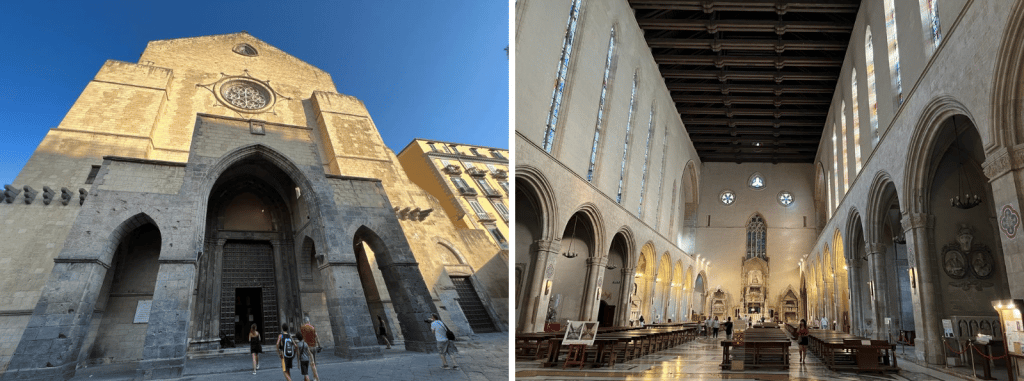
Monastery of Santa Chiara
Santa Chiara is a religious complex featuring a basilica, a double monastery, a crypt, and an archaeological museum. Located in the historic center, it’s one of Naples’s main attractions.
The most striking feature is its cloistered garden, lined with 64 columns and benches covered in colorful majolica tiles, with beautiful frescoes and tilework. The work was carried out by artisans Donato and Giuseppe Massa, who perfectly matched the majolica colors to the surrounding greenery. Unfortunately, given our arrival time, we weren’t able to visit ourselves.
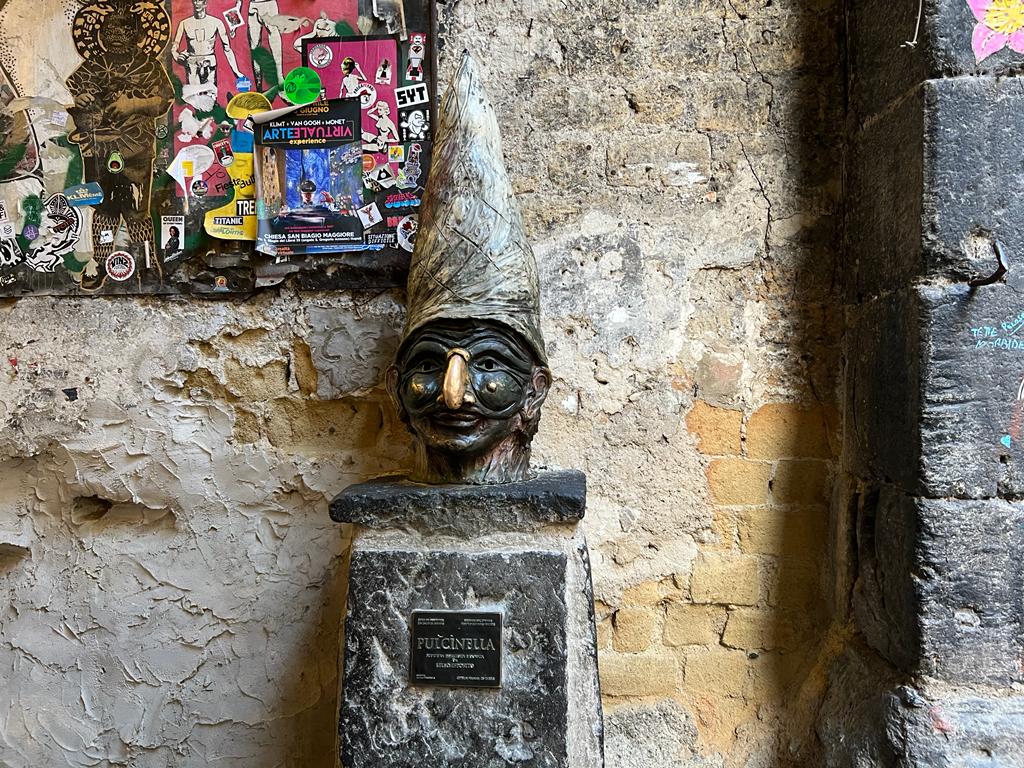
Bust of Pulcinella
The Pulcinella mask is essentially the most iconic symbol of Neapolitan culture, tracing its roots back to Ancient Roman theater. This bronze statue was created by an artist in the 1500s, and legend has it that rubbing his nose brings good luck.
Pulcinella has a clumsy, blunt, sometimes rustic personality, but he’s always cheerful and resilient, despite the hardships of a region that’s historically been poor but always warm-hearted.
He wears a black mask with a large, curved nose, a pointed hat, and a loose white shirt and pants.
More tips for Naples
Since we only had a short time in the city, we missed a few attractions — here are the tips anyway.
The Spanish Quarter (Quartieri Spagnoli)
With its narrow, bustling streets, the Spanish Quarter has doors and windows left wide open, giving the impression that residents treat the street as an extension of their own homes.
There’s a cluster of small, traditional restaurants here, though since the neighborhood has a bit of a reputation for being less safe, we were hesitant to explore it ourselves.
Mercato di Pignasecca
Every morning, the area near Montesanto station, just north of the Spanish Quarter, hosts a small market popular with locals — worth a stop to try a local delicacy or two and take in the local produce.
Catacombs of San Gennaro
The Catacombs of San Gennaro are essentially an underground cemetery, carved into the porous rock of the Capodimonte hillside, in the northern part of Naples. It’s made up of several interconnected chambers spread across two distinct underground levels, built up over the centuries.
With genuinely unique architecture, the catacombs also hold a significant collection of 9th- and 10th-century frescoes and mosaics.
What to eat in Naples
The local cuisine is rich in pasta and seafood, though what really caught my attention was the street food.
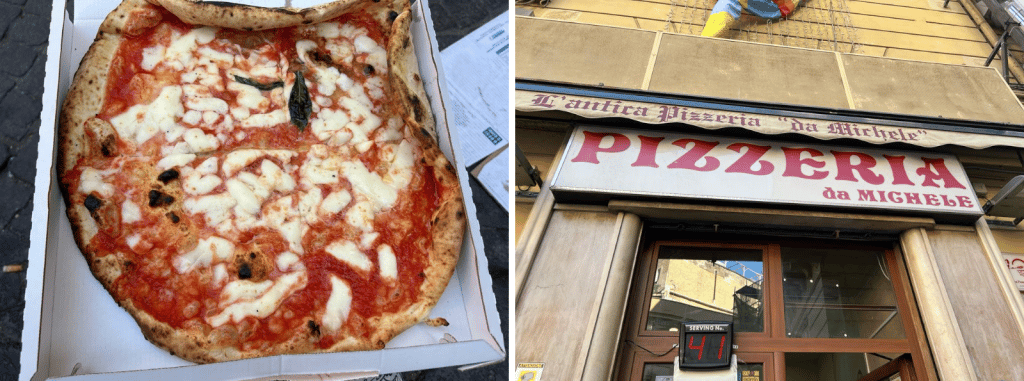
1. Neapolitan Pizza (or “a portafoglio”)
Everyone knows Naples is famous for pizza. The most iconic address is Da Michele, dating back to 1870, made even more famous by the book and film Eat Pray Love with Julia Roberts — though unfortunately, we weren’t fans.
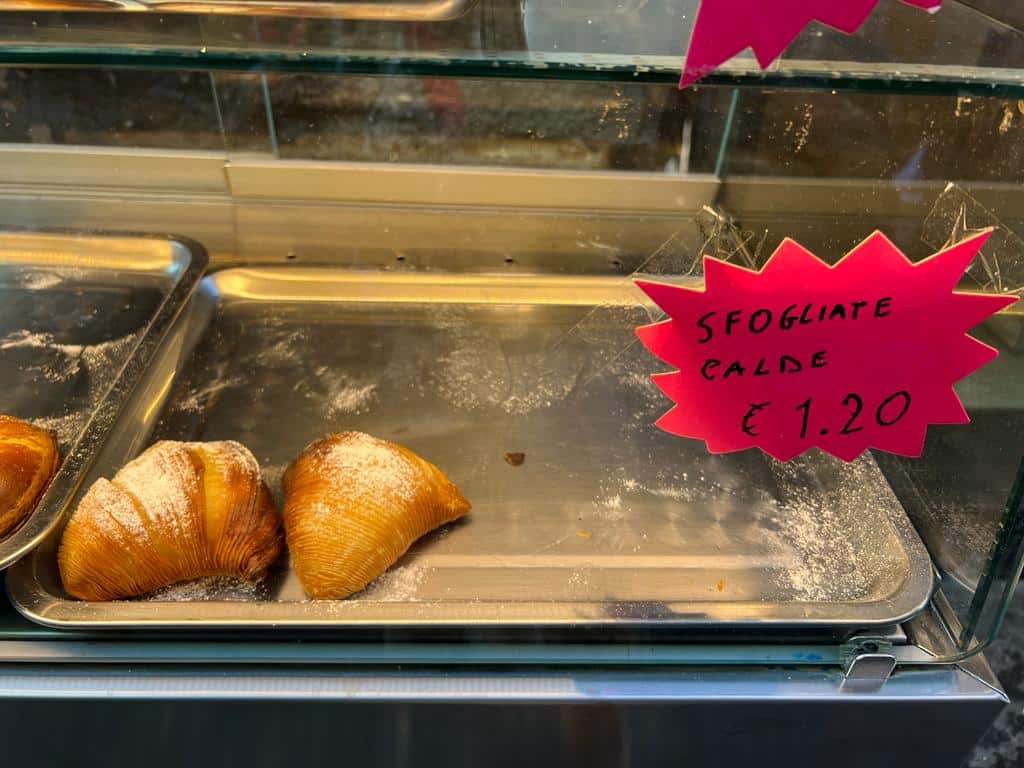
2. Sfogliatella
A delicate, flaky pastry filled with ricotta cream. You’ll find this Neapolitan specialty at restaurants all over town, since a typically Italian breakfast tends to lean sweet.
3. Caffè Nocciolato
Caffè nocciolato is essentially coffee with hazelnut cream. Right next to Teatro San Carlo, there’s a spot called Bar del Professore — though the “real” one, Il Vero Bar del Professore, is apparently the better pick. We ended up at Leopoldo instead, since it was closer to downtown, but we weren’t fans.

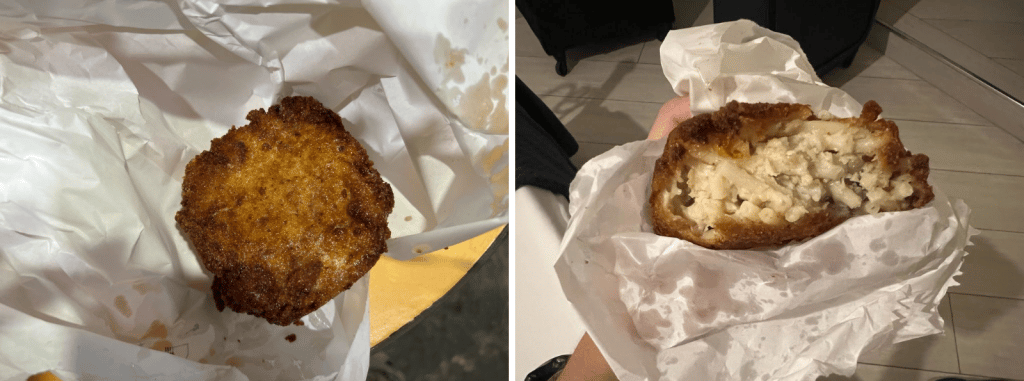
4. Frittatina
A fried fritter stuffed with bucatini pasta (thicker than spaghetti), ham, and cheese — of everything we tried, this was genuinely my favorite.
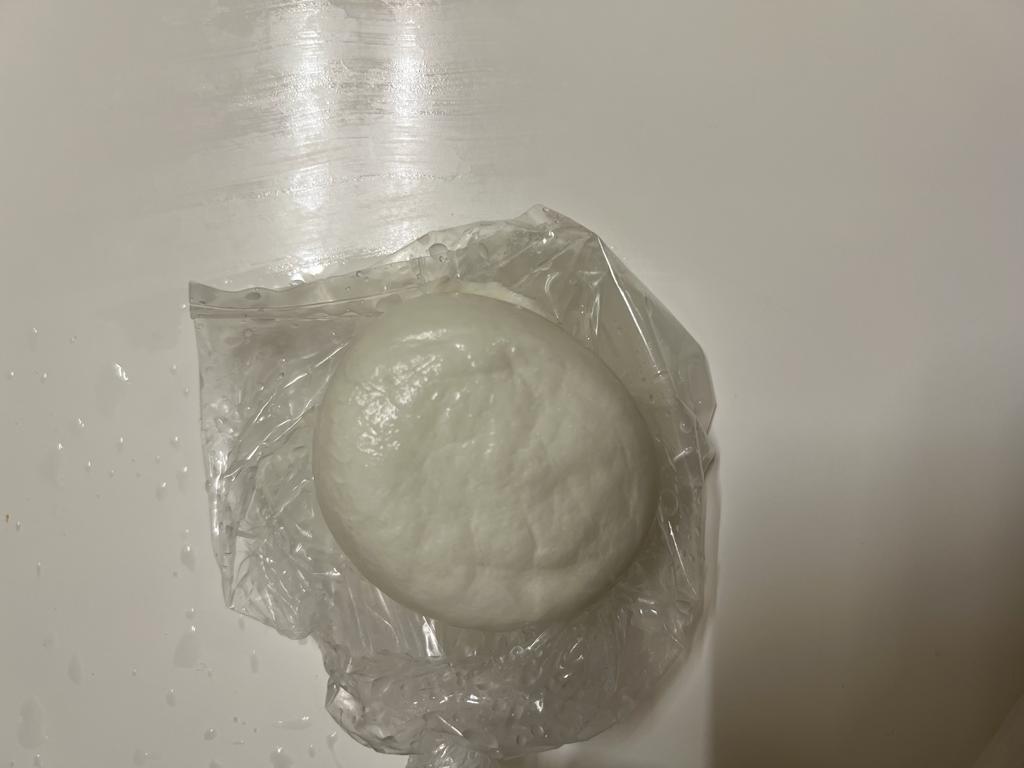
5. Mozzarella di Bufala
Even with an unusual texture compared to what we’re used to, this is a must-try. In its home region, it’s typically served whole, with cherry tomatoes and bread.
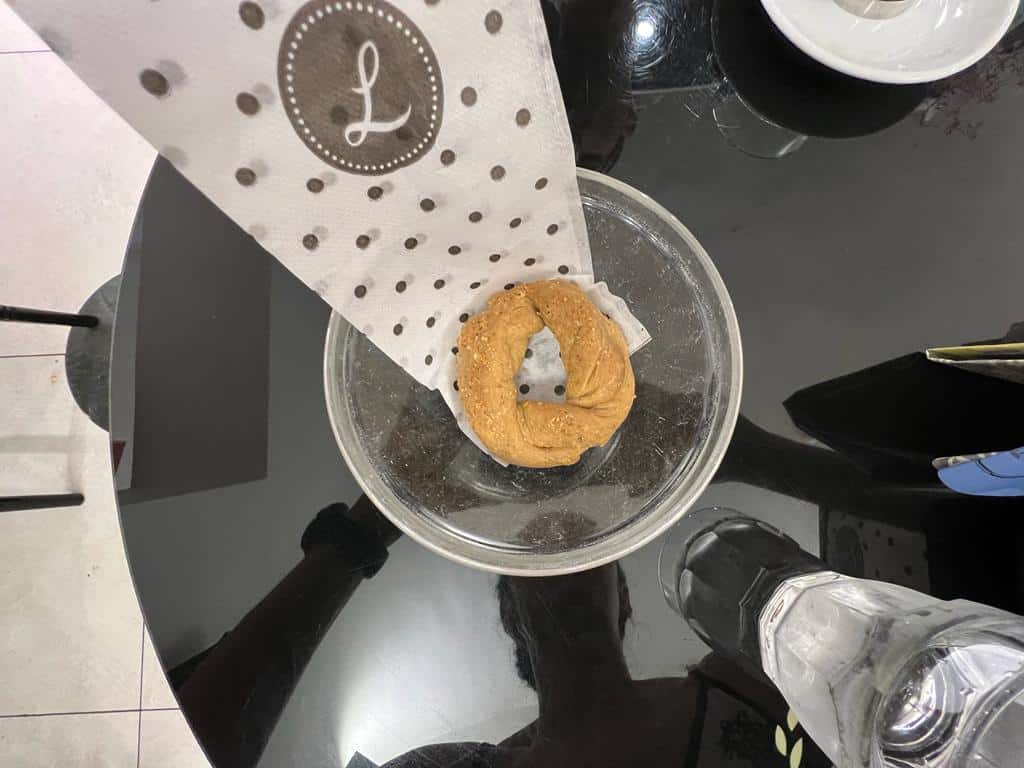
6. Taralli
Savory, slightly spicy, very dry ring-shaped crackers — worth trying, though we personally weren’t fans; they come in different flavors too.
7. Babà
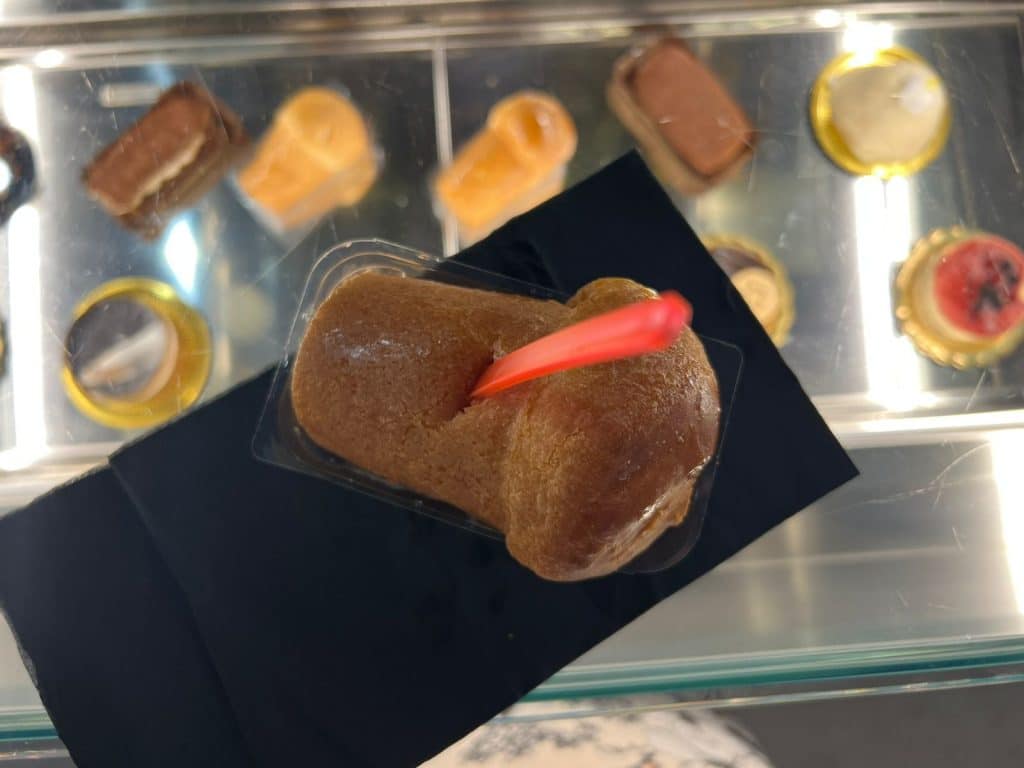
The most famous Neapolitan sweet is babà, an incredibly soft, mushroom-shaped cake soaked in rum syrup. Some versions come giant-sized, topped with cream and berries, but we only tried the original, and we loved it.
8. Gelato
You’ll find gelato all over Italy, of course. In Naples, we tried Gay-Odin, and we genuinely loved it — the shop has been open since 1894, and the ice cream is wonderfully creamy.

Learn more about our trip through Italy in What to Do in Rome.
Read the original version in Portuguese on A Bela e o Bigode.