What to Do in Capri
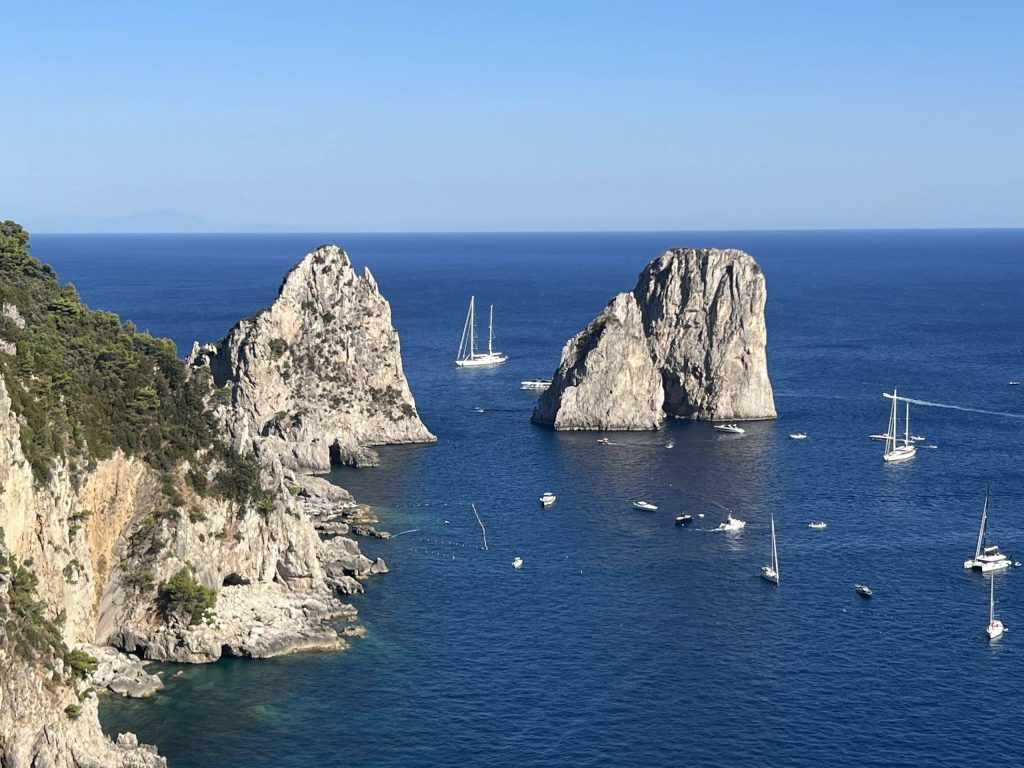
Capri, for me, was the highlight of our whole trip along the Amalfi Coast — an island in the Gulf of Naples, known for its natural scenery, fashion boutiques, limoncello, crystal-clear water, and handmade Capri sandals. Everything about it is genuinely captivating.
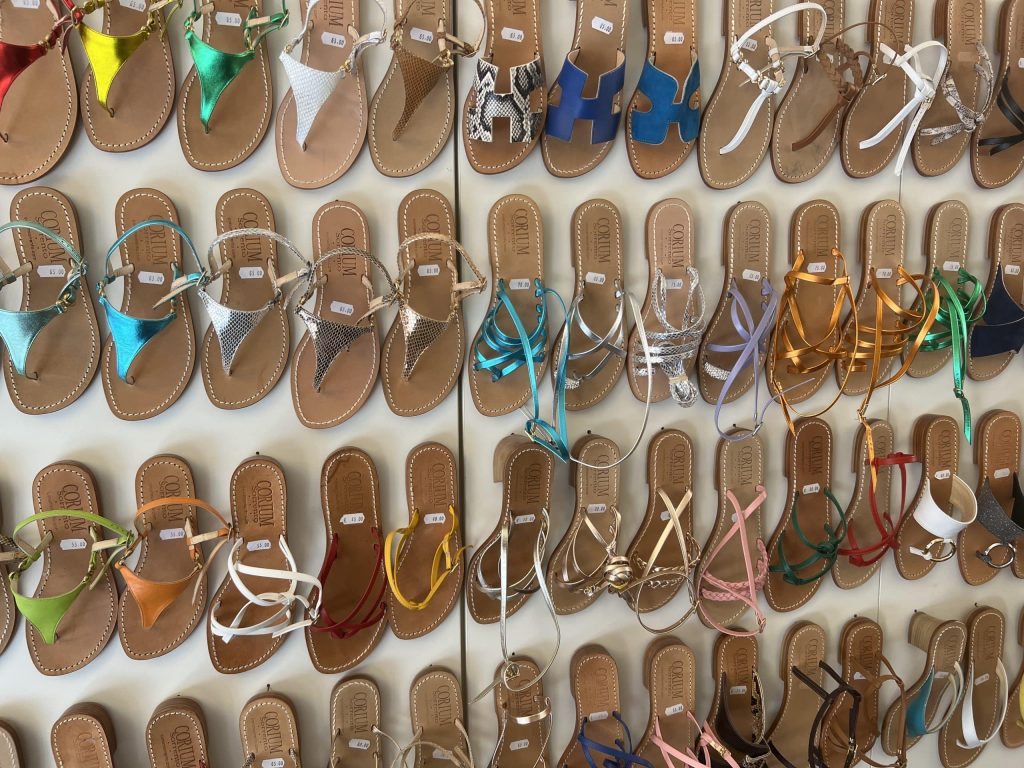
Like Positano, Capri is an expensive destination, but we’d still recommend staying on the island — it’s worth every euro. We’d suggest 2 to 3 days, since there’s so much to do.
Capri is made up of two towns: Capri and Anacapri, which are strikingly different from one another — we found it genuinely interesting to explore both.
Despite appearances, Capri is a hiker’s paradise, and you can cover practically the whole island on foot.
Getting to Capri
We found the best option was taking a boat from Marina Piccola in Sorrento to Marina Grande in Capri. Several companies offer the crossing at the same price, around €21.60 (as of August 2022), so it just comes down to picking the best departure time, both there and back.
Given how many companies operate and how many boats run daily, it’s easy to buy tickets the same day you travel — just arrive an hour early to deal with the line.
Cars aren’t allowed on the island, and there’s a lot of climbing and steep stairs, so pack light — a small carry-on or backpack with just what you need for your stay.
Getting around Capri
Once you arrive at Marina Grande in Capri, you can head up on foot (a steep climb with stairs), by funicular (a cable tram running between Marina Grande and central Capri, though with a huge line), by taxi (extremely expensive on the island), or by bus (the cheapest option, though with awful scheduling — only once an hour).
We chose to walk every time, since we were physically prepared for it. If you’re not, or have any health concerns, we’d recommend one of the other options above.
One more important tip about the bus: don’t bother buying a ticket in Capri to ride around Anacapri — the bus lines are run by different companies, so buy Capri tickets in Capri and Anacapri tickets in Anacapri, and masks are required on public transit.
Buying your bus ticket at the central ticket booth is cheaper than buying on board.
Boat tour around the island of Capri
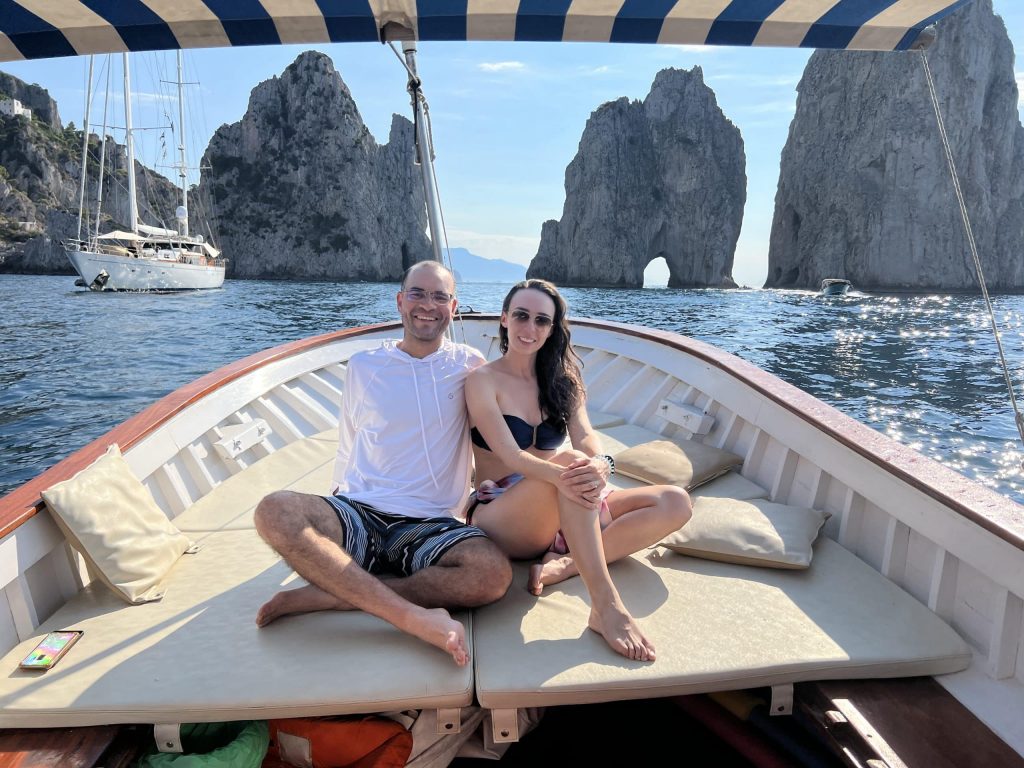
We did a nearly two-hour tour during high season in August, and had no trouble finding a boat captain for a private tour — they’re stationed at Marina Grande, near where the group tours depart, though we’d recommend booking with a captain the day before to avoid missing out on a private tour.
Despite the steep price, €150, we thought the experience was absolutely worth it — it’s just you and the captain, with plenty of time to swim and enjoy the trip. We weren’t able to enter the Blue Grotto, though, since the tide stayed high the whole time we were on the island.
The boat captains also don’t speak great English, and the tour follows a bit of a memorized script, so anything outside that script can be hard for them to understand or answer — even so, they’re extremely warm and pleasant.
The Blue Grotto is one of the most beautiful parts of the tour, but the tide was high when we went, so we couldn’t get inside. To enter the grotto, you transfer to a small rowboat, with an extra €10 per person charge, since larger boats can’t fit inside.
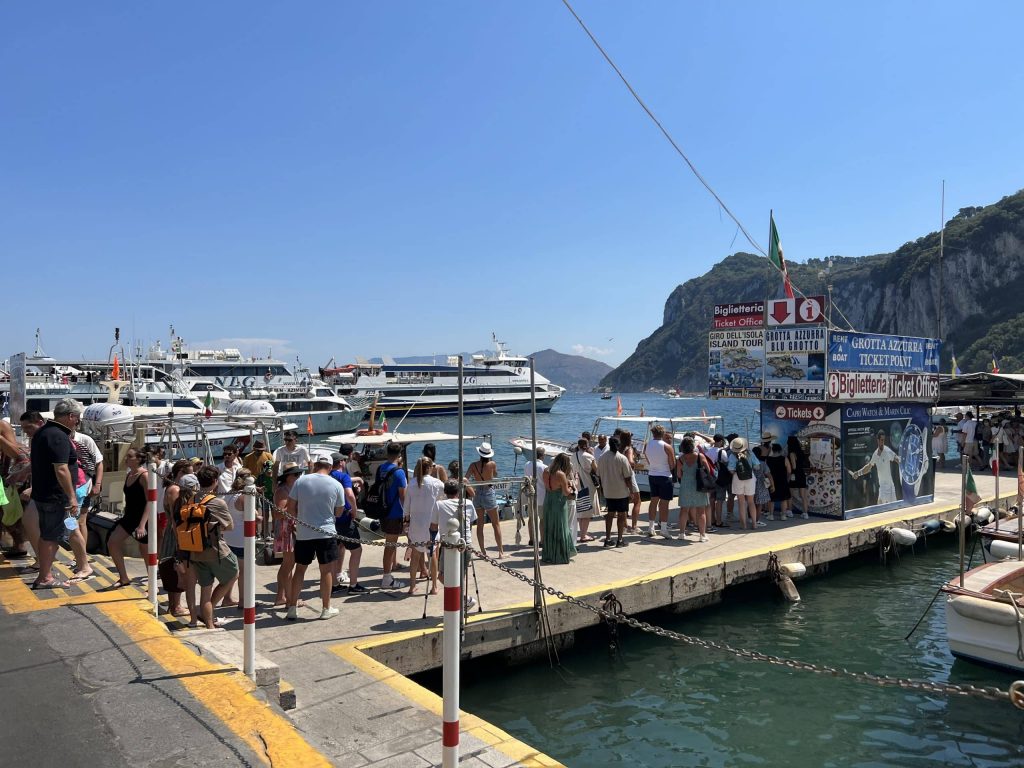
There’s also a group tour for €20 round trip to the Blue Grotto, or €21 for a full loop around the island — the ticket line is huge, so arrive early.
Piazzetta di Capri and the town center
The square’s official name is Piazza Umberto I. This is where the funicular from Marina Grande arrives. It’s the heart of town, home to the church, restaurants, bars, shops, the bus and taxi stop, a supermarket — basically everything touristy.
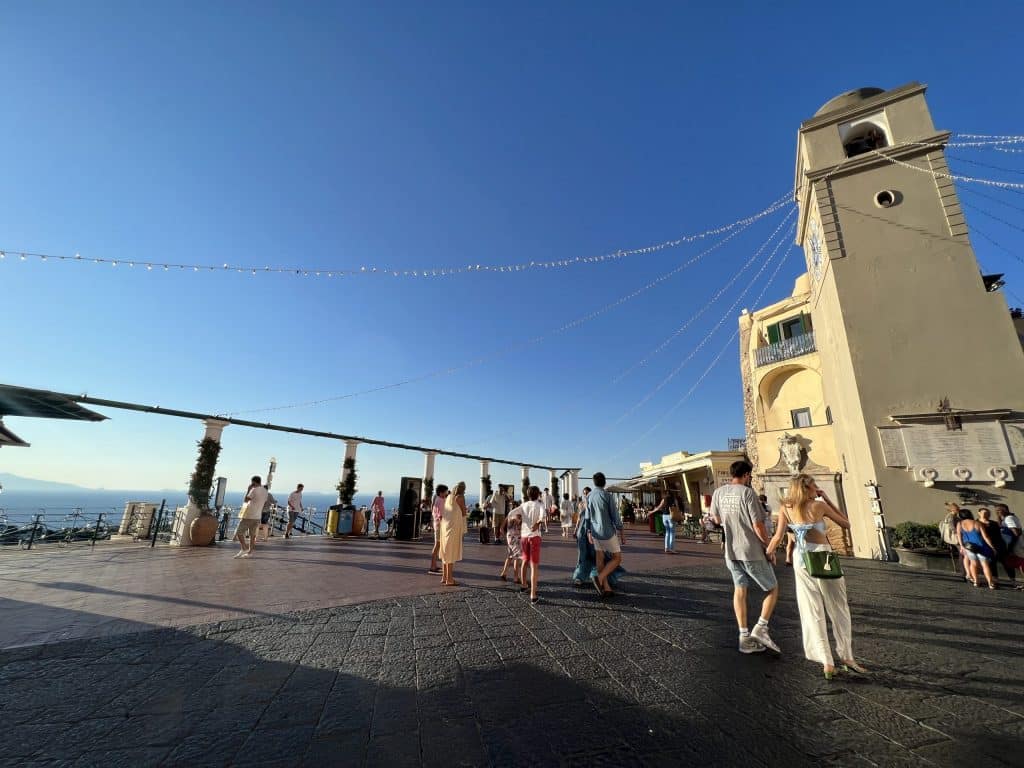
There’s a beautiful sunset here, so make sure to set aside an evening to watch it from the town center. Near the Piazzetta, you’ll find fashion boutiques and storefronts along Via Camerelle.
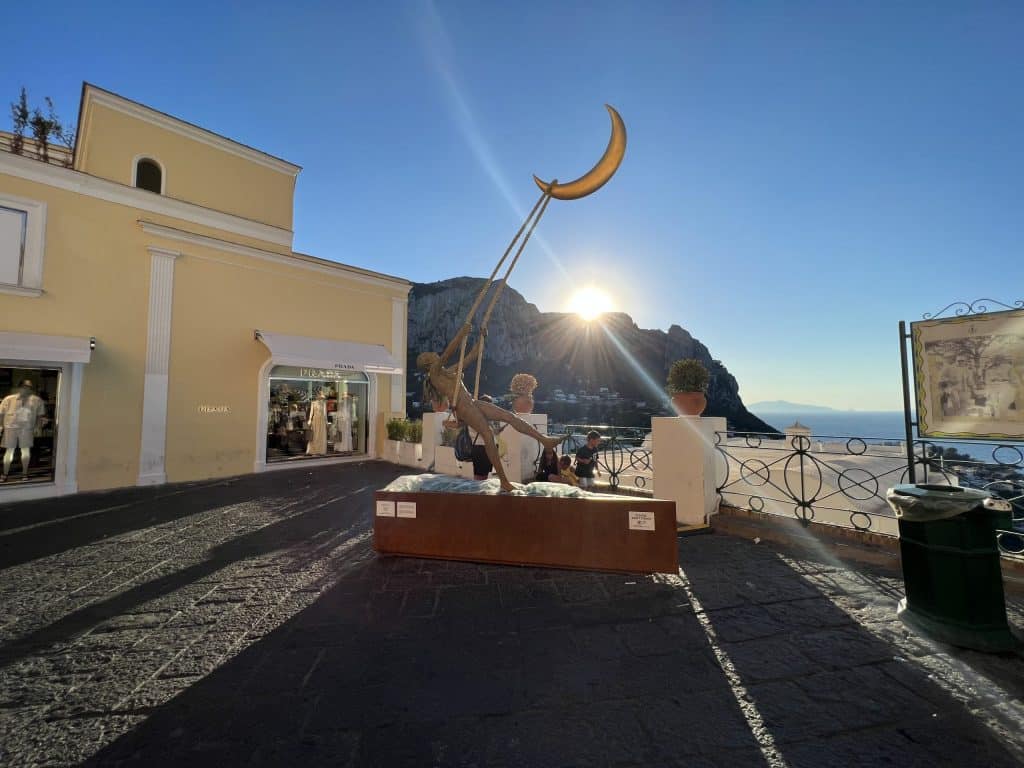
Near the town center, you’ll also find Capri’s cathedral, right next to the square, and beautiful to visit.
Capri’s Trails
We love hiking, so we covered every major attraction on foot — we’ll walk through them below and include a GPX file for the trail. This trail is genuinely worth doing, letting you experience the island’s natural side.
All the trails described below connect to one another, so you can head out and come back a different way, covering the whole island. The full trail runs about 11.42 km with 486 meters of elevation gain, and it took us about 3h20m, with plenty of photo stops.
Given the intense summer heat, we’d recommend doing the trail in the morning, bringing plenty of water and snacks along the way — and remember to pack out your trash.
Track powered by Wikiloc
Villa Jovis
These are the ruins of a Roman palace built by Emperor Tiberius in the 1st century BC, completed in 27 AD. Tiberius ruled mainly from here until his death in 37 AD.
To reach Villa Jovis, follow the signs or the map toward Via Tiberio — about an hour of walking, mostly uphill. It was closed when we arrived.
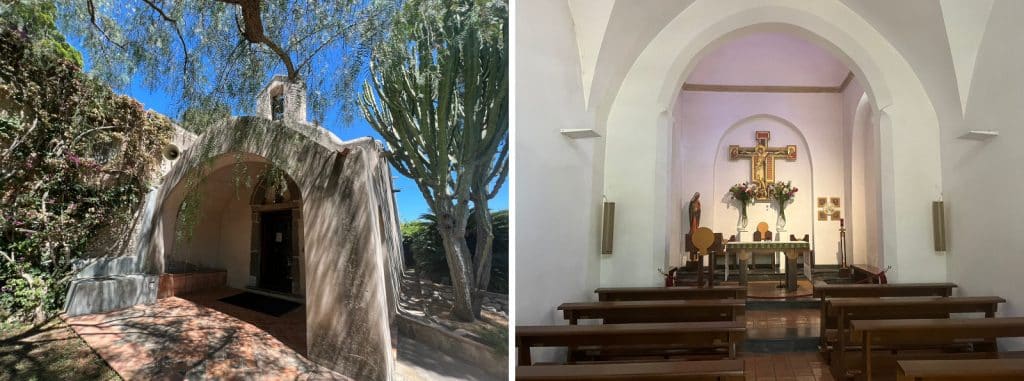
Along the way, you’ll also pass Chiesa di San Michele Arcangelo, a small church, but well worth stepping inside.
The site was chosen for its cliffside position, offering the privacy and security Tiberius needed as Emperor. The Villa Jovis complex officially opened to the public in 1937, following excavation work led by archaeologist Amedeo Maiuri.
To the left of the Villa Jovis gate, there’s a dirt road leading to Villa Lysis — you can also reach it via Via Capo, though that route is longer than the dirt path.
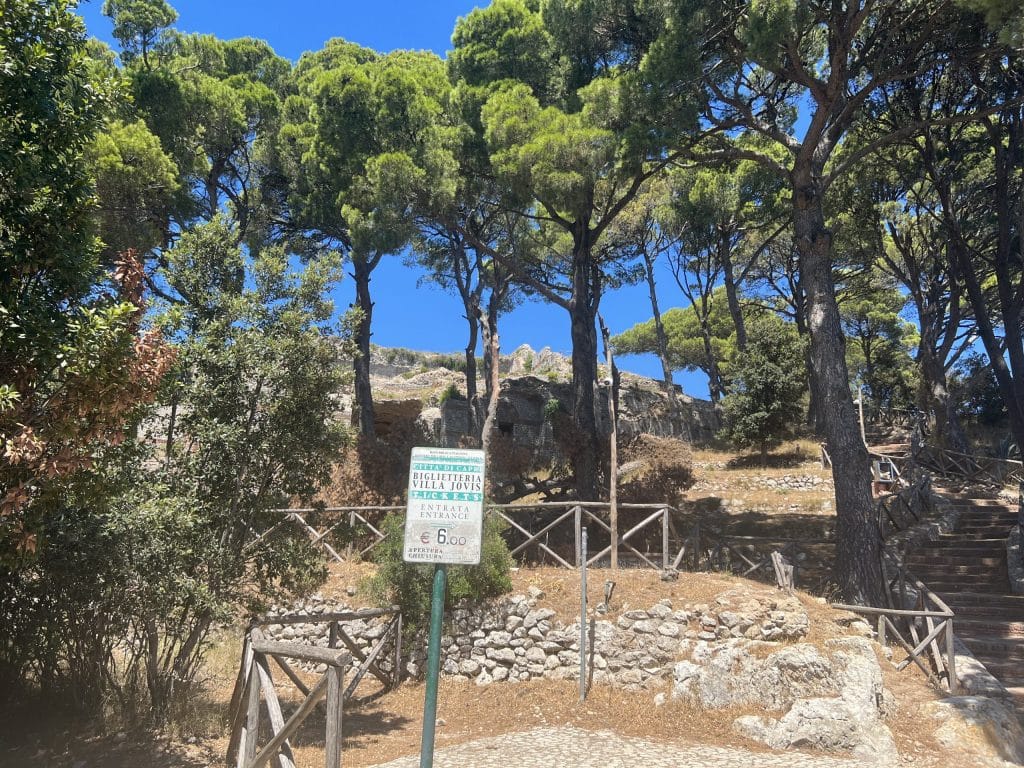
Hours: Thursday to Sunday, 10 AM–4 PM Admission: €6
Villa Lysis
This villa (Instagram) was built by industrialist and poet Jacques d’Adelswärd-Fersen in 1905, “dedicated to the youth of love.” It served as Fersen’s self-imposed exile from France following a sex scandal involving Parisian students and nude portraits.
Fersen became addicted to opium during a trip to Ceylon while the house was under construction, and after World War I, he began using cocaine. He eventually took his own life in 1923, from a cocaine overdose.
Maintenance and upkeep of the villa stopped after 1934, and it fell into ruin by the 1980s. In 1989, Italy’s Ministry of Cultural Heritage designated the building a historic monument. It was restored in the 1990s by the Lysis Fund Association (founded in 1986 by Neapolitan gallery owner Lucio Amelio) and the Municipality of Capri.
The house itself is beautiful, though sparsely furnished inside — it’s really the garden view that makes the visit worthwhile more than the interior, but we still enjoyed seeing it.
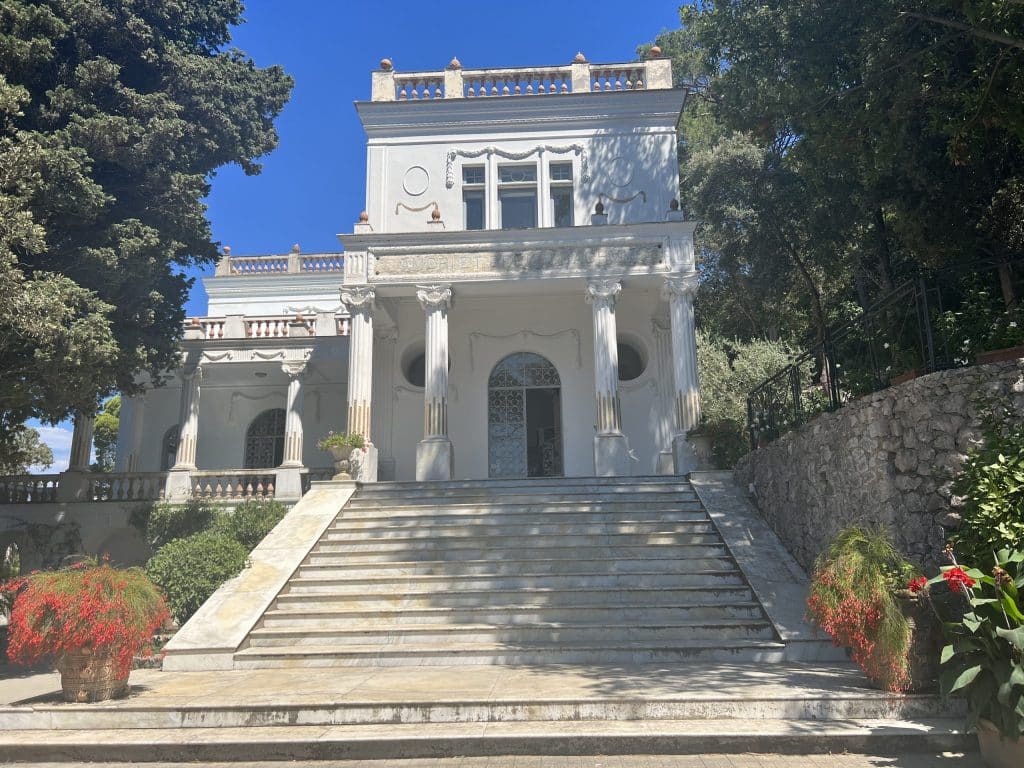
Hours: Daily, 10 AM–7 PM Admission: €1.50
Arco Naturale
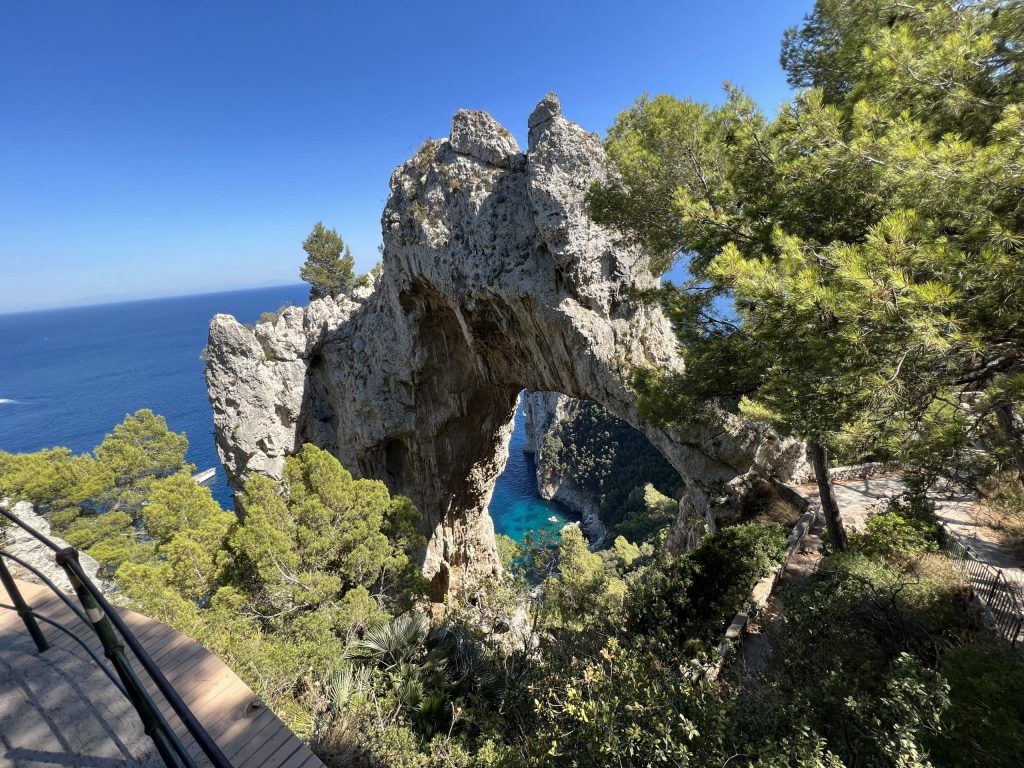
From there, continue along Via Tiberio to the Arco Naturale, which, of all Capri’s natural wonders, is my personal favorite.
Technically, the Arch dates back to the Paleolithic era, the remnants of a collapsed cave. It measures 12 meters across and stands 18 meters above the ground, made of limestone — though none of that really captures the beauty of the place, or the turquoise blue of the water framed by the arch, a view you simply can’t get from the boat.
Even though it’s a somewhat tiring trail, it’s genuinely worth setting aside a few hours to do it.
From there, take Via Pizzolungo to reach the Faraglioni, Capri’s three most famous rock formations.
Faraglioni, seen from the island of Capri
The legendary trio of sea giants is, without question, Capri’s postcard image, just a few meters off the island’s southern coast.
Three rocky spires rise from the sea, each with its own name: the first, still attached to land, is called Stella; the second, separated by a stretch of open water, is Faraglione di Mezzo; and the third, Faraglione di Fuori (or Scopolo), meaning the “head” or promontory that extends out into the sea.
The Scopolo sea stack provides a unique habitat for the Podarcis sicula coerulea lizard — this rock is, in fact, the only place in the world where you’ll find this lizard, whose blue coloring is believed to result from its close proximity to the sea and sky.
The Faraglioni average around 100 meters in height. Faraglione di Mezzo has a central cavity large enough for a small boat to pass through — we sailed through it on our boat tour; tradition says to kiss your loved one as you pass through the rock for good luck.
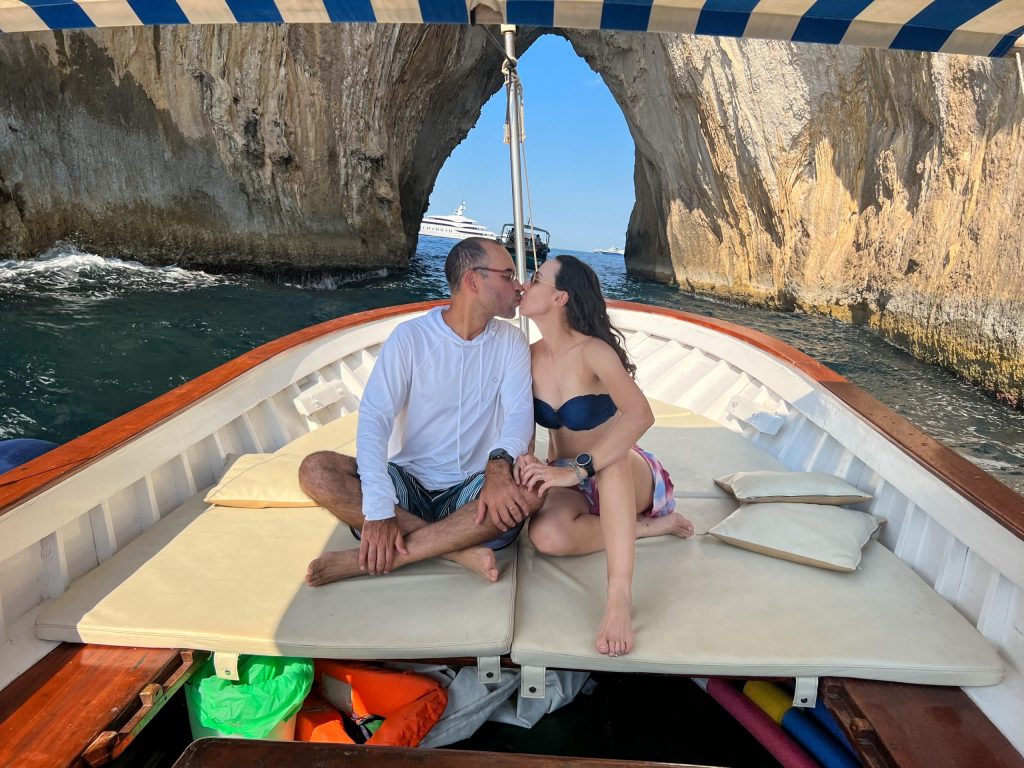
The rocks are beautiful, and along the trail you can see them from behind, the side, and the front. Near the rocks, there’s also a concrete sunbathing platform.
From there, continue on to Certosa di San Giacomo via Via Tragara.
Certosa di San Giacomo in Capri
Certosa di San Giacomo was a Carthusian monastery, founded in 1363 by Giacomo Arcucci. Today it’s a museum, used for cultural events.
The buildings that made up the charterhouse are divided into three main areas: the pharmacy and women’s church, the monks’ quarters, and the guest quarters. The Chiostro Grande (Great Cloister) follows a late-Renaissance design, while the Chiostro Piccolo (Small Cloister) features Roman marble columns.
When we visited, the building had just hosted an event and was still being taken down, so the space was a bit messy — but you could still get a sense of how impressive it is.
From Certosa di San Giacomo, take Via Matteotti or Via Certosa to reach the Giardini di Augusto.
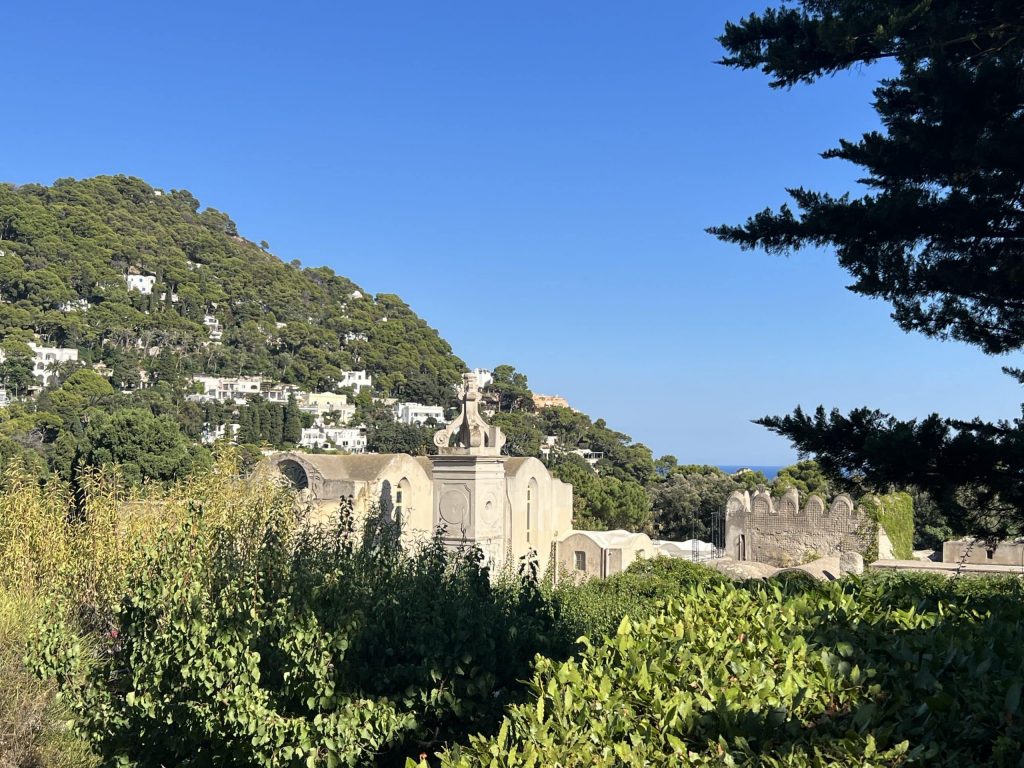
Giardini di Augusto and Via Krupp in Capri
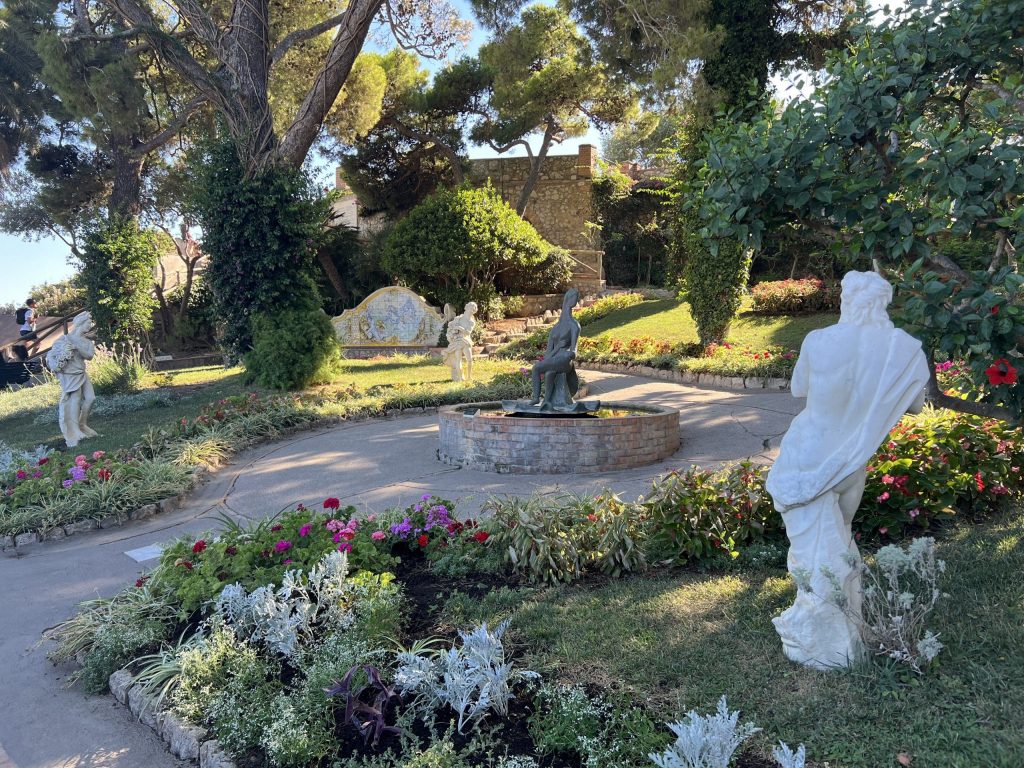
A park 100 meters above sea level, with flower-lined panoramic terraces offering the best view of Capri’s coastline, with the Faraglioni on one side and the bay of Marina Piccola and Via Krupp on the other.
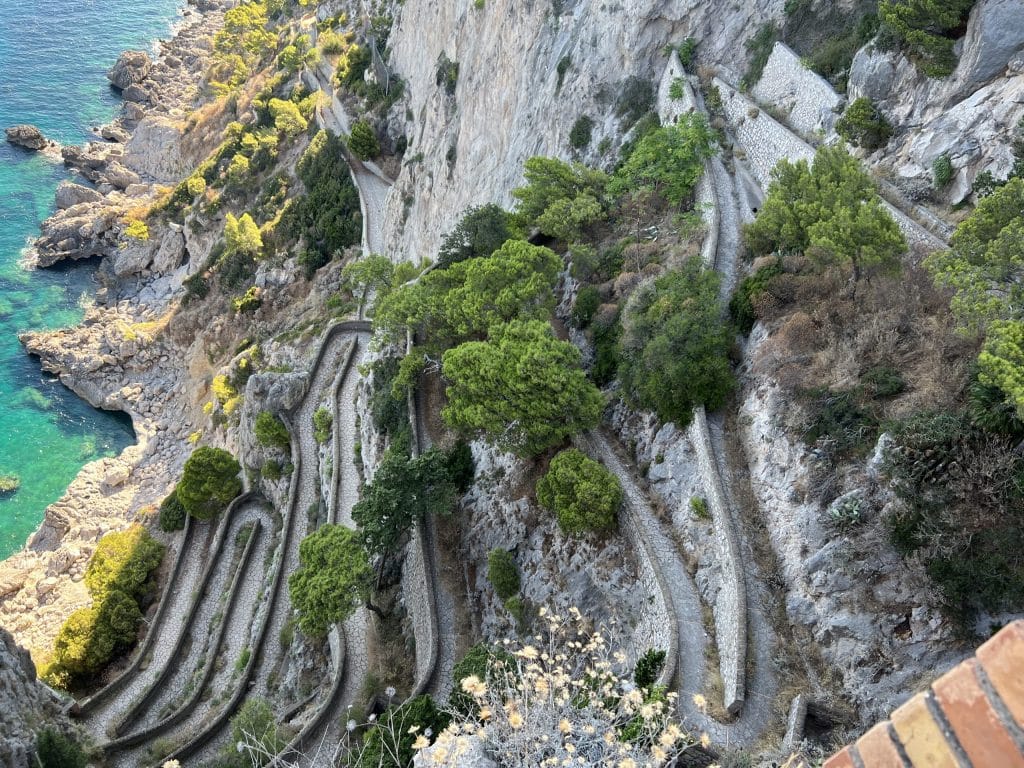
Via Krupp is a zigzagging path descending toward the deep blue sea surrounding the island. Unfortunately, the path has been closed for years due to landslide risk, though admiring this beautifully carved path between the mountains and sea is still impressive from above.
Built in the early 20th century by German industrialist Friedrich Alfred Krupp, who commissioned engineer Emilio Mayer to design and build a path connecting Marina Piccola — where he docked his yacht every summer — to the area around Certosa di San Giacomo and the Gardens of Augustus, near his suite at the Grand Hotel Quisisana.
After this, we headed back to Piazza Umberto I for lunch.
Hours: Daily, 10 AM–8 PM Admission: €1.50
Anacapri
Anacapri is the neighboring town, sitting at the top of the island of Capri. Its historic center is much smaller, but just as charming despite the size. Anacapri is home to some of the island’s main attractions, like the Blue Grotto, Villa San Michele, the cable car up Monte Solaro, and the lighthouse.
These attractions offer some of the most beautiful panoramic views on the island, overlooking the town of Capri, Vesuvius, Naples, Sorrento, and even Ischia.
The best way to reach Anacapri is by bus, either from the town center or Marina Grande in Capri, though more adventurous travelers can hike there via Monte Solaro.
Track powered by Wikiloc
Historic Center of Anacapri
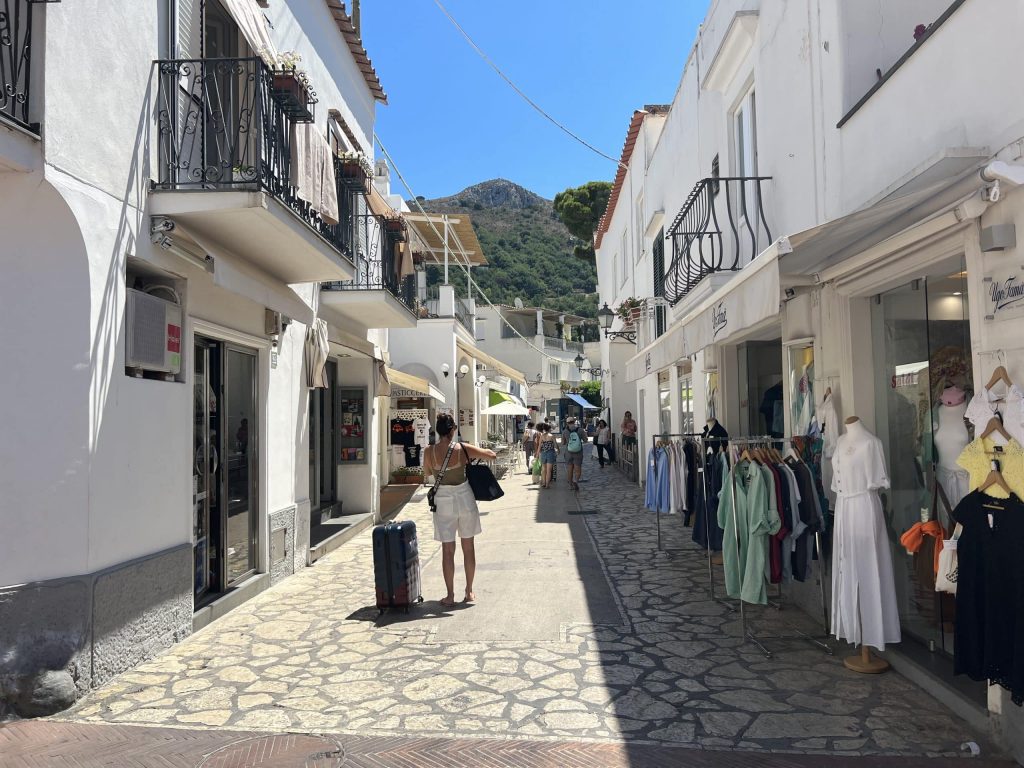
Anacapri’s historic center is genuinely interesting, and far quieter than Capri, with white-awninged shops lining narrow streets.
Casa Rossa
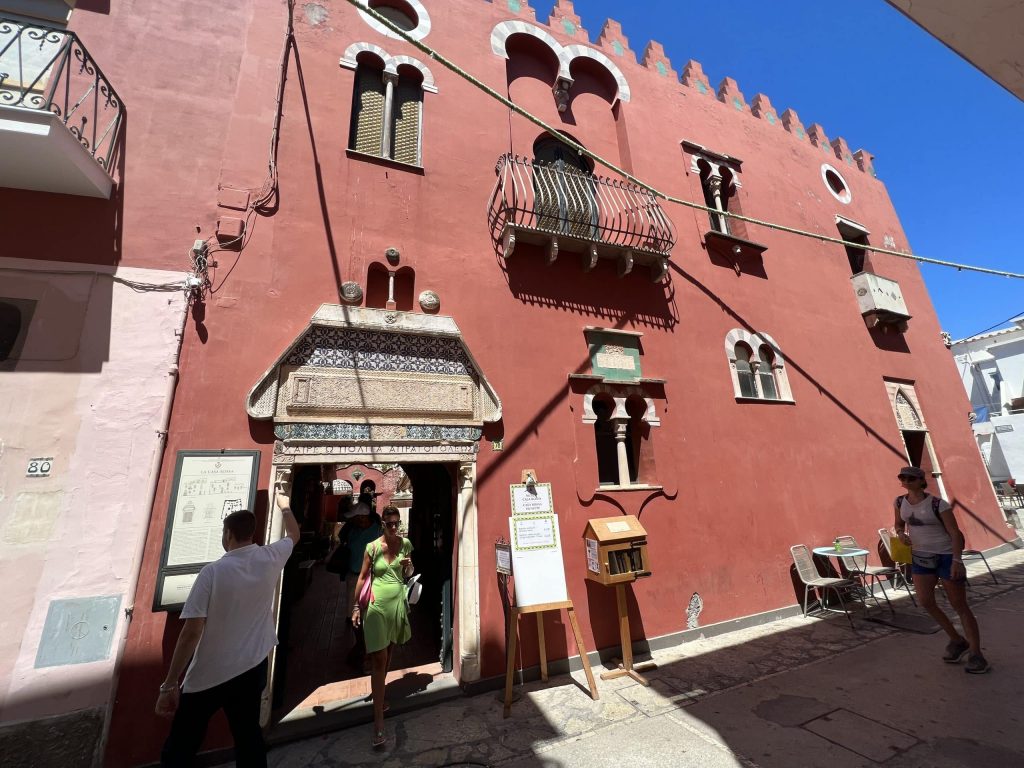
Once a fashionable residence in the late 19th century, now a museum, built between 1886 and 1899 by eccentric American colonel John Clay MacKowen (1842–1901), right next to an Aragonese tower dating to the late 1400s. It stands out for its vivid red color.
Since 2003, the Isola Dipinta exhibit has featured 19th-century paintings of Anacapri, offering a chance to see the island the way Grand Tour travelers once did, alongside Italian artists who discovered this magical place.
The museum also hosts cultural events and temporary exhibitions, giving visitors a chance to explore lesser-known facets of the island’s history and traditions.
Chiesa Monumentale di San Michele
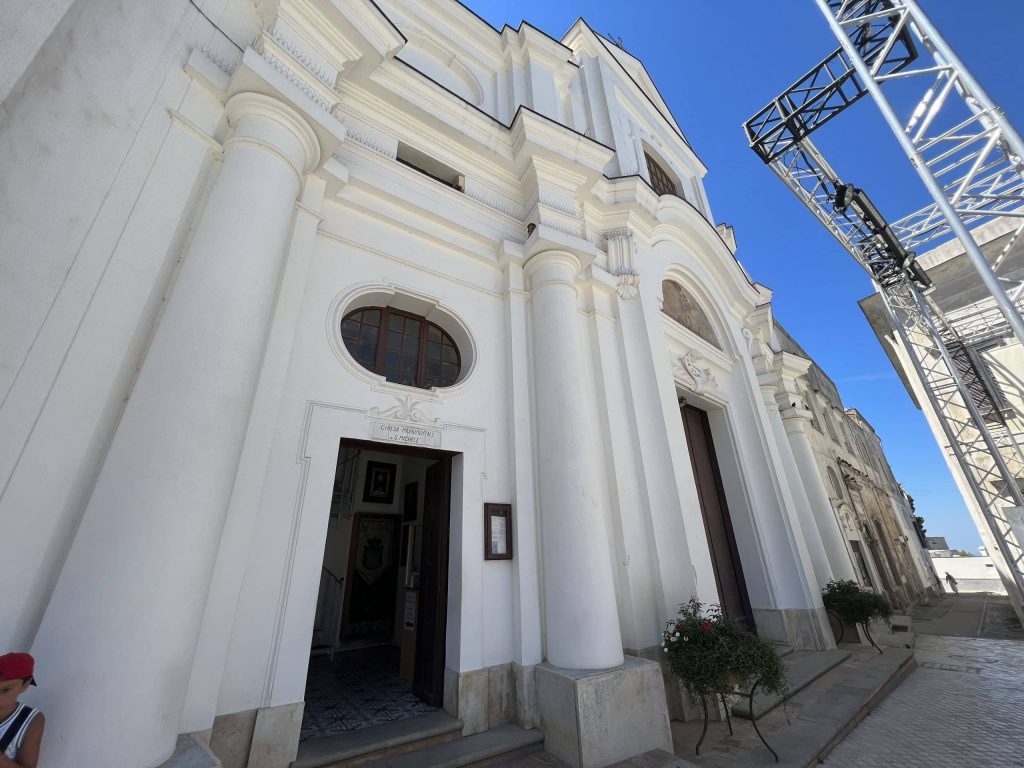
Located on Piazza San Nicola and built in 1719, the Chiesa Monumentale di San Michele is a Roman Catholic church, octagonal in shape and Baroque in style. It earned “monument” status for its remarkable majolica-tiled mosaic floor.
Hours: Daily, 9 AM–7 PM Admission: €2
Chiesa di Santa Sofia
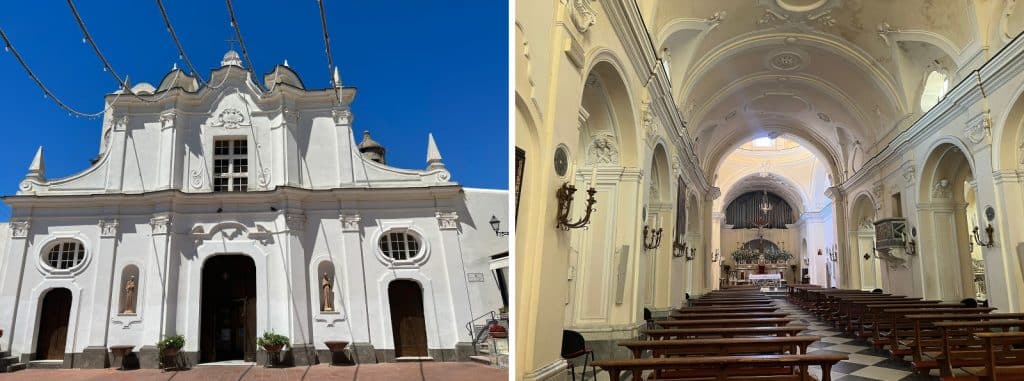
A Roman Catholic church located on Piazza di Anacapri. It dates back to 1596, when it replaced the Chiesa di Santa Maria di Costantinopoli as the town’s parish church. Its chapels are dedicated to Sant’Antonio, Anacapri’s patron saint, and to Madonna del Buon Consiglio. Architecturally, it features a Baroque façade.
Piazza Edwin Cerio
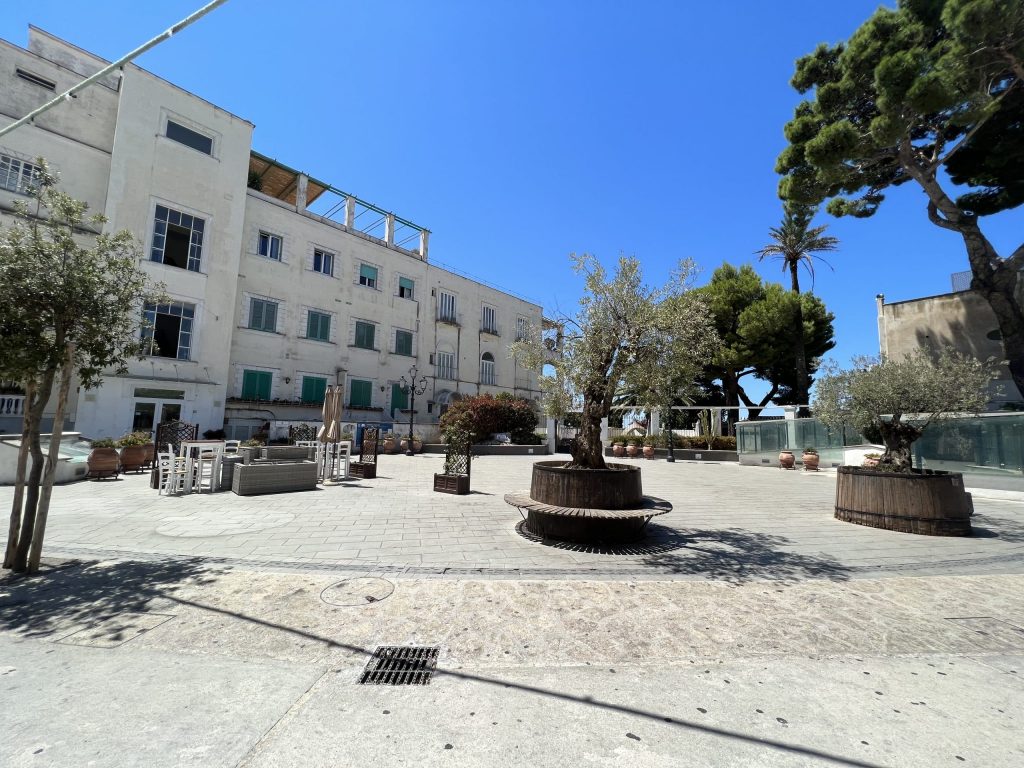
Somehow, the name Cerio has become part of Capri’s own mythology.
Once you start hearing locals talk about the Cerio family, you’ll be intrigued to learn about the houses they built: Casa Solitaria, La Pergola, Lo Studio, Torre Saracena, and what feels like dozens of hideaways scattered around the island, each with its own “Cerio style” and a jaw-dropping view.
A square that captures the town’s calm atmosphere.
Monte Solaro
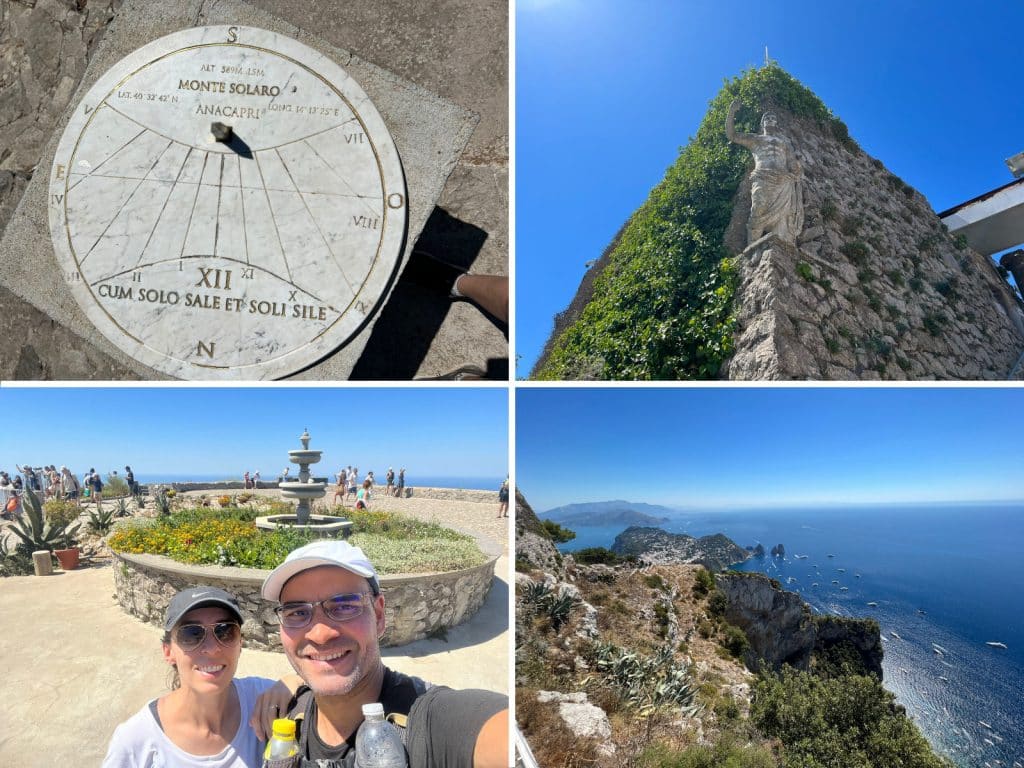
Monte Solaro is Capri’s tallest peak, at 589 meters above sea level, offering one of the best views on the whole island. It’s home to the “Fortino di Bruto,” a fortress once used in battles between Britain and France in the early 19th century.
You can reach it on foot from Capri or Anacapri, or by cable car — the fastest, most convenient option. The cable car uses individual chairs, with an average ride time of 12 minutes.
On clear days, you can even spot Vesuvius, the Gulf of Naples, and the Sorrentine Peninsula.
Hours: March to October, 9:30 AM–5:30 PM; November to February, 10:30 AM–3 PM Price: €10 round trip
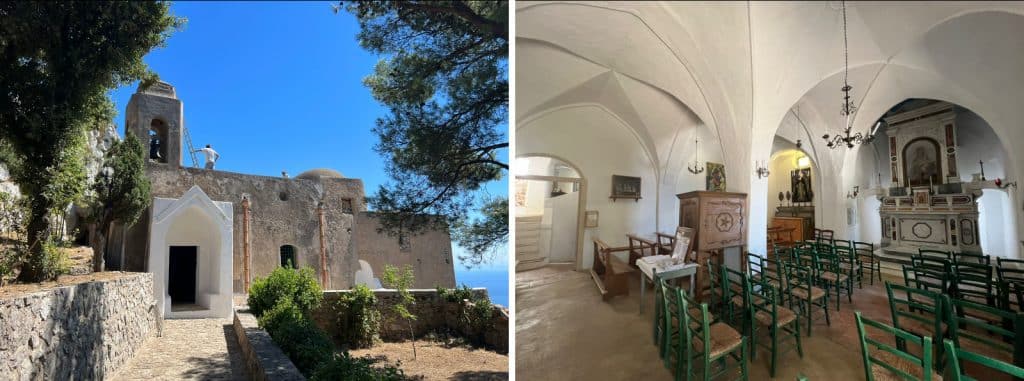
Eremo di Santa Maria a Cetrella
Located near Monte Solaro, at 476 meters of altitude. Its name comes from the fragrant lemon-scented herb “erba cetra.” Legend has it this was once the site of a pagan temple dedicated to the goddess Venus. In the 16th century, the hermitage of Santa Maria a Cetrella was built right at the cliff’s edge, overlooking Marina Piccola.
It was once home to Franciscan and Dominican friars, who chose it as their spiritual retreat.
Inside the church, an image of Santa Maria remains preserved. This icon held particular importance for Anacapri’s sailors, who, in the past, before heading out for coral-gathering trips, would climb up to Cetrella’s church on a pilgrimage before setting off.
Blue Grotto (Grotta Azzurra)
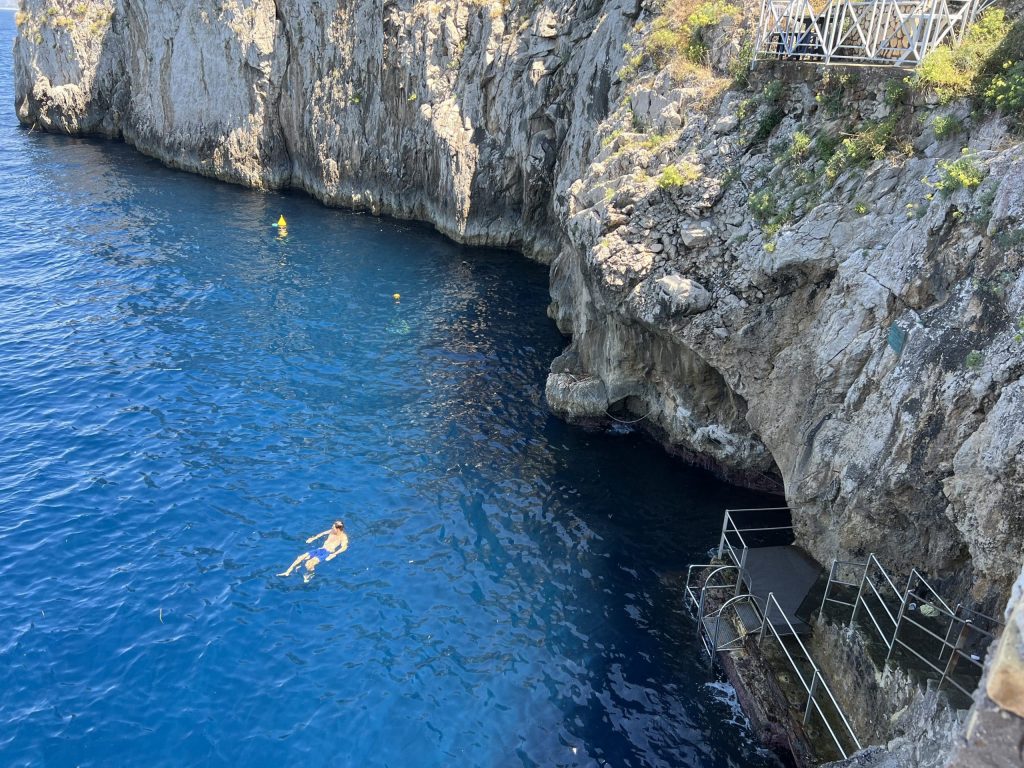
The most famous excursion in the region is the boat trip to the Blue Grotto, though you can also visit by land, taking a bus from downtown Anacapri. Once you arrive to see the Grotto, there’s a staircase next to Restaurante Il Riccio (Instagram) in Anacapri, where you can catch a boat into the grotto.
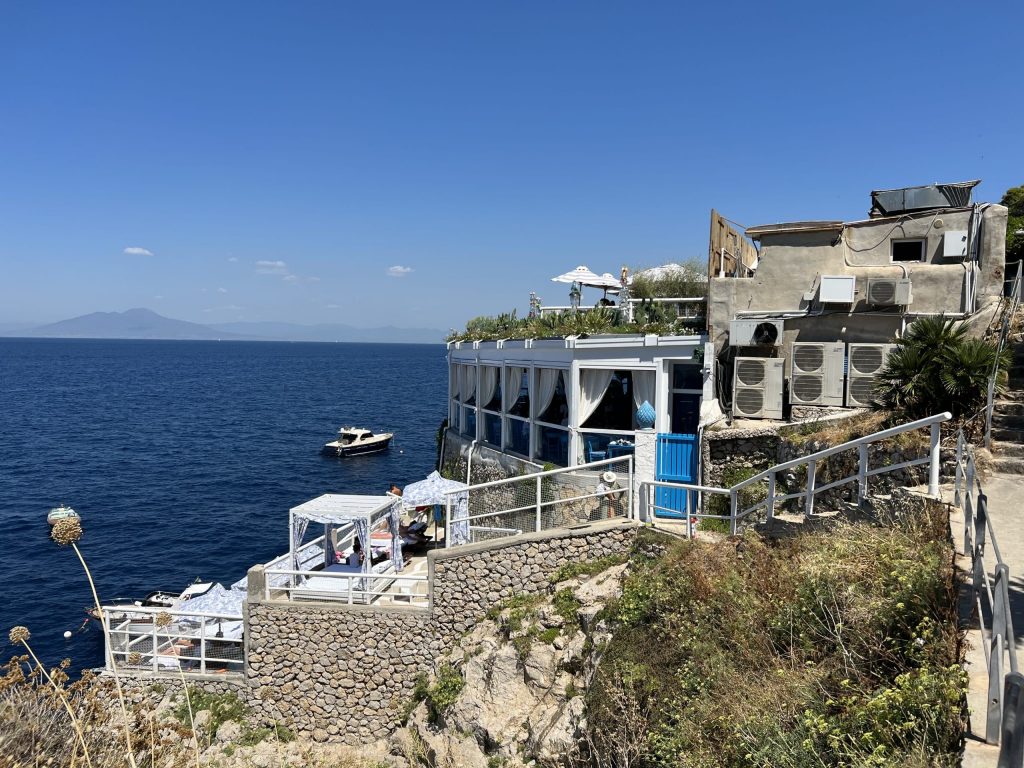
Whether on a private or group tour, you’ll need to transfer into a small rowboat to enter the grotto, at an extra cost of €10 per person. Boat captains bring tourists in both by sea and by land, as mentioned, so once conditions allow entry, a long line forms at the staircase.
At the top of the grotto, there are delicious, extremely pricey restaurants — Il Riccio is a real spectacle, with a Dior pop-up store, the brand opening its doors right into what feels like a genuine sea cave, overlooking the deep blue Mediterranean waters, a setting accessible only by boat.
Faro di Punta Carena
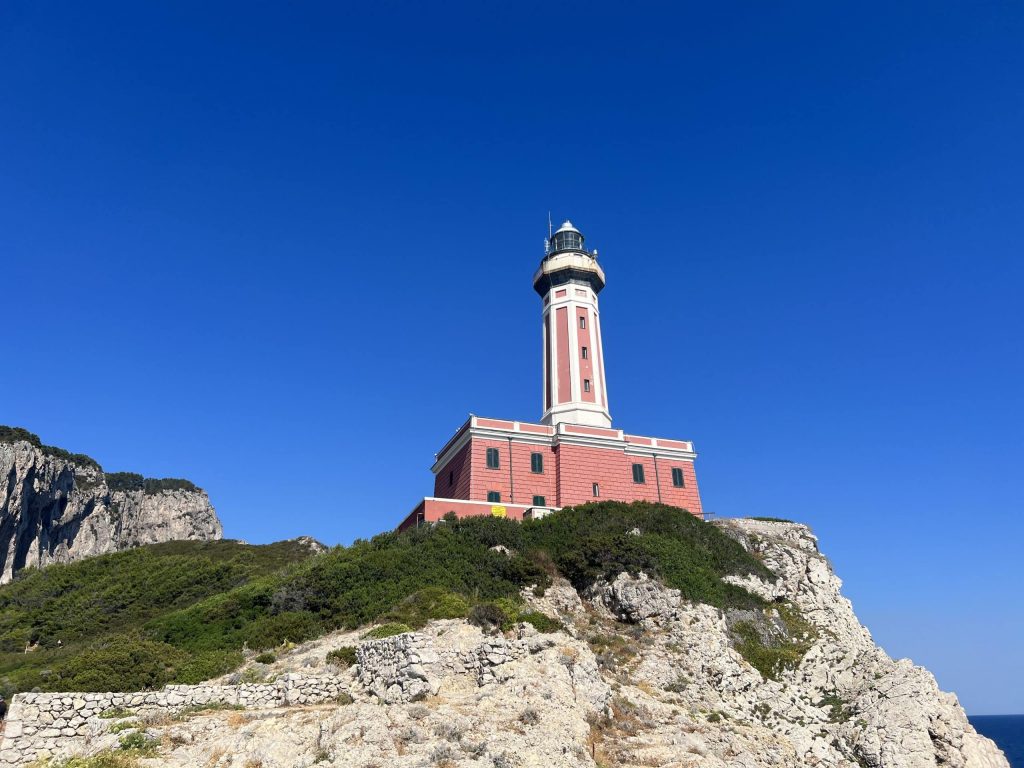
The Faro di Punta Carena lighthouse was built in 1866. Italy’s second-tallest lighthouse (after Genoa’s), it’s also among the most important guarding the Tyrrhenian Sea.
Behind the lighthouse rises the Migliera cliff, flanked by defensive walls built by the British in the early 19th century to protect Capri from invasion. In front of the lighthouse, the sea stretches all the way to Sicily.
There’s also a beach club here, with a series of private decks and steps leading down to the water, a snack bar serving panini and salads, and a waterfront restaurant for a romantic candlelit dinner — one of the most sought-after sunset spots is Lido del Faro (noon to 7 PM daily).
Sentiero dei Fortini in Anacapri
Sentiero dei Fortini is a trail in Anacapri connecting the Blue Grotto to the Faro di Punta Carena, passing by the forts that once protected Capri from foreign invasions — most are down to their foundations, and the last one, near the lighthouse, was under renovation to be rebuilt as it once looked.
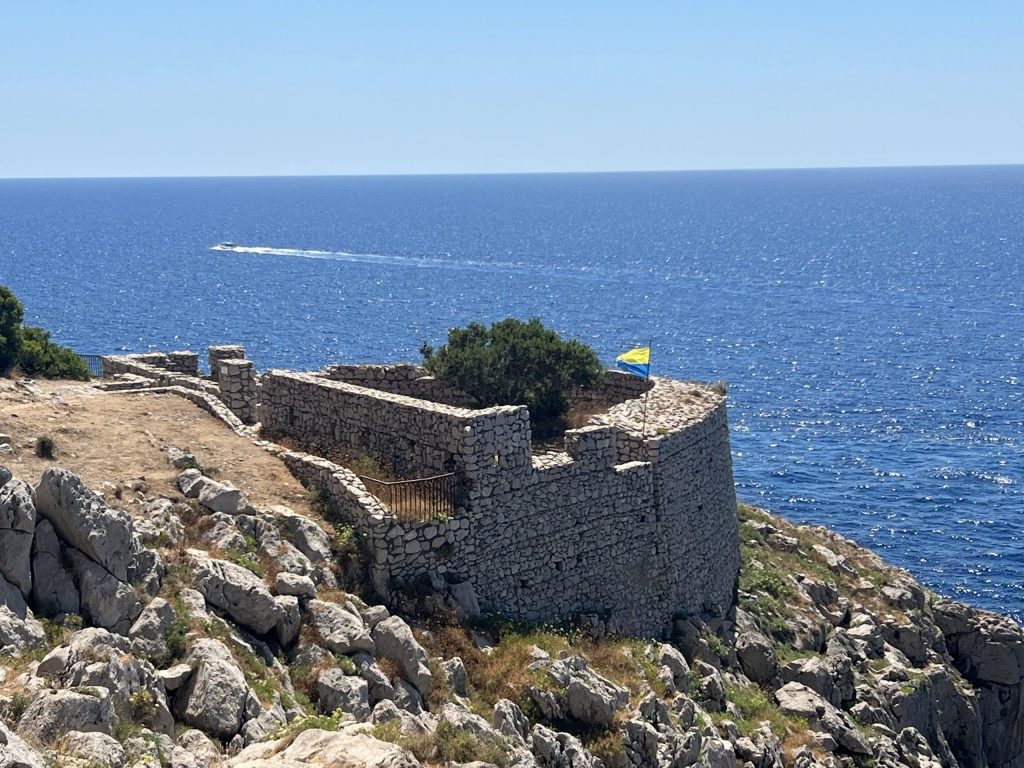
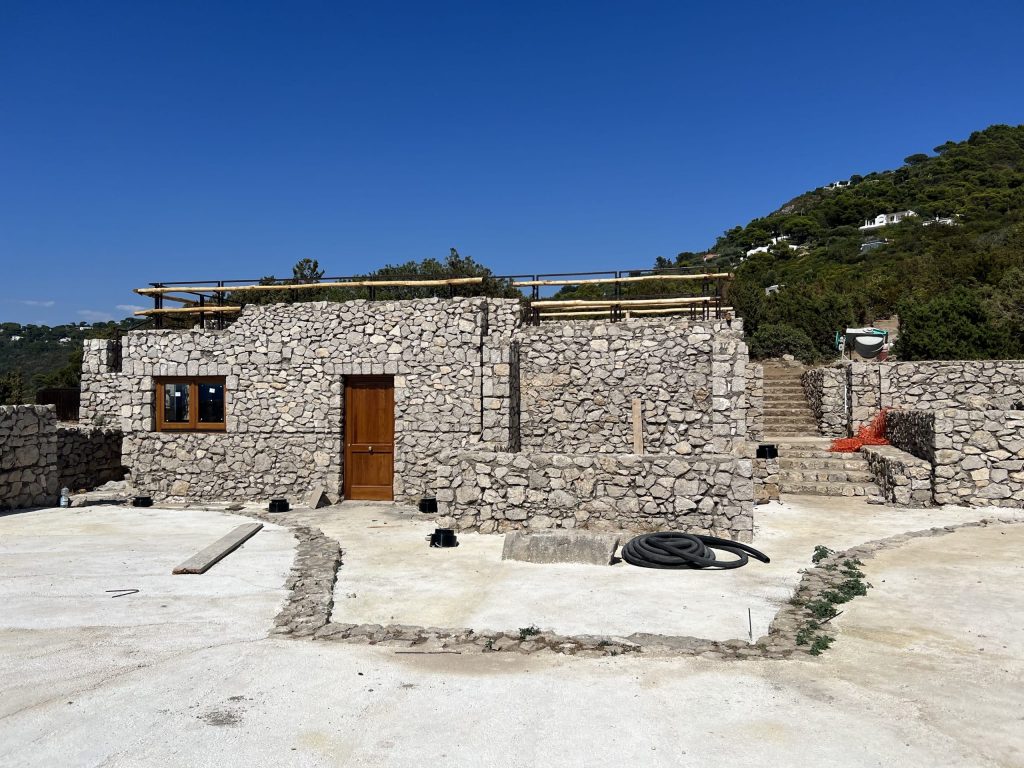
Since we love hiking, we did the whole route — along the way, you’ll find paintings depicting local flora and fauna, some genuinely interesting.
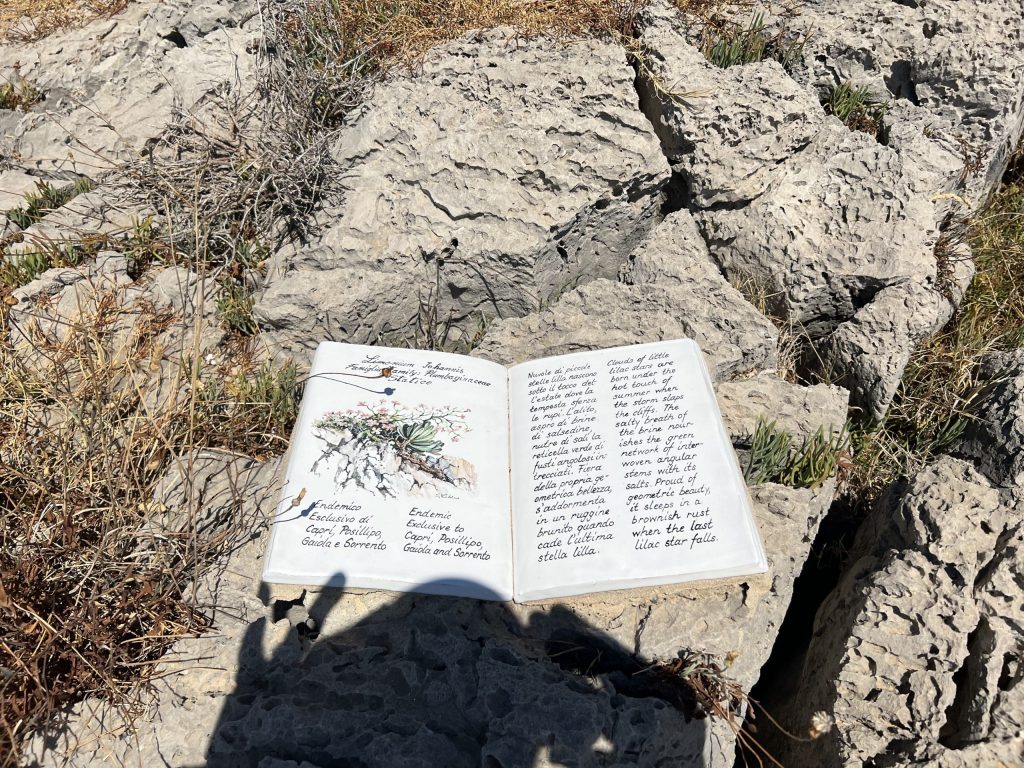
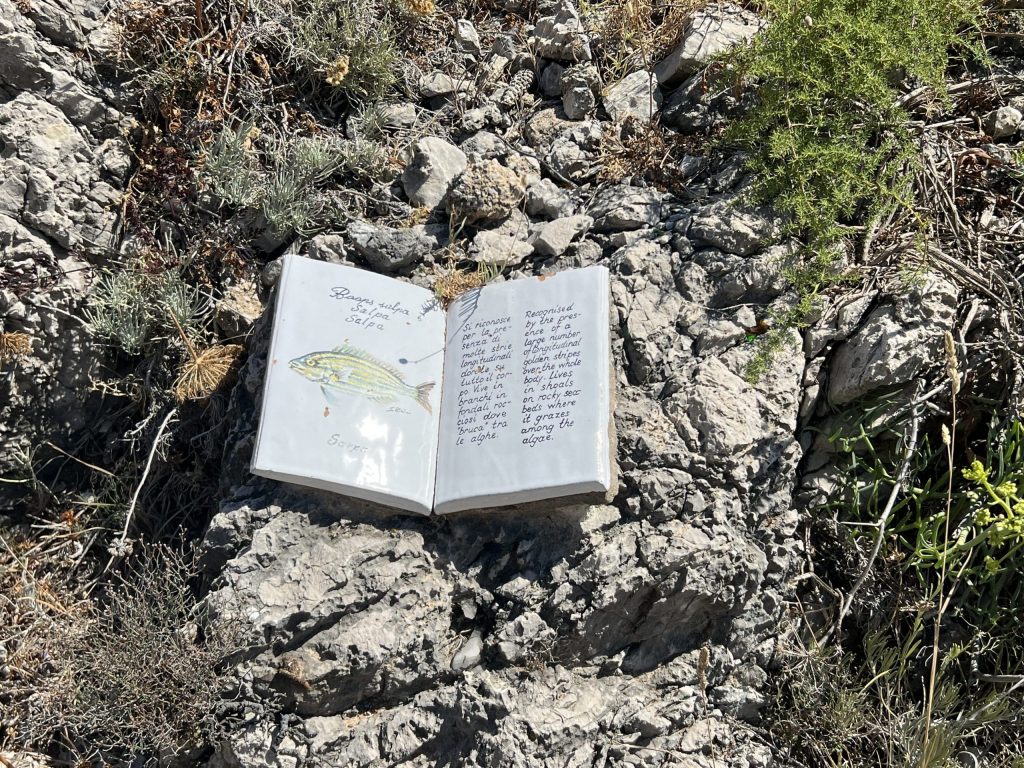
Worth mentioning: there’s a water refill point along the trail, genuinely important to know about, but no spot to buy food — the trail follows the coastline the whole way, so pack snacks to avoid getting hungry along the way.
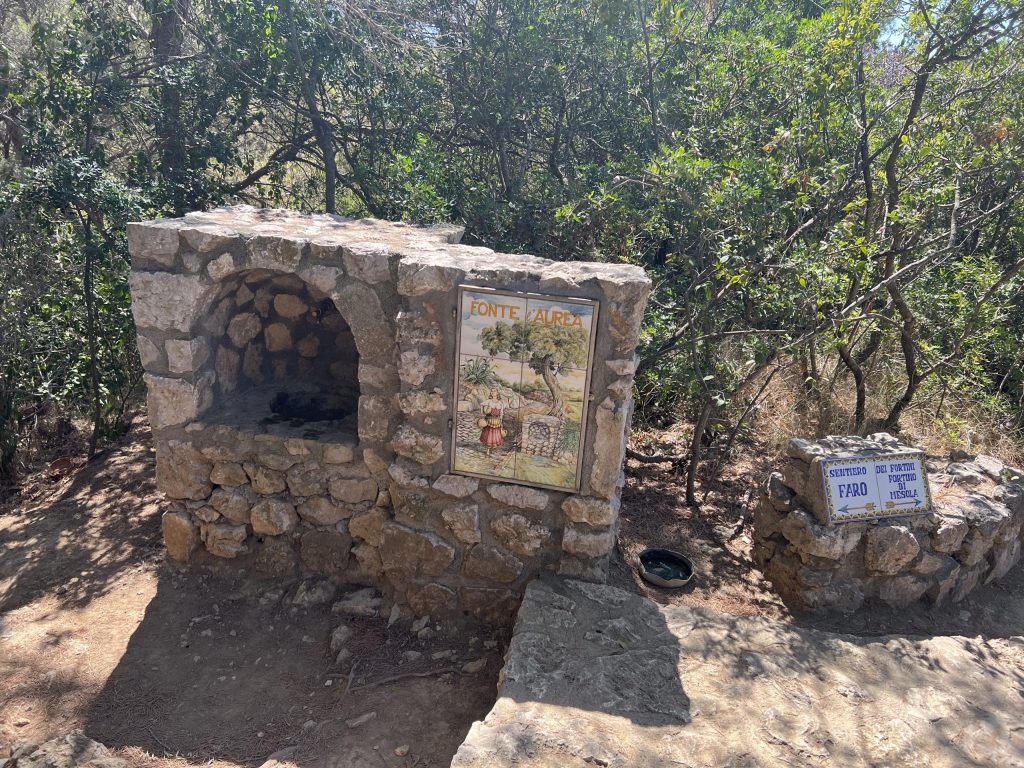
One more thing: this trail is completely exposed, so bring a hat, sunscreen, and plenty of water, especially in summer.
Track powered by Wikiloc
Where to eat in Capri
There are several restaurant options in Capri, all a bit pricier than average, but with great quality — here’s our own experience.
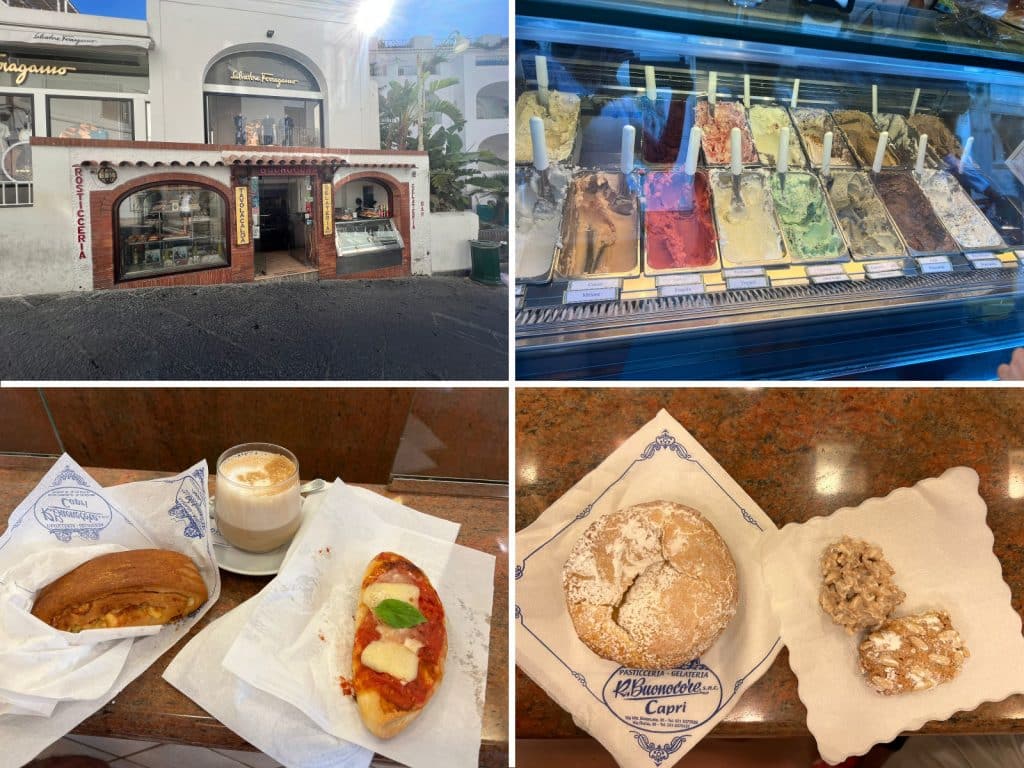
Sorveteria Buonocore Gelateria
Easy to spot, thanks to the line at the door of this famous ice cream shop on the island of Capri. Despite the small scoop size for the price, it’s genuinely worth a visit, both to try other sweets and for breakfast.
The cones are made fresh on the spot, with the gelato served right alongside, which is why the cones turn out so wonderfully crisp.
Ristorante Isidoro
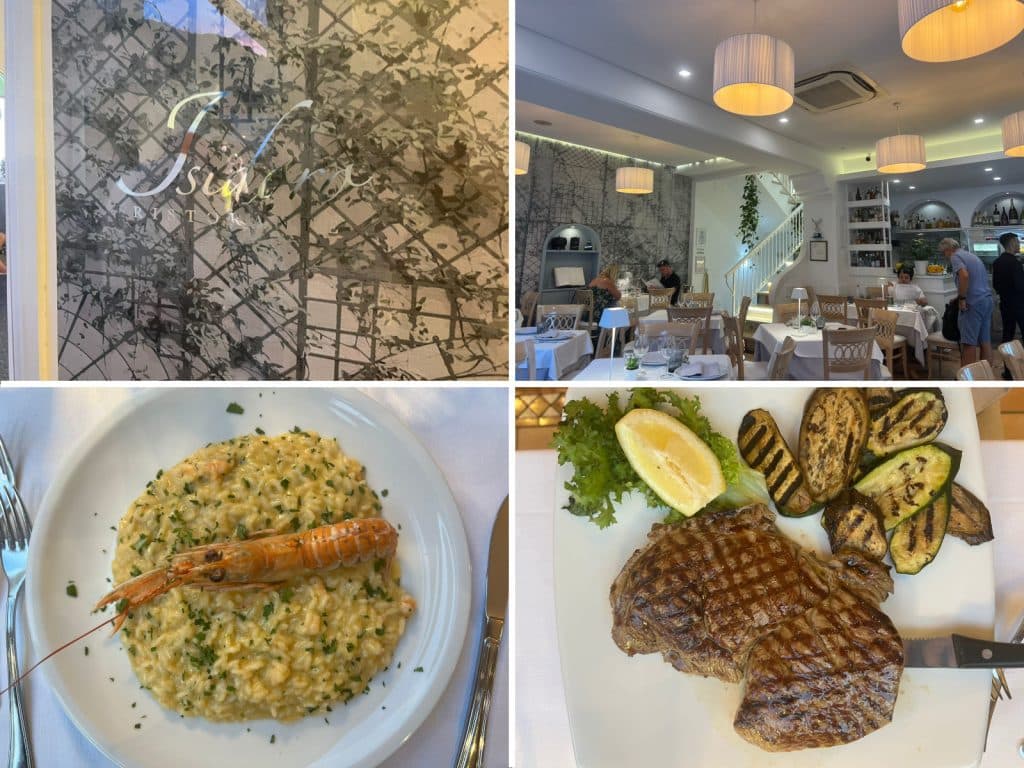
Located in the center of the island of Capri, Ristorante Isidoro (website) is genuinely pleasant, spacious, and we sat near the window to cool off. We had steak with vegetables and a risotto al limone with langoustine, both simply delicious.
La Terrazza di Venere
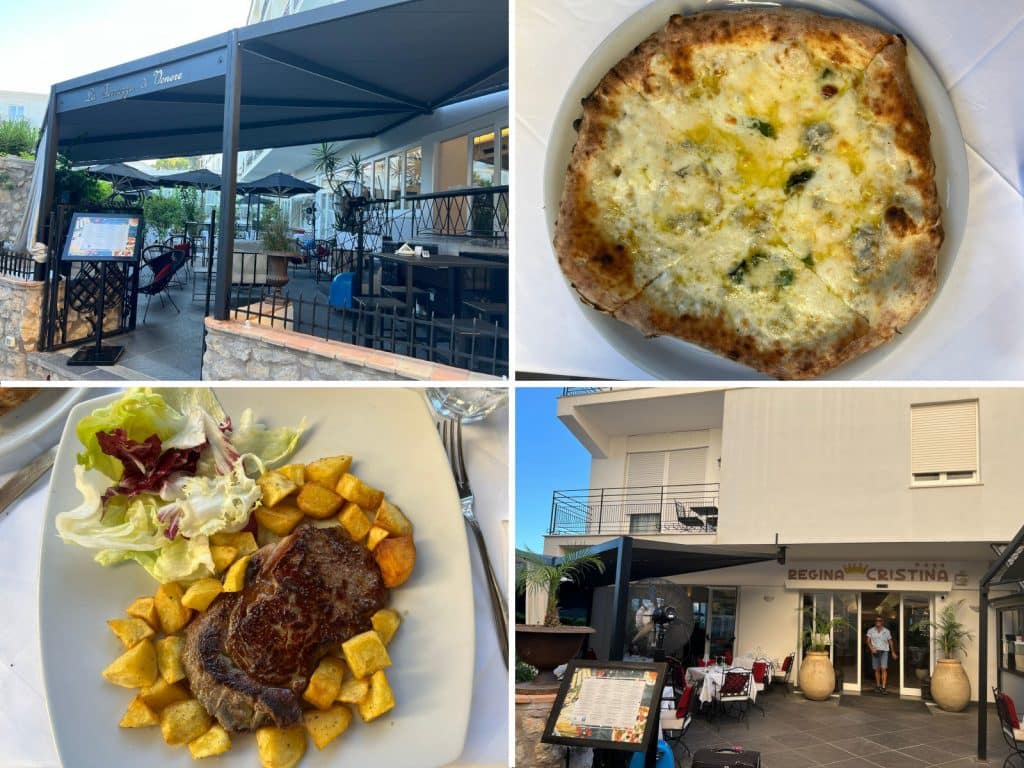
La Terrazza di Venere is a restaurant we loved — without a doubt, the best pizza we had anywhere in Italy. The steak was also incredible.
The setting is really pleasant, service was great, and overall this restaurant was well worth it.
Read more about our trip in Cetara.
Read the original version in Portuguese on A Bela e o Bigode.