What to Do in Positano
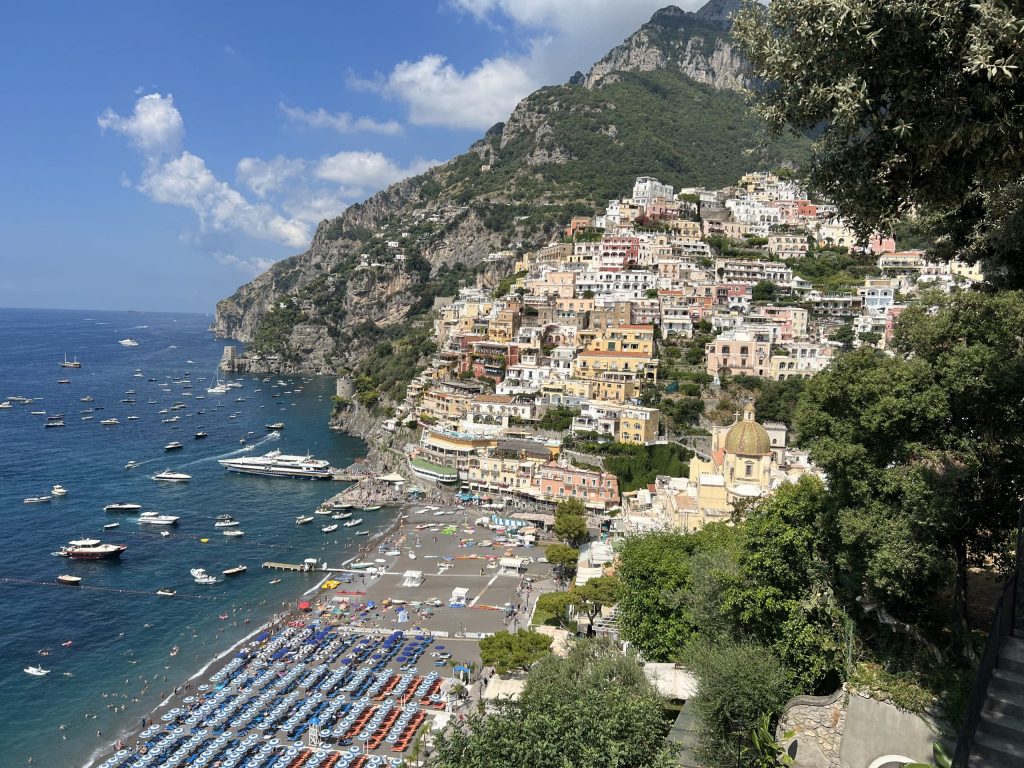
Positano is one of the liveliest, priciest towns on the Amalfi Coast, a favorite with couples thanks to its incredibly romantic atmosphere. We’d recommend spending 2 to 3 days here to properly explore and enjoy the town’s zigzagging, up-and-down streets.
The town was originally a fishing village and Amalfi Coast port, which eventually went bankrupt, leading most of its residents to emigrate to America.
Things only changed after a reporter for Harper’s Bazaar wrote an article in May 1953 praising the town’s singular beauty — since then, Positano transformed into a luxury destination, later serving as the filming location for several movies.
The town is built vertically, carved into the rocky coastline facing the sea, creating a genuinely paradise-like landscape.
Getting to Positano
There are several ways to reach the town, from Naples and Sorrento — by car, transfer, train, bus, or boat.
By car to Positano
We rented a car, and here’s the main tip: parking in Positano is nearly impossible. Most public parking spots are reserved for town residents, requiring a resident permit displayed in the car.
Private parking lots are extremely expensive, charging €60 a day — when we booked our hotel, it only had an arrangement with one parking option, and we didn’t see any kind of discount, since it was the same price we’d paid the day before at a different lot while sightseeing before checking into town.
So we’d recommend always booking hotels that include parking, though that’s not easy to find either.
From Naples, it’s a 60 km drive, taking about 1h30m via the SS145 and then the A3, winding along the Amalfi Coast with a beautiful view of the cliffs and crystal-clear water.
From Sorrento, it’s 18 km, about 41 minutes, via SS163, then Via Nastro d’Argento, back onto SS163 and SS145.
Train + bus to Positano
From Sorrento, the company running this route is SITA, stopping at several towns along the Amalfi Coast. The trip takes about 2 hours, along extremely winding roads.
Boat to Positano
Ferries run from Sorrento or Salerno between April 1 and October 31, stopping in Positano and Amalfi — you can also book other group or private boats.
What to do in Positano
Chiesa di Santa Maria Assunta
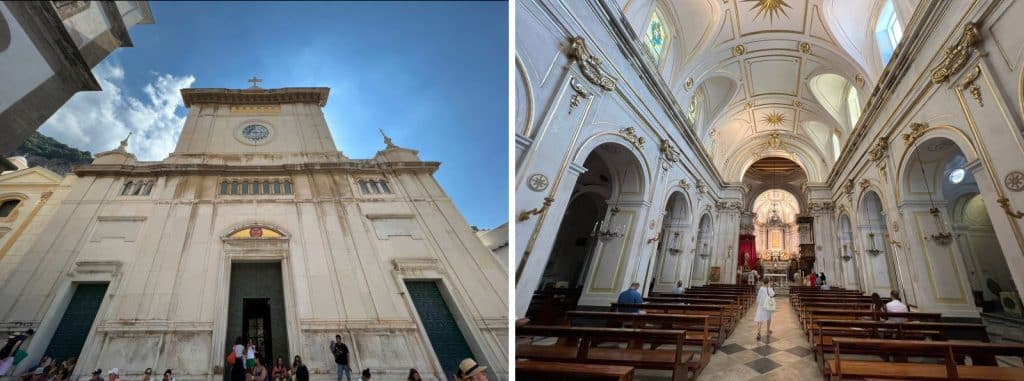
Be sure to visit the Chiesa di Santa Maria Assunta, the town’s famous church and one of its postcard images, with its colorful tiled dome.
The church’s history ties back to the Benedictine monastery of Santa Maria, which, according to undocumented tradition, was built to mark the arrival of a Byzantine icon of Our Lady in Positano. More likely, though, the abbey was founded in the second half of the 10th century.
What really stands out inside is a Black Madonna with the Christ Child, a Byzantine image closely tied to the town’s very name.
Beneath the church, archaeologists discovered a Roman villa destroyed by the eruption of Vesuvius — the same eruption that destroyed Pompeii.
Museo Archeologico Romano di Santa Maria Assunta
Opened in 2018, this museum showcases a 1st-century AD Roman villa. Several Roman emperors kept residences along the Amalfi Coast, though many were buried over time and are now being rediscovered and preserved.
Walking Positano’s streets and historic center
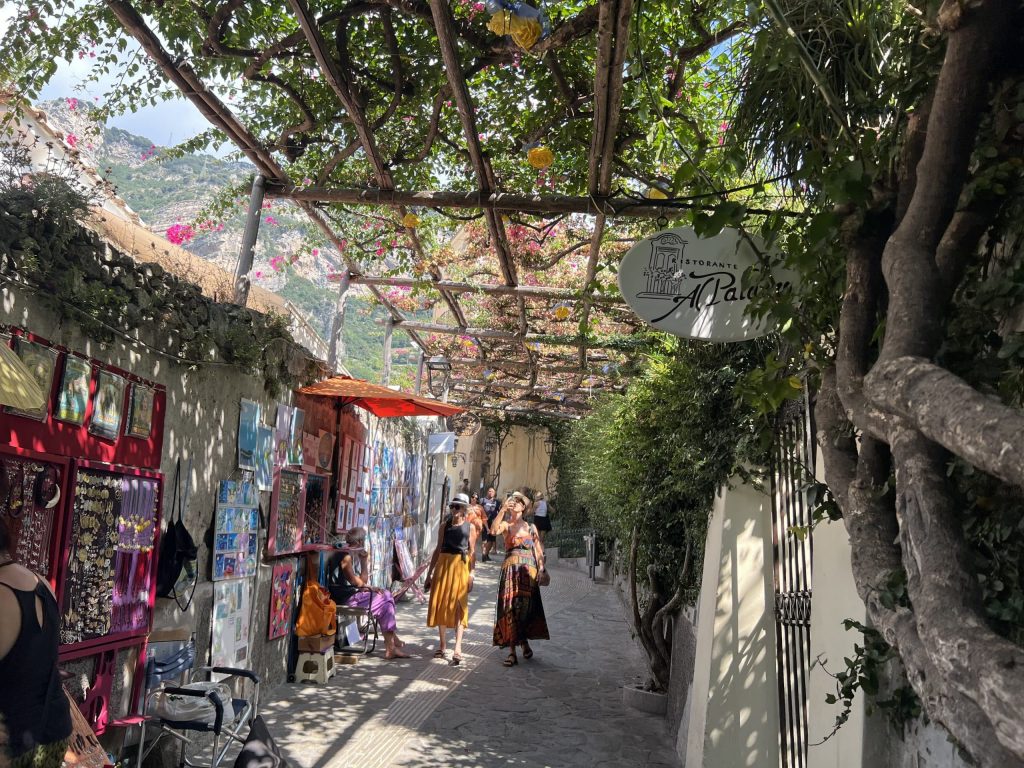
The narrow alleyways here are lined with ceramic shops, handmade sandal makers, beachwear boutiques, jewelry stores, bars, and restaurants.
Follow the covered street next to the church — it’s absolutely charming, and you’ll really feel the atmosphere of the region.
Beaches in Positano
Most of the beaches here are private, requiring you to rent chairs and umbrellas — unfortunately at steep prices, €35 per person right on the water (a price that holds across the whole Coast), or €30 per person for a spot in the second row at L’Incanto.
There are also extra charges for a hot shower (€1.50), a cold shower (€0.50), and for using the changing room and renting a towel (€5) — there’s not much way around these fees, since you can’t exactly pack a beach chair in your suitcase, the “sand” is actually pebbles (making it hard to just sit on a beach towel), and the sun heats the ground significantly.
Part of the beach is also reserved for local residents, so the free public section ends up being quite small too.
The main beach is Marina Grande, and its waters carry the “bandiera blu” (Blue Flag) certification, indicating excellent water quality — this is also where you’ll get the best photos, with the hillside and its colorful houses in the background.
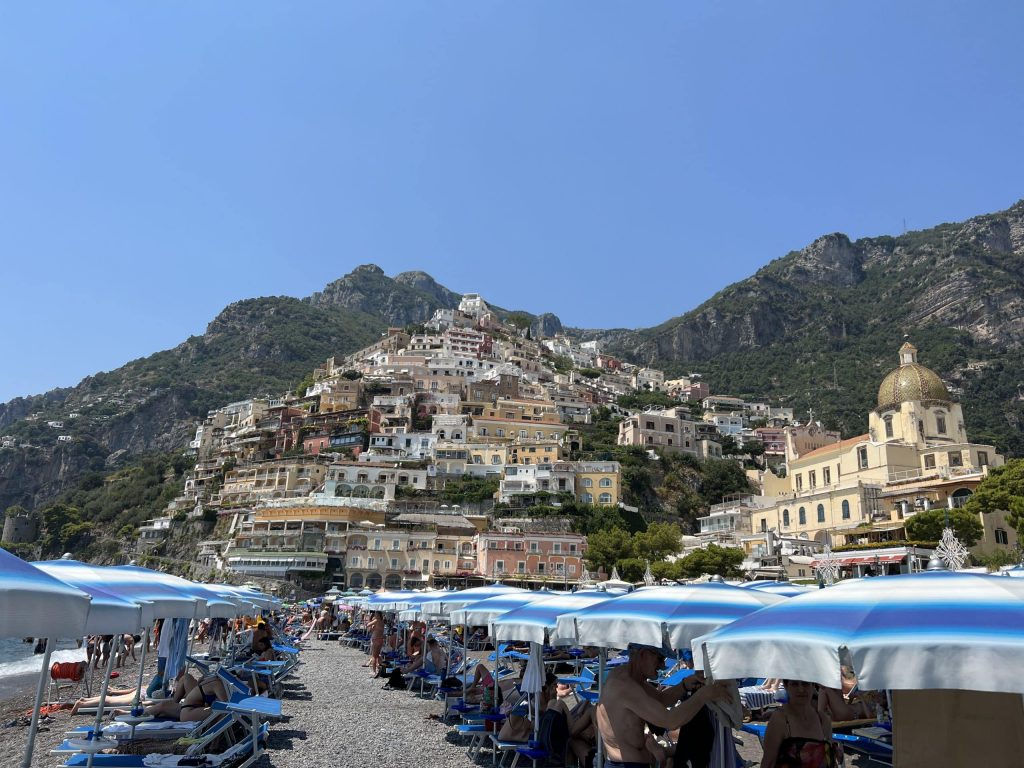
Boats to other towns along the Amalfi Coast depart from Marina Grande, which is also home to one of the region’s best and oldest restaurants, Chez Black — we’d recommend booking ahead to secure a table for dinner, which starts at 8 PM.
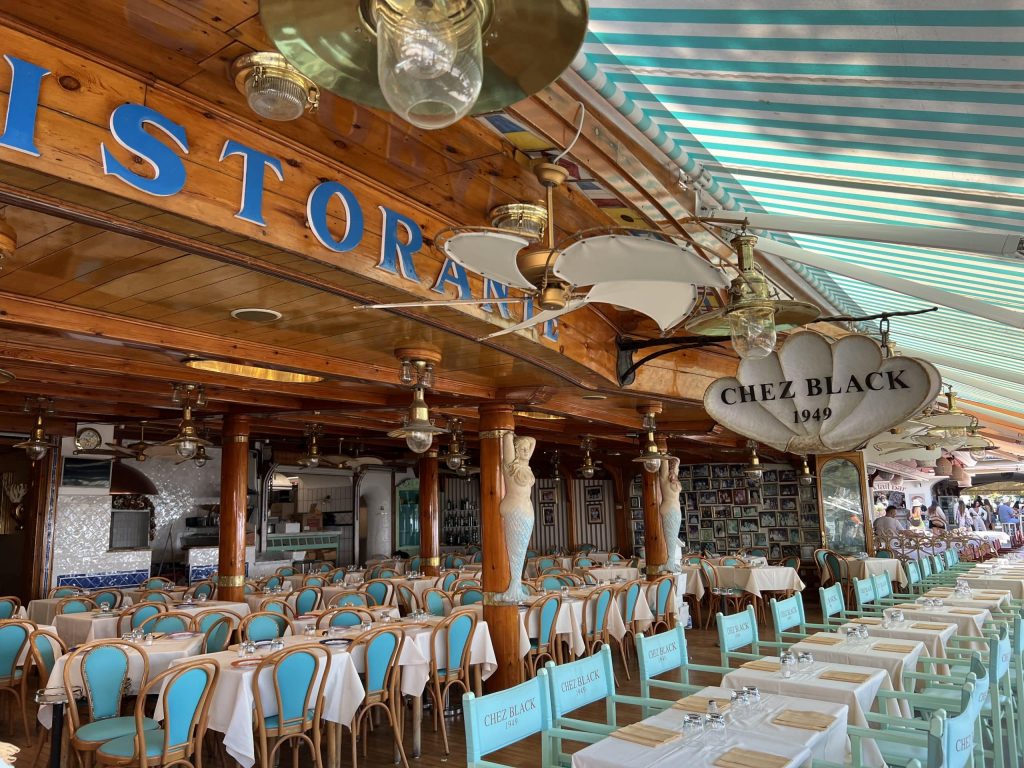
Other recommended beaches: Fornillo, Laurito, and Arienzo.
Saracen Towers
You’ll find these all along the Amalfi Coast, and some have since been converted into hotels and restaurants. Some are round, others more square, depending on when they were built.
In the past, though, they served to warn the town of danger, particularly pirate attacks, so residents could flee to the hills or the woods.
Path of the Gods (Sentiero degli Dei)
The Path of the Gods is a trail immersed in nature, about 9 kilometers long, running along the Amalfi Coast, ideal for hiking and trekking. The trail starts in Agerola and ends in Positano.
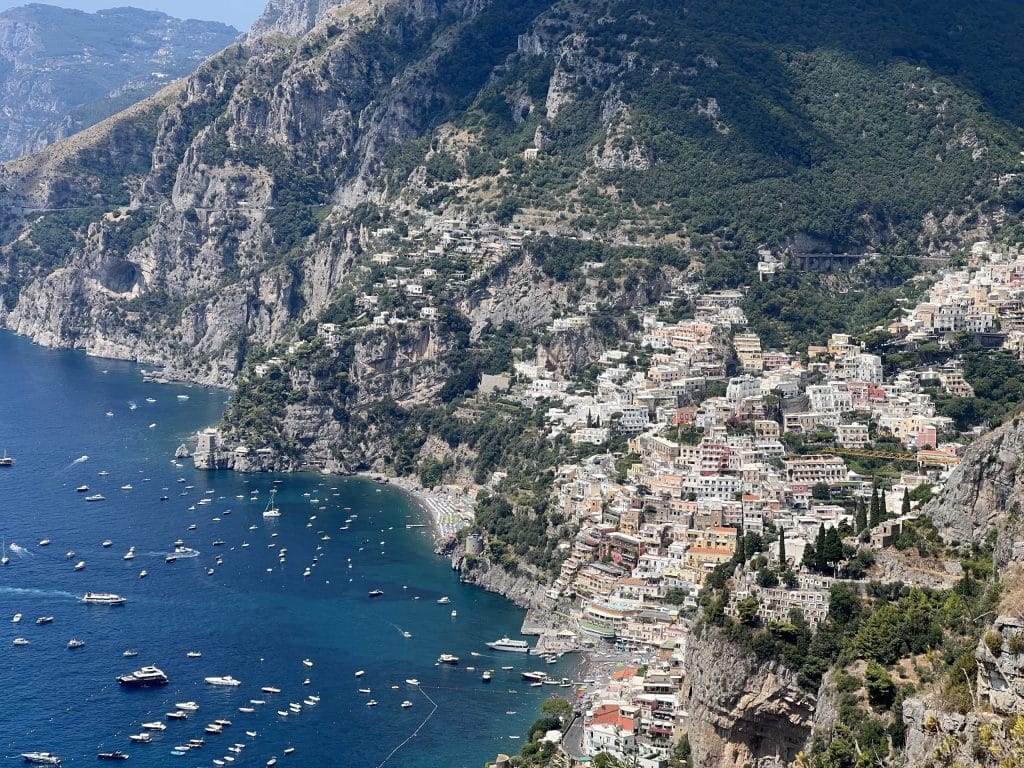
It gets its name from the legend that the Greek gods passed through here to save Ulysses from the sirens stationed on the island of Li Galli — even writer Italo Calvino described the path as “that road suspended over the magical gulf of the ‘Sirens,’ still shaped today by memory and myth” — you can also read this quote on tiles placed right at the start of the Path of the Gods.
The trail is very well marked, with protective barriers in a few sections.
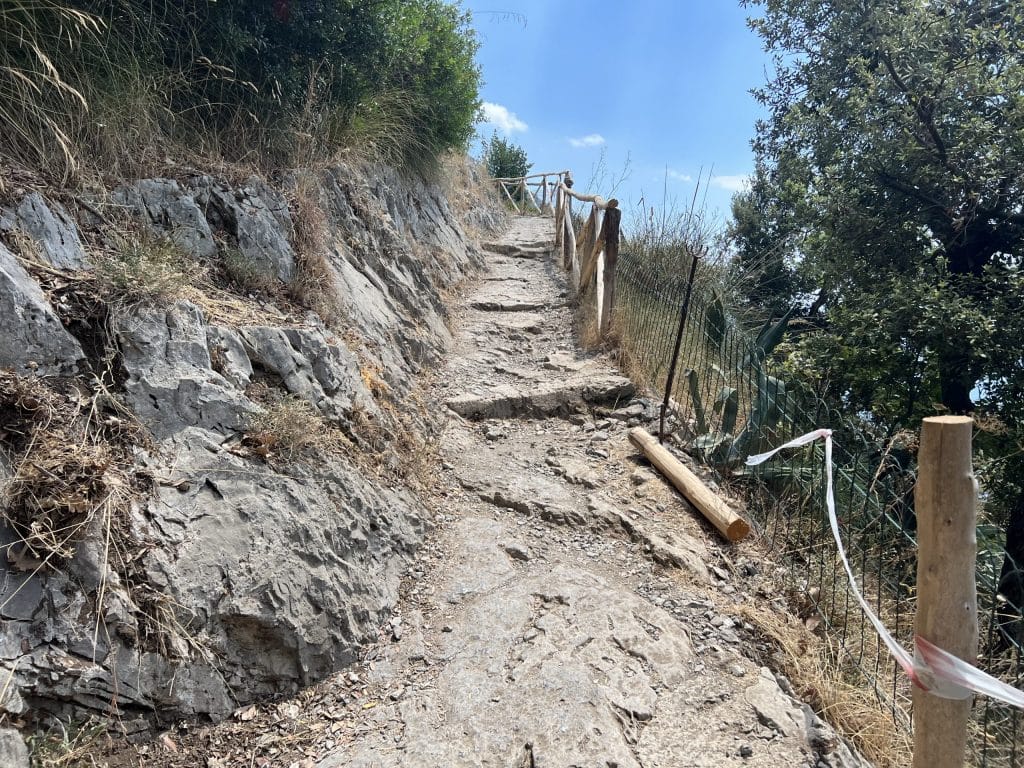
There are actually several route options for the Path of the Gods, and the most famous is the one described above — we’d recommend taking a public or private bus to Bomerano (Agerola) and hiking toward Positano, since doing it in this direction means the many stairs come at the end of the hike, not partway through.
We actually started in Positano and stopped a bit earlier in Praiano, but having since visited Praiano ourselves, we think it would have been worth continuing all the way to Agerola — still, the whole route is beautiful, so set aside a full morning for the hike.
This trail is completely exposed, so don’t forget sunscreen, breathable clothing, and proper footwear.
Lemon Granita at Lemon Point
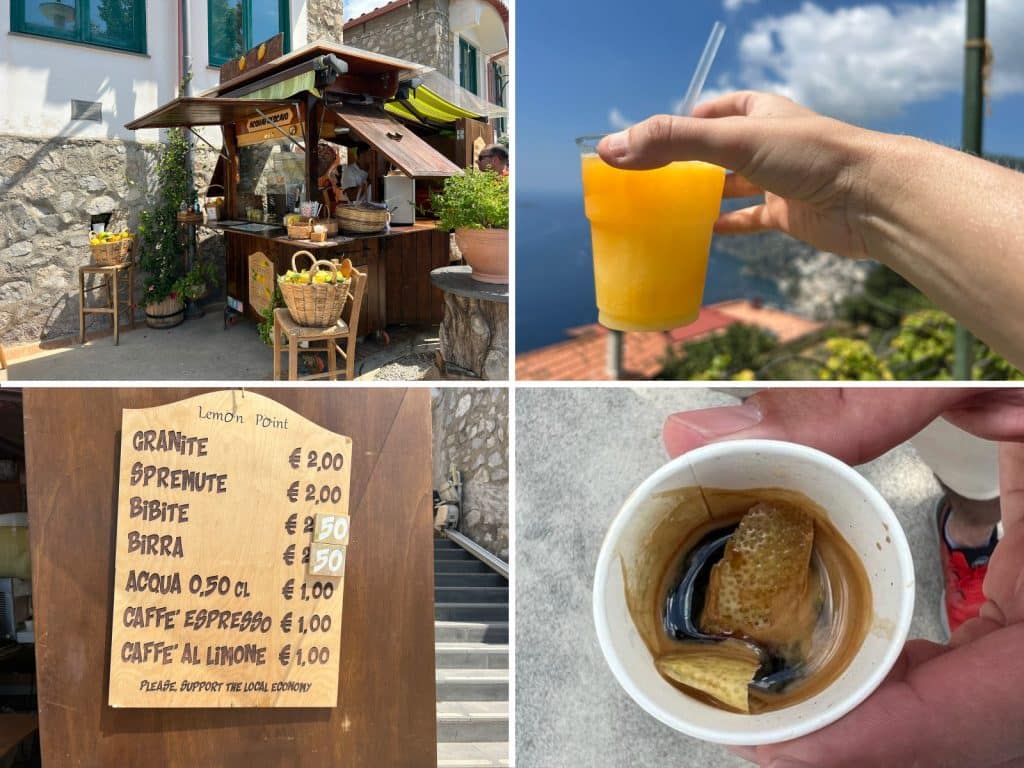
Partway along the trail, there’s a spot called Lemon Point, a great place to grab lemon-flavored coffee or a lemon-and-orange (or plain lemon) granita — we loved it. At Lemon Point, on the Path of the Gods, they also sell a lemon coffee, an odd combination that isn’t especially tasty, but still worth trying once. It’s located near the Chiesa di Santa Croce, a small 12th-century church that we enjoyed visiting too.
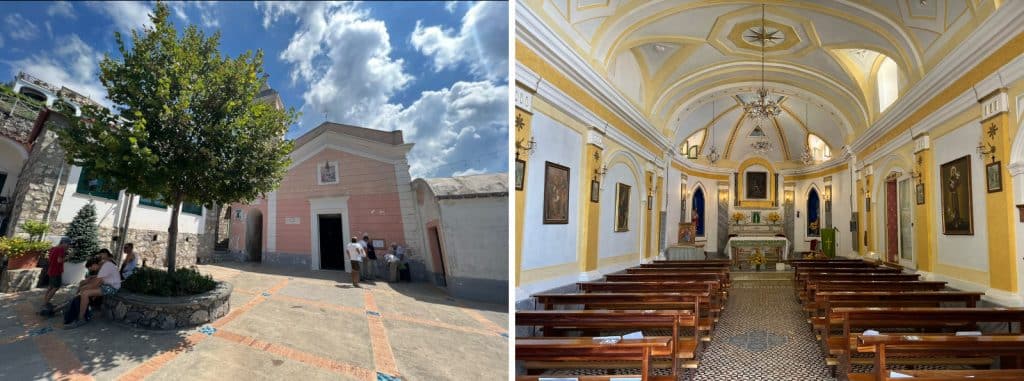
Track powered by Wikiloc
Where to eat in Positano
There are plenty of delicious restaurants throughout town, and we’d recommend trying at least one Michelin-recognized spot in the region — we loved the one we tried.
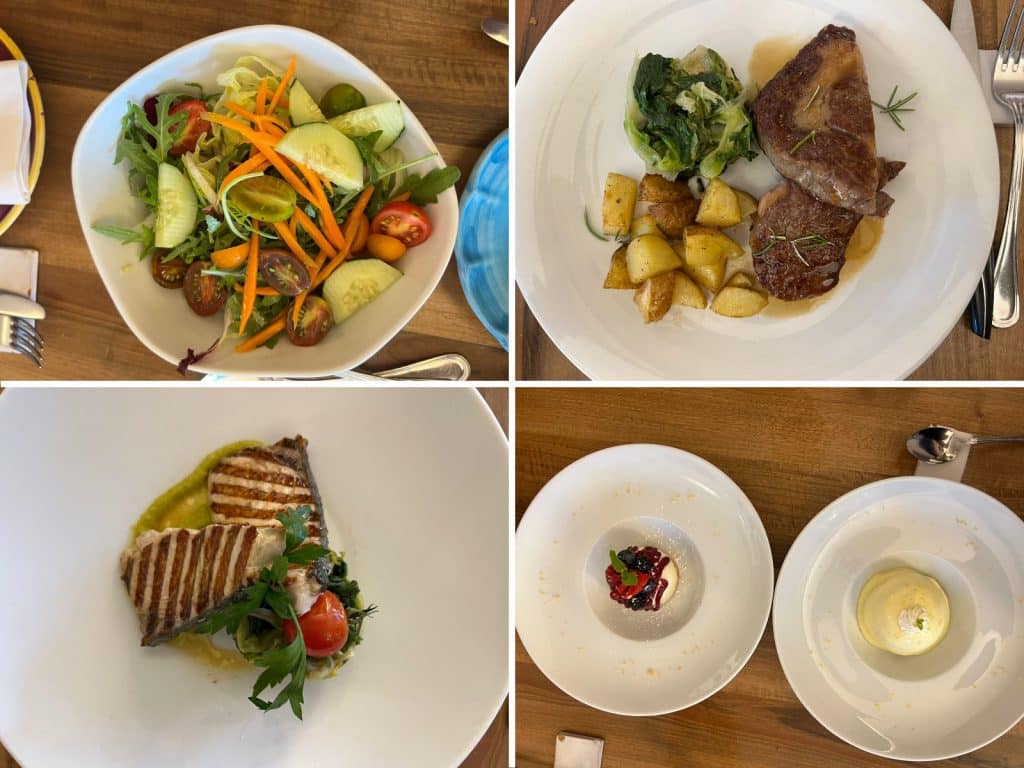
Da Vincenzo
This restaurant, Da Vincenzo (website), tops our list of restaurants in Positano — it holds a Michelin listing, and every single dish was wonderful.
We got lucky finding a table without a reservation, but the food here is so good that we’d recommend booking ahead through their website to avoid missing out.
For our main courses, we ordered steak with potatoes and one of the best fish dishes I’ve ever had in my life, served with a mixed salad — everything about it was wonderful: the setting, the service, and the food.
But out of everything, what really stood out was dessert — the cheesecake, made with buffalo milk cheese, might be the best dessert we’ve ever had! We also ordered a lemon dessert, which was good, but the cheesecake completely stole the show.
Location: Viale Pasitea, 172/178.
Ristorante Bruno
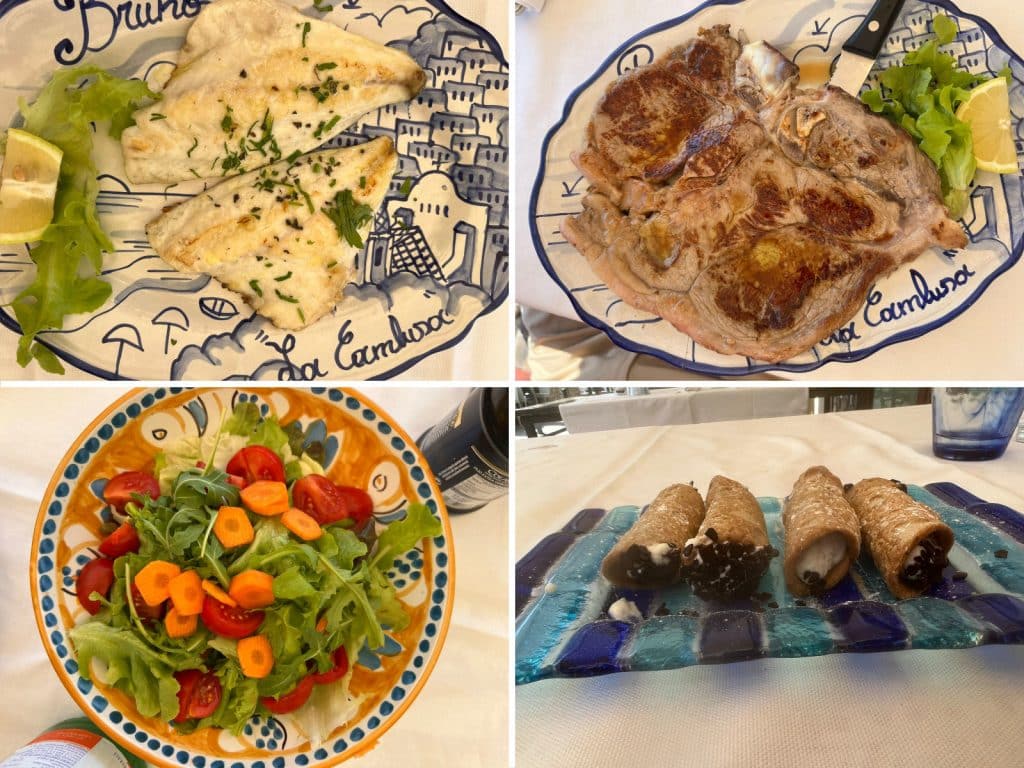
Restaurante Bruno (Instagram) won us over immediately, thanks to its stunning view over town. The food was also really tasty, and service was great, so we’d say it’s well worth a visit. You can book through their website.
We ordered the fish (€25), veal chop (€22), a mixed salad on the side (€7), and a delicious dessert of three cannoli (€7).
We didn’t end up making a reservation and still got a table, though it was close to the end of lunch service.
Location: Via Cristoforo Colombo, 157.
Ristorante La Pergola
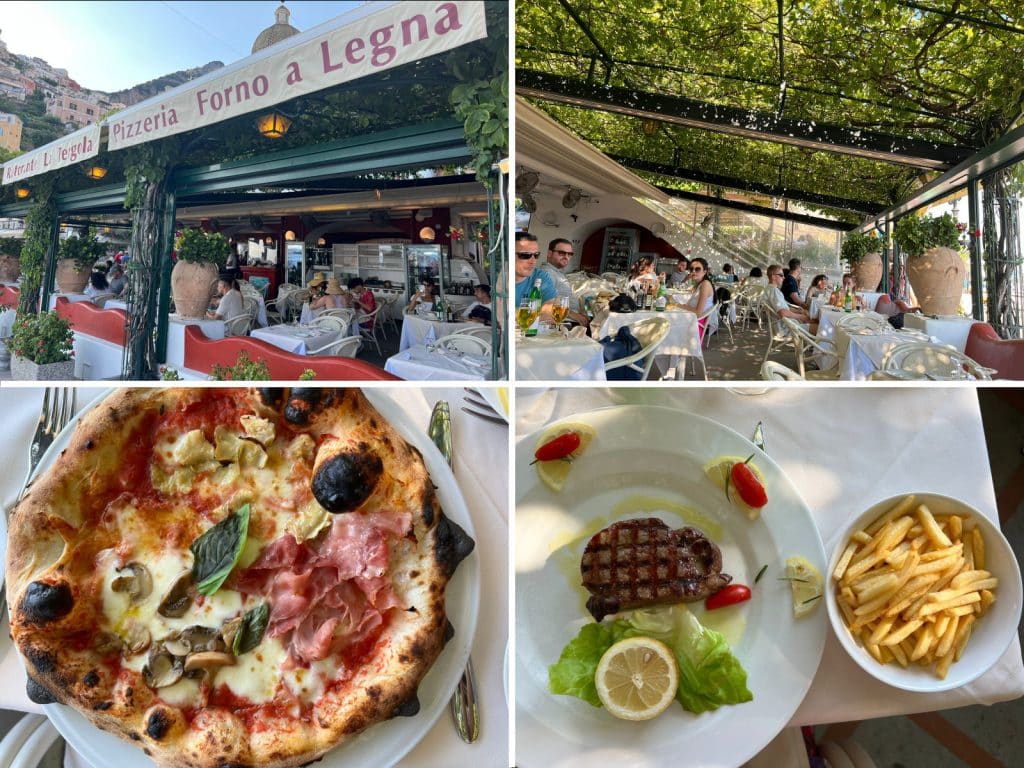
Right across from Marina Grande, Positano’s main beach as mentioned earlier, sits Ristorante La Pergola (Instagram). We ended up eating here after finding Chez Black closed.
We really liked the setting — genuinely pleasant — and ordered steak and pizza, both very tasty.
Location: Via del Brigantino, 35.
Lemon Point
Along the Path of the Gods, Lemon Point (Facebook) is a great stop for a granita — a kind of lemon shaved ice — perfect for cooling off, and you can even try lemon-flavored coffee, all with a beautiful view over town and a charming little church nearby worth a look.
Location: Via Santa Croce, 84017 Nocelle SA.
La Zagara Garden Bar
In Positano, La Zagara Garden Bar (website) is a fantastic spot for coffee and something sweet — the desserts here are simply incredible, and it’s well worth the visit.
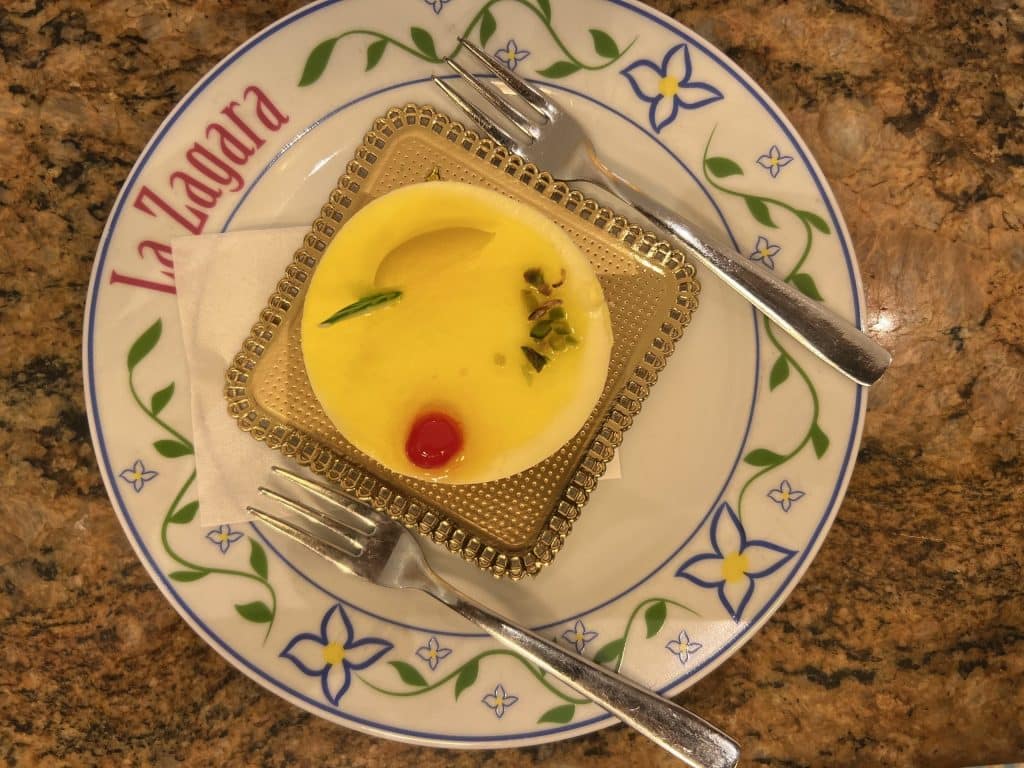
Location: Via dei Mulini, 10.
The Ice Cream Shop at Buca di Bacco
We thought this was the best ice cream we had in Positano, located near Marina Grande — we loved discovering this spot, well worth it for a dessert and a great scoop of gelato.
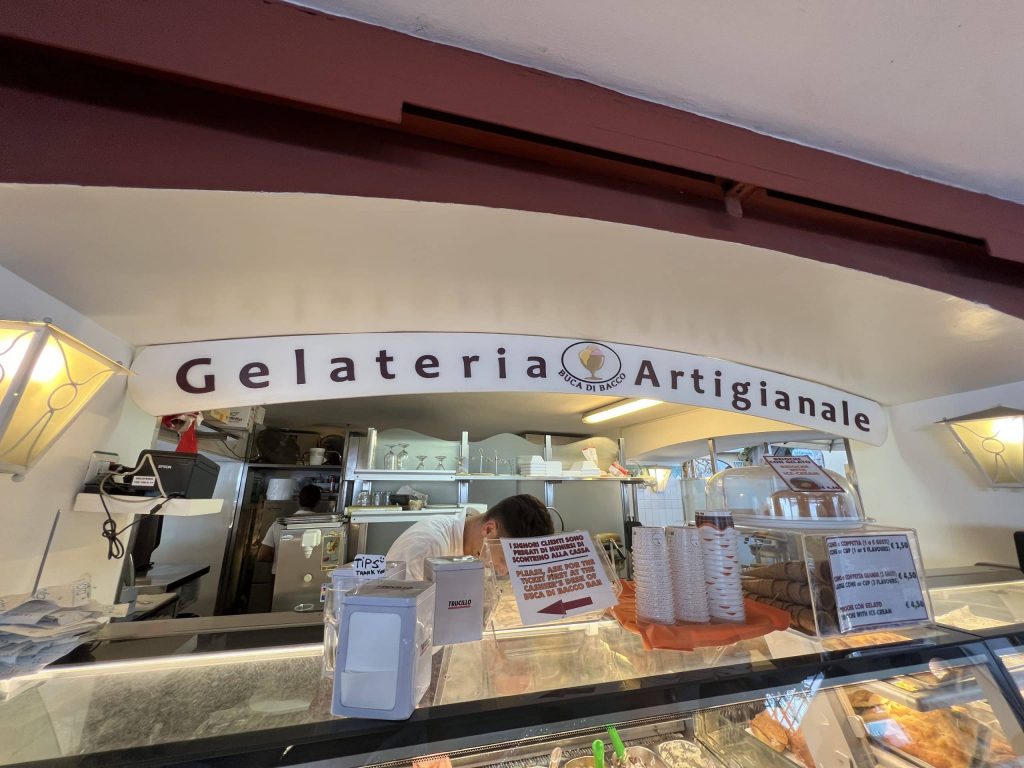
Location: Via della Tartana, 6.
Read more about our trip to Italy in What to Do in Capri.
Read the original version in Portuguese on A Bela e o Bigode.