Serrinha do Alambari: A Green Paradise Near Penedo
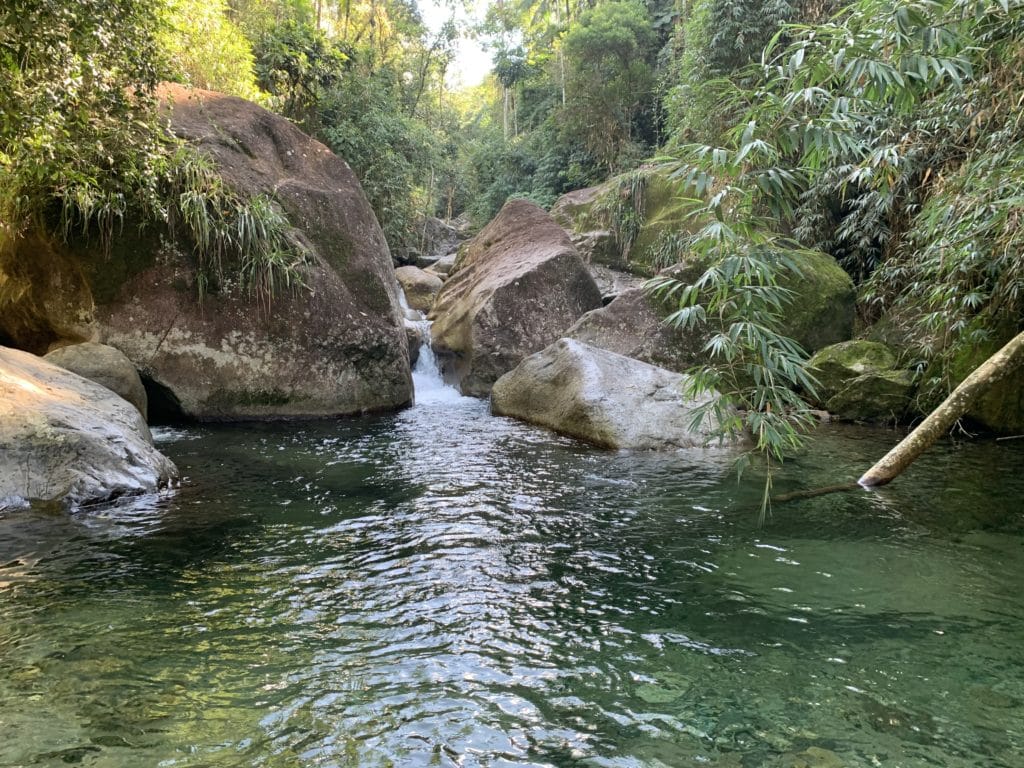
We stayed in Penedo over the Corpus Christi holiday, and while researching what we could do in the area, I discovered Serrinha do Alambari, an Environmental Protection Area (APA) since 1991, located in the municipality of Resende, RJ, on the eastern slope of Itatiaia National Park, in the Serra da Mantiqueira, west of the road to Visconde de Mauá (RJ-163).
Getting to Serrinha do Alambari
There’s no way to get lost if you’re driving, since there are signs all the way from the Dutra highway leading to the village, about twenty minutes from Penedo. There’s no regular bus service to the district, so driving is really the best option. We’d also recommend a 4x4, since the dirt roads are quite rough.
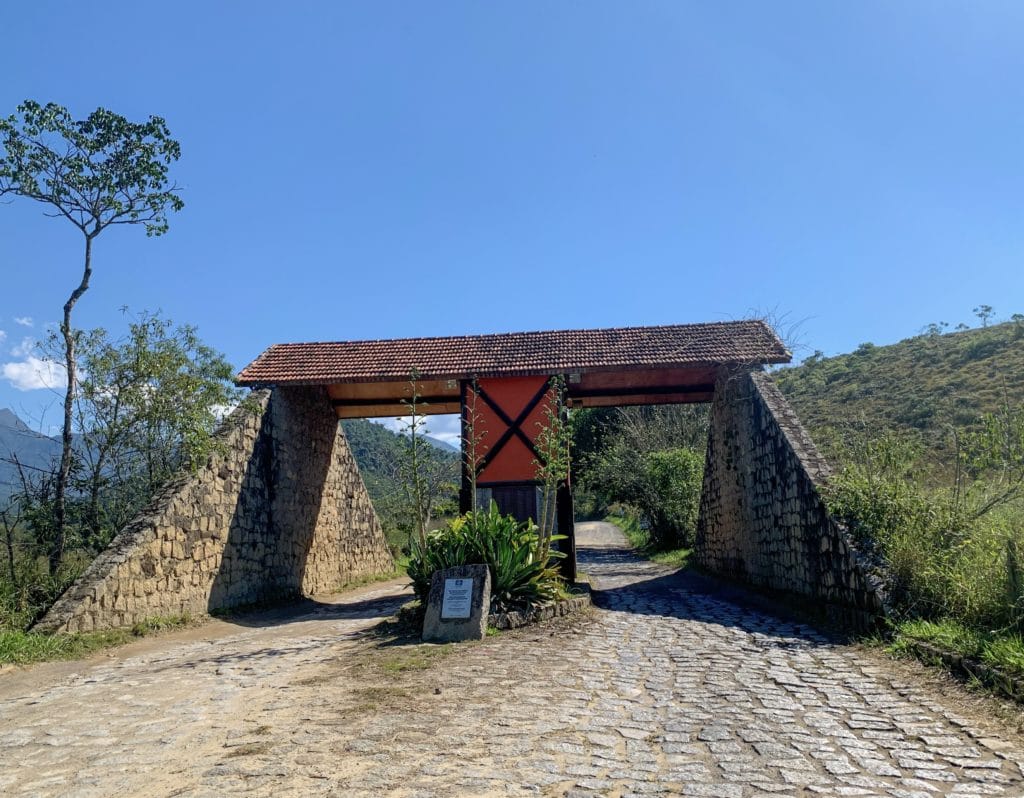
You’ll know you’ve arrived once you pass through the gate, simple but charming. Right after, a curious sign led us to Pedra Sonora.
Pedra Sonora
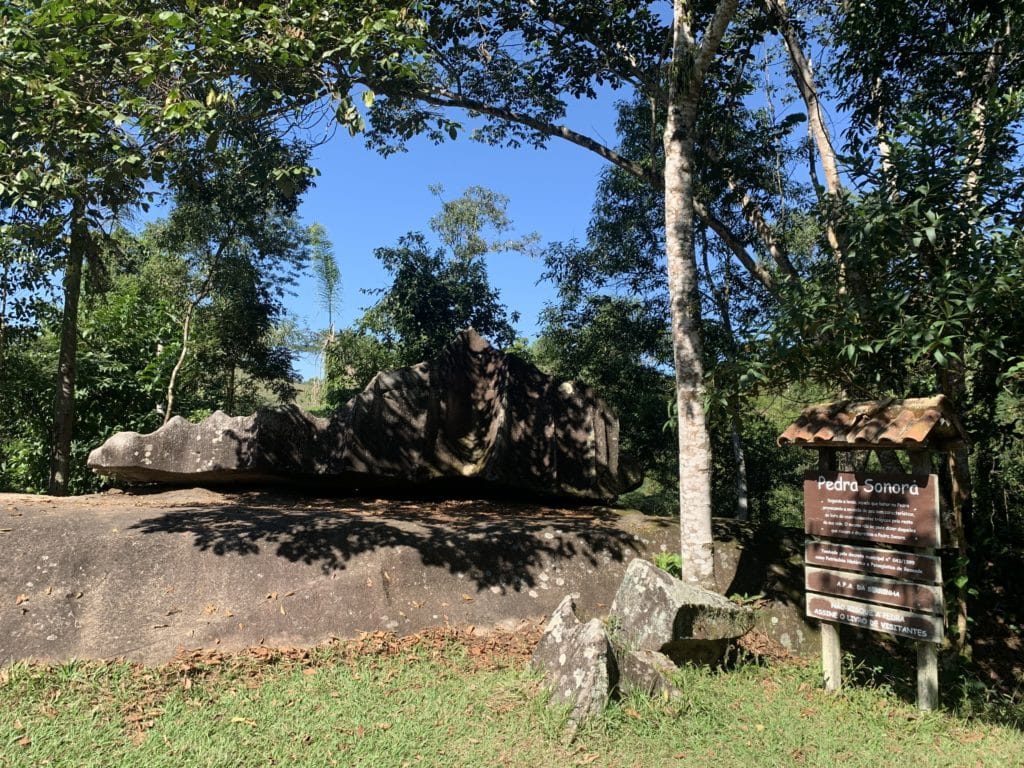
The first attraction you’ll come across in town is Pedra Sonora, designated a Natural Heritage landmark of the municipality of Resende. It’s a rock that produces a metallic sound when you strike it with another rock.
The Legend of Pedra Sonora
There are several legends surrounding this rock. One says that anyone who strikes the shell-shaped rock and hears its rumbling sound will be protected from dying in an accident, by gunshot, or by stabbing.
Another traces back to an Indigenous legend, from many years ago, when the Coroado people were fighting the local Puri people over the land.
An Indigenous chief, while scouting the area, was struck by an arrow in the neck. Unable to call for help, he knelt beside the rock, and his axe fell onto it.
The sound echoed across the hillside, and the wounded man kept striking the rock. His companions, curious, followed the sound and reached him in time to save his life.
Ever since, no one from the tribe would leave to hunt, fish, or go to war without first visiting the rock, striking it, and asking for protection against disaster. This legend has been told in Serrinha do Alambari for more than 30 years.
Igreja de São Sebastião
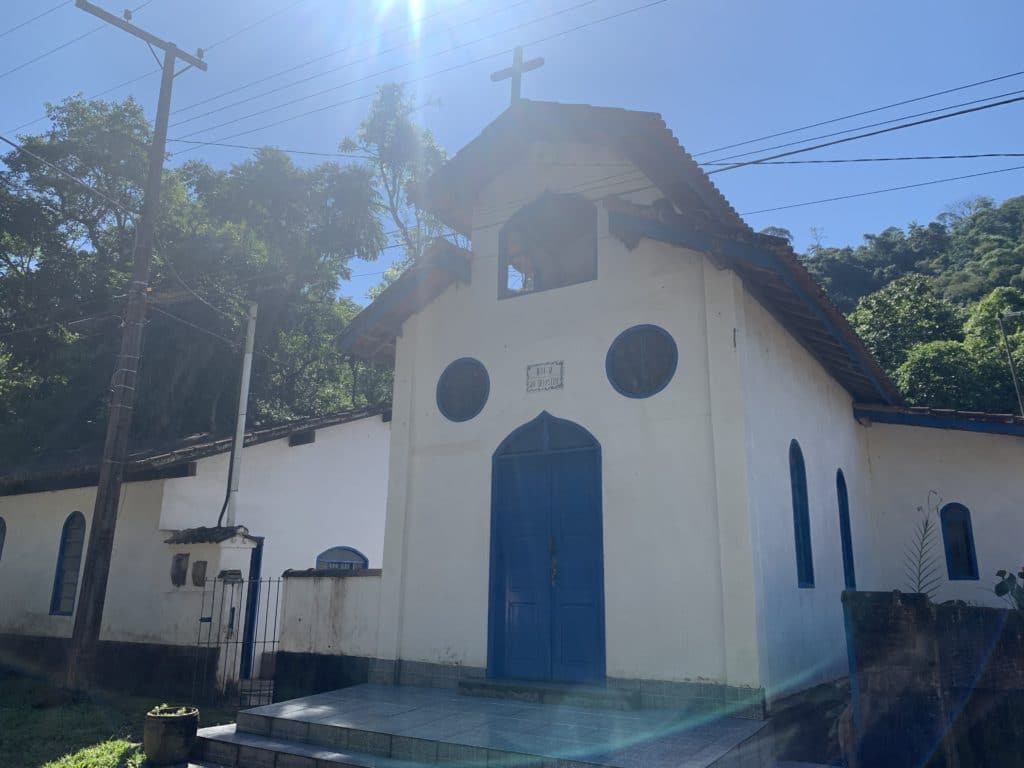
From Pedra Sonora to the campground, you’ll pass a genuinely charming little church in town. The doors were closed when we visited, so we weren’t able to see inside.
Camping Clube do Brasil (CCB)
CCB is an association founded in 1960 to establish and maintain campgrounds across Brazil. Interestingly, the community of Serrinha do Alambari actually formed and grew up around this CCB site, so the campground came before the village itself.
Arriving in the APA, you’ll find Camping Clube do Brasil, a large area with spots for trailers, motorhomes, and, of course, tents. It has decent bathroom facilities, a rustic sauna, and a simple restaurant. Admission to the campground just to see the pools, without camping, is R$15 per person.
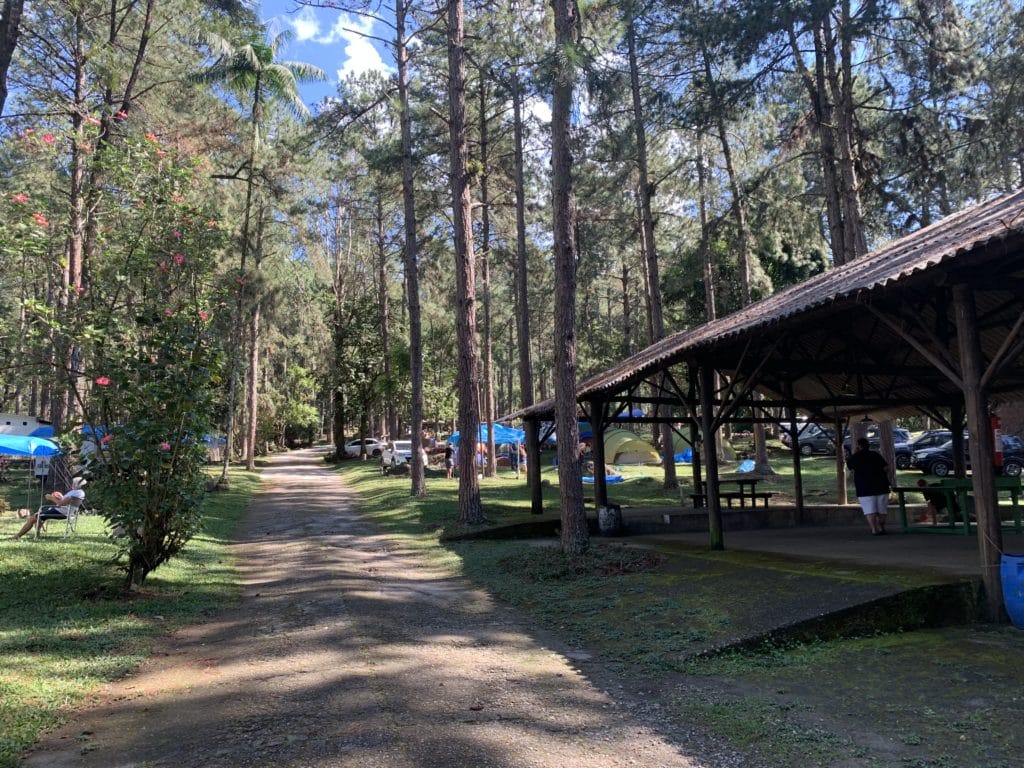
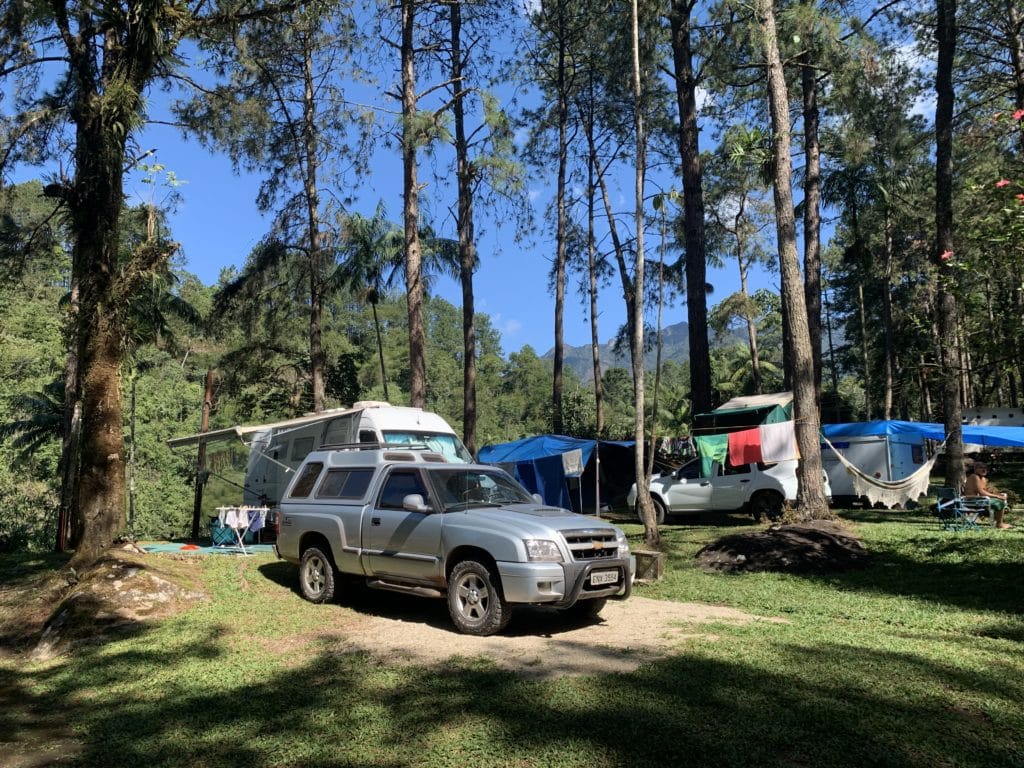
This large green space has 7 pools, small waterfalls spread across a 3 km round-trip trail, and we visited every single one. They’re listed here in the order you’ll encounter them, and there are signs pointing the way to each one.
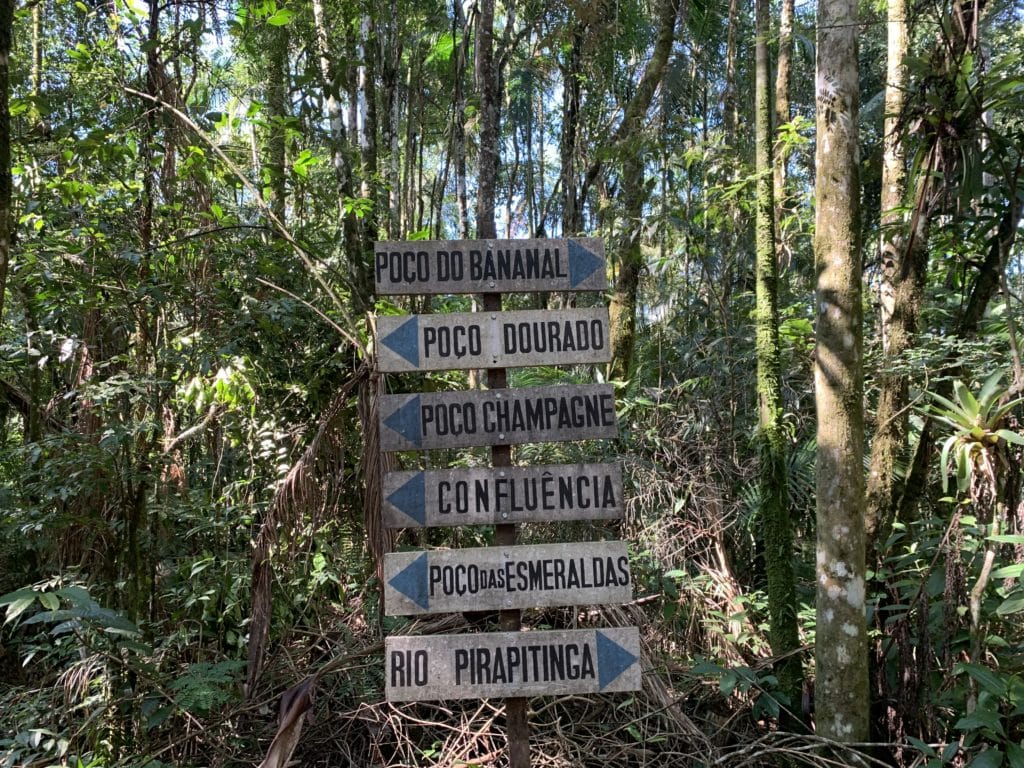
Names of the Pools
- Pinguela
- Dourado
- Coruja
- Champagne
- Bananal
- Esmeraldas
- Sauna
These are small waterfalls, each with its own character and surrounding nature. Our favorite was the last one, Poço das Esmeraldas, which stands out especially for the color and clarity of its water, though it’s quite cold.
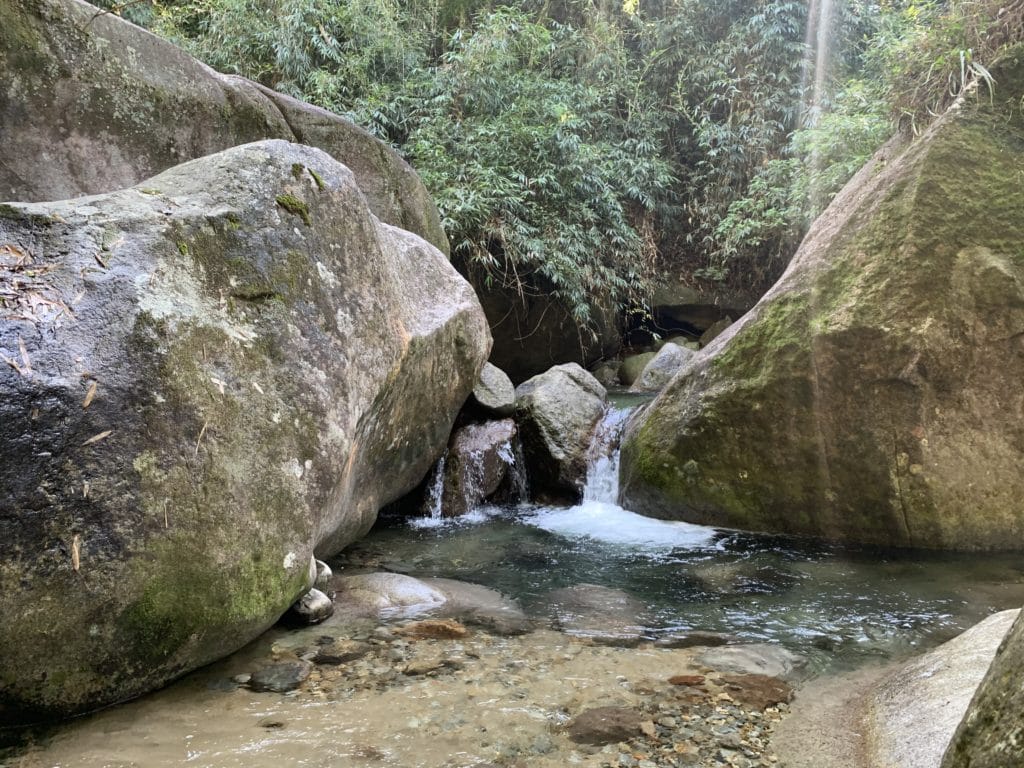
The whole trail is easy, just watch out for a few slippery sections — we’d recommend sneakers to avoid slipping too much.
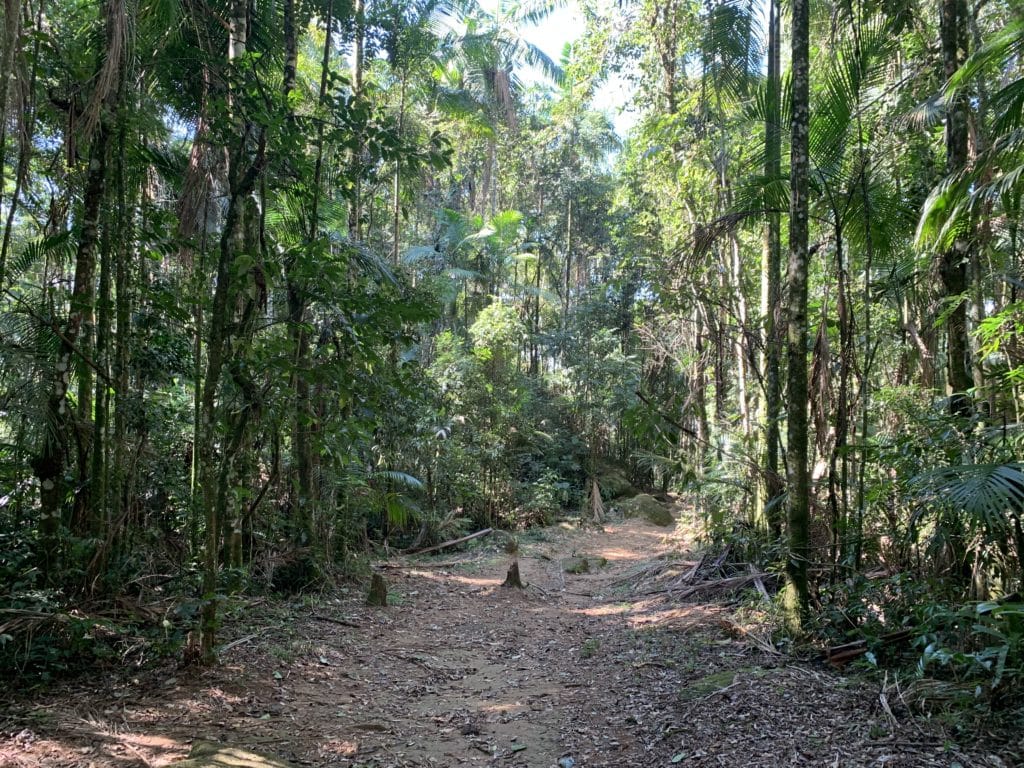
Track powered by Wikiloc
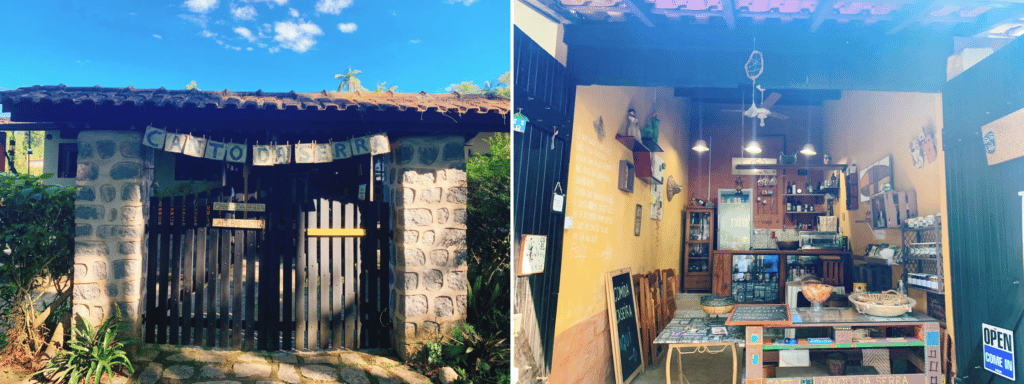
Afterward, leaving the campground, we came across shops selling rural products, like naturally leavened breads, jams, and vegetables. We visited two shops close to each other, run by really pleasant owners, called Tia Naná and Canto da Serra. At the second one, they make home-cooked food daily, though we arrived too late for lunch — we did spot a poster for a brewery advertised there, and asked for directions to find it.
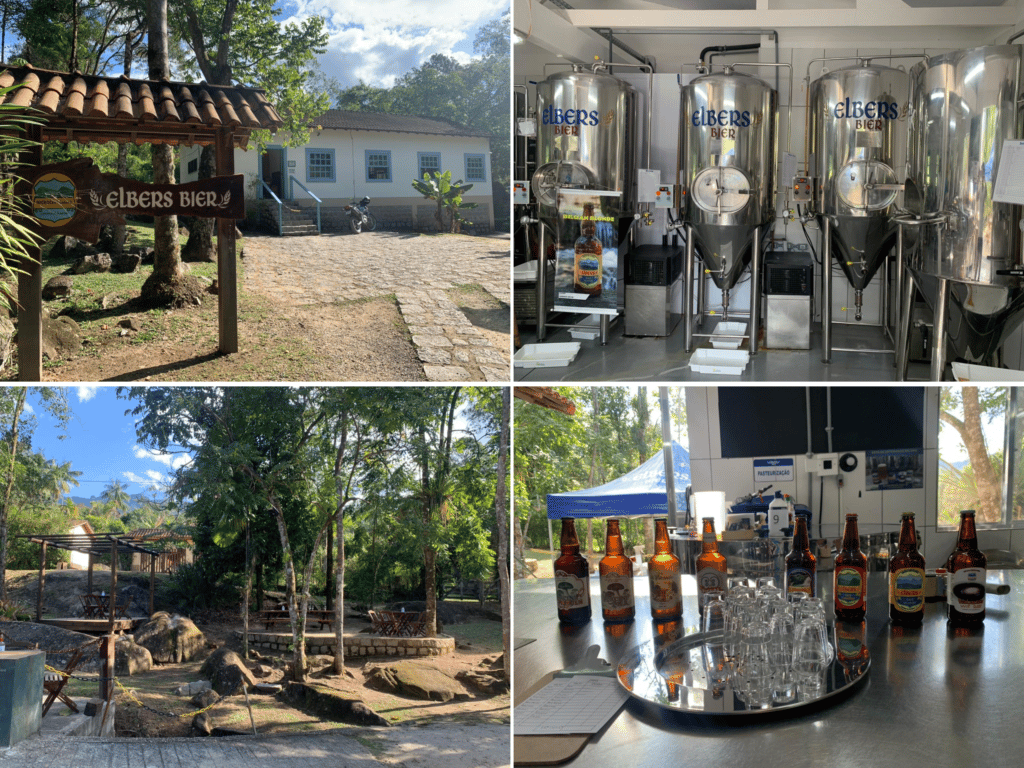
Cervejaria Elbers Biers
The road to the brewery is in really rough shape, so we’d recommend a 4x4 or a vehicle with high clearance, and to watch out for rocks and potholes. It’s well signposted, though, so it’s easy to find.
The brewery consists of a house and an outdoor area converted into a small bar, fully open-air and, without question, really pleasant. They also sell snacks to pair with the beer on weekends.
Inside the house, they brew beer with Belgian influences. Once you arrive, you can ask staff to walk you through the production process — the tour is done individually, since we’re still in a pandemic and every precaution counts. The explanations are genuinely interesting, covering everything from how raw ingredients are stored, through fermentation, to bottling.
They offer 8 types of beer, priced between R$18 and R$20, with progressive discounts depending on how many bottles you buy.
Other Tips
Beyond Serrinha do Alambari, we came across two spots on private property that we’ll mention even though we didn’t visit them ourselves — Poço do Céu and Poço do Dinossauro, both closed because of COVID-19.
Worth noting too: these trails sit on private land, so you’ll need to go with accredited guides.
There are also hotels and restaurants in the area, but since we were staying in Penedo, we didn’t get to explore them.
Most of the area has no cell signal, so it’s always a good idea to bring cash, since card machines don’t work here.
Learn more about our trip in where to eat in Penedo and São José do Barreiro (in Portuguese).
Read the original version in Portuguese on A Bela e o Bigode.