What to Do in Cabo Frio in an Afternoon
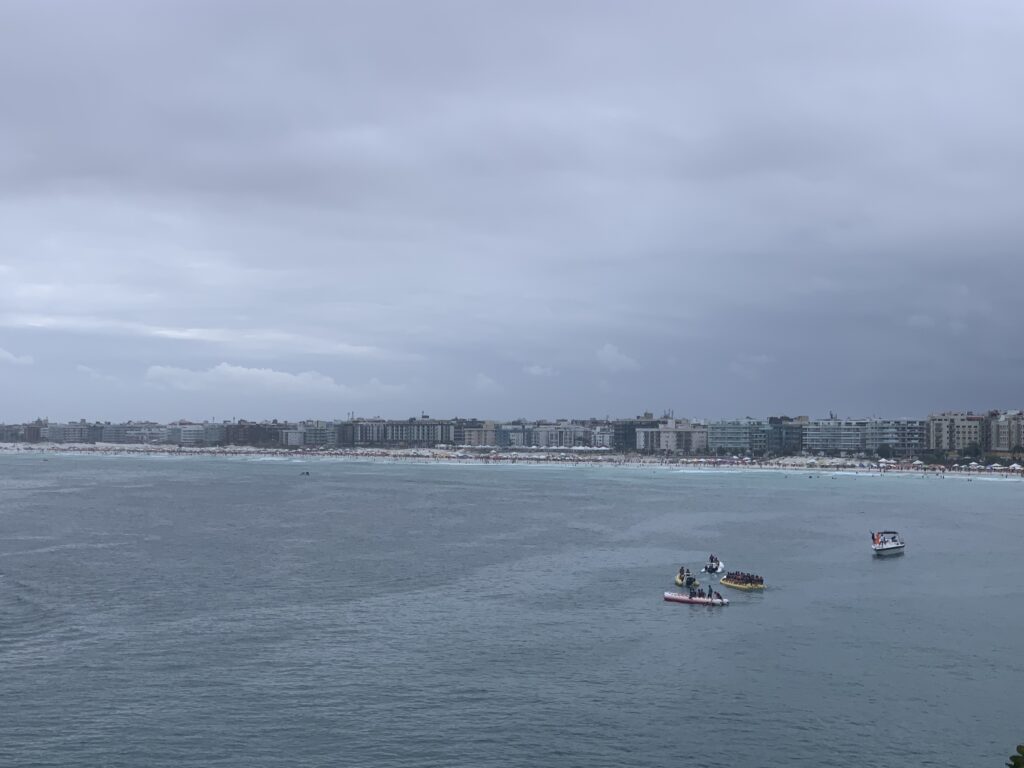
Cabo Frio sits in the Região dos Lagos, along with Búzios and Arraial do Cabo, but it’s a town with plenty of infrastructure, and it genuinely surprised us with its beauty. It gets its name precisely because the water here is cold, so get ready to brave the ocean.
It actually worked out well, since we got a rainy, overcast day, and the town still let us explore without relying solely on the beaches.
We ended up staying in Arraial do Cabo, but honestly, it’s much more worth staying in Cabo Frio, given the town’s infrastructure.
How to Get to Cabo Frio
The Região dos Lagos sits along the northern coast of Rio de Janeiro state.
Bus
Buses run from both Rio de Janeiro, with several daily departures, and São Paulo, with three daily departures from Estação do Tietê, operated by Viação 1001. Check departure times ahead of time. The trip takes about 9 hours, covering roughly 583 km.
Worth remembering, buses depart from Galeão Airport at various times. If you land at Santos Dumont, you’ll need to get to the Rodoviária Novo Rio.
Plane
There are two flight options with Gol, flying direct from Guarulhos to Cabo Frio airport, currently running 3 times a week (Wednesday/Saturday/Sunday).
Or fly from São Paulo to Rio de Janeiro, then take a bus or rent a car from there — we chose the second option.
Car
After arriving at Galeão International Airport or Santos Dumont, or from the city of Rio de Janeiro itself, follow BR-101, known locally as Avenida Brasil, then take the Rio-Niterói Bridge, followed by RJ-124, the Via Lagos, until you reach your destination. Along the way, there are two tolls: one at the Rio-Niterói Bridge, and another at km 22 of Via Lagos.
When to Go to Cabo Frio
Summer, from December to February, is peak season, and the Região dos Lagos is one of Brazil’s most sought-after destinations, so during this window, expect crowded beaches and higher prices.
Holidays and weekends also bring crowded beaches, partly because of demand from the city of Rio itself, running into the same inflated-price, crowded-beach issues as summer.
In winter, you might catch no rain at all, and the ocean water runs slightly less cold than usual — yes, you read that right, the water is less cold, since regardless of season, it’s always chilly there, and the factor behind this is upwelling, which makes the water less cold in winter and colder in summer.
What to Do in Cabo Frio
Praia do Forte
Praia do Forte is Cabo Frio’s main beach, stretching 7.5 km. Located centrally, with a developed shoreline and good infrastructure, so the beach can get crowded on weekends and holidays.
If you prefer calmer water, stay near the fort, where natural pools with crystal-clear water form, though the crowds are bigger there too. If you prefer a quieter beach, head to the opposite end.
Street vendors are plentiful and might get a bit bothersome, but the beach is beautiful!
Praia do Forte, seen from Forte São Matheus
Forte de São Matheus
Forte São Mateus, unfortunately, is a bit neglected — not just in terms of climbing it, where you need to be careful not to slip on the rocks, but also in terms of the information available at the fort, which is quite sparse.
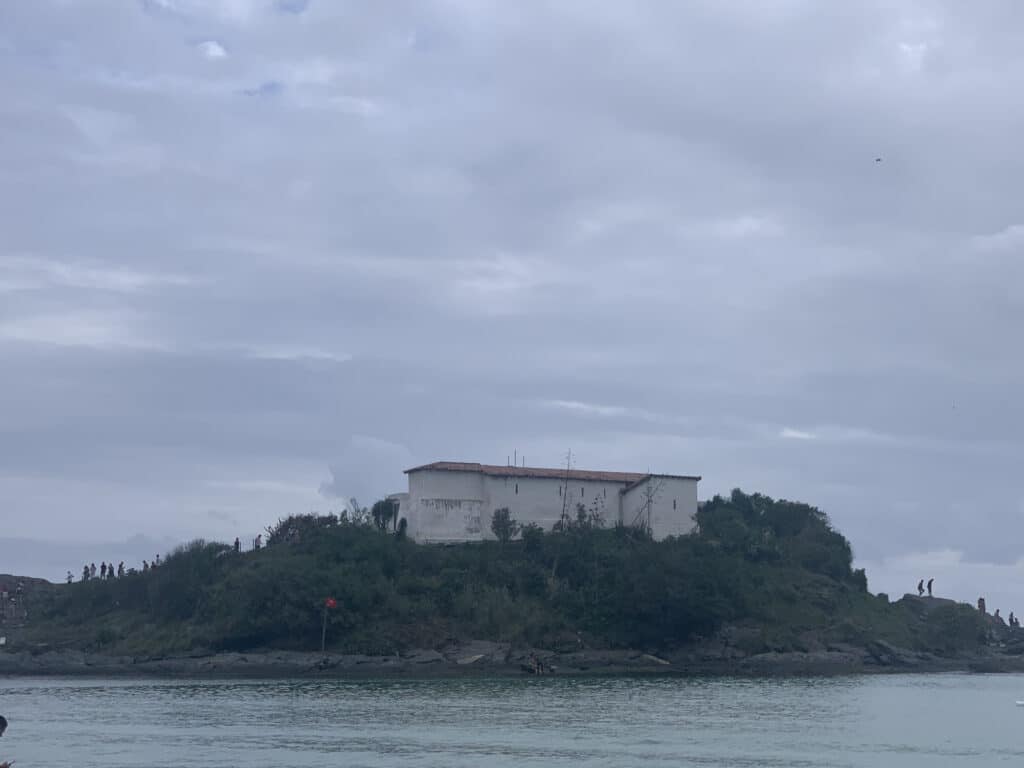 View of the fort from the beach
Built in 1616, it’s one of the oldest structures from Brazil’s colonial period. Its purpose was to protect the town from invasions. It was built with stone, mortar, whale oil, and lime, and it still holds cannons from the era.
It offers a view over Praia do Forte. We heard that history teachers sometimes volunteer at the site to share information, but we couldn’t find a specific schedule to share here.
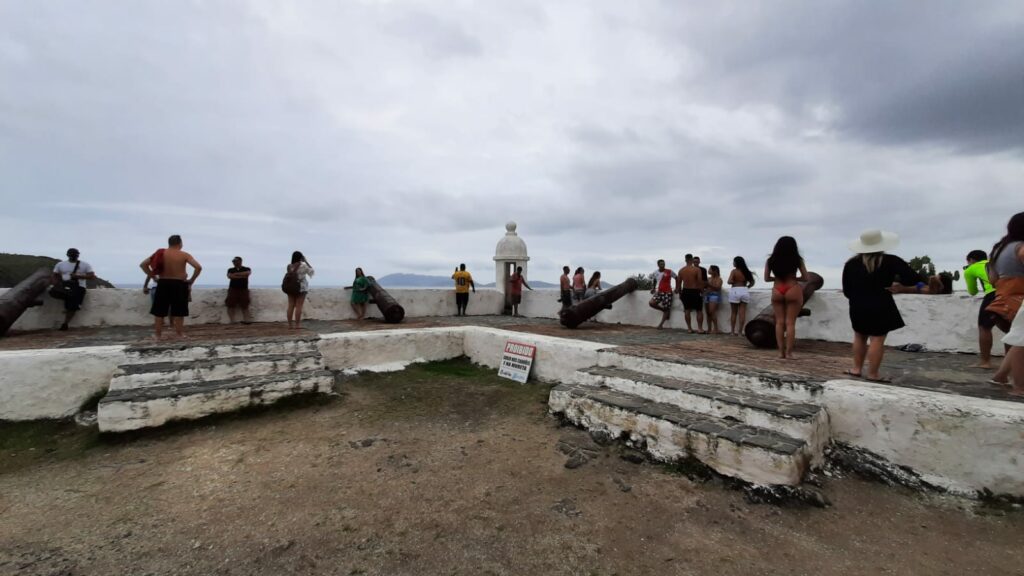 Interior of the fort
Admission is free, open from 8 AM to 6 PM.
Morro da Guia
Morro da Guia offers a spectacular 360-degree view of the town of Cabo Frio, including over the Canal do Itajurú, though not the beaches.
You can’t drive up, and the path is a bit steep, though it’s fully paved and well marked.
At the top, there’s a garden and a wooden walkway, along with a lookout for watching the sunset.
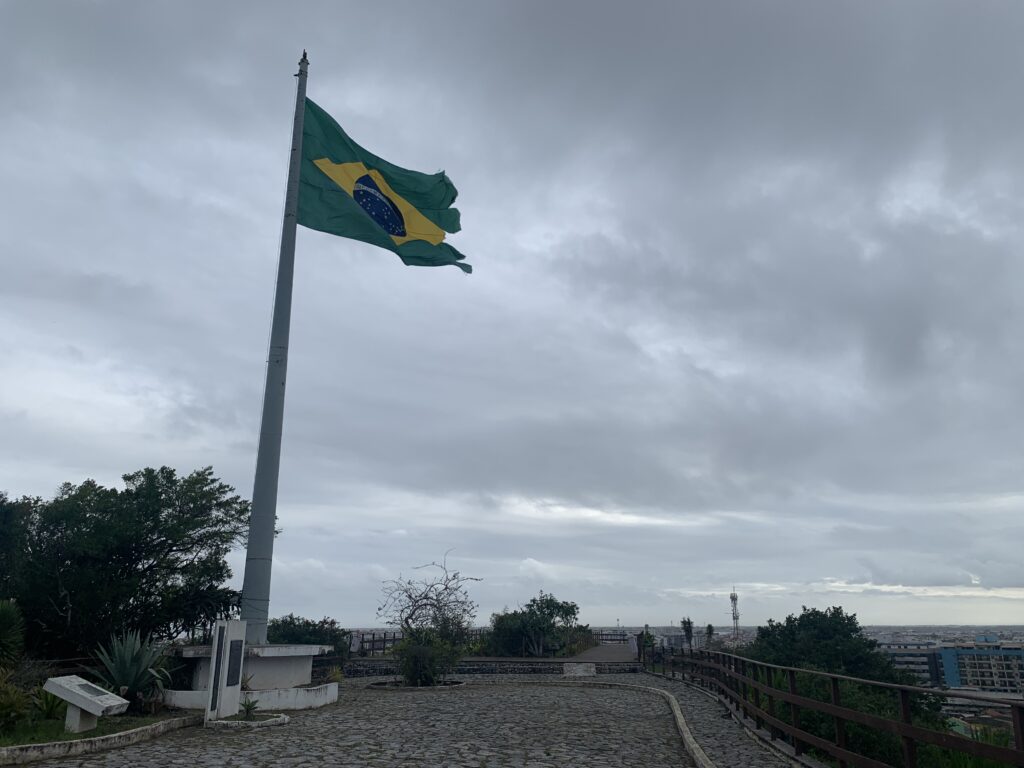 Morro da Guia lookout
What stands out most here is the Capela da Nossa Senhora da Guia, built in 1740. The chapel was closed when we visited, but it holds the saint’s image, tied to a curious legend. As the story goes, the saint’s image kept appearing at the top of the hill, having come from the Convento Nossa Senhora da Guia (today the Museu de Arte Religiosa). The chapel was built to house the image.
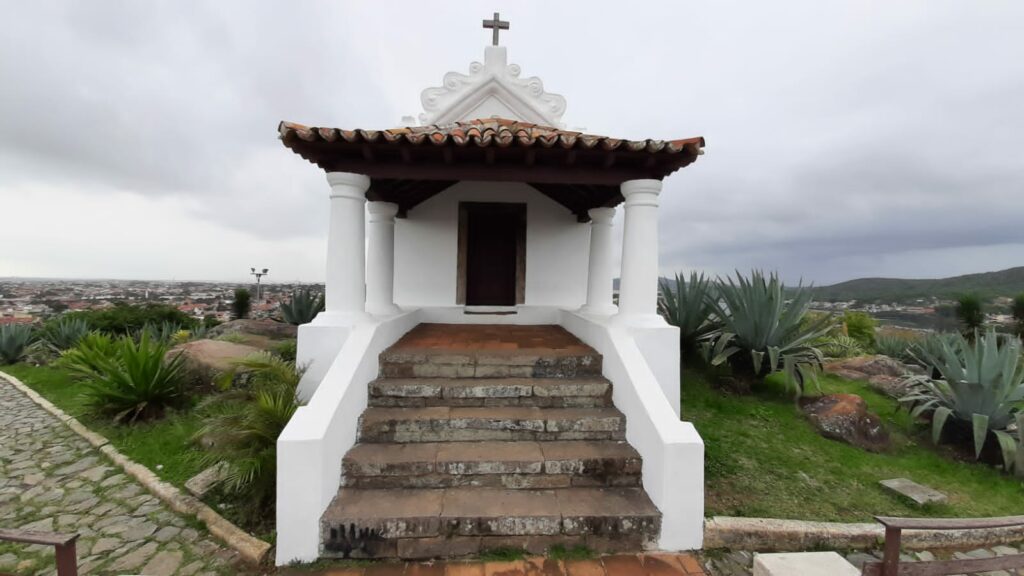 Capela da Nossa Senhora da Guia
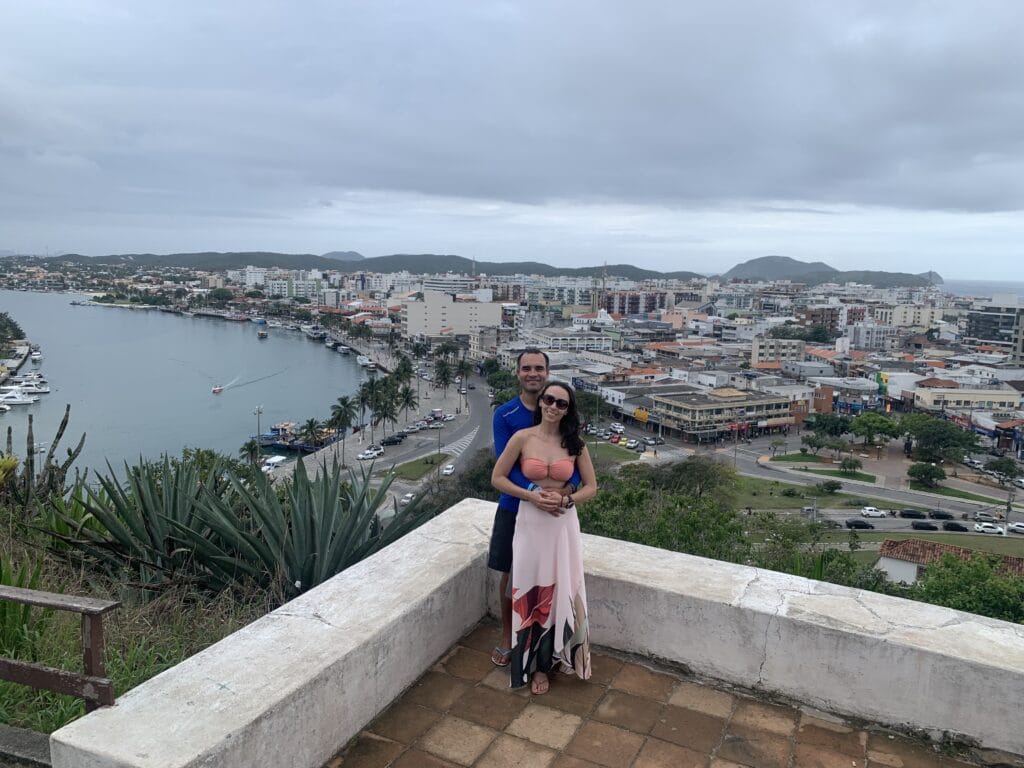 View from Morro da Guia
Museu de Arte Religiosa e Tradicional de Cabo Frio
Below Morro da Guia is the Museu de Arte Religiosa e Tradicional de Cabo Frio, which can be visited, though it was closed for a holiday when we went.
It operated as the Convento Nossa Senhora dos Anjos starting in 1686, and as a museum since 1982 — a beautiful example of colonial-era Franciscan architecture.
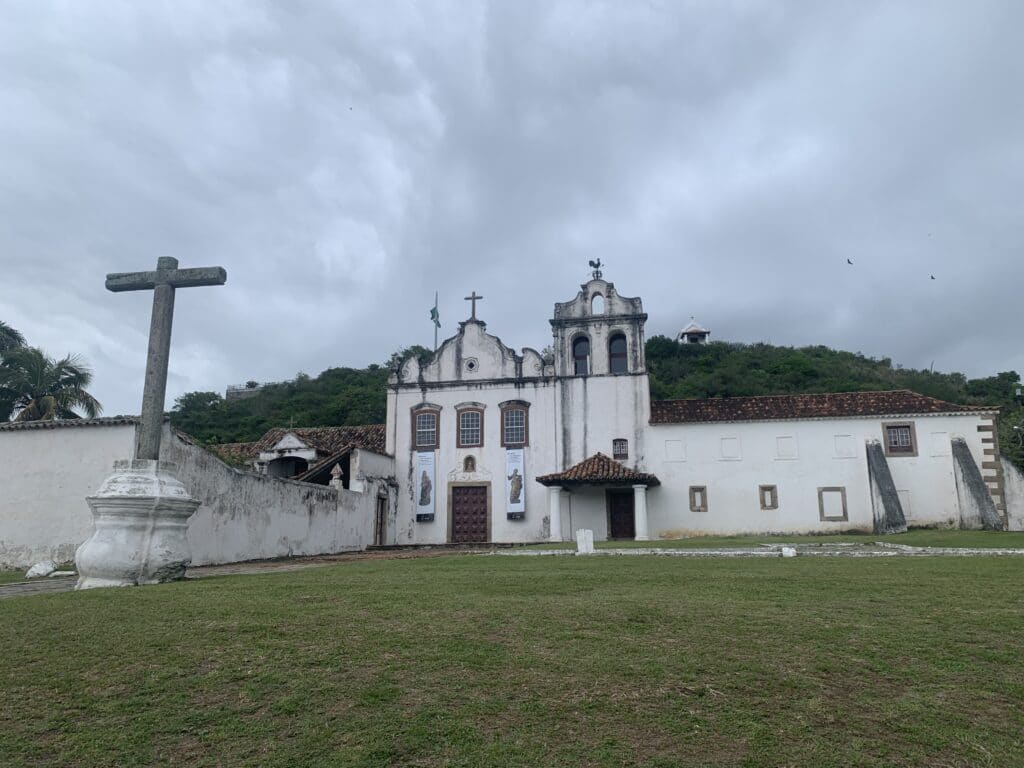 Museu de Arte Religiosa e Tradicional
Bairro da Passagem
Bairro da Passagem has Portuguese origins, and it’s also Cabo Frio’s oldest neighborhood, dating from 1616 to 1660. It’s home to several buildings designated as historic and cultural landmarks.
We loved the spot, with its narrow alleys and colonial houses with colorful windows and doors, reminiscent of Paraty, though on a smaller scale.
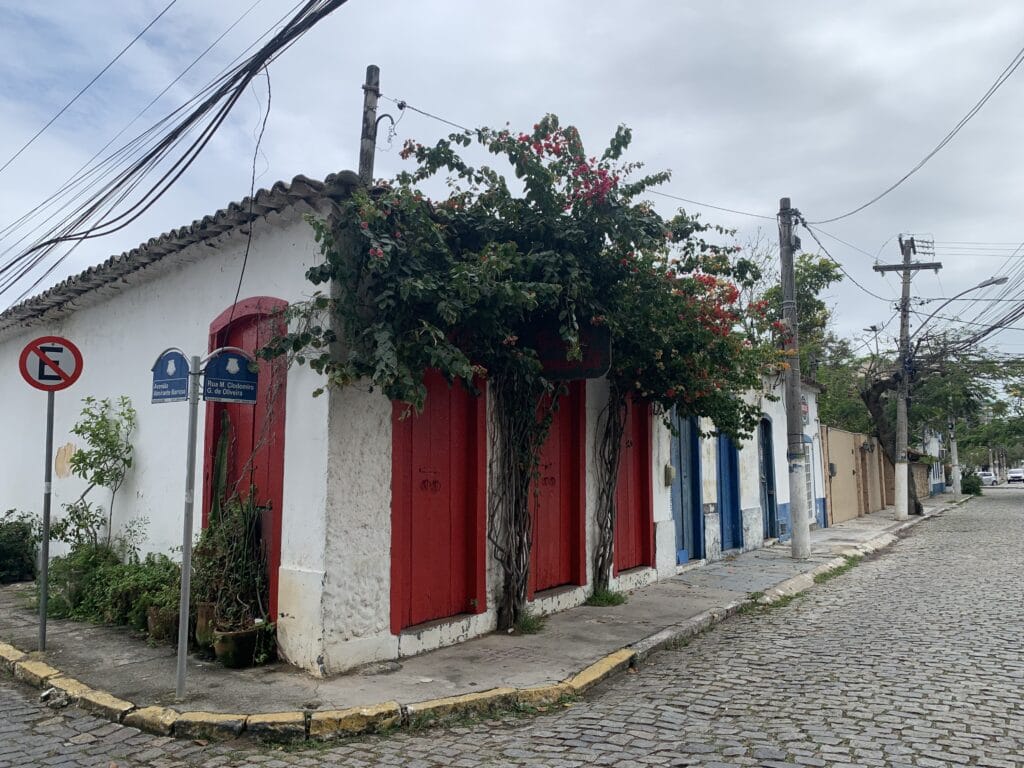 Colonial house in Cabo Frio
Beco do Príncipe, or Beco do Furtado, is one of the best-known spots, a passageway marked by an arch running from Hotel Solar do Arco to the Canal do Itajurú and Praça São Benedito.
The hotel was built by the royal House of Orléans and Bragança. But during construction, the passage used by fishermen was blocked off, so the arch was built to restore the route.
At Largo São Benedito stands the Igreja de São Benedito, built by enslaved and free Black people, once home to religious festivities and expressions of Black culture.
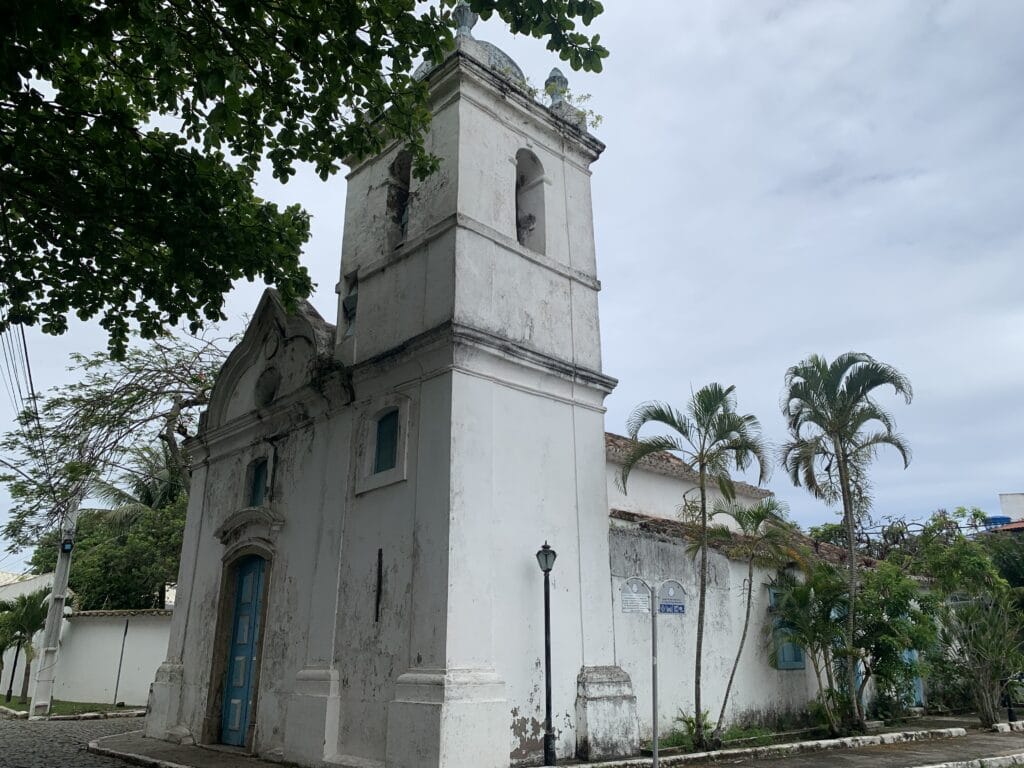 Igreja de São Benedito
Between the square and the Canal do Itajurú, there are several charming restaurants, some with live music, and we chose an excellent Thai spot called Casa Kanaloa (Instagram).
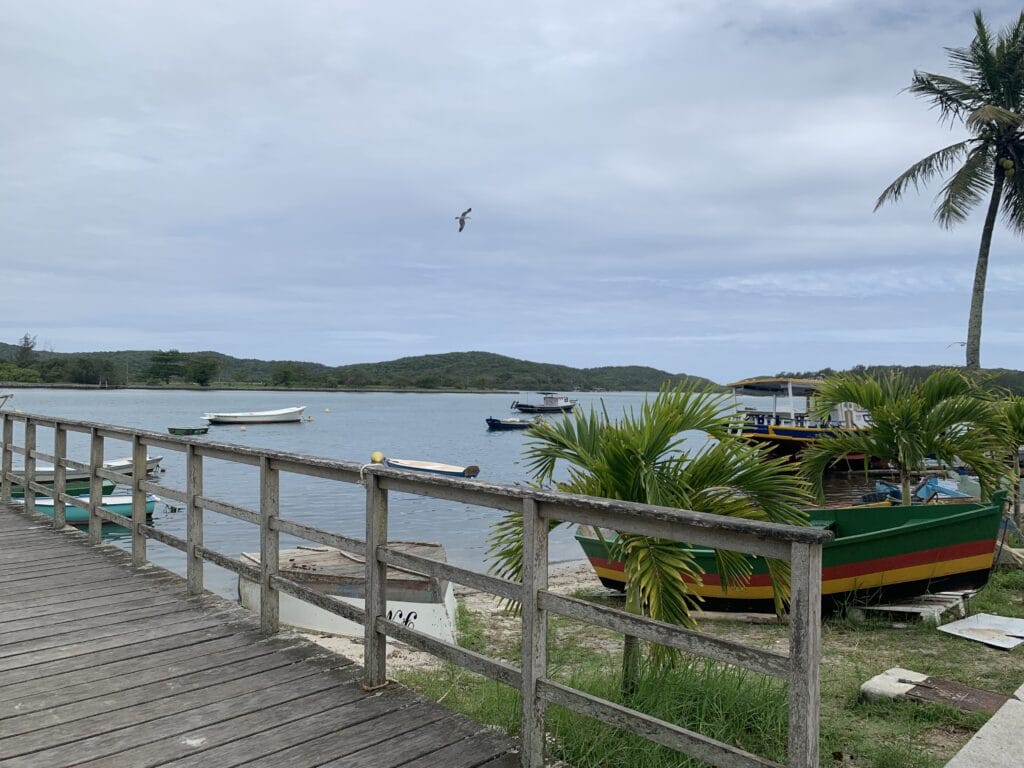 Lagoa de Araruama
Rua dos Biquínis
For anyone who loves shopping, a visit to Rua dos Biquínis is a great addition to your itinerary, since it’s an open-air mall with more than 150 shops specializing in swimwear, activewear, and accessories.
The advantage here is that shops let you mix and match your own bikini, with different styles and sizes.
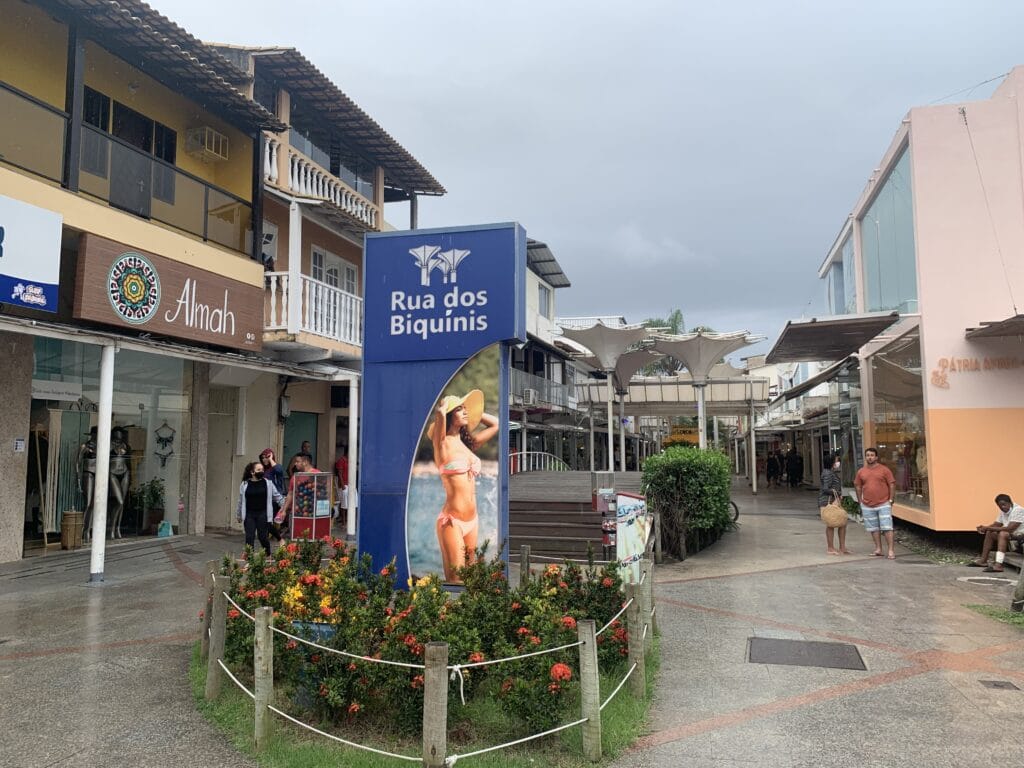 Rua dos Biquínis
Open daily during peak season from 8 AM to midnight, and during off-season from 9 AM to 9 PM.
Other Tips for Cabo Frio
Ilha do Japonês
As mentioned earlier, we went to Cabo Frio to spend an afternoon since it was raining and the water had gotten murky. So we weren’t able to do this tour, but it’s one we read about with good reviews. That said, it needs to be done at the right time, while the tide is rising (not at the lowest tide, nor once the tide is fully high), so the water stays clear.
This small island sits in the Canal do Itajurú and is part of the Parque Estadual da Costa do Sol. It’s existed since the 17th century, and its area has grown over time due to sediment buildup in the channel.
Its name comes from a Japanese family, the Yamagatas, who owned the island from the 1920s until 1936.
Since it’s part of a state park, there’s a R$10 admission fee.
The crossing runs daily through the Associação das Empresas de Táxi Marinho de Cabo Frio, in the Passagem neighborhood. Contact them via WhatsApp (22-99715-3557), 8 AM to 5 PM, for R$20.00 per person.
Praia do Peró and Praia das Conchas
Praia do Peró and Praia das Conchas are more remote beaches, so you’ll need a car or taxi, though both are close to each other.
Praia do Peró has infrastructure, paved streets, and stretches 7 km. Street parking is paid, with staff walking around collecting fees. Praia das Conchas, meanwhile, has more rustic access, shaped like a half-moon cove, just 600 meters long, with crystal-clear water.
Peró earned the international Blue Flag certification in 2018, guaranteeing the quality of its sand, water, and accessibility, with restrooms and ramps adapted for people with disabilities. Only 18 beaches in Brazil have received this quality symbol.
Between the two beaches, there are two hills that double as lookouts, both worth the climb for the view: Morro do Vigia, taking about an hour to climb, and Ponta do Arpoador, a 15-minute climb.
Diving in Cabo Frio
Diving is widely practiced in the region thanks to the clarity of the water, though as mentioned earlier, I can no longer do this sport myself, since I’ve already suffered a barotrauma.
One of the recommended spots for diving is Ilha dos Papagaios, about 8 km by boat from downtown Cabo Frio, home to a wide range of marine biodiversity. There’s also Ilha Comprida, one of the best-known spots for the sport.
Where to Eat in Cabo Frio
Since we only spent an afternoon there, we only got to try one restaurant, though there are several good options near the Canal do Itajurú.
Casa Kanaloa
Casa Kanaloa once belonged to Seu Carlos, owner of the boat that shared its name, Kanaloa I. Seu Carlos loved the sea and was a close friend of the current owner, Davi Barcellos, who honors his friend’s memory by keeping the restaurant’s story alive.
This Thai food restaurant surprises with its pleasant atmosphere, excellent service, and without question, spectacular food. On Instagram, you can see photos of the dishes to help you decide.
For the main course, we ordered Magret with orange curry and plantain purée (R$83.00). The dish is beautifully presented and just as good tasting. I ordered fried jasmine rice served in a pineapple with shrimp (R$79.00), equally delicious.
We loved the food so much that we ended up ordering not one but two desserts: fried banana with grilled butter cheese and cinnamon ice cream (R$30.00). We also tried strawberry ice cream flambéed in sake with vanilla ice cream and chocolate ganache (R$32.00), which was tasty too.
The same owner has another restaurant, Arcos do Canal, also beautiful, though unfortunately we didn’t get to visit. Its menu looks great too.
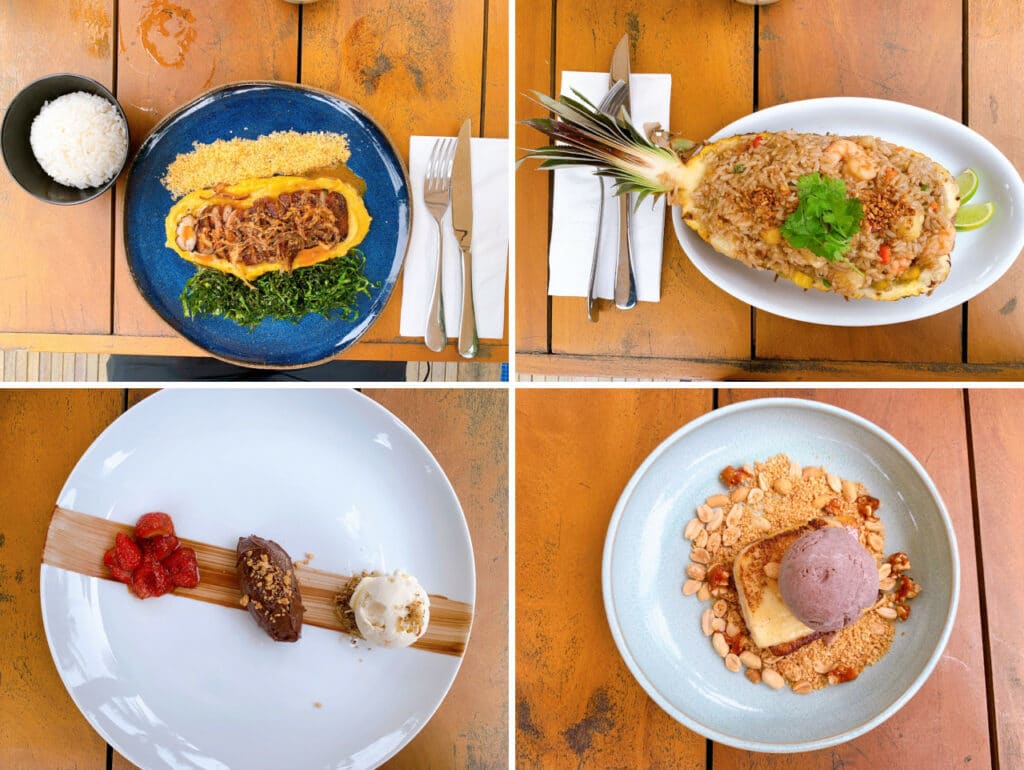 Restaurante Casa Kanaloa, Cabo Frio, RJ
Read more about our trip in Arraial do Cabo and Búzios.
Read the original version in Portuguese on A Bela e o Bigode.