What to Do in Rio de Janeiro, the Marvelous City
To start, Rio de Janeiro is one of Brazil’s most important cities, with an incredibly strong tourism scene thanks to its beautiful attractions. It also served as Brazil’s capital from 1763 until 1960, when Brasília took over.
The first thing we want to mention: Rio can be an extremely dangerous city in certain areas, so be very careful with jewelry or anything valuable you might want to wear. Our honest advice: just don’t wear it.
Always prioritize paid, enclosed venues, even for sightseeing, to avoid robbery, group muggings, or stray bullets — and be especially careful of viewpoints with beautiful views that unfortunately sit inside favelas (informal communities), like Mirante Dona Marta.
We would not recommend entering any favela, even with a local guide — it’s simply not worth the risk, and there are plenty of equally beautiful views you can find elsewhere.
With that out of the way, here’s everything we visited on this trip, along with how we picked spots and bought tickets.
Where to stay in Rio de Janeiro
This really depends on what you want to see, since Rio is a huge city. Ibis Styles Botafogo is a great option, close to most attractions and with the reliable Ibis quality. Novotel Porto Maravilha is close to downtown and makes it easy to get around the historic center.
What to do in Rio de Janeiro
Historic Downtown Rio de Janeiro
Despite the rain, since everything was close together, we did this entire section on foot — just made sure to dress for the weather. We had a rental car, but parking downtown was really hard to find.
Confeitaria Colombo
We came here for breakfast — hours were reduced due to the pandemic, so check ahead. We covered this café in more detail in our where to eat in Rio de Janeiro post. Absolutely worth it — the building is gorgeous, built in colonial style, and the food is delicious.

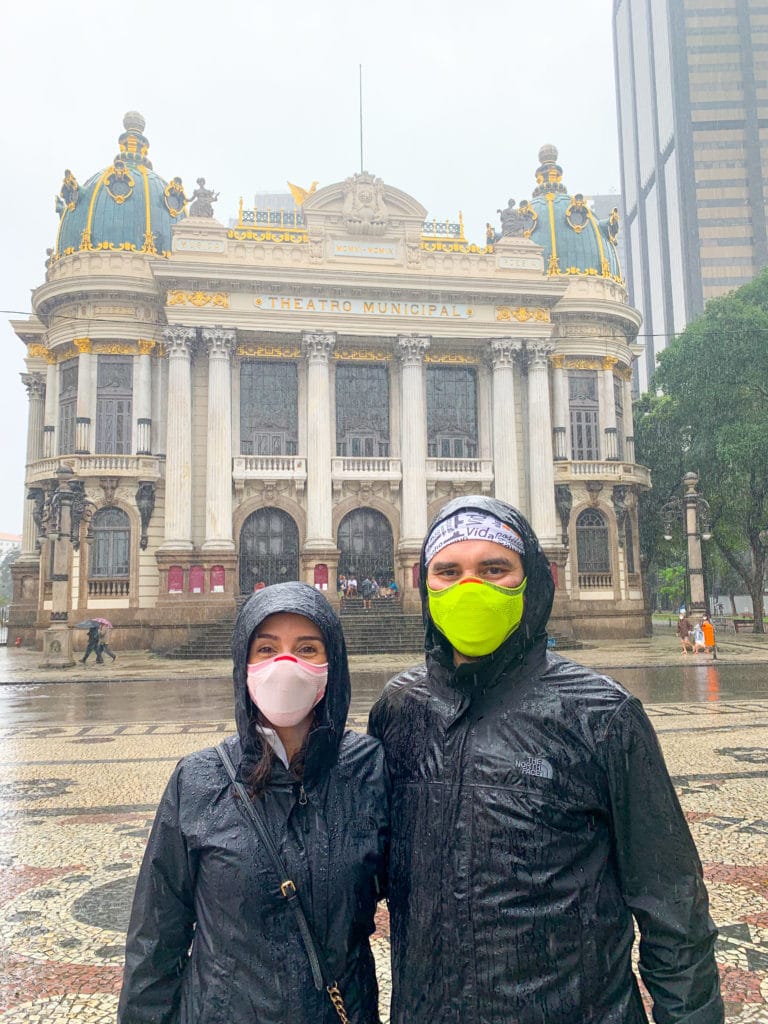
Teatro Municipal
An imposing building in downtown Rio, opened in 1909 after four years of construction in eclectic style — currently closed due to the pandemic. On weekdays you can normally book a guided tour, while weekends are reserved for performances.
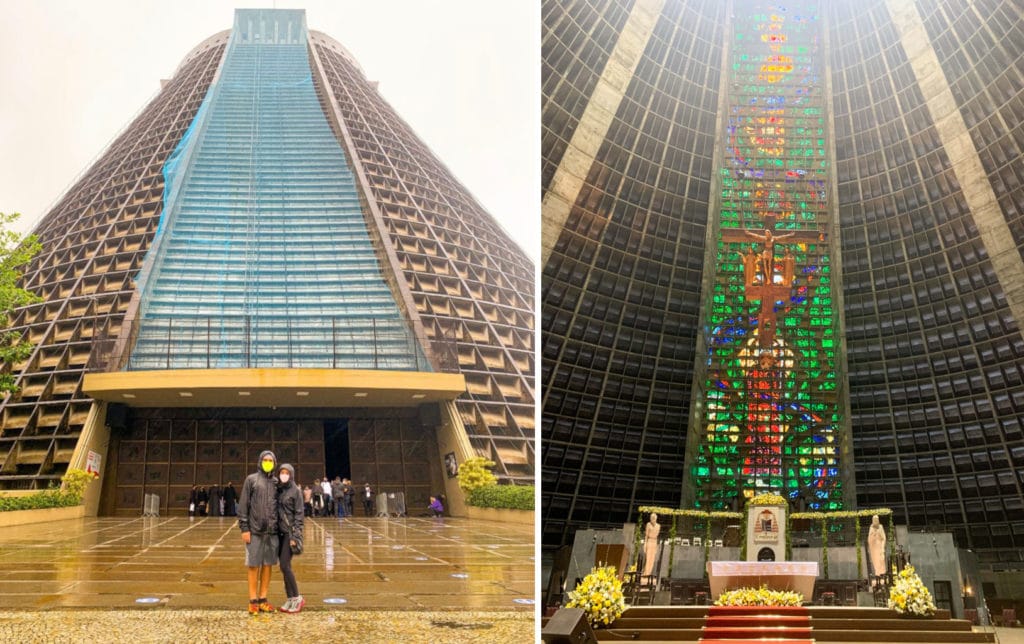
Catedral de São Sebastião
- Catholic church
- Also known as Rio de Janeiro’s Metropolitan Cathedral
- Opened in 1979
- 75 meters tall, in a conical shape
- Inspired by Mayan pyramids
Striking for its stained-glass windows — well worth stepping inside.
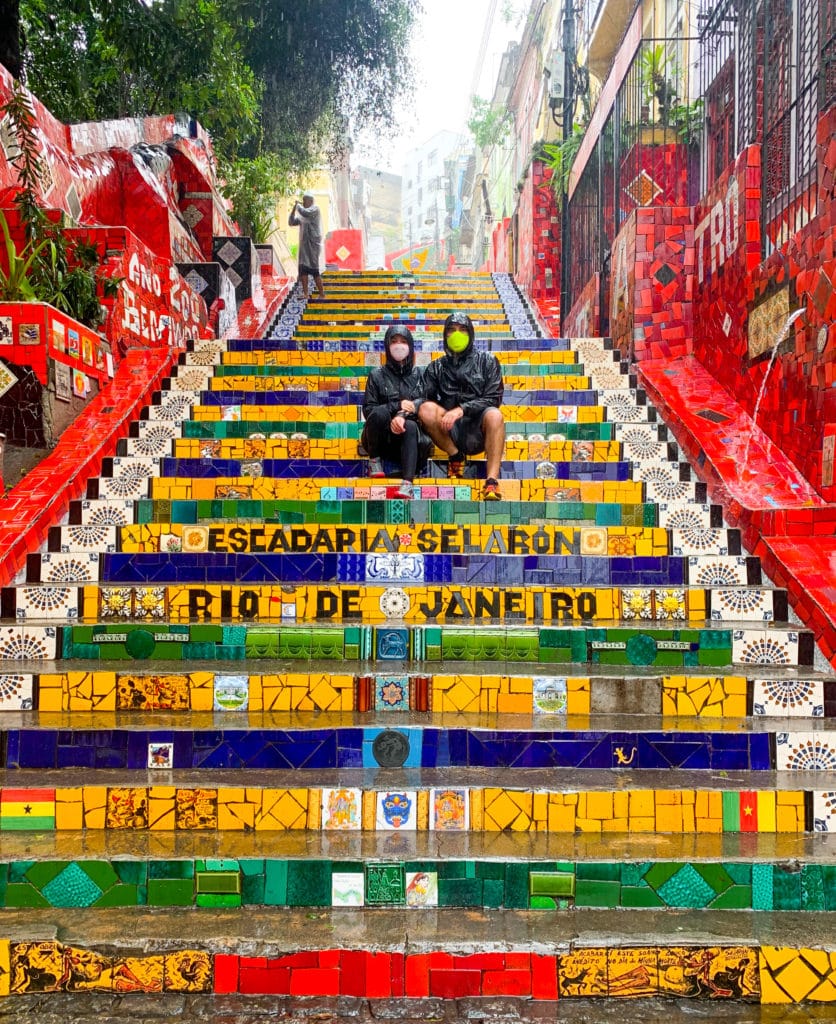
Escadaria Selarón
- Located between the Santa Teresa and Lapa neighborhoods
- Created by Chilean artist Jorge Selarón, a painter and ceramicist
- Made from 2,000 tile pieces
- Built in 1990
We thought this spot was beautiful — it sits near the Arcos da Lapa, and if you’re there around lunchtime, it’s worth checking out the restaurants near the steps, since there are some great options.
From there, we drove to the port district, which has been beautifully revitalized through a project called Porto Maravilha.
What to see in Porto Maravilha
This district is packed with attractions worth visiting, especially on a rainy day, since most are indoors.
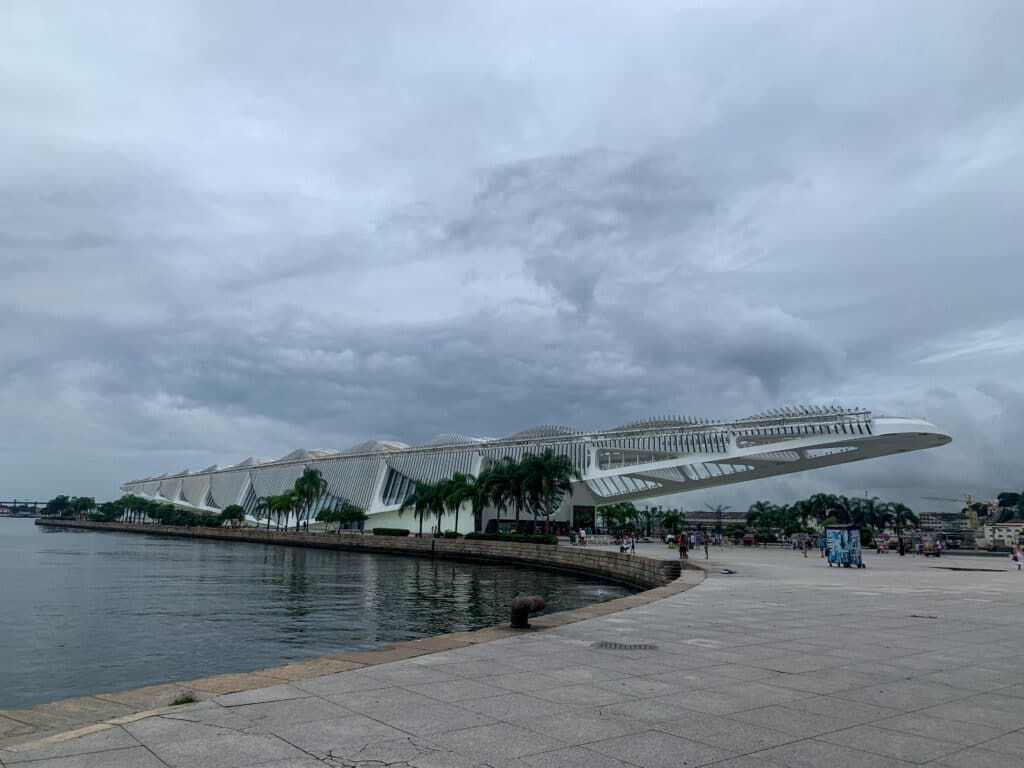
Museu do Amanhã (Museum of Tomorrow)
- Interactive applied-science museum
- 20 meters tall
- Tickets: R$30 full price, R$16 discounted
- Opened in 2015
- Designed by the Roberto Marinho Foundation in partnership with the City of Rio de Janeiro
This is a sustainable building: seawater is stored in a reservoir and treated for use in the air conditioning and the reflecting pool surrounding the building, while the roof is made of photovoltaic panels that shift according to the sun’s position.
An impressive structure, though the reflecting pool was inactive during our visit. Fun tip: look for shapes in the exterior design — a whale, a boat, and more.
The permanent exhibit inside is entirely futuristic, and it’s worth the visit especially for the videos on pollution statistics and humanity’s environmental impact. There’s a restaurant inside for coffee or a meal, plus a souvenir shop.
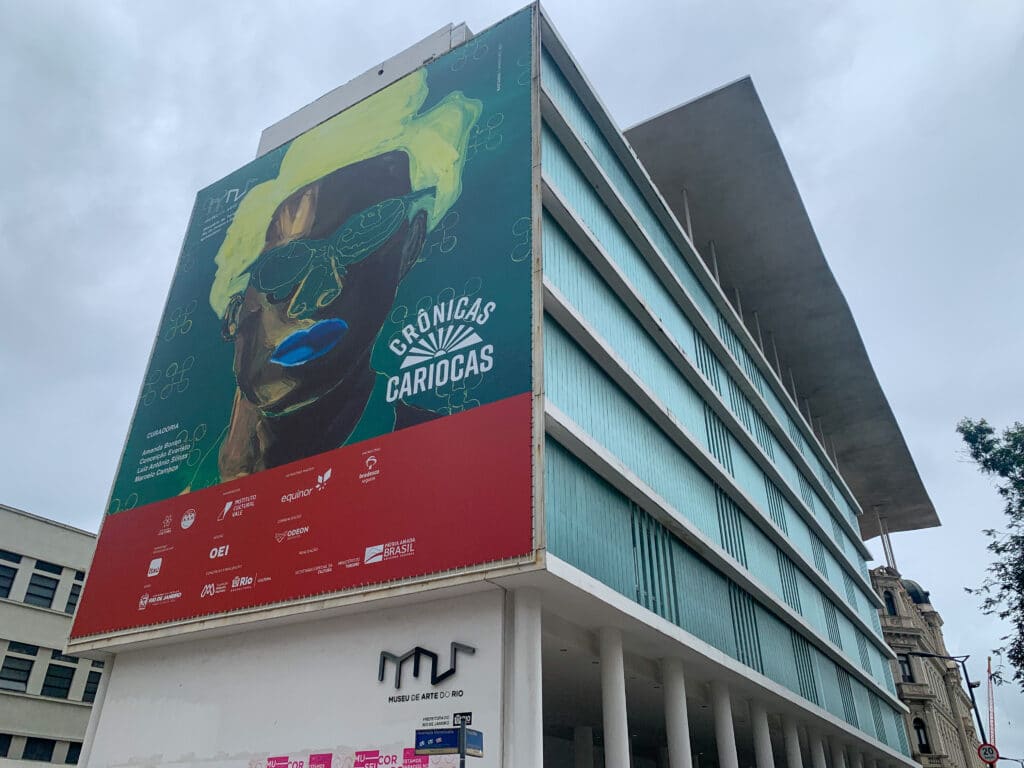
Museu de Arte do Rio
- Opened in 2013
Created as part of the Porto Maravilha Cultural project, aimed at restoring and celebrating heritage in Rio’s port district.
It occupies two buildings on Praça Mauá, connected by a suspended walkway nicknamed the “fluid roof” — a category winner at the Architizer A+ Awards, a well-known international architecture prize.
The top floor serves as a lookout over the Museu do Amanhã, and exhibits rotate over time — we caught “Crônicas Cariocas,” which we found genuinely interesting.
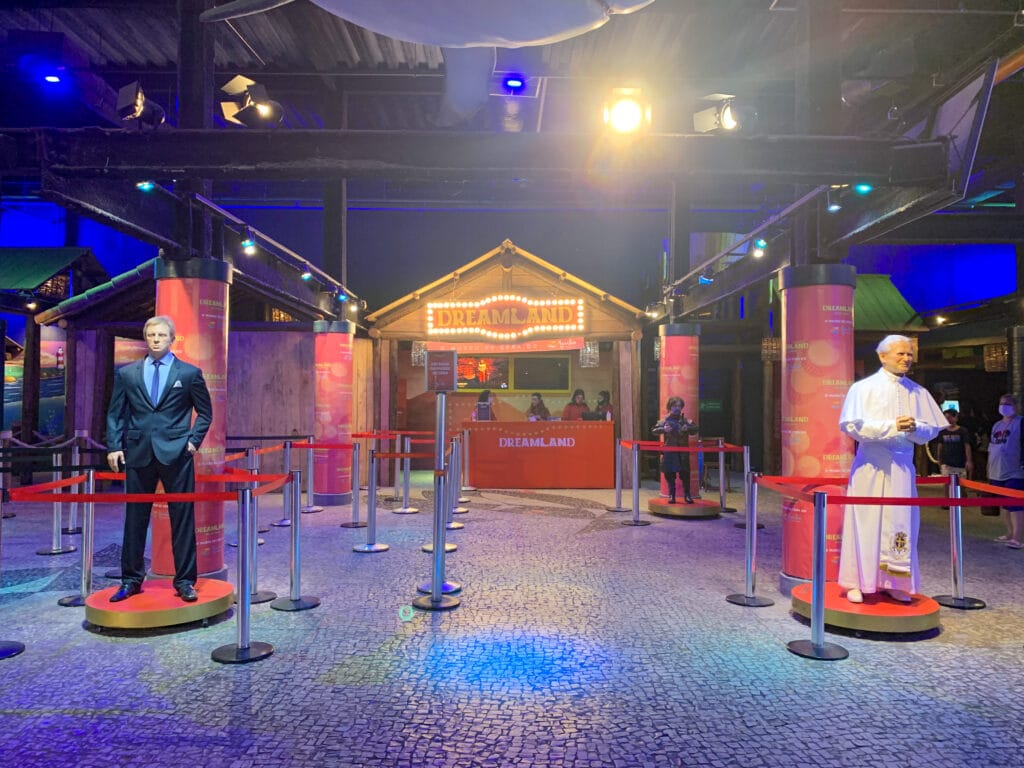
AquaRio
South America’s largest aquarium, home to 5,000 animals across 350 species from Brazil and around the world, spread across 28 tanks. Simply beautiful! Absolutely worth it — don’t skip this one!
Very well organized, with a café on-site and clear signage throughout. The staged photo ops are a lot of fun, and you can buy digital or printed copies!
The best part is walking through the underwater tunnel and getting close to the animals, especially the sharks and rays!

Inside AquaRio, you’ll also find the Dreamland wax museum, which requires a separate ticket — since we’d already visited another wax museum, we skipped this one, but for first-timers, we’d say it’s worth it, since the figures are remarkably lifelike.
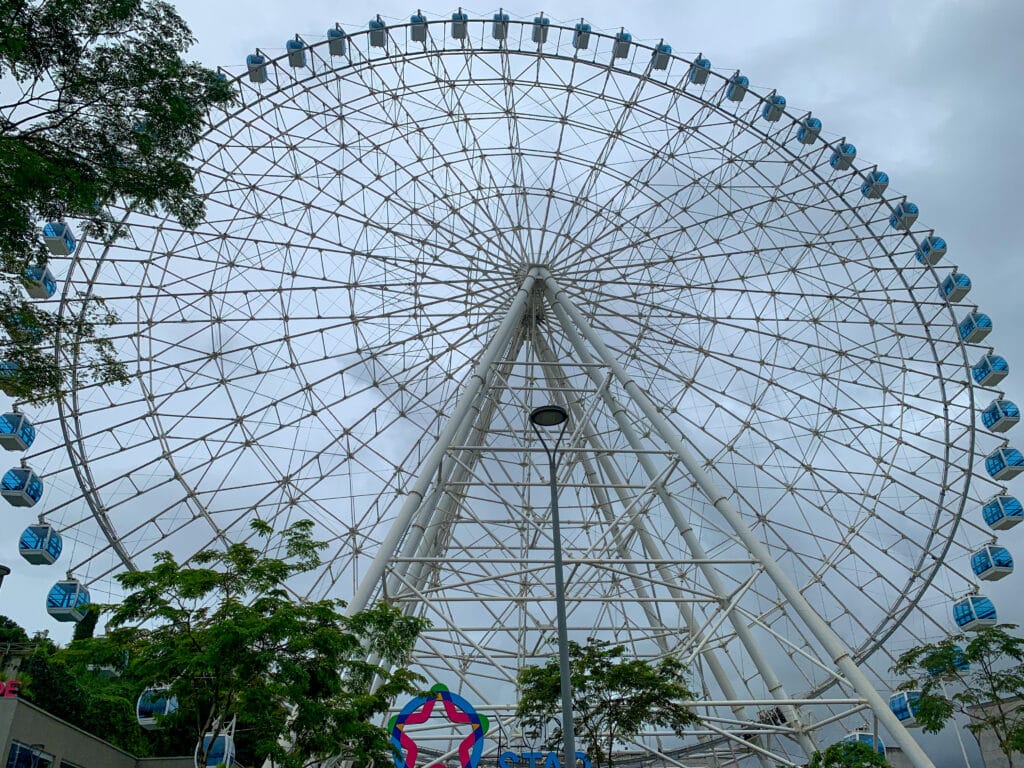
Yup Star Rio
This Ferris wheel stands 88 meters tall, holding 324 people across 54 climate-controlled cabins, operated by the company since 2019.
The ride lasts about 20 minutes, since the wheel moves quite slowly, but we loved the experience.
Boulevard Olímpico in Rio de Janeiro
- Right in front of the port warehouses
- “Etnias” mural by artist Eduardo Kobra
- Stretches 2.5 km along the waterfront
- Opened in 2016
Impressive for its scale and vibrant colors — a great photo spot.

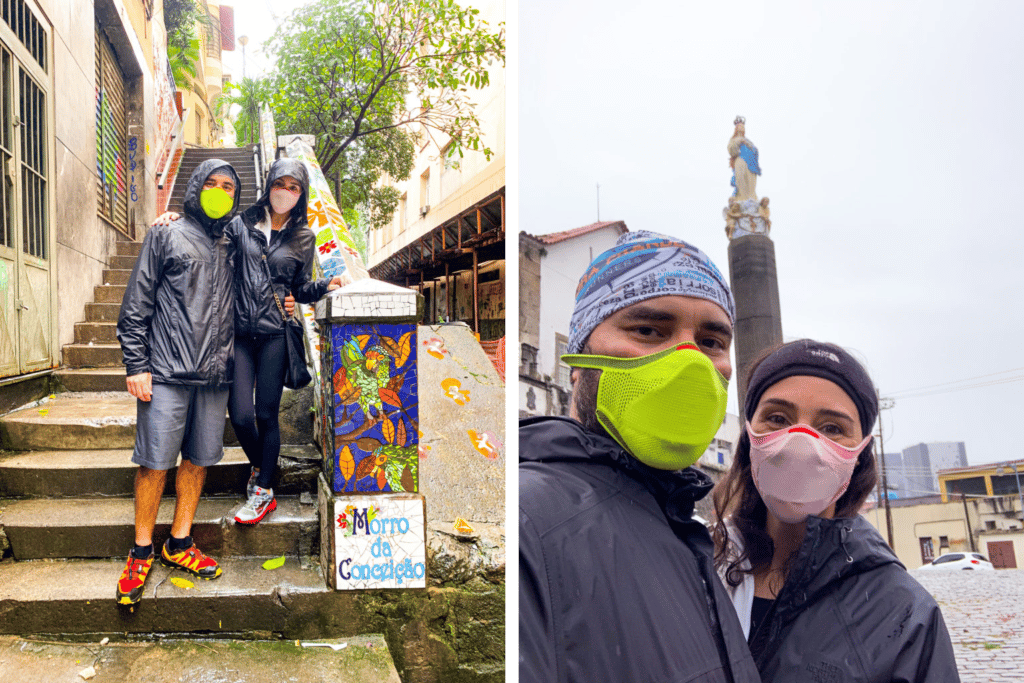
Morro da Conceição
- Marks the city’s earliest settlement
- Founded in 1565
- Named after a small chapel honoring Nossa Senhora da Conceição in 1590
After climbing the stairs, you’ll find a cobblestone street lined with beautiful homes, many decorated with tile mosaics depicting various saints — most of the houses have been restored and are lovely to see.
At the top of the hill sits an image of Nossa Senhora da Conceição, and heading down along the side of the wall — known as Fortaleza da Conceição — leads toward Pedra do Sal.
Pedra do Sal
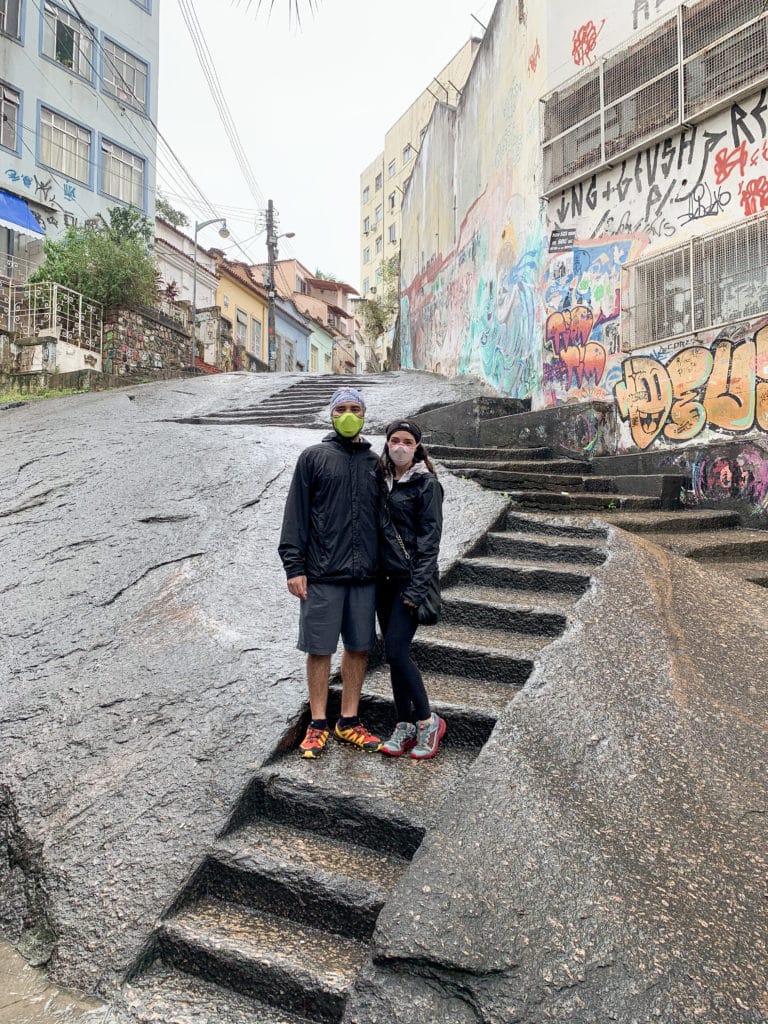
Pedra do Sal is well known for its famous samba gatherings, still held there today. The name comes from enslaved Africans who unloaded salt shipments arriving at the docks here. The steps were carved into the rock to make climbing easier for that work.
After their shifts, samba musicians would gather at the homes of the “tias baianas” (Bahian aunties) for samba circles, which eventually gave rise to Rio’s earliest Carnival groups.
Other tips: Jardim Suspenso do Valongo, Cemitério dos Pretos Novos, Palácio Episcopal da Conceição, and Igreja de São Francisco da Prainha.
Santa Teresa Trams
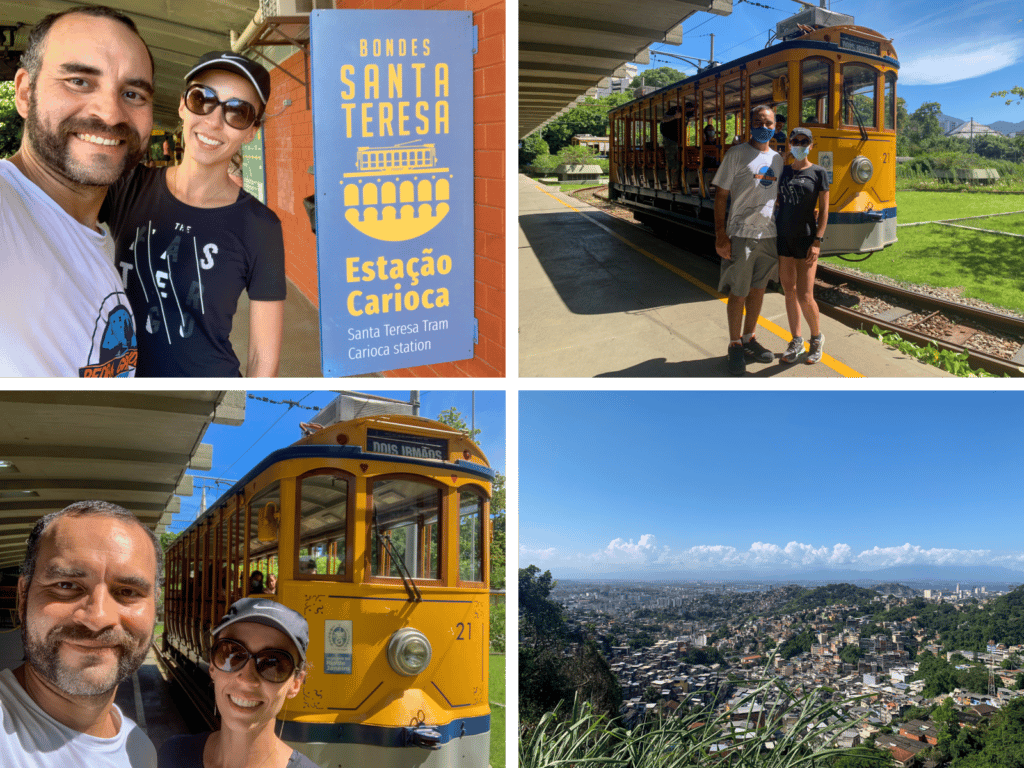
- A historic system, first opened on September 1, 1896
- Restored to run to the once-trendy Santa Teresa neighborhood
- Departs from Estação Carioca, passing the Arcos da Lapa, ending near Morro Dois Irmãos
- R$20 per person, though residents can ride free with a resident card
- Trams depart every 30 minutes
- Hours: Monday–Friday, 8 AM–3 PM; weekends and holidays, 10 AM–3 PM
We really enjoyed this ride — worth it for the views over the neighborhood and the city. You can hop off at certain stops and catch a later tram down, though the cars get quite crowded, so we wouldn’t recommend getting off partway.
We’d already made our way to Santa Teresa for lunch at Bar do Mineiro, so we had to walk down through the Arcos da Lapa to reach Estação Central and catch the tram, which is close to the Petrobras building.
Forte de Copacabana
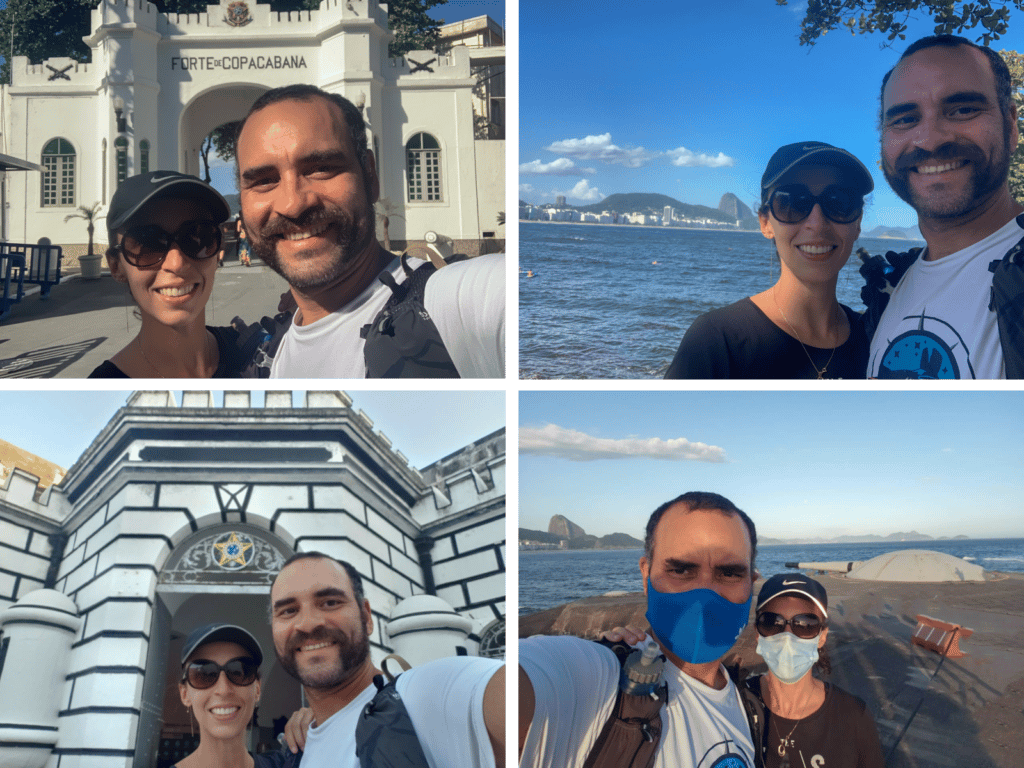
- Officially the Army Historical Museum / Forte de Copacabana
- Construction of the fort at Ponta da Igrejinha in Copacabana began January 5, 1908, under President Afonso Pena and War Minister Marshal Hermes da Fonseca
- Cost: R$6 per person
- Opened September 28, 1914, under President Marshal Hermes da Fonseca
Today it houses a museum showcasing antique weapons and telling Brazil’s history, including all the flags Brazil has flown throughout its history — genuinely interesting.
There’s also a space with a beautiful view of the beach and a spot for coffee, including a Confeitaria Colombo location — though it’s not quite like the downtown one. We loved this place, it was a pleasant surprise.
We tried to catch the sunset near Arpoador afterward, but were mugged, and I had my necklace stolen along with a neck injury — so once you leave the fort, we’d suggest picking a different spot for sunset.
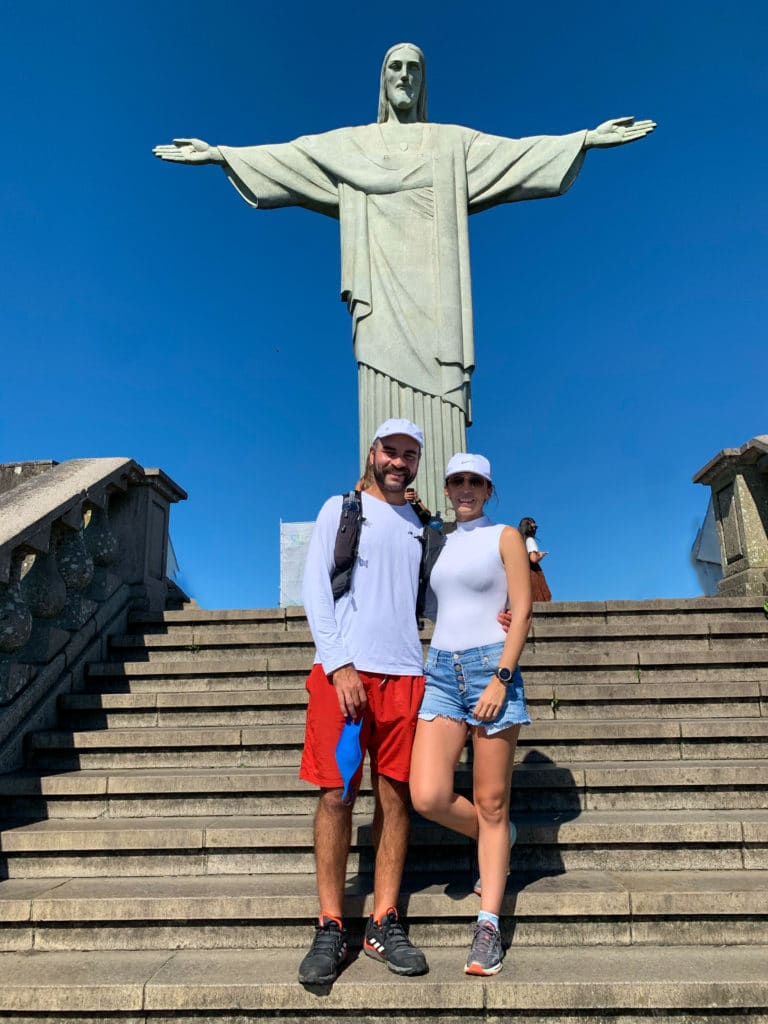
Corcovado and Christ the Redeemer in Rio de Janeiro
- Corcovado is one of Rio de Janeiro’s mountains
- It’s home to the 38-meter-tall Christ the Redeemer statue
- Part of the New Seven Wonders of the World
- Located within Tijuca National Park
Getting to Corcovado
Via the Corcovado train concession, Paineiras-Corcovado vans, licensed tour guides, or on foot — prices vary depending on the option.
- Pricing varies by season: parquenacionaldatijuca.rio/como-visitar-o-corcovado
Our experience at Corcovado
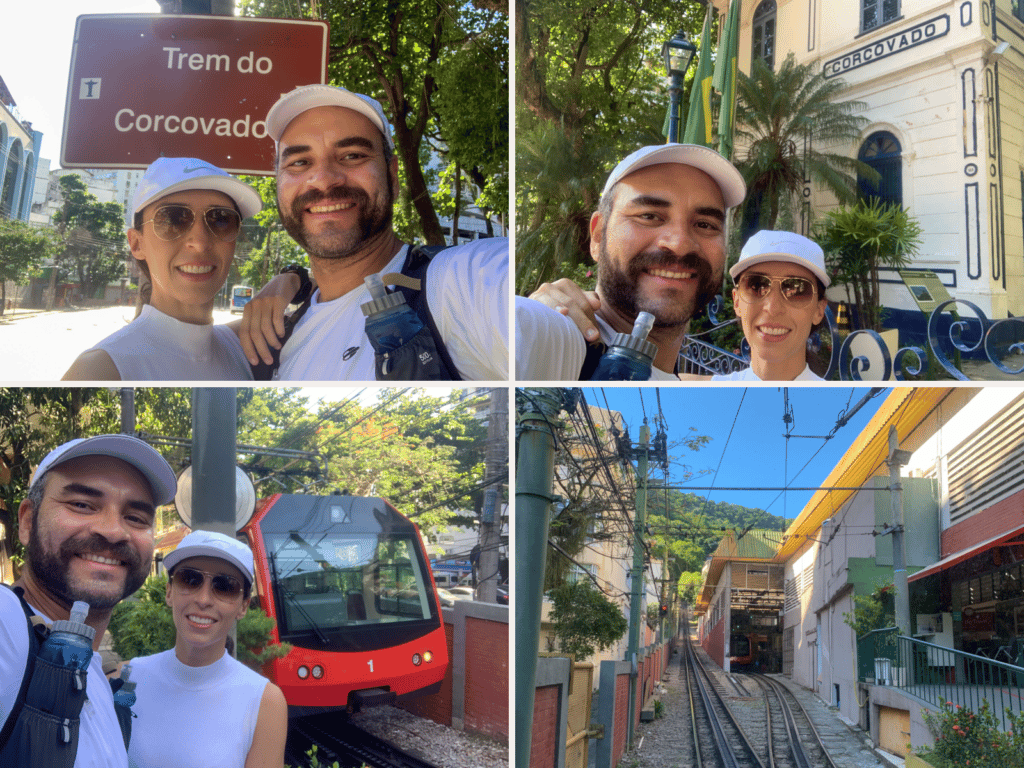
This was our first outing on Sunday, and we arrived thirty minutes before opening as recommended, which meant we were the very first people to board the train up to Christ the Redeemer — an amazing experience.
We bought tickets online, and we’d strongly recommend not leaving this for the last minute, to avoid long waits. The train departs from Cosme Velho, and we’d suggest taking a taxi or Uber there, since there’s no parking on-site.
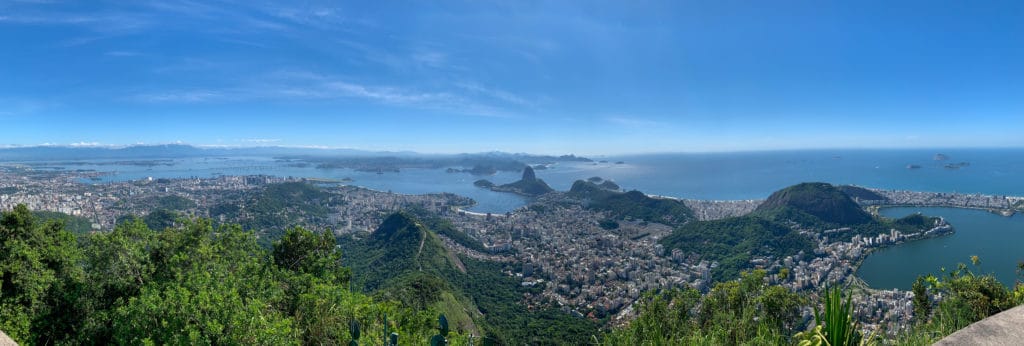
We also got lucky with our photos, catching moments with fewer crowds, and the site itself offers a beautiful panoramic view of the city.
Parque Lage
- Part of Tijuca National Park
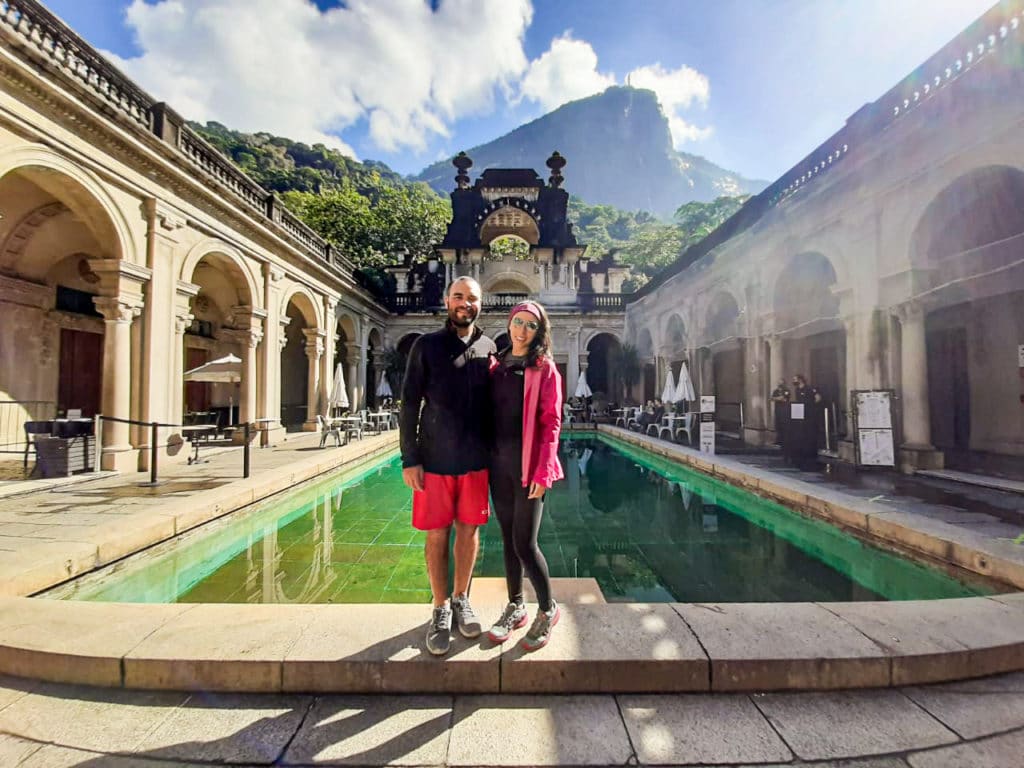
- A former sugar mill dating back to colonial Brazil
- The Engenho Del Rey belonged to Antônio Salema, 16th-century governor of Rio
- Located at the base of Corcovado, right next to the Botanical Garden
In 1859, it became the property of Antônio Martins Lage, later passing through other owners until his grandson, Henrique Lage, bought it.
Henrique Lage fell in love with and married Italian opera singer Gabriela Besanzoni, and to win her over, he built a replica of a “Roman palazzo” here.
This became one of my favorite spots in Rio de Janeiro, not just for its beauty, but for the delicious breakfast served here too.
Tijuca National Park in Rio de Janeiro
- A federally protected conservation area
- Managed by ICMBio (Brazil’s environmental agency)
- In 1961, the Tijuca Massif (Paineiras, Tijuca, Gávea Pequena, Trapicheiro, Andaraí, Três Rios, and Covanca) became a National Park, expanded by decree in 2004 to include Parque Lage, Serra dos Pretos Forros, and Morro da Covanca
- Spans 39.41 square kilometers
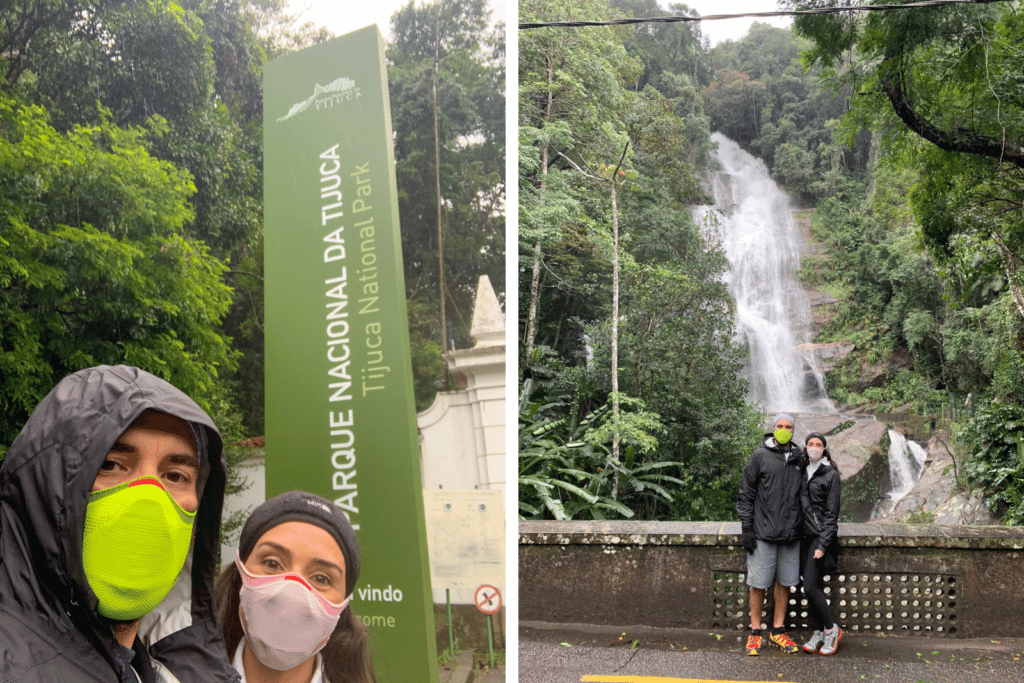
We tried to visit Pico da Tijuca and Vista Chinesa, but the trail to the first was closed after 3 PM due to the pandemic, and the second isn’t accessible by car — on foot only.
Between the rain and likely poor visibility, we saved both for a future trip. We did, however, see the Cascatinha Taunay waterfall, right near the entrance.
Ilha da Gigóia
Located in Barra da Tijuca, this island is a great option for a boat trip with lunch. The area is known as the “Pantanal Carioca.” Ilha da Gigóia is considered very safe, with a calm, laid-back vibe and a wide range of restaurants — honestly hard to pick just one.
The boat ride lasts 30 minutes, passing 5 small islands along the way, and toward the end, where the mangrove gets too narrow to pass, you’ll spot plenty of caimans and capybaras of all sizes.
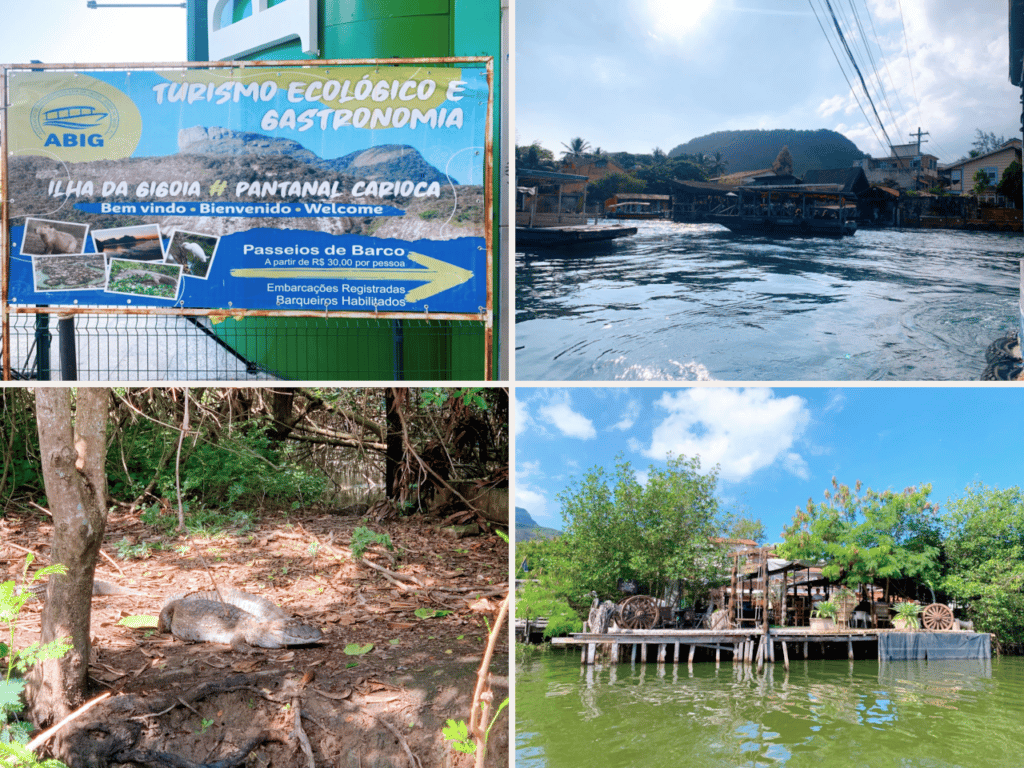
Access is right next to Shopping Barra Point — if you’re driving, park there, and the pier is right between the gas station and the UNIMED building.
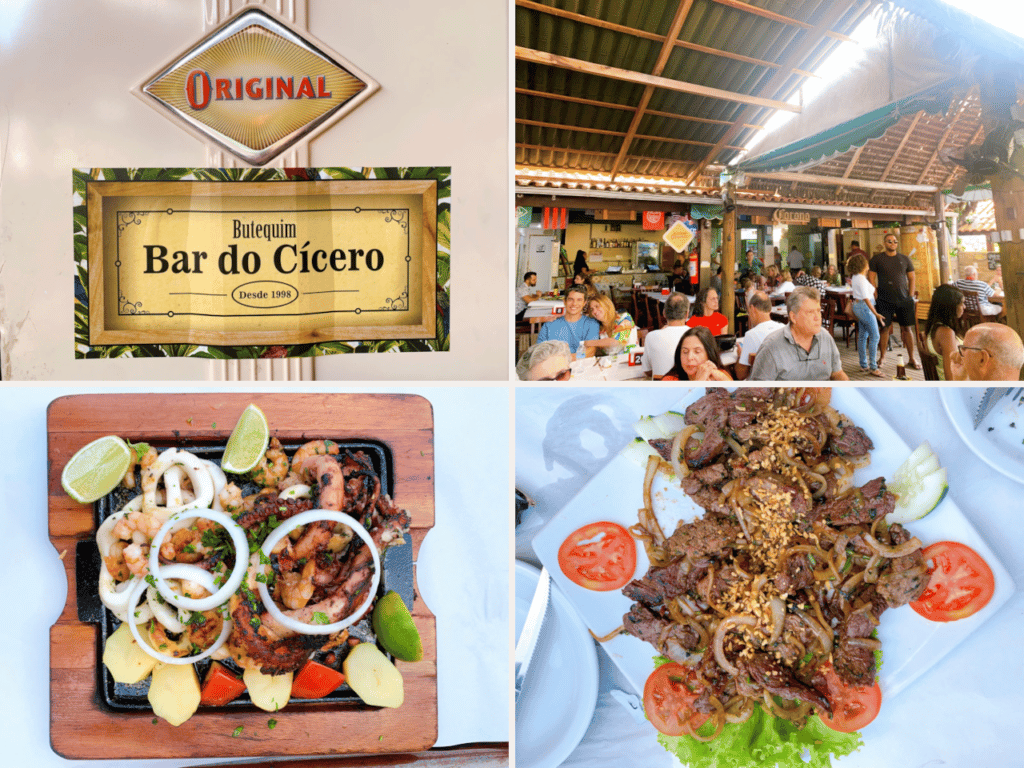
The tour costs R$30 per person, though it’s negotiable with larger groups. Afterward, we headed to Bar do Cícero (Instagram) for lunch and some delicious drinks — a genuinely enjoyable outing we’d recommend.
Pedra do Pontal in Rio de Janeiro
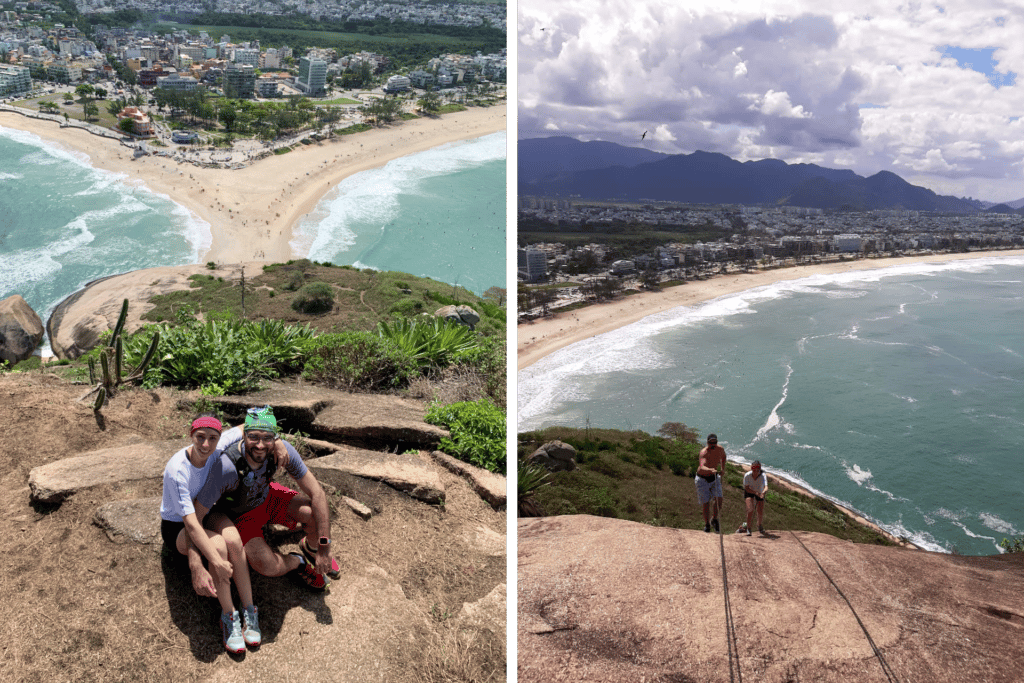
- Between Praia do Recreio dos Bandeirantes and Praia da Macumba
- Trailhead at Posto 12
- Moderate-to-hard trail, with a rope-assisted section
- Distance: under 2 km round trip
- Time: about an hour round trip
- Altitude: 123 meters
- Free entry
- Parking nearby
We loved the narrow strip of sand between the two beaches — the view alone makes it worth it.
Download the GPX file for the Pedra do Pontal trail.
Track powered by Wikiloc
Vista Chinesa in Rio de Janeiro
A bit of history
- The name “Vista Chinesa” (“Chinese View”) comes from Chinese farmers brought to Rio de Janeiro in the 19th century
- Free entry
Originally, about a hundred Chinese workers came from the Portuguese colony of Macau in 1812, brought over by the Conde de Linhares under orders from Dom João VI. They were brought to test tea cultivation in Brazilian soil, with the goal of exporting it to Europe.
These immigrants, who had experience growing tea, settled behind the Botanical Garden, but the tea’s flavor wasn’t great, which ended the project — another theory suggests the workers who came weren’t actually that experienced in tea production after all.
Further up the same road, Estrada da Vista Chinesa, a spot built as a rest stop for the imperial family’s frequent outings became known as Mesa do Imperador (“The Emperor’s Table”).
Our experience at Vista Chinesa
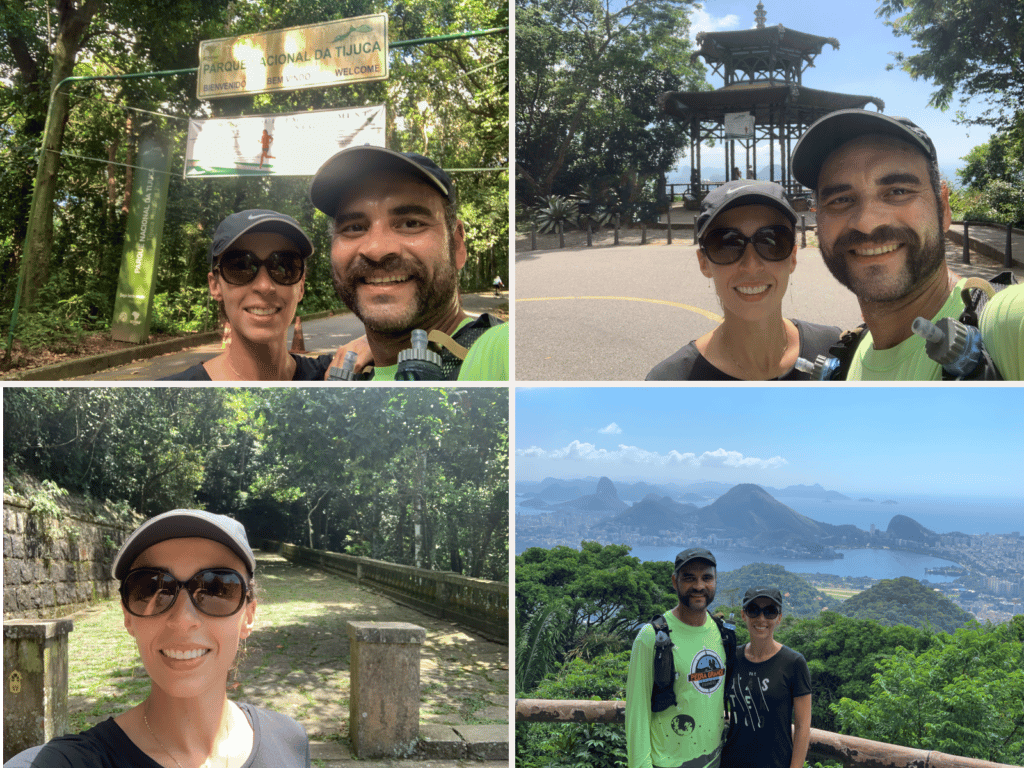
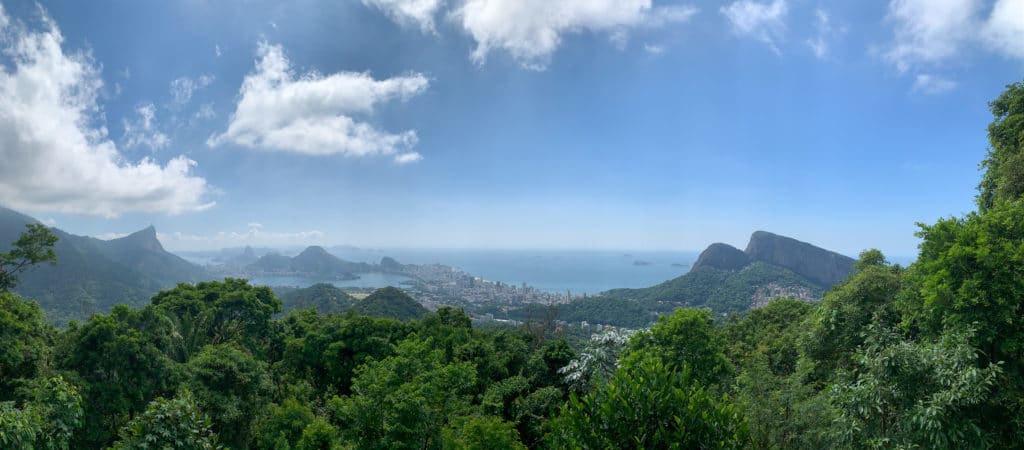
Vista Chinesa is a Chinese-style lookout within Tijuca Park, located in Alto da Boa Vista — cars aren’t allowed in, so you’ll need to walk or bike.
If you drive there, park on Rua Pacheco Leão; from there it’s 2 km to the park entrance, then another 3 km to the lookout, and 1 km further to Mesa do Imperador — the whole route is paved.
We didn’t think Mesa do Imperador itself was worth it for the view, but it’s a good training route — if you climb the stairs, you can access a 5.8 km trail through dense forest toward the Portão da Floresta da Tijuca, though you have to hop over a wall to reach the trail.
All these trails are part of the Transcarioca Trail, which runs 180 km total — we covered the Vista Chinesa–Mesa do Imperador stretch, and only about 800 meters into the forest section, since even though it was well marked, it felt very empty.
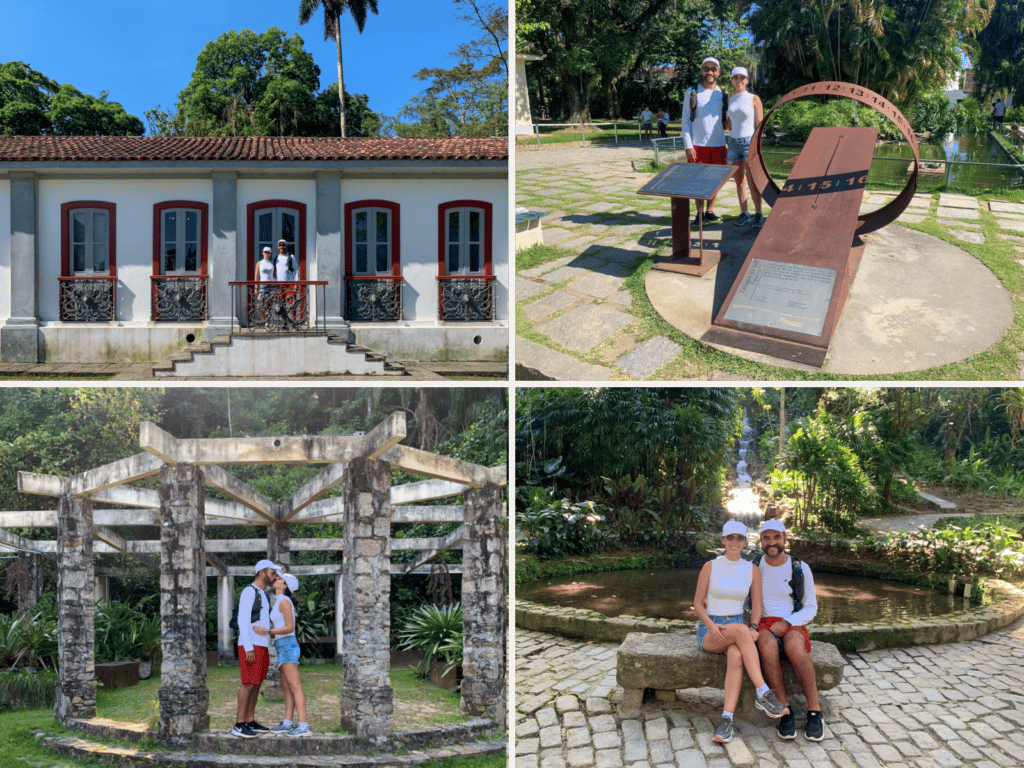
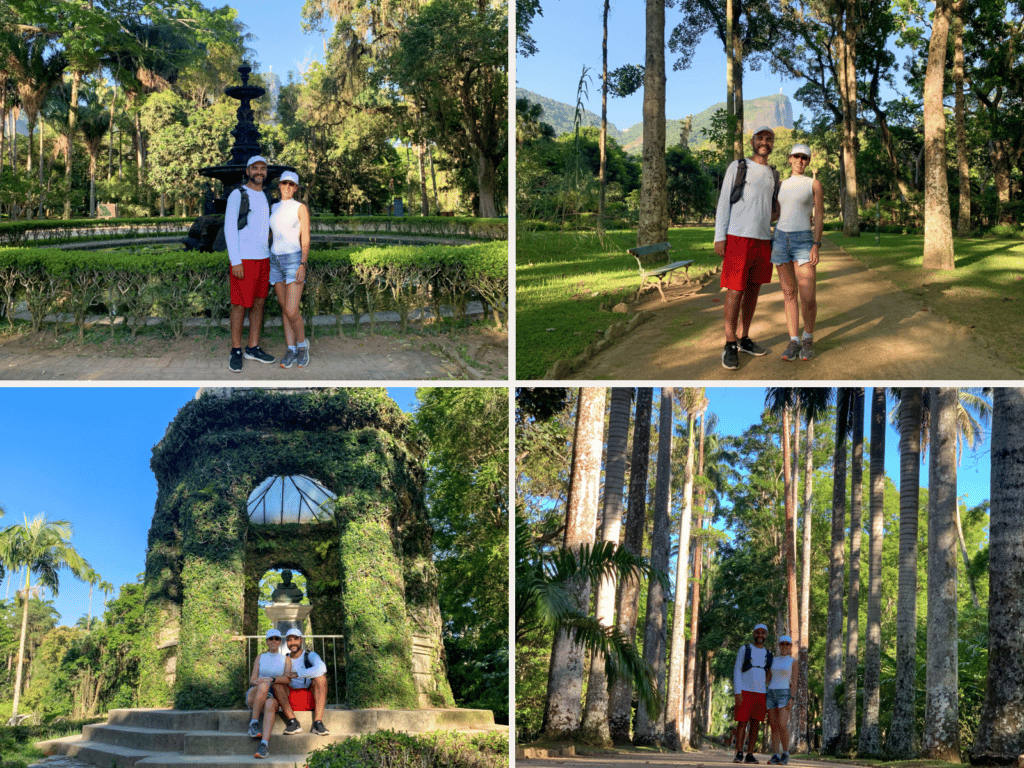
Jardim Botânico in Rio de Janeiro
- One of the city’s most beautiful, well-preserved green spaces, showcasing Brazil’s plant diversity alongside species from around the world
- Home to 6,500 species, some endangered
- Spans 54 hectares
- Several trails to explore
- Hours: Mondays, noon–6 PM. Tuesday–Sunday, 8 AM–6 PM.
- R$15 per person
You’ll need to book online first, then purchase your ticket at the counter. We thought the garden was absolutely worth visiting, not just for its beautiful trees and flowers, but for the architecture too.
A wonderful place to spend an afternoon walking around and taking gorgeous photos.
Read about our trip in Where to Eat in Rio de Janeiro.
Read the original version in Portuguese on A Bela e o Bigode.