What to Do in Ravello
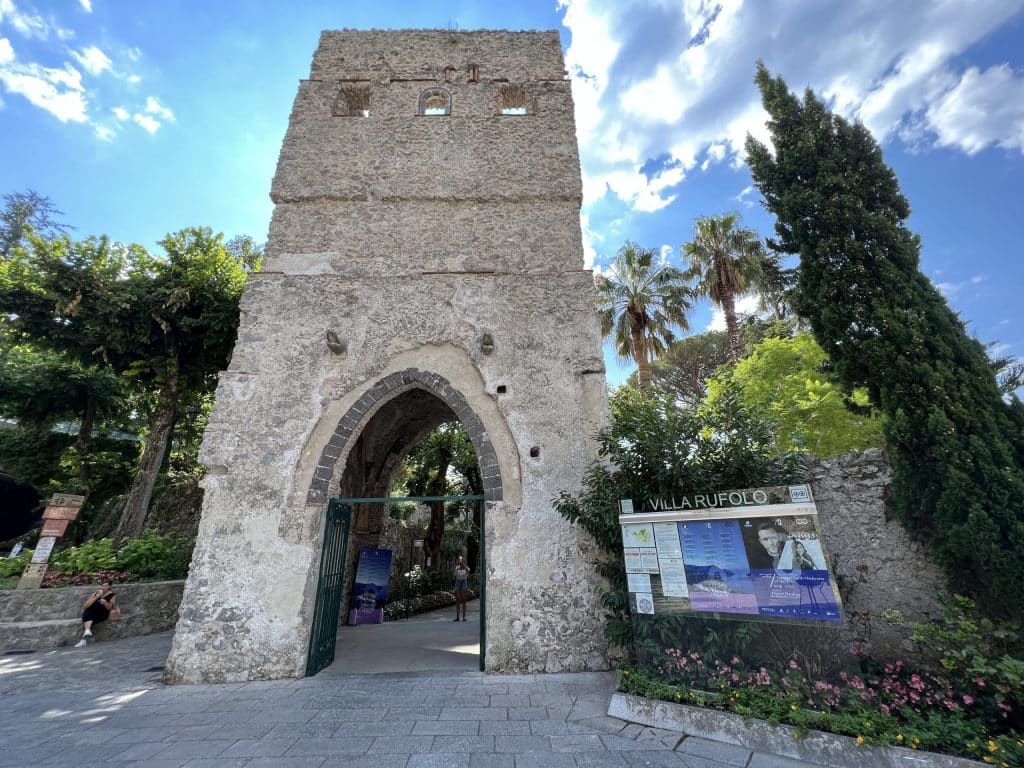
Unlike other towns along the Amalfi Coast, which hug the shoreline with beautiful beaches, Ravello sits high up in the mountains, 350 meters above sea level. It’s a romantic town, known as “la città della musica” — the city of music.
Worth noting: there’s no way to reach Ravello by boat, only by car or bus.
It’s an old medieval town, with beautiful scenery and patrician houses. The view isn’t directly over the sea, but rather over the Tyrrhenian coast and the Gulf of Salerno. Given its size, you can see the whole town in just a few hours.
Ravello Festival
The Ravello Festival (website) runs from the first week of July through the end of the month. It features several classical music concerts, held at Villa Rufolo. In recent years, the event has also expanded to include modern music, like jazz concerts and international folk selections.
Ravello Cathedral (Duomo)
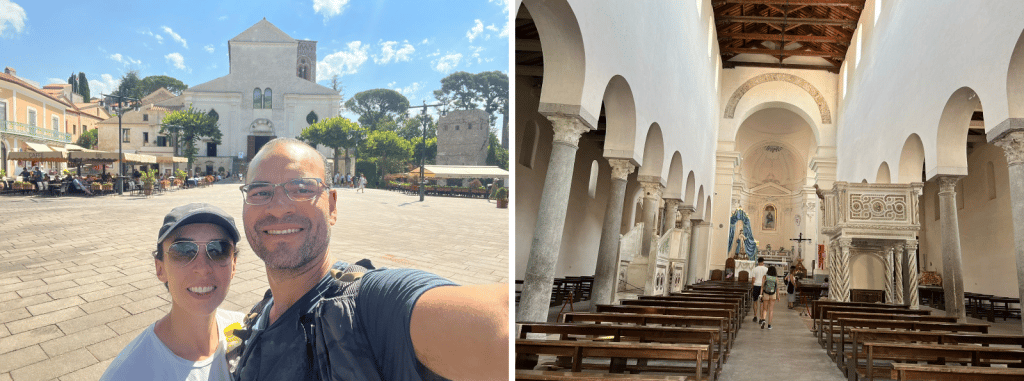
This is one of the oldest cathedrals in Italy, with its first structure dating back to 1086. Built in the 11th century with support from the Rufolo family, the Duomo blends Baroque and Romanesque styles.
Dedicated to St. Pantaleon, the church has undergone extensive changes and restorations over its nearly 900-year history. The Duomo’s bright white façade dates to its last major restoration in 1931. The bell tower dates to the 13th century, showing Moorish and Byzantine influences.
Inside the 17th-century chapel, a vial said to hold the blood of St. Pantaleon is kept, believed to liquefy every year on July 27.
St. Pantaleon was a healer, a 3rd-century physician beheaded on the orders of Emperor Diocletian after converting to Christianity — much like San Gennaro’s church in Naples, his blood is also said to liquefy annually.
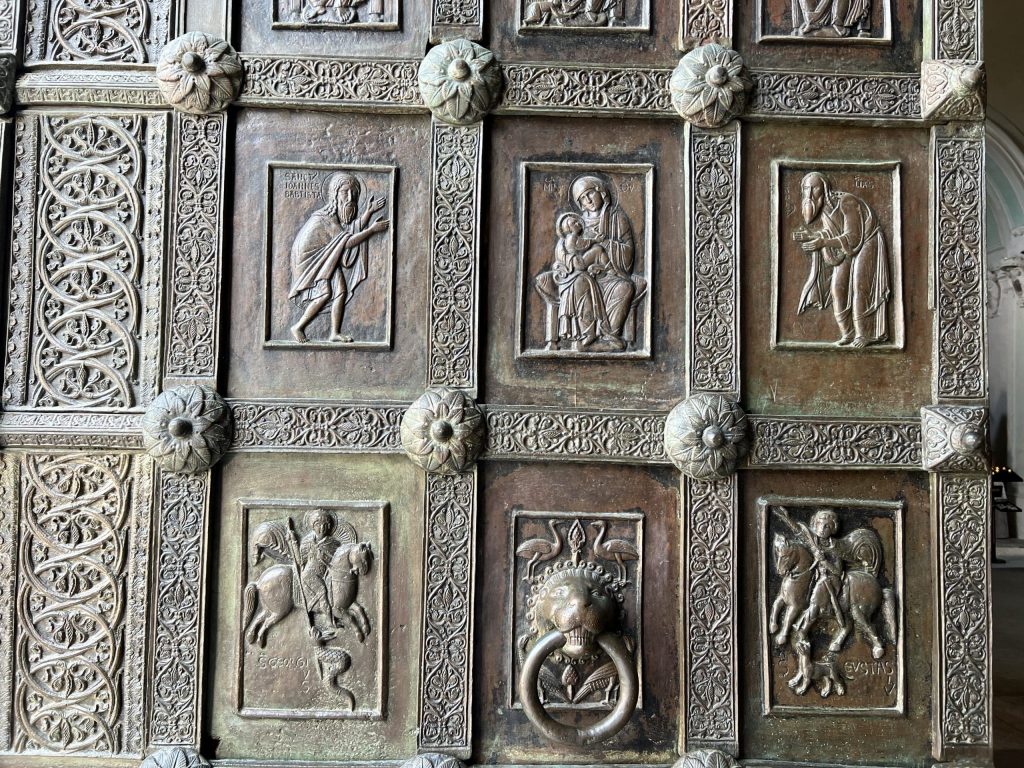
The bronze door was temporarily removed for restoration in 2010. Built in 1179 by Barisano da Trani, it’s one of fewer than two dozen bronze doors of its kind remaining in Italy.
Ravello’s Main Square and Streets
The town’s main square, Piazza Vescovado, is genuinely charming, surrounded by restaurants that let you soak in the town’s atmosphere.
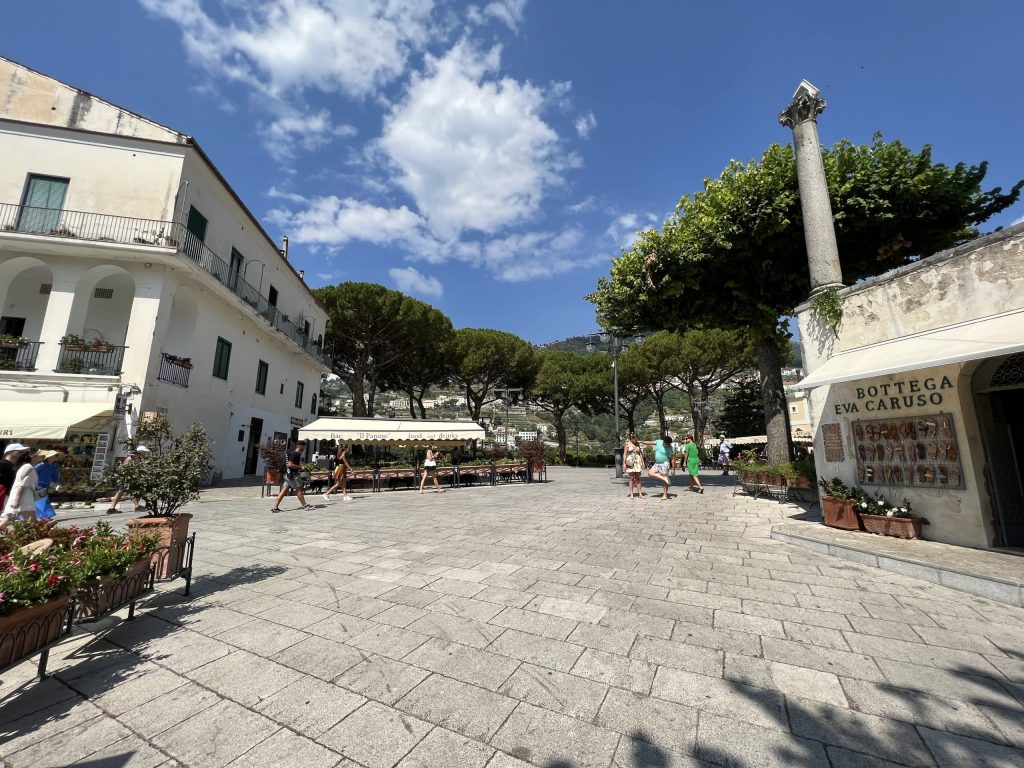
Since this town sees far less tourism than others on the Amalfi Coast, it’s a great pick if you’re after some privacy during your stay.
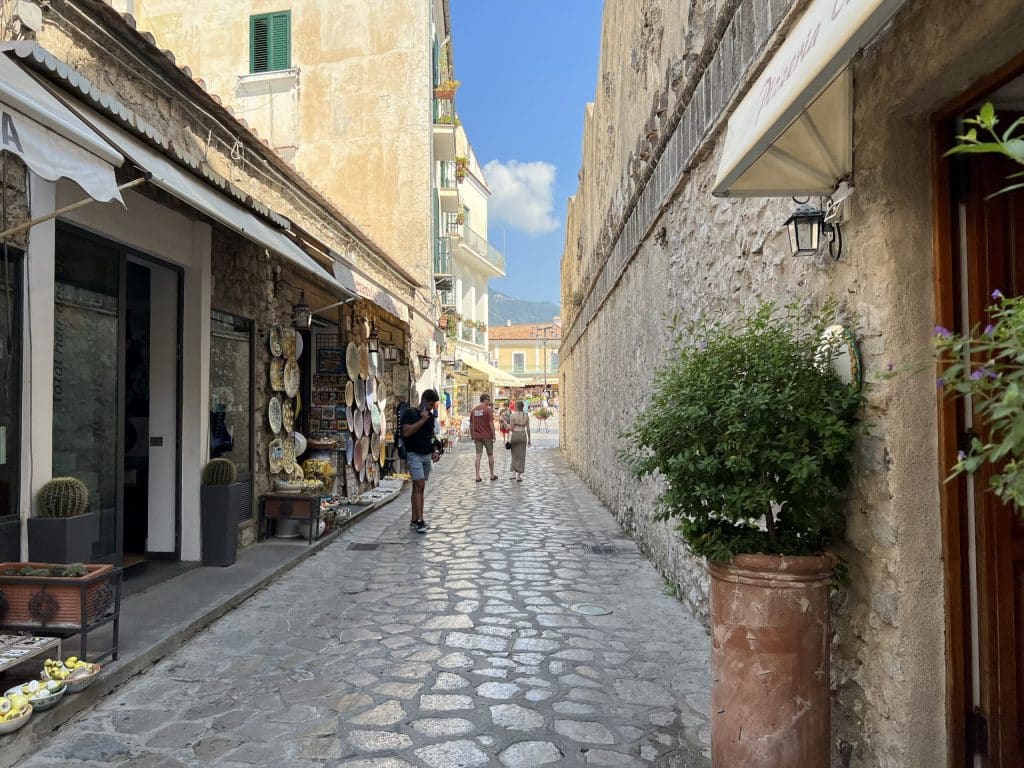
The streets are narrow, lined with shops throughout — a pleasant, quick walk, since the town center is quite small.
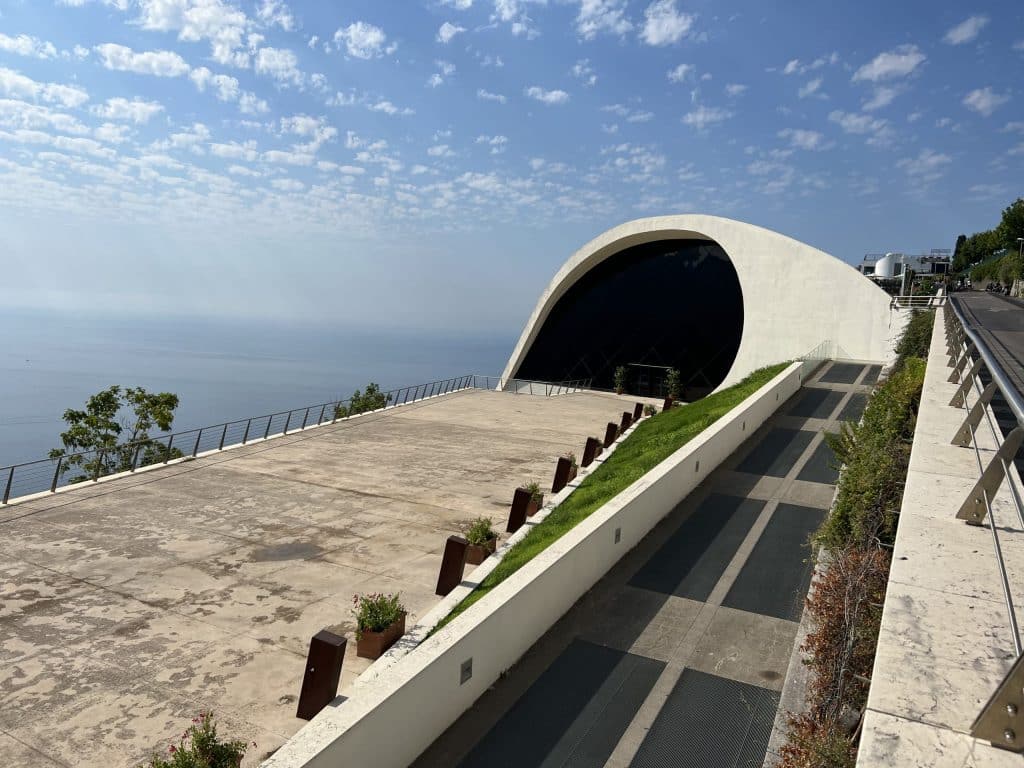
Oscar Niemeyer Auditorium in Ravello
Opened in 2010, this 400-seat venue was designed by architect Oscar Niemeyer and hosts both musical events and exhibitions. The structure spent ten years mired in environmental and legal controversy before finally being completed.
Shaped like a giant acoustic shell, with mirrored front and side façades that double the visual effect of the stunning landscape around it. It was closed when we visited.
Villa Rufolo in Ravello
Villa Rufolo is a palace complex featuring towers, exotic plants, and multi-level gardens, with fantastic views over the Gulf of Salerno. It once inspired German composer Richard Wagner.
Its terrace and beautiful gardens host the annual summer Ravello Festival, a classical music festival drawing musicians from around the world.
Built in the 13th century by the powerful Rufolo family, it once hosted popes and royalty. The gardens are colorful and lush, and the entrance is right off the main square.
Located in the center of Ravello, a short walk from the main square, Piazza del Vescovado, next to the cathedral.
Hours: Daily, 9 AM–7:30 PM Admission: €7
Villa Cimbrone in Ravello
This is a five-star hotel (website), and its garden is open to the public. The garden ends at the “Terrace of Infinity” — a terrace suspended 400 meters up, offering a stunning view. Below it, you can grab a drink at Il Balcone di Lucullo bar and take in the garden view.
Highlights along the way include the Temple of Ceres, the Temple of Bacchus, the peaceful Avenue of the Hydrangeas, a statue of David, a tea room, a “Mercury” seat, and finally the Terrace of Roses.
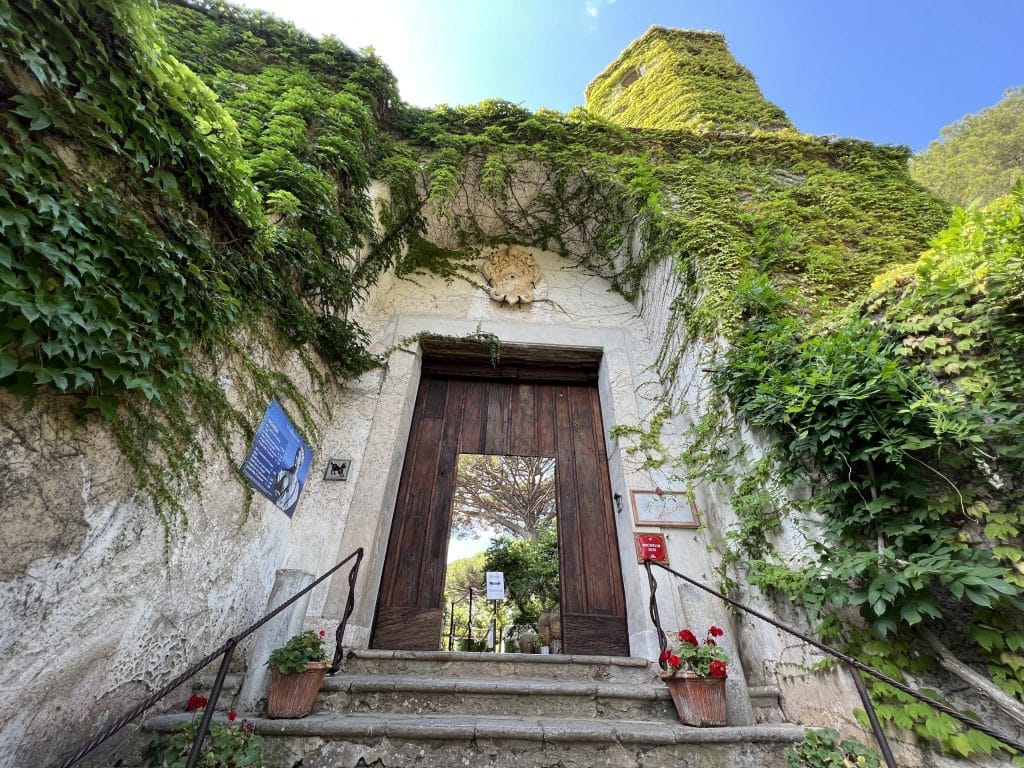
Hours: Daily, 9 AM–7:30 PM Admission: €10
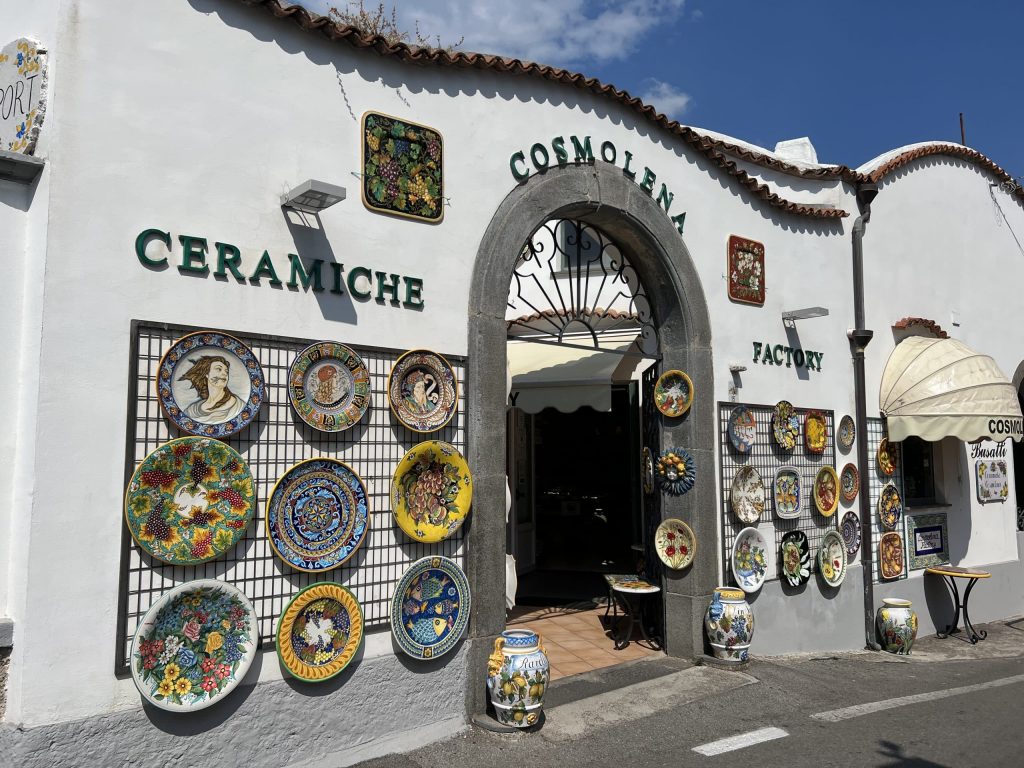
Shopping at Ceramiche d’Arte Carmela
Colorful, handmade ceramics, offering high-quality pieces made by local artisans. They carry all kinds of housewares — plates, bowls, and statement pieces — all made with lead-free, food-safe paint and materials, ideal for everyday, practical use.
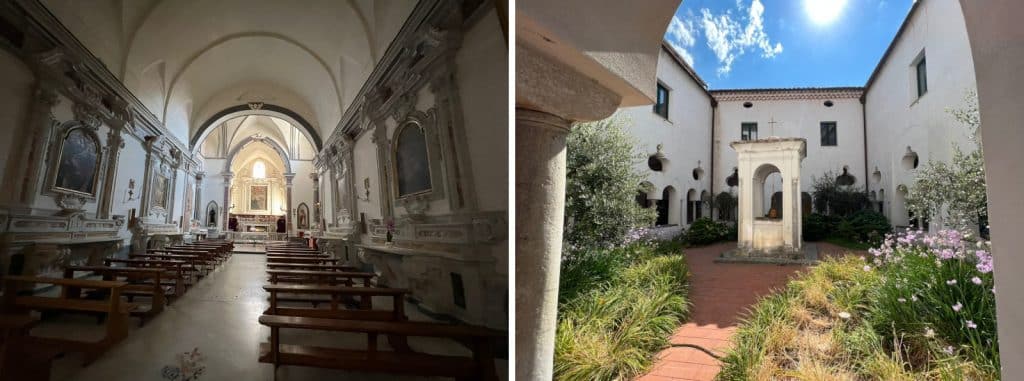
Chiesa e Chiostro di San Francesco
A Baroque church dating to the 13th century, named after Italy’s patron saint, St. Francis of Assisi. It was built over what remained of an earlier church dedicated to John the Baptist.
Legend has it St. Francis himself visited the church in 1222, passing through Ravello to venerate the remains of St. Andrew.
Though small, the church has plenty worth seeing, including an interesting pipe organ in the choir. Beneath the main altar sits an urn holding the body of Blessed Bonaventure of Potenza, a Franciscan priest and missionary who preached and worked along the Amalfi Coast, dying in Ravello in 1711.
Read more about lesser-known towns on the Amalfi Coast in Cetara and Vietri sul Mare.
Read the original version in Portuguese on A Bela e o Bigode.