What to Do in Paraty: A 3-Day Itinerary
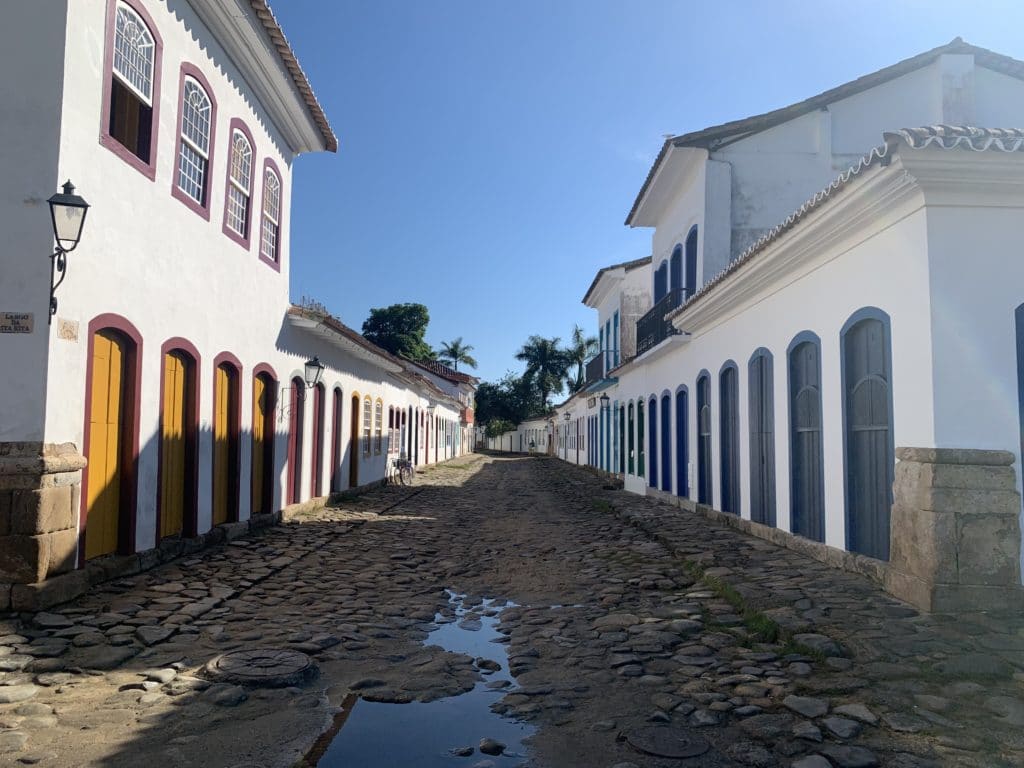
Paraty is a small, charming town, with mountains as a backdrop, on the southern coast of Rio de Janeiro state. Beyond that, its Portuguese colonial center has stone-paved streets and buildings dating to the 17th and 18th centuries.
The town was founded in 1667, built around the Igreja de Nossa Senhora dos Remédios, its patron church. It initially held major economic importance thanks to its sugarcane mills (at one point, more than 250 of them), and it still has large stills producing good cachaça to this day.
In the 18th century, the town operated as a port during Brazil’s gold rush era, exporting gold and precious stones — but once a new route was built as part of the Estrada Real, running straight to Rio de Janeiro, the town fell into significant economic isolation.
In the 1970s, the Paraty-Cunha highway opened, and especially after the Rio-Santos highway was built, the town became a hub for both domestic and international tourism, thanks to how well preserved it remained and its natural beauty.
Declared a UNESCO World Heritage Site, for its exceptional integration of both cultural and natural heritage, making it Brazil’s first mixed heritage site, and a member of the UNESCO Creative Cities Network in the gastronomy category, further proof of the richness of local culture.
Origin of the Name
Tupi language scholar Eduardo de Almeida Navarro traces “Paraty” back to the old Tupi term parati’y, meaning “river of the paratis,” combining parati (a type of mullet fish) and ’y (river). “Parati” refers to both a species of fish in the mullet family and a variety of manioc.
Instead of Parati, the city government uses the spelling Paraty, technically incorrect under current spelling rules, but acceptable since it’s a proper noun.
Driving to Paraty from São Paulo
How to get there from São Paulo:
-
First, take the Rodovia Presidente Dutra to the Guaratinguetá exit, then BR-459 (Rodovia Juscelino Kubitschek de Oliveira) to Paraty. See the route via the Dutra highway on Google Maps.
-
Alternatively, take the Rodovia Ayrton Senna, continue on the Rodovia Carvalho Pinto to the Rodovia Presidente Dutra, and, as above, continue to Guaratinguetá, then take the Rodovia Paulo Virgínio (SP-171), passing through Cunha, SP, ending in Paraty, RJ. See the map at this Google Maps link.
Driving straight through, without stops or traffic, the trip takes a little over 4 hours, given the winding descent through the mountains.
What to Do in Paraty
There’s a wide range of things to do here, from visiting cachaça stills to shops selling Minas Gerais cheese, the charming historic center, beaches, waterfalls, and trails — here’s what we did during our visit.
Everything we saw of the historic center and museums was from the outside only, since due to the pandemic, everything was closed to visitors.
Saco do Mamanguá (Pão de Açúcar do Mamanguá)
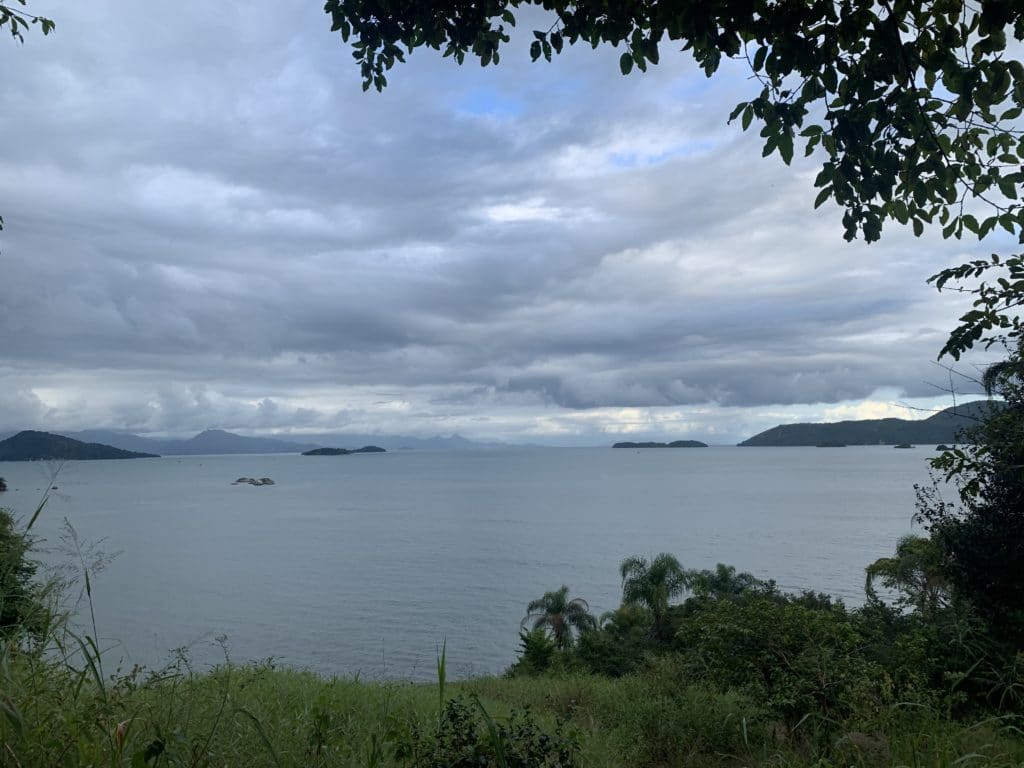
Considered Brazil’s only true fjord — a fjord being a large sea inlet surrounded by tall rocky mountains. Landscapes like this are common in Scandinavian countries like Denmark and Norway, and here in Rio de Janeiro too, as you’ll see.
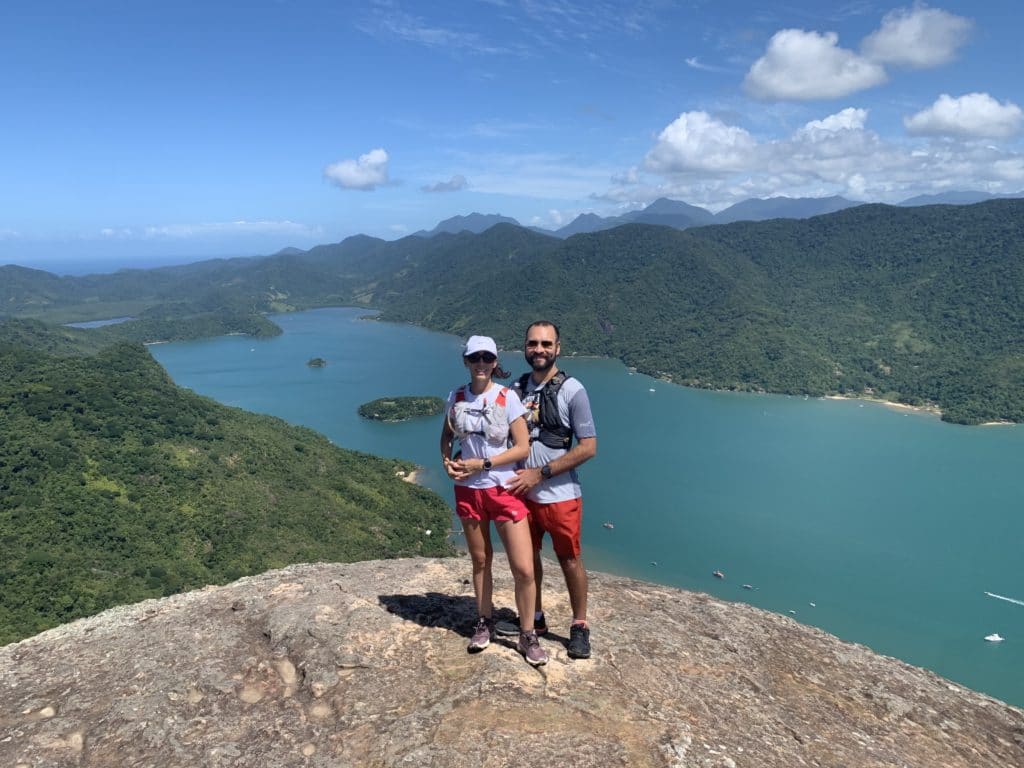
Saco do Mamanguá, in Paraty Mirim, stretches 8 km inland from the sea and 2 km wide, home to 33 beaches and 8 traditional caiçara fishing communities, forming a genuine Atlantic Forest refuge. We’d recommend hiking to the top of the Pão de Açúcar peak for the best view of the whole area.
The full trail is 3 km, but you can read about our adventure in Saco do Mamanguá in Paraty. We dedicated a whole separate post to this spot, since it’s simply wonderful!
Schooner Tour in Paraty
This tour can be done by boat, schooner, or speedboat — we went with the schooner since it was cheaper, and our biggest tip here is to book through the marina or downtown, and never through your hotel. Our tour lasted four hours, though tour shops advertise it as 5 hours.
When we walked through downtown, we saw the Fênix II, the schooner we’d booked, listed at R$50 per person, while we’d paid R$80 per person through the hotel, having trusted their offer.
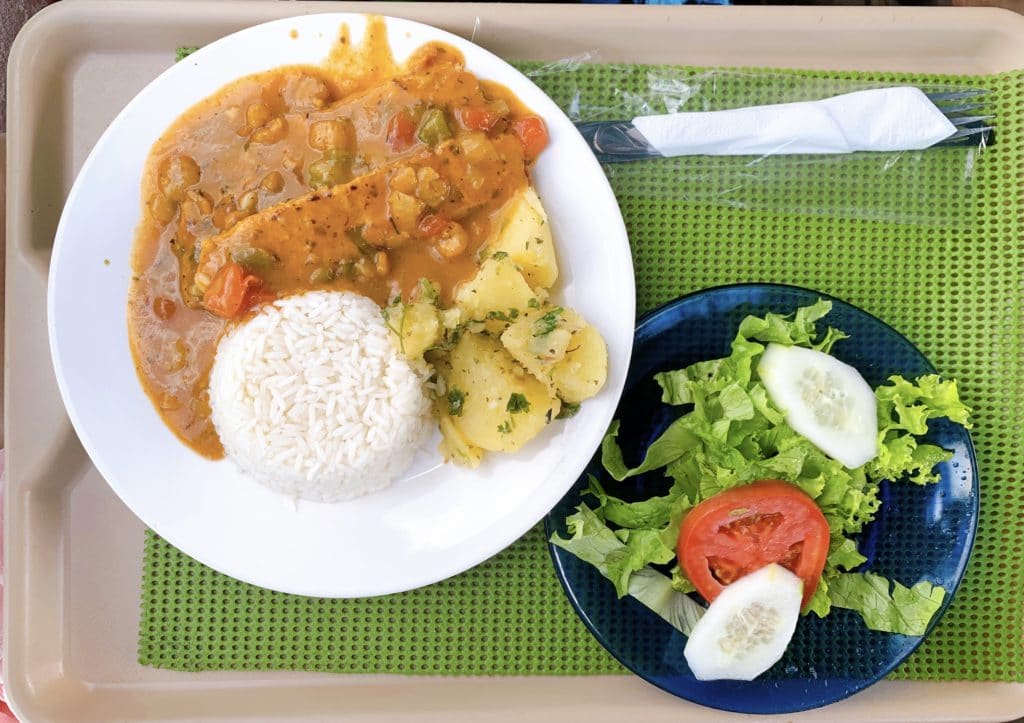
Lunch isn’t included, and in our case, they charged an extra R$40 per meal. You can choose fish or chicken, plus snacks — we went with the fish in shrimp sauce, which was okay.
There’s an onboard bar where you can order alcoholic and non-alcoholic drinks, and a musician plays Brazilian popular music, adding a 10% surcharge to your tab plus an artist’s cover charge. There’s also a photographer taking photos throughout the tour, though it’s optional — you only buy the photos if you want them, negotiating the price on the spot.
Without question, the tour is genuinely great, passing Praia Vermelha, Ilha Comprida, Lagoa Azul, and Praia do Lula — and the water, contrary to what Bigode expected, isn’t cold.
The Stops
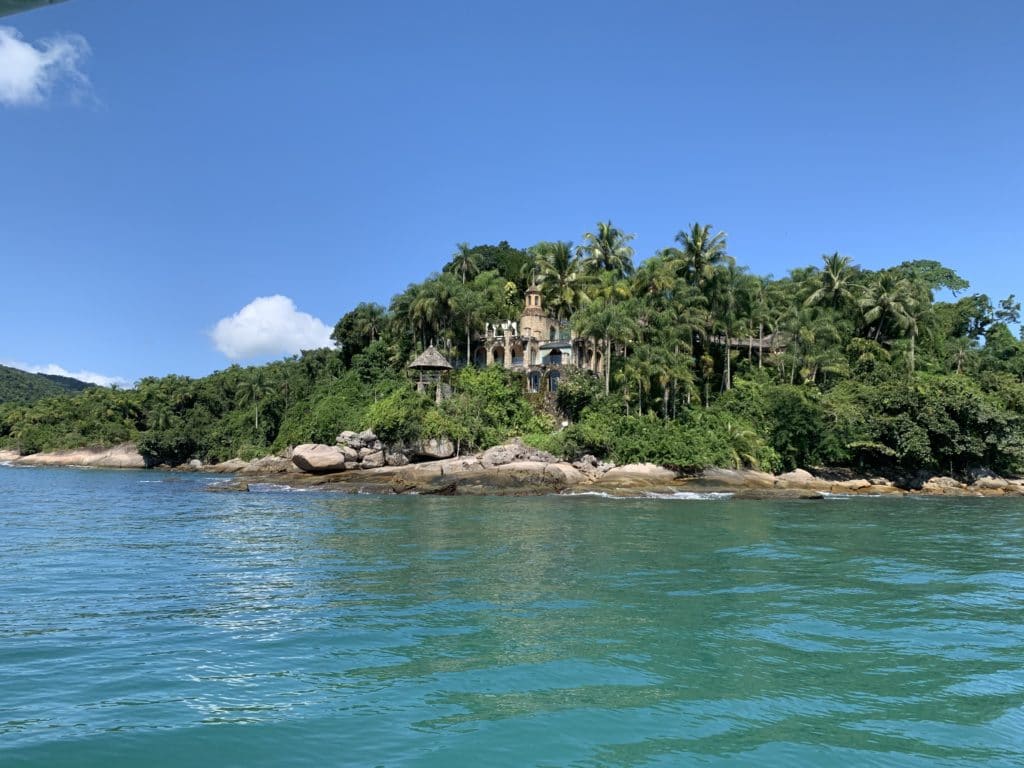
We passed Ilha do Mantimento and saw one of the most expensive hotels in Brazil, though just to admire from the water, without stopping.
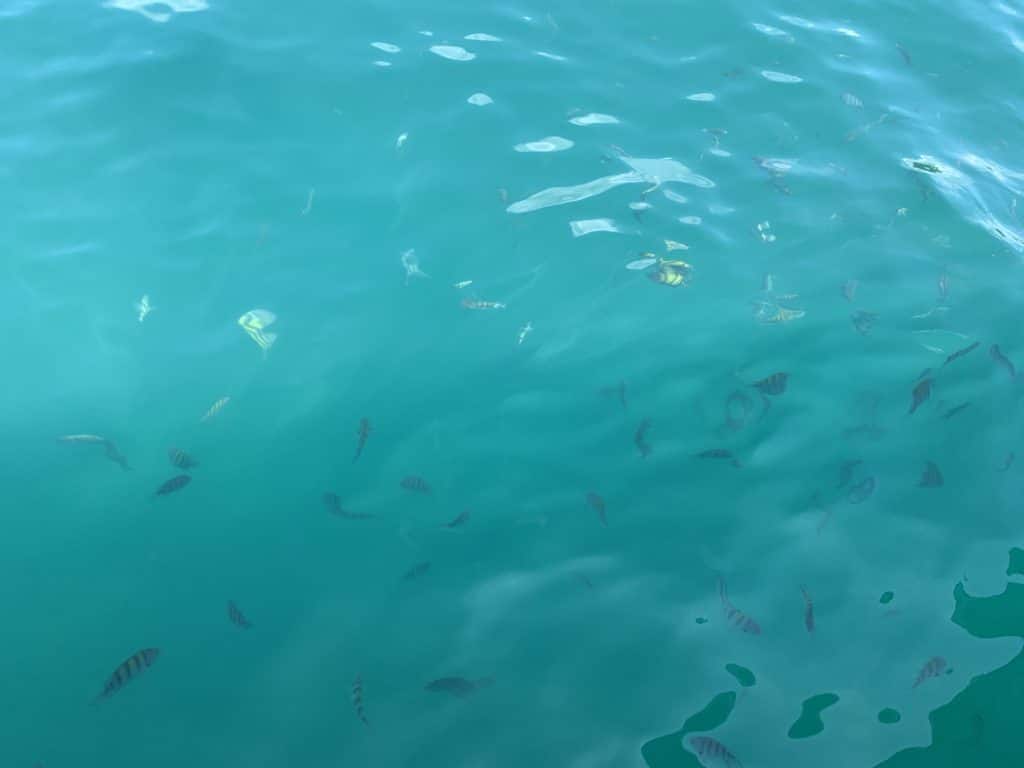
First, we stopped at Ilha Comprida, Paraty’s own natural aquarium, great for snorkeling and taking photos with the fish. The island is privately owned, so you can’t actually go ashore.
Praia Vermelha has a wide stretch of sand and some great rocks for photos, with a private property tucked in one corner.
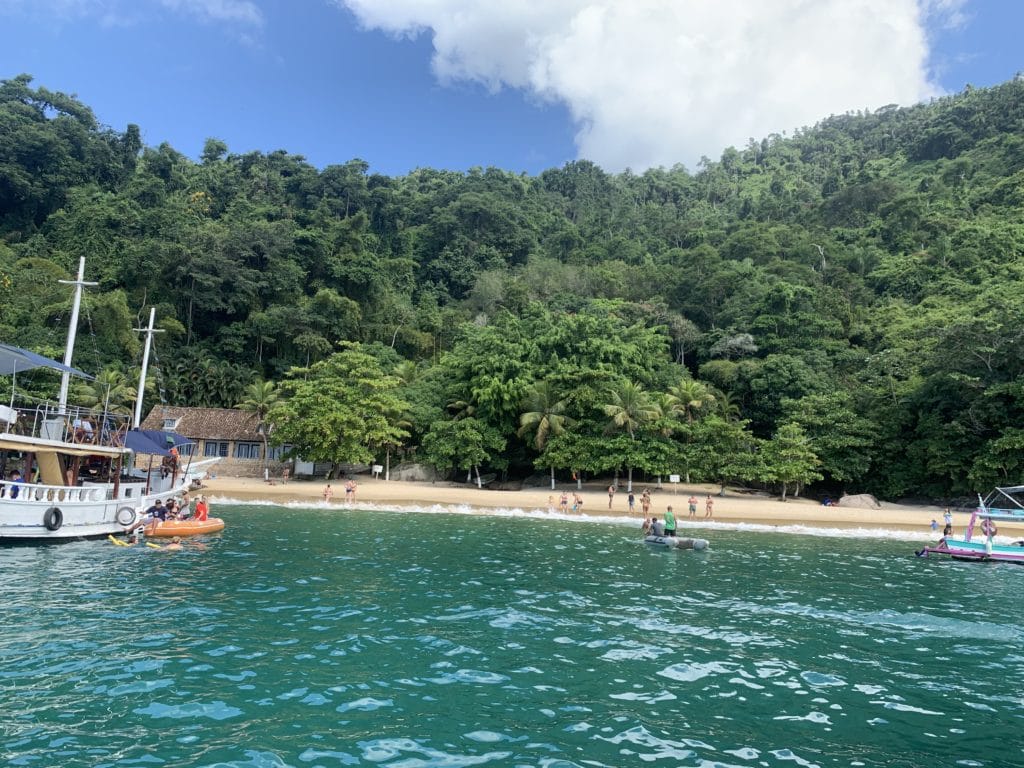
As for Lagoa Azul, I’d expected it to be more beautiful — it’s an area of calm, clear water where the boat stops for lunch. I’ve read accounts of it being great for swimming with fish, but since we were full from lunch, we decided not to get in the water.
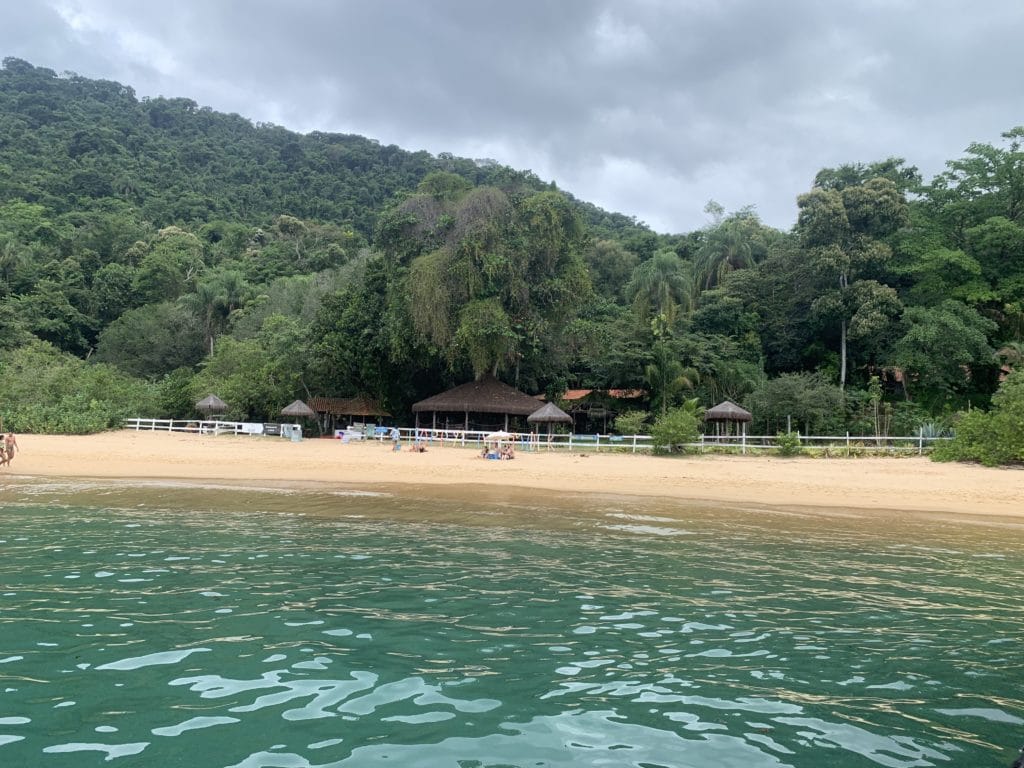
Praia da Lula, with light-colored sand and crystal-clear water, has a restaurant called Happy Hammock Paraty, great for anyone who doesn’t want to just lie on the sand — you only pay for what you order, and there are hammocks to relax in.
Waterfalls in Paraty
Cachoeira do Tobogã
You can do this trip by Jeep or your own car, with paid parking for R$10 right in front of the waterfall.
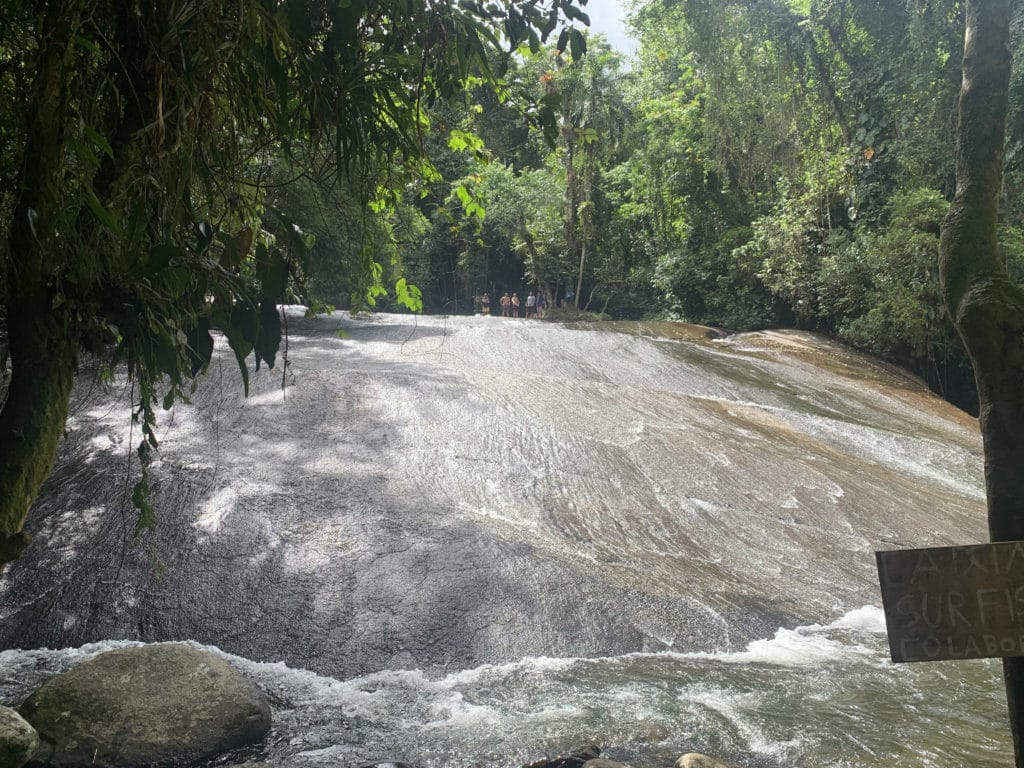
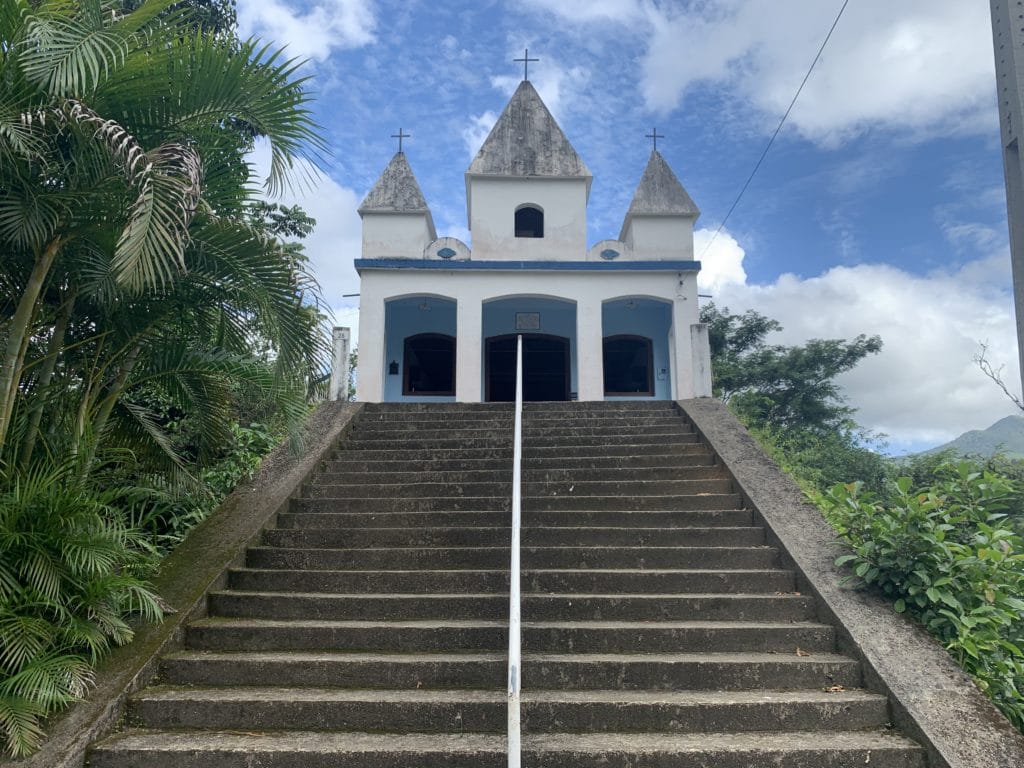
To find the parking, look for the Igreja Nossa Senhora da Penha or the Engenho D’Ouro cachaça still, which we’ll cover in another post — parking sits right in front of these landmarks, with Poço do Tarzã just above. There’s no admission fee for the waterfall itself. The main draw is a large, smooth rock face where the water flows down, forming a natural slide.
Poço do Tarzã
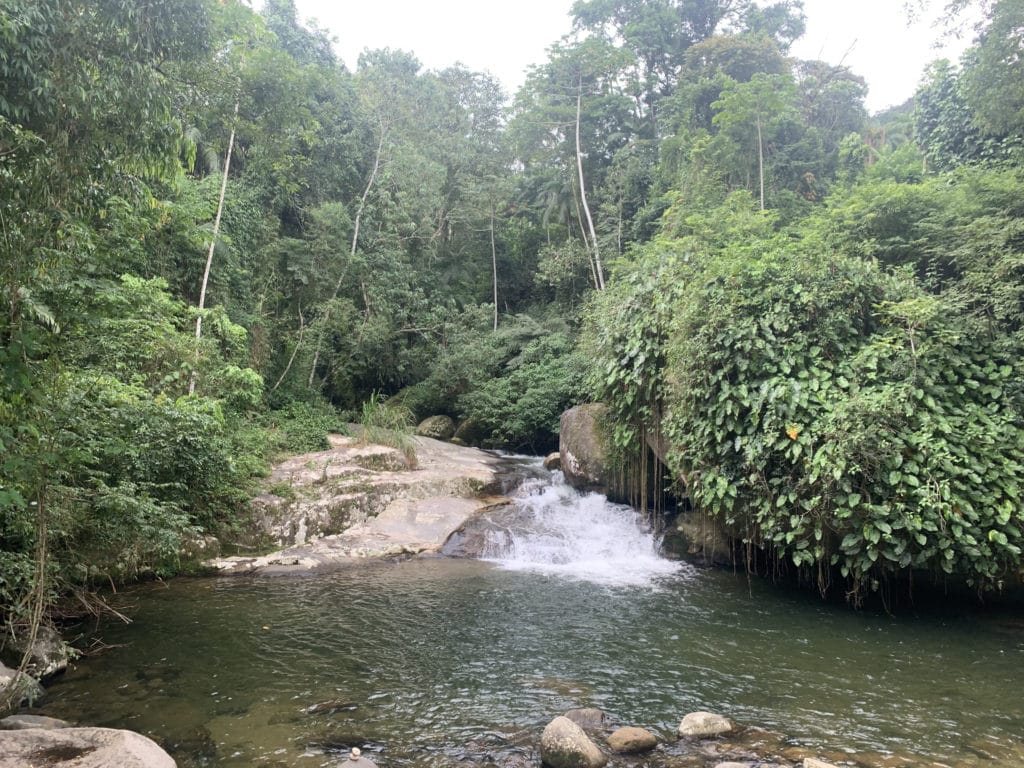
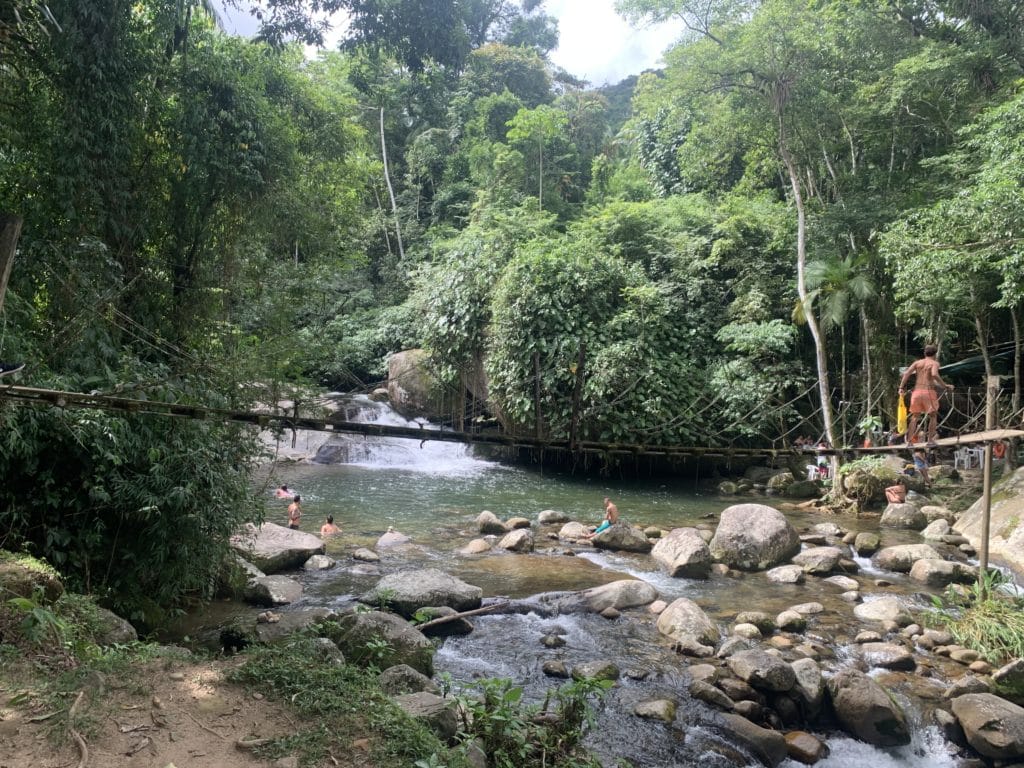
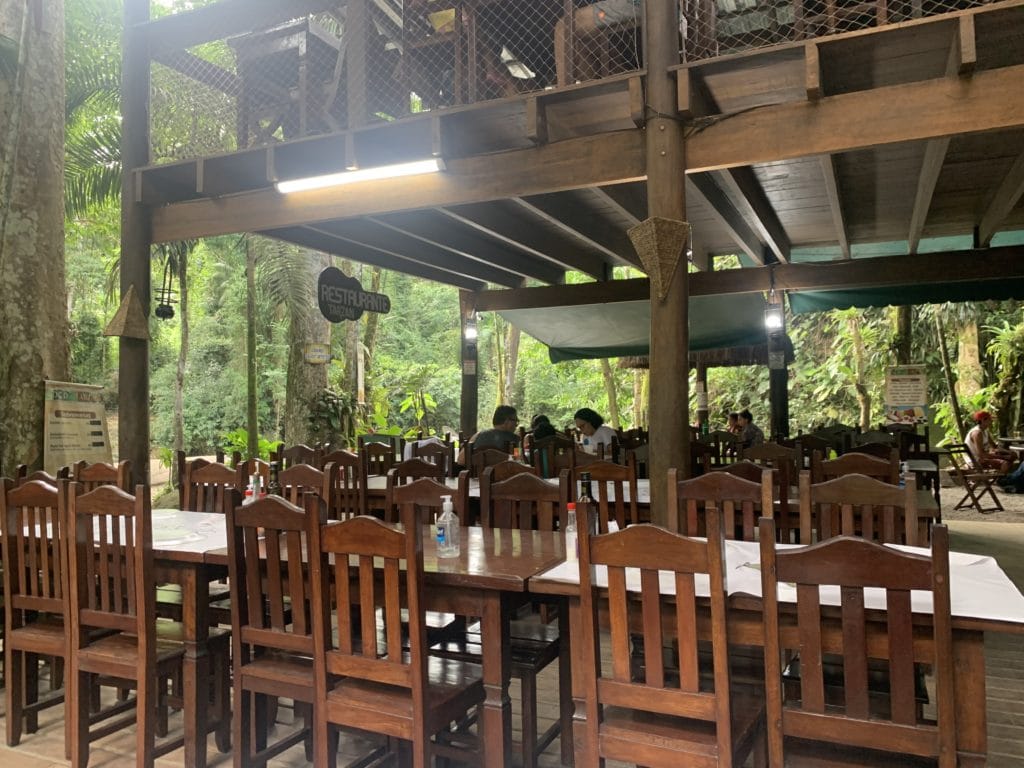
Climbing up along the side of Cachoeira do Tobogã, you’ll find a natural pool formed between the rocks. A small suspension bridge crosses over the river, leading to a rustic restaurant that’s only open during peak season — we ate there, and the food was decent, at a spot called Restaurante Tarzan.
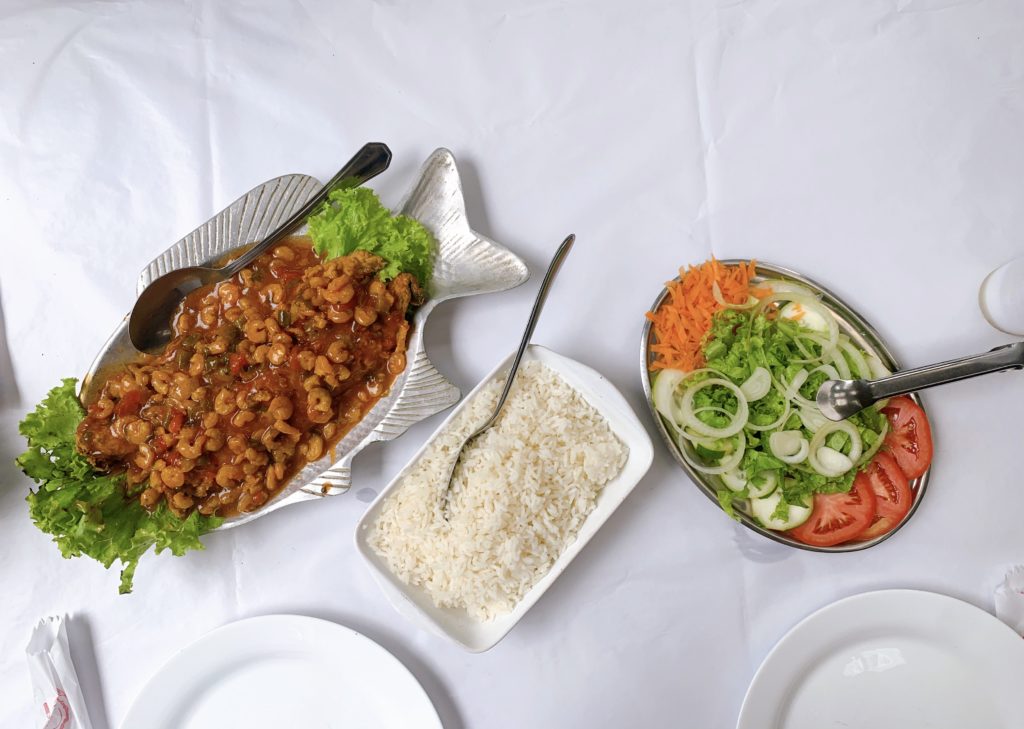
At the restaurant, we ordered fish in shrimp sauce as our main course, served with salad and rice, and it was tasty.
Find more tips on where to eat in Paraty in our other post.
Historic Center of Paraty
The historic center remains beautifully preserved, both the colonial stone streets and the houses, and it’s genuinely beautiful and romantic to walk through. Today, the colonial houses serve as shops, restaurants, art studios, and inns.
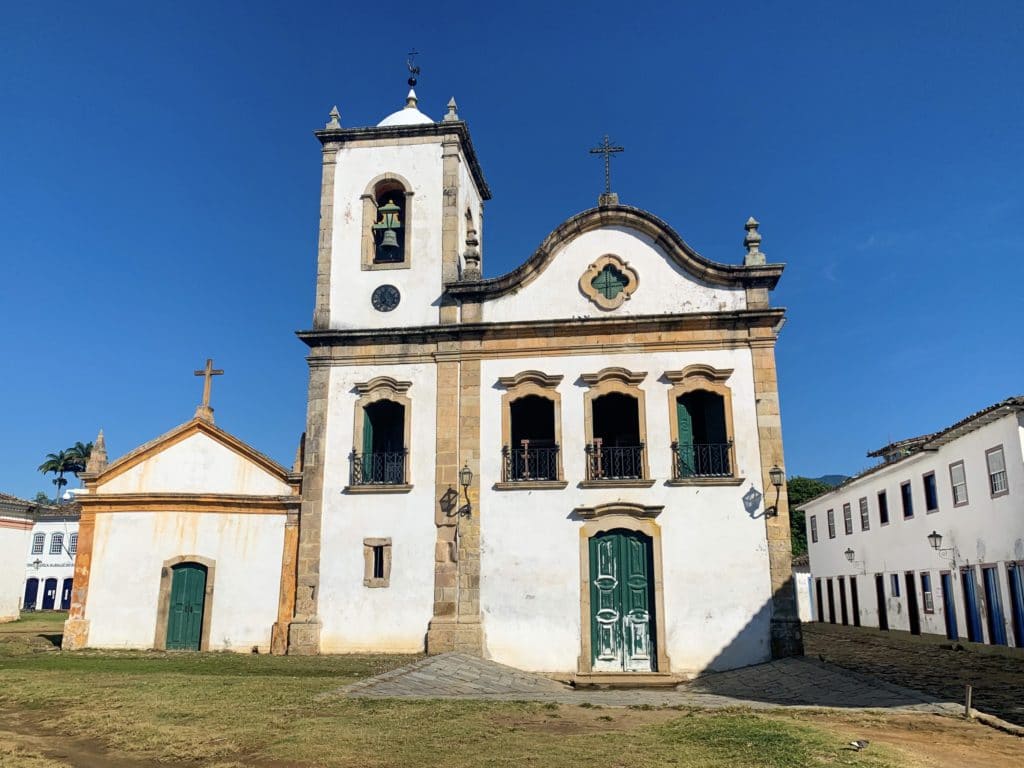
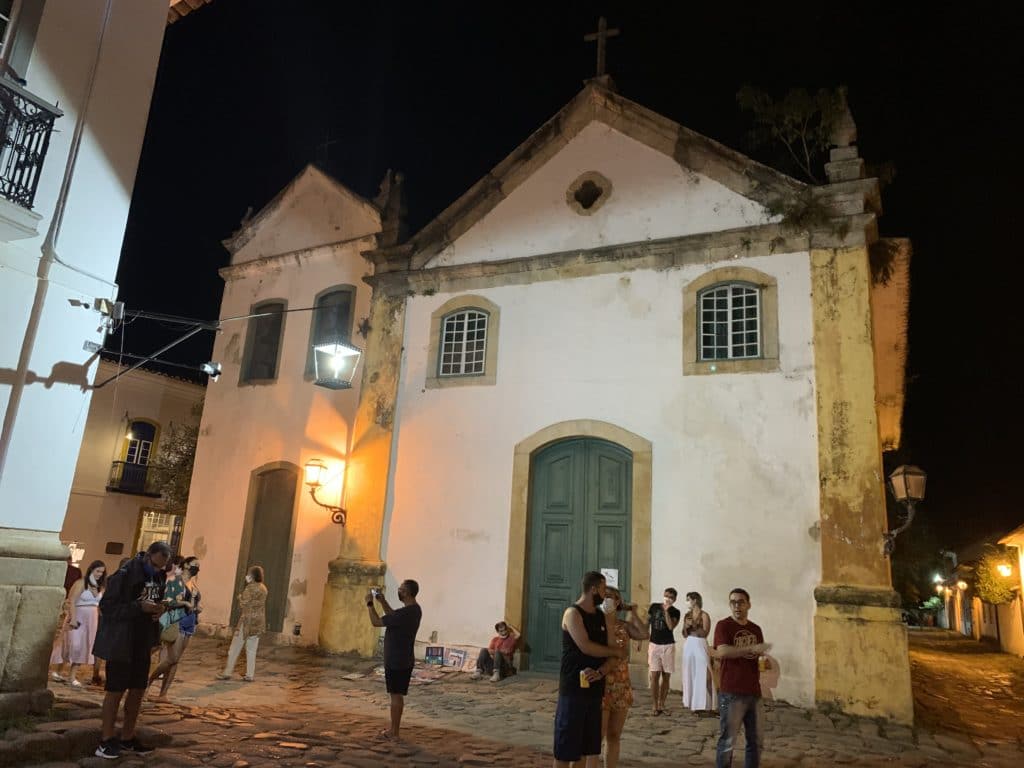
Capela de Santa Rita
Among the town’s architectural landmarks is the Capela de Santa Rita, right on the waterfront facing the pier — a church built in 1722, and, without question, the town’s postcard image.
Built by freed Black Brazilians, it was later repaired and expanded a few years on by white devotees who began using it as the main church while a new temple was under construction. It’s the oldest church in town, following the demolition of the São Roque chapel and the original main church.
Igreja Matriz de Paraty
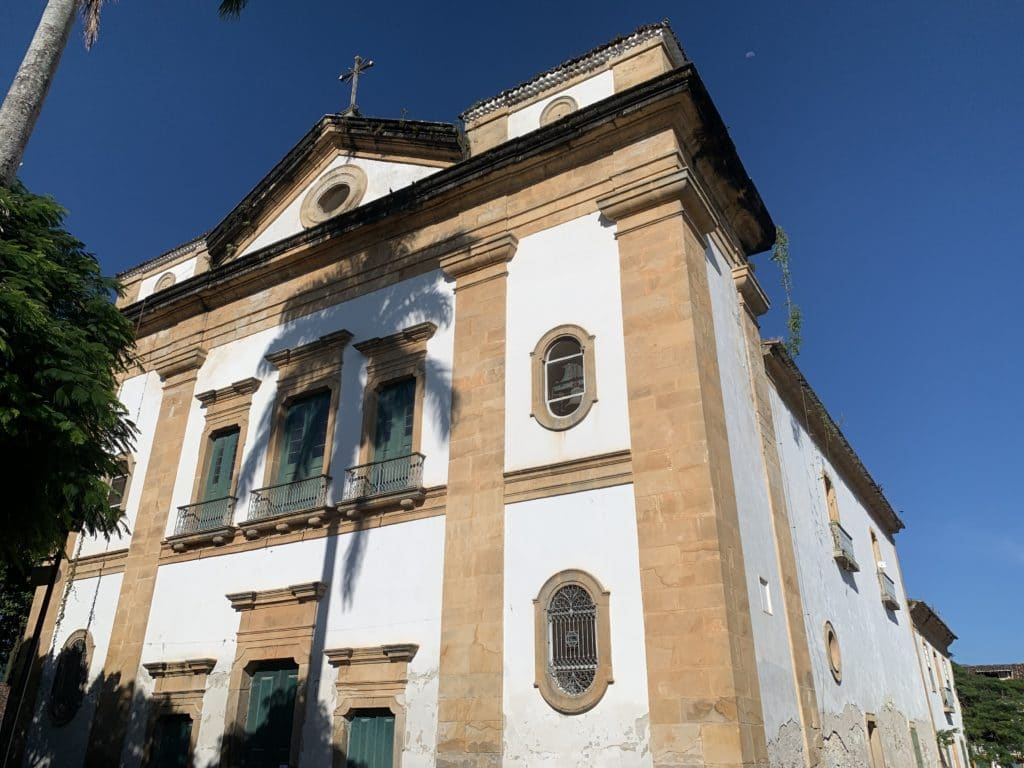
The Igreja Matriz de Nossa Senhora dos Remédios sparked the settlement of the region in 1640, though construction on the church itself didn’t begin until 1646.
In 1668, the original structure was torn down and a larger one built, finished in 1873, though not exactly as originally planned — the bell towers and rear of the church were left unfinished.
Igreja Nossa Senhora das Dores
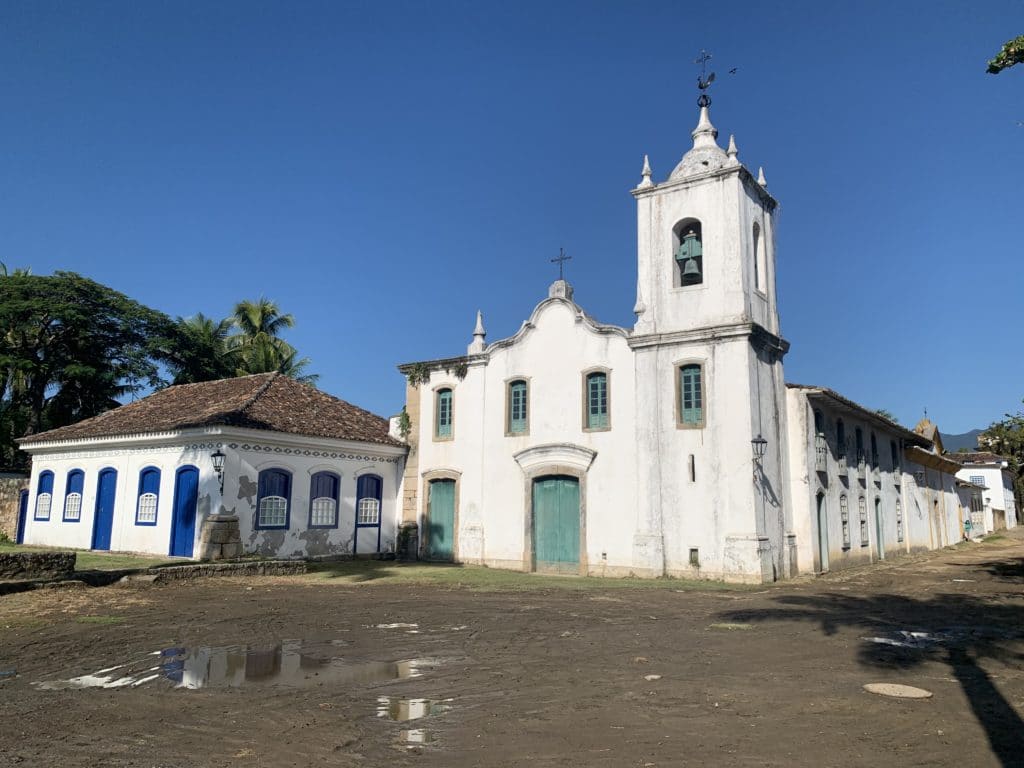
Built in 1800 by women of Paraty’s aristocracy, popularly known as the “capelinha” (little chapel), renovated in 1901, and located on Rua Fresca.
Igreja de Nossa Senhora do Rosário e São Benedito
Located in the historic center, among the shops and restaurants at Largo do Rosário. Construction began in 1725 and finished around 1757, and it was built for the enslaved Black Brazilians who helped construct the town.
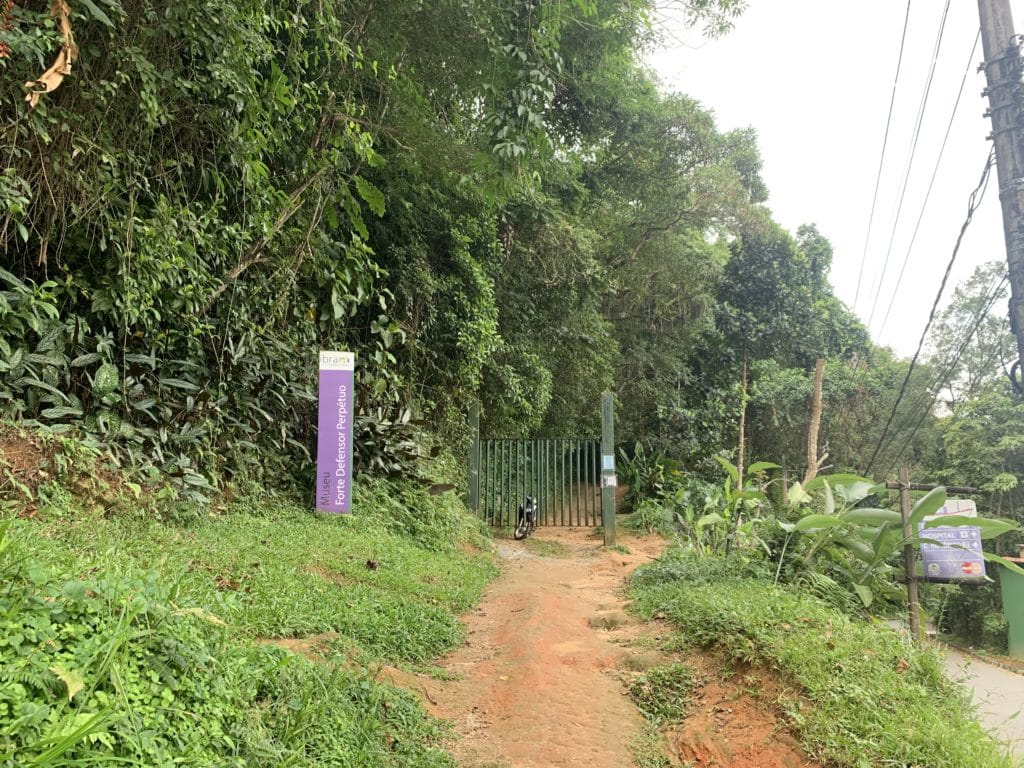
Museu Forte Defensor Perpétuo
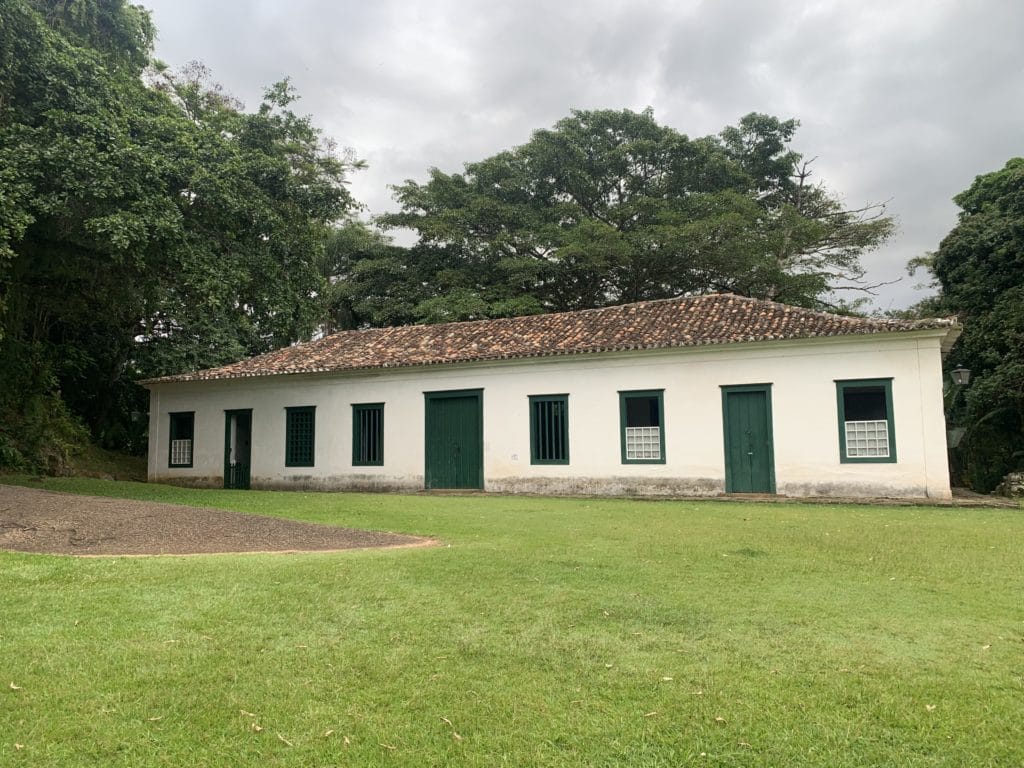
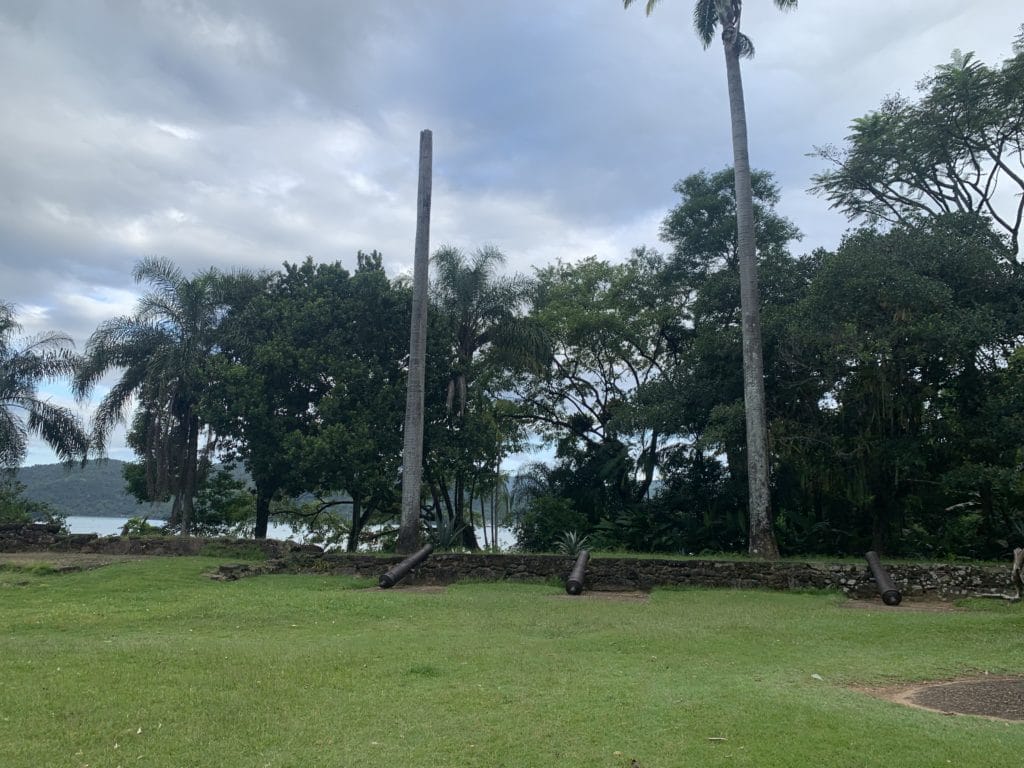
Built in 1793 on Morro da Vila Velha, or Pontal da Defesa, it was named in honor of Dom Pedro I, Perpetual Emperor of Brazil, and was built to defend the Vila de São Roque, the town’s very first settlement.
Until 1822, the fort sat in ruins because of the town’s economic decline, but it was rebuilt and renovated around that time. Its interior remains authentic, preserving three distinct areas: the commander’s quarters, the troop barracks, and the enlisted men’s barracks.
The city closed the fort to visitors because of the pandemic, but you can still see the building from outside and enjoy the view from the hill.
Learn more about our trails in Itatiaia.
Read the original version in Portuguese on A Bela e o Bigode.