What to Do in Ponta Grossa
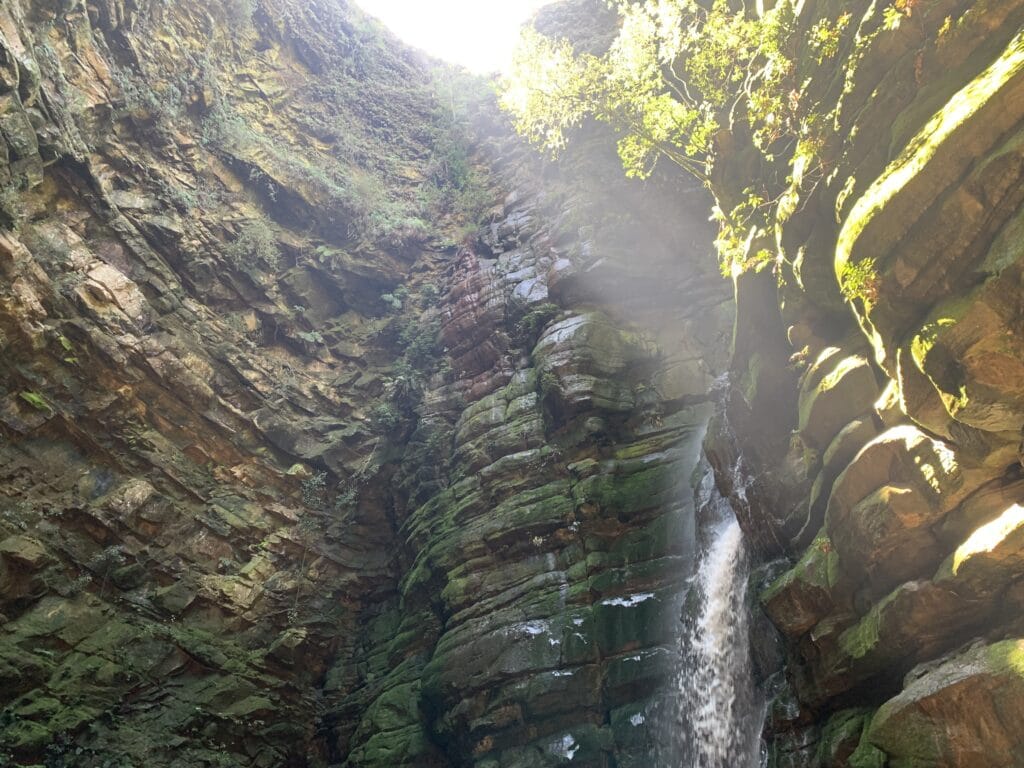
Ponta Grossa is a town located about 120 km from Curitiba, with plenty of natural beauty that charms visitors, much like the entire Campos Gerais region.
First off, the Campos Gerais region is a natural phytogeographic zone, with open grasslands and gallery forests, or isolated patches of mixed ombrophilous forest.
Even though it’s not yet widely known, the region is rich in tourist attractions, especially natural scenery.
The town’s beauty lies mainly in its waterfalls and rock formations, the most notable being the sandstone formations at Parque Estadual de Vila Velha and Buraco do Padre.
How to Get to Ponta Grossa
By car, leaving from Curitiba, the trip takes about two hours, via the fully divided BR-376 highway, which has tolls, though they’re currently inactive pending a new concession.
We’d recommend driving, since the attractions are spread apart from each other and from downtown, giving you more flexibility.
When to Go to Ponta Grossa
We’d recommend visiting in summer to make the most of the waterfalls, though the town can be visited year-round.
What to Do in Ponta Grossa
Parque Estadual da Vila Velha
The most famous attraction in Ponta Grossa, Parque Estadual de Vila Velha has three main draws: Arenitos, Furnas, and Lagoa Dourada.
The park has a visitor center, restrooms, snack bars at every attraction, parking, and finally, a souvenir shop. It offers easy access with clean, well-marked trails, walkable on foot or by bike, and the park also runs buses to shuttle visitors around. Signs at every bus stop list return times.
Everything in the park is beautiful, but the most stunning part is the rock formations called Arenitos. There, you’ll find several different shapes, like a goblet, a camel, a cat, and more. To walk among the formations, there are two paved, easily accessible trails between the rocks (the Trilha dos Arenitos and the Trilha do Bosque), totaling 2.5 km of walking.
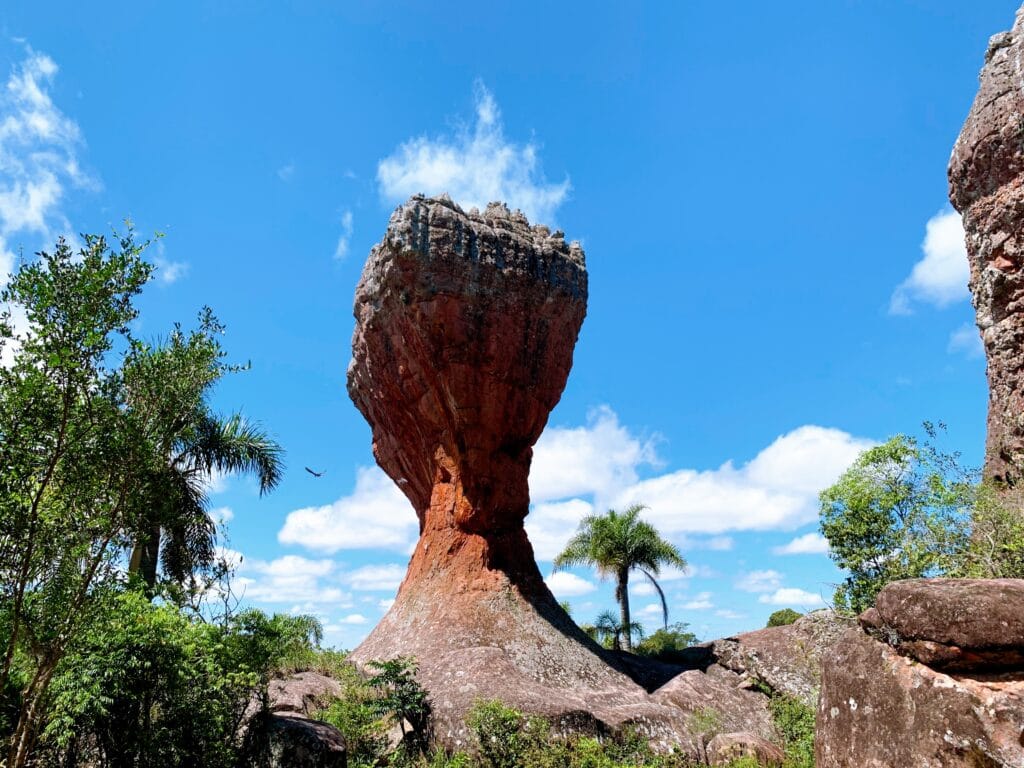 The Taça, one of the park’s main symbols
After that, take the bus to the Furnas, large sinkholes, just to illustrate, with lush vegetation and water inside, fed by an underground aquifer. They’re 6 km from the Arenitos by road, and Paraná’s two deepest furnas are open to visitors (Furnas 1 and 2), reaching depths of up to 100 meters.
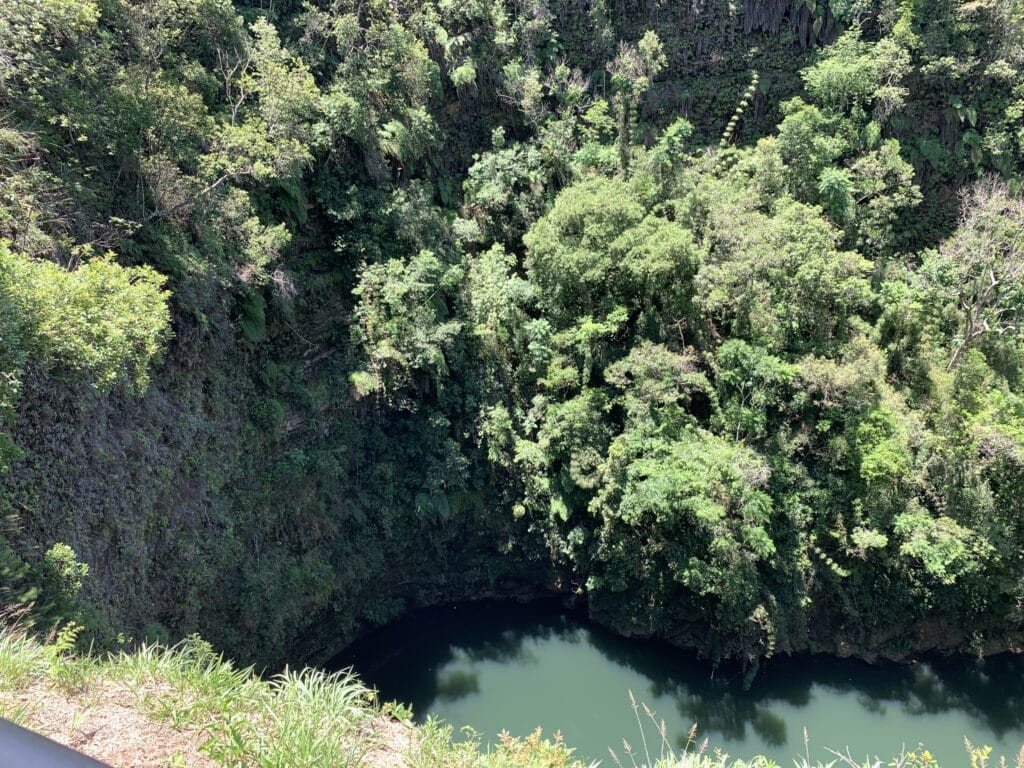 Furna
Furna
Lagoa Dourada gets its name from the golden color the water takes on when it reflects the sunlight.
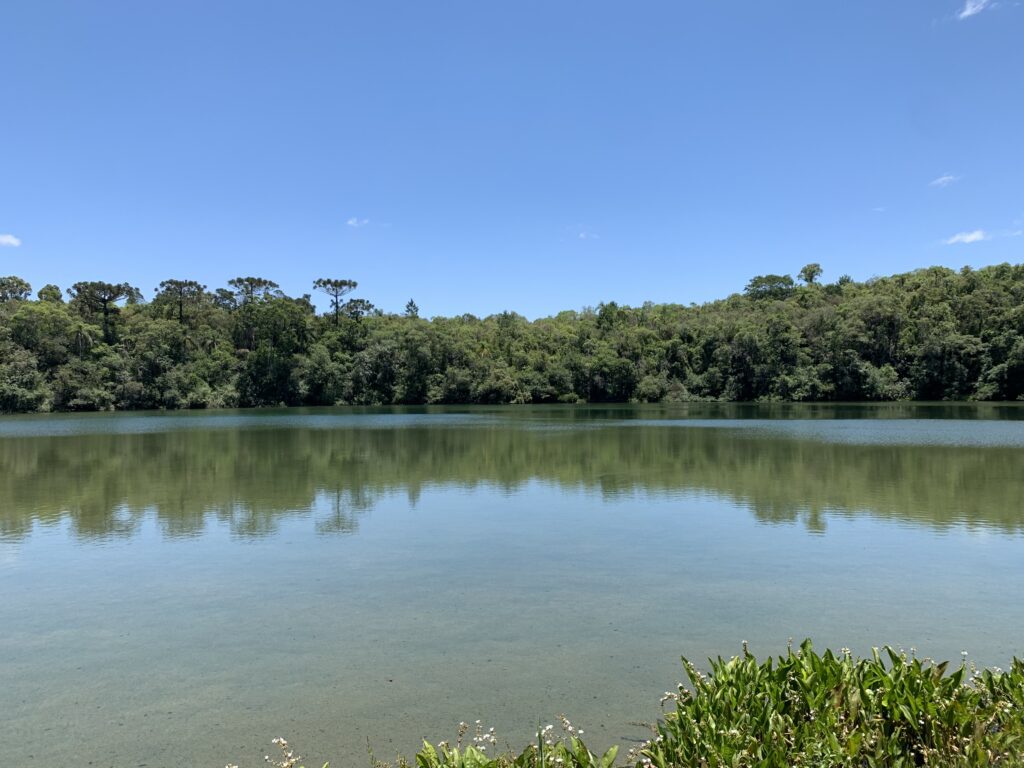 Lagoa Dourada
For the more adventurous, the park also offers treetop climbing (R$42.00) and a zipline (R$64.00).
Visiting hours: Wednesday to Monday (closed Tuesdays), 9 AM to 5 PM. Note: the park closes once it reaches its maximum daily capacity of 800 visitors, to help preserve the site. So on weekends and holidays, it’s best to arrive early, and if possible, by 1 PM, to see every attraction. Admission: R$49.00 to see every attraction.
Buraco do Padre
Buraco do Padre is simply beautiful, and it absolutely belongs on your itinerary! It’s a vertical cave (furna) with roughly 40 m of visible depth, from which a 30-meter waterfall pours down, genuinely stunning. This natural cavity is also the habitat of the Sick’s Swift, the bird symbol of the park.
It’s 30 km from Ponta Grossa, in the district of Itaiacoca, with 22 km paved and 8 km unpaved. It got its name because Jesuit priests would come here seeking refuge for meditation and religious practice.
The trail leading to the waterfall is fully accessible, since it’s a wooden walkway.
Buraco do Padre
Fenda da Freira sits within the same park, though it’s accessed via a parallel trail leading to another route up to the top of Buraco do Padre. The visit is guided, and the explanations are genuinely interesting.
It’s roughly 300 m of a narrow sandy corridor between greenish walls covered in moss and lichen, naturally sculpted by the passage of time — you can only visit the first 100 meters, though, since beyond that, the crevice narrows and requires climbing to pass through.
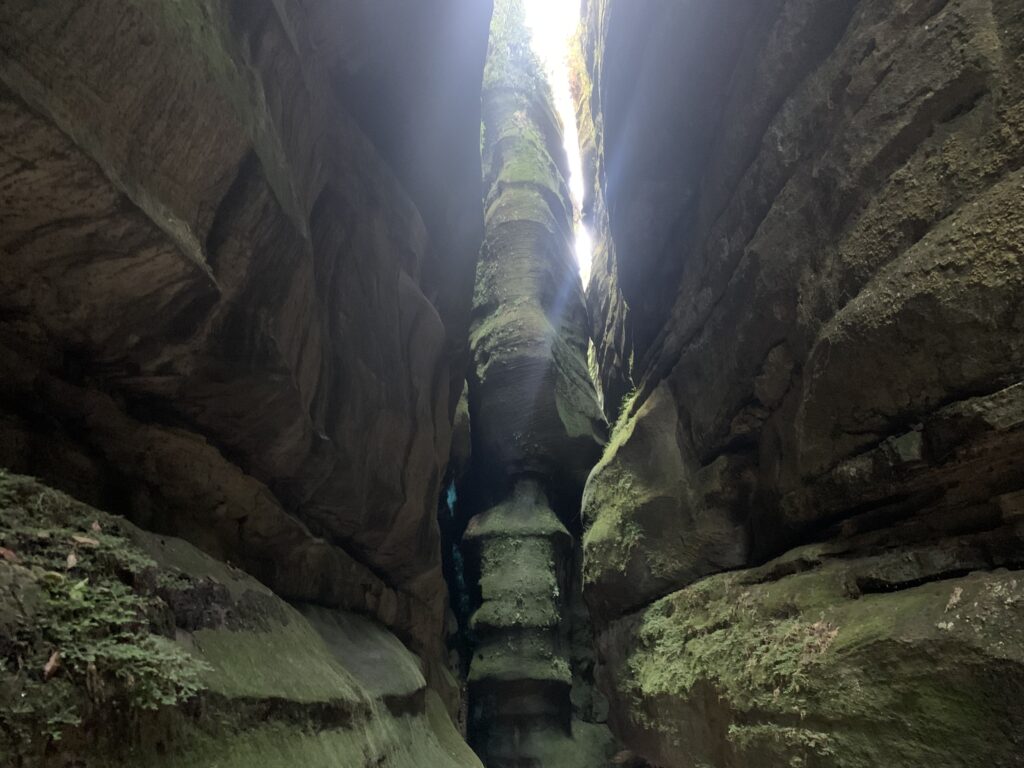 Fenda da Freira
Beyond the main trail, there are other trails too, along with climbing areas, barbecue pits, a main house, a snack bar, and souvenirs for sale.
Visiting hours: During summer, the park is open Wednesday to Sunday and holidays, 9 AM to 4:30 PM. Admission: R$48.00 for Buraco do Padre and R$40.00 for the Fenda da Freira.
Downtown Attractions in Ponta Grossa
Ponta Grossa’s urban attractions include a few squares and monuments. The main ones are:
Praça Barão do Rio Branco – Located right downtown, this is Ponta Grossa’s central square, a good place to relax among the trees.
Catedral Sant’Ana – built in 1823, with modern, rounded architecture, and beautiful stained glass windows worth seeing. Around it, you can admire buildings designated as Cultural Heritage of Paraná, like the old Fórum building and the Guilherme Naumann building.
Igreja Sagrado Coração de Jesus – Built in 1898, it became known as the Igreja dos Polacos, since its history is tied to Polish immigration.
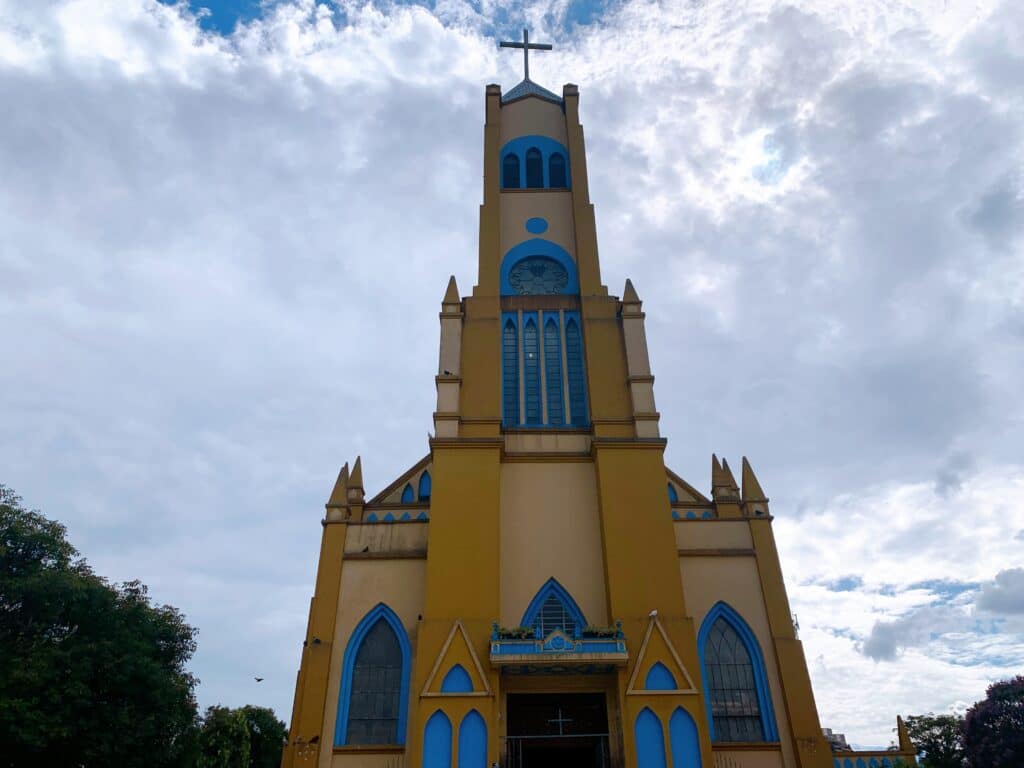 Igreja Sagrado Coração de Jesus
Old Restored Train Stations
Casa da Memória – A museum with an exhibit telling the town’s history, located at what was once Ponta Grossa’s first train station — out front stands a recently restored Maria Fumaça steam locomotive.
Visiting hours: Monday to Friday, 9 AM to 5 PM, free admission.
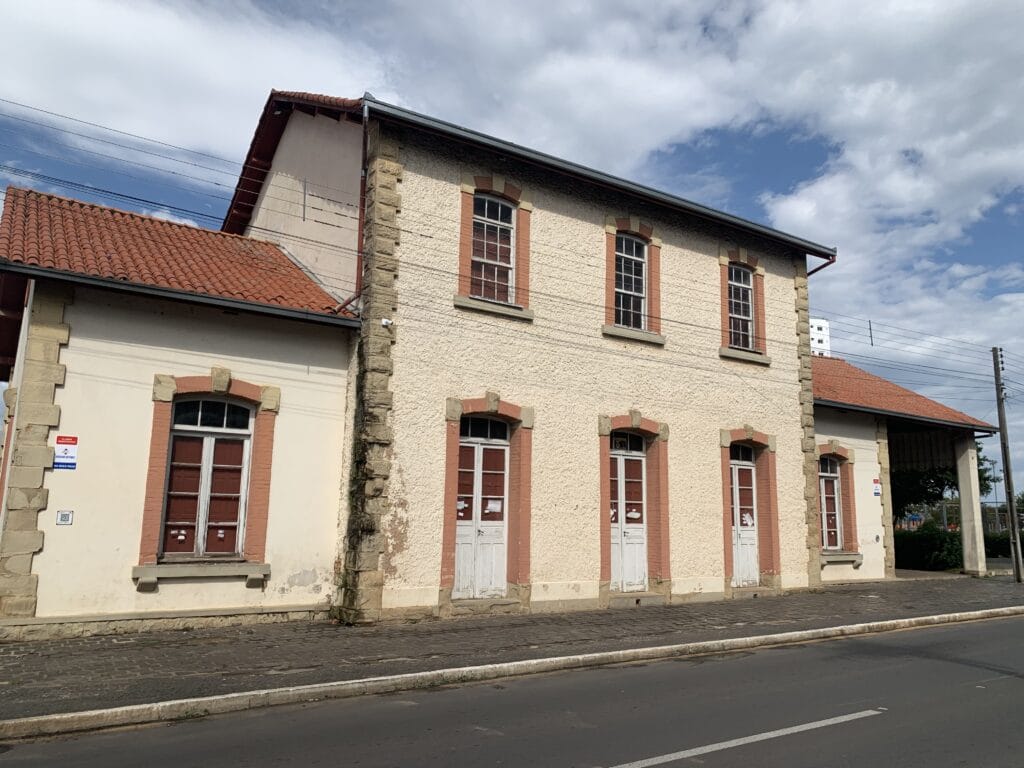 Casa da Memória
Estação Saudade – the São Paulo – Rio Grande station opened in 1900 and retains its original building features to this day. It’s also been designated Cultural Heritage of Paraná, and today it houses the Sesc Estação Saudade branch, a good spot for coffee.
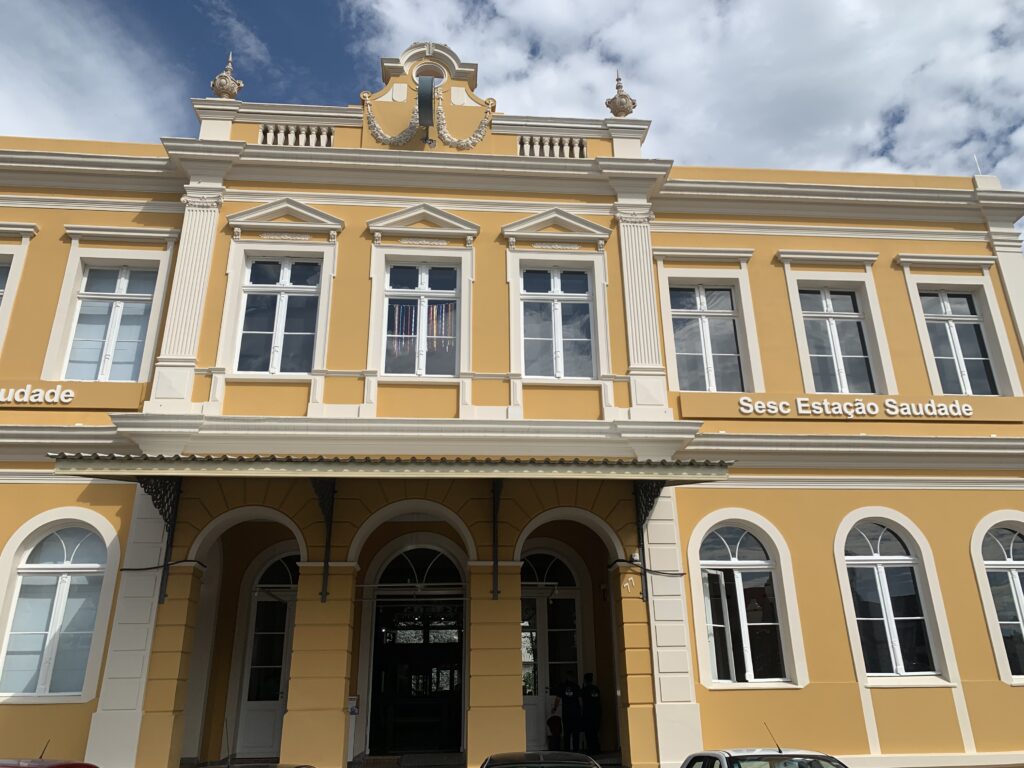 Sesc Estação Saudade
Mosteiro da Ressurreição - founded in 1981, known mainly for its Gregorian chant. The site has a shop where the monks sell handmade products like preserves, liqueurs, candles, ceramic pieces, paintings, and more. You can also stay at the Monastery, by advance booking.
Visiting hours: open every day, free admission.
Mansão Vila Hilda - built in 1926 by Alberto Thielen, a merchant and prominent local figure. It’s named after his wife, Hilda Thielen.
Designated Cultural Heritage of Paraná since 1990. The architecture blends French Neoclassical and Art Nouveau influences, and the mansion’s interior features paintings depicting European and local landscapes.
Visiting hours: open Monday to Friday, 8 AM to 6 PM.
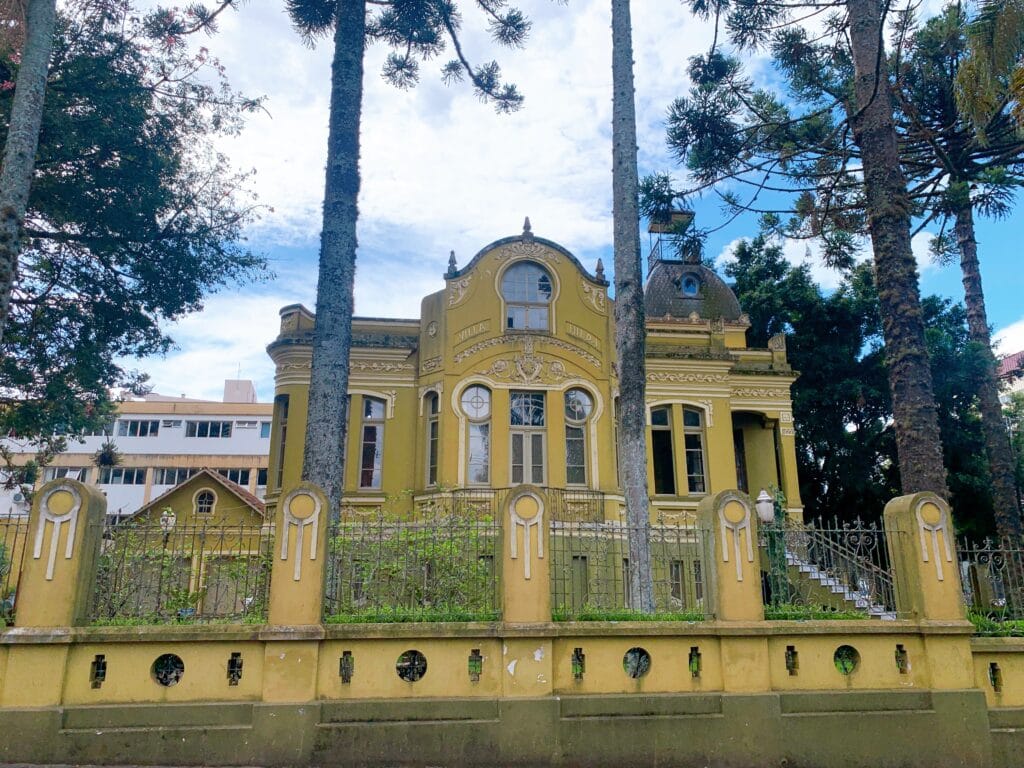 Mansão Vila Hilda
Shopping Paladium - a great spot for an evening out or free time in town, since it’s easy to reach and has plenty of well-known shops.
 Shopping Paladium
Other Tips
For anyone with more days to spend in town, we’d also recommend the following.
Cânion São Jorge and Cachoeira do Rio São Jorge
Cânion São Jorge is a private property with several waterfalls, the highlight being the São Jorge waterfall, standing 30 meters tall. The site also has swimming areas, restrooms, camping, a snack bar, and cliffs suited for rappelling.
It’s 18 km from downtown, with 10 km paved and 8 km on a somewhat rough unpaved road — we’d recommend GPS, since the route can be tricky to find.
Visiting hours: every day, 9 AM to 9 PM. Admission: R$20.00 per person for a day visit, R$40.00 per person to camp, and lunch R$47.00.
Cachoeira da Mariquinha
Cachoeira da Mariquinha (website) is a waterfall roughly 30 meters tall, whose pool forms a natural swimming hole with a sandy bank around it. Like Cachoeira do Rio São Jorge, it’s also located on private property, about 35 km from downtown Ponta Grossa.
From the parking area, you’ll follow a 900-meter trail through native forest, taking about 15 minutes at most to reach the waterfall. The site has a camping area, restrooms, and a snack bar.
It’s 35 km from downtown Ponta Grossa, with 24 km paved and 11 km unpaved. Visiting hours: Tuesday to Sunday and all holidays, 9 AM to 7 PM. Admission: R$25.00 per person, R$40.00 to camp. Pets not allowed.
Balneário Capão da Onça
Capão da Onça (website and Facebook) is a swimming spot made up of several waterfalls and rapids, the largest standing 6 meters tall. Beyond the waterfalls, there are rapids and natural pools forming small sandy stretches along the Rio Verde.
Bathed by the Rio Verde, it’s 15 km from downtown Ponta Grossa, toward the district of Itaiacoca. Its name comes from the vegetation native to the area, and from the fact that long ago a jaguar (onça) was found and killed in the middle of its fields.
The site has parking, kiosks with barbecue pits, restrooms, camping, and a snack bar.
It’s 15 km from downtown, with 13.5 km paved and 1.5 km unpaved. Visiting hours: every day, 9 AM to 6 PM. Admission: R$20.00 per person, R$40.00 per person to camp, and kids up to age 12 free.
Where to Eat in Ponta Grossa
Boteco da Visconde
Boteco da Visconde (Instagram) is a laid-back spot, great for meeting up with friends and enjoying a great feijoada on Saturdays. We loved it, and we’d recommend it. With fun décor featuring several antique objects on the walls and delicious snacks, it’s absolutely worth stopping by.
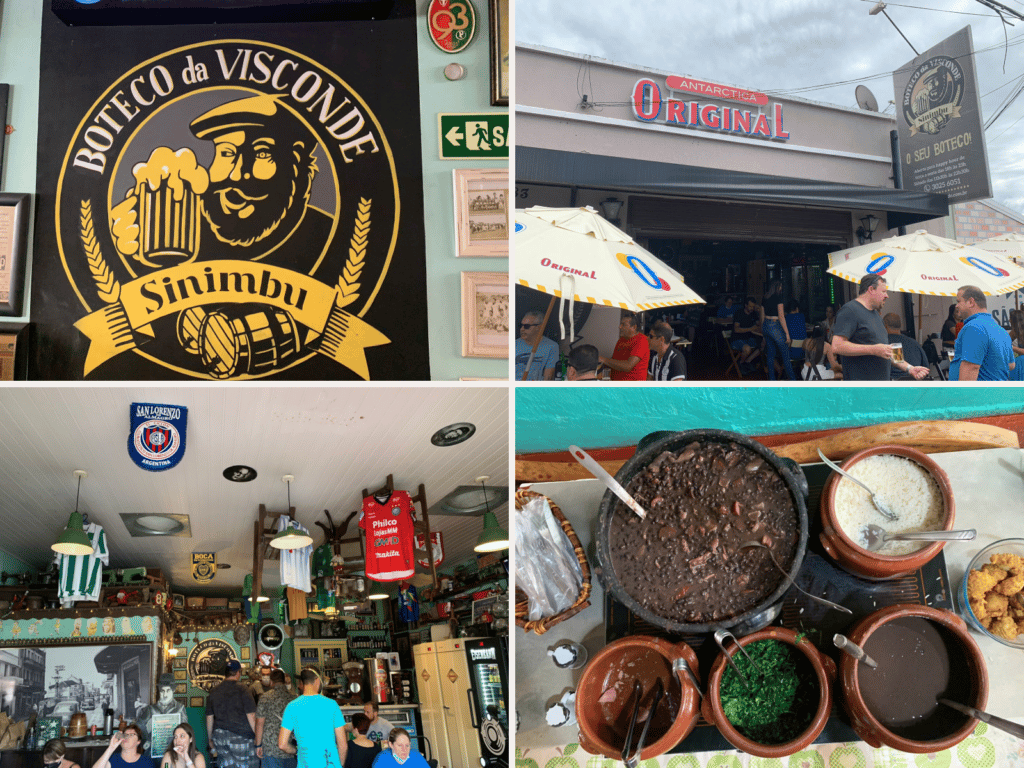 Boteco da Visconde, Ponta Grossa
Read the original version in Portuguese on A Bela e o Bigode.