Ilha do Mel: A One-Day Guide
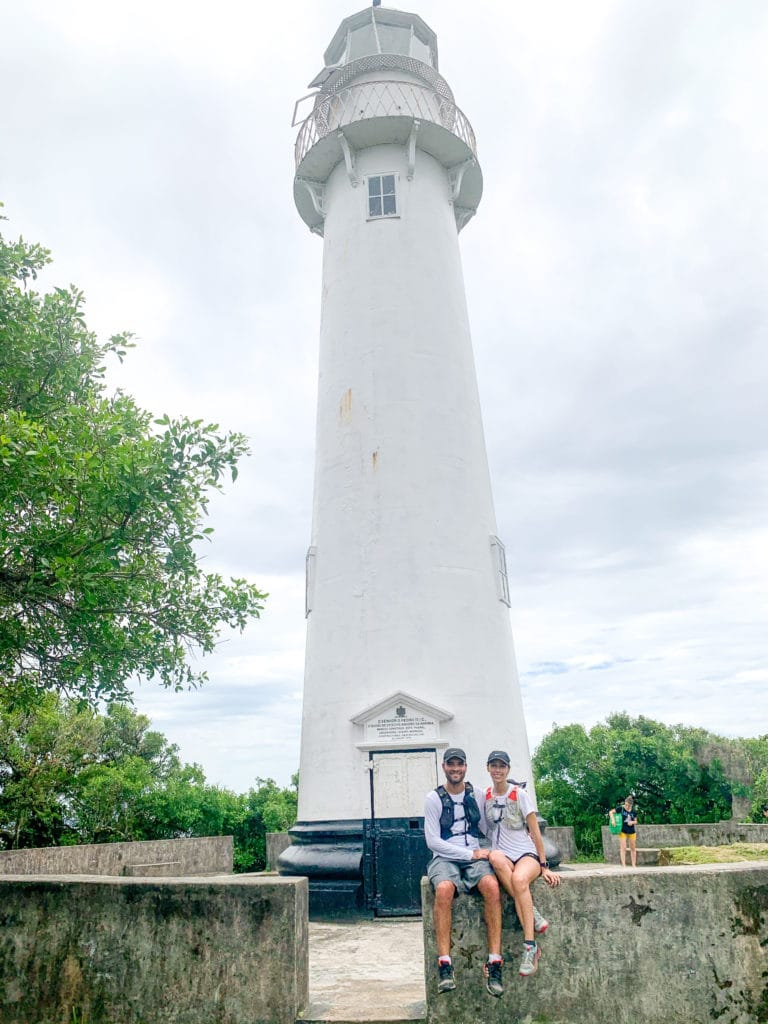
Ilha do Mel is a destination for anyone drawn to genuinely rustic adventure and untouched vegetation, since access is only by boat from Paranaguá or Pontal do Paraná, meaning far fewer tourists than most other beaches in Brazil. When you arrive, the streets are unpaved, and beyond that, there are no cars, and electricity is scarce, limited to a few shops and inns.
Cell signal is weak too, making this a place to fully disconnect from city life and reconnect with nature. Claro’s data signal didn’t work anywhere on the island, though Vivo worked in a few spots.
Access is also limited by visitor numbers. Currently, only five thousand people per day are allowed in, helping prevent environmental degradation.
Ilha do Mel sits within a protected stretch of Atlantic Forest, with more than 90% of its area covered by different vegetation types over sandy soil. The island is recognized as a UNESCO Natural World Heritage Site and protected under Paraná’s Historic, Artistic, and Natural Heritage designation.
Each beach has its own distinct character, from fortresses to deserted stretches, a lighthouse, and Praia das Encantadas, a popular gathering spot for younger crowds.
For lodging, it’s best to stay in one of two villages: Nova Brasília or Encantadas, both with plenty of inns, campgrounds, and restaurants. The island actually has five different villages in total: the two mentioned, plus Fortaleza, Farol, and Praia Grande.
Our Experience
There are several trails on the island, and we decided to link together the sections we considered most important, adding up to 21 km total, since we only had a single day on the island — we caught the boat in the morning and returned at the end of the day.
Origin of the Name
There are several theories:
Its first appearance is recorded as early as 1666, on a map made by João Albbernas in the “Livro de Toda a Costa da Província Santa Cruz.” That map is held in the map archive of Brazil’s Ministry of Foreign Affairs, and the island already appears there under the name Ilha do Mel.
Another map, this one by Antônio Vieira dos Santos, published in 1850, also already used this name. In the prior century, though, it was known as “Ilha da Baleia” (Whale Island), possibly because of its shape.
Another theory ties the name to wild honey harvesting before 1850, when food was sweetened with honey or sugarcane molasses extracted from cane grown right on the island, since refined sugar was hard to come by.
How to get to Ilha do Mel from Curitiba
Bus
- Two hours to Pontal do Sul, operated by Viação Graciosa
Renting a car:
- Curitiba to Paranaguá: 90 km (Google Maps)
- Curitiba to Pontal do Sul: 120 km, 80 km of divided highway and 40 km of single-lane road (Google Maps)
Parking
Once you get close to the pier where the boats depart, leave your car in a secure, covered parking lot near the boarding area.
We paid R$20 in Pontal do Sul to leave the car there for the whole day.
When to visit Ilha do Mel
- Summer: the best season. Long, hot days and cooler nights, though it’s also the rainy season, so expect afternoon showers.
- Fall: also a good time, with little rain, and the island stays nice and quiet, without many tourists.
- Spring: alternates between sunny days and rainy, windy ones. This is when the bromeliads are in bloom, beautiful to see, but you’ll need some luck with the weather.
- Winter: only if you’re into fog, cold winds, and chilly water — we honestly wouldn’t recommend it.
- November and December bring a lot of horseflies, which are especially annoying while eating — the areas with the most insects are around Brasília and Fortaleza.
Getting to Ilha do Mel
- Boat crossing
- Duration: 30 minutes (from Pontal do Sul) or 1 hour 30 minutes (from Paranaguá)
- Cost: R$53 (Paranaguá–Ilha do Mel) and R$35 (Pontal do Sul–Ilha do Mel). Prices are round-trip.
- Departure hours to the island: 8 AM to 6 PM, every 30 minutes, extended to 7 PM on weekends.
- Return departure hours: every hour.
- You can arrive at either Nova Brasília or Encantadas.
- Check schedules and prices at www.abaline.com.br.
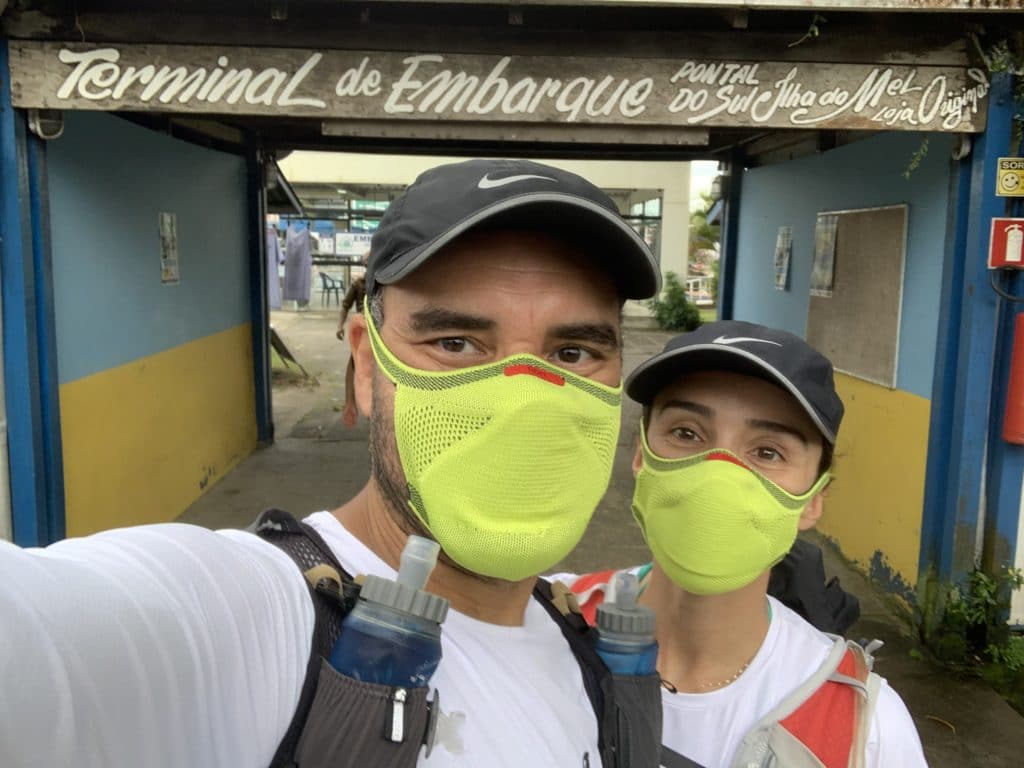
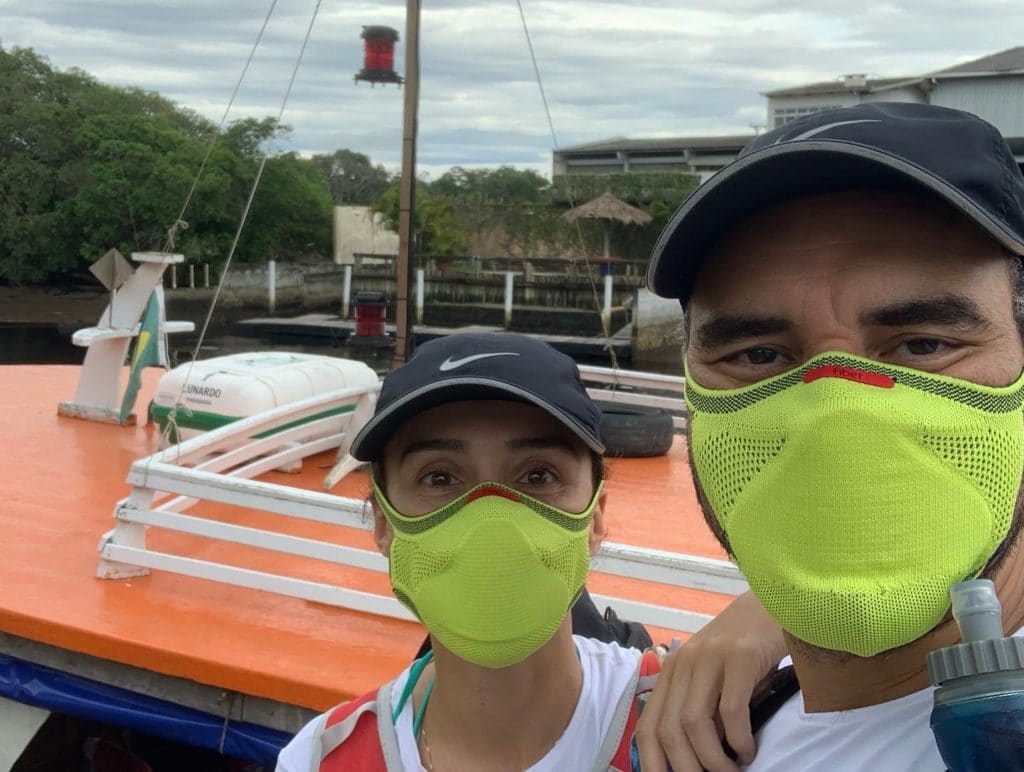
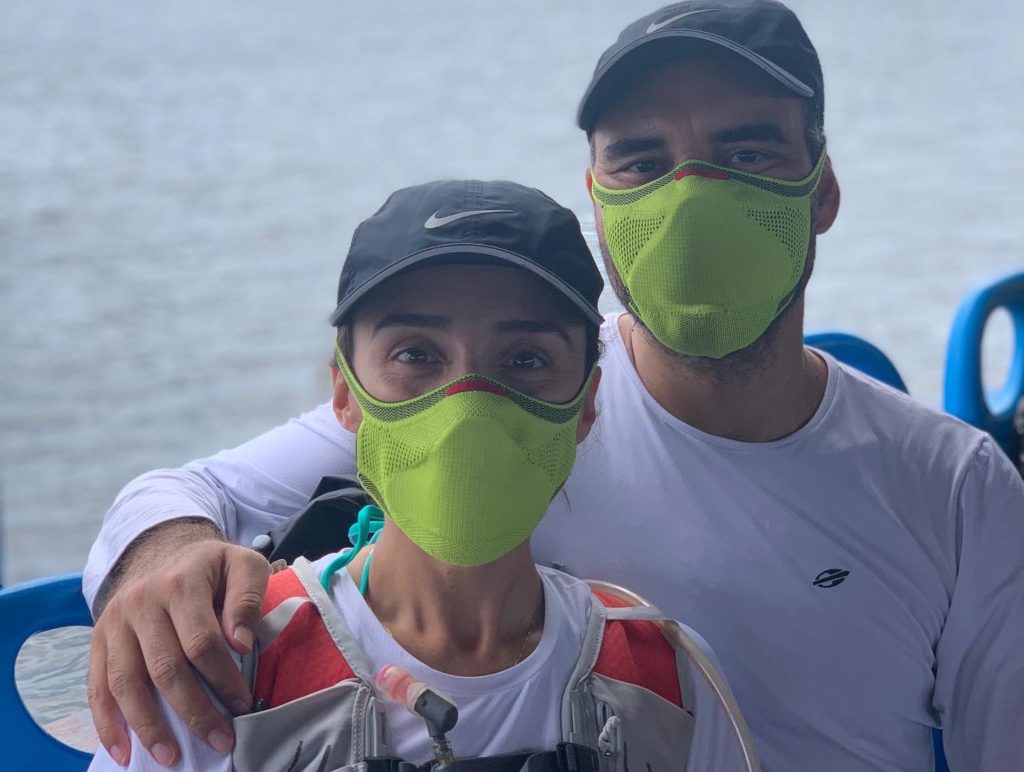
We went through Pontal do Sul to catch the boat and got off at Encantadas to start our trail between the beaches. We preferred to go on foot, but you can also bike. That said, we were told rental prices can be a bit steep. Since we don’t usually walk or rent bikes ourselves, we can’t confirm this firsthand, but we’d recommend looking into it.
What to see on Ilha do Mel
As mentioned, we got off at Praia Encantadas, and soon after headed to see the Gruta das Encantadas, very close to the drop-off point. Beyond the cave, there are three other main spots to see: the Farol das Conchas lighthouse and the Fortaleza Nossa Senhora dos Prazeres.
You can reach all three by following the trails between the beaches, taking in genuinely beautiful scenery along the way. So we started at Encantadas and looped back through Brasília, covering the full route.
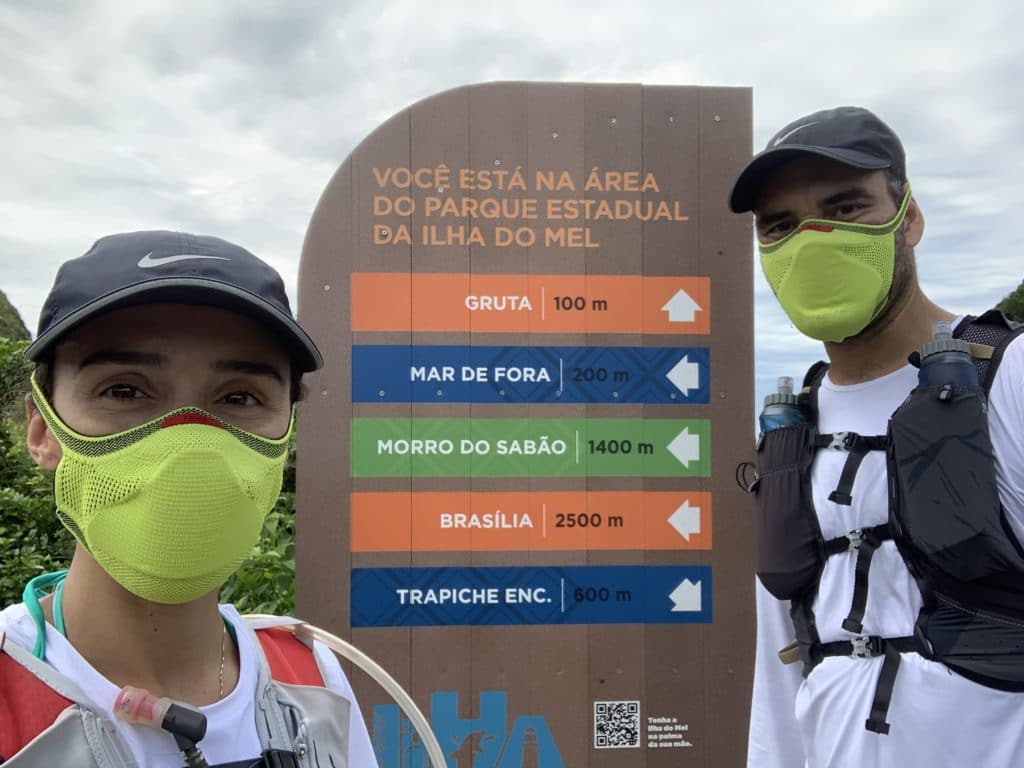
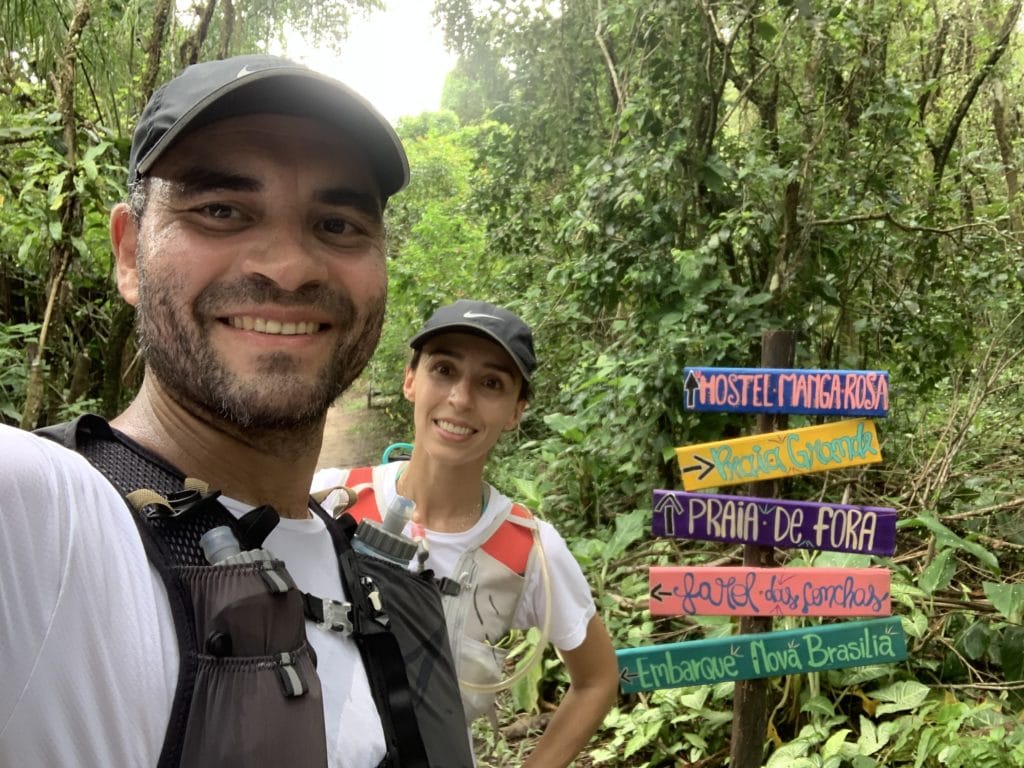
Every trail is well marked with signs, so you’ll easily find your way to wherever you’re headed. Watch out for mosquitoes along the trails, and we’d recommend bringing repellent, since even outside peak mosquito season, I got bitten quite a bit. Add it to your must-bring list.
Praia das Encantadas
Praia das Encantadas has great infrastructure, with restaurants, hotels, and a market, so you could easily spend the whole day there.
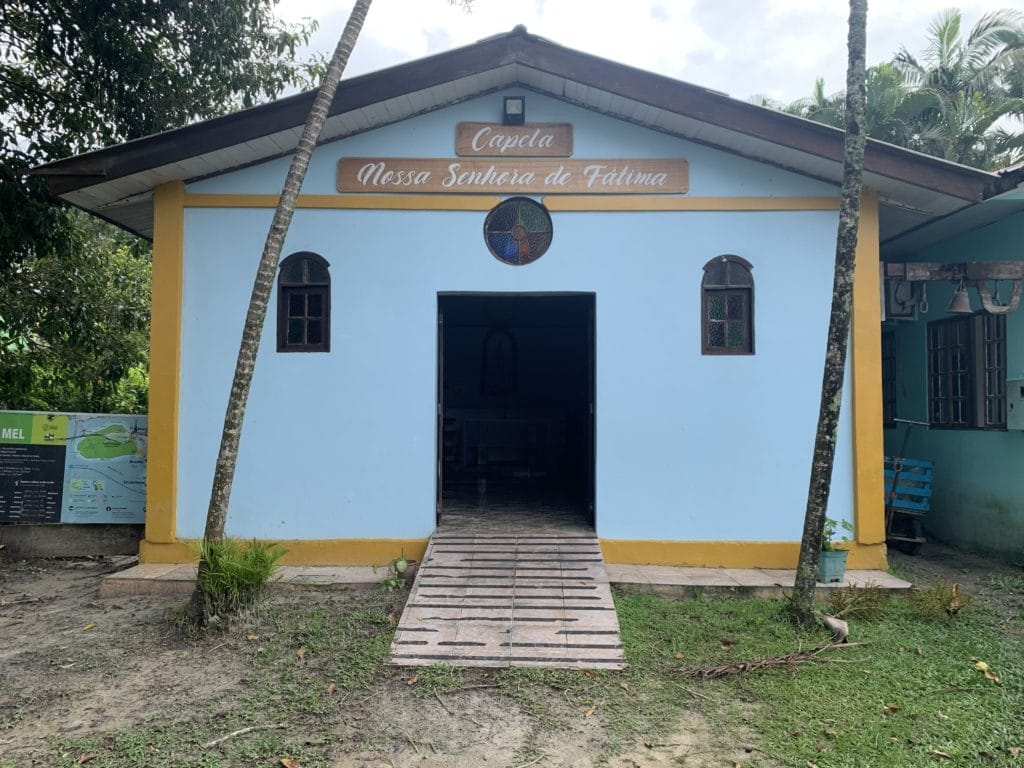
As soon as we arrived, we spotted a beautiful chapel and stopped for a photo — its beauty paired with the setting right on the beach made it worth the stop.
Gruta das Encantadas
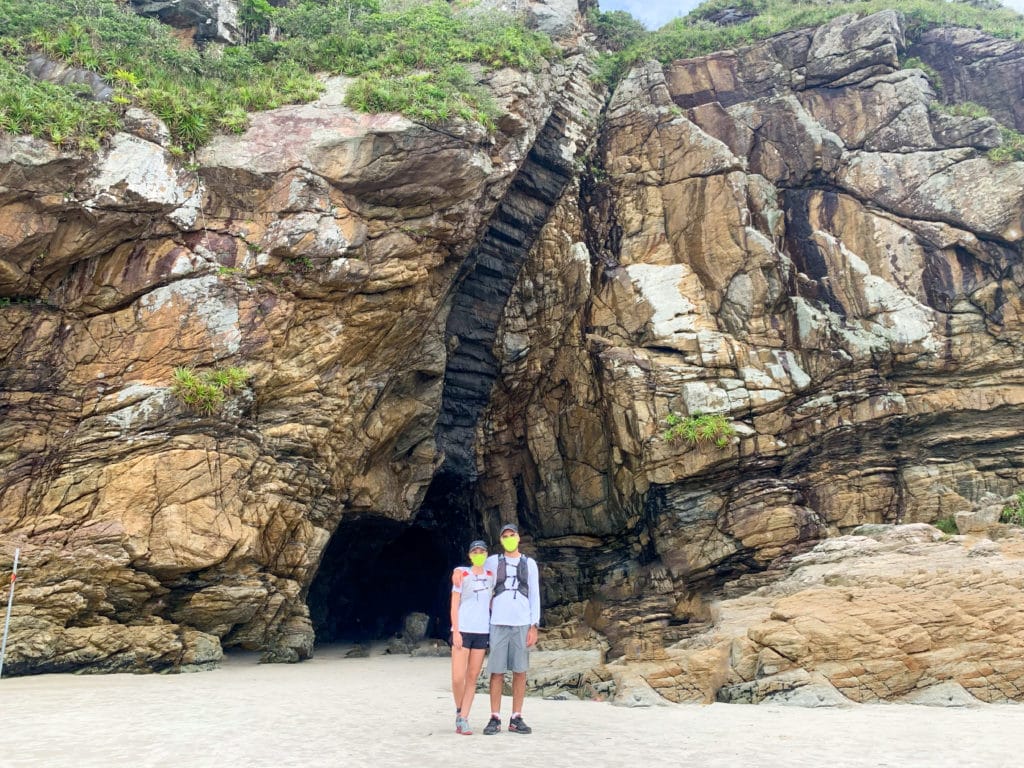
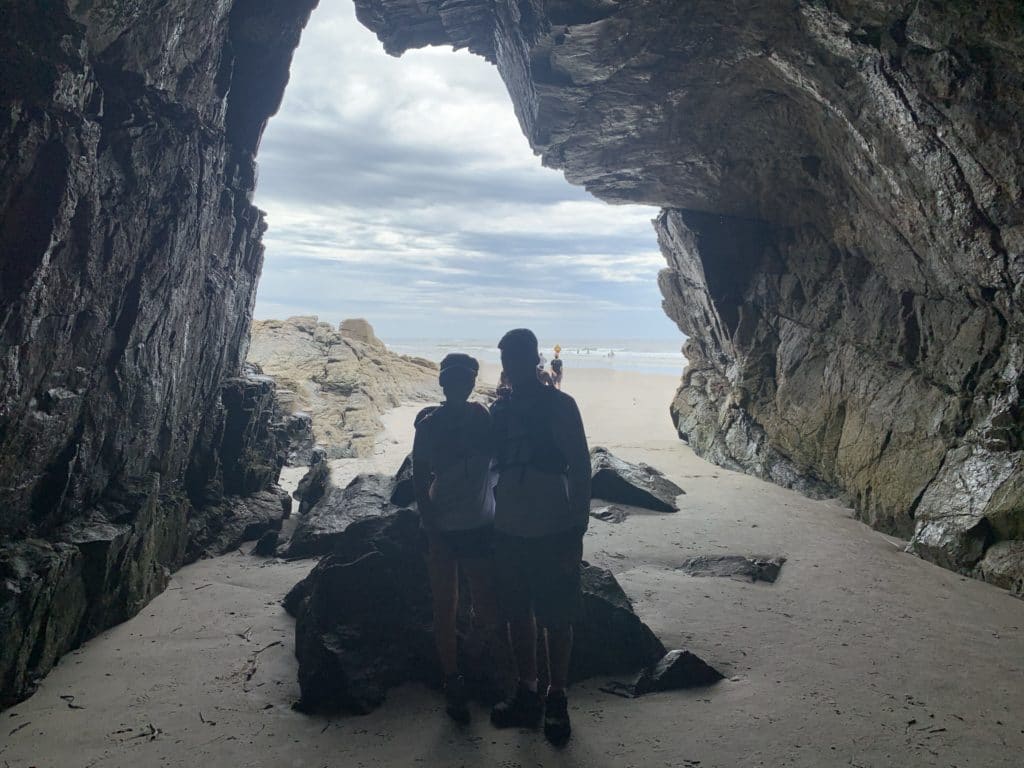
In short, the Gruta das Encantadas is a cave located on the southern end of Ilha do Mel. It’s a natural heritage site, set within “Morro da Gruta,” formed from a type of rock called migmatite.
To make it easier to reach, a walkway was built leading to its entrance.
There’s a local legend, the lenda das encantadas, which tells of mermaids who once appeared here — feminine figures who enchanted men until they eventually drowned. This is possibly one of the oldest legends in Paraná.
The Legend of the Encantadas
Inside the Gruta das Encantadas once lived beautiful women who danced and sang at sunrise and dusk, their song intoxicating, numbing, and dangerous for any mortal who heard it.
One day, a young Indigenous man ventured close and watched them from atop the rocks. As the sun rose, he began to hear the melody drifting out from inside the cave.
Strangely, he didn’t fall asleep, and he couldn’t tear his eyes from the beautiful ritual unfolding before him. The women were stunningly beautiful, nude, with long hair made of seaweed, and he became fascinated with one dancer in particular, whose eyes were the color of emeralds.
When he declared his love for her, she told him that for the two of them to be together, he would have to die — and so it happened.
Hands intertwined, to the mournful song of the other dancers, the two of them walked into the water and disappeared. The Encantadas vanished into the deep waters, never to be seen again. And ever since, the cave has stood empty.
Another version of the local legend says that as more men arrived, the women retreated further and further into the island, until they eventually changed direction and moved to Ilha de Currais, never to be spotted again.
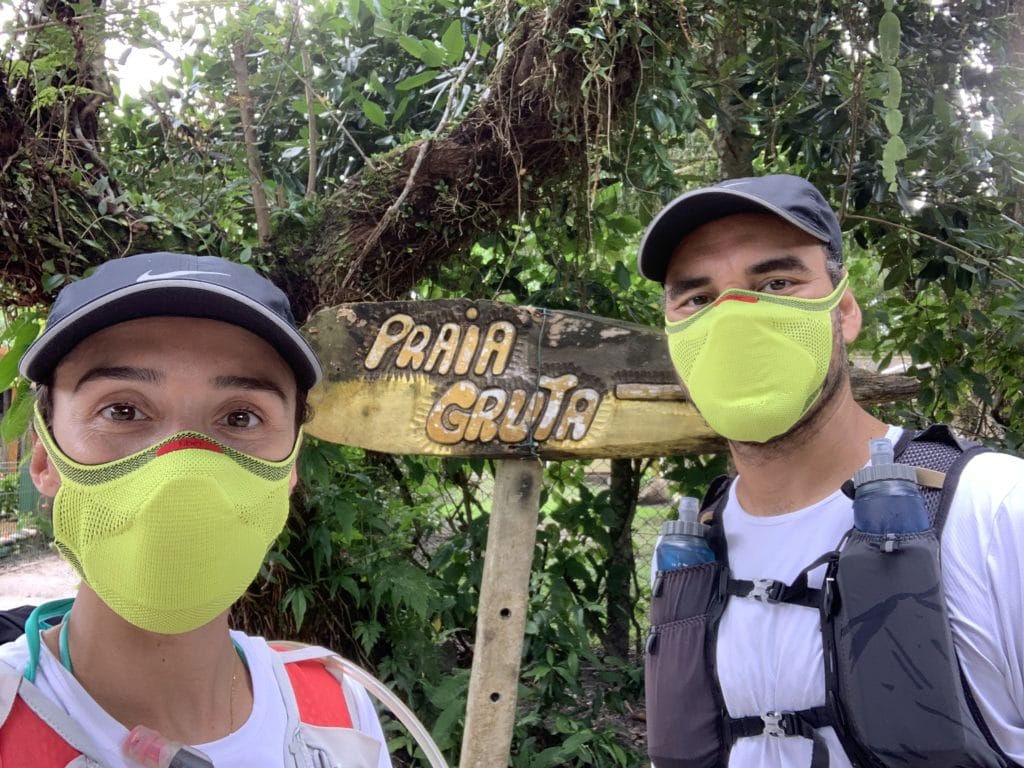
From there, we continued along the beach toward Morro do Sabão.
Morro do Sabão
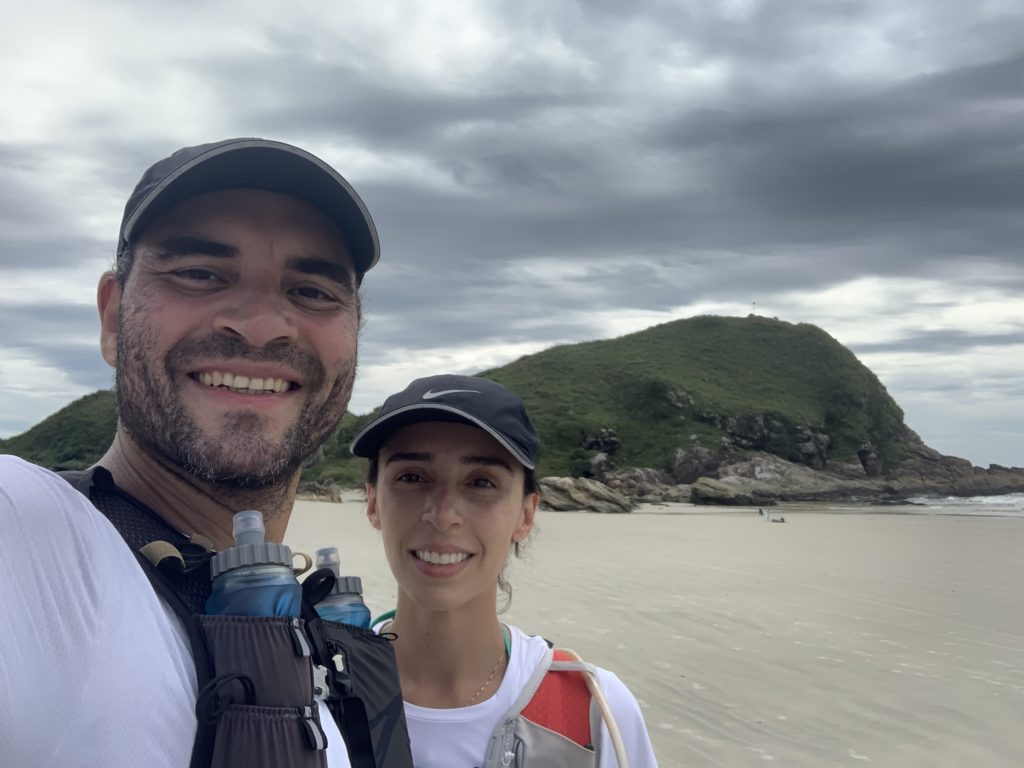
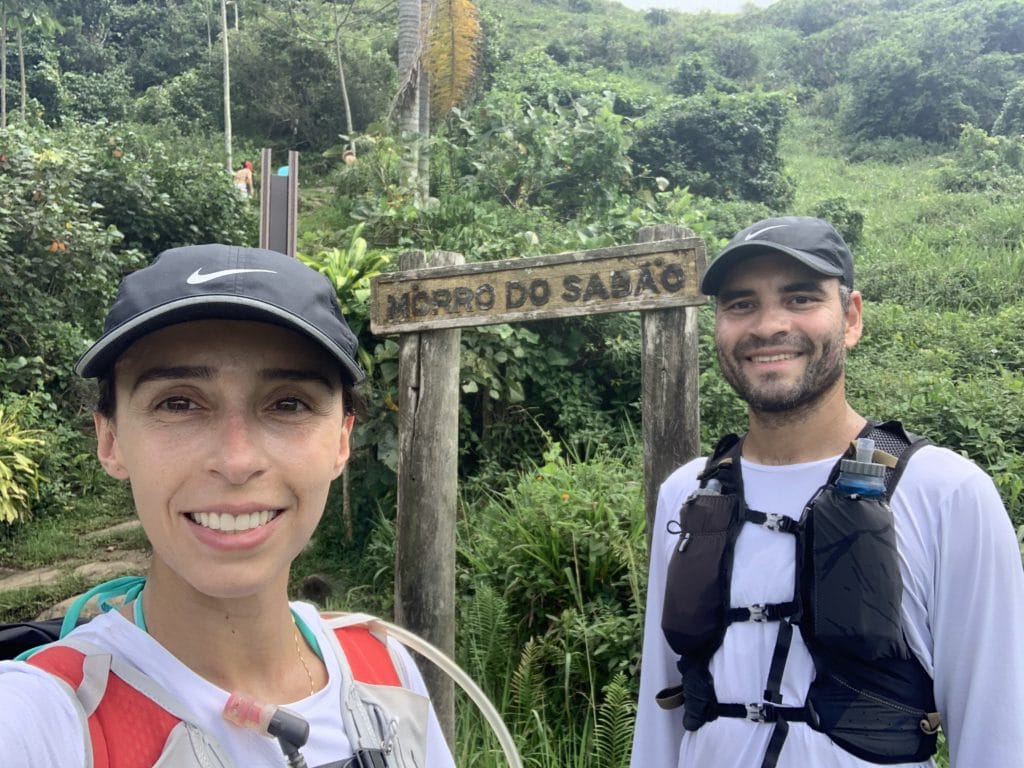
This hill gets its name from just how slippery it is. You can climb it via a trail through the mountain or a path that follows the river — the second option is easier, since it has stone steps, though those are slippery too.
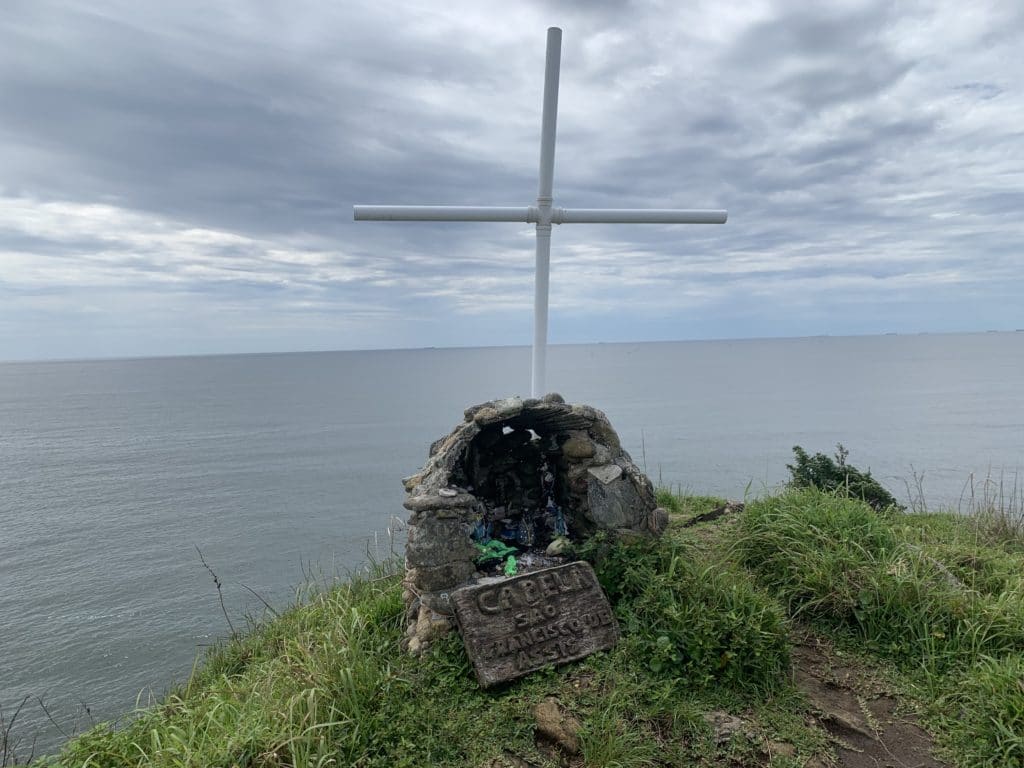
As you get close, you’ll spot a cross on the hill, and next to it, the Capela de São Francisco de Assis.
It’s well worth the climb for the beach view from the top; after that, we headed back down and followed the traditional path along the signs.
Note: you can see both the cross and the trail up, but since we’d downloaded the route on our Garmin, we decided not to risk it and stuck to the known path.
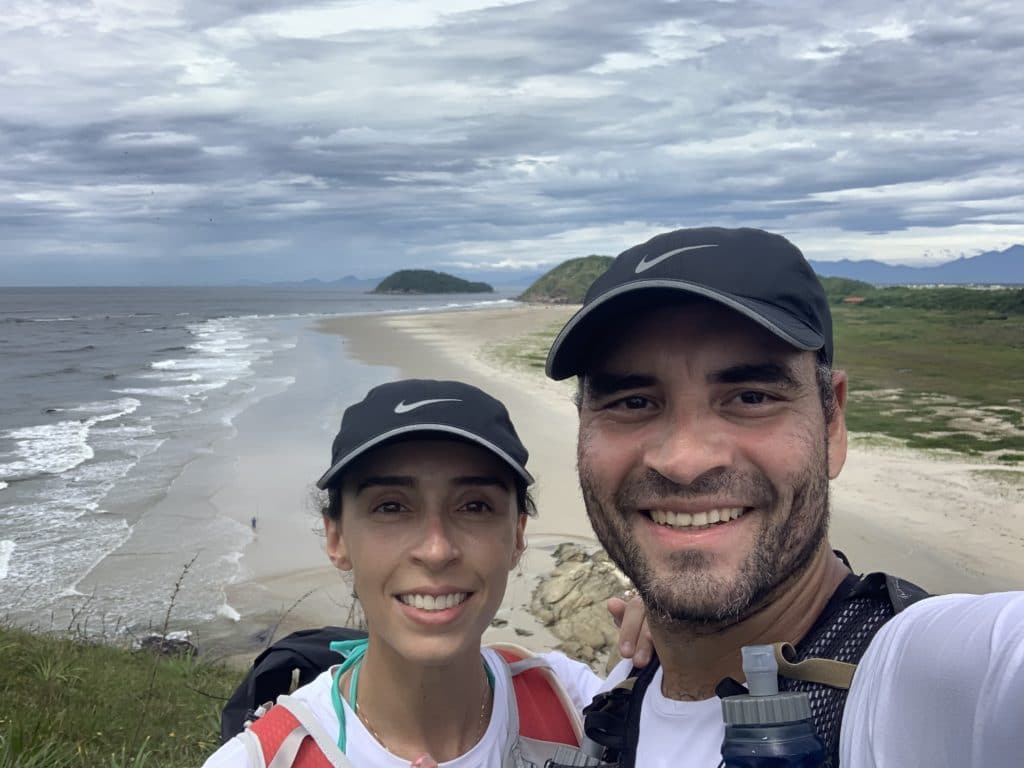
Praia do Miguel
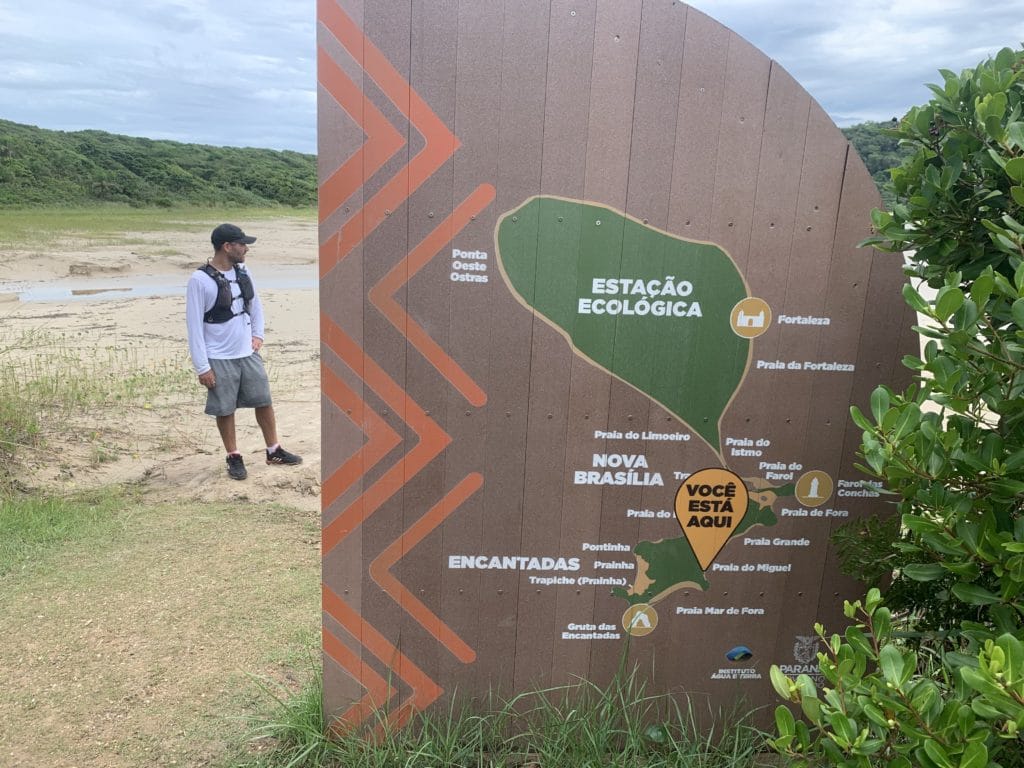
As soon as we arrived, a sign confirmed we were at Praia do Miguel. All the beaches here are great for stopping to enjoy the water, but this one has less infrastructure.
So if you’re after some social distancing, this is a great beach for it.
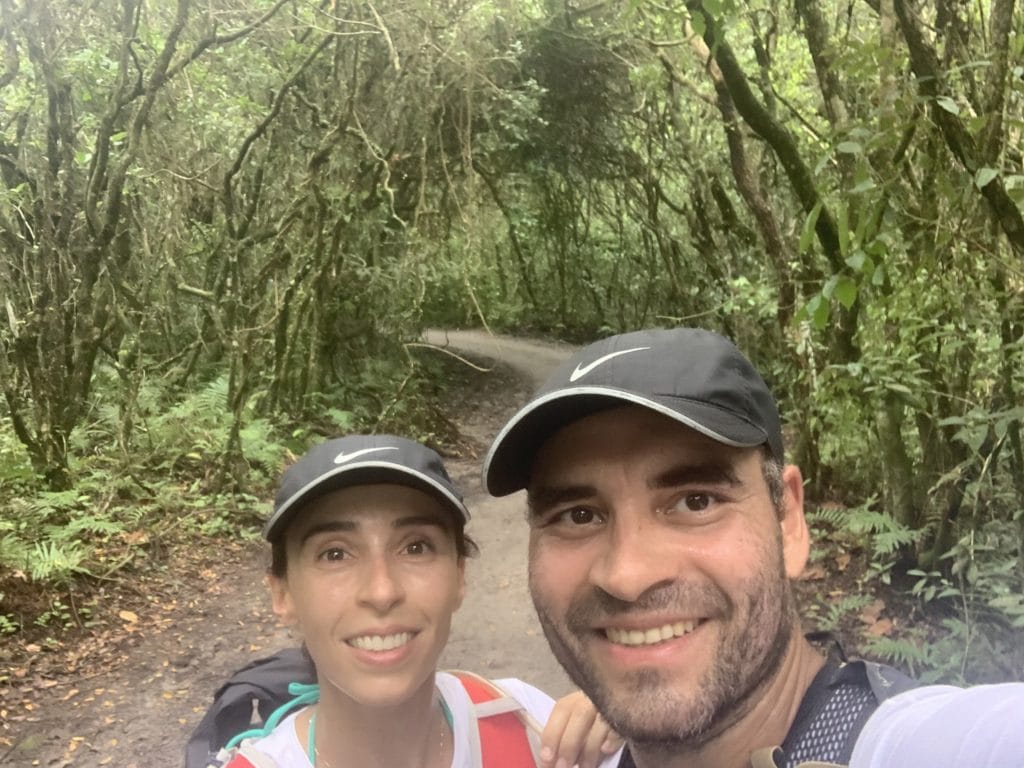
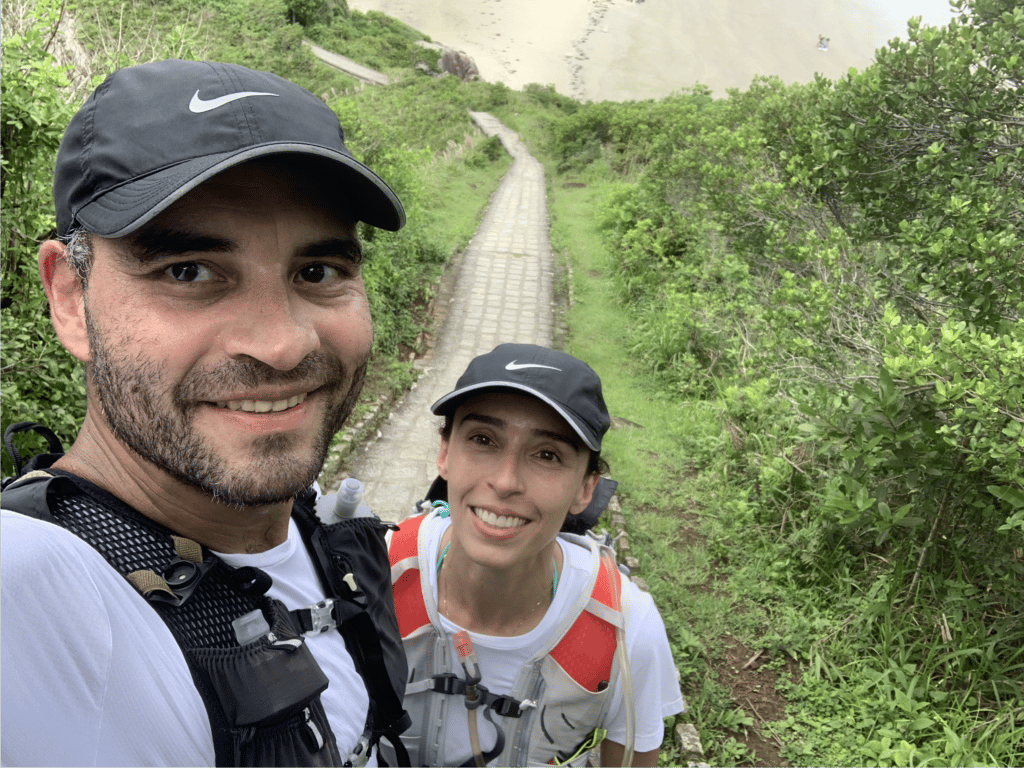
We continued along the beach and reached a great trail for running, closed in by brush like a tunnel, with well-packed sand underfoot.
This trail led us to the next beach, Praia de Fora, though you can also continue on to reach the lighthouse.
From the beach, we continued on to Farol das Conchas.
Farol das Conchas
To help guide ships in the region, Dom Pedro II ordered the lighthouse built in 1870, and it was completed in 1872. It still serves that purpose to this day.
Standing eighteen meters tall and built entirely of cast iron shipped from Glasgow, Scotland, it’s considered one of the great engineering achievements of its time.
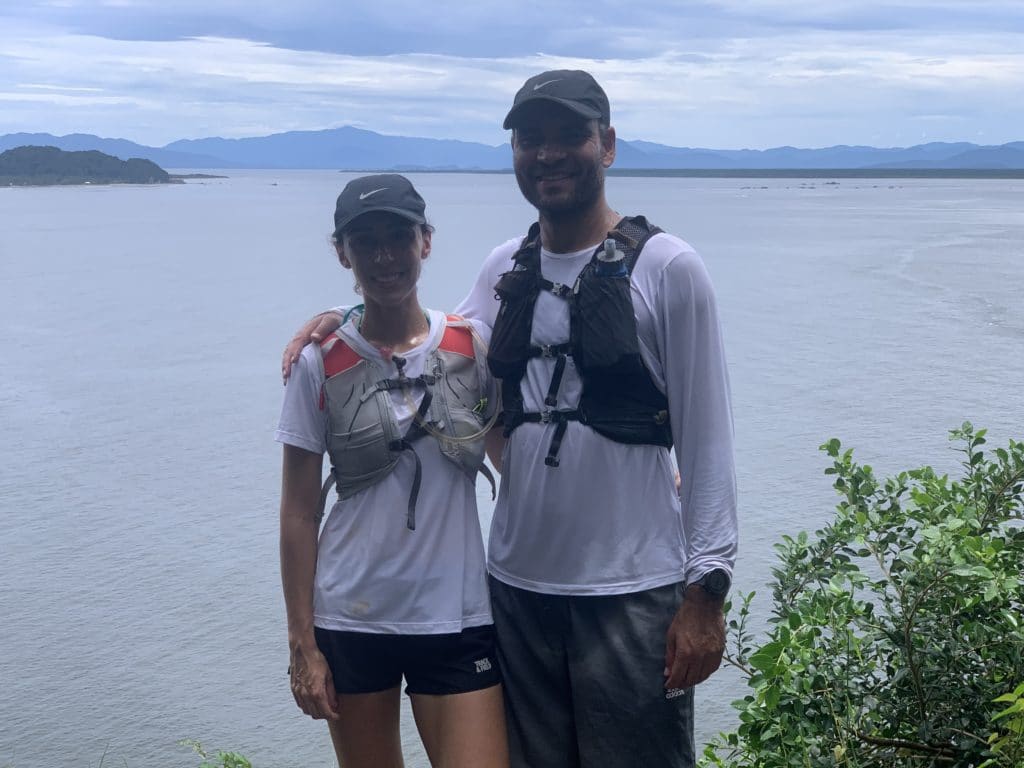
Reaching the lighthouse requires climbing 150 steps, with a beautiful view along the way — the climb takes around thirty minutes.
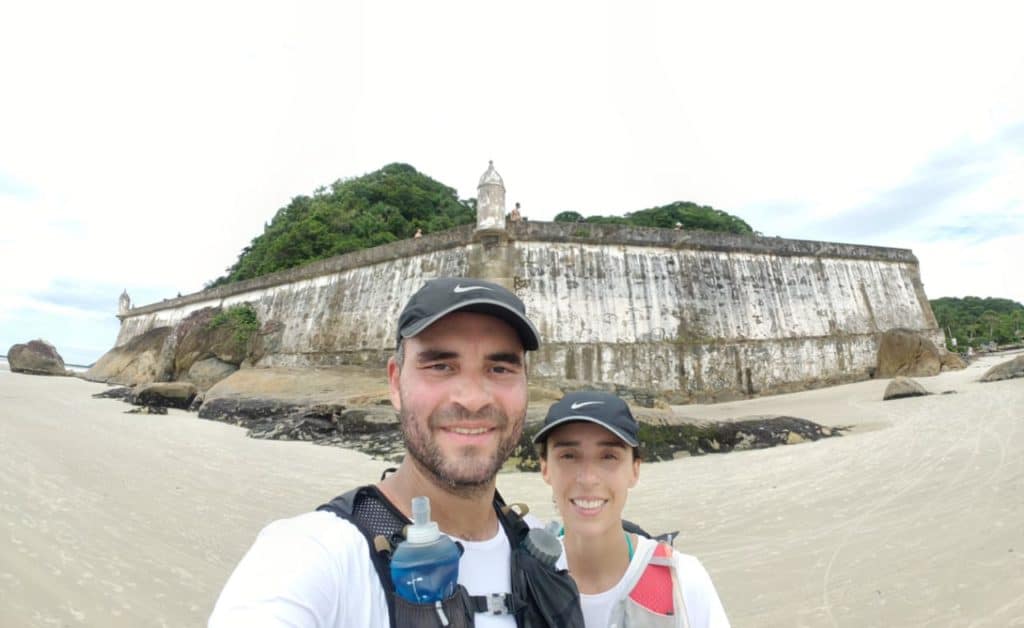
Leaving from there, you’ll need to run along a long stretch of sand to reach the fortress.
Fortaleza Nossa Senhora dos Prazeres
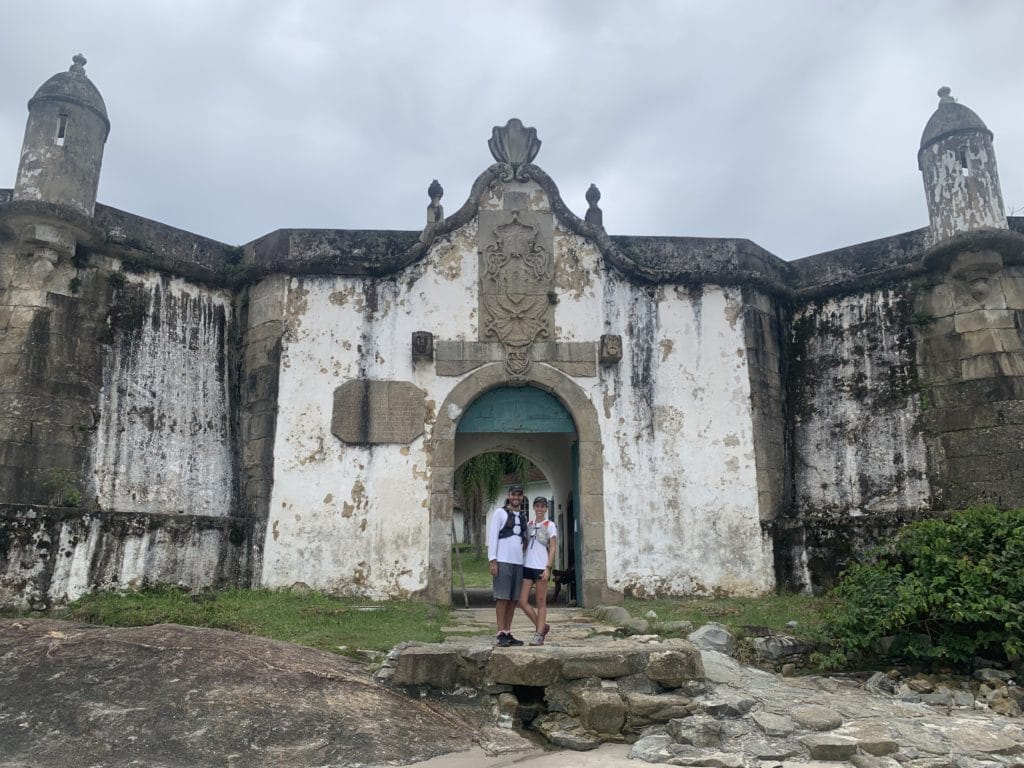
Located on Praia da Fortaleza, at the base of Morro da Baleia.
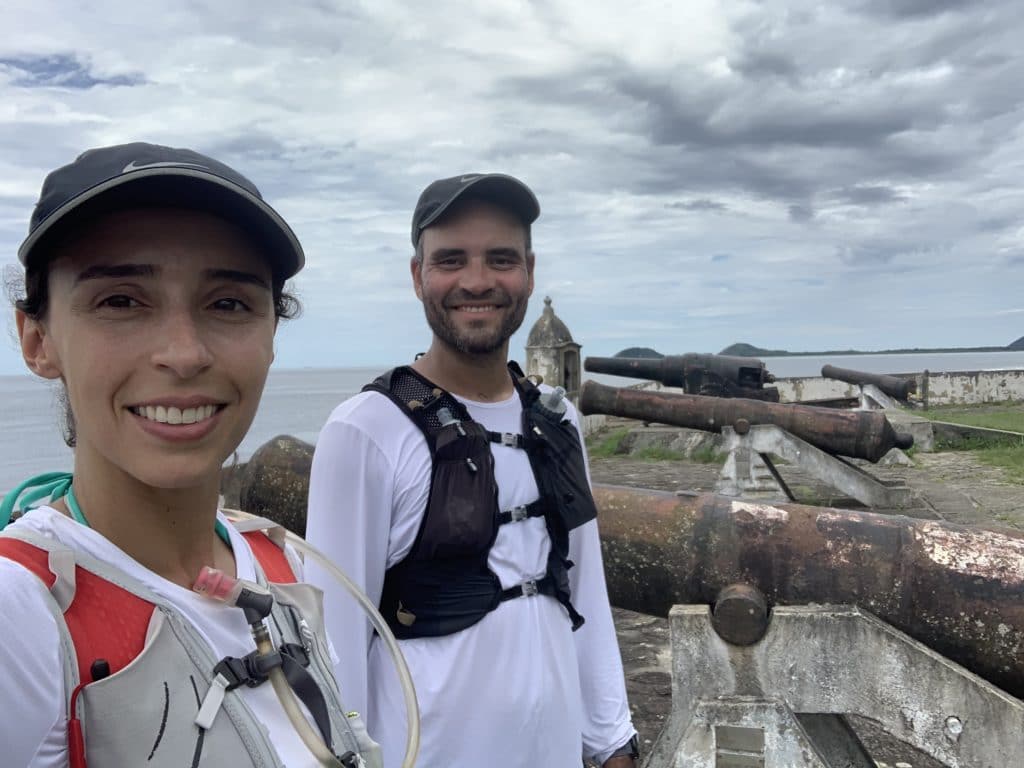
To start, the Marquis of Pombal began building the fortress in 1767, finishing in 1769. At the time, he served as regent of Portugal, and the fortress’s main purpose was to defend the old village of Paranaguá, from which gold, timber, and later yerba mate extracted from the region were shipped out, against corsairs and Spanish raiders who frequented that stretch of coastline.
It was the only military installation in Paraná during the 18th century, and, interestingly, it was also the first fort in Brazil to see combat.
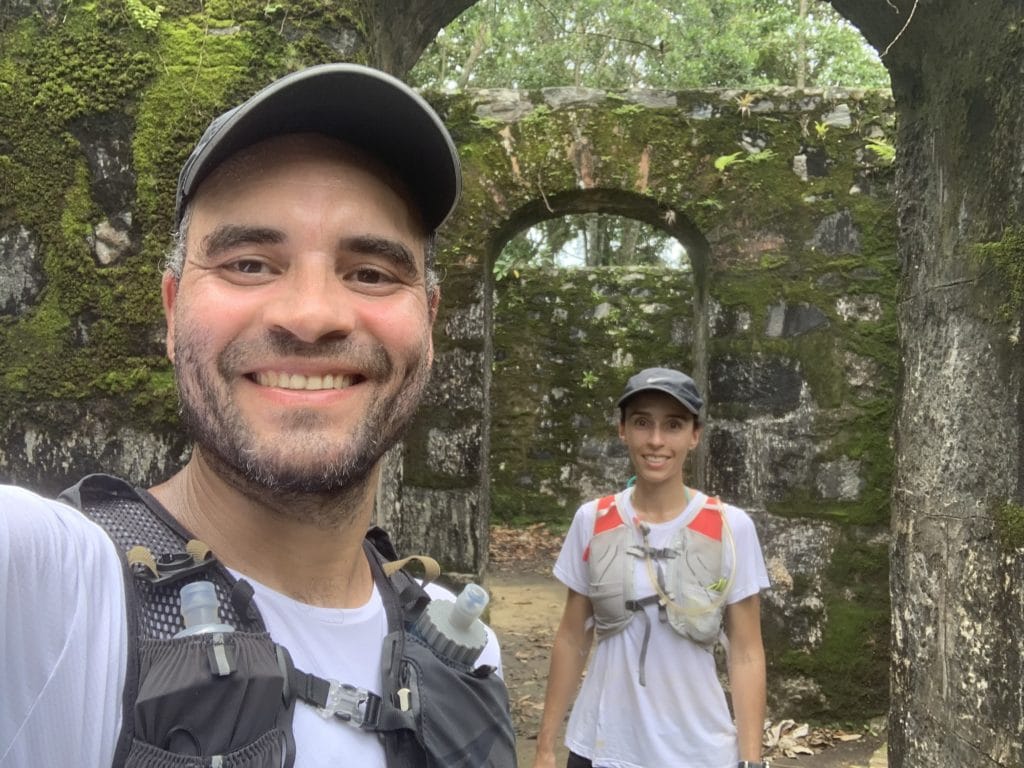
Brazil’s National Historic and Artistic Heritage Institute (IPHAN) designated the fortress a national landmark in 1938, and a state landmark in 1972. It was decommissioned in 1954, and all that remains of its military past today is the architecture itself. That same year, IPHAN took over managing the site and began restoration and conservation work.
The fortress has a viewpoint with cannons and a labyrinth, roughly 500 meters from the main entrance, at about 70 meters of elevation, offering a beautiful view as well.
Watch out for mosquitoes, which swarm heavily in the labyrinth, making it tricky even to get a photo.
After exploring the fortress, we headed back to the beach and ran to Praia Brasília for lunch, since we were starving after three hours of trails.
Praia de Brasília
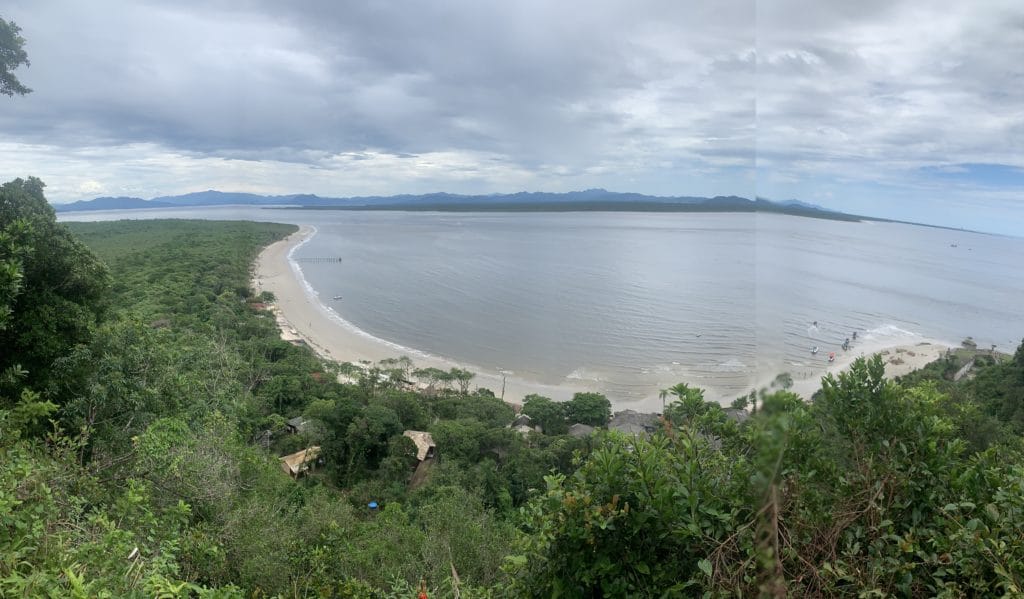
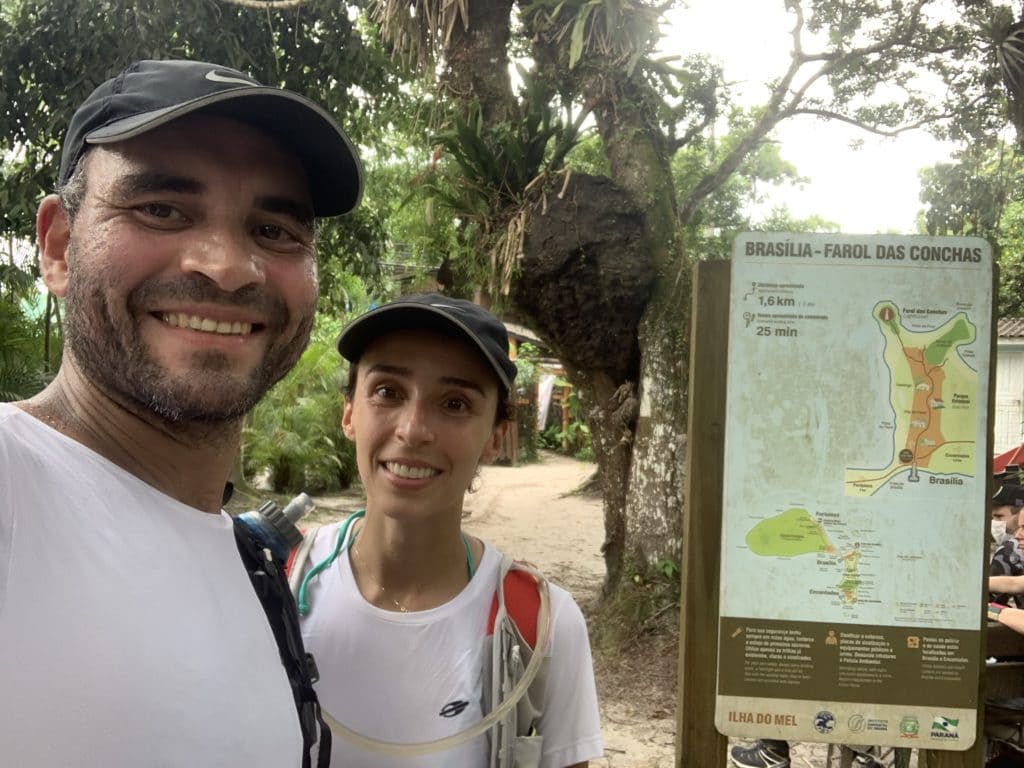
A beach with good infrastructure — hotels and restaurants — and genuinely pleasant. This is also where the ferry arrives and departs.
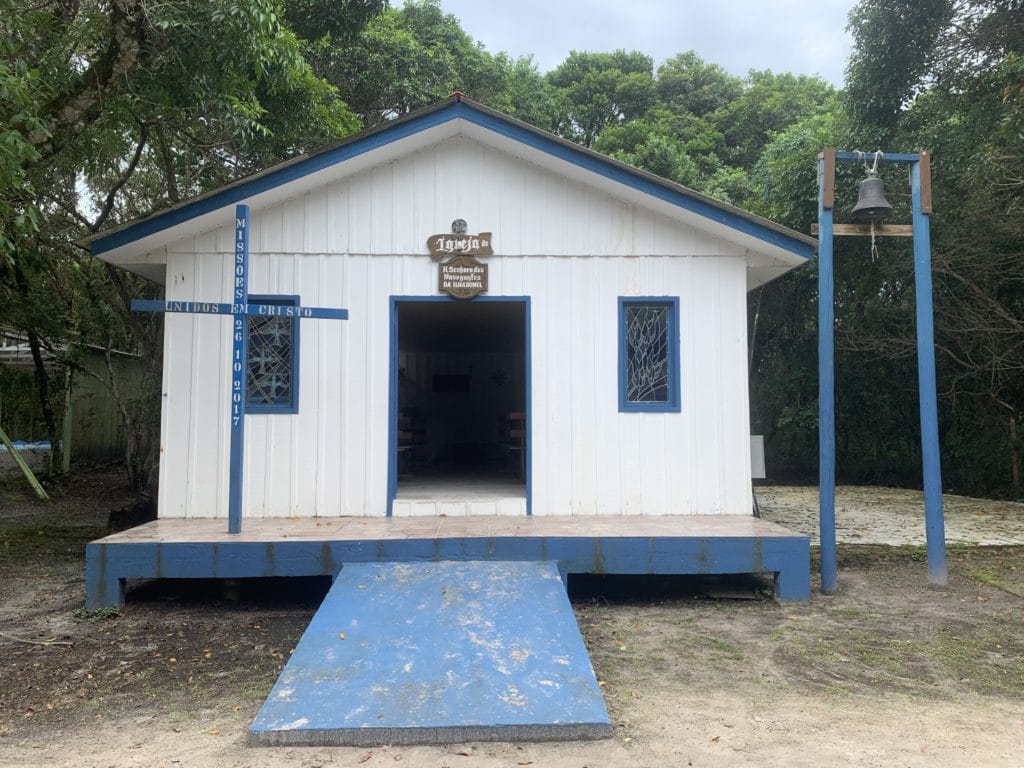
It’s also home to a small, charming chapel dedicated to Nossa Senhora dos Navegantes, close to the center of the village.
Track powered by Wikiloc
Where to eat on Ilha do Mel
As mentioned at the start, the two spots with the best infrastructure are Encantadas and Brasília. Since our trail ended there, we picked a restaurant in Brasília to eat.
Toca do Abutre
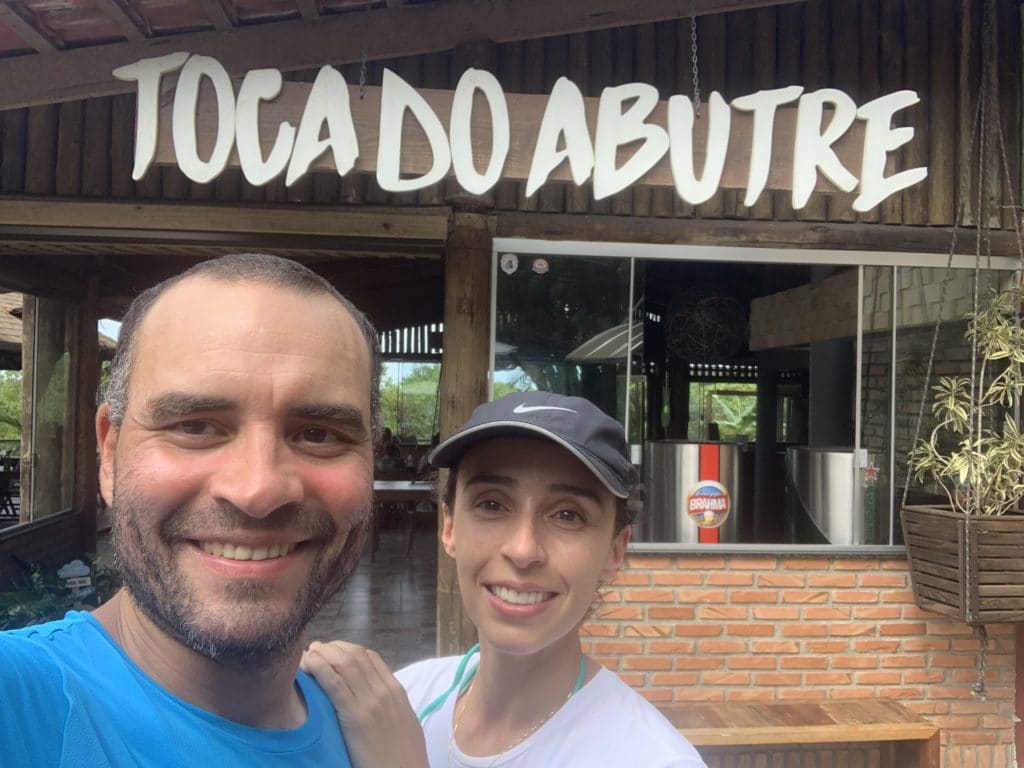
We chose Toca do Abutre, which was wonderful — a pleasant space, great service, and delicious food.
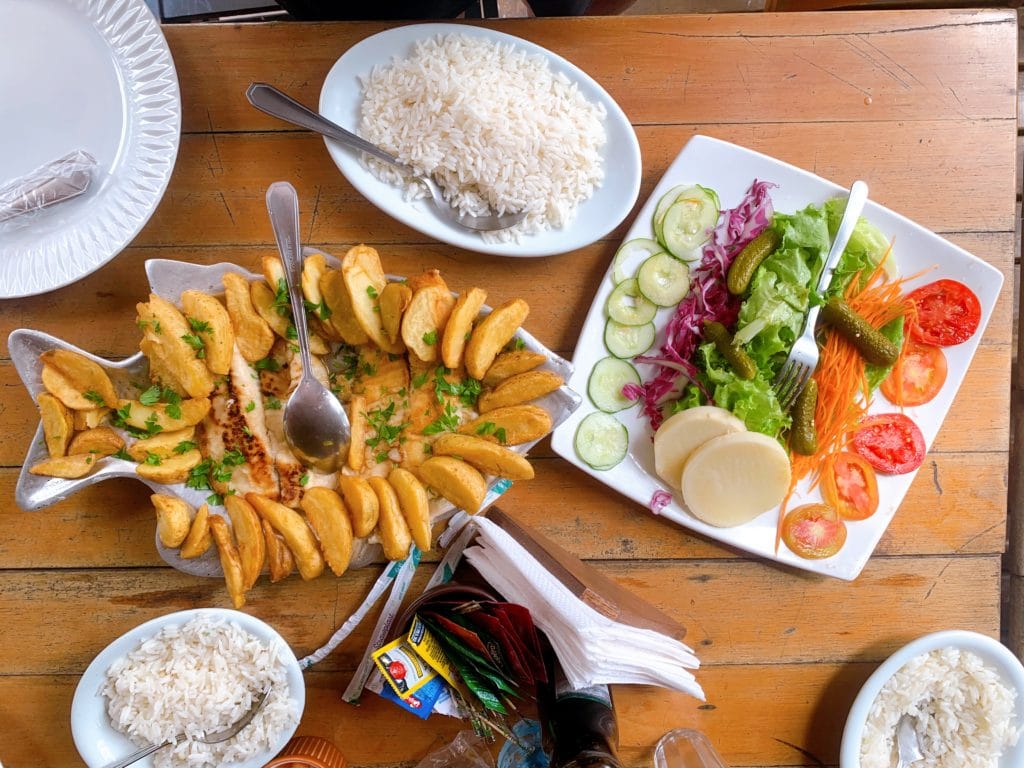
Main course: we ordered tilapia in butter sauce, served with potatoes, rice, and salad.
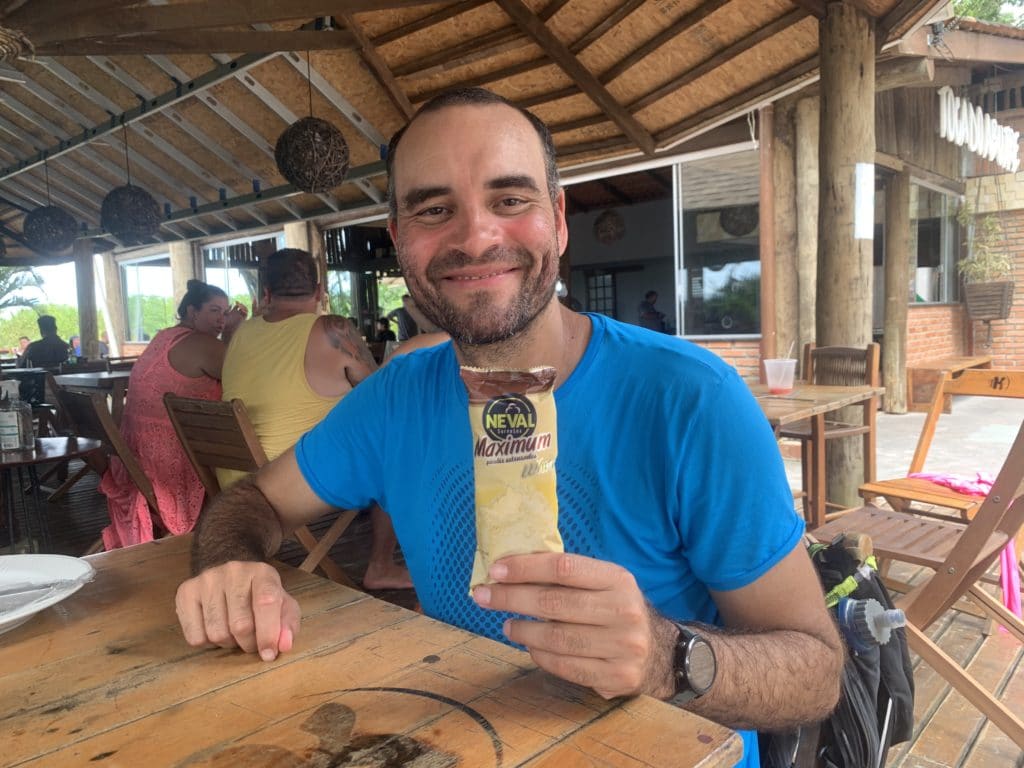
Dessert: we ordered a Nevral white chocolate popsicle, which was tasty and, without question, helped cool us off from the heat.
Price: R$170 plus drinks, for two people.
After lunch, we caught the boat back from Brasília.
Learn more about our trip in Paranaguá.
Read the original version in Portuguese on A Bela e o Bigode.