Paranaguá, Paraná's First City
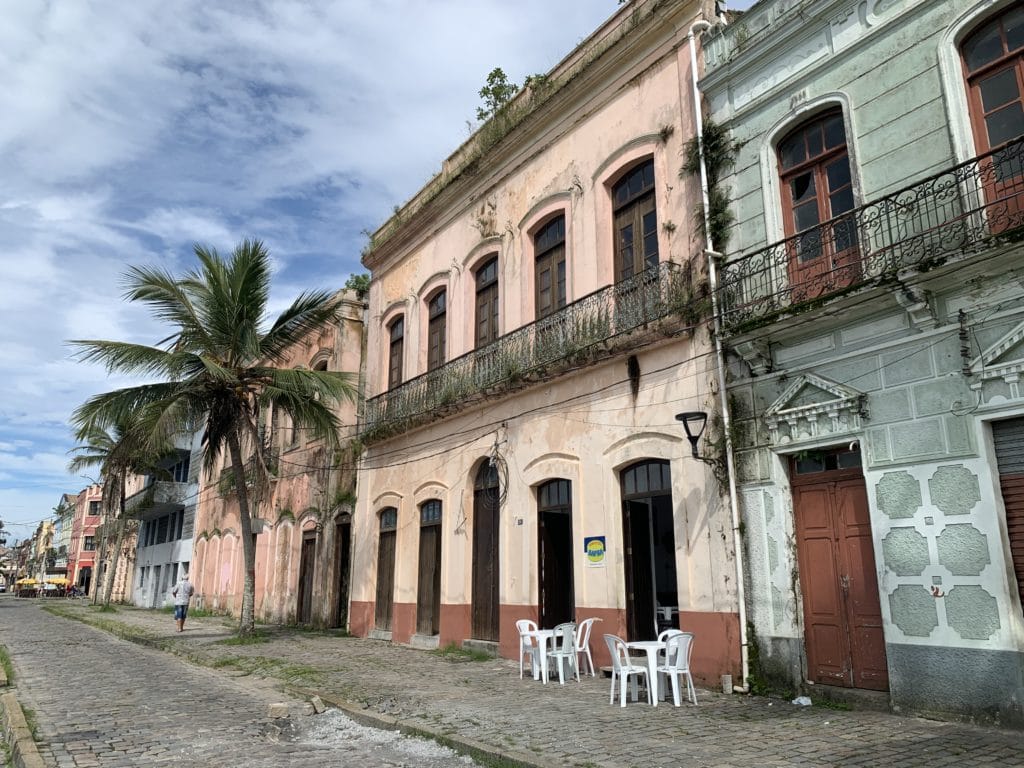
Paranaguá is known as the place where the state of Paraná began to be settled, in 1550, specifically on Ilha de Cotinga, driven by the search for gold in the region. The city itself was founded in 1649, and local Indigenous people knew it as “the sea’s inlet.”
It’s the largest city on the state’s coast, with about 155,000 residents, and it’s also home to the largest grain export port in Latin America. The city has plenty of natural beauty and, above all, a lot of history.
Our trip was actually headed to Ilha do Mel, and we stopped in Paranaguá on the way back. Getting back to Curitiba afterward took about an hour and a half, despite the short 90 km distance, since we were climbing the mountain range.
After visiting the city, I’m sure you’ll be charmed by its colorful old townhouses, or by exploring its stretch of Atlantic Forest.
Our Experience
As mentioned, we’d gone to see Ilha do Mel, but since our schedule was open, we spent the Sunday exploring the city too. We researched its history and found some really beautiful photos, like the old houses and the river, and you’ll get to see some of those same spots in this post.
But it’s not all rosy — we got the impression that the city feels somewhat abandoned. There are plenty of grand old townhouses and churches, but most are poorly maintained, with construction signs and scaffolding up.
There are a lot of panhandlers and unhoused people along the waterfront, which felt unsettling at times, even though we were there in the morning — so imagine what it must be like at night. Just to illustrate, one of them actually followed us into the aquarium, inside the building, and we didn’t see any police, even at the entrance.
We weren’t robbed or assaulted, but we stayed alert the whole time we were in the area.
Historic Center of Paranaguá
There are many grand old houses, churches, and museums near downtown, so we’ll try to share a bit of the history behind each one.
Looking at a map, you’ll see you can easily explore on foot, since most of the spots in this post are close together.
Estátua do Caranguejo (Crab Statue)
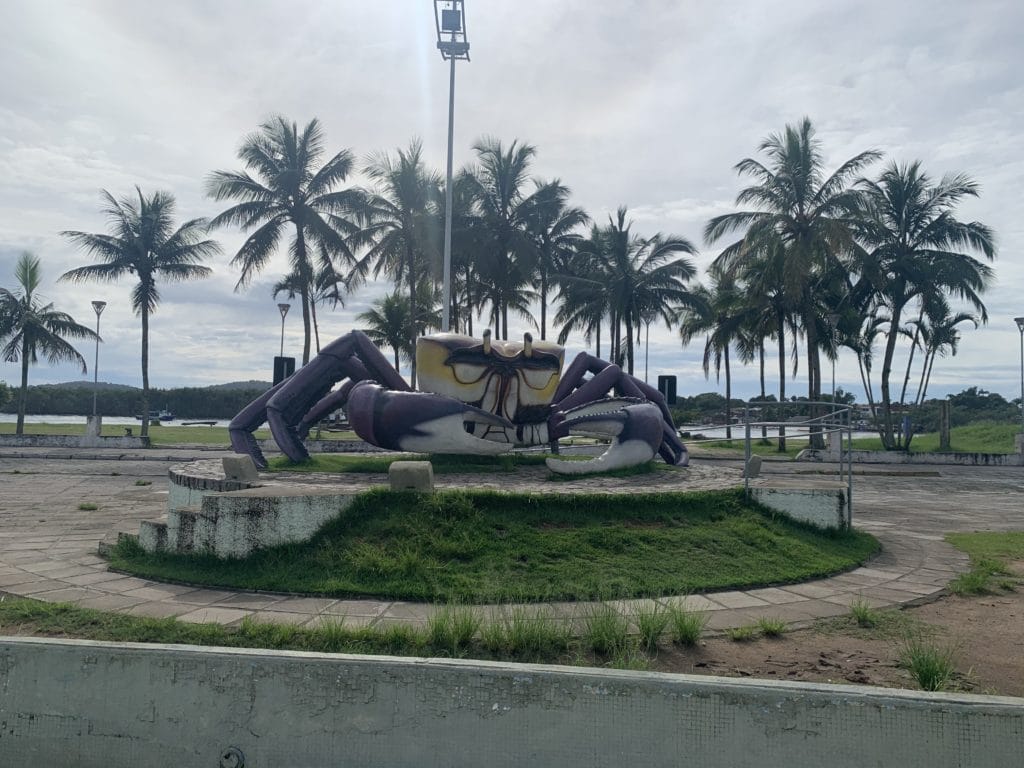
The city unveiled this crab sculpture in 2017, on the opening night of the Paranaguá Crab Festival, in December that year. A company donated the decorative piece, built by craftsman Guilherme Ferreira, known as Índio, and today it’s without a doubt one of the city’s attractions.
That said, while walking through the square, stay alert, given the number of unhoused people around.
Rua da Praia
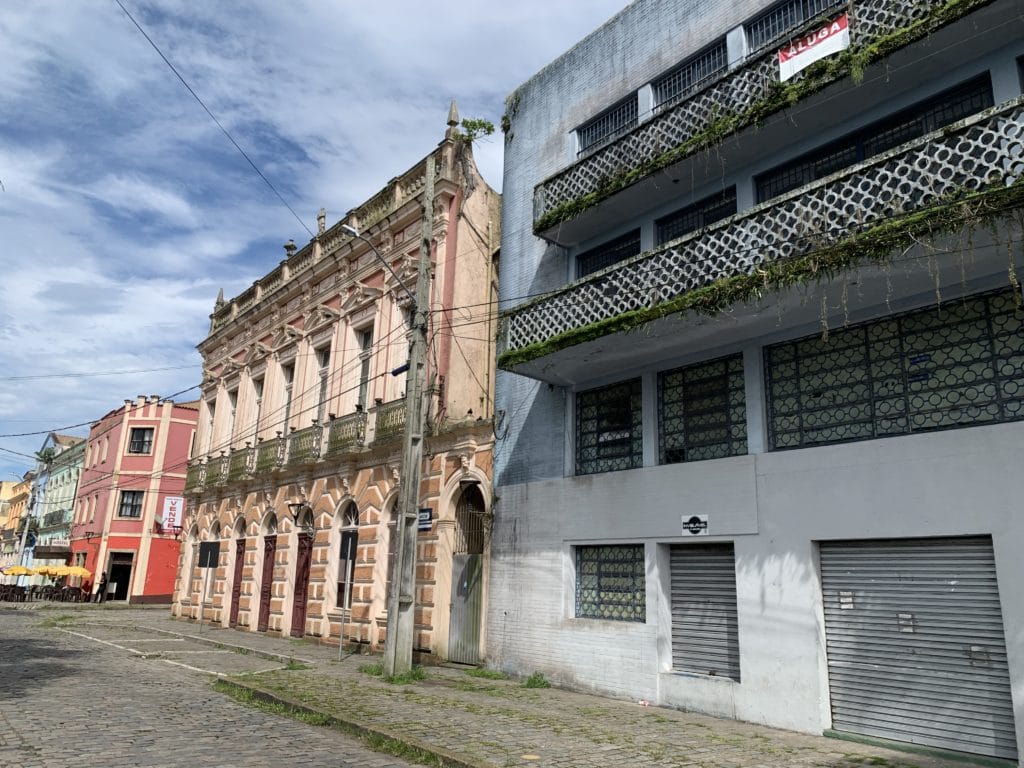
This street is likely where you’ll find the largest concentration of colonial townhouses. These old buildings still show the lines and forms of Portuguese colonial architecture, and many have been designated protected landmarks, now housing museums, cultural spaces, and markets. It’s located along the left bank of the Itiberê River.
Palácio Mathias Bohn
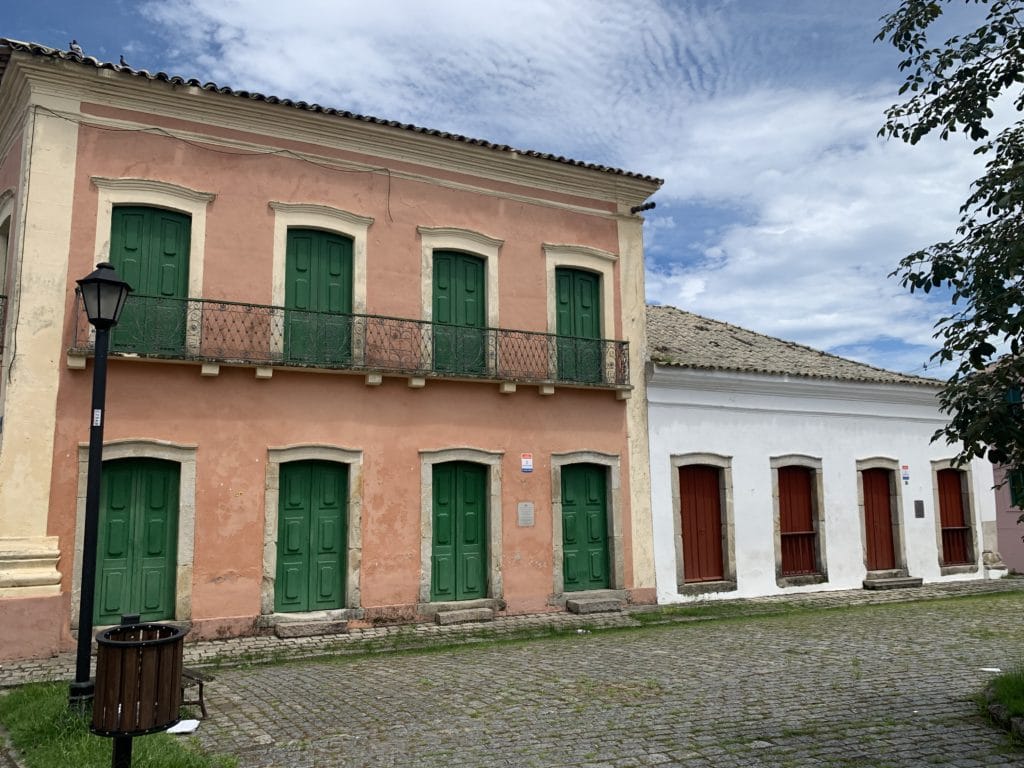
Originally, in the 18th century, this was known as Palacete Barbosa. It sits on Rua da Praia, and its renovation took place in the late 18th century, when the owner was a wealthy German merchant who’d settled in the region. Today, it houses the nautical station.
It’s the pink house on the corner, shown in the photo below, though we didn’t get too close, since there were some concerning-looking people sitting in front of the building, in a small square.
Mercado do Artesanato
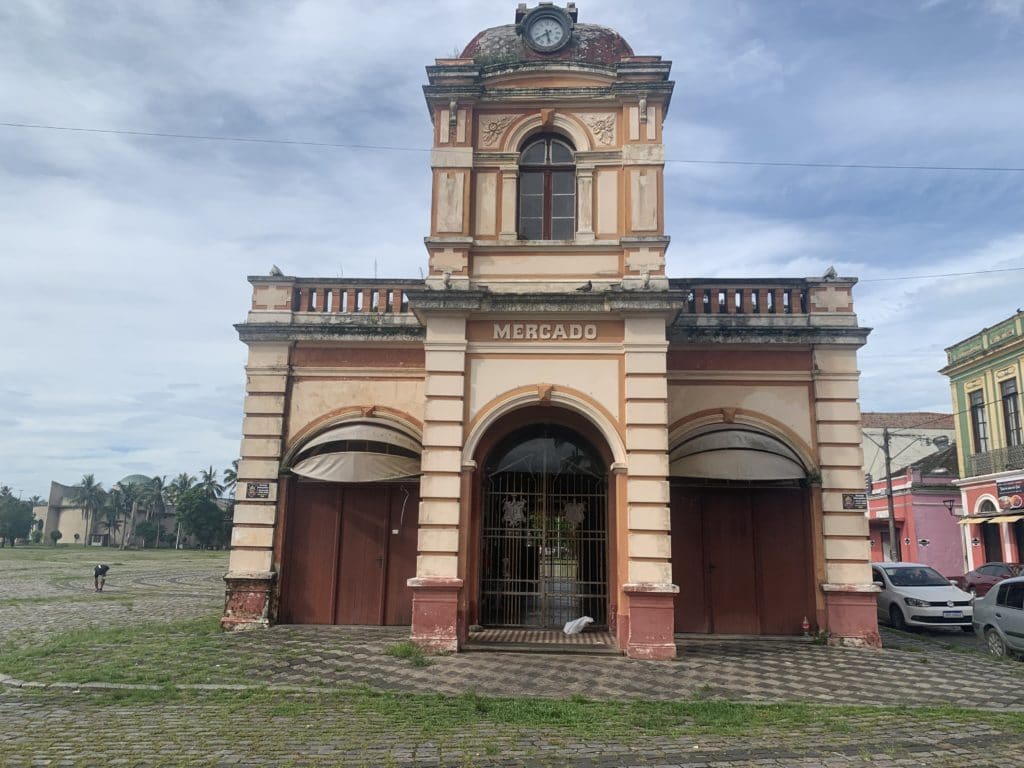
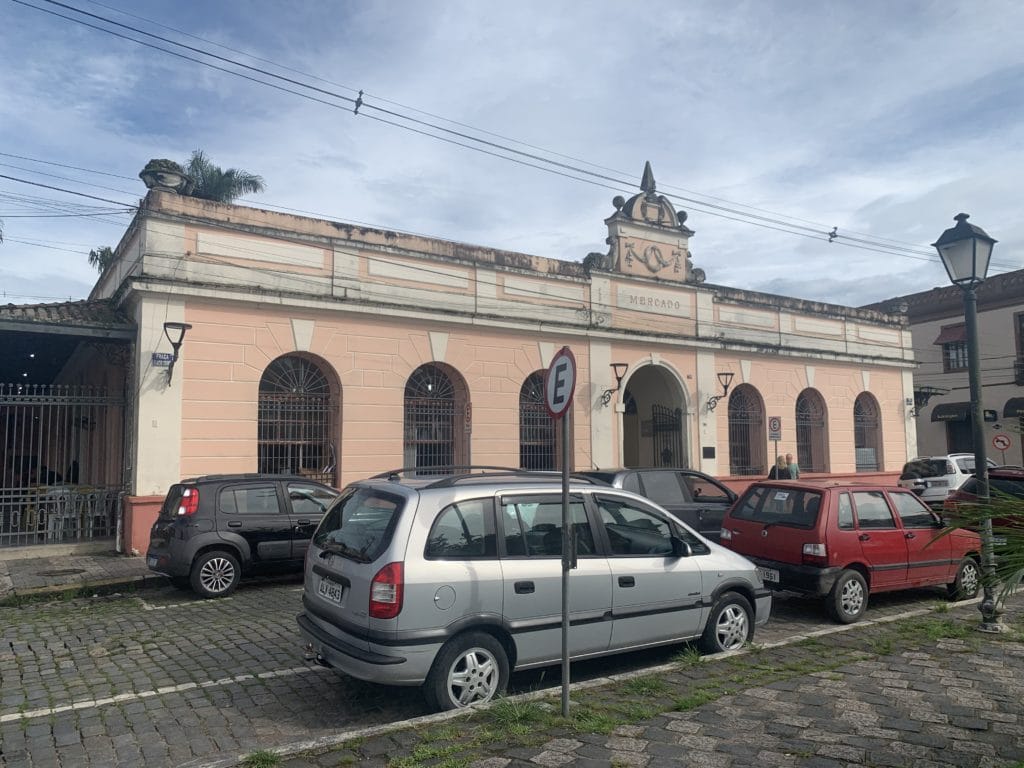
Located on Praça 29 de Julho, and just like the city itself, this was the first public market in Paraná. Built in 1914 in neoclassical style, the space once housed the fish market, and since its renovation in 1983, it now serves as a crafts market.
Mercado Municipal do Café
Facing the crafts market, this space is now home to several restaurants selling pastéis, which looked great, though we didn’t try any, since we were there for breakfast and wanted something with a coffee-house feel.
Museu de Arqueologia e Etnologia da UFPR
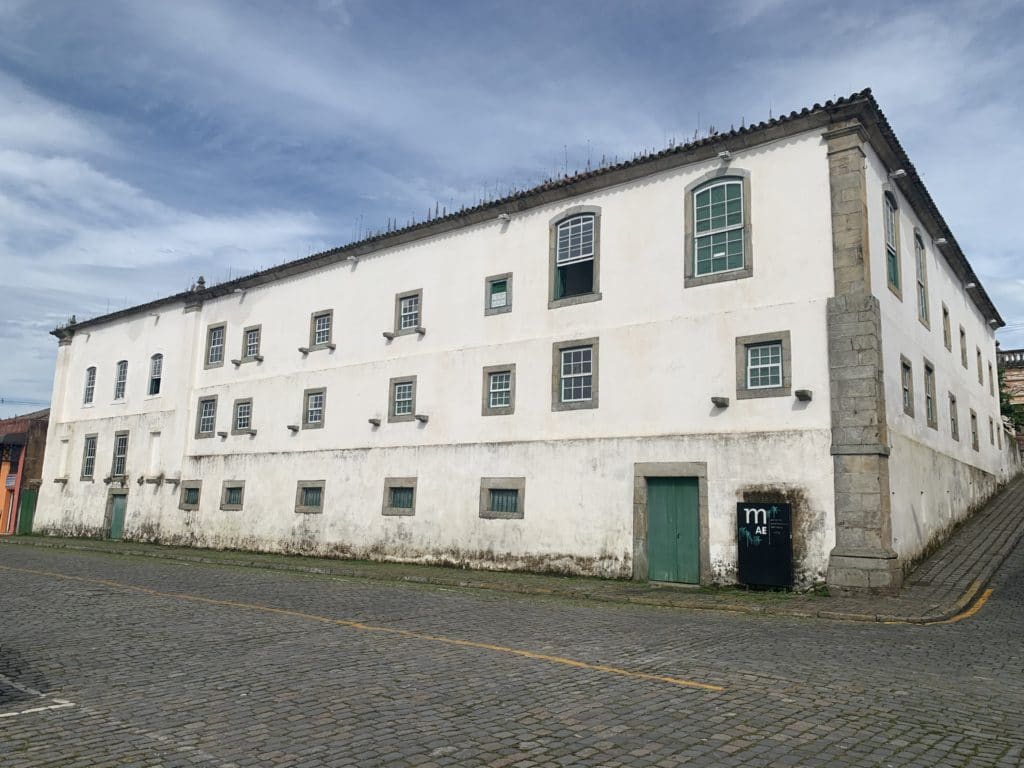
Once the Jesuit College, occupied starting in 1754, though officially founded the following year, in 1755. It was the largest and most important educational institution the Jesuits built before they were expelled by the Marquis of Pombal.
Today, the building houses the UFPR Museum of Archaeology and Ethnology, opened in 1962, with a collection of about 25,000 pieces divided into four major thematic collections. We weren’t able to visit, since we went on a Sunday and it wasn’t open, due to the pandemic.
Museu do Instituto Histórico e Geográfico do Paranaguá
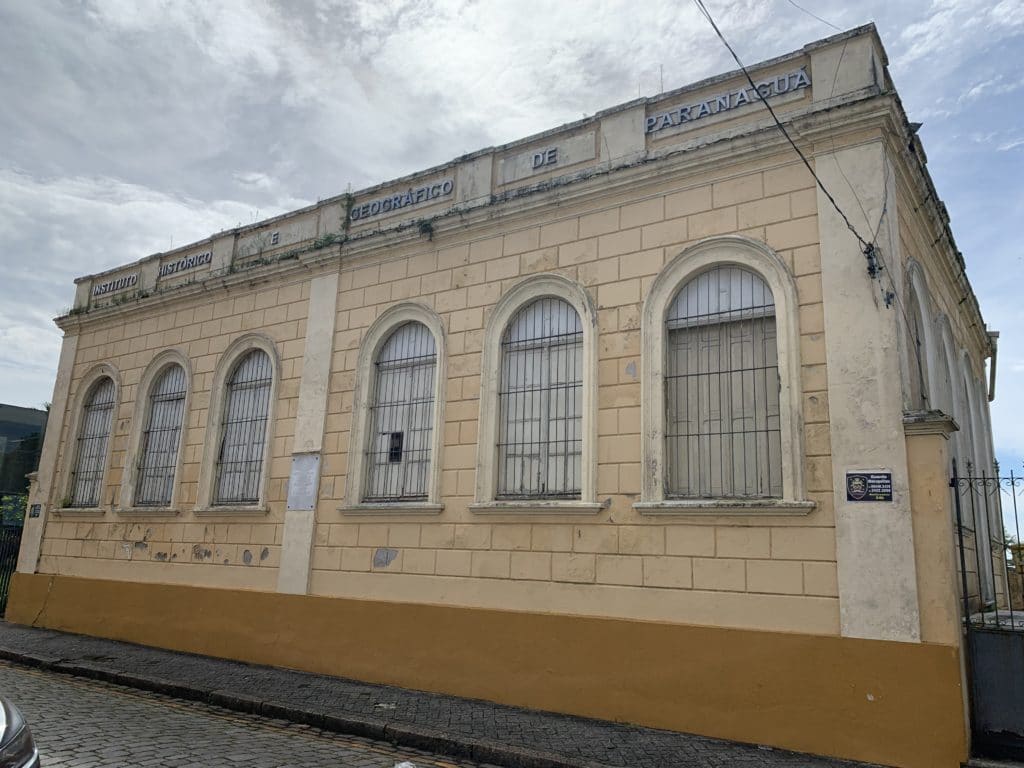
Opened in 1896, with original manuscripts from Vieira dos Santos and the image of Nossa Senhora das Vitórias, plus a collection of 17th- and 18th-century pieces.
Teatro Municipal de Paranaguá
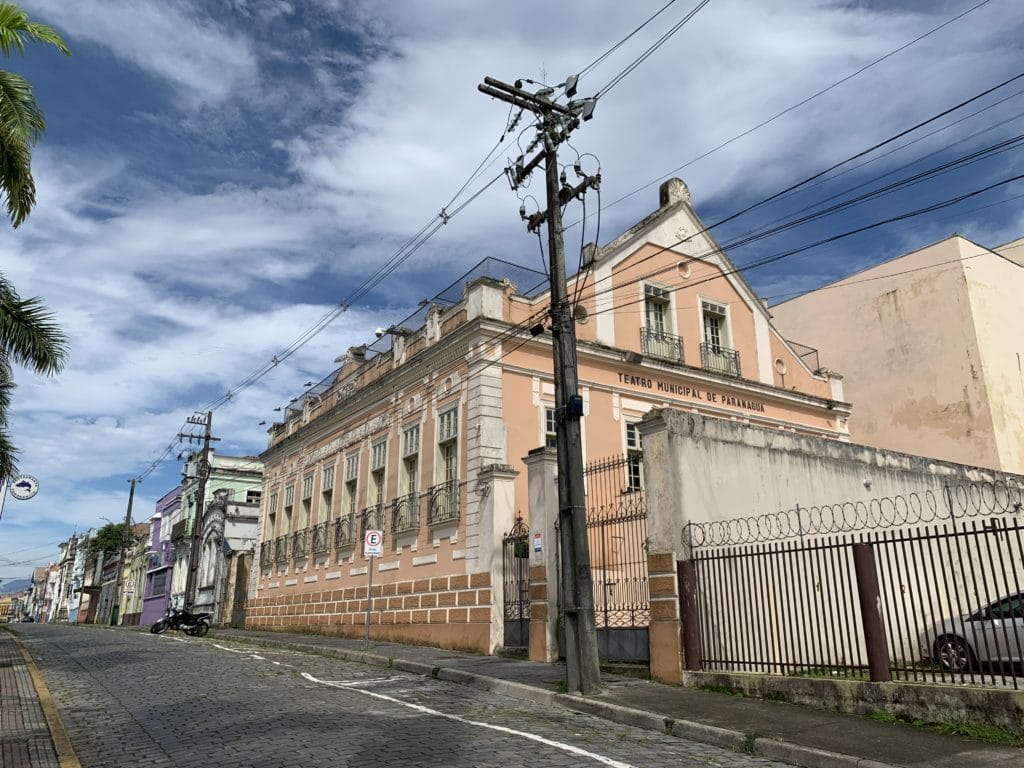
Casa Veiga, built using stones taken from the demolition of the Igreja do Bom Jesus dos Perdões, in 1938, was privately owned for more than a century. The Veiga family lived there until the 1970s. Today, it houses the Teatro Municipal Rachel Costa, seating 530 people.
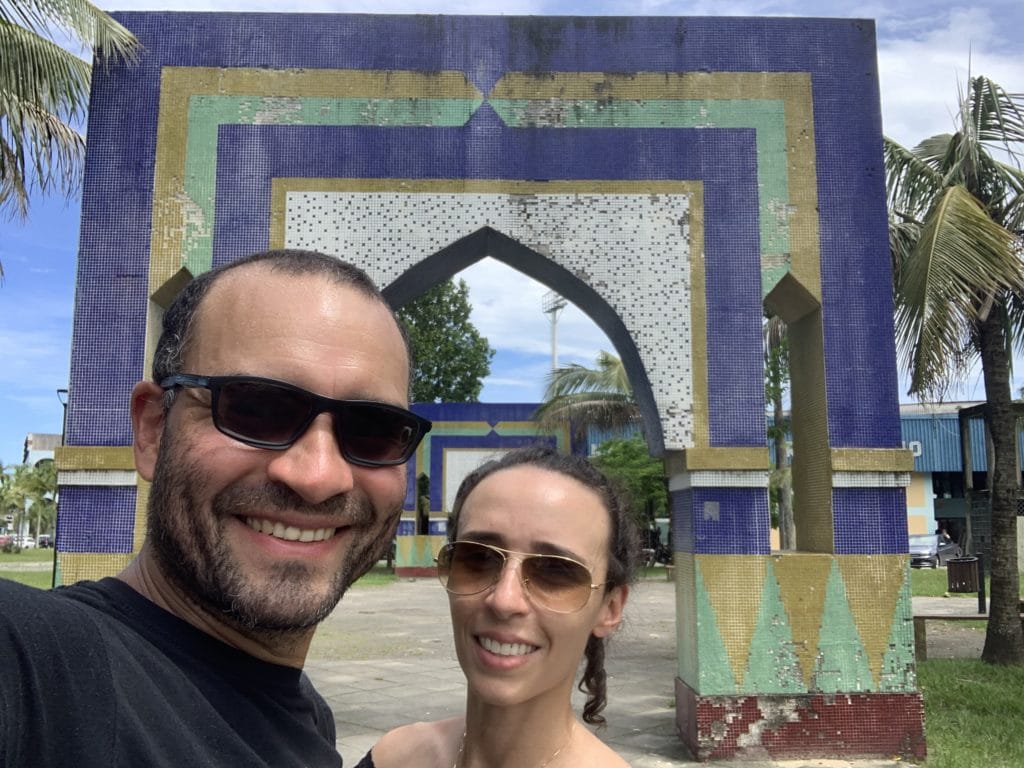
Praça dos Povos Árabes
This square honors the city’s recognition of the important contributions of the Arab community living in Paranaguá. It opened on March 14, 2012.
Aquário Marinho de Paranaguá
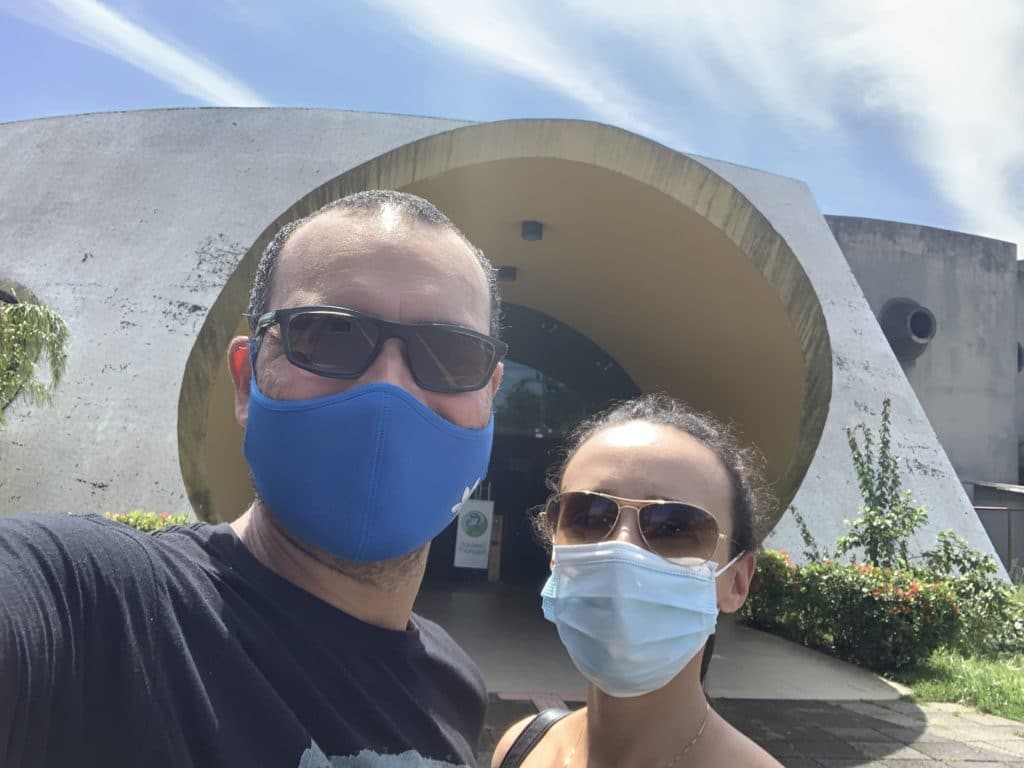
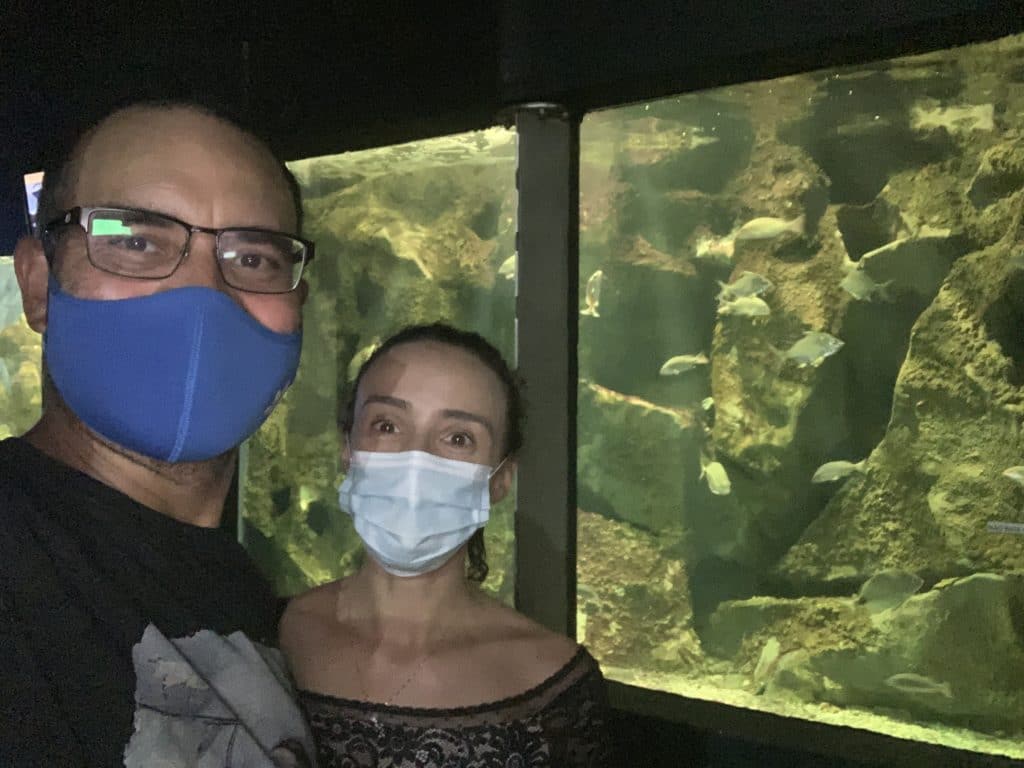
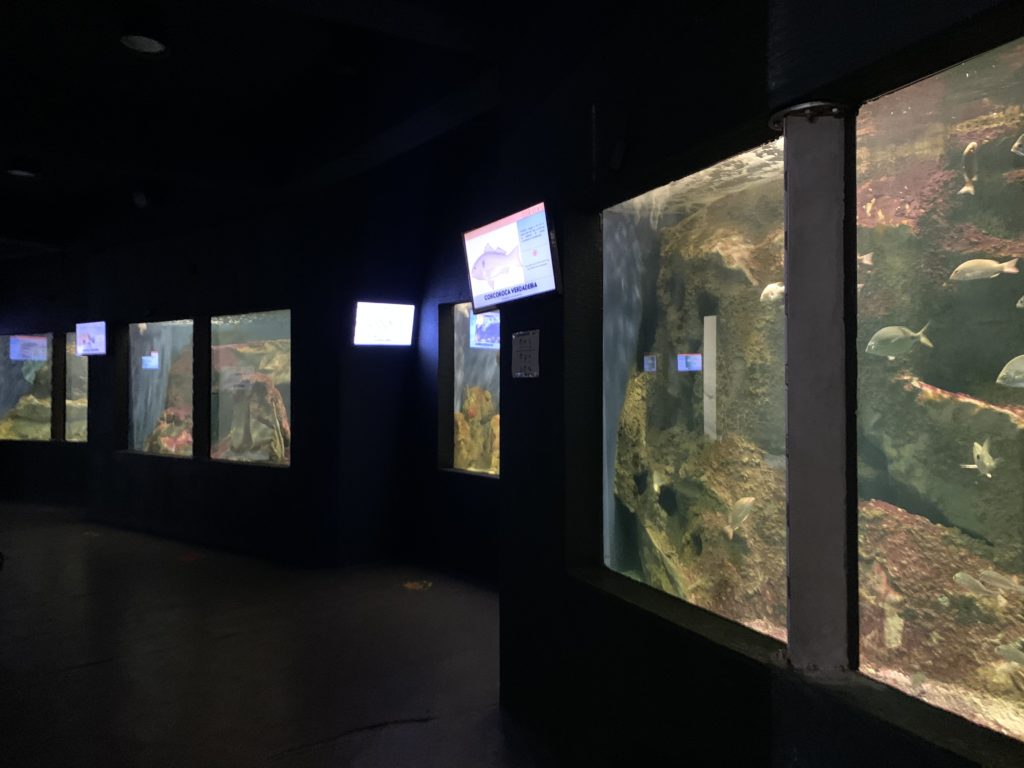
Opened in early 2014, the aquarium houses a range of species across 26 tanks. Some are interactive, and visitors can even touch the stingrays and crabs. It has three floors, two housing marine species and the top one serving as a viewpoint over the area.
Parking nearby is easy, but the moment we headed back to our car, an unofficial “parking attendant” appeared out of nowhere.
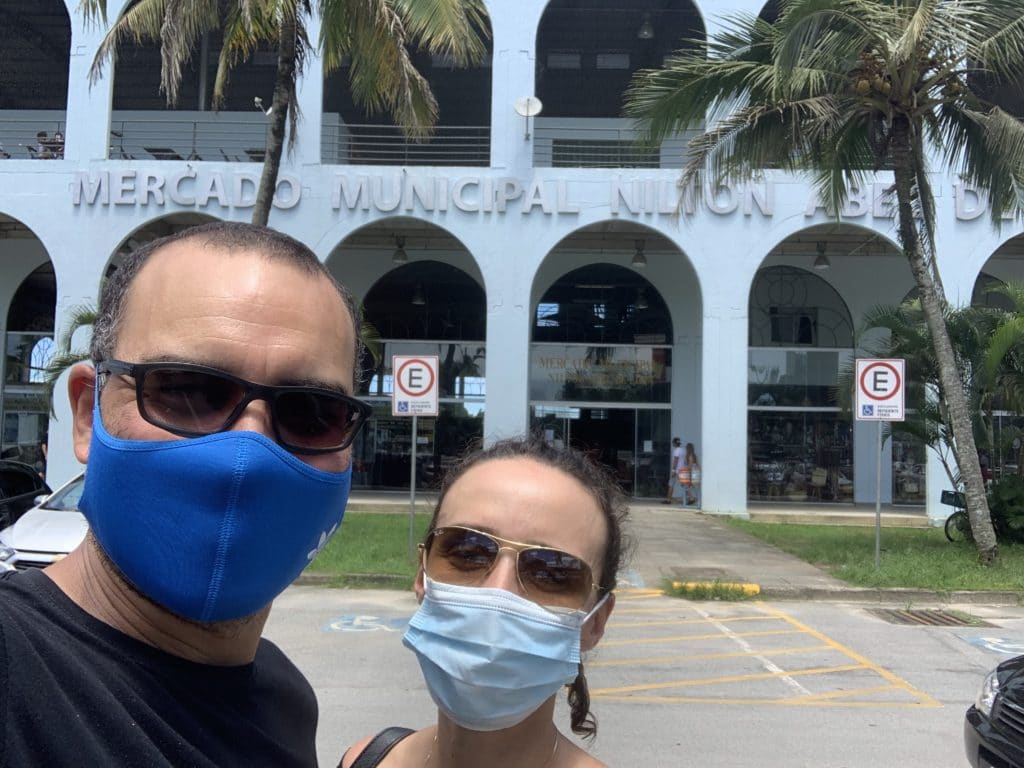
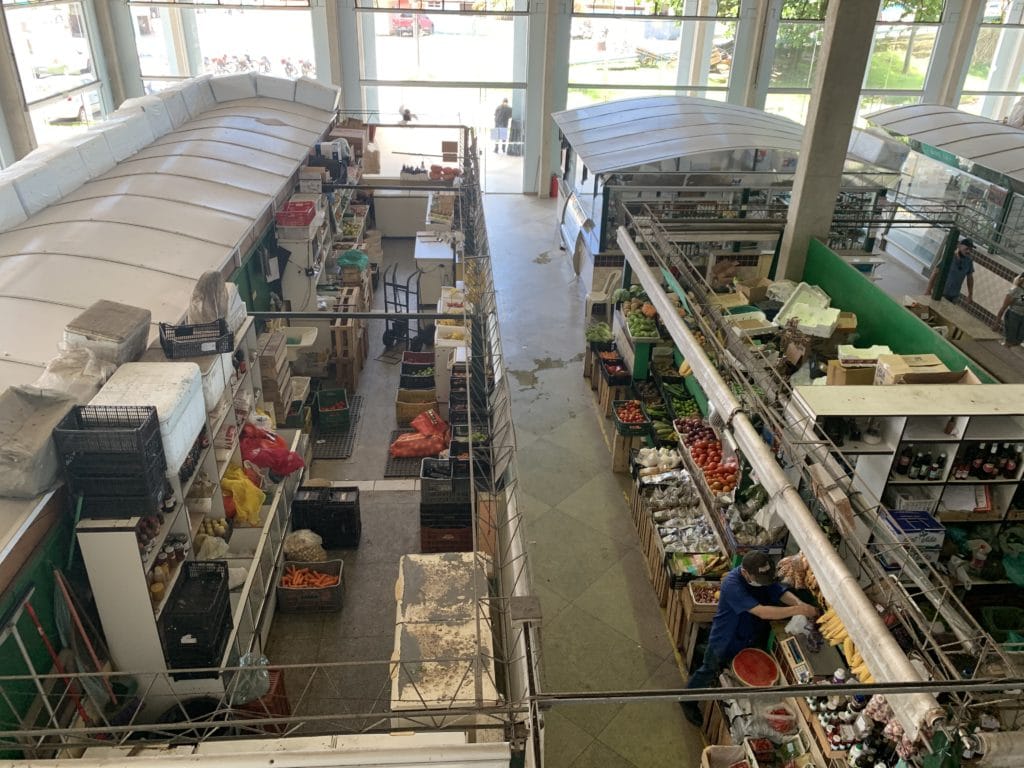
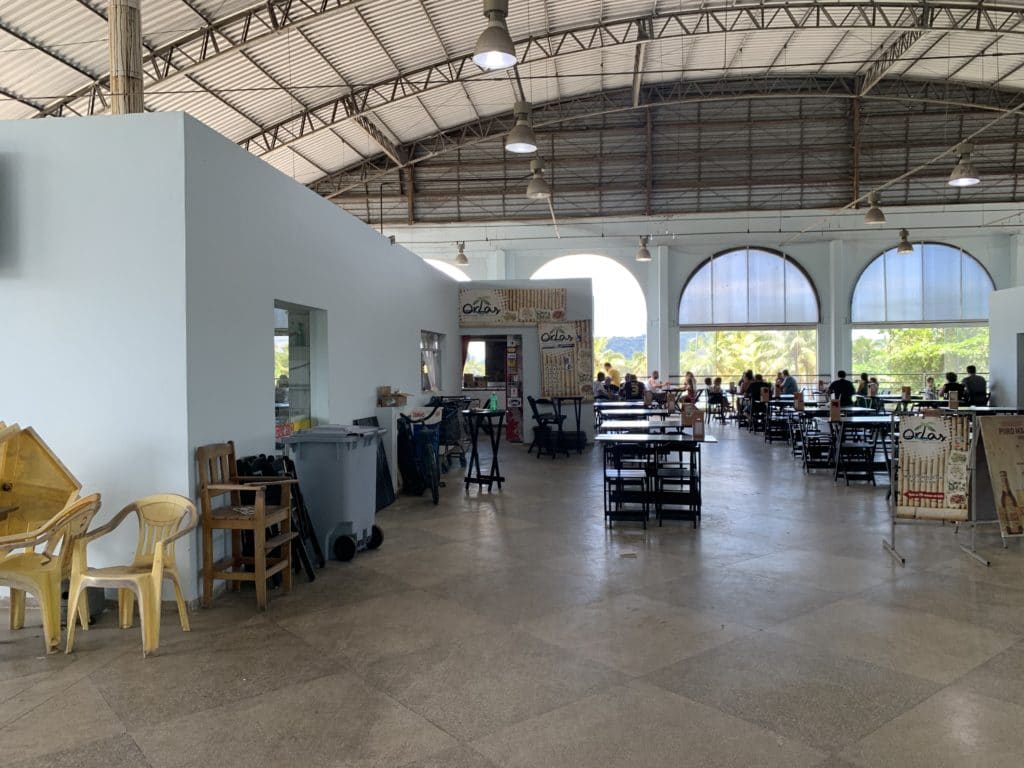
Mercado Nilton Abel de Lima
Opened on July 29, 2009, marking Paranaguá’s 361st anniversary. The ground floor holds several stalls selling not just local crafts but also fruit, grains, and spices. Upstairs are the restaurants, serving seafood and other dishes, with a beautiful view thanks to the building’s glass construction.
We were somewhat unlucky not to visit this place earlier, since it looked like a genuinely nice spot for breakfast.
Igreja da Ordem Terceira de São Francisco das Chagas
A Baroque church, from 1794, that, according to records, was once frequented by the city’s elite. It even has a cemetery in its courtyard, reserved for children and priests. Designated a historic landmark by Paraná in 1962, and a national landmark in 1967.
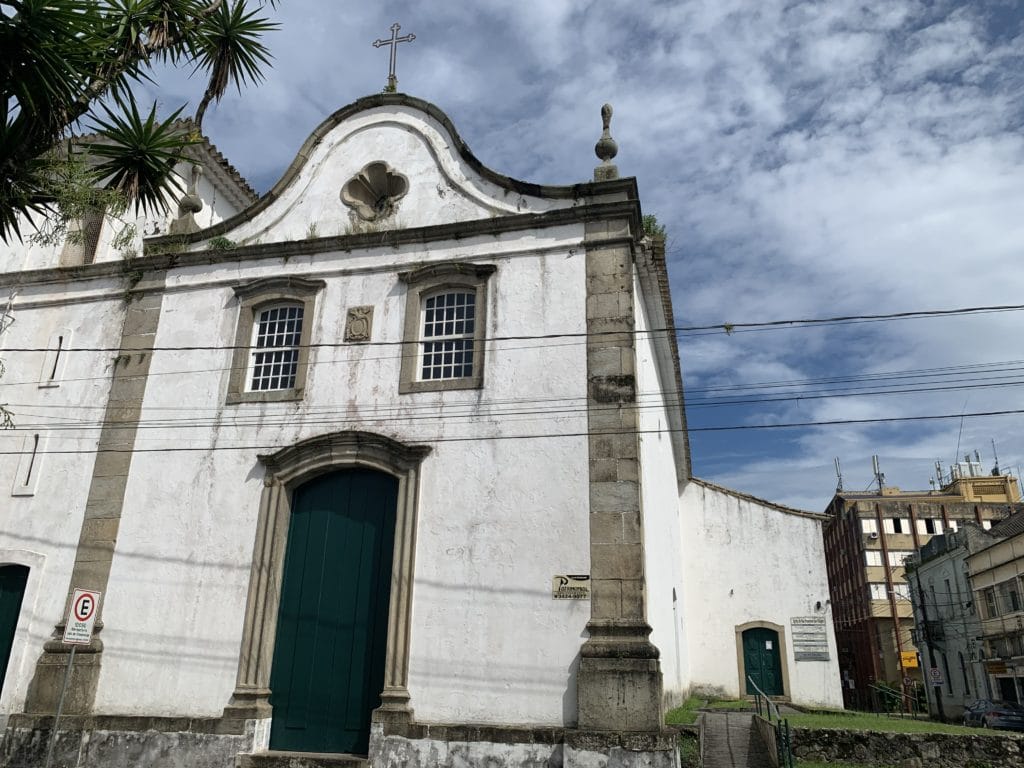
Igreja da Ordem de São Benedito
Igreja São Benedito, founded by enslaved Black Brazilians between 1600 and 1650, was mainly attended by freed Black residents. Built from stone masonry. In 1962, the process of formally protecting the building and restoring it began.
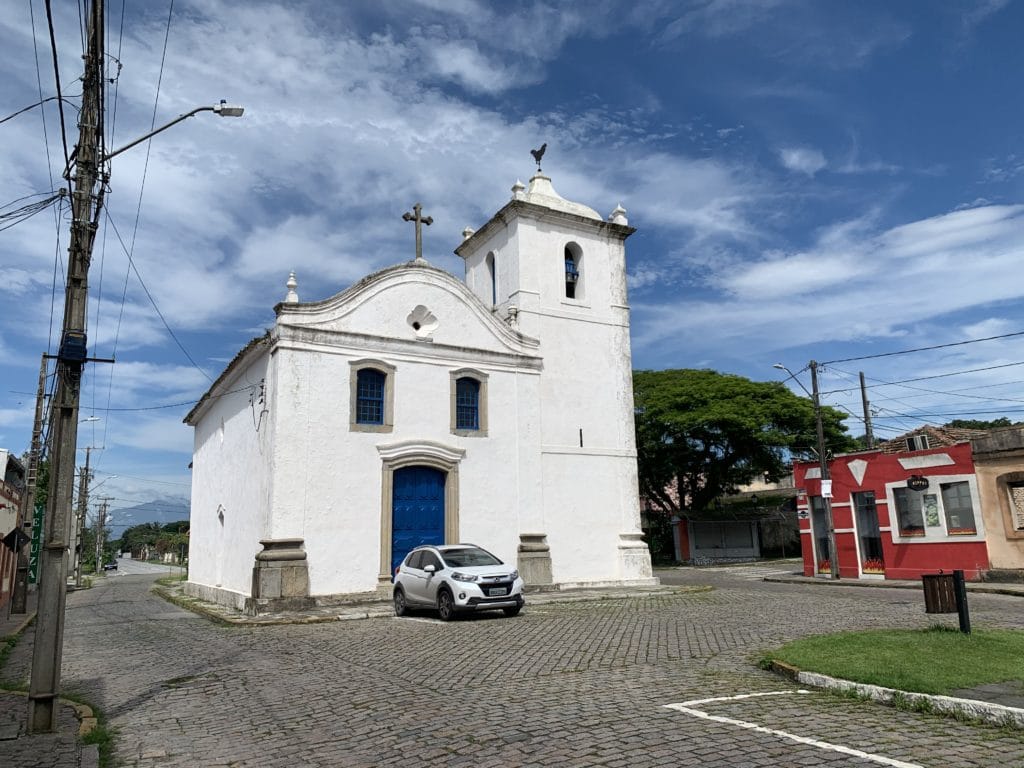
Igreja de Nossa Senhora do Rosário
Considered the Diocesan Cathedral, built in 1578 by enslaved people during the Portuguese colonial period, and the site where the whole city began. Just like the city itself and its municipal market, it was the first Catholic church in the state, and homes and shops began forming the surrounding village from there. Today, though, it’s undergone so many renovations that almost nothing remains of the original structure.
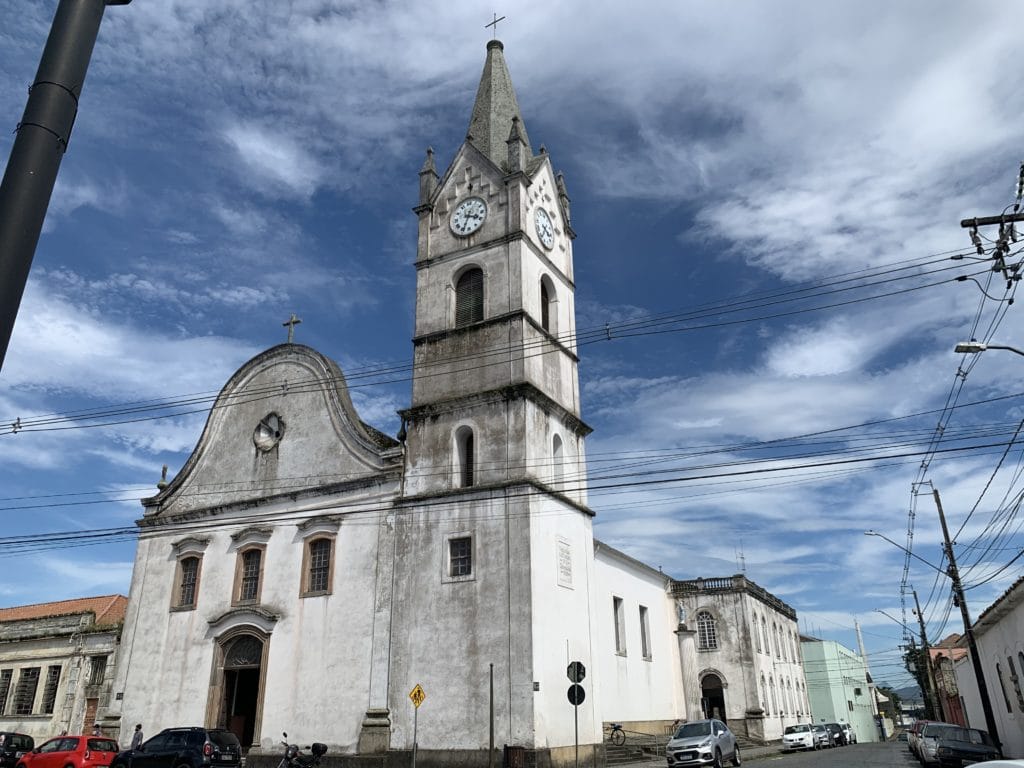
Casa da Cultura Monsenhor Celso and Sobrado da Matriz Casa Brasílio Itiberê
The Itiberê da Cunha family built both houses in different centuries, in the mid-18th century. Patriarch João Manuel da Cunha grew so fond of Paranaguá that he added “Itiberê” to his children’s names. One of them, Brasílio Itiberê da Cunha, went on to serve as ambassador to several countries.
The building was designated a protected historic landmark by Paraná in 1972, and today it houses the Casa da Cultura Monsenhor Celso, while the townhouse holds the Casa da Música Brasílio Itiberê.
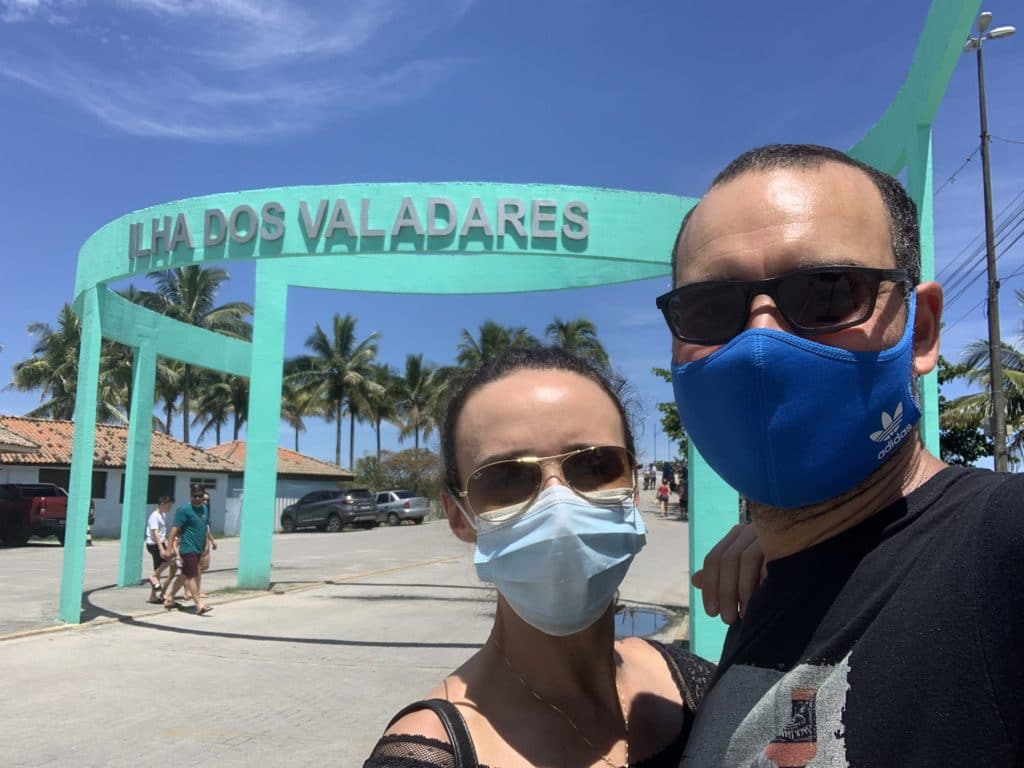
Ilha dos Valadares
This island belongs to the municipality of Paranaguá, sitting about 400 meters from downtown, and covering 2.8 km².
It sits along the right bank of the Itiberê River. The fishing families who live here practice traditional artisanal fishing and keep local traditions alive, including hosting the fandango paranaense, a traditional coastal dance.
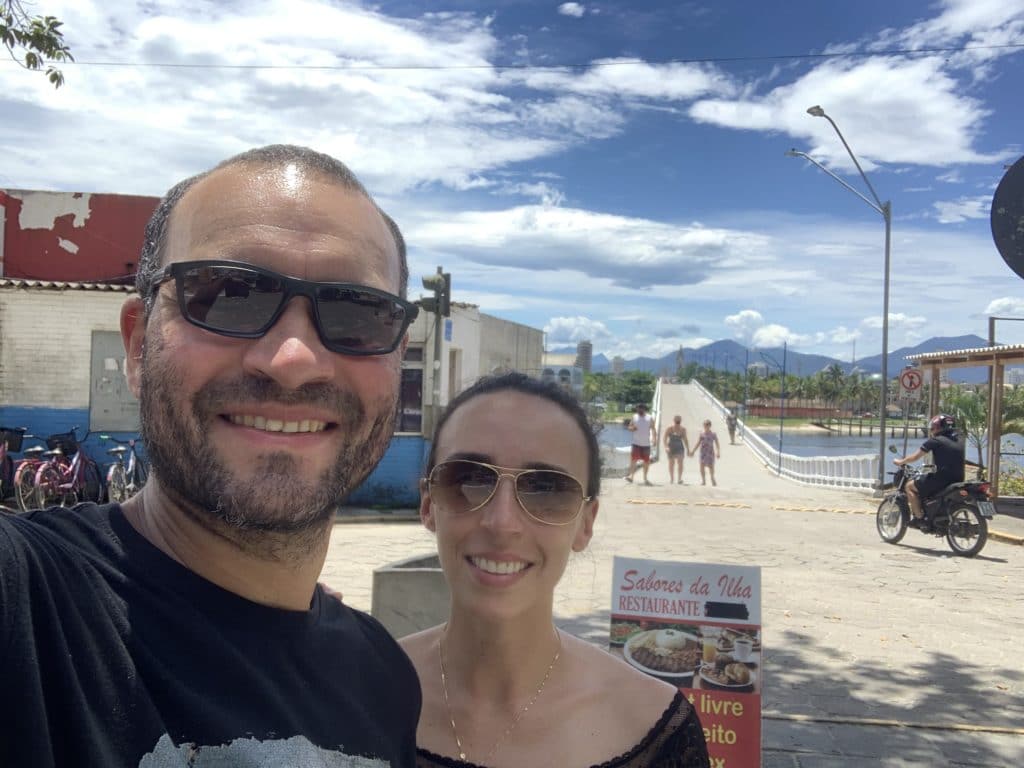
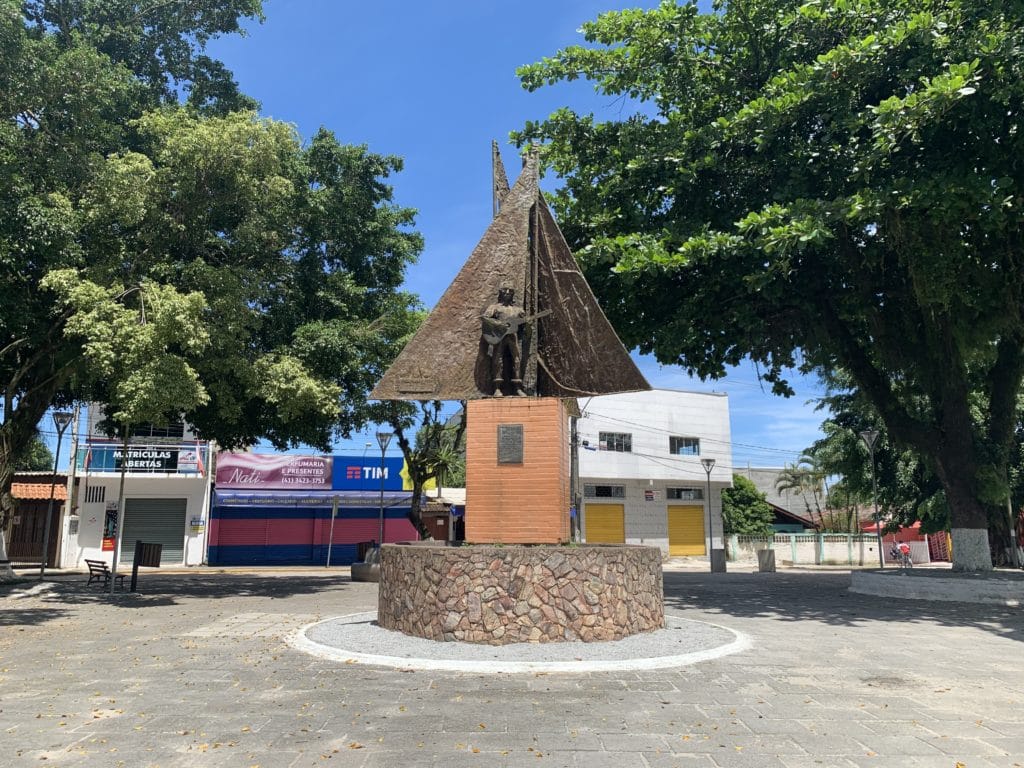
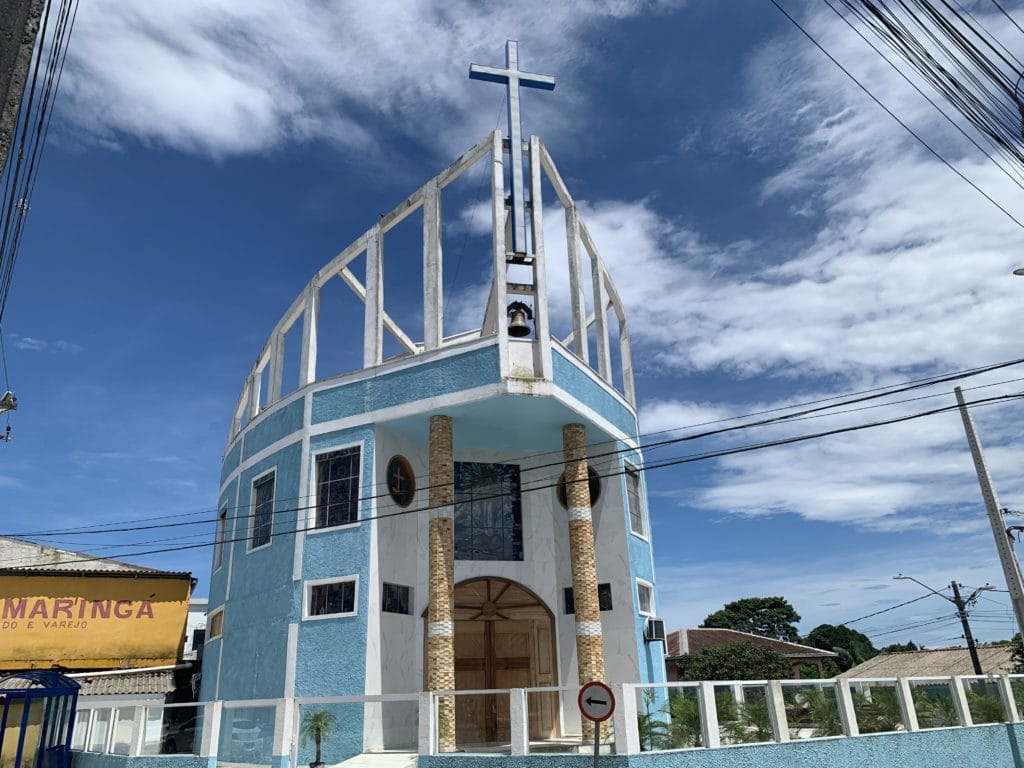
It’s connected by a bridge, which we crossed to check out the other side. There isn’t a huge amount to see, just a statue of Cyro Abalem, in a square of the same name, and a church, both of which we’ve included photos of here.
We’re not sure who Cyro Abalem was, but based on the statue, unveiled in 1997, we’re guessing he was a musician.
Estação Ferroviária de Paranaguá
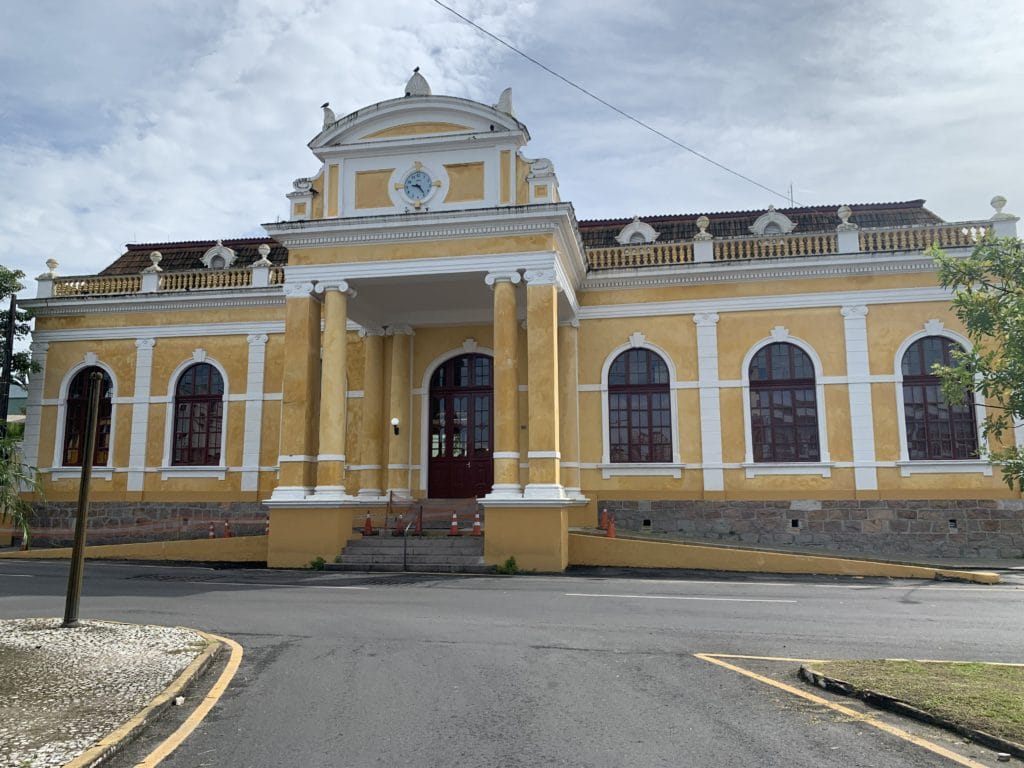
Opened in 1883 alongside the Morretes–Paranaguá rail line, with the route to Curitiba added in 1885 by Princess Isabel. The original station was decommissioned and replaced by the one shown in the photo, which opened on May 7, 1922. Furniture and equipment were transferred from the old station to the new one. This station kept receiving passenger trains until the first decade of the 2000s.
It was one of the greatest feats of railway engineering in the world at the time, and it’s currently under renovation. Designated a protected historic landmark by Paraná in 1990.
Santuário de Nossa Senhora do Rocio
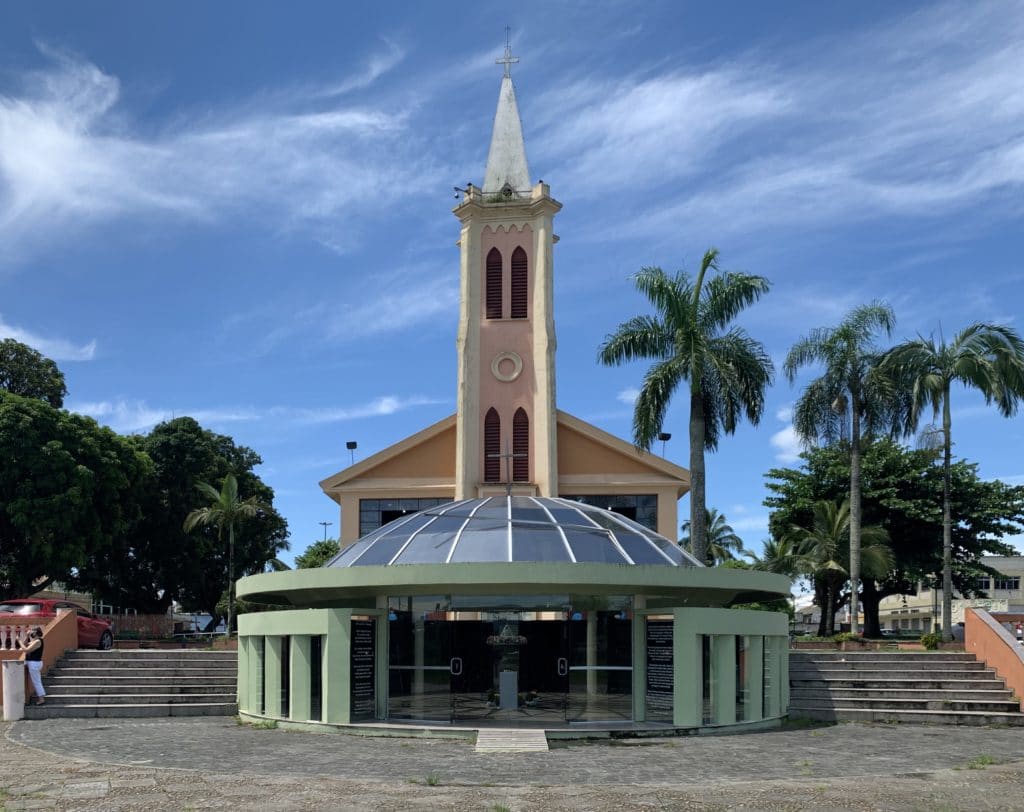
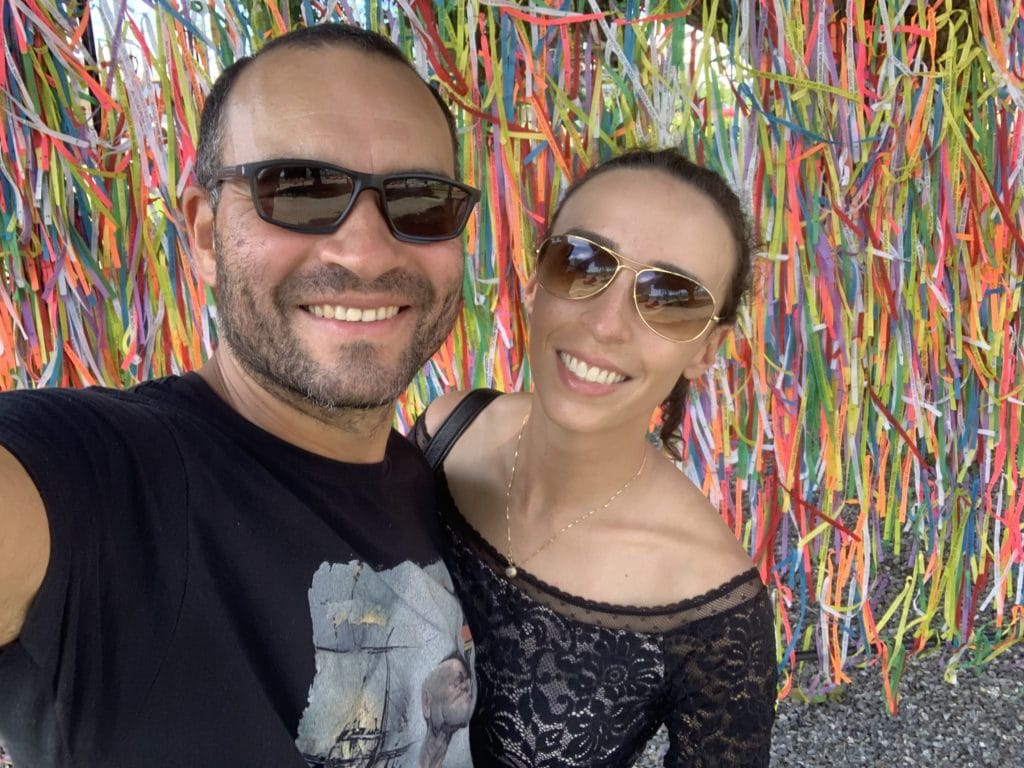
The Santuário de Nossa Senhora do Rocio, dedicated to Paraná’s patron saint, was built in 1813 and became a pilgrimage site for the faithful from across the country. This landmark, however, sits a bit outside downtown, about 8 minutes by car. Highlights include the Praça da Fé, the Gruta de Nossa Senhora, and the Salão Social.
Local tradition holds that a fisherman known as Pai Bere found an image of the Virgin caught in his fishing net, at a spot called Rocio, which established the custom of praying the rosary to her, especially during the month of November.
In 1686, a cholera epidemic hit the coast, claiming many families, and people turned to the saint for help — soon after, the epidemic came to an end.
Antiga Alfândega de Paranaguá
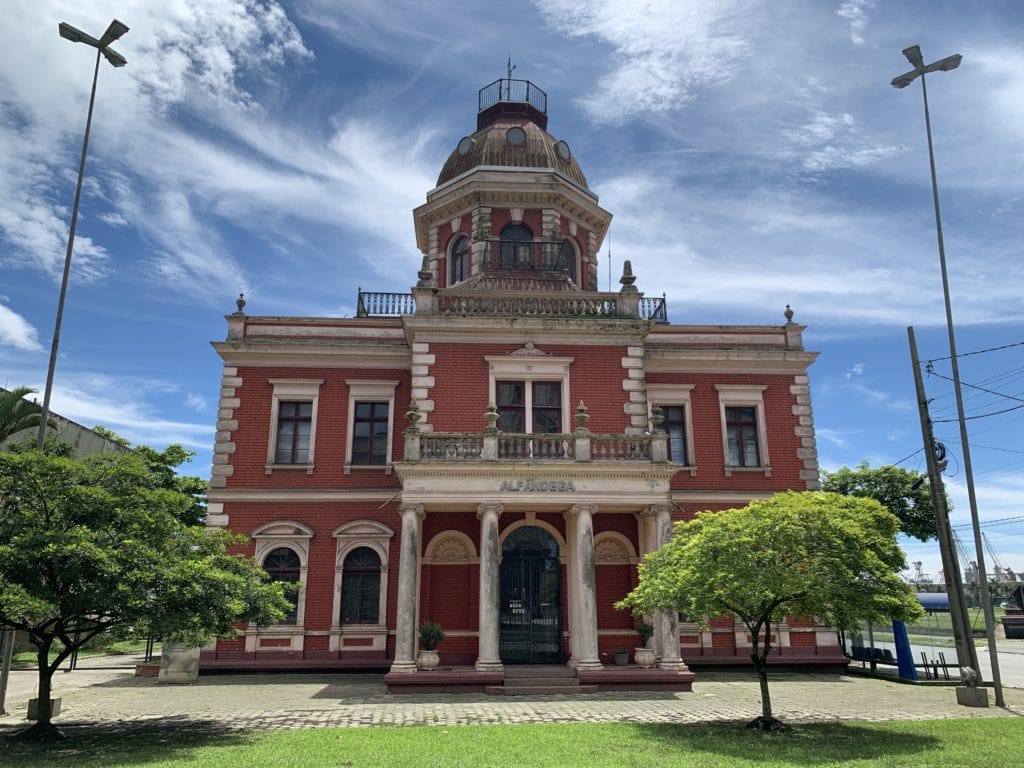
Construction on this beautiful customs house building began in 1903, opening in 1910. It’s located in the Porto D. Pedro II zone, with eclectic architecture in the Roman-Renaissance style.
It’s served various purposes over the years, and today it’s back to serving as a customs facility, used by Brazil’s federal tax authority (Receita Federal) until 1975, then left abandoned and poorly maintained. Designated a protected historic landmark by Paraná in 1999.
Where to eat in Paranaguá
The local cuisine is famous for pirão de peixe (fish and manioc porridge), tainha (mullet), and barreado, a dish more commonly associated with the neighboring town of Morretes — which we really wanted to try, so we decided to check out Casa do Barreado.
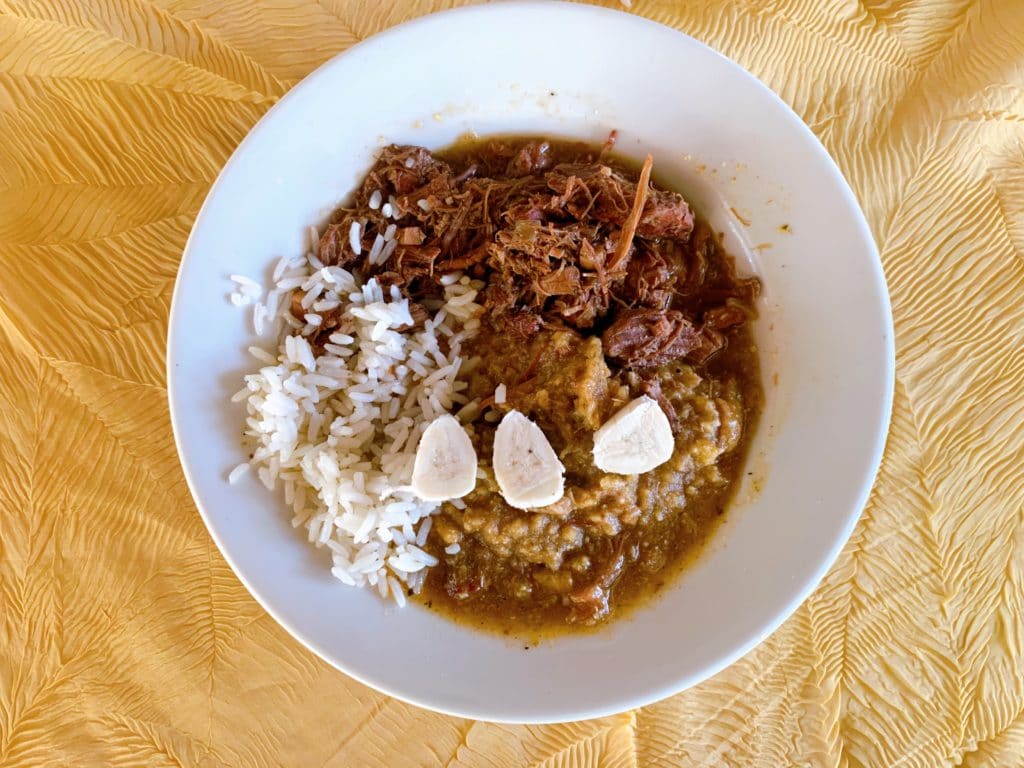
Barreado is a traditional meat and manioc flour dish prepared along the Paraná coast, considered the state’s most iconic dish. It has Azorean roots, tied to a 300-year-old ritual still followed today in preparing it.
Casa do Barreado
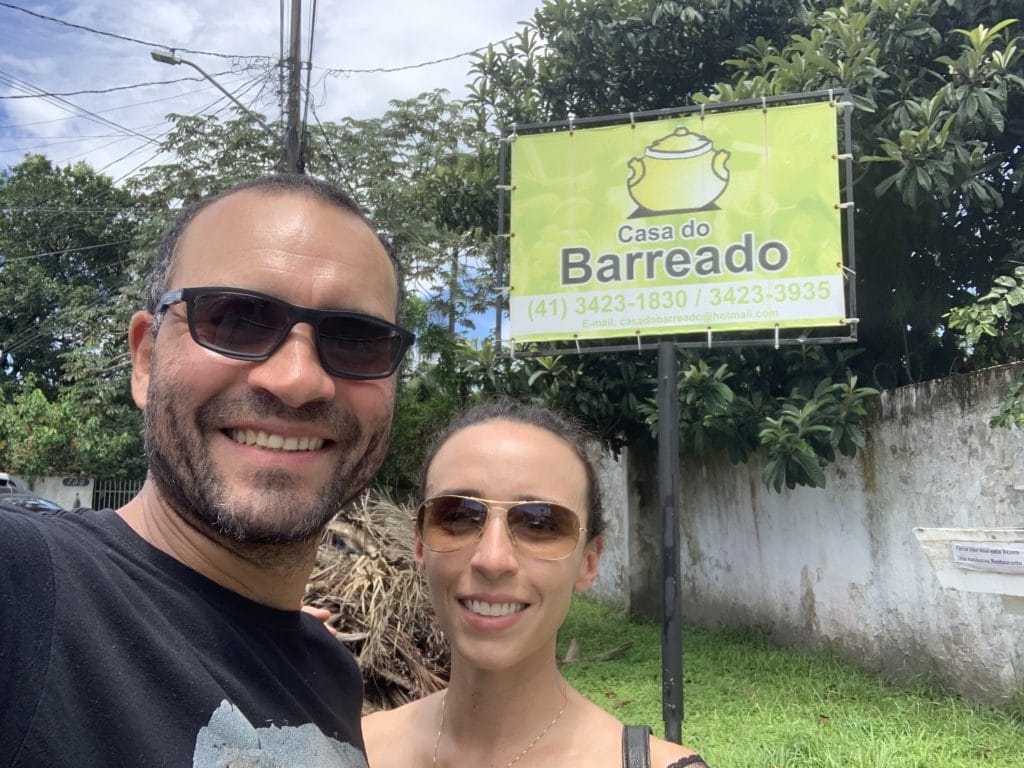
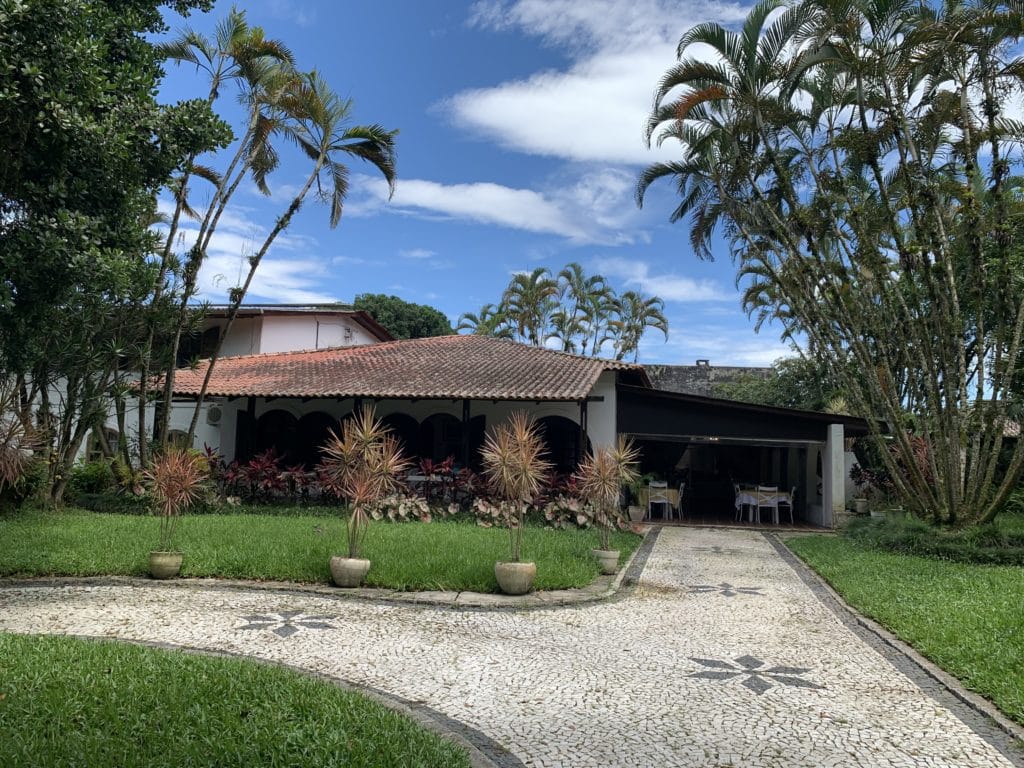
The space: small and cozy, with really good service. They walked us through the whole ritual and history behind the dish. The restaurant sits a little over 1 km from downtown, and you can park either on the property or on the street.
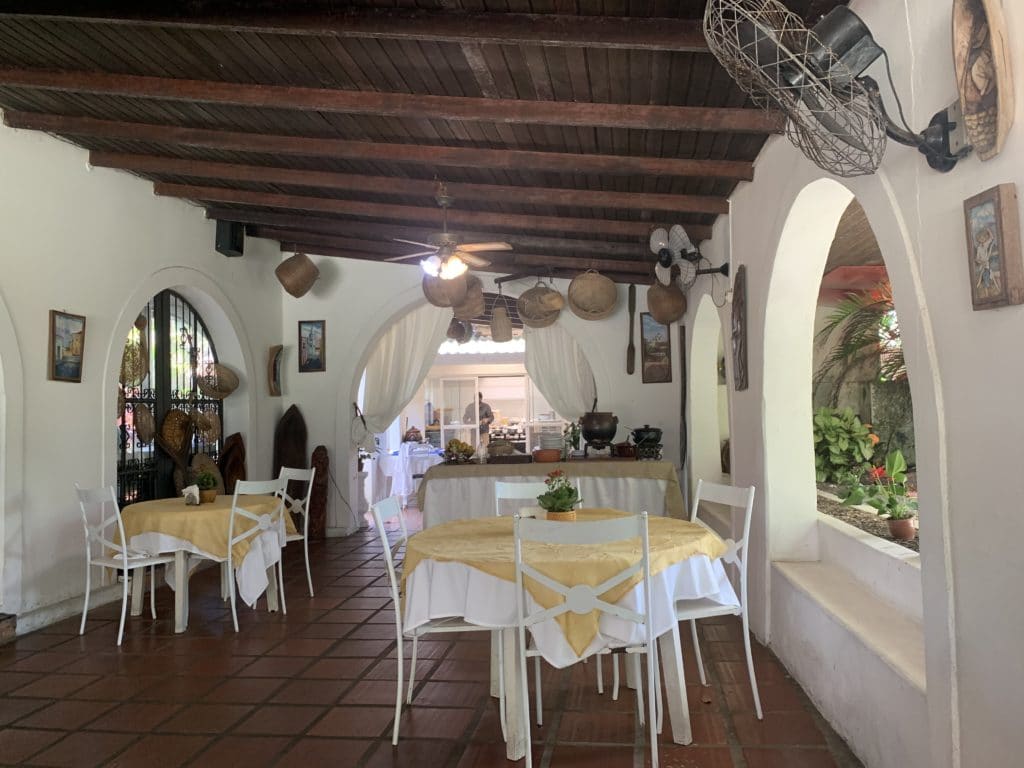
Main course: barreado, and we loved watching how the dish is prepared and served. First, a porridge is made from the meat’s cooking liquid and manioc flour, then it’s served with meat that’s been slow-cooked for 24 hours in a clay pot. The meat is so tender it practically falls apart.
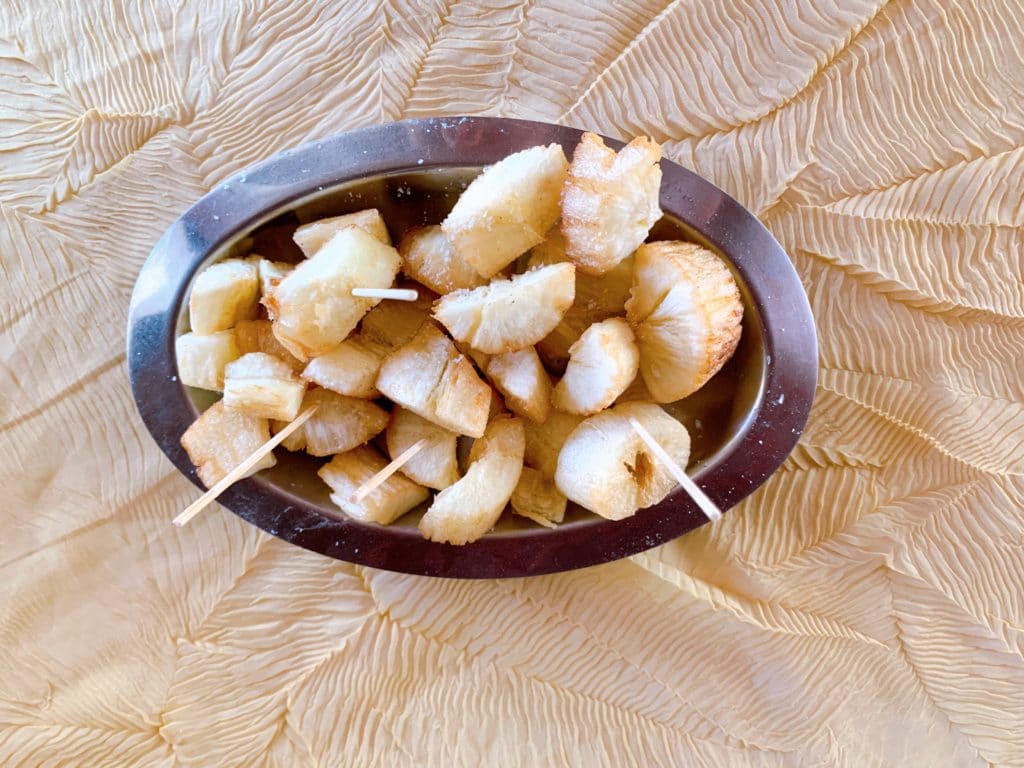
Every dish is prepared right in front of you, and you can get seconds if you’d like, all for one fixed price. It’s served with rice, and fried cassava comes to the table to round out the meal.
You can add banana to the dish to balance out the cumin flavor, a spice used in the preparation, and we’d absolutely recommend eating it with the banana.
Dessert: there were several dessert options included with the meal — you just got up and helped yourself to whatever you wanted. Options included passion fruit mousse, Chico Balanceado, milk pudding, pumpkin sweet, papaya sweet, and guava sweet, all laid out on the table. And all of them were really good.
Chico Balanceado is the restaurant’s signature dessert, but as usual, Andrey preferred the milk pudding and went back for seconds.
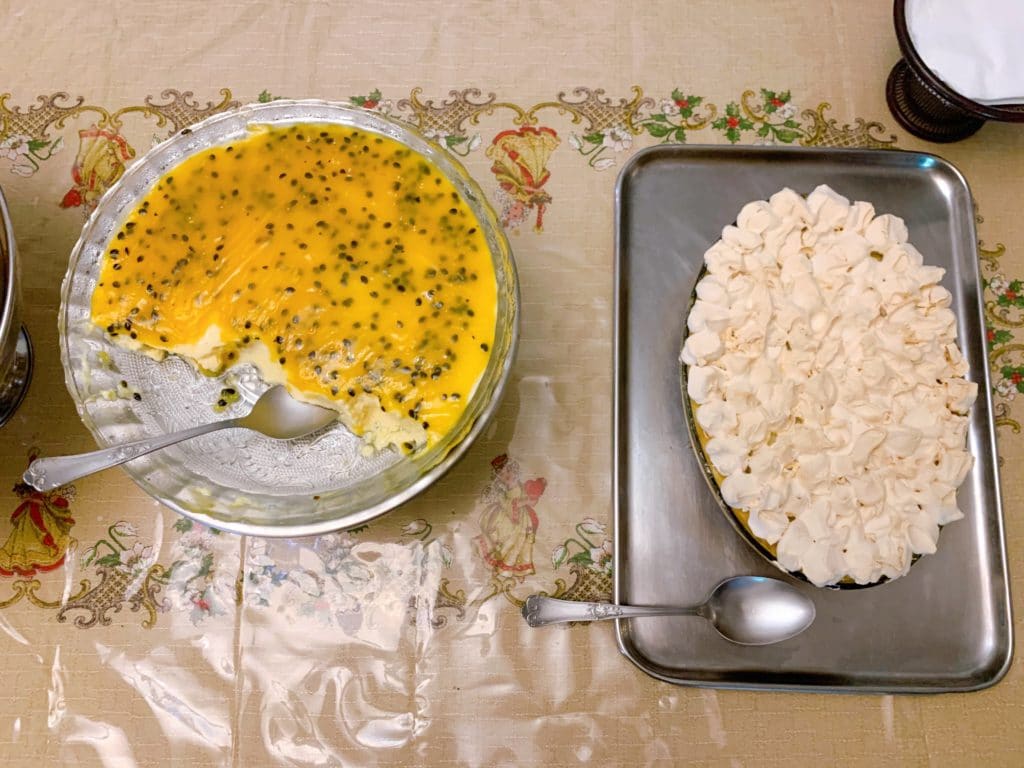
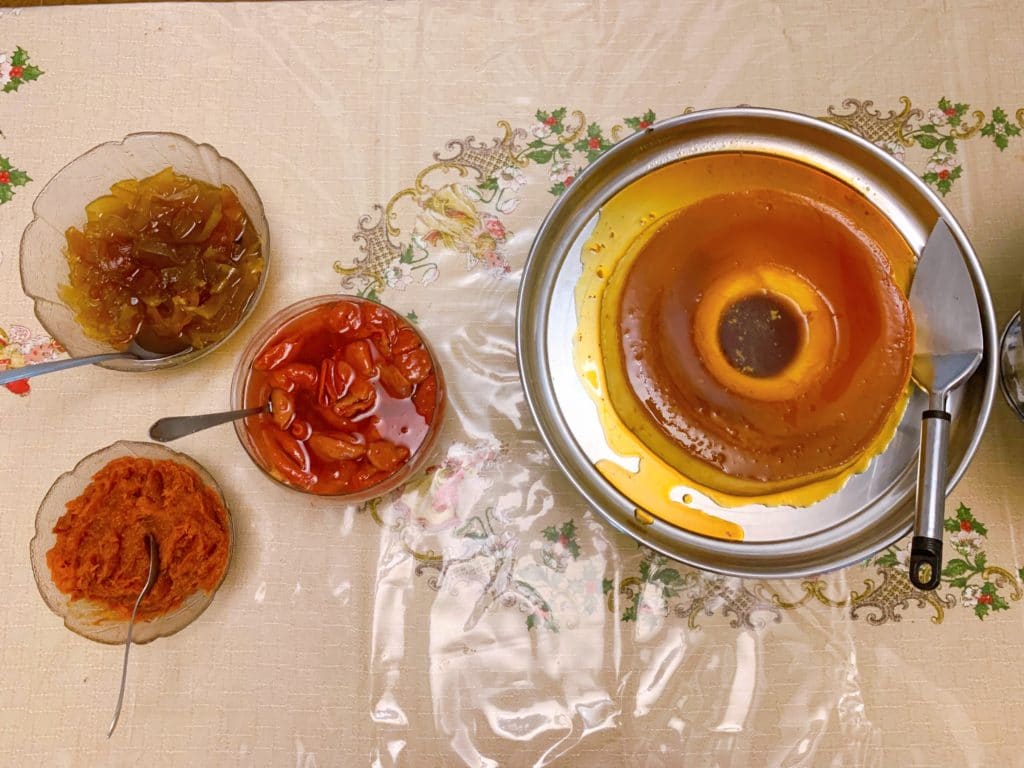
Price: R$110 for two people, with juice, the main dish, and all-you-can-eat dessert.
Conclusion on Paranaguá
As we mentioned, the old townhouses are genuinely beautiful and worth the visit to the city, which you can easily fit into a single day. If you’re staying for the weekend, you can catch the boat to Ilha do Mel from there. The crossing takes longer, about an hour and a half, but the visit is well worth it.
Did you enjoy the post? Have a question, or a tip or suggestion of your own? Send it our way.
Read more about our trip in Ilha do Mel.
Read the original version in Portuguese on A Bela e o Bigode.