What to Do in Paris in One Day
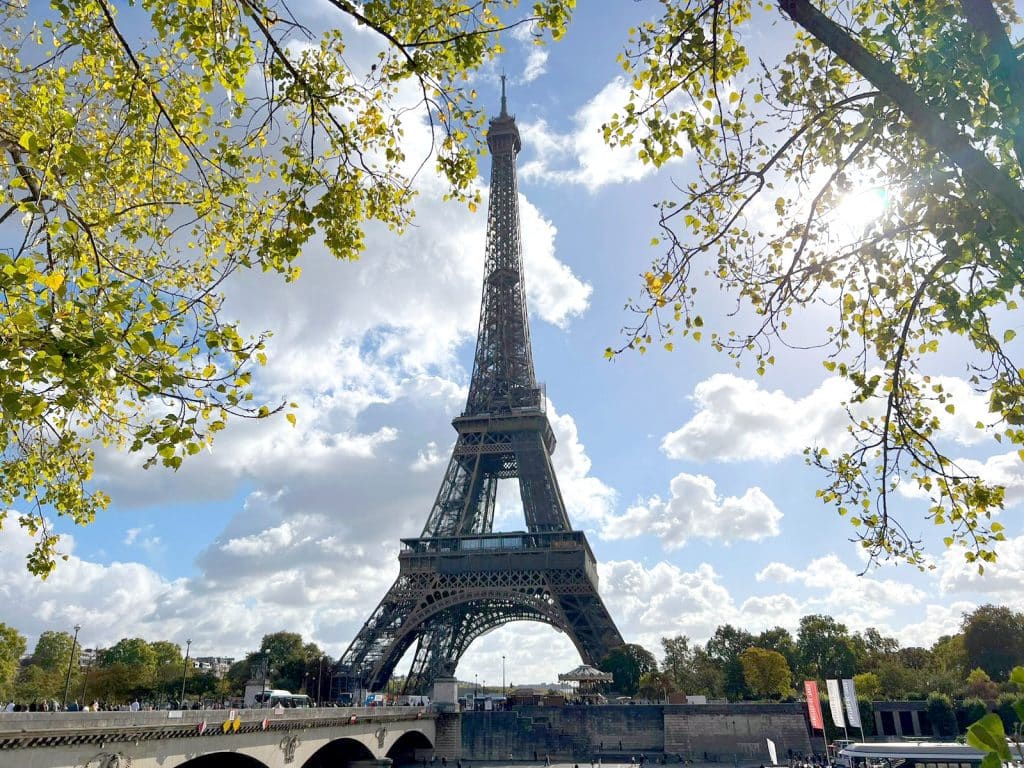
Paris is one of the world’s great capitals, and it’s absolutely worth spending around 4 days in the city. We only had a single day there, though, since the main focus of our trip was exploring the Burgundy region.
So we picked just a handful of highlights to revisit the “City of Light.” Paris earned that nickname because, for centuries, some of the brightest minds across every branch of the arts were drawn to the city, the way insects are drawn to a lamp.
Paris is also considered the birthplace of the Enlightenment, of fashion, and the capital of diversity. Its best-known landmarks are the Eiffel Tower, the Louvre, the Panthéon, and Sacré-Cœur. These are, without a doubt, some of the most recognizable things Paris is known for.
Sights in Paris
Stade de France, Saint-Denis
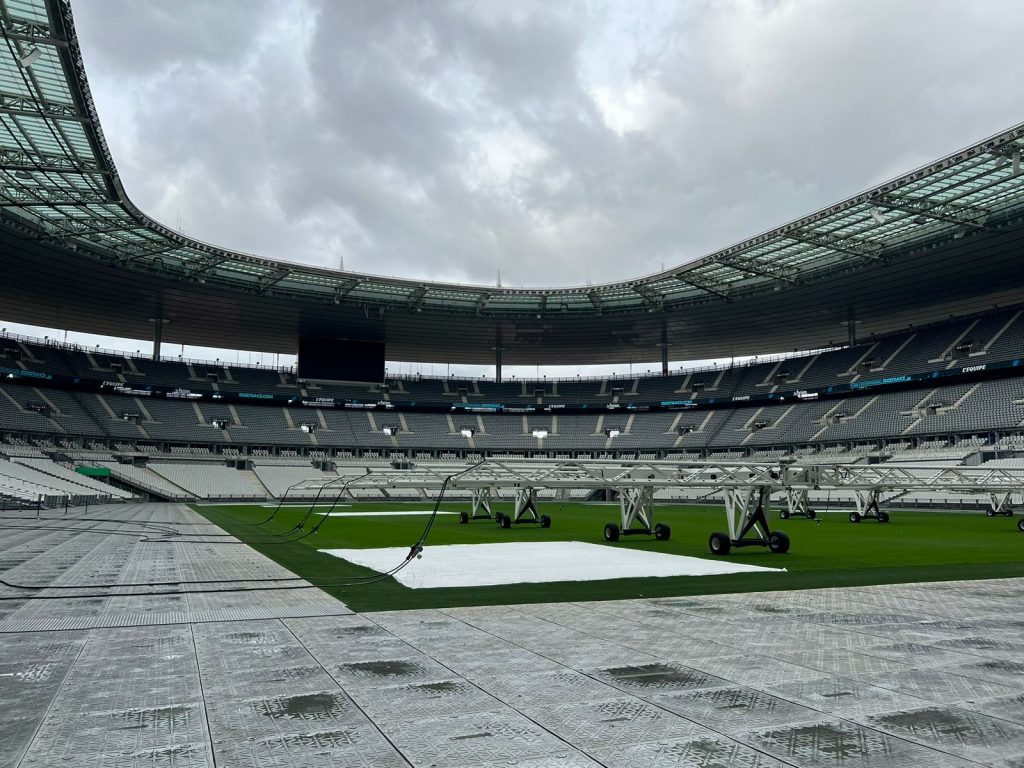
I was traveling with my dad, and since he’s crazy about soccer, we went to check out the French stadiums. There’s a paid tour offered in both French and English, and it’s genuinely incredible.
Located in Saint-Denis, on the outskirts of Paris, the Stade de France is an icon of French sport. It became famous for hosting the 1998 World Cup final, where the French team beat Brazil 3–0 to win the World Cup.
Tickets are sold through the official website and at the on-site shop, and the tour runs about an hour and a half. You can walk through the interior of the stadium and the Stade de France museum. The museum holds several objects tied to that historic 1998 World Cup: jerseys, autographed soccer balls, a replica of the trophy.
The tour also takes you through the locker room with the players’ uniforms, the stands, the presidential box, and the players’ bench — the part where you walk into the arena is incredible, since you enter just like the players do, in two lines.
The venue currently hosts soccer and rugby matches, along with concerts by major artists, and we’d definitely recommend a visit.
Paris Saint-Germain Stadium
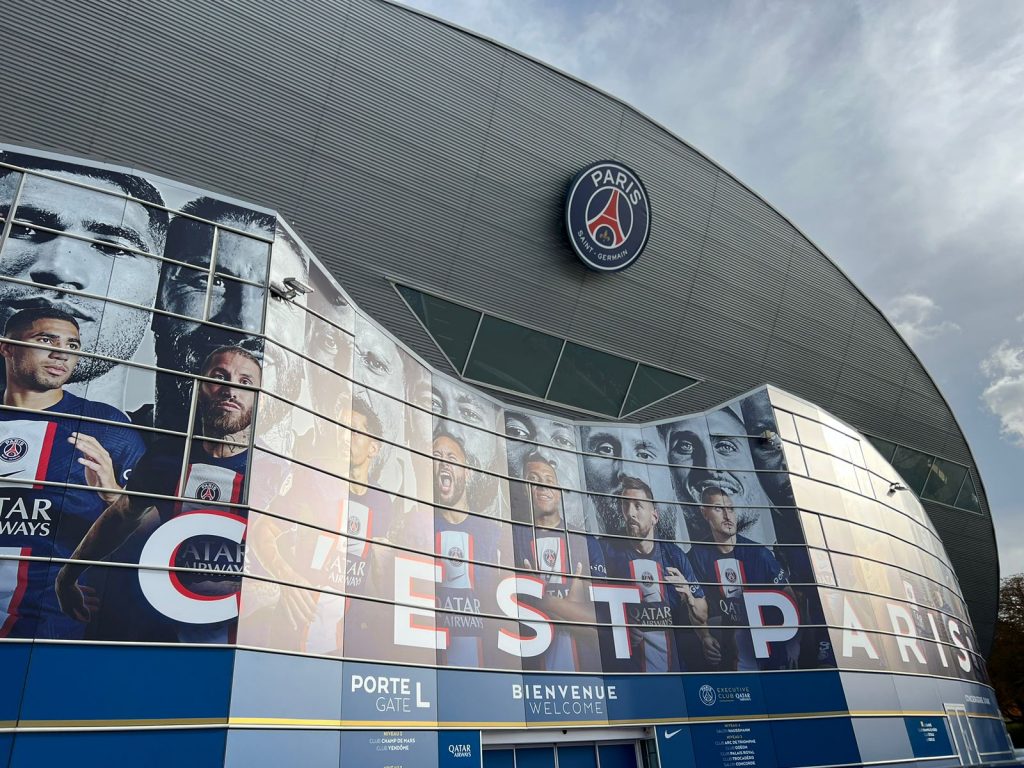
Parc des Princes (website) is a stadium located within the city of Paris itself, opened on July 18, 1897. It’s mostly used by the club, but rugby matches are also held there. It once served as a velodrome and was the finish line of the Tour de France.
There’s also a guided stadium tour and a massive team store with clothing, sneakers, caps, player figurines, and other souvenirs from the famous club.
You’ll spot the team’s star players, like Neymar and Kylian Mbappé, referenced everywhere throughout the stadium — an unmissable stop for soccer fans.
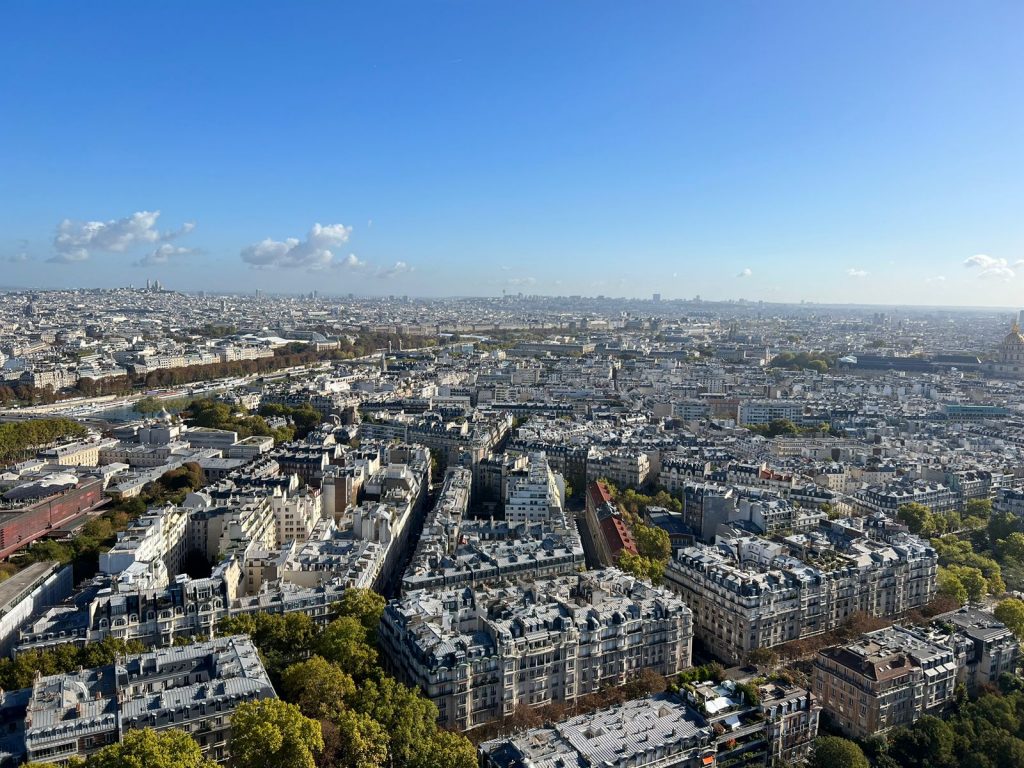
Going up the Eiffel Tower
The Eiffel Tower is a wrought-iron lattice tower named after its engineer, Gustave Eiffel, whose company designed and built it. The tower stands about 330 meters tall, roughly the height of an 81-story building, and is the tallest structure in Paris.
It has a curious history: after Gustave Eiffel’s design won a competition for the 1889 World’s Fair, and while it was under construction, it was criticized by residents, artists, and intellectuals who protested against it and didn’t want it built — today, it’s a global cultural icon of France.
Locally nicknamed the “Iron Lady,” it was built between 1887 and 1889. The tower has three levels open to visitors, with restaurants on the first and second floors.
It’s the most-visited paid monument in the world, which is exactly why we’d recommend buying your ticket online in advance through the official website — otherwise, you risk finding it sold out for the day, especially for access to the top level.
The website also lets you track wait times and get directions. But if you’re only after seeing the tower from outside, it’s worth a visit both during the day and especially at night, when it’s fully lit up — the lights turn on within 10 minutes of nightfall and stay lit until 1 AM.
Walking the Champs-Élysées
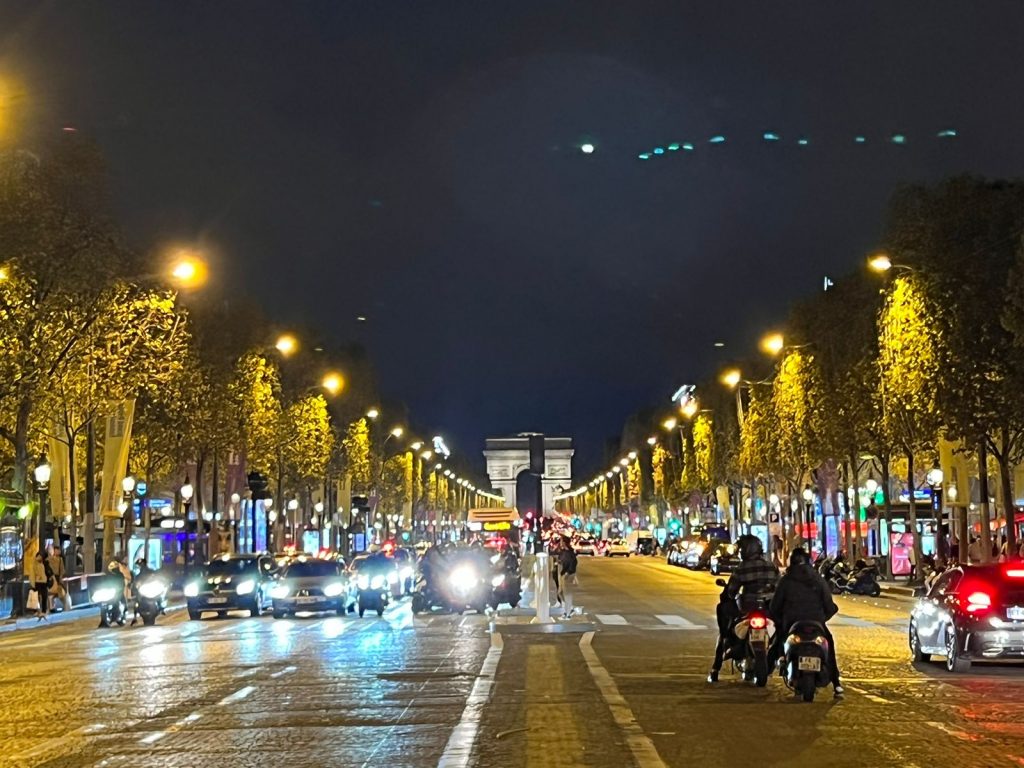
Stretching almost two kilometers, the Champs-Élysées is the most beautiful avenue in Paris, and also one of the most famous avenues in the world.
It got its start in 1640, with the planting of a grand row of trees that would later grow into the avenue. Its name, Champs-Élysées, comes from Greek mythology, referring to a place equivalent to the Christian paradise.
In 1724, the avenue took on its current layout, and in 1884, it underwent a major renovation that made it even more beautiful. Today, it’s home to some of the most important luxury brand stores in the world, making it a great spot for shopping, along with being one of the most beautiful places in the entire city.
The Champs-Élysées is also the finish line of the Tour de France, one of the most important cycling competitions in France and the world.
The avenue is split into two sections. The lower stretch of the Champs-Élysées, near Place de la Concorde, is surrounded by gardens flanked by imposing buildings, like the Palais de la Découverte, the Petit Palais, and the Grand Palais.
The upper stretch of the avenue begins at Place de l’Étoile, next to the magnificent Arc de Triomphe, lined with luxury stores, restaurants, and movie theaters.
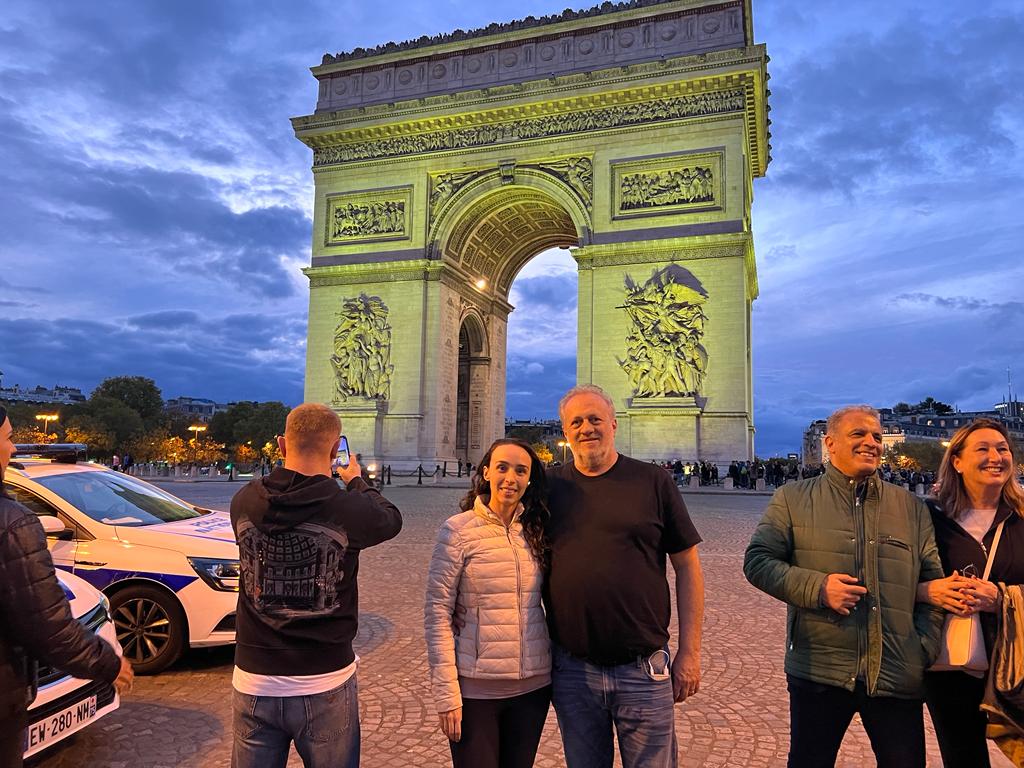
You can climb the Arc de Triomphe for a view over the Champs-Élysées from above. Or simply stand in the middle of the avenue for a beautiful photo with the arch in the background.
Arc de Triomphe
A triumphal arch is a monumental structure shaped like an arch with one or more passageways, typically designed to span the width of a road or street.
It’s associated with ancient Roman construction. While the Romans are generally credited with inventing it, triumphal arches were built to celebrate victorious generals or important public events, like the founding of new colonies, the construction of a road or bridge, the death of a member of the imperial family, or the rise of a new emperor.
In 1805, following France’s victory at the Battle of Austerlitz, Napoleon commissioned a great monument that would not only commemorate the country’s victory, but make anyone standing before it feel small, the way he wanted to feel when contemplating this majestic work of architecture — though Bonaparte never lived to see it finished.
Its walls bear the names of Napoleon’s major victories. It’s also home to the Tomb of the Unknown Soldier, honoring those who died in battle.
As mentioned, you can climb the Arc for a view over the Champs-Élysées from above, and also take in the exhibition inside the monument, which holds models and objects related to the Napoleonic era.
Eat steak-frites (entrecôte with fries) in Paris
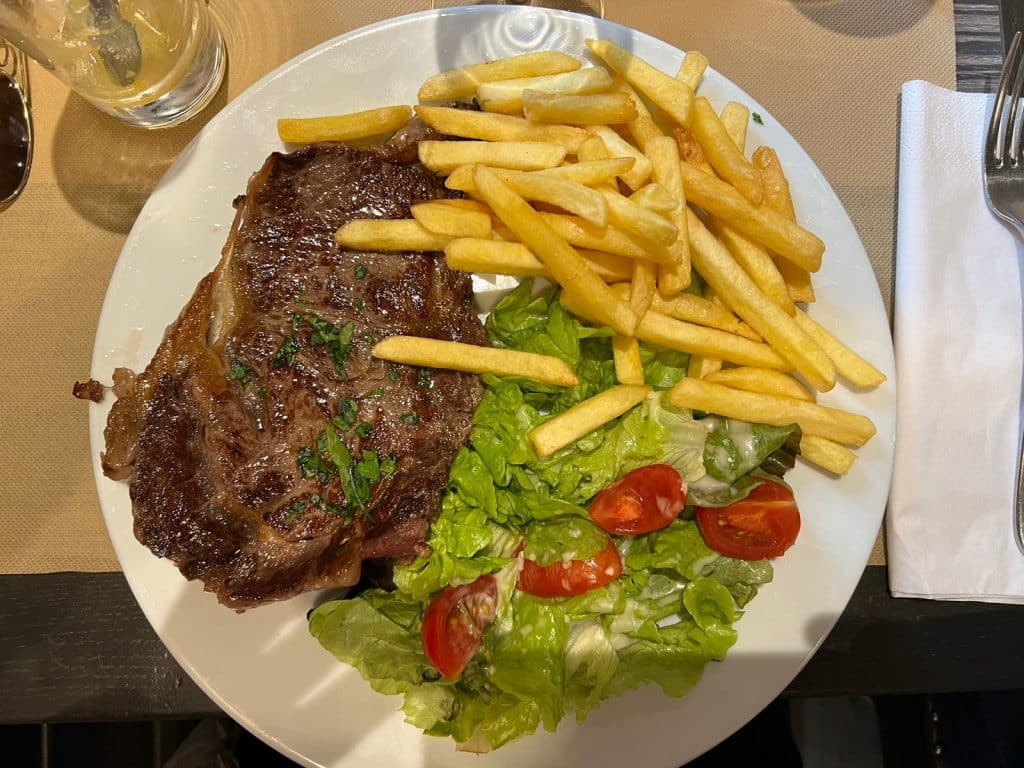
The dish is a beautiful steak and fries, covered in a mysterious green sauce. The base of this secret sauce is mustard, basil, and olive oil — all I know is it’s delicious and unforgettable. The fries are great too.
Le Relais de Venise L’Entrecôte is the most famous spot for this dish in Paris, with more than 50 years in business. Demand runs high too, so brace yourself for a long line — though there are other restaurants serving the same dish scattered around the city.
We ended up going with La Favorite instead, since we were short on time in the city.
Eat macarons in Paris
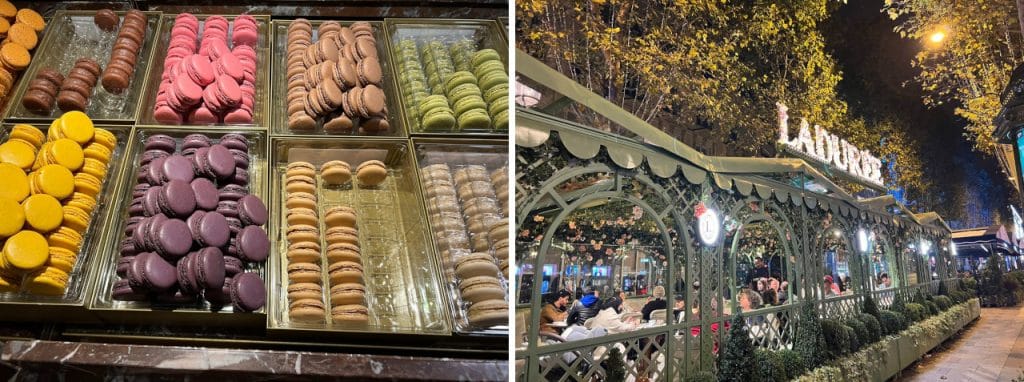
While walking the Champs-Élysées, a stop at Ladurée (website) for their delicious macarons is an absolute must. There are countless flavors, and it’s genuinely hard to pick just one.
Read more about our experience in France in What to Do in Lyon.
Read the original version in Portuguese on A Bela e o Bigode.