What to Do in Burgundy
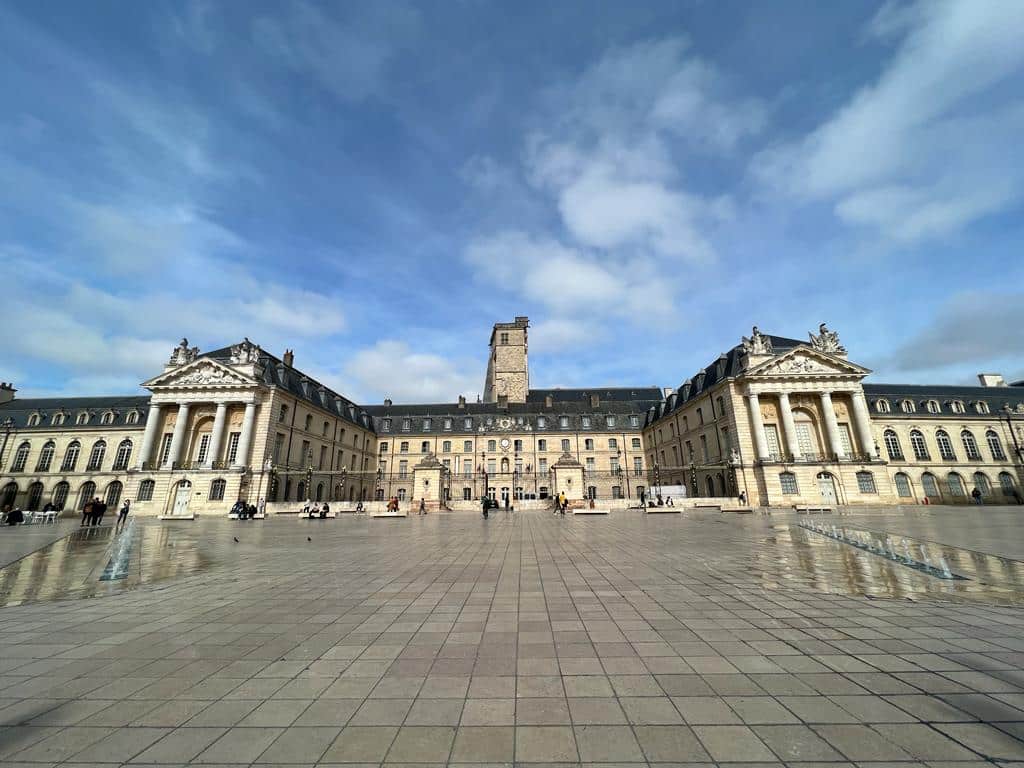
What to do in Burgundy?! That’s a great question, since the region is made up of several super charming little towns with fantastic food.
We spent 15 days in the region and picked a handful of main towns to visit, though you’ll find signposts along the road pointing out all kinds of attractions and quirks of each place along the way.
Getting to Burgundy
Burgundy is a region made up of small towns, so there’s no airport of its own — the simplest way in is through the Paris airport. From there, you have three transport options: car, train, or bus.
You can rent a car, which we found the best option and the one we chose, driving the 340 km between the small towns and paying just one toll, with the trip taking 3 to 5 hours depending on your destination.
Another option is the train, with prices varying between express and regional service, taking about 3 hours on average to reach Dijon. The last option, the bus, takes 5 hours but is the cheapest: between €15 and €25, depending on the company — Flixbus runs pricier at around €20, while Ouibus is cheaper at around €16.
When to visit Burgundy
The best time to visit Burgundy is during summer and spring, so May through September, since temperatures are mild enough for sightseeing. If you want to tour the region’s famous wineries, aim to go before September — after that, harvest season begins and most wineries close to visitors.
If you’d rather travel with fewer crowds, lower costs, and more time to properly enjoy the towns, the best window is fall, from September through December.
Which towns to visit in Burgundy
One of the region’s biggest draws is its famous wines and wineries, but the towns themselves are beautiful, and you can easily fit more than one into a single day. Here’s a map of the towns we visited.
Auxerre
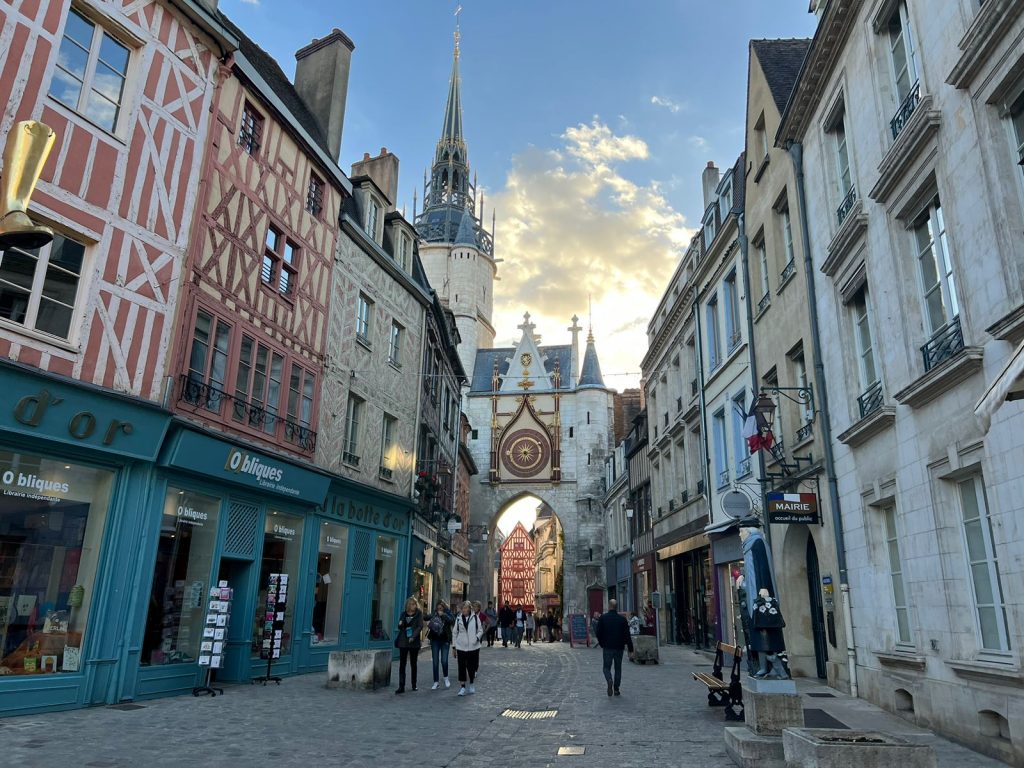
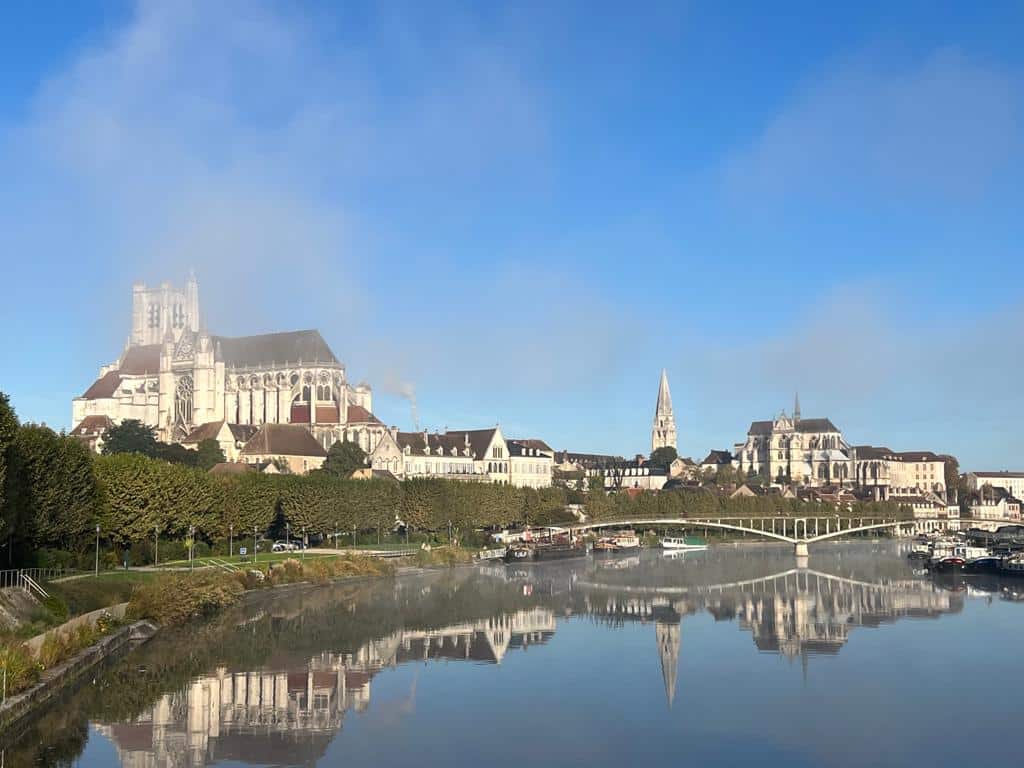
Auxerre is the first town you’ll hit along the route, and we’d recommend spending at least a full day exploring it, since the town is simply incredible, with its canal and art around every corner.
Here, you’ll find some of France’s oldest visual art, along with religious relics. You can see different works at the Cathédrale St-Étienne, the Abbaye de Saint-Germain, and the Église Saint-Eusèbe, all gorgeous and well worth visiting.
The town has 35 historic landmarks and three museums. One of those landmarks is La Tour de l’Horloge, the old clock tower marking one of ancient Paris’s gates, alongside a great food scene, with restaurants and bars all over town.
Dijon
Dijon is the region’s administrative capital, and it’ll win you over the moment you arrive. Explore the center, take in its beautiful architecture, and discover one of the country’s leading wine-producing areas.
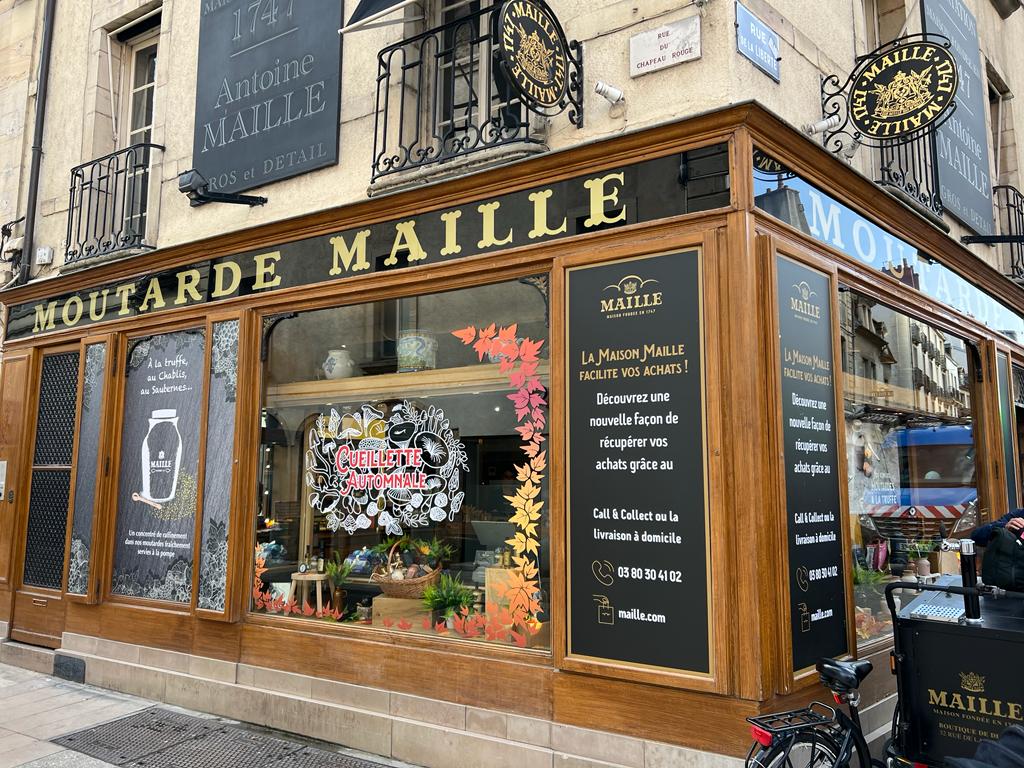
It sits 310 km from Paris and 200 km from Geneva and Lyon, making it a great, strategically located base to stay in. It’s world-famous for Dijon mustard, and it’s absolutely worth touring the factory and sampling mustards in the shops.
The biggest curiosity about the city is that its most important landmarks are marked by the Owl’s Trail. You’ll spot a small owl symbol on the ground next to a number. A guidebook explaining each stop is sold in several languages at any tourist information office for just a few euros.
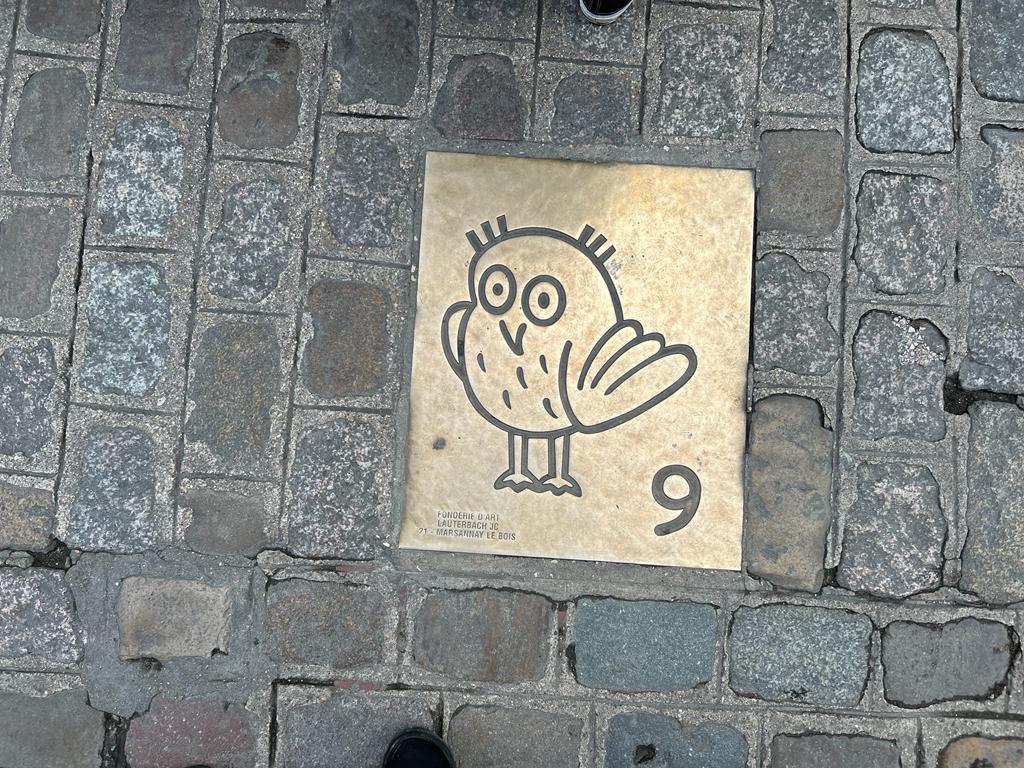
There’s also the option of a guided tour, but you can get a good feel for the city with just the map, so we ended up skipping the owl guidebook ourselves.
Visit the Arc de Triomphe, the Musée des Beaux-Arts, dating to 1787 and housed inside the grand Palais des Ducs, once home to the region’s dukes. There’s also the 13th-century Cathédrale Notre-Dame, older even than the one in Paris, along with the Les Halles municipal market with its great food options, the Église Saint-Michel, the Hôtel de Vogüé, and more.
Beaune
Beaune, Burgundy’s wine capital, has a charm all its own thanks to the walls surrounding the whole town. At night, there’s a beautiful light show, and it’s well worth a day trip.
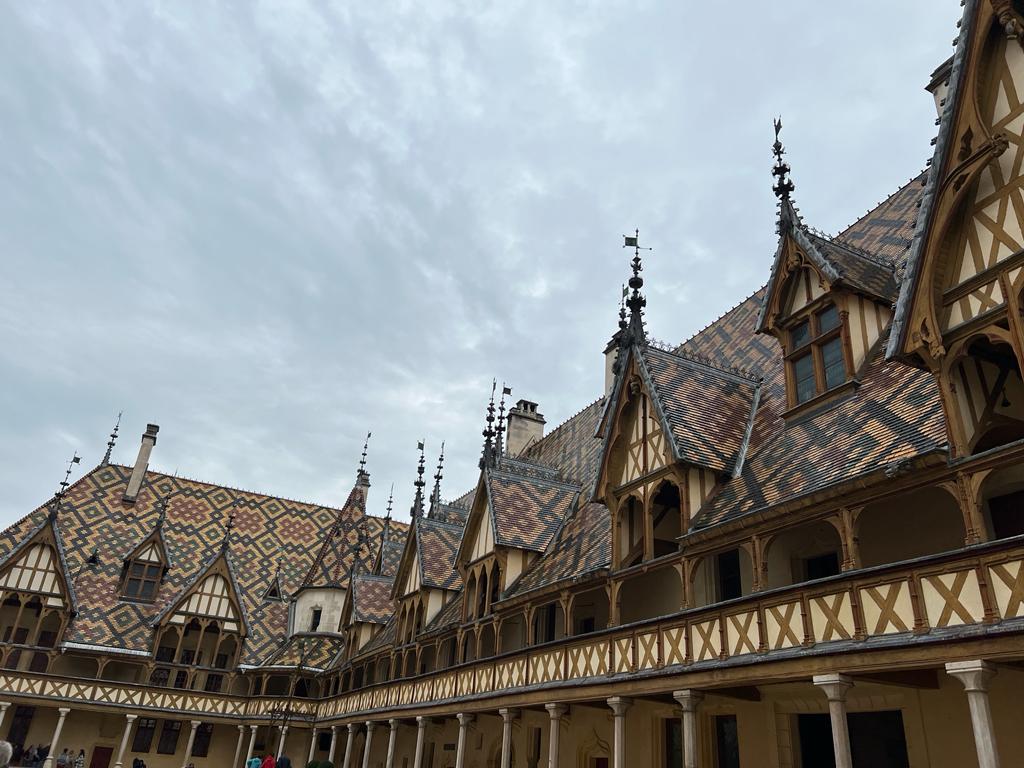
But the museum you can’t miss is the Hospices de Beaune — Musée de l’Hôtel-Dieu. It’s a hospital founded in 1443, with Gothic architecture, colorful tile roofs, and beautiful murals, along with religious and artistic works. It’s well worth grabbing the audio guide to understand the site’s history.
Beyond its own substantial wine production, Beaune sits strategically at the center of a great “belt” of vineyards and wineries known as the Côte d’Or (the golden coast).
South of Beaune lies the area known as Côte de Beaune, which generally produces softer, fresher-style wines. Some of the most important villages here — which also lend their names to the wines — are Pommard, Volnay, and Meursault.
Further north of town, on the way to Dijon, lies the Côte de Nuits region, producing more intense, complex wines, especially reds made from pinot noir grapes.
In Beaune, we made time for a wine tasting at Cellier de la Cabiote and toured the mustard production at La Moutarderie Fallot — both were incredible experiences, and tickets for either are sold at the tourist information office.
Vézelay
This is a village well worth spending a day in, with beautiful vineyards, fields, and medieval houses. Its biggest draw is the natural beauty of the site itself, like the “eternal hill” where the village sits. At the top of the hill stands the site of one of the most important moments in Christian history — the gathering point for the Crusades.
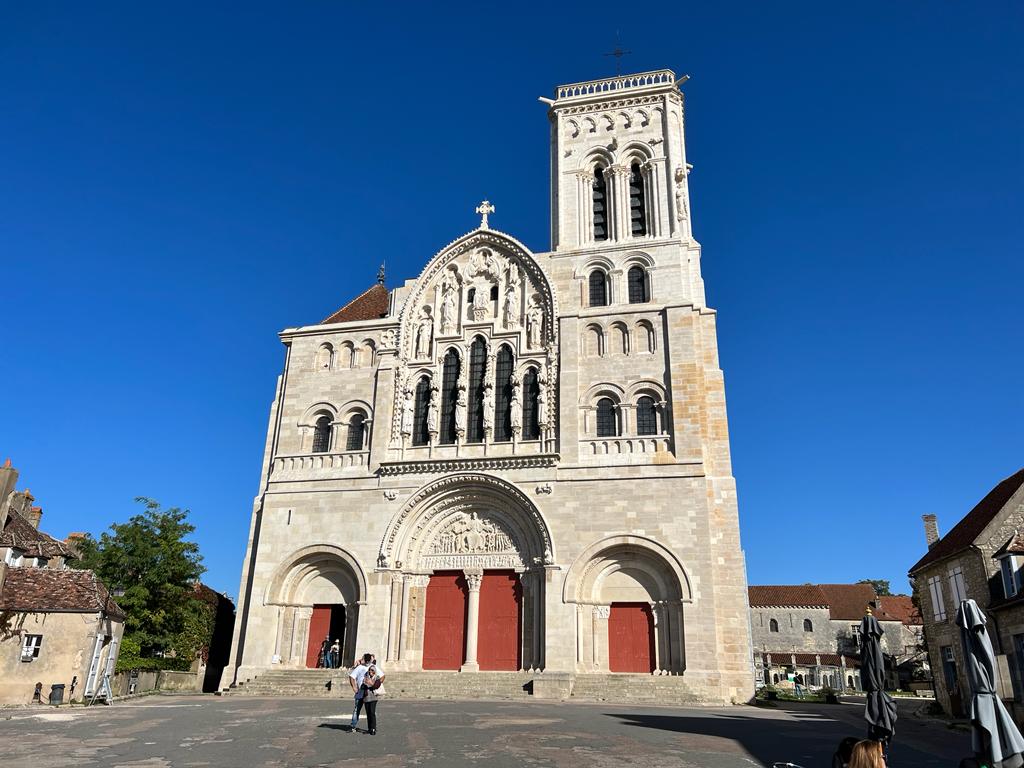
Vézelay is home to the Basilique Sainte-Marie-Madeleine, a Benedictine monastery. It holds relics believed to be those of Mary Magdalene, brought from the Holy Land and displayed here since the Middle Ages. It’s recognized by UNESCO as a World Heritage Site.
At the edge of town, where you’ll park your car, there’s an excellent restaurant worth recommending, Relais du Morvan — a great option for lunch or dinner.
Avallon
Avallon isn’t really a town to base yourself in — more of a stopover — but it’s well worth a visit.
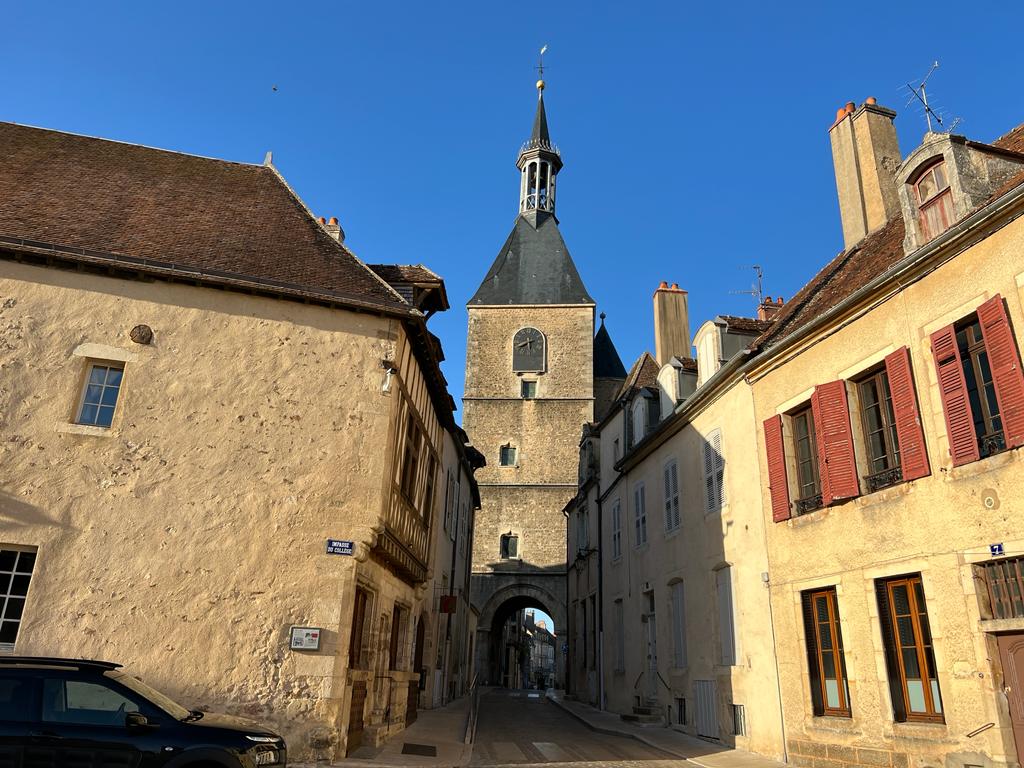
An imposing, ancient fortified town in the Burgundy region, Avallon sits on a granite outcrop between two gorges along the Cousin River.
The town endured successive wars against the Saracens, Normans, English, and eventually the French, all of which shaped Avallon’s defensive character.
Its main landmark is the Église Saint-Lazare, a 12th-century Romanesque church with two magnificent portals — the larger one carved with the signs of the zodiac, the labors of the months, and the musicians of the Apocalypse — and a beautifully decorated nave.
Joigny
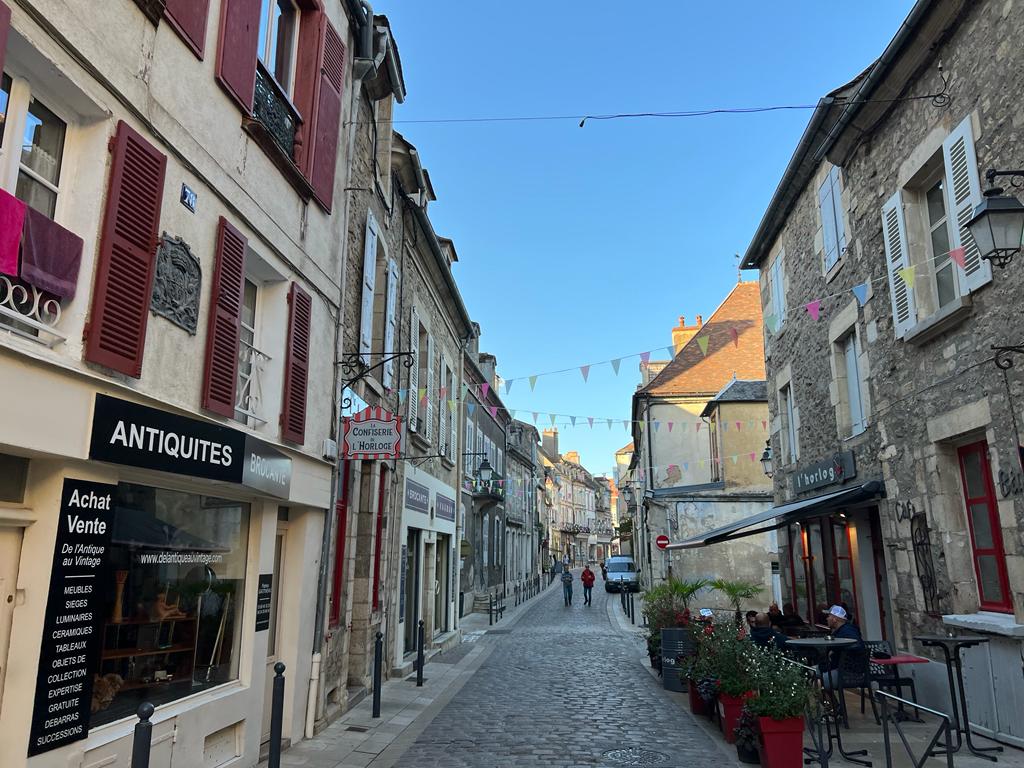
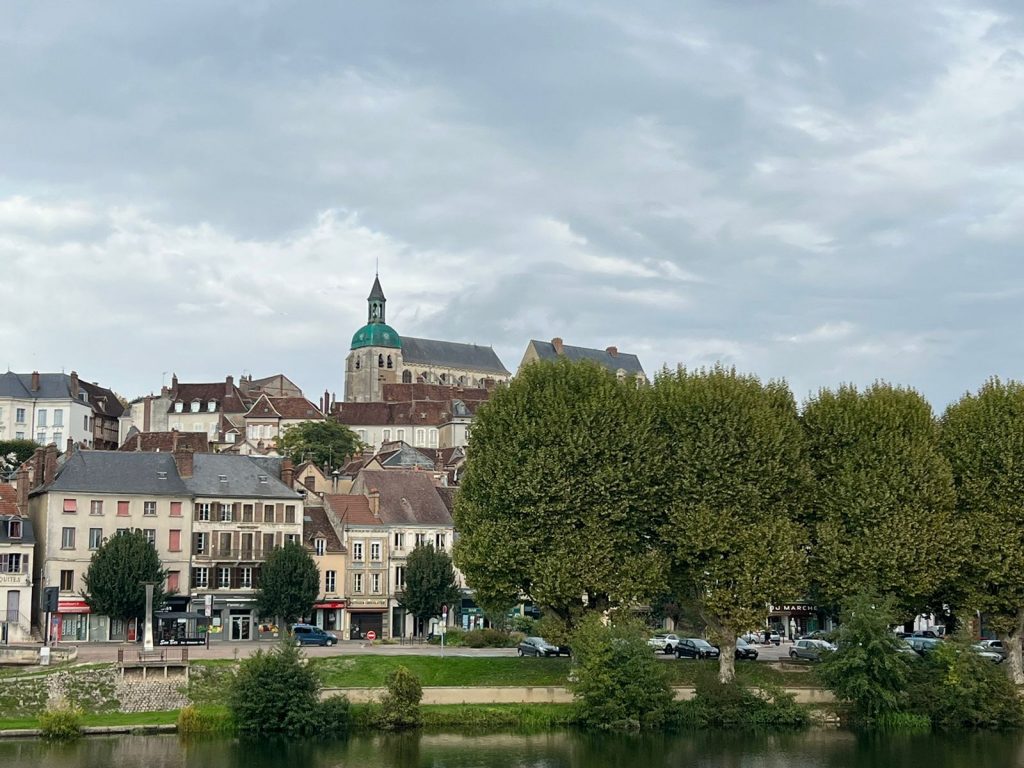
Less than two hours from Paris, crossing the bridge over the Yonne River drops you straight into a maze of alleyways lined with 16th-century monuments and façades — a genuine journey through history and art.
The Église Saint-Jean towers over the whole town. It’s been rebuilt several times over the centuries, most recently in the 16th century, following a fire in 1530. Construction wrapped up in 1596 under architect Jean Chéreau.
The Église Saint-Thibault, blending Gothic and Renaissance styles, was built between 1490 and 1529. Its main feature is, without question, the equestrian statue by sculptor Jean de Joigny.
The Église Saint-André, founded in 1080, is proud to house a Daublaine-Callinet organ, installed in 1842.
Between one church and the next, Béatrice showed me the Maison du Pilori, dating to the 16th century. Carved wooden pillars, and a façade decorated with green, blue, and yellow ceramic and glazed tiles that stand out from the rest of the town’s landmarks.
Grottes d’Arcy-sur-Cure
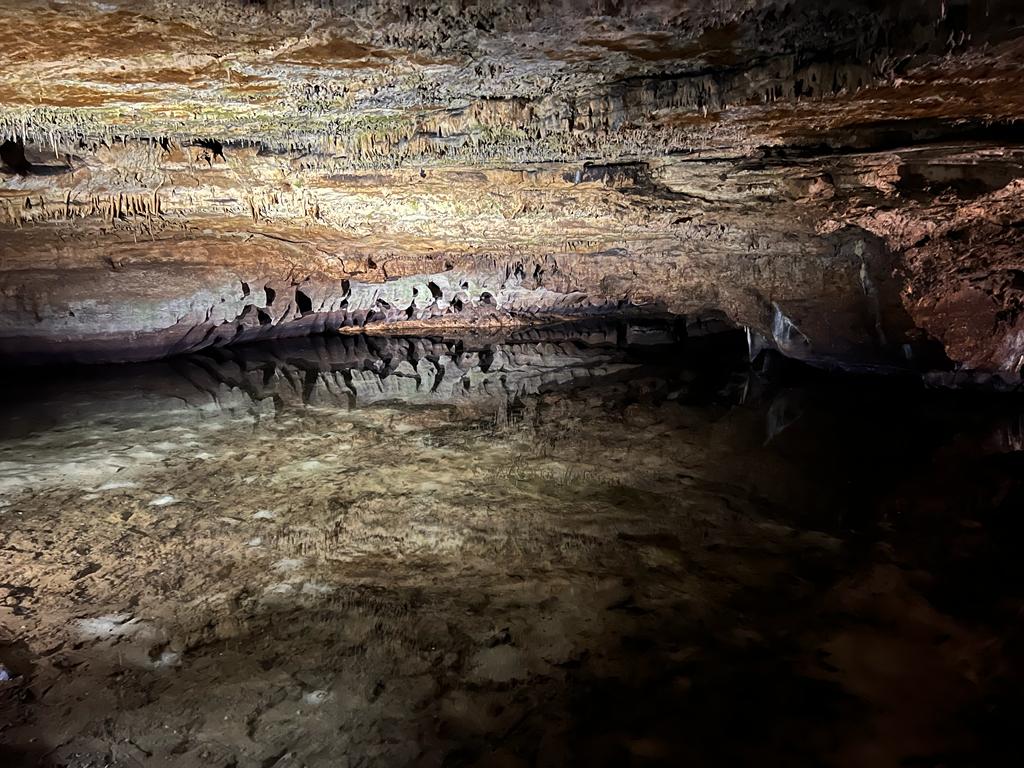
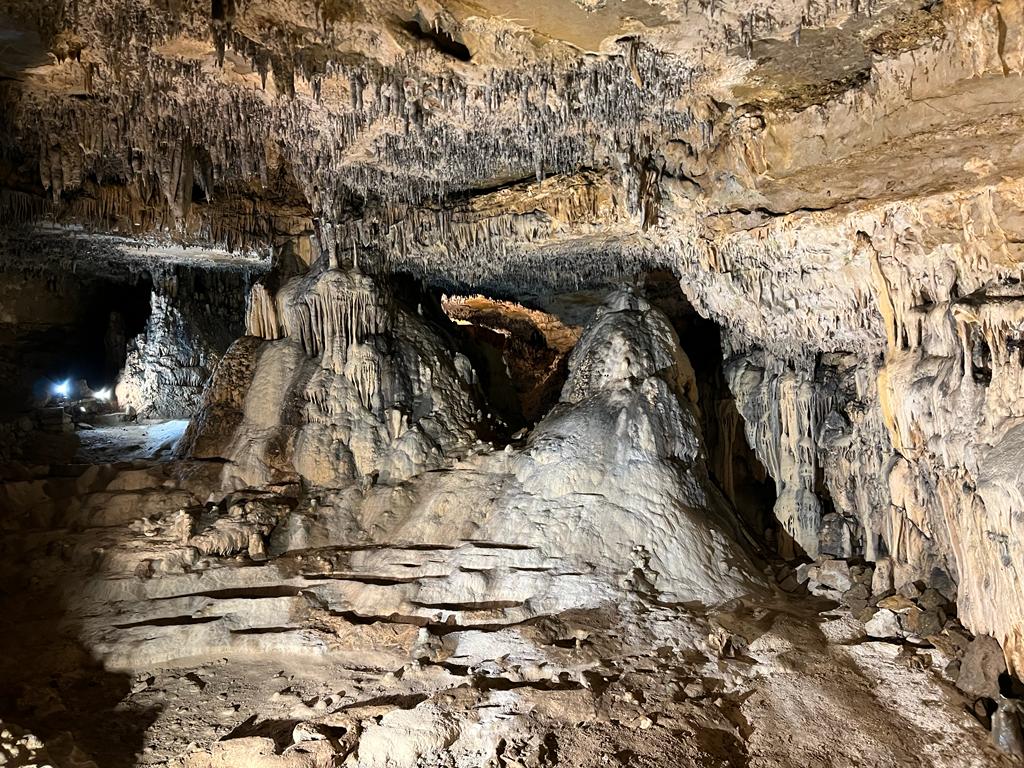
This is a cave system along the route between Auxerre and Avallon, in the Yonne département. It’s absolutely worth visiting, and we were genuinely captivated by the tour. Visits are guided in both French and English by park staff, and there’s an admission fee.
It’s a network of 11 cavities carved out by the Cure River. The Grande Grotte, the only one open to visitors, is the oldest decorated cave in the world after the Chauvet Cave.
Its 28,000-year-old cave paintings, mostly in red, are divided into more than 140 individual images, including sixty animals (mammoths, bears, wild cats, birds, and more). There are also eight negative handprints and various symbols.
Not all the paintings are open to the public, but the ones you do get to see are genuinely striking.
What to eat in Burgundy
Burgundy (Bourgogne, in French) is another major wine-producing region, considered the second most important in France and one of the most prestigious in the world — it’s also considered France’s culinary capital.
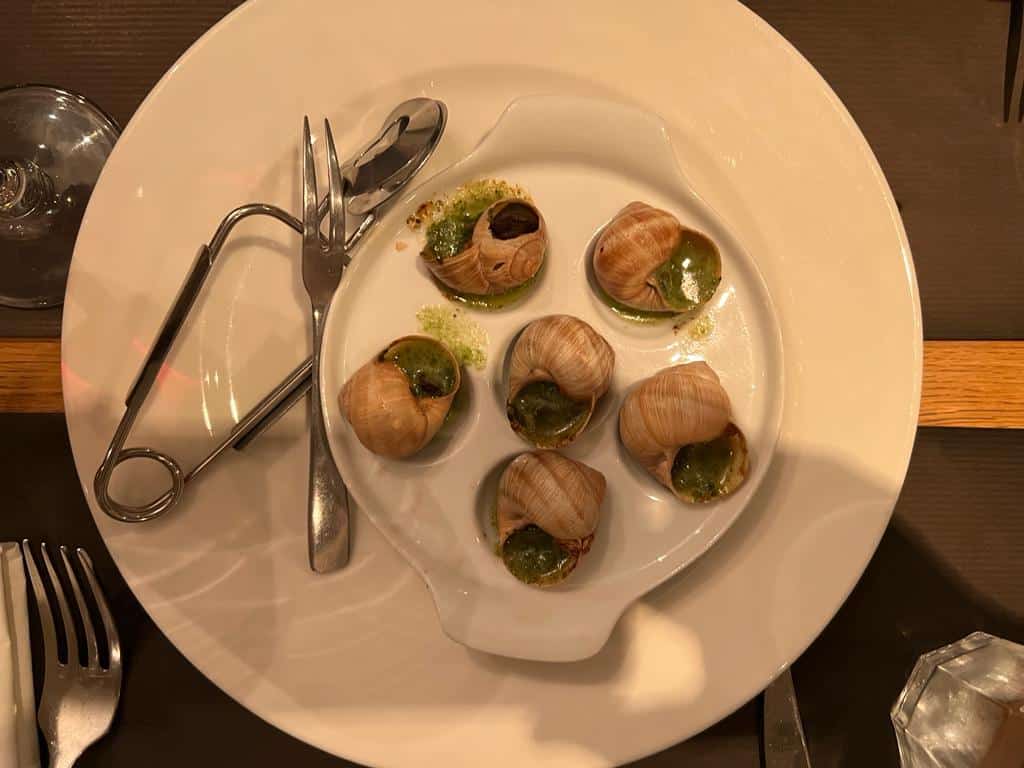
To start things off in the region, we’d recommend escargots à la bourguignonne, since the seasoning is simply wonderful. Another good option is gougères, small choux pastry bites with gruyère cheese, cured ham, and rosette du Morvan sausage. There’s also jambon persillé, ham set in a terrine with a white-wine-flavored aspic.
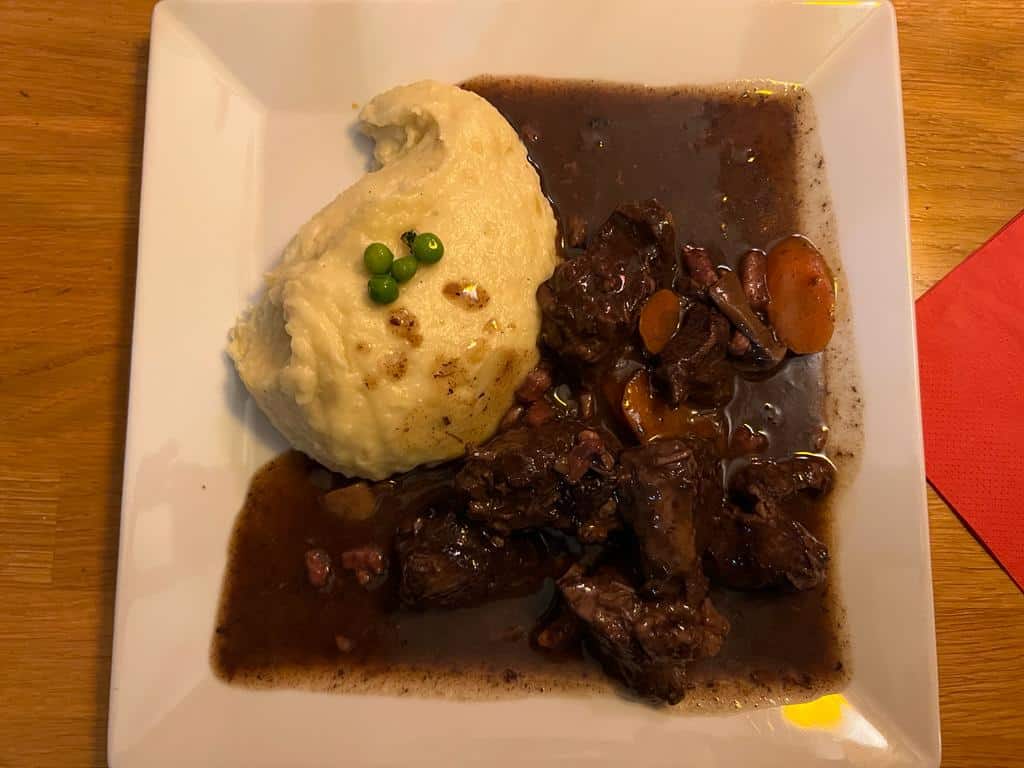
For a main course, we’d first and foremost recommend boeuf bourguignon, essentially beef stewed with wine, onions, mushrooms, and bacon — a French classic. It’s a lot like Brazilian picadinho, but with a sauce that carries a much stronger flavor thanks to the wine.
And of course, don’t forget to try Dijon mustard.
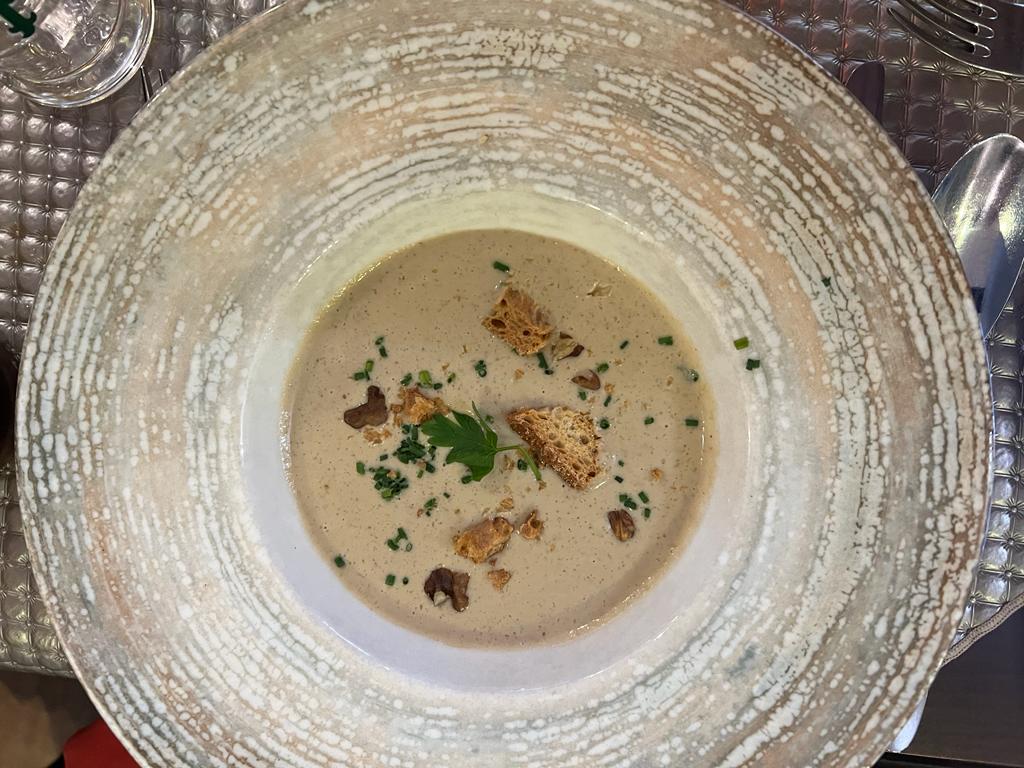
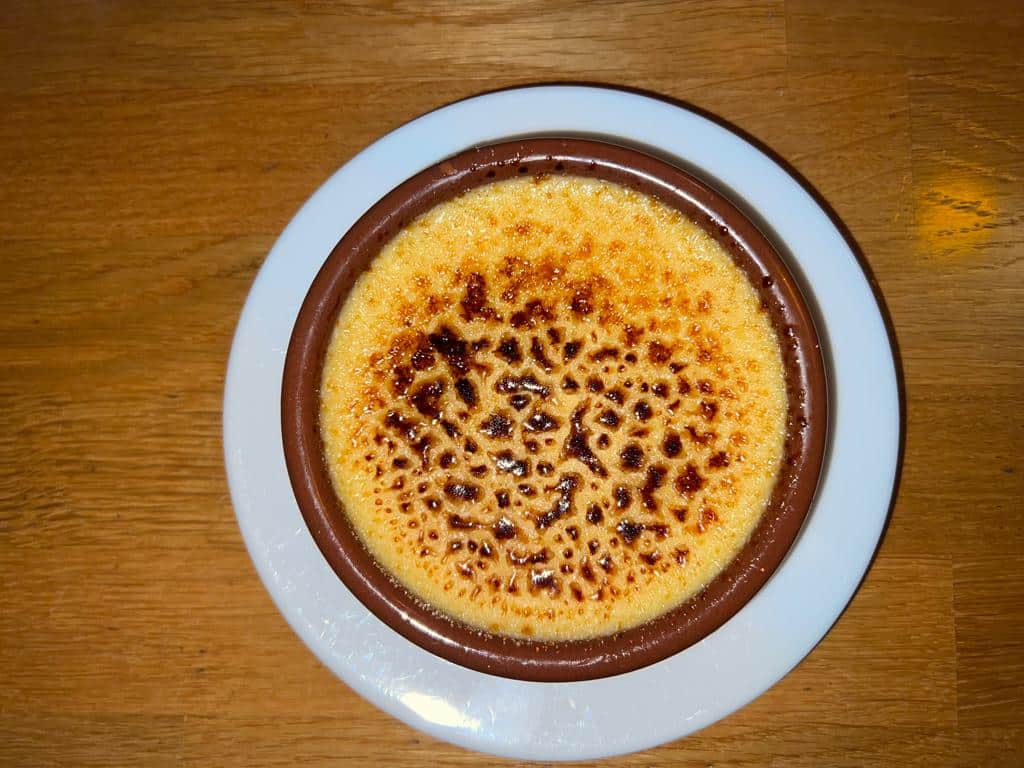
A couple more things worth calling out from French cuisine: the onion soup, which is simply incredible, and the classic dessert, crème brûlée.
Read more about our trip in What to Do in Paris.
Read the original version in Portuguese on A Bela e o Bigode.