What to Do in Morretes, Paraná: A One-Day Trip
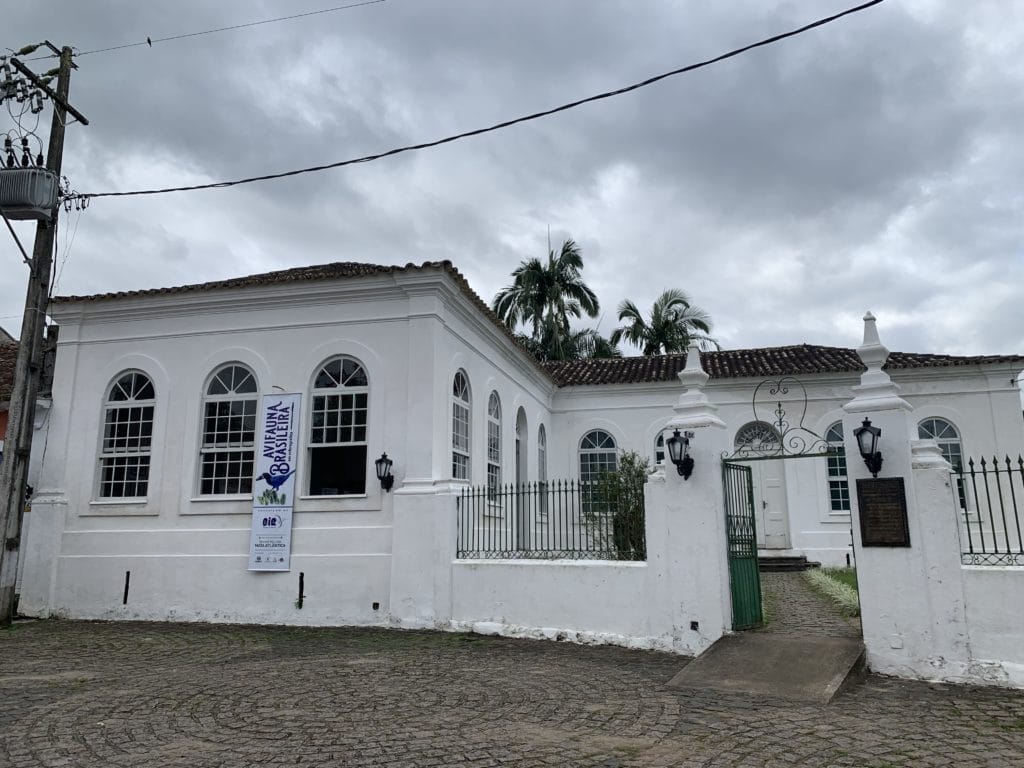
Morretes was founded in the 18th century, at the foot of the Serra do Mar, along the banks of the Nhundiaquara River. It sits about 70 km from Curitiba, roughly a 1 hour 30 minute drive. Morretes has, without question, a small, charming historic center. The town also captivates visitors with its colonial houses, cobblestone streets, and several excellent restaurants.
When we visited, we took a van there and returned by train, through a company called Jyulitur, which we’ll describe below.
History of Morretes
The city of Morretes’s first residents were adventurers and prospectors who came from towns in São Paulo state, starting before 1646, with the goal of settling the region. Between 1648 and 1653, prospectors discovered gold deposits in the area, mainly in the Pinto, Guarumbi, and Cubatão rivers. It was founded as a village in 1721 and became a municipality in 1841.
Without question, Morretes’s growth in the 19th century came entirely from its position between the coast and the highlands. But once the Estrada de Ferro do Paraná railway was built, Morretes went into decline, and activity at the yerba mate mills ground to a halt. For years, much of its commercial and industrial activity sat in deep recession, and today the economy runs on tourism, likely hit hard by the pandemic too.
The Morretes Train
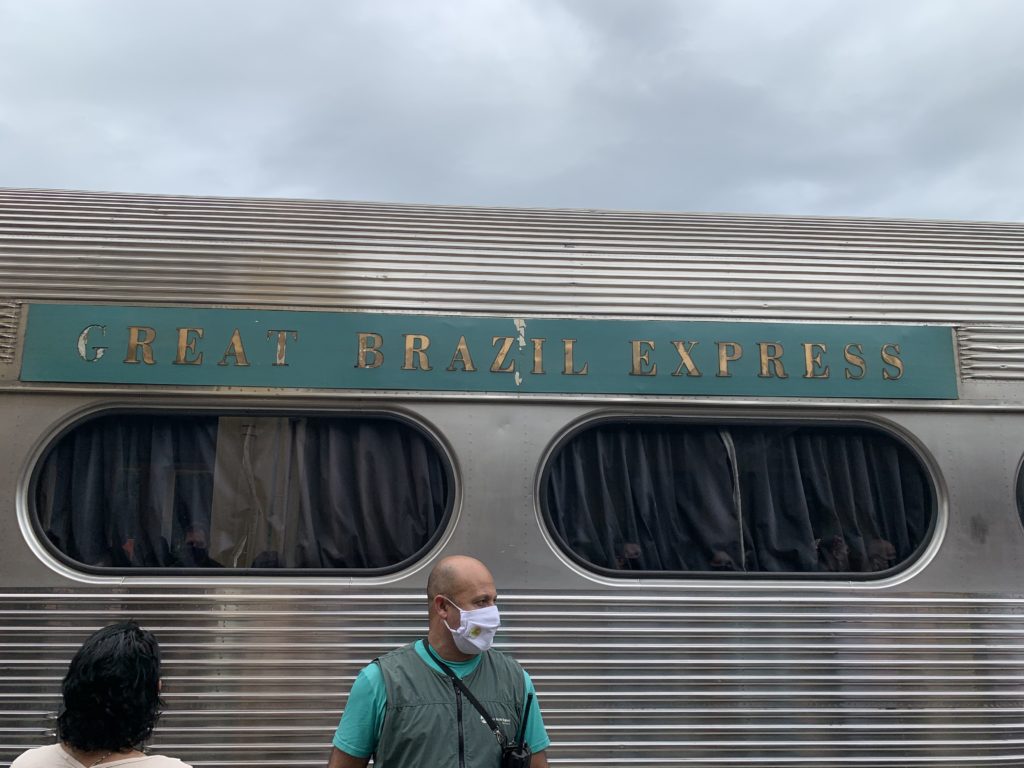
Without a doubt, this is the main attraction, offered by the company Serra Verde Express, running through the Serra do Mar along the Paranaguá-Curitiba railway.
The idea for the train came from Dom Pedro II, and it opened in 1885, inaugurated by Princess Isabel.
It offers beautiful scenery along the way, with mountains, waterfalls, a sanctuary, bridges, thirteen tunnels, and countless curves.
The trip averages three and a half hours, though the exact time depends on how many stops are needed. These are technical stops, made whenever the train needs to pass another one coming the other way.
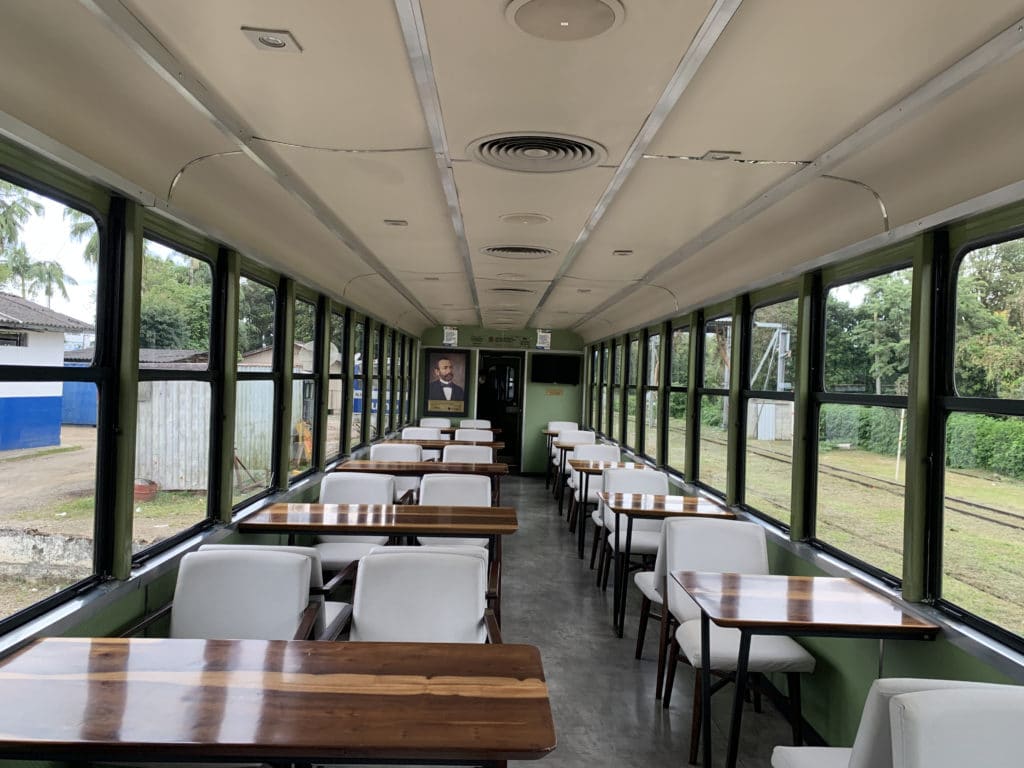
Ticket prices range from R$135 to R$435, depending on which car you book — just to give you an idea, we rode in the Barão de Cerro Azul car.
Exploring Morretes’s Historic Center
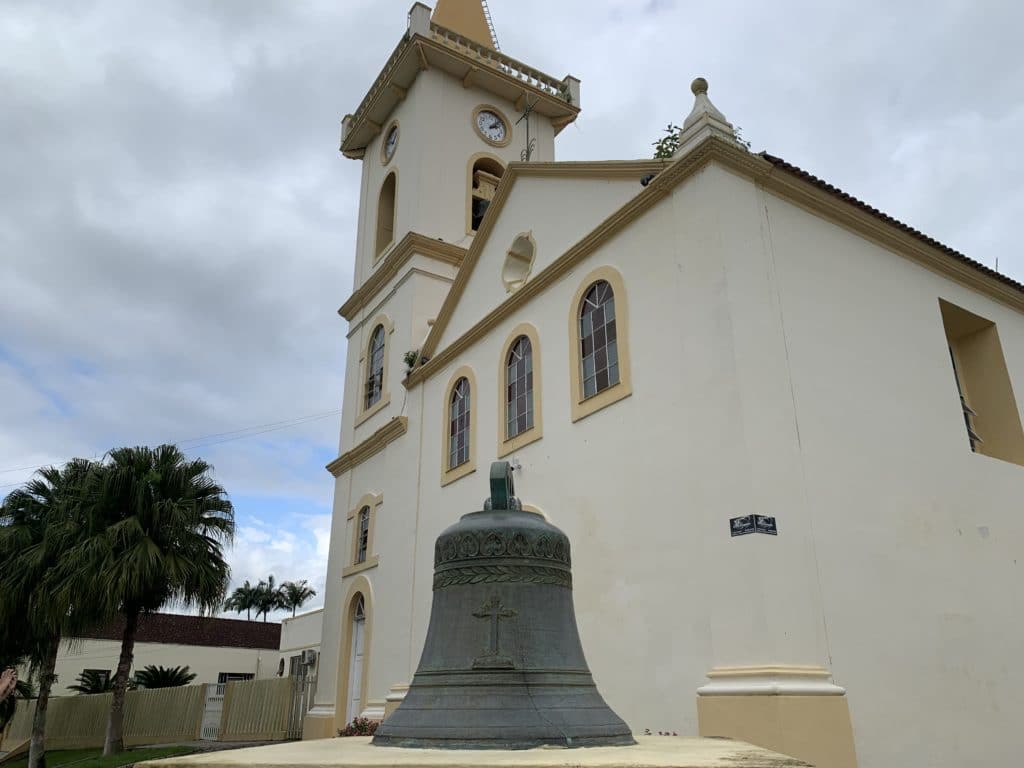
Igreja Matriz Nossa Senhora do Porto
A simple church, located at the highest point in town — construction began in 1812, on the site of an earlier chapel, though it wasn’t completed until 1850. It was built with only one tower, to avoid paying additional taxes to the Vatican, with plans to build the second tower once finances improved.
The Jesuit Cross in front of the church marks the end of the 19th century.
The Cracked Bell was a gift from Dom Pedro II, and it was never installed because of a crack running through it. It bears an imperial coat of arms, which is why it was never discarded.
Marco Zero de Morretes
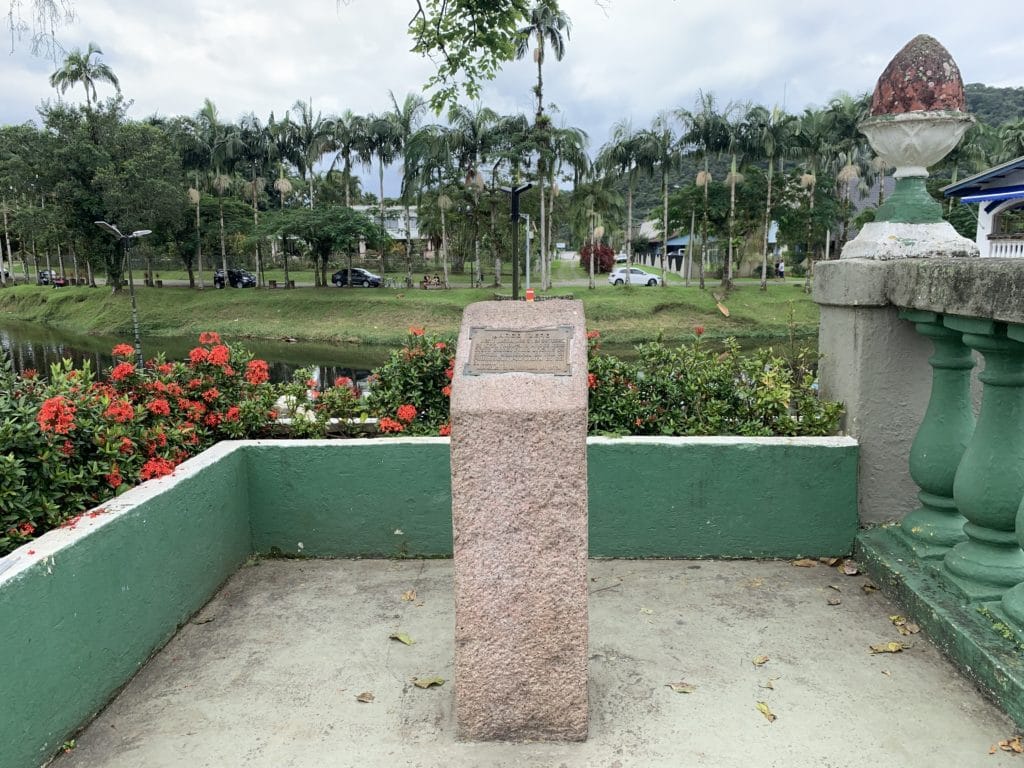
Morretes’s Marco Zero (Ground Zero marker) sits on Rua Coronel Rômulo José Pereira, 216, near the town’s first building, on the riverbank. A family was designated to live here in 1721, but the marker itself wasn’t placed until October 31, 1733.
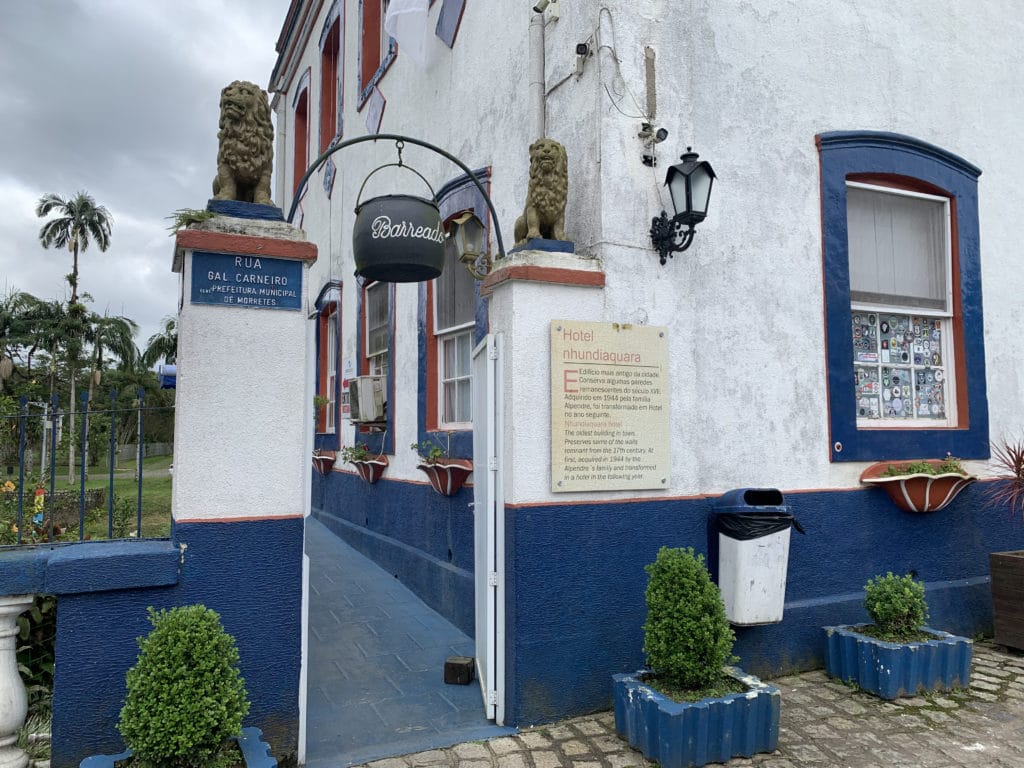
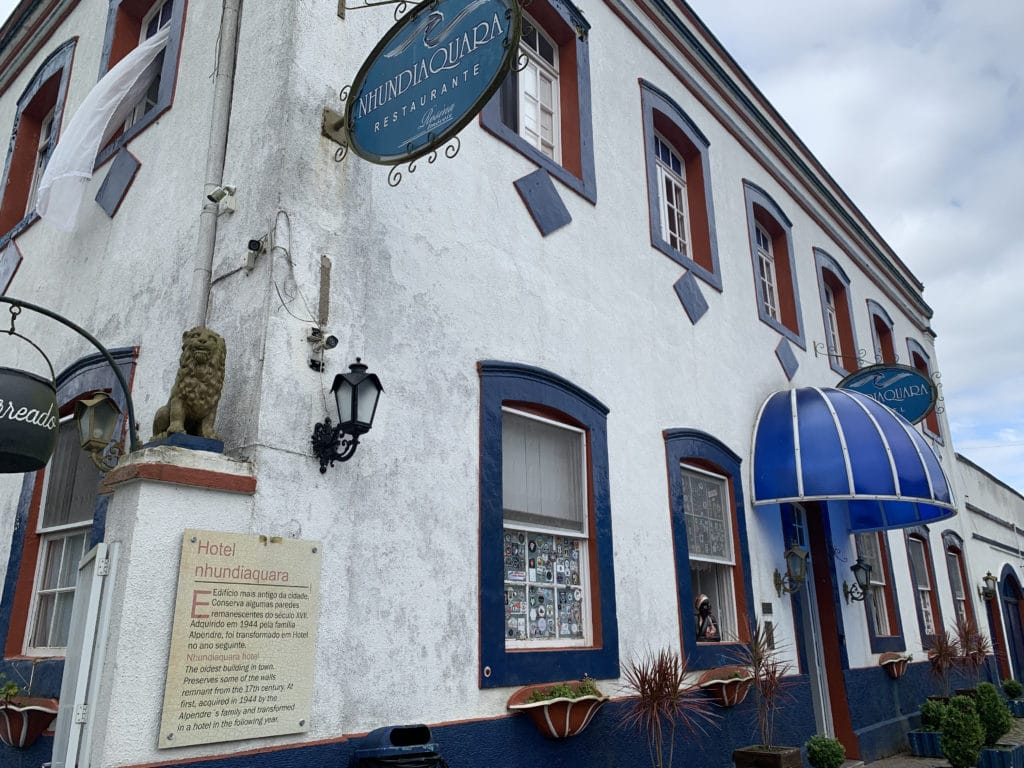
Hotel Nhundiaquara
This is the town’s oldest building, with walls still standing from the 17th century. In 1944, the Alpendre family bought it and reopened it as a hotel in 1945. Today, it operates as both a hotel and restaurant.
The name comes from Tupi-Guarani, where “nhandiá” means fish and “quara” means hole, together meaning “fish hole.”
It was also one of the first buildings in Morretes to have a modern sewage system.
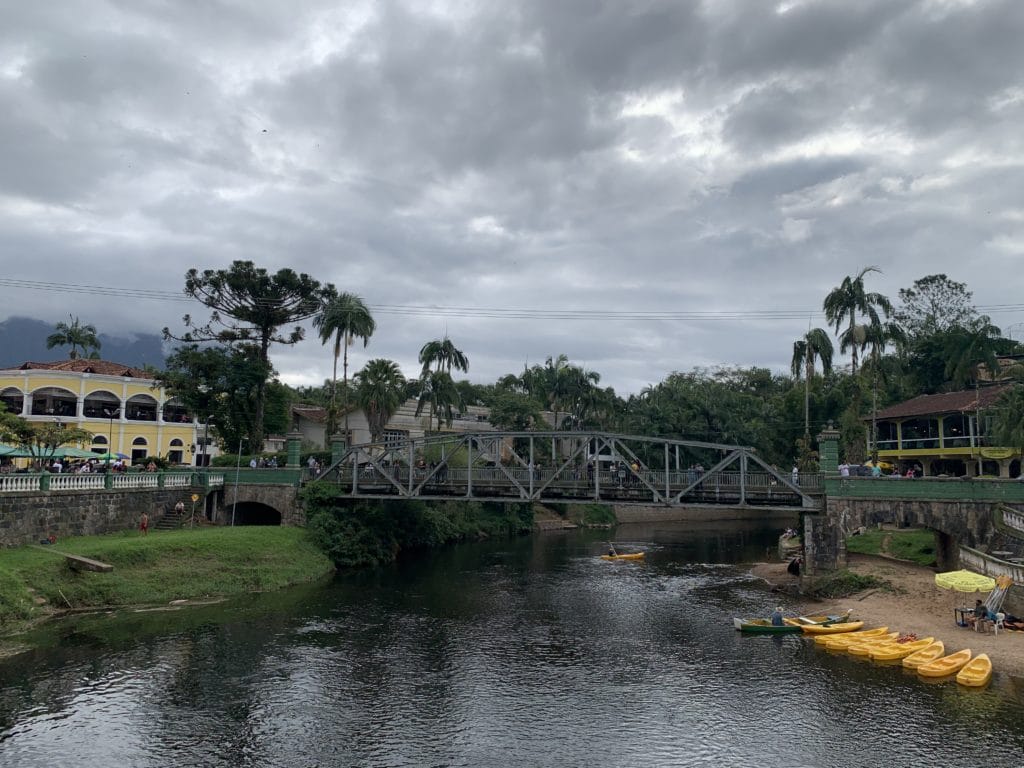
Ponte de Ferro, or Ponte Velha
Built in Germany, shipped over in pieces, and assembled on site in 1912. It has space for cars down the middle and pedestrian walkways on either side.
Historic Townhouses
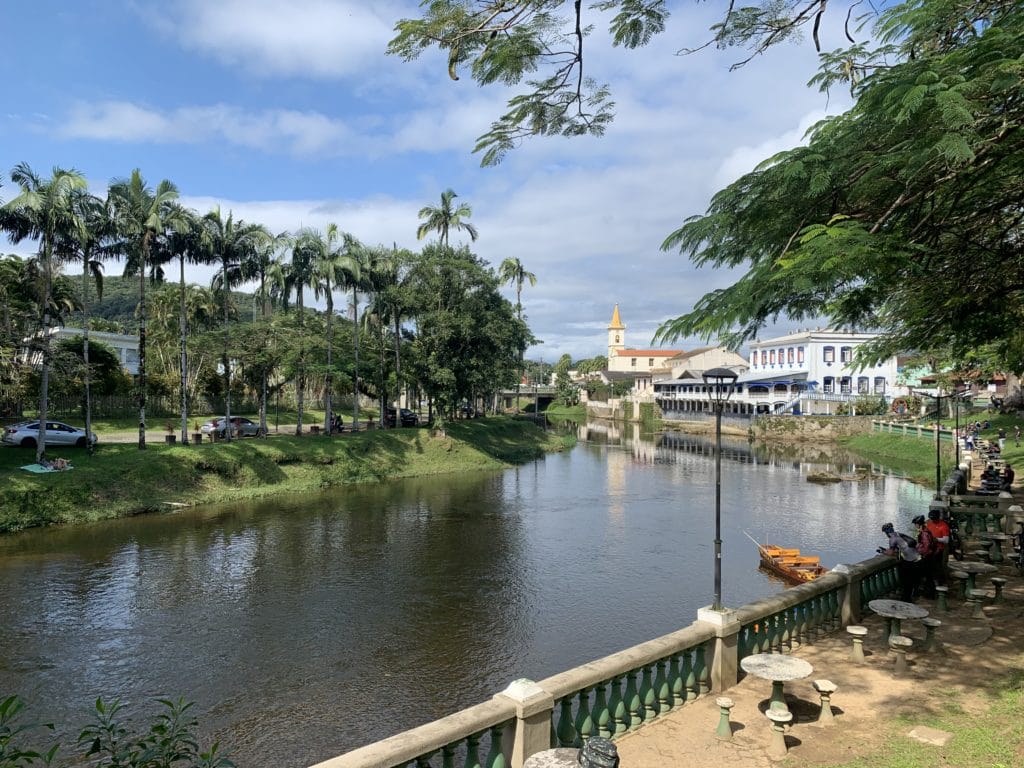
Along the Nhundiaquara River, there are dozens of historic townhouses now home to restaurants, ice cream shops, and souvenir stores, all genuinely charming along the cobblestone street, which is closed to car traffic.
Feirinha de Morretes
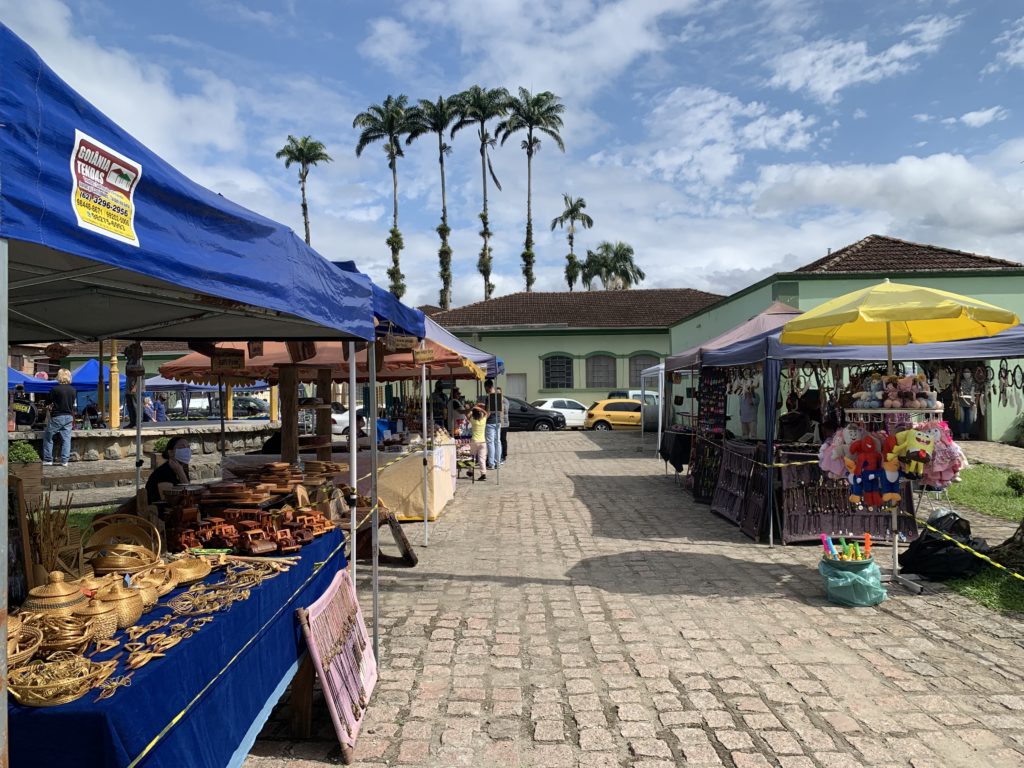
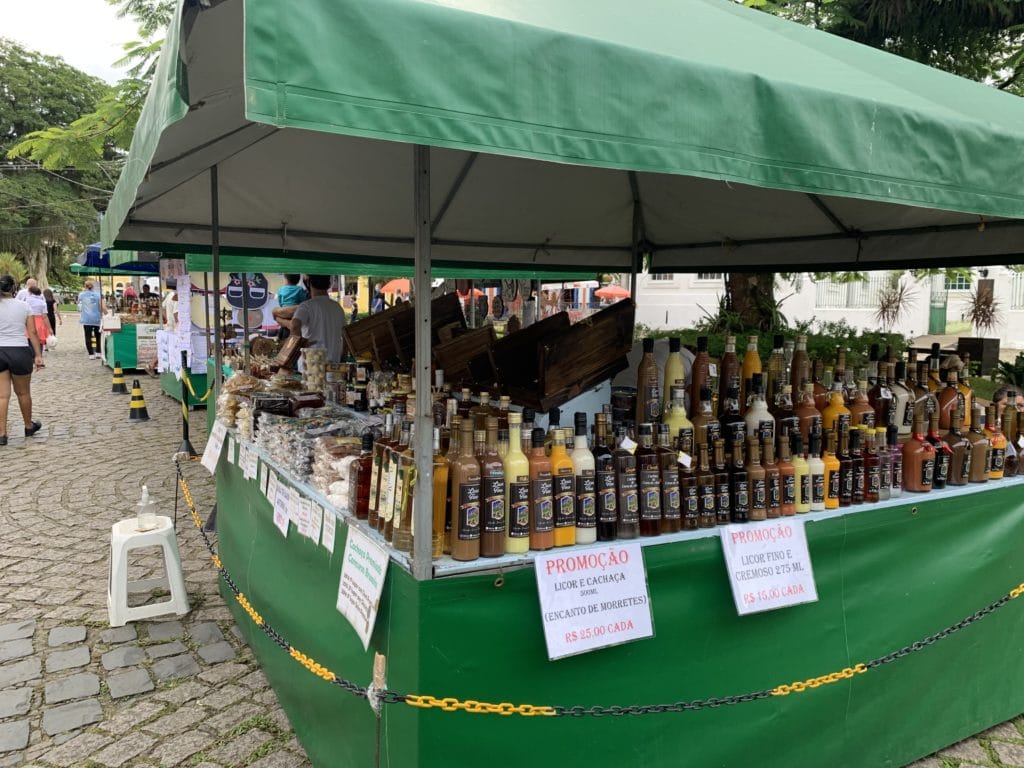
Walking through Largo Dr. José dos Santos Pereira Andrade, right by the river, you’ll come across a small market selling traditional colonial-era products, like cachaças, spices, banana candy, and handmade goods.
Kayaking or Boating on the Nhundiaquara River
You can also rent a kayak to paddle along the river, or hire a gondola-style boat for a ride down the river while taking in the scenery. The gondola costs R$15 per person for 20 minutes, and children over age 3 pay R$10.
Eating Barreado in Morretes
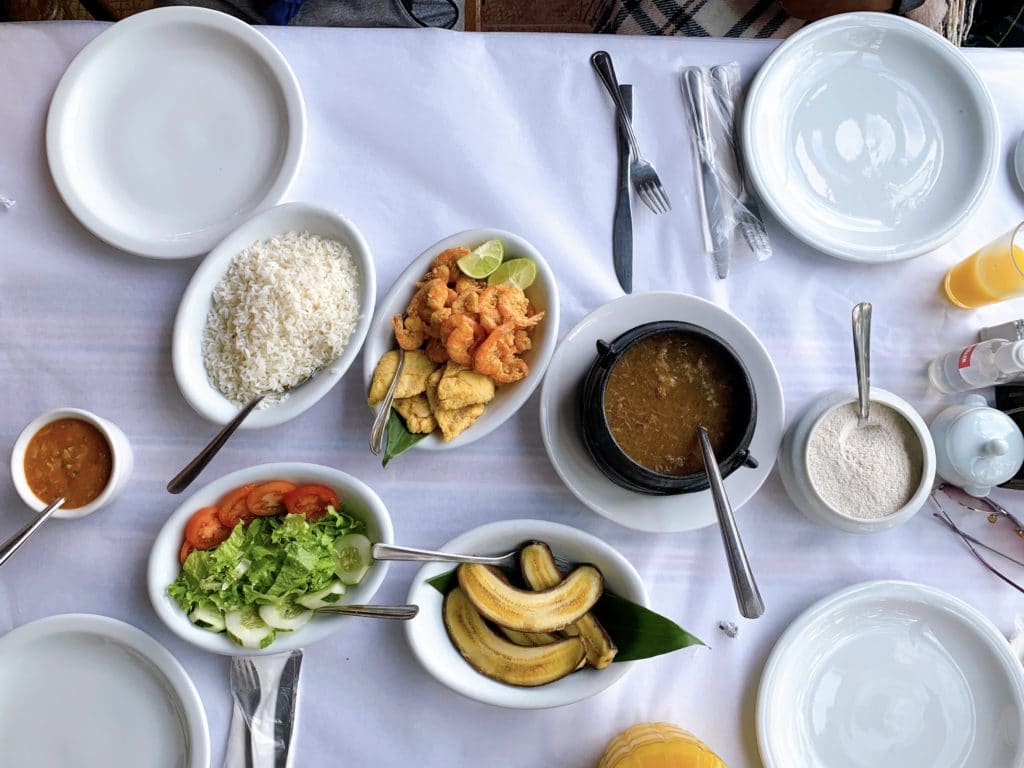
It’s impossible to visit the town without experiencing the local barreado culture, which resembles a kind of slow-cooked pot roast, and there are several theories on its origins. That said, the most widely accepted version traces it back to the Portuguese habit of making well-seasoned meat stews, combined with the Azorean tradition of cooking meat in the ground, and Indigenous customs of mixing in manioc flour.
The dish was originally served to farmers in the region before they headed back to their farms, and it later became a staple at those same farms, eventually finding its way to festival tents, where fruit like orange and banana started being added alongside the pirão.
Barreado gets its name because the meat is slow-cooked for hours in a mixture that includes ash, manioc flour, and water, which is used to seal, or “barrear,” the edge of the pot. The meat cooks for 12 to 24 hours over a wood fire. And we absolutely loved it.
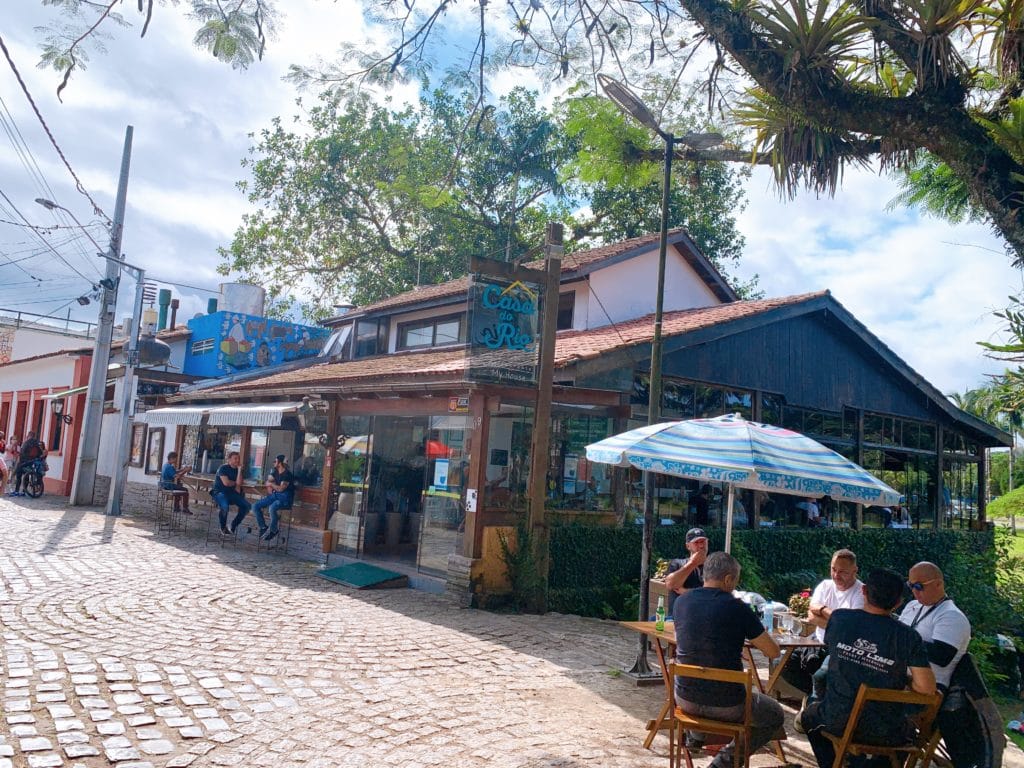
We ate at Casa do Rio, a beautiful, pleasant restaurant with a river view — though if we hadn’t already seen how barreado is prepared in Paranaguá, we never would have understood how it’s made. Still, the food was really tasty.
Visiting the Town of Antonina
It’s worth visiting this town too, though the first time we went, we only stopped by the church and took a photo at the port. In short, we made a brief stop at the Matriz Nossa Senhora do Pilar church, which has a view over the port, but it’s worth setting aside a full day to really explore Antonina.
Did you enjoy this? Then learn more about our trip in Estrada da Graciosa.
Read the original version in Portuguese on A Bela e o Bigode.