What to Do in Lisbon
Lisbon, Portugal’s capital, is a thoroughly modern city, and well worth visiting for its history, monuments, shopping, and restaurants.
We were on our honeymoon, and since our flight was with TAP, we spent a quick day in the area — here’s what we managed to see, even with so little time.
The easiest way to explore the city is neighborhood by neighborhood, taking in the best of each area, since the sights themselves are pretty spread out.
Belém
This is where you’ll find Lisbon’s postcard monuments: the Torre de Belém (Belém Tower), the Mosteiro dos Jerónimos (Jerónimos Monastery), and the Padrão dos Descobrimentos (Monument to the Discoveries). All three are close together, connected by a short walk.
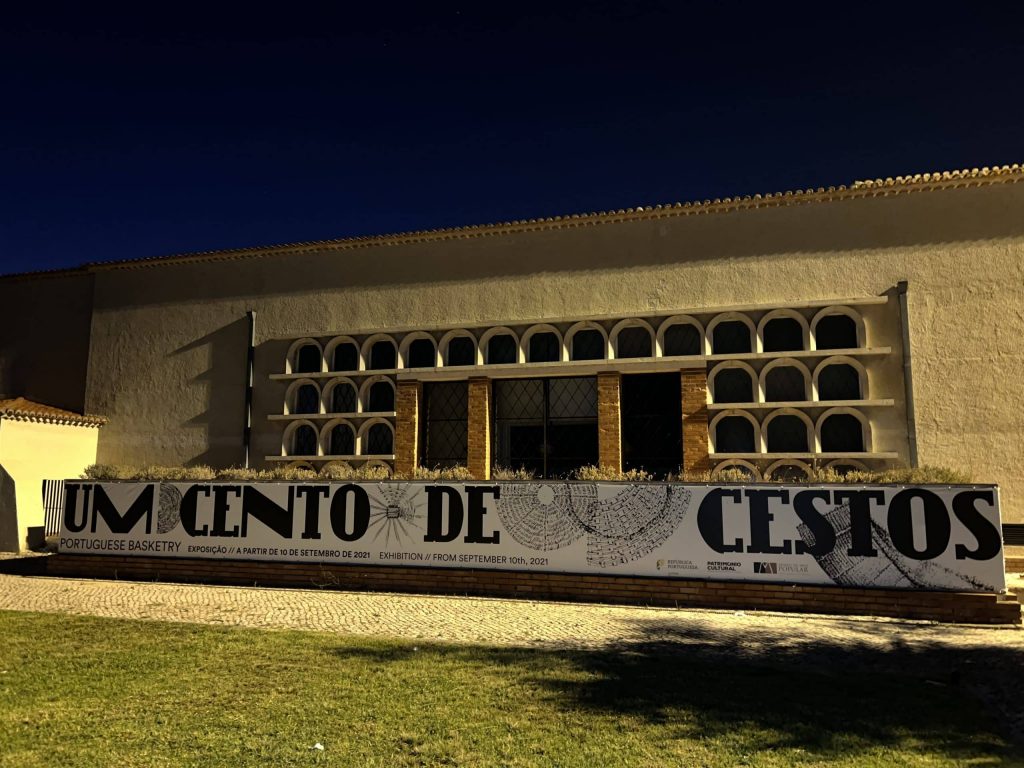
The neighborhood also has some lesser-known attractions worth a visit: the MAAT — Museum of Art, Architecture and Technology, with its striking contemporary building, plus the National Coach Museum, the National Basketry Museum, the Naval Museum, and the Calouste Gulbenkian Planetarium.
In the area, there’s a restaurant serving Pastéis de Belém, where you can try the most authentic Belém custard tart in the world, right across the street from the Jerónimos Monastery — though we’d already had a custard tart in Chiado and were pretty full by that point.
Mosteiro dos Jerónimos
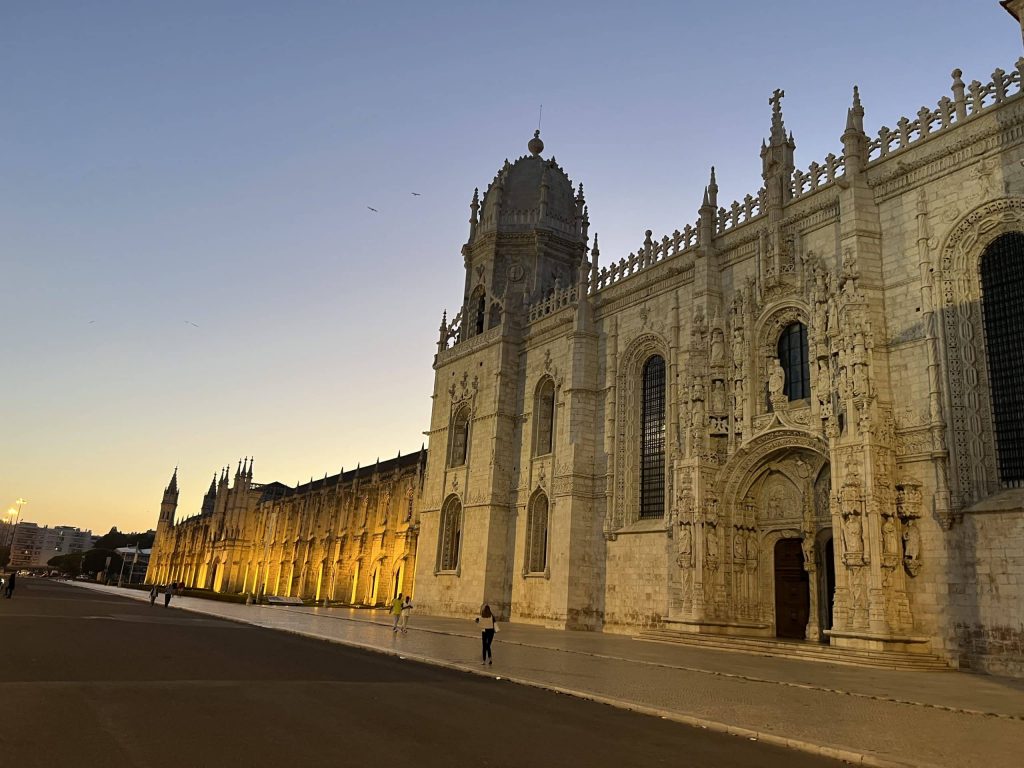
Considered a jewel of Manueline architecture, the building is imposing from the outside and packed with detail and history inside. It’s also where the tombs of Fernando Pessoa, Luís de Camões, and Vasco da Gama are located.
We’d recommend touring the monastery, since the interior is genuinely fascinating, especially its stunning cloister — but we arrived in the area at night and weren’t able to go in ourselves.
Torre de Belém
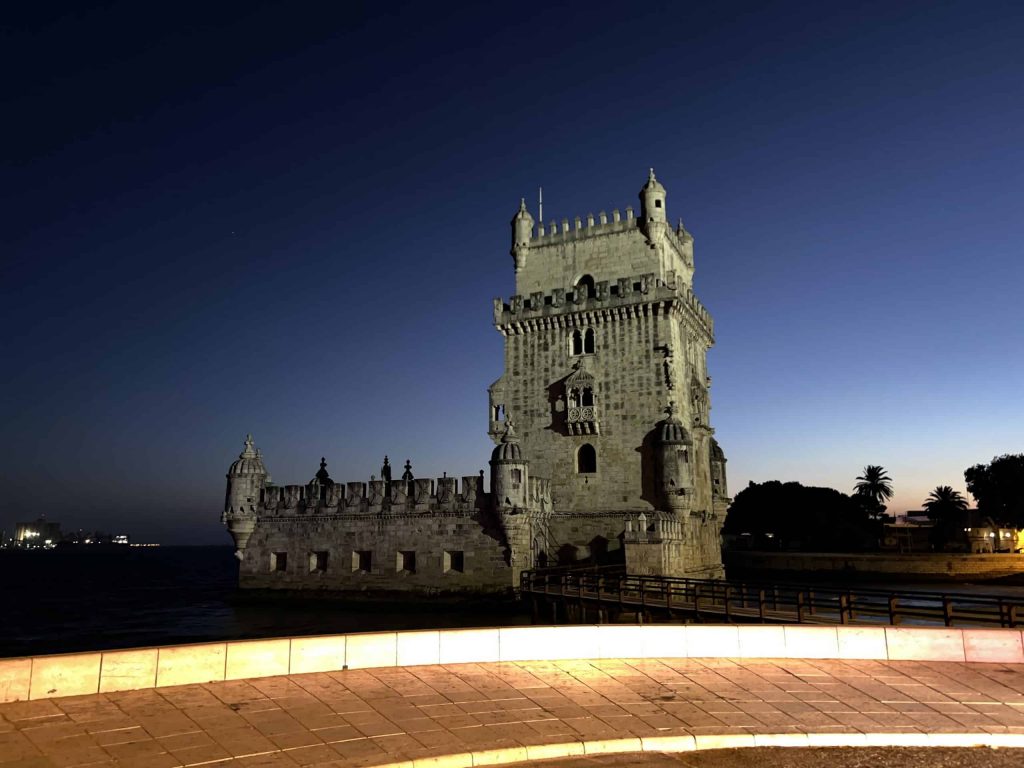
Built in 1520 to defend Lisbon from potential invaders, the Belém Tower has served over the years as a prison, a customs house, and eventually a lighthouse, before becoming one of Lisbon’s biggest postcard images. Depending on the day, the line to get in can be long, but you can buy tickets online through this link.
Padrão dos Descobrimentos
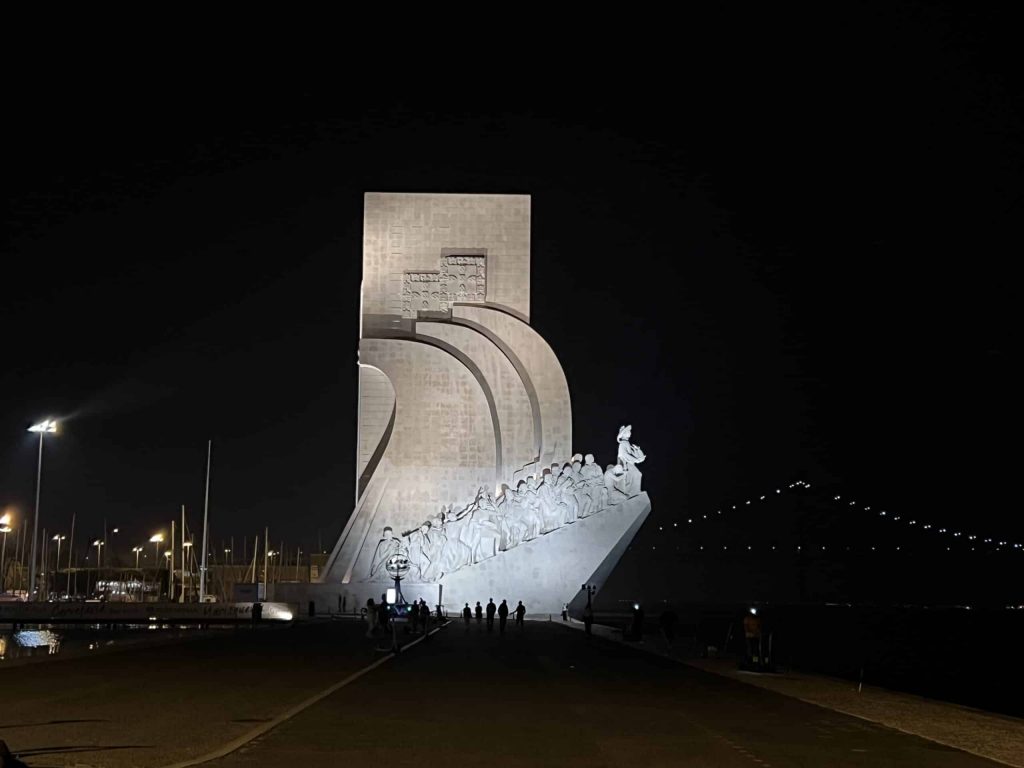
This monument, dedicated to Portugal’s Age of Discovery, stands on the banks of the Tagus River. It honors not just navigators like Vasco da Gama and Pedro Álvares Cabral, but also the poet Luís Vaz de Camões. You can climb to the top of the monument — tickets through this link — for a sweeping view over the Belém neighborhood and the Tagus. It’s a great spot for sunset.
Downtown Lisbon
Steeped in history, bars, and restaurants, downtown has plenty to see and taste, especially if you walk through Rua do Chiado, Avenida da Liberdade, and the shopping district.
Praça do Comércio
Known locally as Terreiro do Paço, Praça do Comércio sits right on the banks of the Tagus, and it’s genuinely beautiful, with restaurants tucked beneath the old buildings that once served as royal residences and now house government offices and hotels. The most famous restaurant here is Martinho da Arcada, once a regular haunt of Fernando Pessoa.
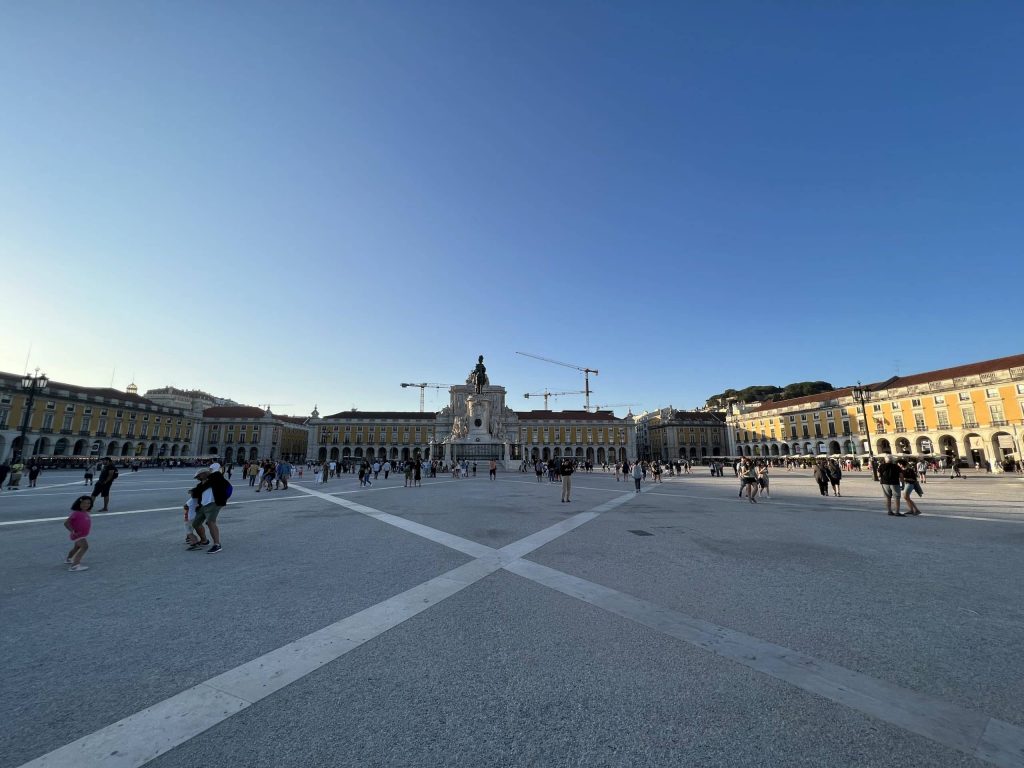
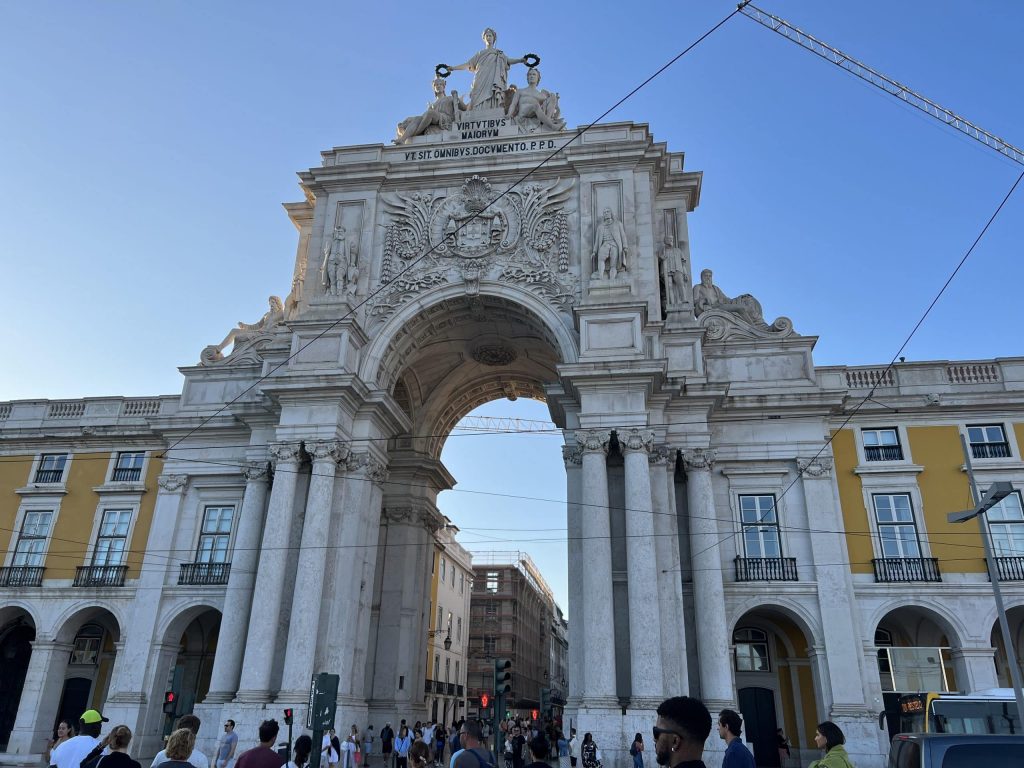
Arco da Rua Augusta
In the same square, you’ll find the Rua Augusta Triumphal Arch, construction on which began in 1759 and wrapped up in 1873. You can also climb to the top, for a full 360-degree panoramic view of the city center.
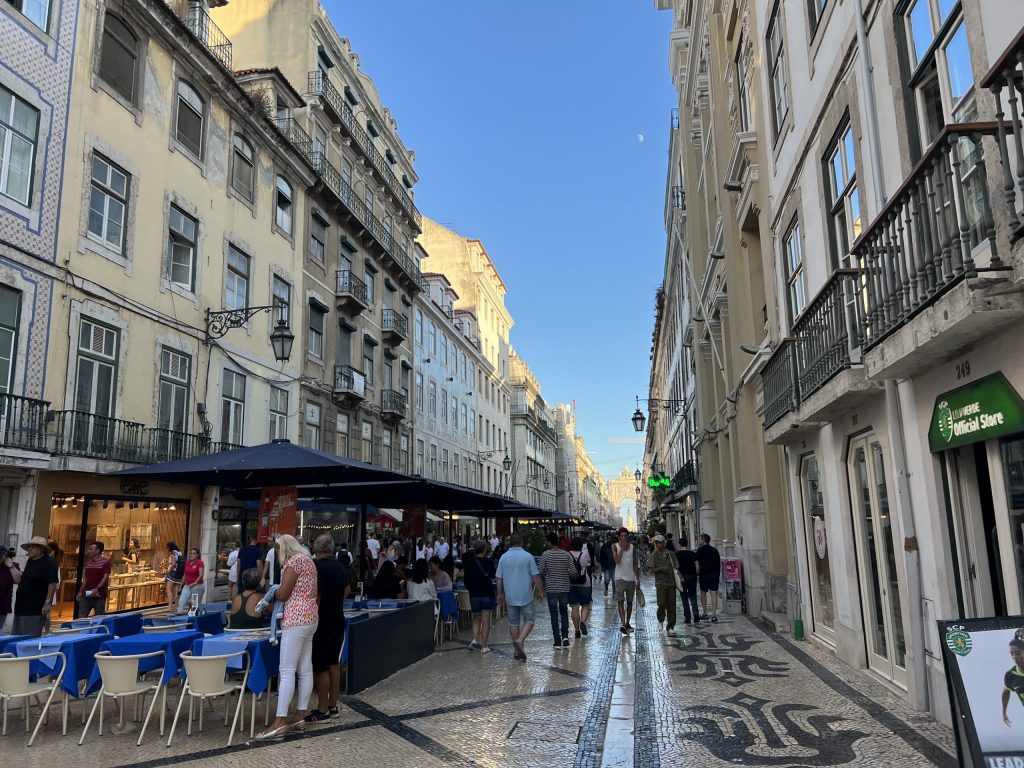
Rua Augusta
Rua Augusta is Lisbon’s central pedestrian promenade, lined with international brand stores and a few genuinely Portuguese chains, like “Mundo Fantástico da Sardinha Portuguesa,” which specializes in canned seafood. The streets running parallel to Augusta also offer good shopping, including Rua do Ouro and Rua da Prata.
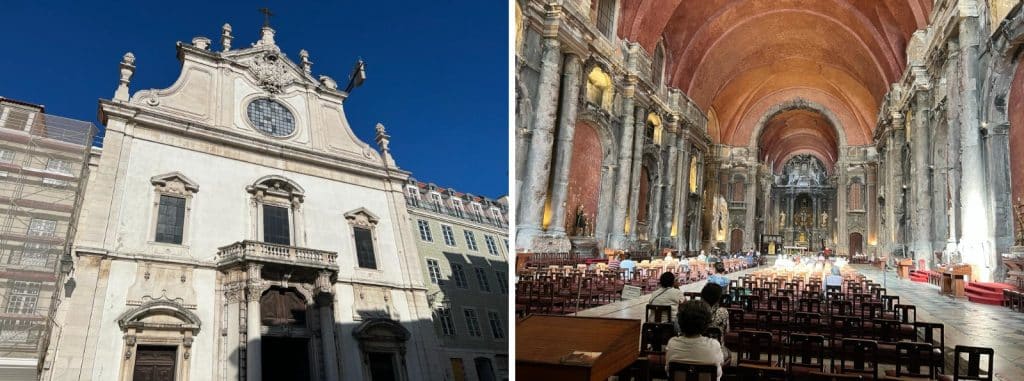
Largo de São Domingos
Largo de São Domingos sits within the parish of Santa Maria Maior, inside what were once Lisbon’s medieval Fernandine walls.
It’s a traditional gathering point for immigrant communities, including many people of African descent from Portugal’s former overseas territories.
The square is also home to the Igreja de São Domingos, once part of the São Domingos Convent, founded in 1242, which gave the square its name. The church survives to this day, even after being nearly destroyed by the historic 1755 earthquake and a 1959 fire, and it’s absolutely worth a visit.
The church once held gilded altarpieces, paintings, and valuable religious images, all of which were unfortunately lost in the great fire of 1959. Today, the blackened stone of the walls and altar still bear the scars of that terrible fire, which is exactly what makes the space so striking.
Try a Ginjinha
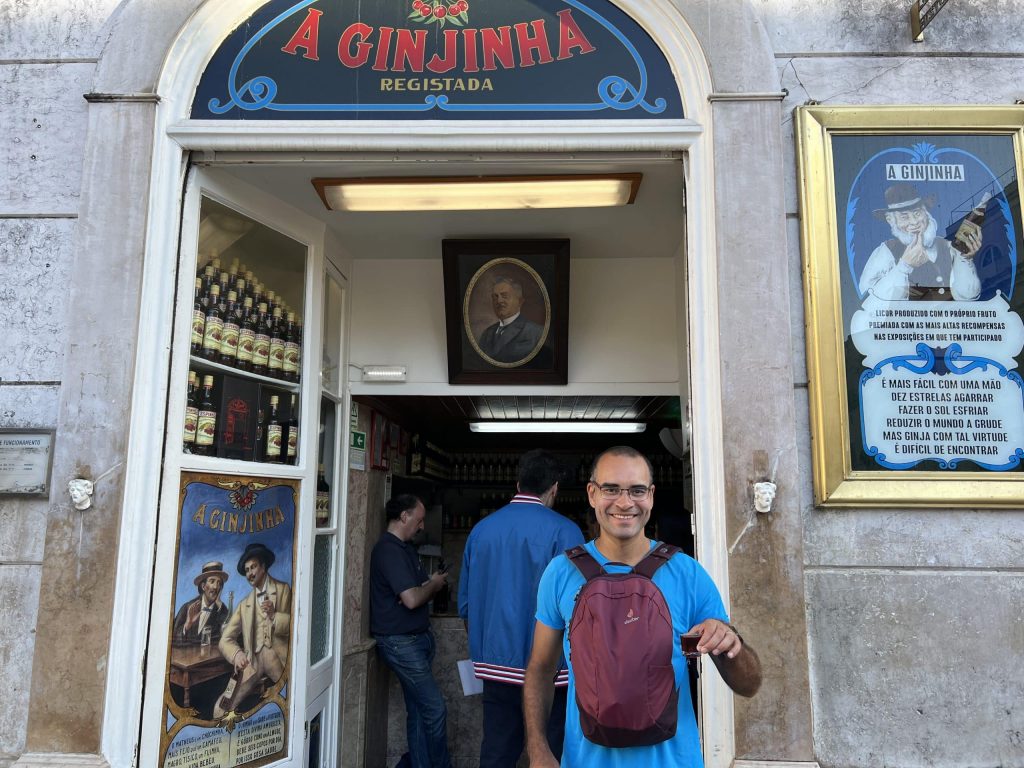
Ginjinha is one of the most beloved traditional liqueurs in Portugal. It’s made from the ginja, a small, sweet-and-sour red fruit that arrived in Portugal in the mid-15th century, originally from Asia.
We tried ours at Ginjinha Espinheira, open since 1840, an award-winning ginjinha spot near the center of the church that burned in the earthquake.
Try a Pastel de Nata
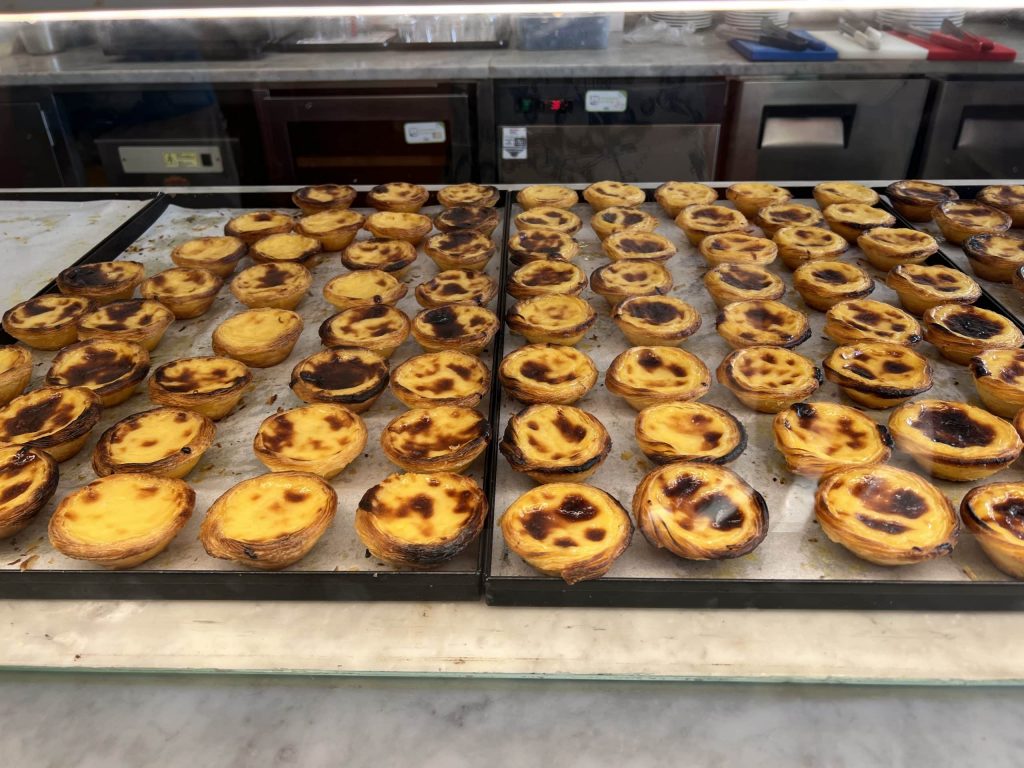
The Pastéis de Belém shop is, without question, the place to try the most authentic Belém-style custard tart in the world. But if you’re staying downtown, another great option is Fábrica da Nata, where the tart is simply delicious and you can watch it being made through a glass window — genuinely interesting to see.
Eat bolinho de bacalhau with port wine
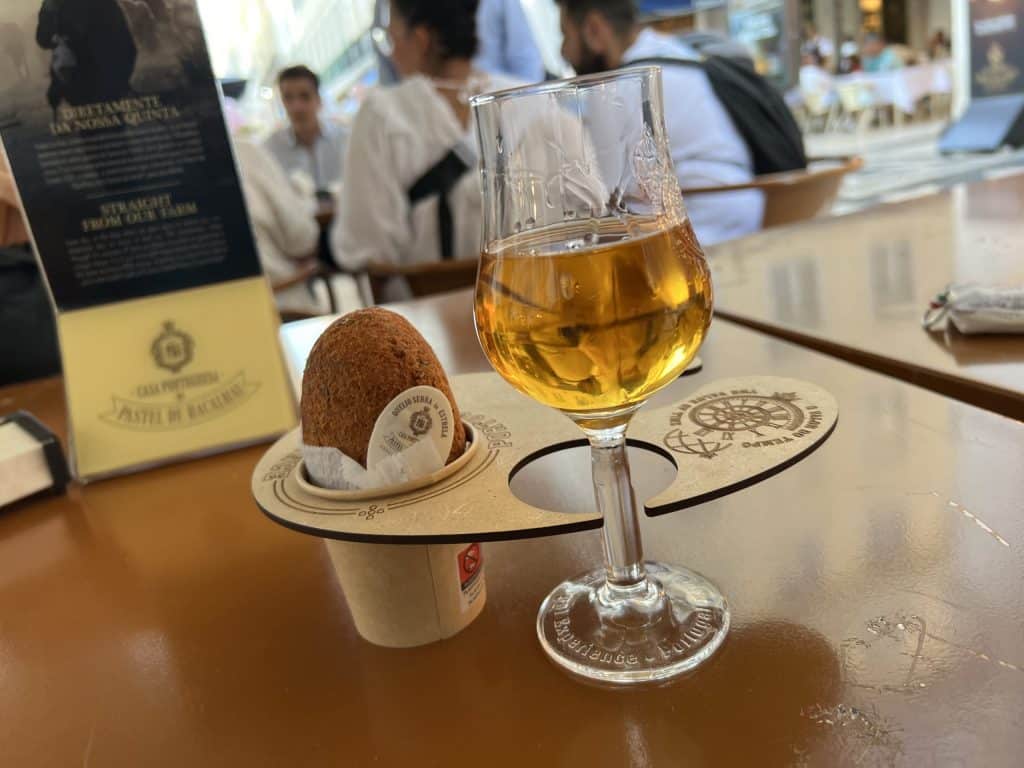
We’d also recommend trying bolinho de bacalhau (codfish fritters) with Serra da Estrela cheese, near the Rua Augusta arch. The cheese lends the fritter a slightly bitter edge, but it’s very typical of the region — you can also get it without cheese at Casa Portuguesa do Pastel de Bacalhau, right there on site.
Walking through the Chiado neighborhood in Lisbon
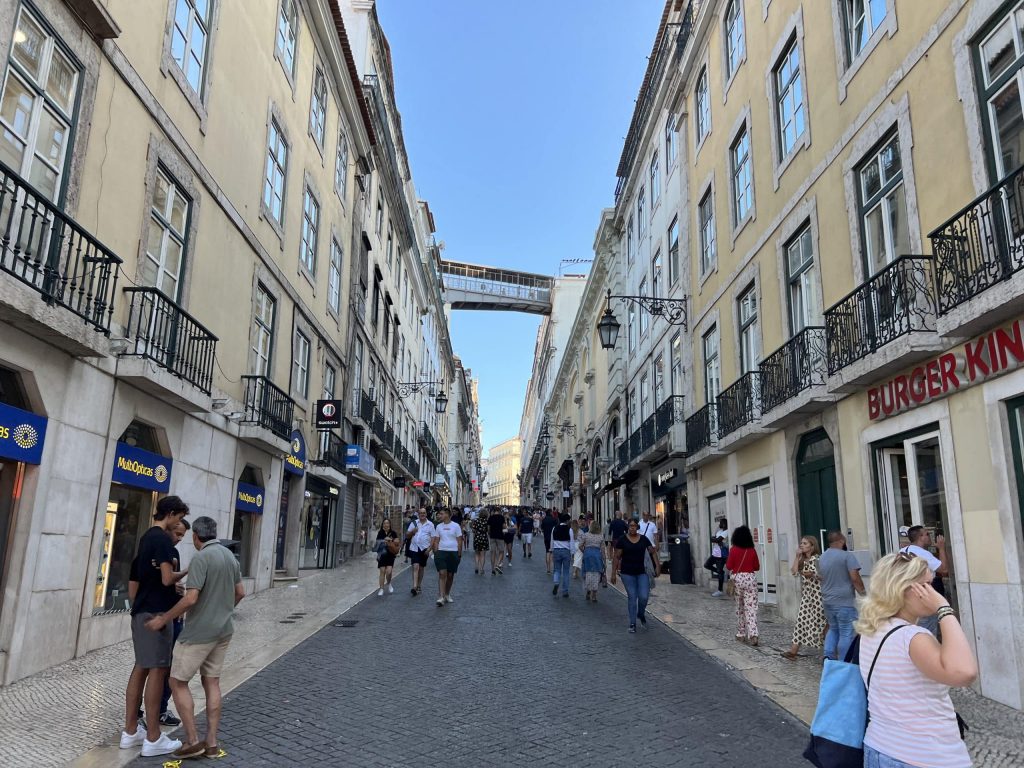
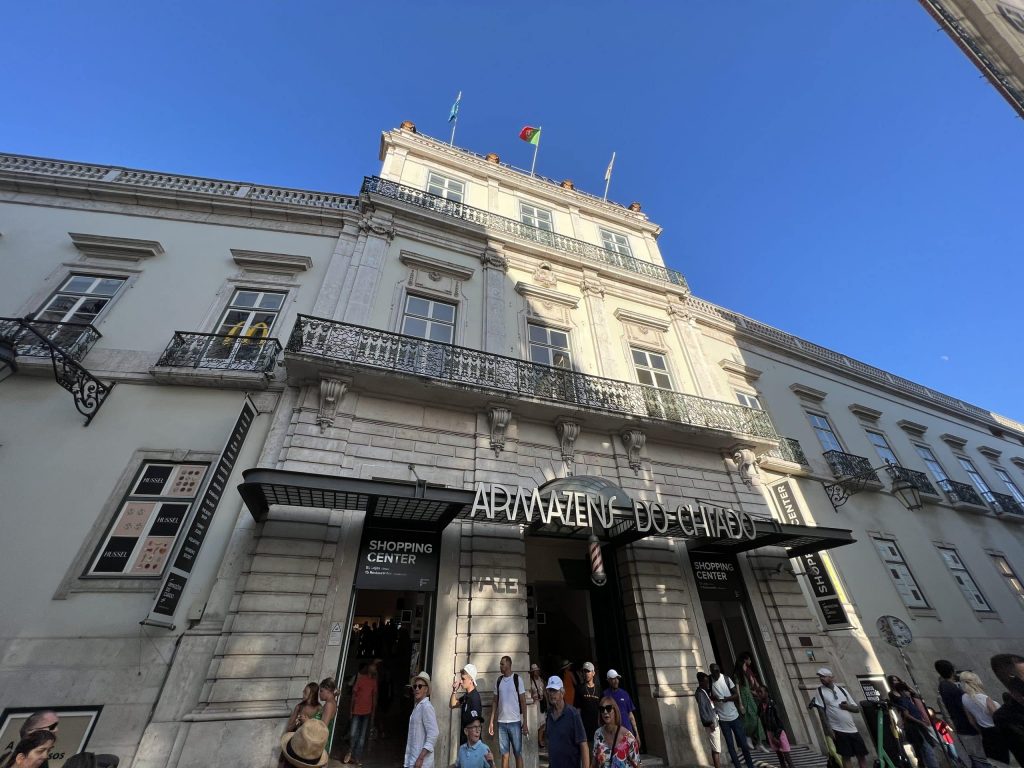
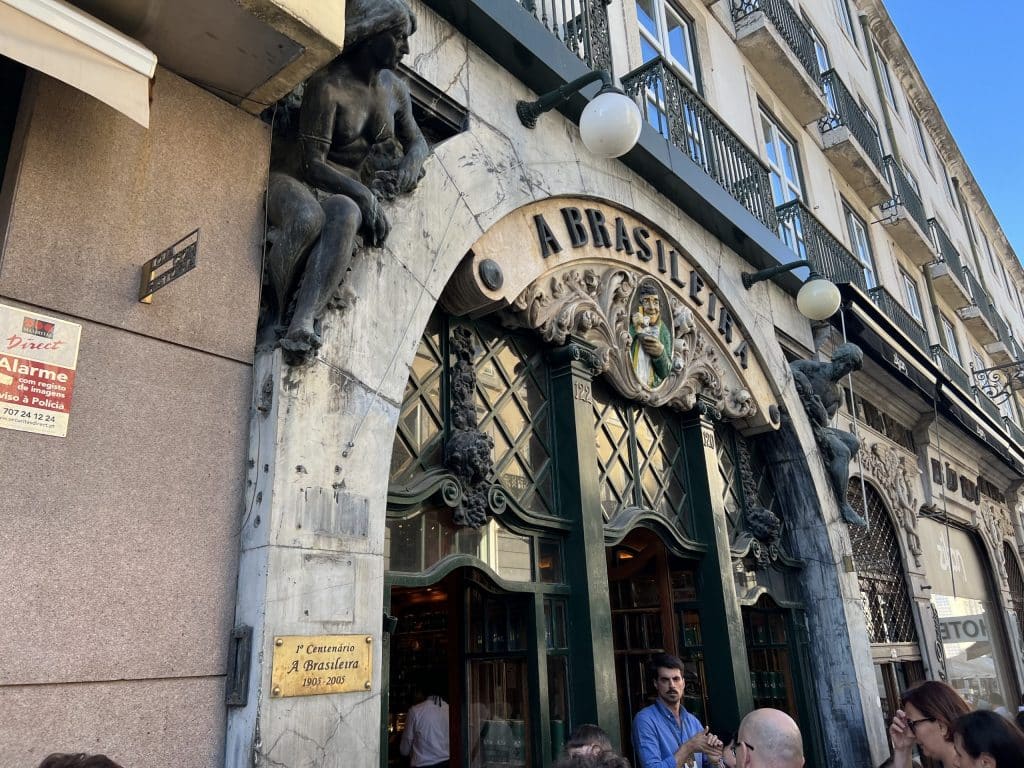
Sitting between Bairro Alto, Baixa Lisboeta, and Cais do Sodré, Chiado stands out as a major open-air shopping district. You’ll find Livraria Bertrand here, said to be the oldest bookstore in the world, the café A Brasileira, along with several restaurants, wine shops, and Armazéns do Chiado, a small shopping mall.
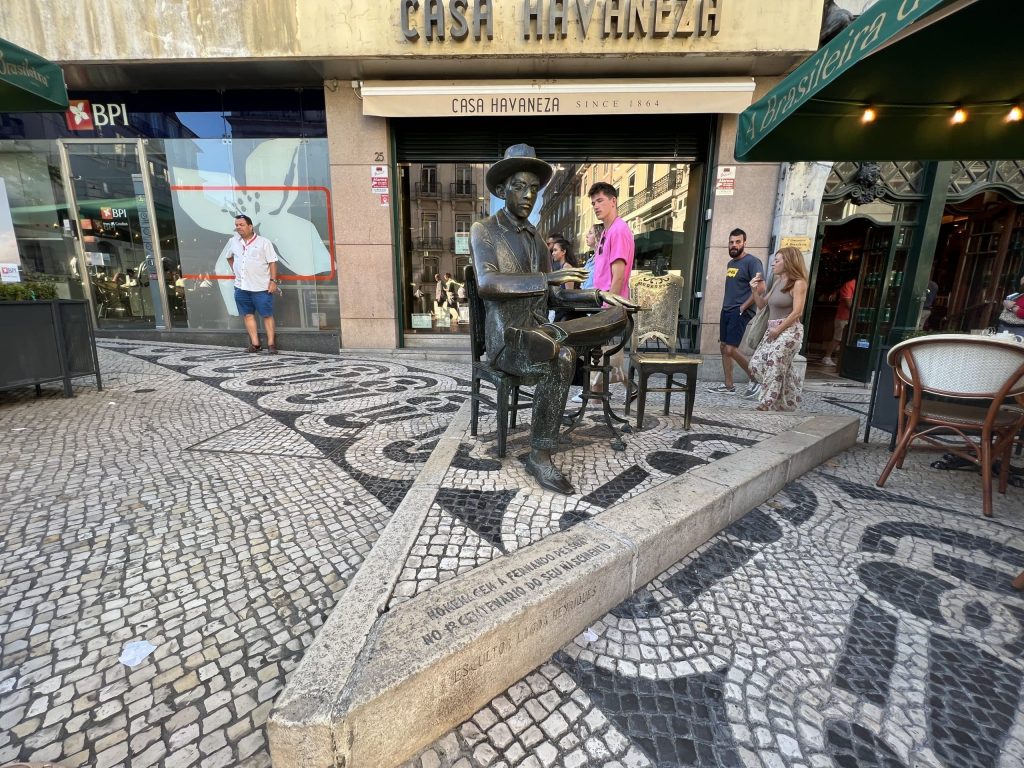
Take a photo at the Fernando Pessoa statue
This bronze sculpture, dedicated to writer Fernando Pessoa, stands in Largo do Chiado, right in front of the café he used to frequent: “Café A Brasileira.”
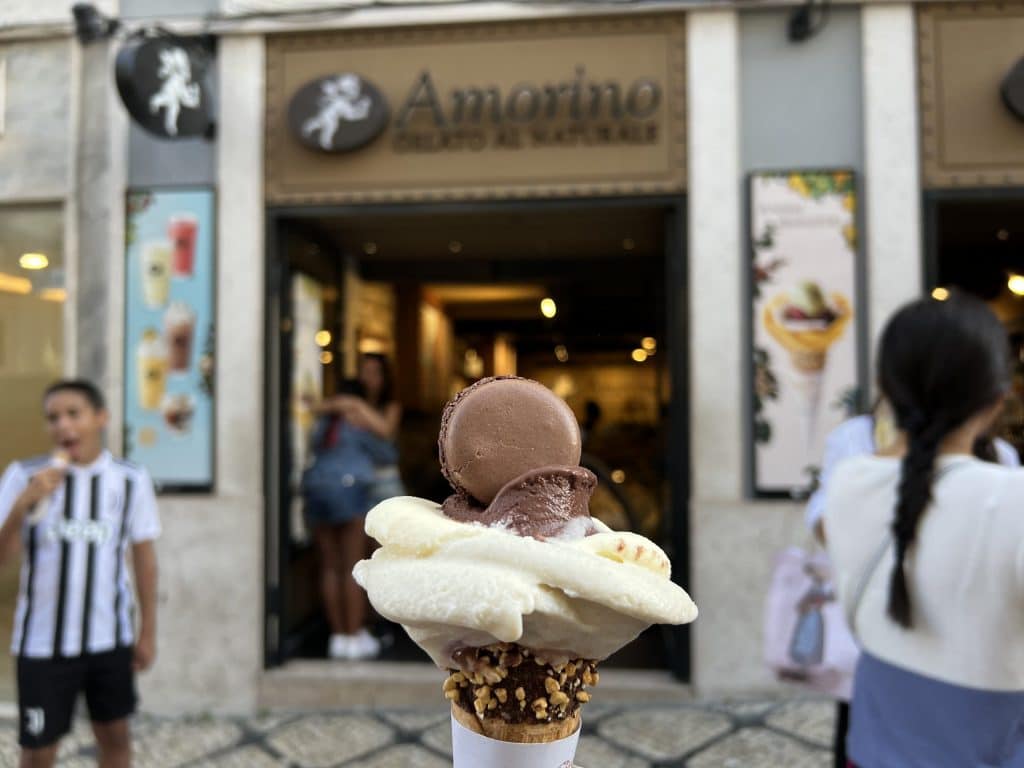
Get ice cream at Amorino Gelato al Naturale
The ice cream at Amorino Gelato al Naturale (Instagram) is fairly standard — since we’d just come from Rome, our gelato standards were admittedly pretty high — but the flower-shaped scoop this place serves is unique, and it’s worth watching them make it and trying a cup for yourself.
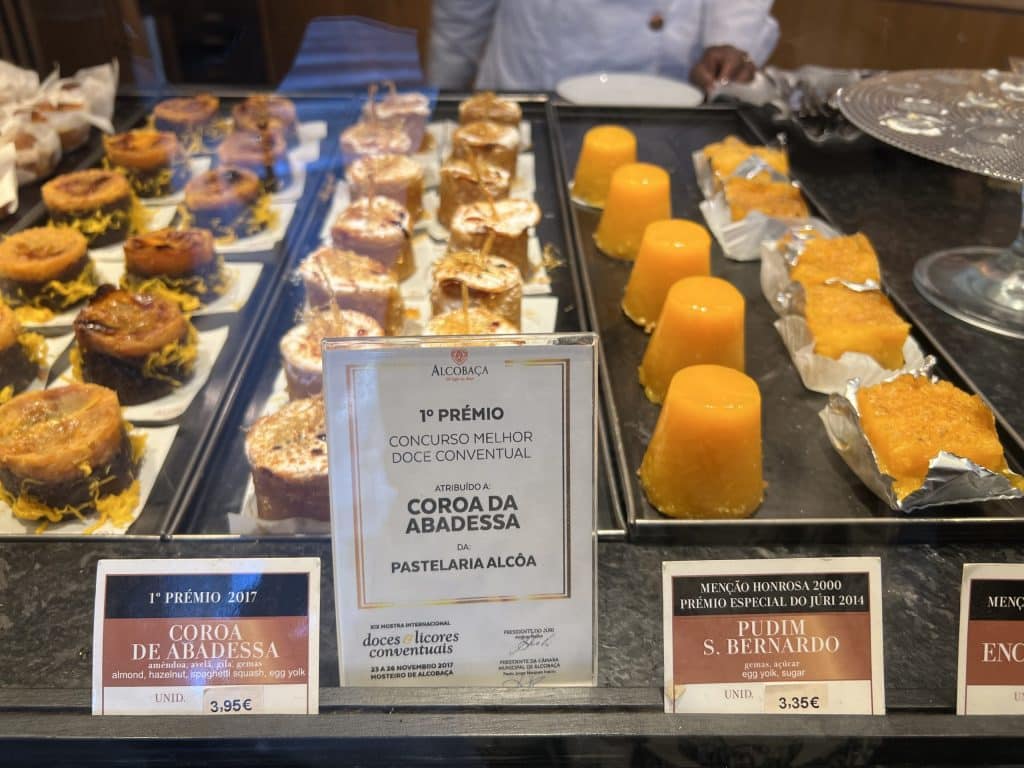
Get an egg-based pastry at Alcoa – A Doceria Conventual
We found this to be a great spot for a traditional Portuguese egg-based dessert. The shop opened in 1957 and carries several award-winning desserts — we tried the Coroa da Condessa and the Pudim São Bernardo, and both were delicious and plenty sweet.
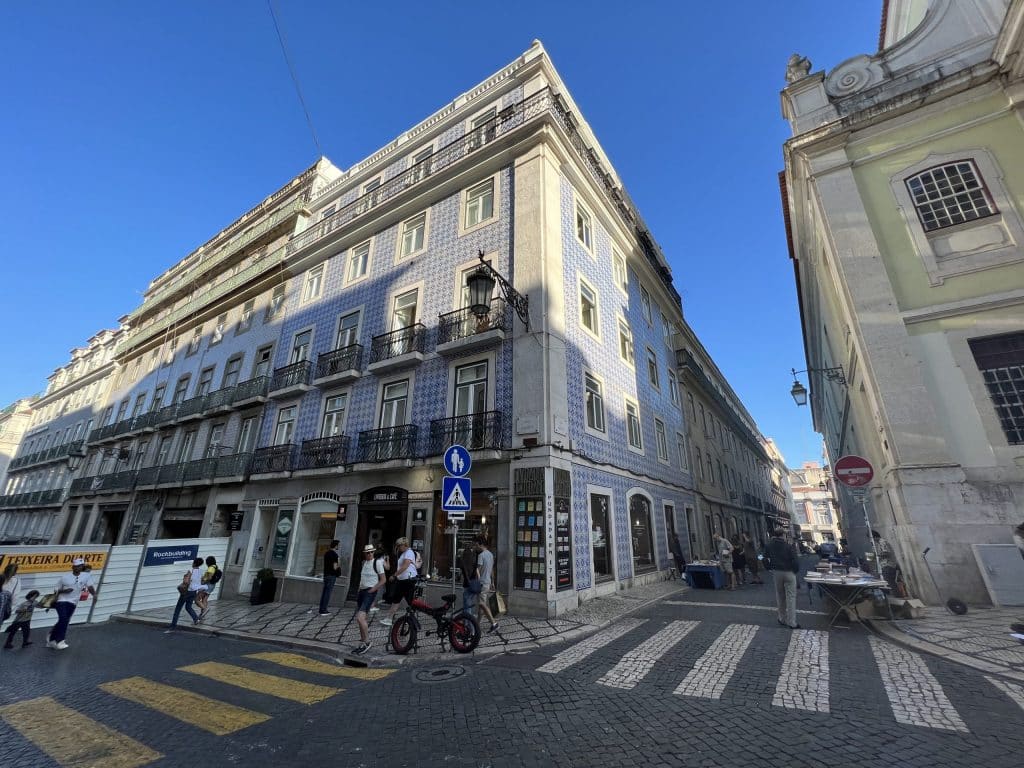
Rua Garrett in Lisbon
The most famous street in the Chiado neighborhood also makes for great shopping. Rua Garrett is home to souvenir shops, Livraria Bertrand — considered one of the oldest bookstores in the world — along with traditional cafés like the century-old A Brasileira.
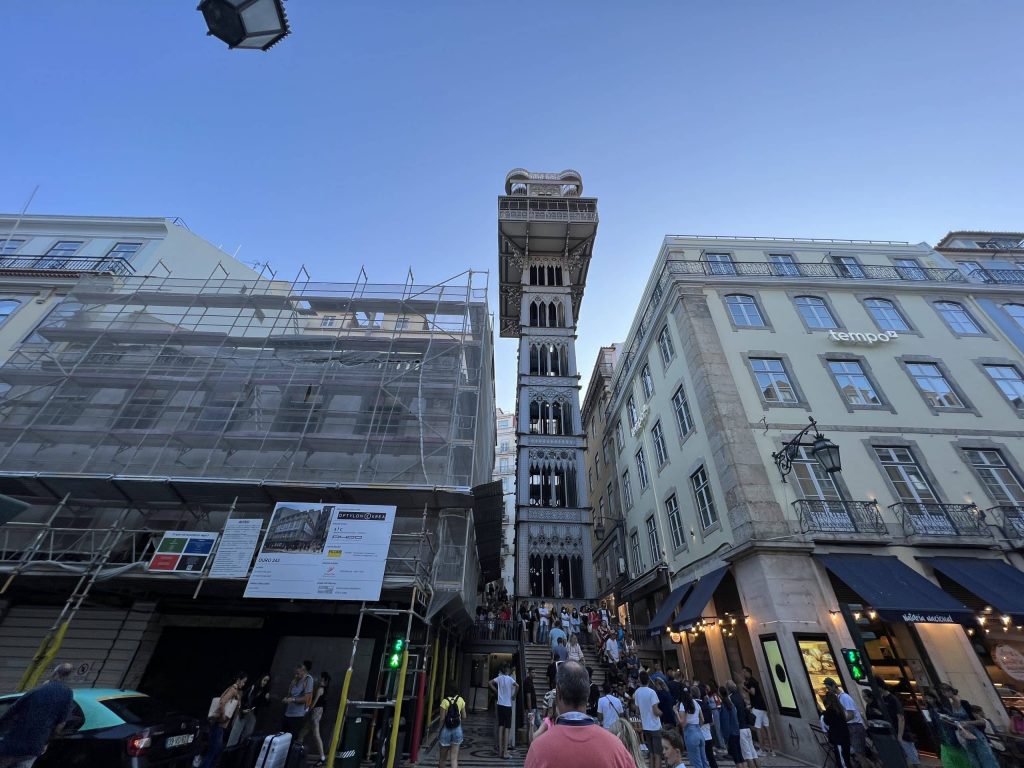
Elevador de Santa Justa in Lisbon
The Santa Justa Elevator opened in 1902, stands 45 meters tall, and was designed by Portuguese architect Raoul Mesnier, a disciple of Gustave Eiffel, to connect Baixa Lisboa with Bairro Alto. Its distinctive look has made it one of Lisbon’s top tourist attractions.
It also functions as a viewpoint, offering visitors a beautiful view over all of Baixa and a glimpse of the Castelo de São Jorge.
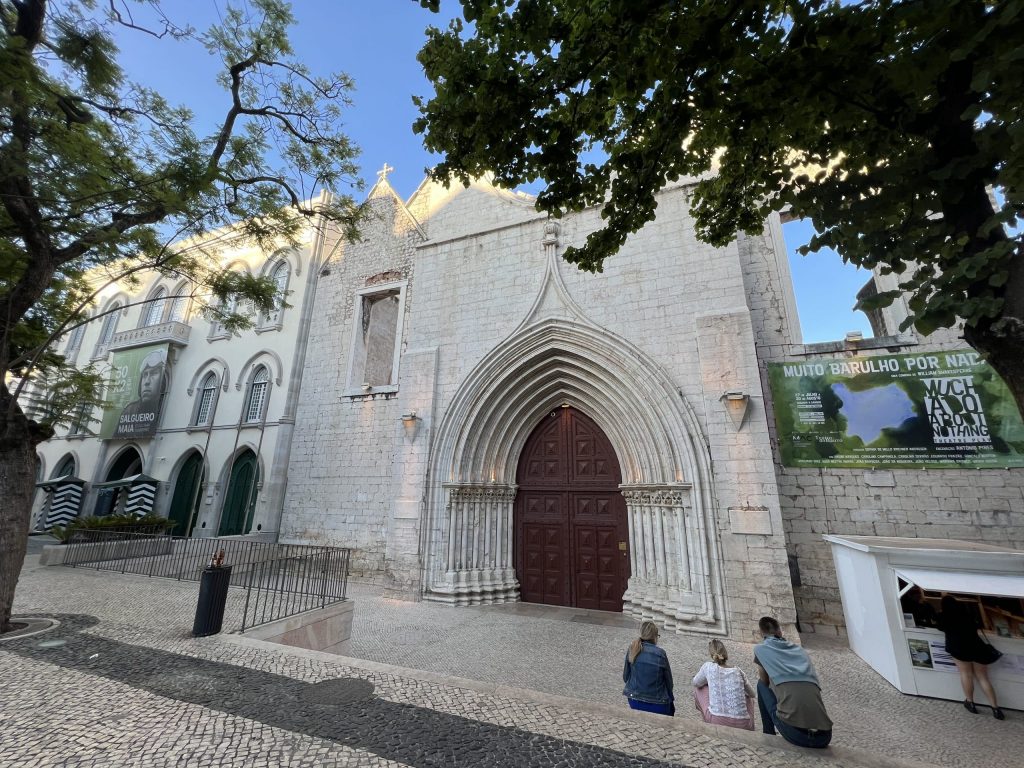
Convento do Carmo
Set within the ruins of the Igreja do Carmo, the Carmo Archaeological Museum stands today as one of the most striking reminders of the 1755 earthquake. All that remains of the original church is its Gothic façade. The museum holds stone-carved tombs, pre-Columbian mummies, an Egyptian sarcophagus, plus ceramics and tile panels.
Praça do Rossio
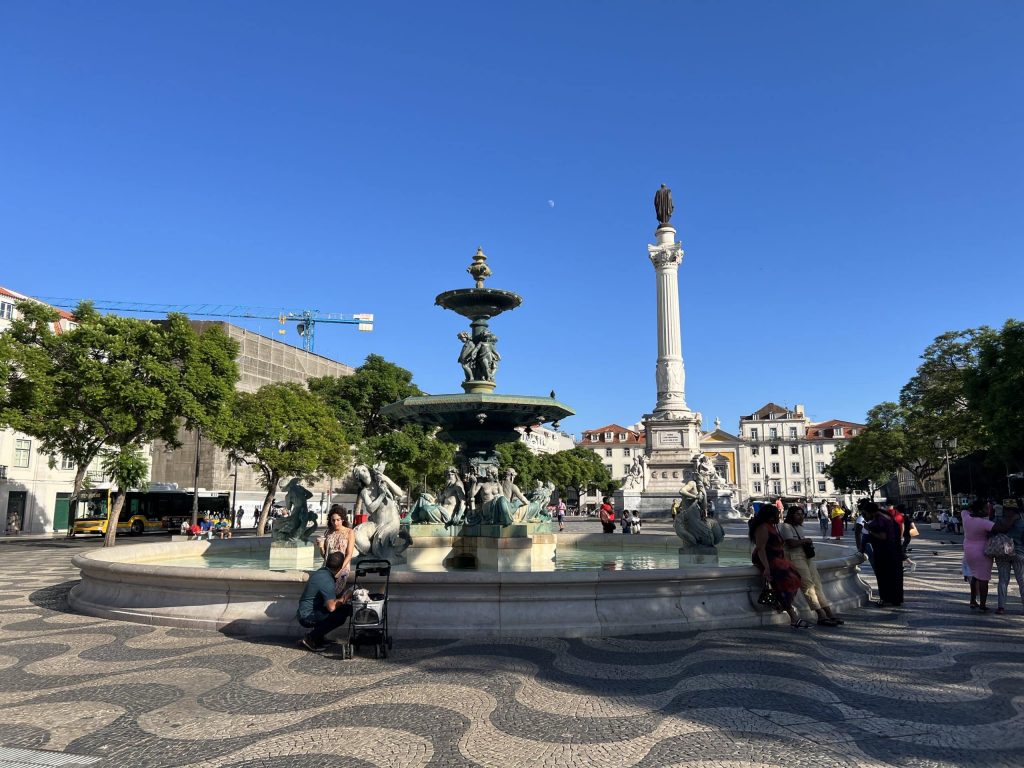
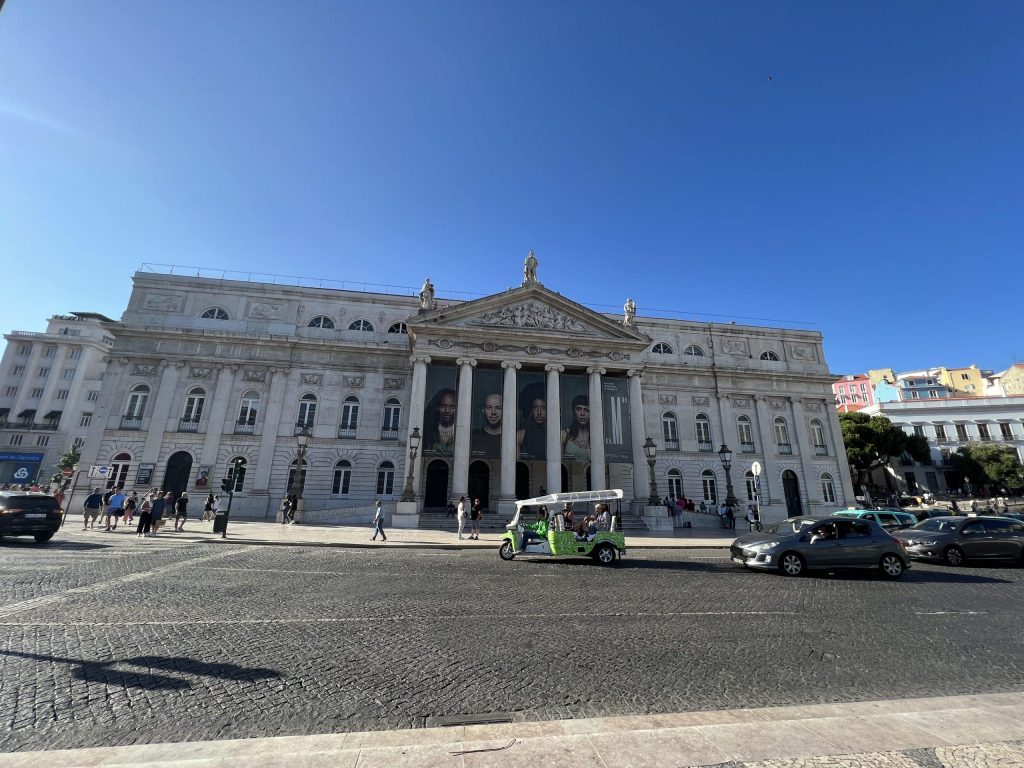
This is where we started our walk, though it could just as easily mark the end of Rua Augusta — one of Lisbon’s most beautiful squares, Praça do Rossio. Around it, you’ll find the Teatro Nacional Dona Maria II, the Rossio train station (for trains to Sintra), the statue of D. Pedro IV, and Café Nicola, one of Lisbon’s most famous cafés.
Avenida da Liberdade in Lisbon
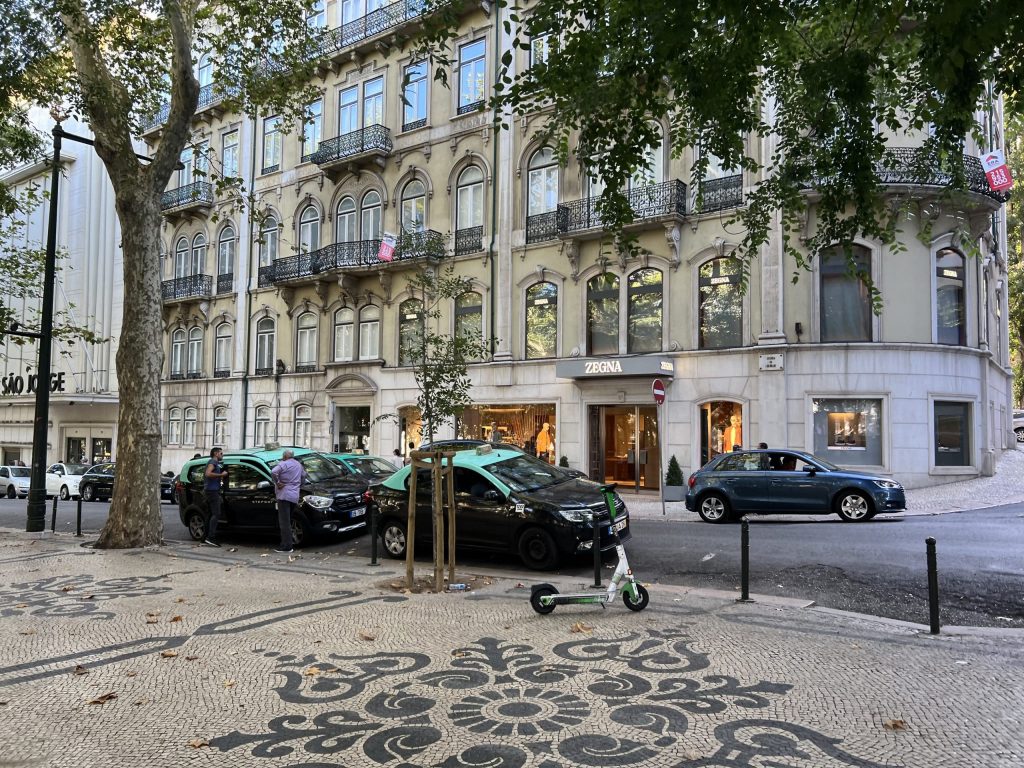
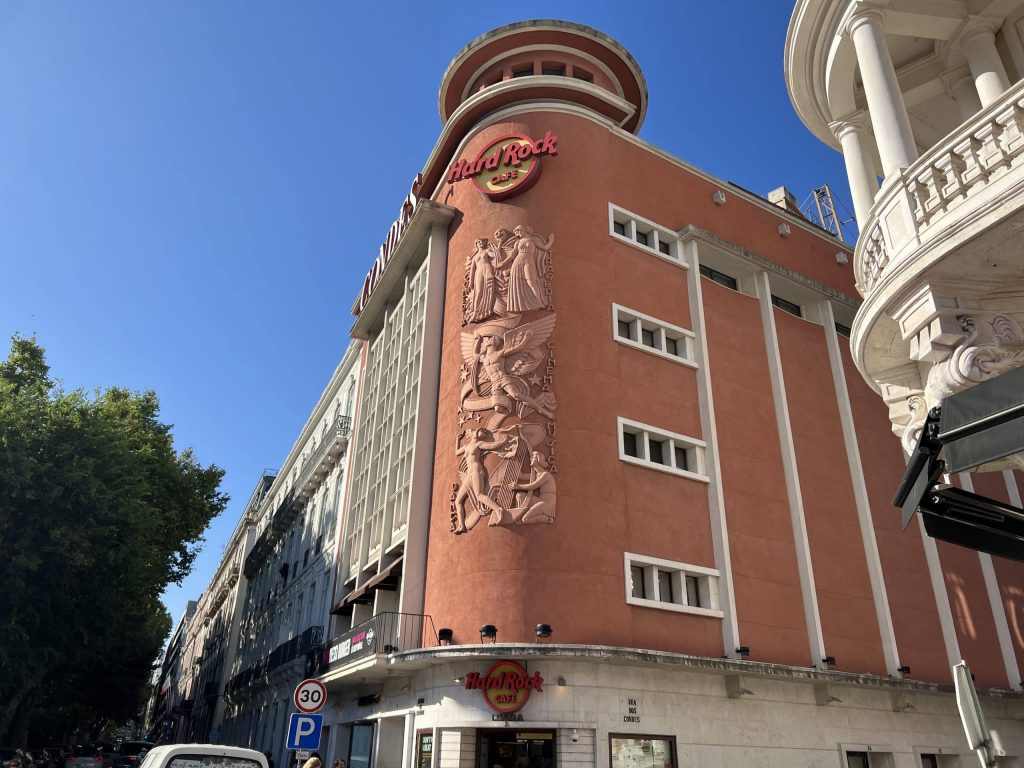
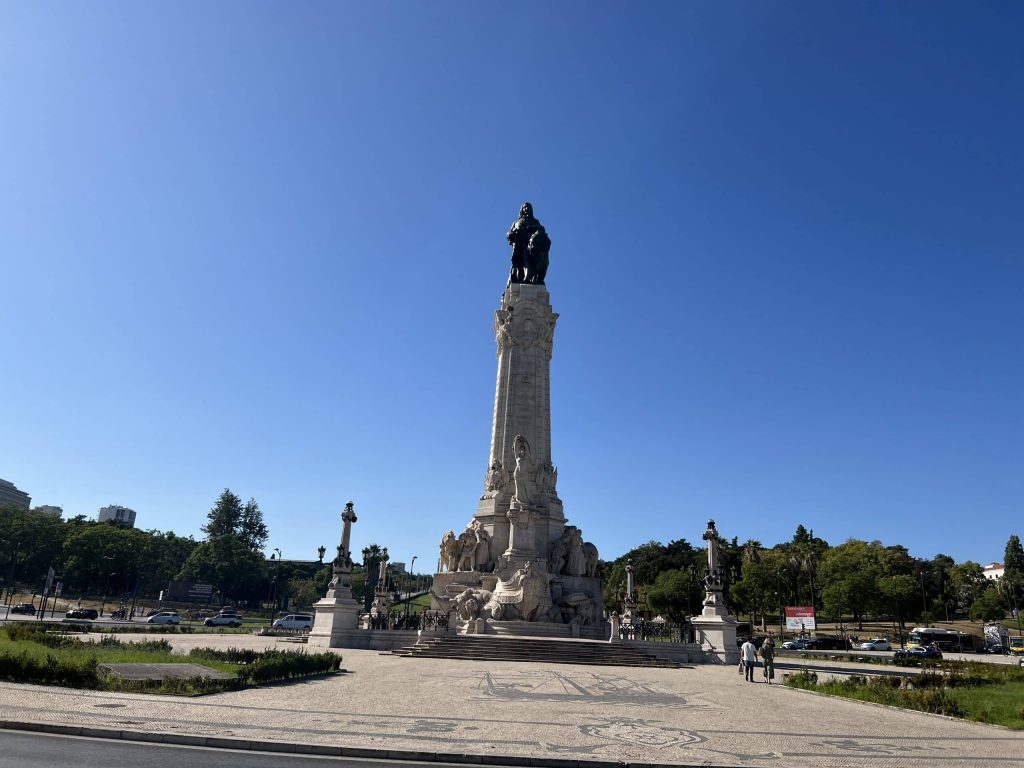
One of the city’s main and most beautiful avenues, connecting Praça dos Restauradores to Praça de Marquês de Pombal. The whole stretch is heavily tree-lined, with plenty of restaurants, hotels, and upscale stores, including the Hard Rock Café Lisboa and brands like Gucci and Dolce & Gabbana.
Parque Eduardo VII
The largest park in downtown Lisbon, located near Praça Marquês de Pombal, at the far end of Avenida da Liberdade. The park features a central lawn with shrubs trimmed into geometric patterns, flanked by traditional Portuguese cobblestone walkways. It also hosts the Lisbon Book Fair every April.
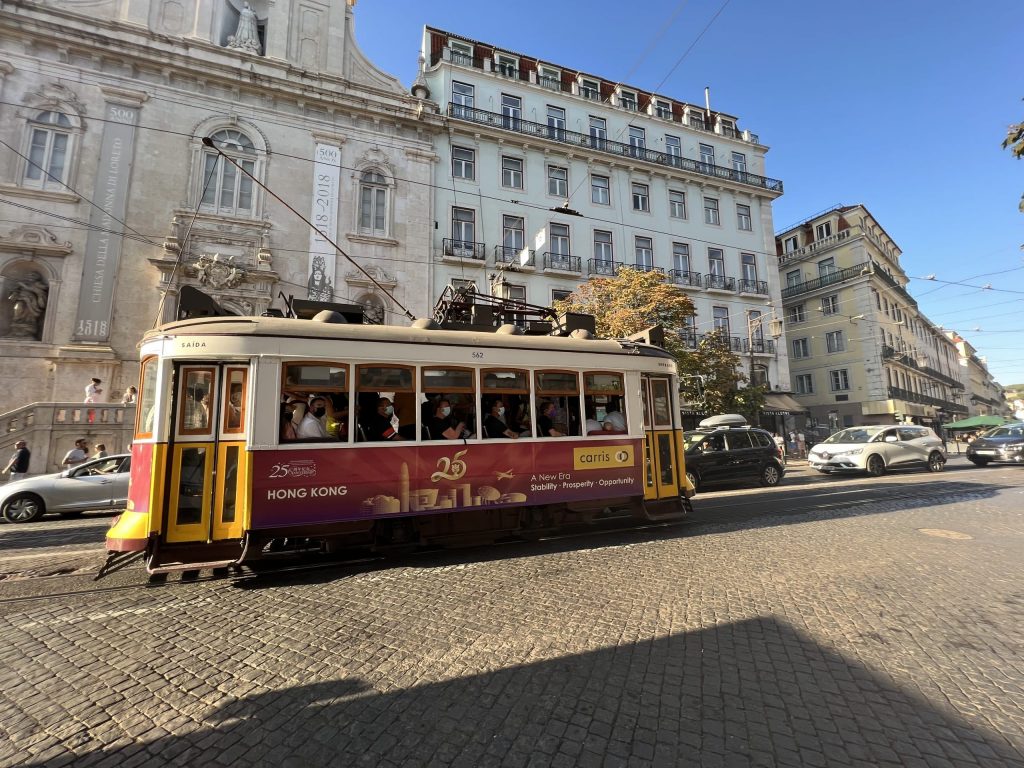
Ascensor da Bica
These colorful funiculars have become one of the city’s postcard images, carrying passengers from the lower streets up to the higher parts of town. The most famous is undoubtedly the Ascensor da Bica, which runs between Cais do Sodré and Bairro Alto, along a very narrow street lined with homes and bars.
Castelo de São Jorge in Lisbon
Castelo de São Jorge is an 11th-century fortress with a viewpoint offering a view over a large part of Lisbon’s landmarks — squares, churches, the Carmo ruins, the Tagus, and the 25 de Abril Bridge.
We’d recommend going close to sunset. You can walk along the walls, climb the towers, and explore the site’s archaeological remains.
We ended up spending our time walking through Chiado instead, but the castle is visible from pretty much anywhere in the city center.
Parque das Nações neighborhood
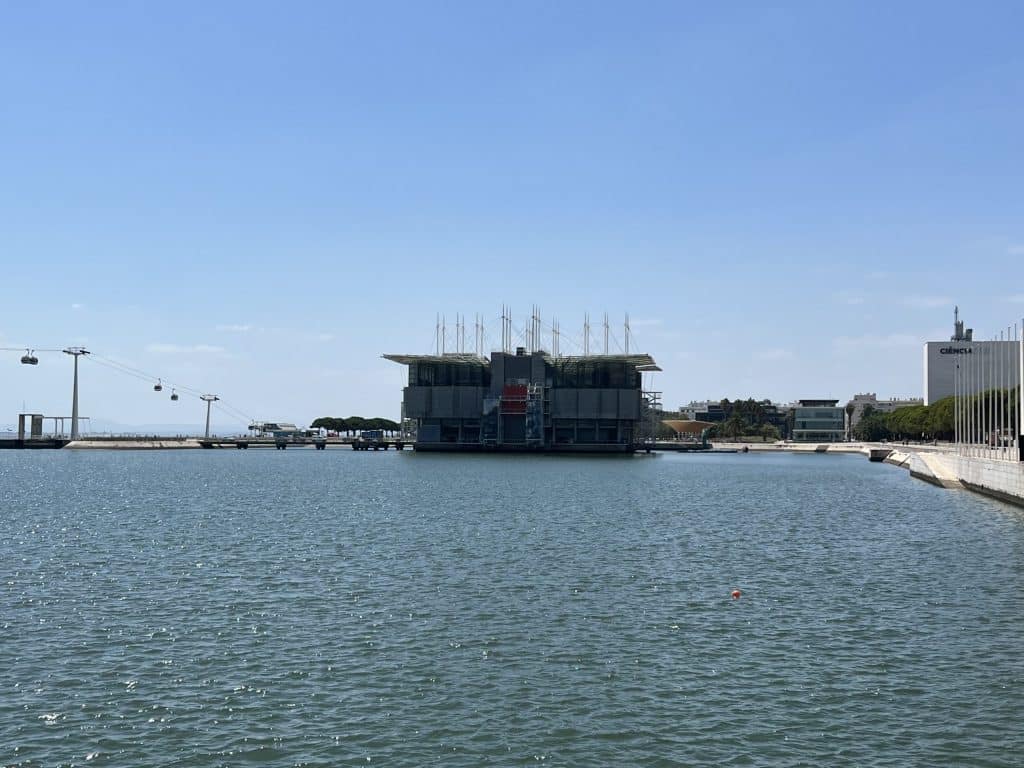
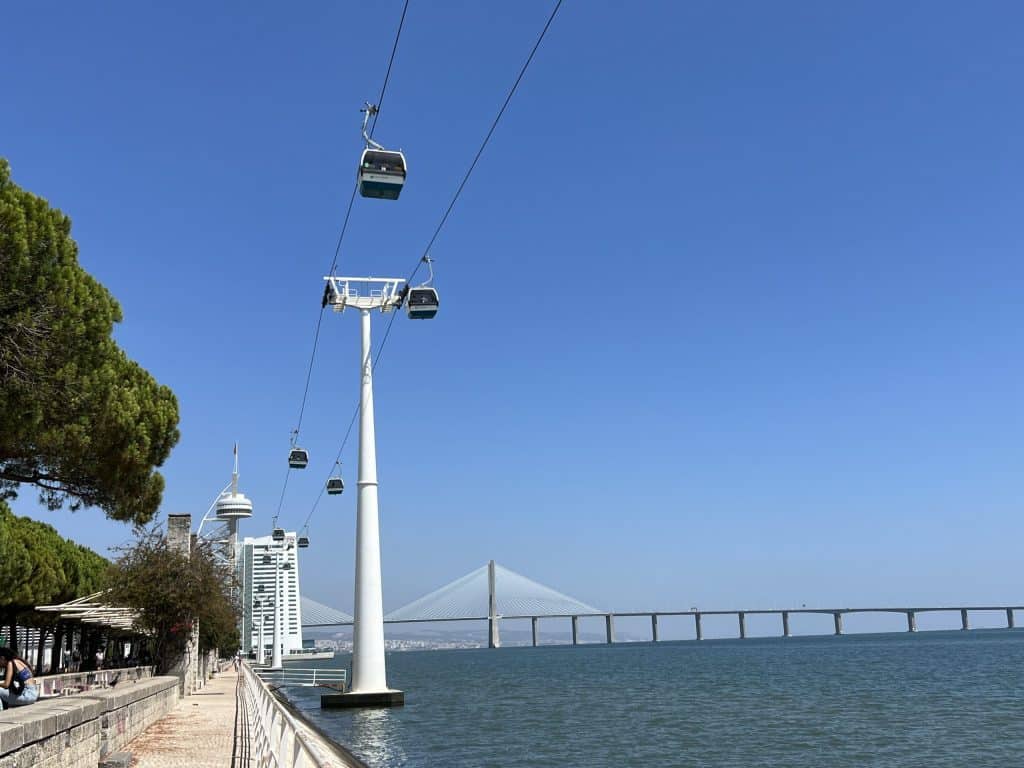
Once an industrial district, Parque das Nações was completely redeveloped to host the 1998 World Expo. Today, it’s home to some of Lisbon’s biggest attractions, including the Oceanarium, the Pavilhão do Conhecimento, a cable car, and the Vasco da Gama shopping mall, one of the largest in the Portuguese capital.
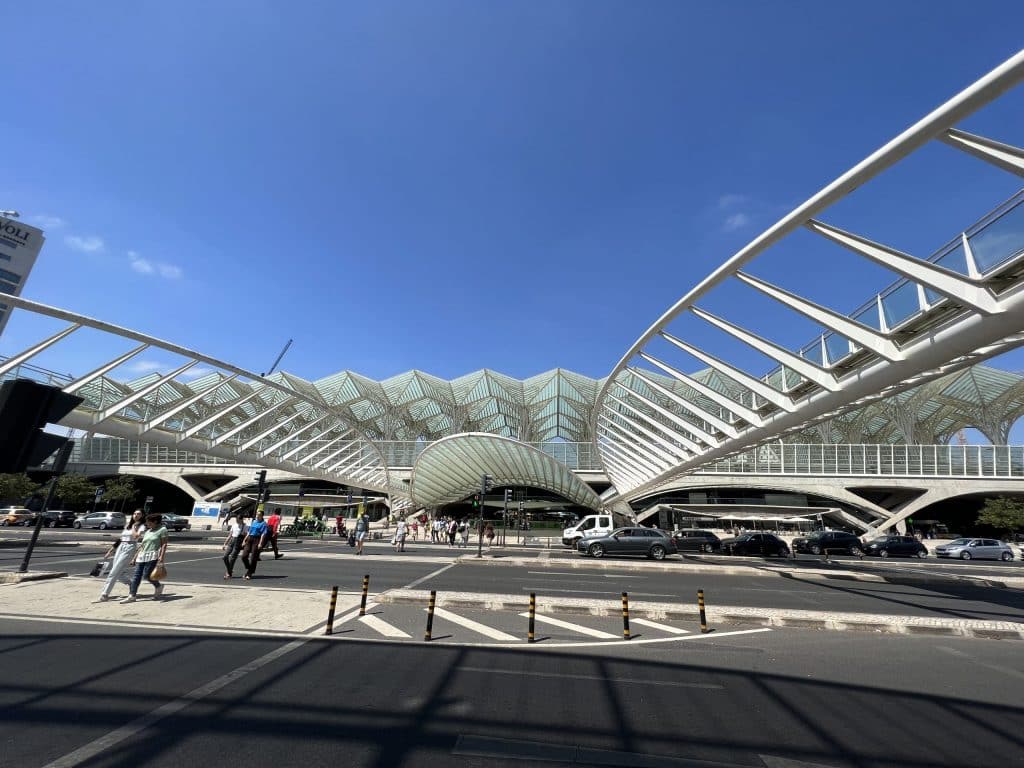
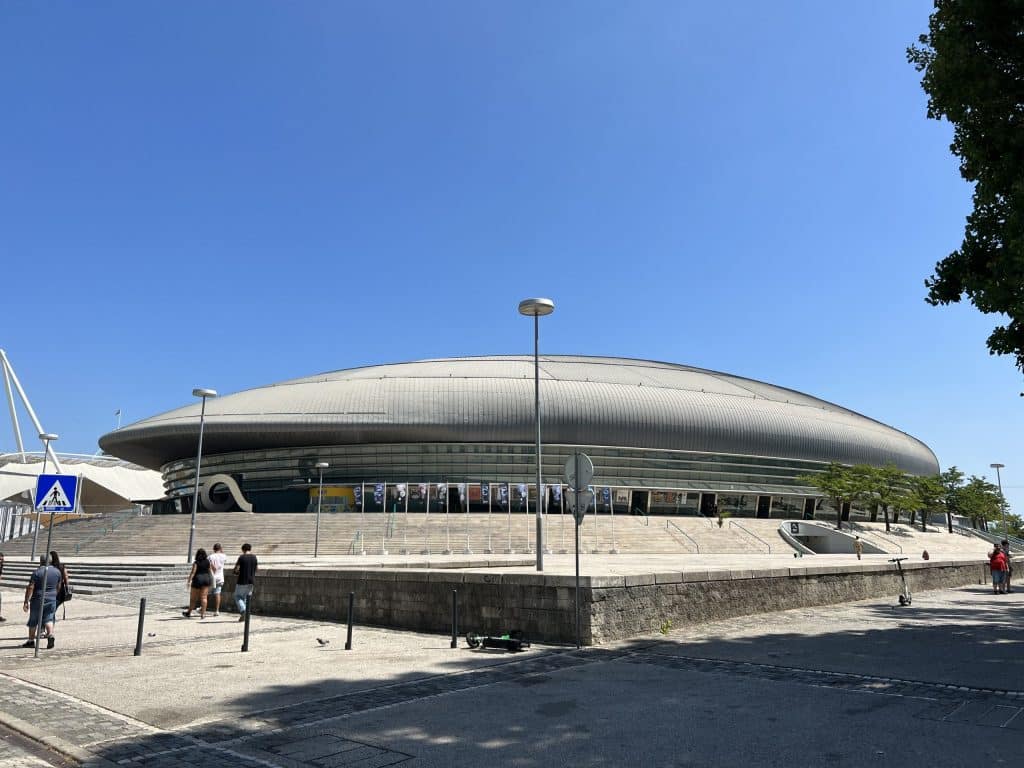
Oceanário de Lisboa
Voted the most beautiful aquarium in the world, the Lisbon Oceanarium is absolutely stunning, and it’ll make you feel like you’re at the bottom of the ocean. Set on the banks of the Tagus in the modern Parque das Nações neighborhood, it’s home to marine species from every ocean on Earth.
Teleférico de Lisboa
One of the best views over Parque das Nações — the old industrial district completely redeveloped for the 1998 World Expo — comes from riding the Lisbon cable car.
Read the original version in Portuguese on A Bela e o Bigode.