What to Do in Caraíva
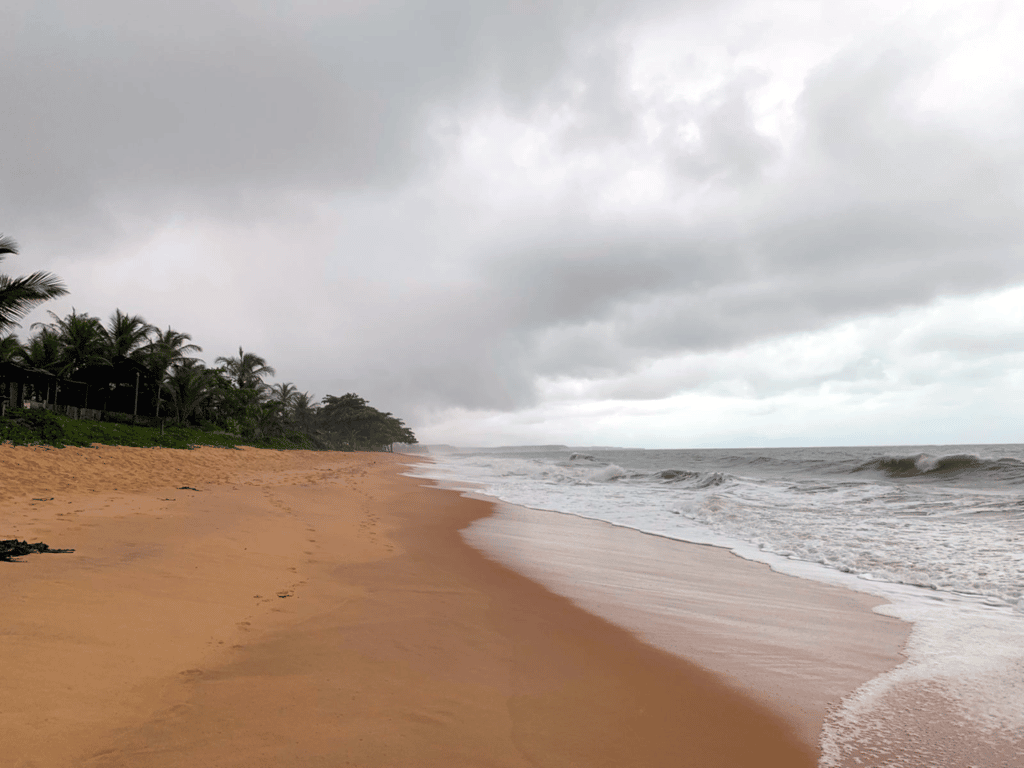
Caraíva is a coastal, riverside community in Bahia, a completely rustic, sand-underfoot village situated between the Rio Caraíva, the Atlantic Ocean, and the Monte Pascoal National and Historic Park.
It’s a district within the municipality of Porto Seguro, with a population of around 1,000. The village is the gateway to Parque Nacional do Monte Pascoal. The landmark marking the Portuguese arrival in Brazil is part of the Pataxó Indigenous Reserve.
There was no electricity here until 2007, and when it finally arrived, the wiring was buried underground. So don’t expect to see power lines or poles around town.
One genuinely interesting and beautiful thing about the region is that the town is bordered on one side by the river, and on the other by the ocean, meeting at Barra de Caraíva.
Ecologically preserved, it benefits from several environmental and historic protections: the Caraíva-Trancoso Environmental Protection Area, the Marine Extractive Reserve Zone (RESEX), UNESCO World Heritage status, IPHAN’s Strict Protection Zone, and the buffer zone of Parque Nacional e Histórico de Monte Pascoal.
Tips for Caraíva
Even though the town is simple, don’t be fooled — lodging and drinks are quite pricey, much like Jericoacoara, though the streets there are a bit wider and the sand less soft — both places, though, have their own distinct vibe.
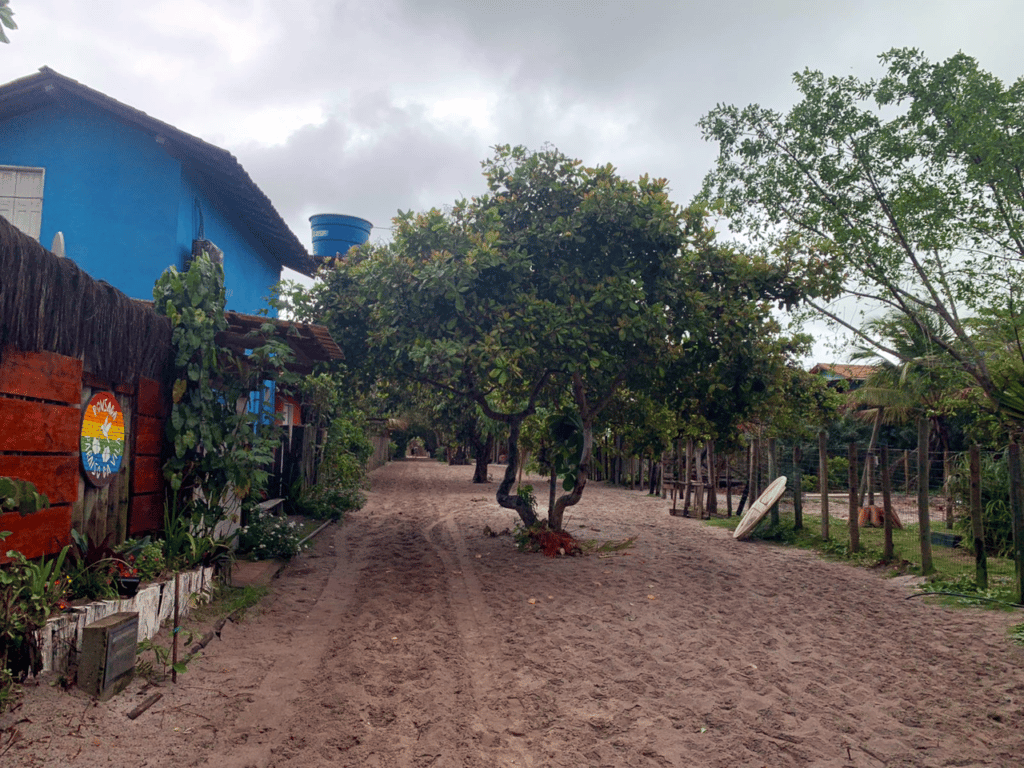 Sand streets in Caraíva
Which brings us to our first tip for Caraíva. When we say the ground is sand, we mean genuinely soft, loose sand, not packed down. So don’t bring roller luggage — bring a backpack instead. But if all you have is roller luggage, it’s worth taking the local “taxi,” a donkey-drawn cart that can carry your bags.
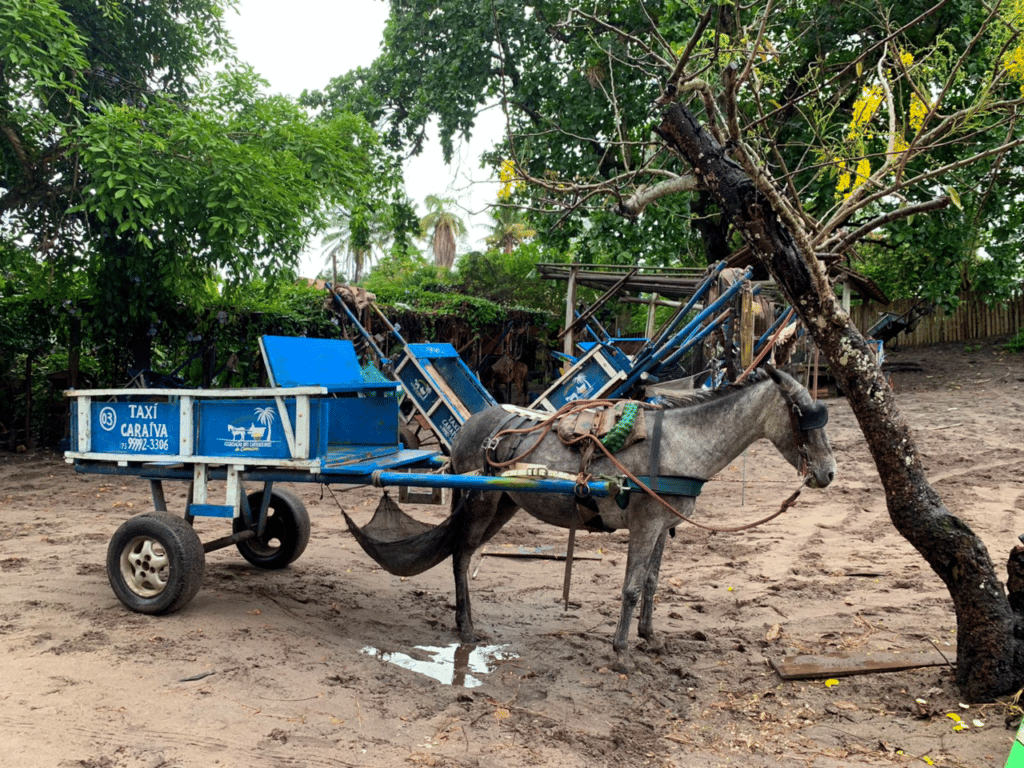 Taxi in Caraíva
Restaurants and shops keep set hours, but it’s a good idea to confirm the day before, since they’re often closed regardless.
As for tours, people here also aren’t especially strict about time, so try not to lose your patience or get stressed! Embrace the local pace — though I’ll admit, I have a hard time with delays and lack of commitment myself.
There are no banks or ATMs in Caraíva, so bring your cash somewhere safe to use around the village. That said, every place accepts debit and credit cards.
Don’t forget to pack sunscreen, sunglasses, light clothing, a flashlight, sunscreen (yes, again), and bug repellent.
How to Get to Caraíva
Caraíva isn’t an easy place to reach, since the nearest airport is in Porto Seguro, about 4 hours from town. The road from Trancoso to Caraíva is unpaved and full of potholes. That makes the trip take much longer, especially if you happen to hit rainy season.
Transfer
A transfer picks you up at the airport, crosses the ferry to Arraial d’Ajuda, or you can go directly by road to Caraíva. The ferry line can get quite long depending on the season. Ferries from Porto Seguro to Arraial depart every 30 minutes.
Prices range from R$350 to R$450, depending on the vehicle and how many people fit. This was our choice, though it’s not the cheapest option. We booked with AJS Tour and spoke with Ney — our trip was excellent, with no delays or headaches. They arrived right on time with a sign showing our name. Contact: (73) 99991-5635.
By road, drive BR-101 to km 769 and turn right into the village of Monte Pascoal, then continue 43 km on an unpaved road until you reach Nova Caraíva. From there, park your car and take a canoe across the Rio Caraíva to reach the village of Caraíva.
The river crossing costs R$7.50 per person. It’s done in small canoes and takes no more than 2 minutes to reach the other side.
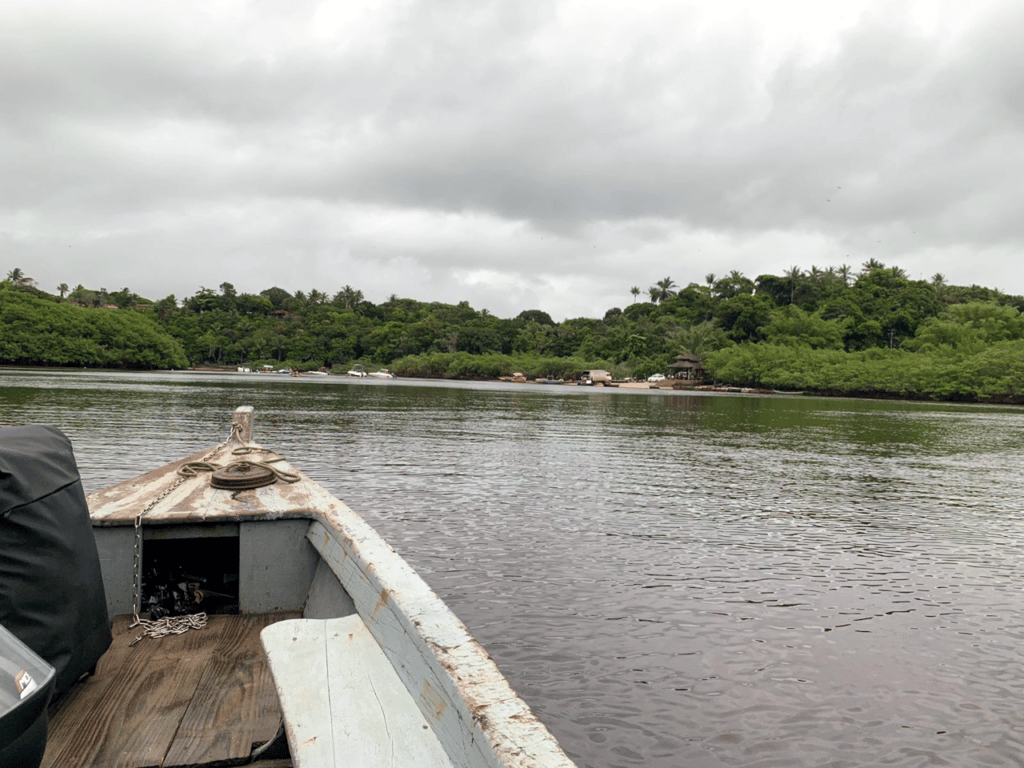 Boat to the village of Caraíva
Rental Car
This depends on the kind of trip you’re planning. If you’re only going to Caraíva, we wouldn’t recommend it, since cars can’t enter the village. But if you’re stopping in other towns along the coast, it’s worth it.
If you do rent, we’d recommend a higher-clearance vehicle, since as mentioned, the road to Caraíva is in bad shape.
By road, drive BR-101 to km 769 and turn right into the village of Monte Pascoal, then continue 43 km on an unpaved road until you reach Nova Caraíva. From there, park your car and take a canoe across the Rio Caraíva to reach the village of Caraíva.
The river crossing costs R$7.50 per person, done in small canoes, taking no more than 2 minutes to reach the other side.
Bus
From Porto Seguro Airport, take a taxi to the ferry to cross to Arraial d’Ajuda, a quick crossing of about 4 km. The full trip takes around 3 hours.
The ferry departs every 30 minutes and takes 10 minutes to cross, priced at R$5.00 per person.
Once in Arraial, take the Águia Azul bus company to Caraíva, departing from in front of the ferry landing. Plan ahead, though, since buses only run twice a day.
History of Caraíva
According to documentation from Brazil’s National Historic and Artistic Heritage Institute (IPHAN), available at the Museu do Descobrimento in Porto Seguro, the community of Caraíva is Brazil’s oldest village.
The first Portuguese arrived around 1530, and several Indigenous tribes lived in this region, known as the “Costa do Descobrimento” (“Discovery Coast”).
For many years, the community lived off fishing, salting the catch and transporting it by mule or boat to neighboring towns for sale.
Until the early 20th century, they also worked in logging. In the 1970s, the village began welcoming adventurous tourists exploring the area, who back then had to walk in from Praia de Trancoso.
When to Go to Caraíva
Any time of year is good for visiting Caraíva, since southern Bahia gets fairly evenly distributed rainfall throughout the year. So there’s no truly dry or extremely rainy season — meaning you’ll likely get both sun and a bit of rain regardless of when you visit.
The best time to visit the village of Caraíva, Bahia, is between spring and summer, when the chance of rain is nearly zero, and the beaches and village fill up with tourists.
Between New Year’s and Carnaval, the village gets crowded and lively, with parties every night. So if you’re not a fan of crowds, Caraíva isn’t the place to unwind during this window.
What to Do in Caraíva
The best of Caraíva is its beaches. We went for a wedding in the region, and unfortunately got hit with a lot of rain. But even so, we still went out and did the tours, getting rained on at the beaches too.
Barra de Caraíva
This was the first spot we visited, since it’s where the river meets the ocean — a beautiful sight. On the river side, there are several chairs and simple wooden cabanas with thatched roofs, serving a range of drinks and snacks.
Be careful where you sit — some stalls charge for seating, while others only charge for drinks. So ask before ordering anything, to avoid being forced to switch chairs. We ordered a local drink made from cacao, similar to what we had in Itacaré, and it’s really good.
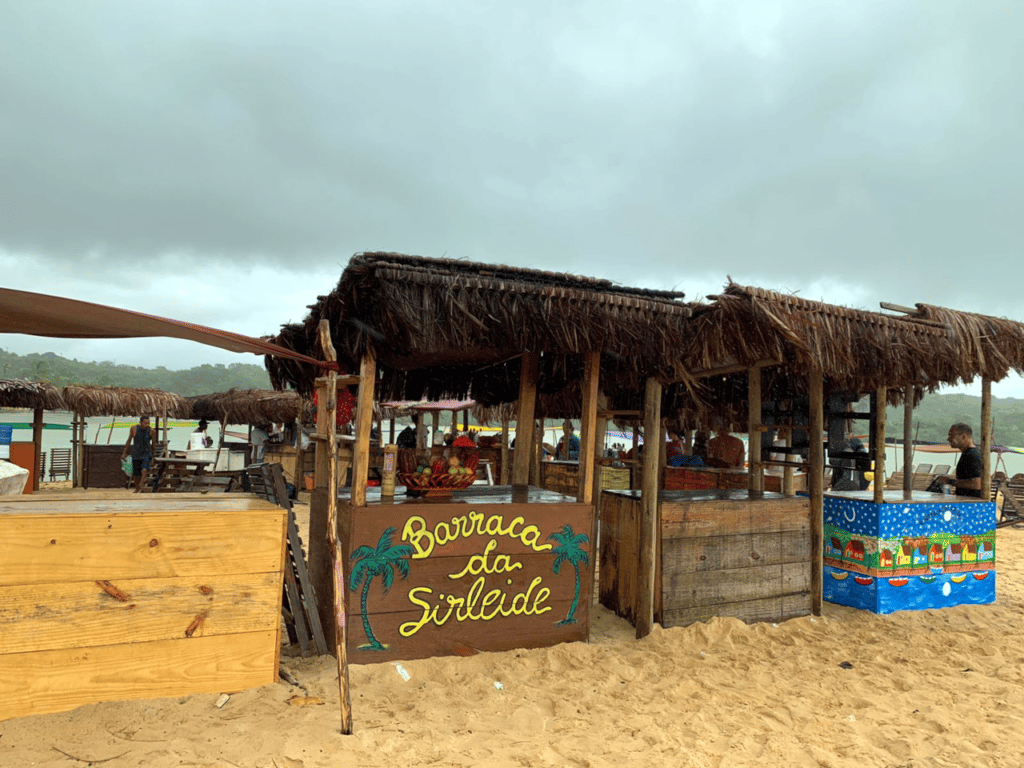 Stalls at Praia da Barra, Caraíva
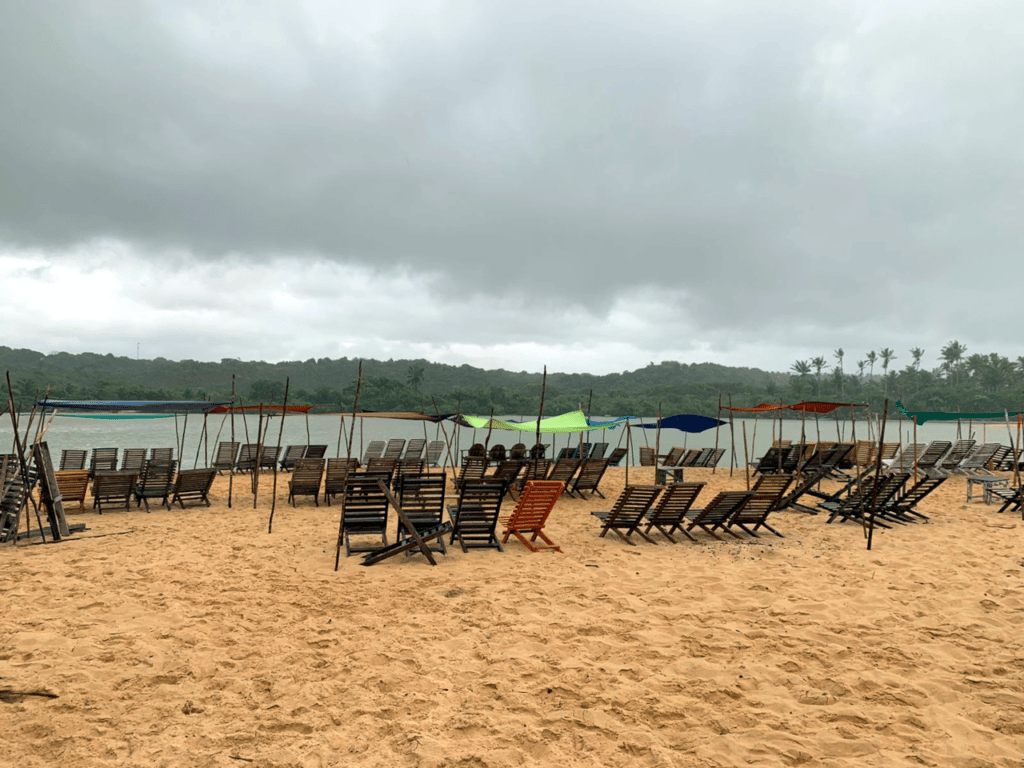 Chairs at Praia da Barra, Caraíva
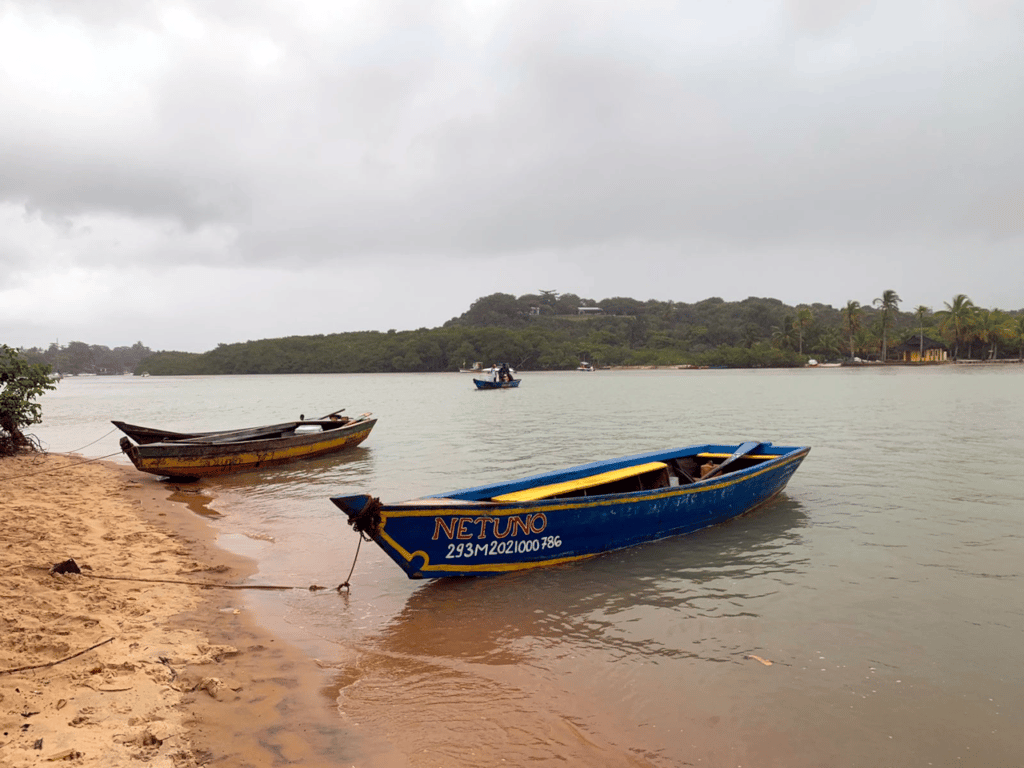 Praia da Barra, Caraíva
The wedding we attended was at the town’s most beautiful hotel, called Fazenda Bela Vista. From there, you can see the river meeting the ocean from above, and both views are absolutely worth it.
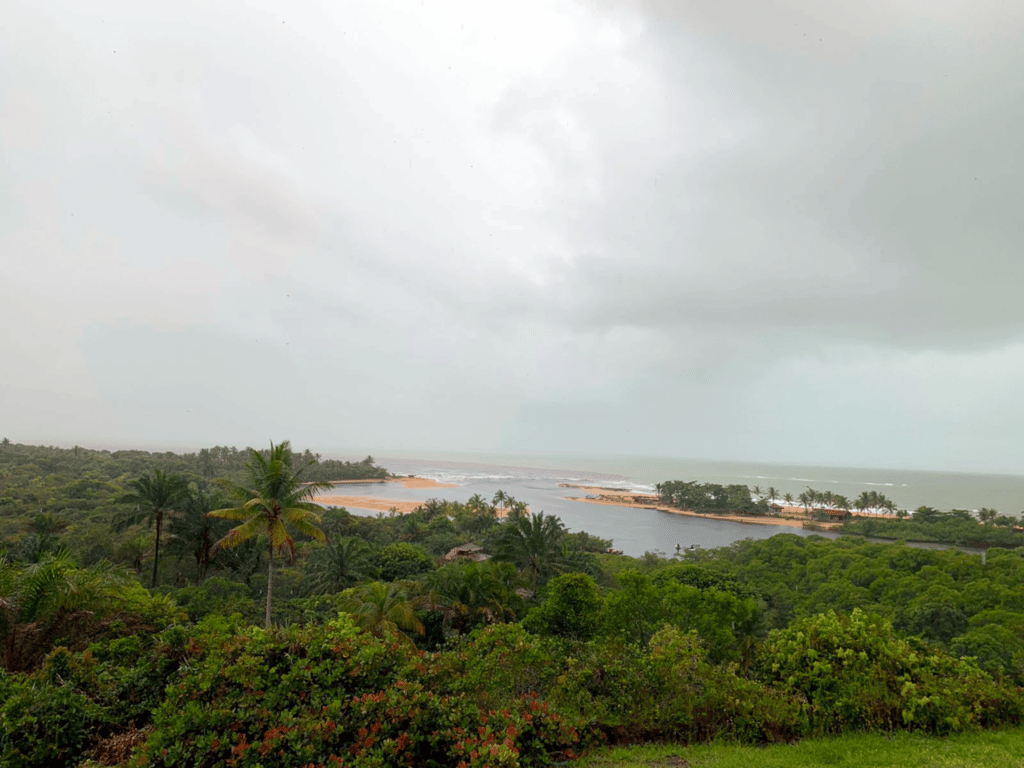 Barra de Caraíva, seen from Bela Vista
Praia de Caraíva
The ocean-side stretch at Ponta da Barra is called Praia de Caraíva. The water changes depending on the tide. It’s a long beach that runs along the whole village.
Praia de Caraíva
Along the beach, there are several bars, all really charming, making it genuinely hard to pick just one.
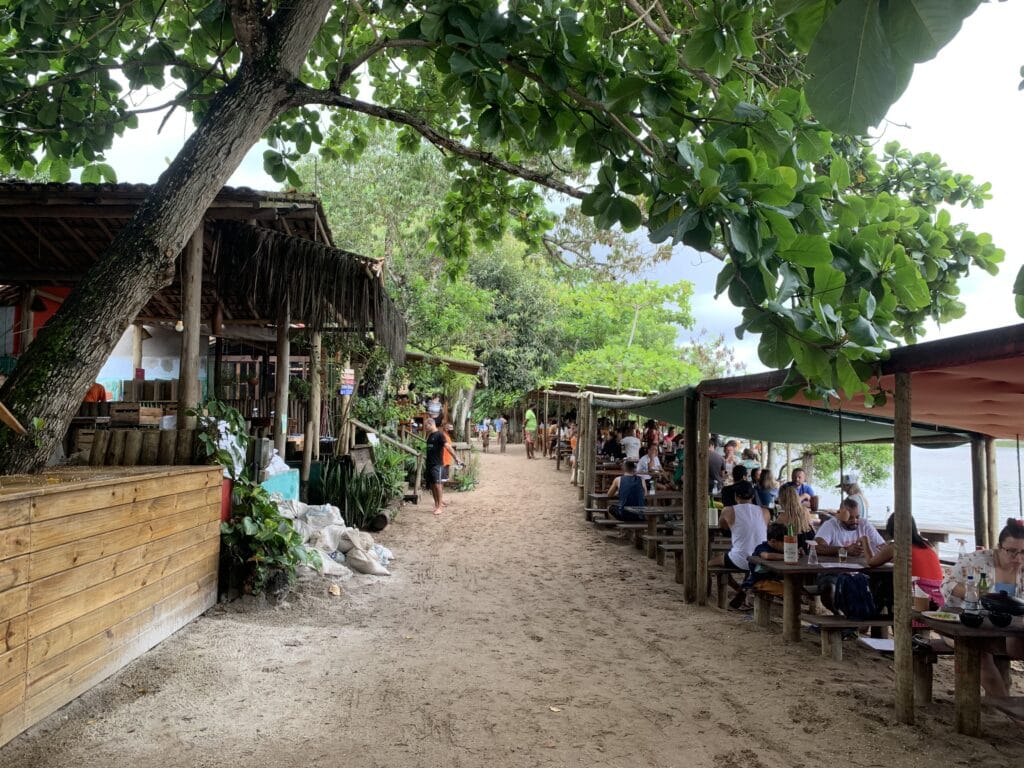 Restaurants in Caraíva
Continuing down the same street, for anyone wanting a souvenir, there’s an Indigenous market with small stalls selling locally made products, like necklaces and earrings.
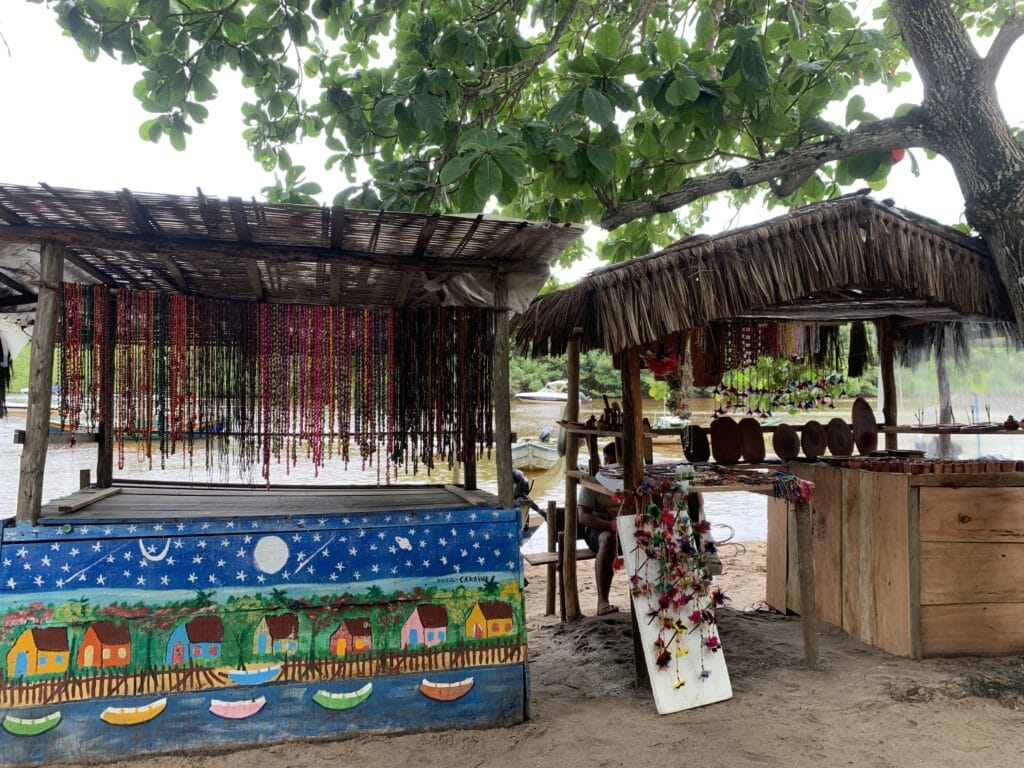 Indigenous market stall
There are also several small shops in town selling clothes, caps, and beach cover-ups branded with “Caraíva.” Our favorite was Vida Lira Caraíva, located at Pousada Cores do Mar. But there are others too, like O Atelier Aquarela, Caraíva Republic (home to the classic photo spot with the wall reading “Sorria Você Está em Caraíva”), and Casa da Heglay.
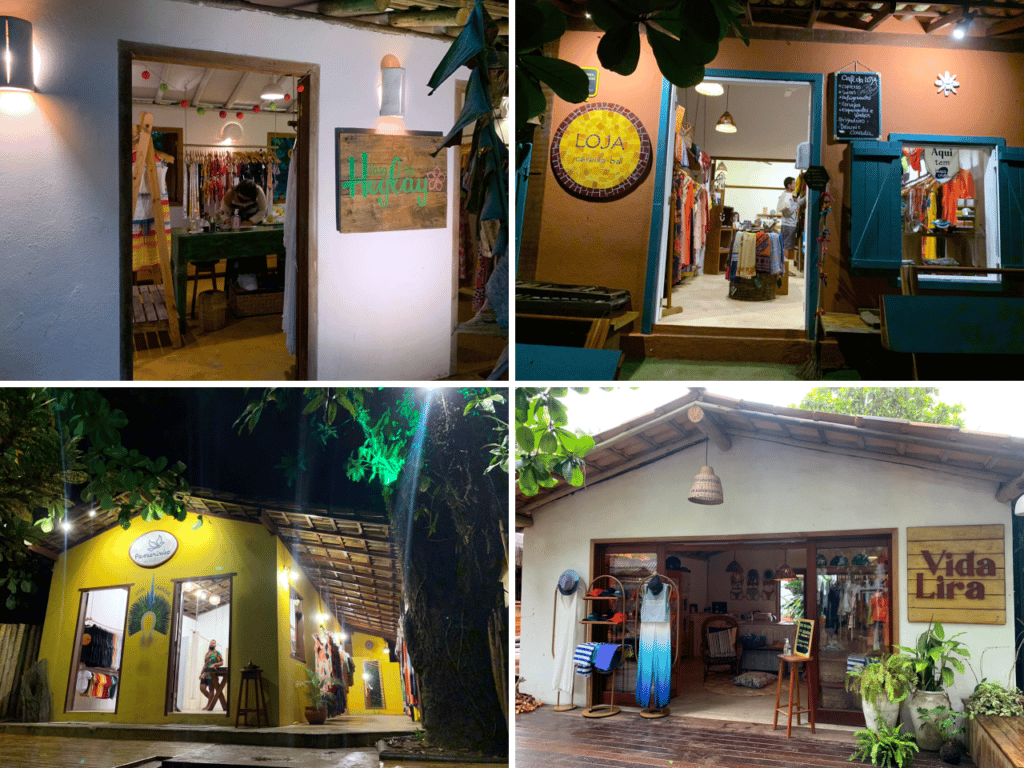 Shops in Caraíva
Buggy Tour to Ponta do Corumbau
We think this tour is a must-do, but we’d recommend being patient, since the buggy drivers tend to run late, or sometimes don’t even show up!!! We’d recommend booking through the association rather than an individual driver, since prices are standardized across the board. Plus, if you book through the association, they’ll send another guide if one doesn’t show. There are three buggy driver associations in the region.
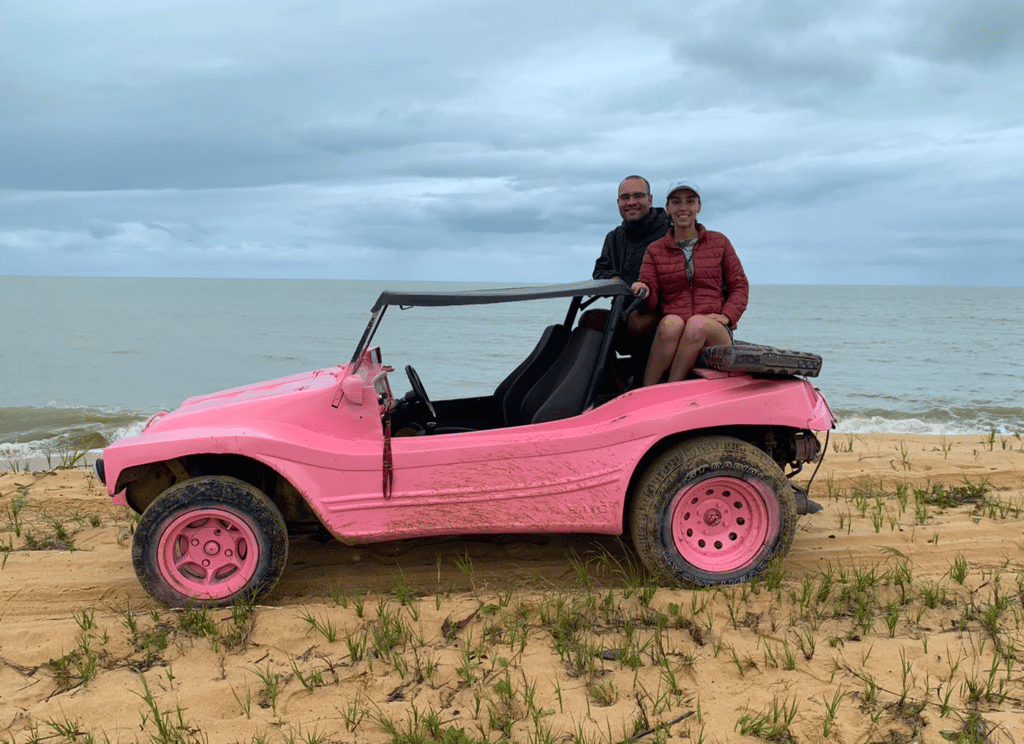 Buggy to Ponta do Corumbau
The buggy drivers in the region are either Indigenous or related to Indigenous families, and there are three tour destinations:
- The buggy tour to Ponta do Corumbau: costs R$110.00 per person, standardized rate. If you go solo, though, the price goes up to R$200.00.
- If you want to visit the Pataxó Porto do Boi reserve: one person is R$160.00, and from 2 people on, it’s R$80.00 per person.
- Caraíva x Reservatório Pataxó Porto do Boi x Corumbau: one person is R$300.00, and from two people on, R$180.00 per person.
The tour to the Pataxó reserve runs inside Parque Nacional de Monte Pascoal, established since 1962, and doesn’t operate Sundays or some holidays. So it’s best to check with the association ahead of time. The village marks the park’s northern boundary.
Vila de Corumbau
The village of Corumbau is in Prado, the municipality next to Caraíva. The drive is scenic, since you can see Monte Pascoal and a long stretch of beach along the way. The buggies stop at the edge of the Rio Corumbau, where boats cross the river (R$10.00 per person round trip). On the other bank, it’s just a 1 km walk, about 10 to 12 minutes, to reach Praia do Corumbau.
Since we went on a Sunday, we weren’t able to do the Pataxó reserve tour, since it was closed, though we’ve read accounts saying the tour isn’t especially interesting anyway, since it lacks a proper village setup.
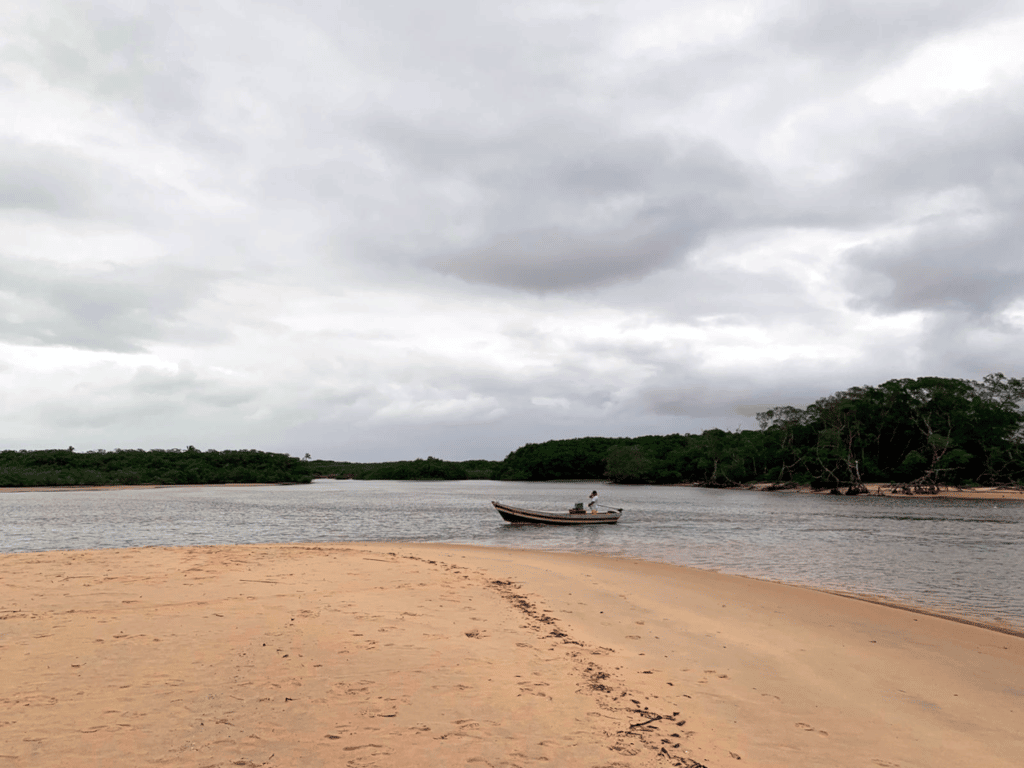 Boat to Ponta do Corumbau
Where to Eat at Praia de Corumbau
Once you arrive, you’ll need to pick a restaurant to enjoy the day at — we chose to spend the day at restaurant Panela de Barro, since we found the chairs really comfortable. The signature local dish is octopus rice (R$175.00, for two, though it could easily serve three), genuinely delicious, and we loved spending the day there.
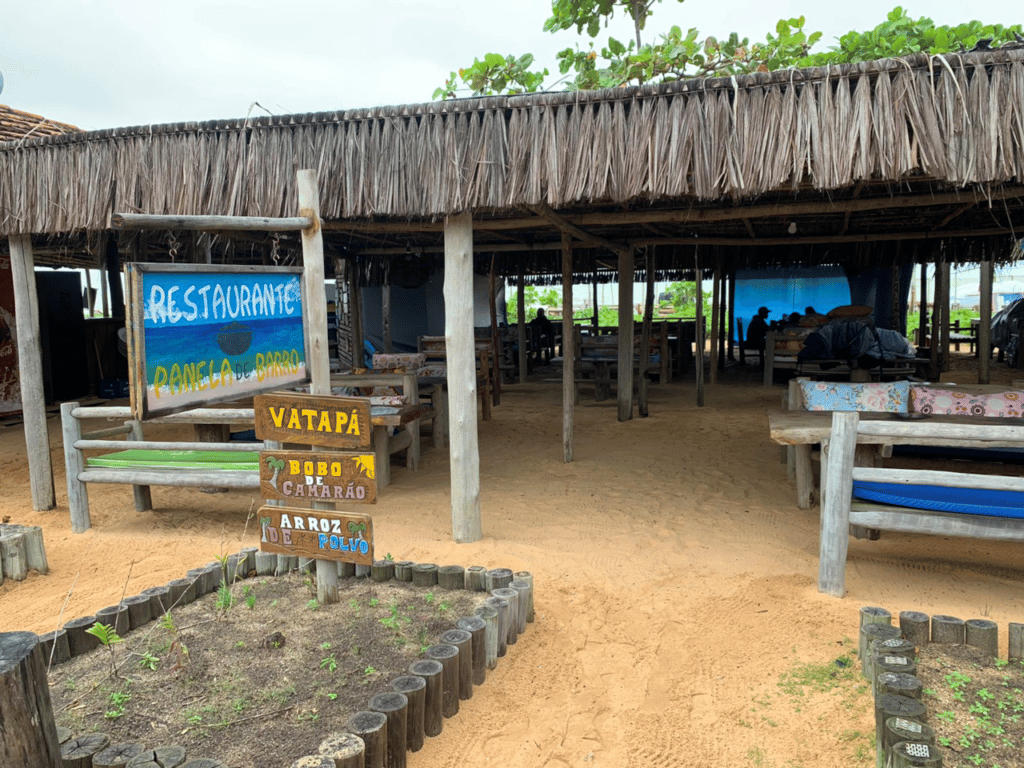 Restaurante Panela de Barro, Ponta do Corumbau
There are other, more affordable options too, like shrimp moqueca (R$130.00), fish moqueca (R$110.00), pasta with octopus (R$110.00), and carne de sol with cassava and rice (R$110.00).
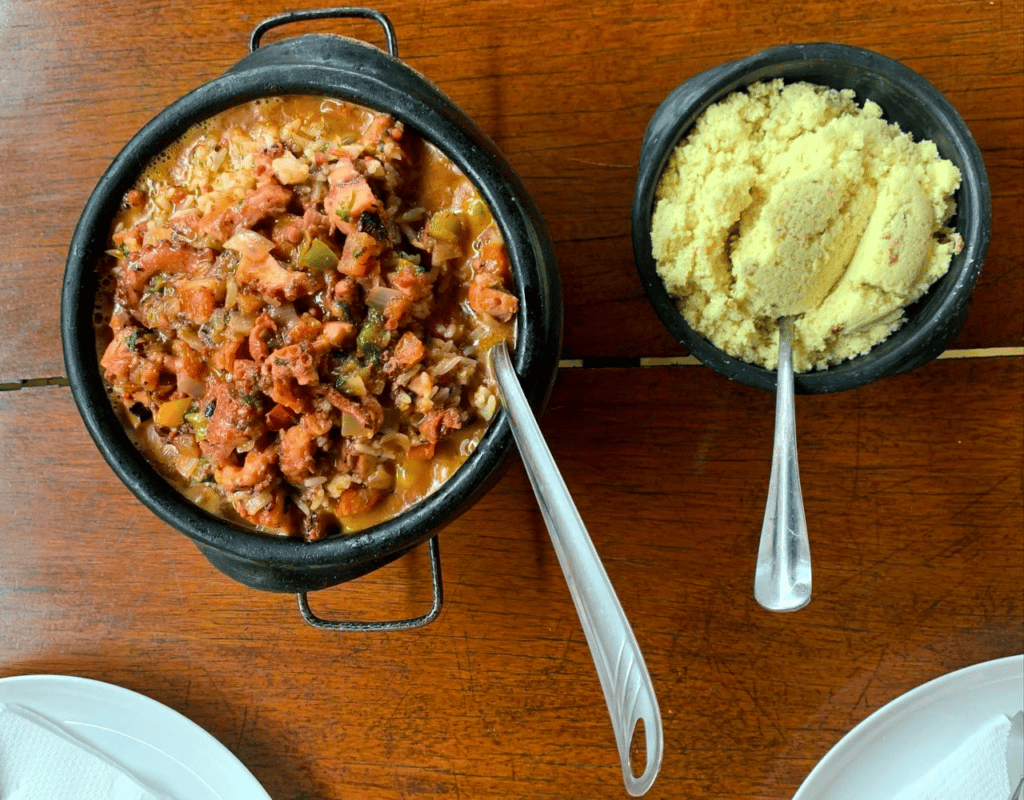 Octopus rice
Before heading back to the village, we made a stop at Prainha.
Prainha
The Prainha is a mangrove area, and the river here is part of the Rio Caraíva, located further upstream, away from where the river meets the ocean. On the day we visited, it was foggy, so we couldn’t see the sunset, but our guide told us this is the most beautiful spot around.
In summer, you can go canoeing or float down the river’s current on an inner tube.
Before the pandemic, a bar that only opens in summer, called Busca Vida Caraíva, opened here, since electronic music isn’t allowed in the village itself, and this bar played it — though it was dismantled when we visited, with plans to reopen in summer, though nothing confirmed.
Another way to reach Prainha is by boat upriver, or by walking 20 minutes toward the Xandó neighborhood (1.5 km along a small sand road) to enjoy the sunset.
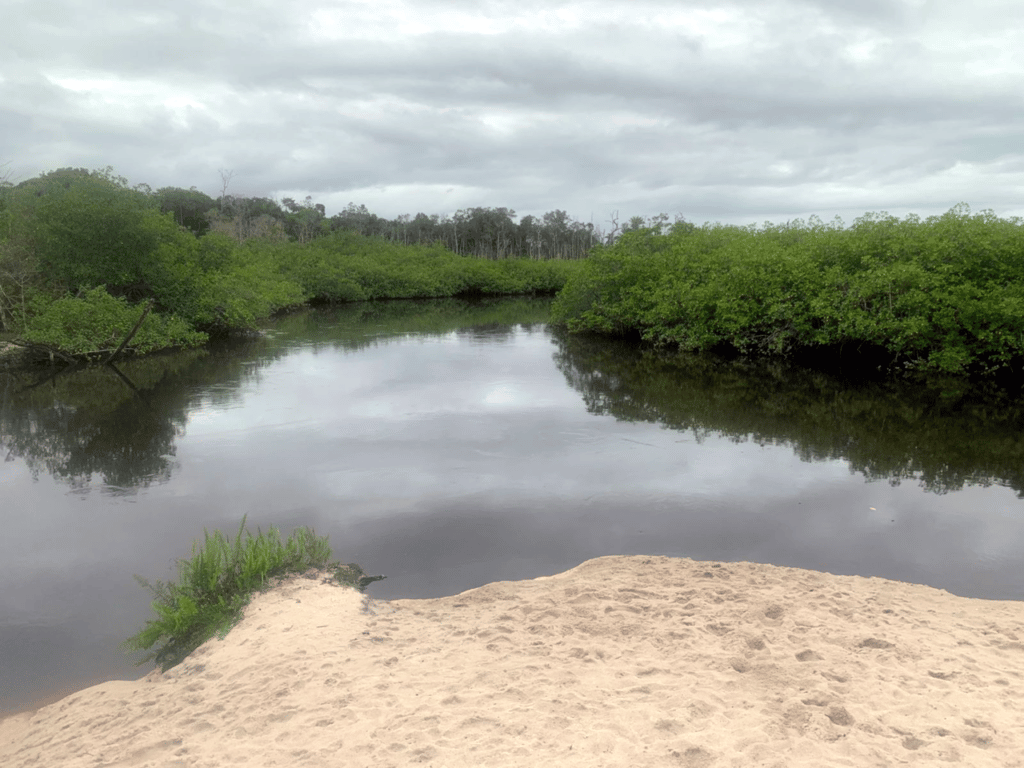 Prainha, Caraíva
Strolling Through the Village
The village is fantastic for lots of colorful photos to remember your trip by. The town’s signature blue paint, which you’ll find on every corner, was done by Duca, a well-known figure in Caraíva. She also runs an atelier-restaurant serving great vegetarian food (with some vegan options), open for breakfast and lunch, though we ended up not getting the chance to visit.
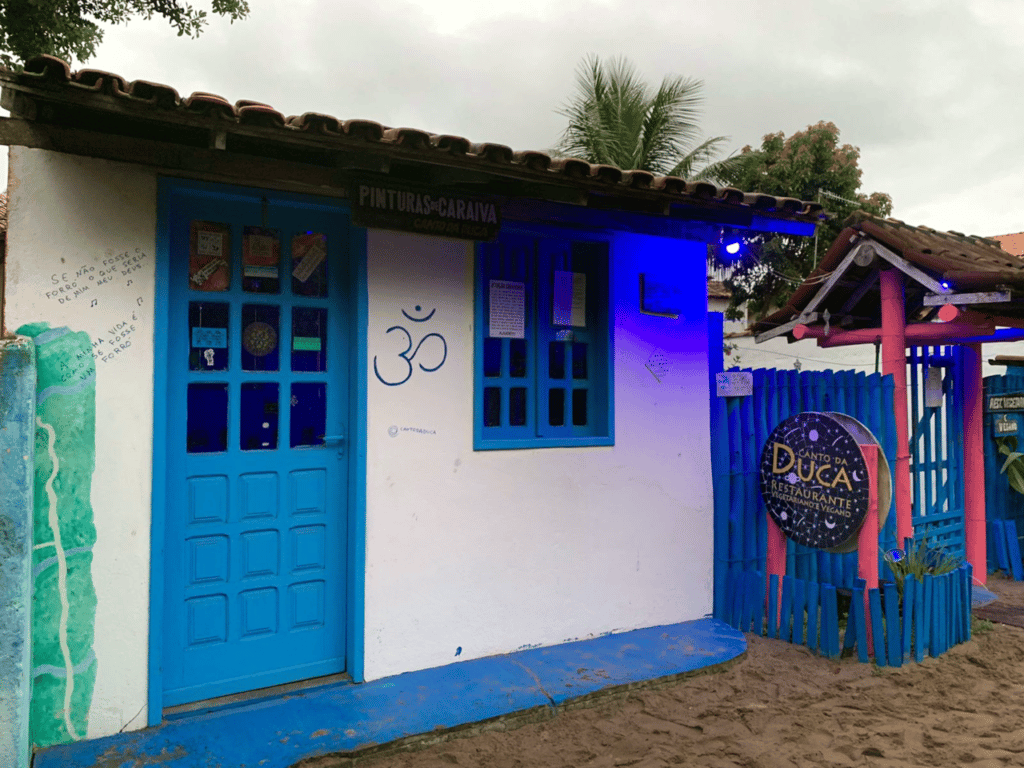 Canto da Duca
There are colorful signs and houses scattered throughout the village. Downtown is also home to the church.
The Igreja de São Sebastião was built with whale oil and bone, along with shells, stones, and sand — it’s a designated historic landmark and one of the oldest churches in Brazil.
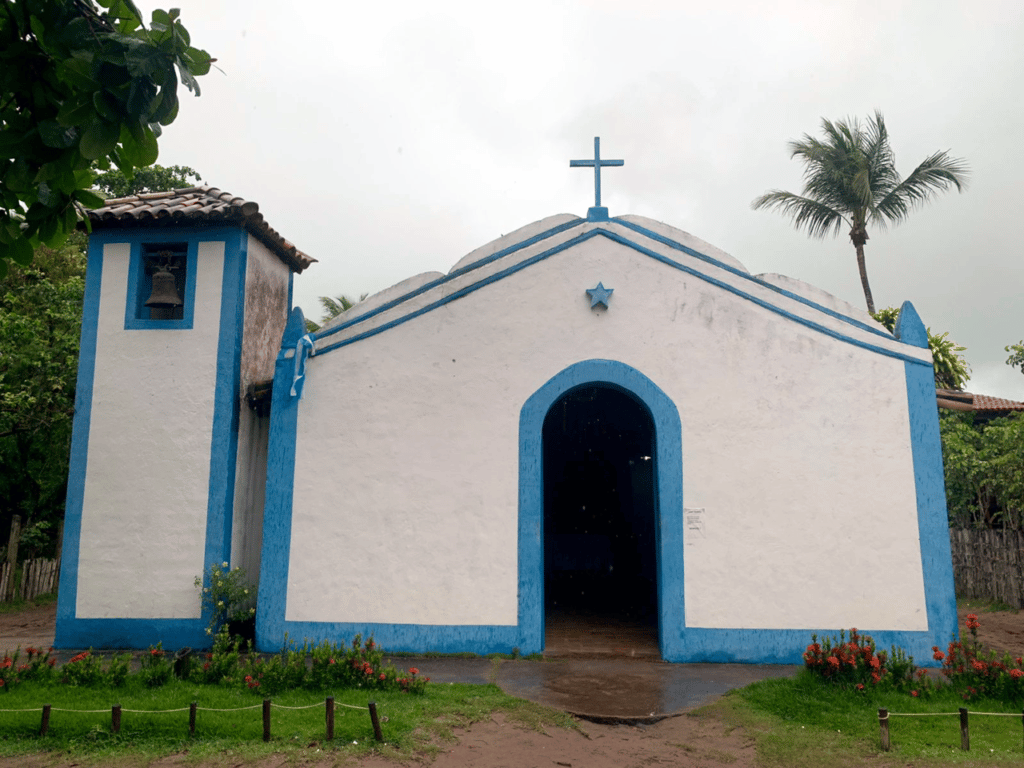 Igreja de São Sebastião
Other Tips for Caraíva
There are two beaches that, because of bad weather and our flight getting moved up 8 hours, we weren’t able to visit — but we’ll still share the tip, and would add them to your list, since they’re a bit harder to reach, requiring a long walk on foot.
The photos below were taken by a friend of mine from running, Silvio, who visited a week later! Thanks for the photos!
Praia do Satu
Praia do Satu is 3 km from the village of Caraíva. To walk there, just take a canoe from the village, at Praia da Barra, cross to the other side, and continue walking along the shore toward Trancoso. There’s also the option of taking a speedboat or a taxi there. People say the beach is beautiful and worth spending the day at, or pairing with a visit to Praia do Espelho.
This route can only be done at low tide, so don’t forget to check the tide chart.
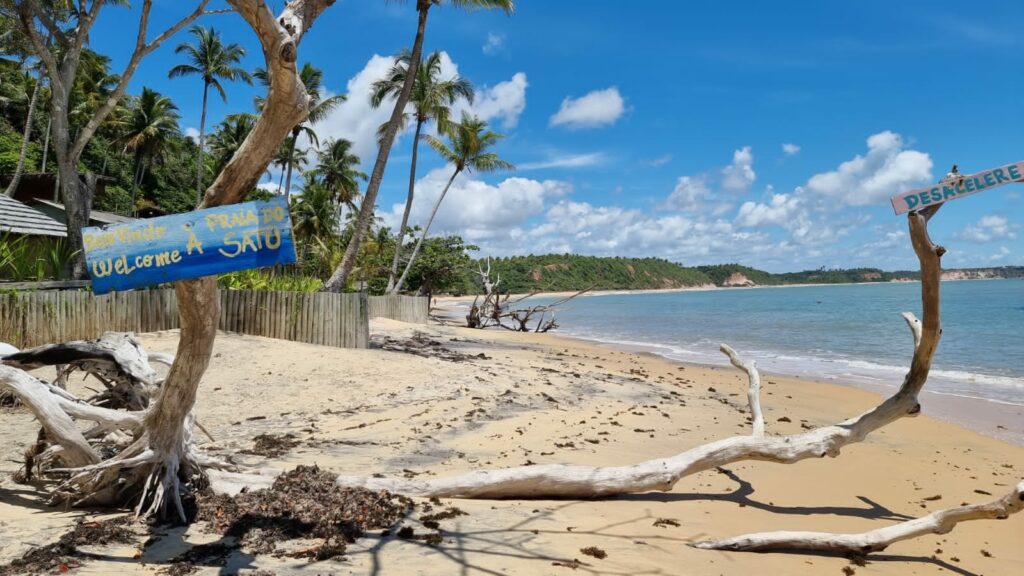 Praia do Satu
Praia do Espelho
Praia do Espelho is about 9 km from the village of Caraíva. Despite the distance, you can walk there via a trail along the top of the cliffs, or take a bus, speedboat, or taxi, depending on your budget.
If taking the bus, keep an eye on the schedule, since it runs around 5 PM. The bus stop is also about 1.5 km from the beach, near the entrance to Condomínio Outeiro das Brisas, so watch out for reported robberies along the way too.
There are natural pools at low tide, coconut trees, and a few bars, restaurants, and hotels along the shore. It’s not a cheap spot, but it’s beautiful and worth visiting — try to go on a sunny day, so you can see the sky reflected in the water, which is where the beach gets its name, Espelho (“Mirror”). On rainy, overcast days, the water turns brown, and you miss out on the beauty of the place.
Where to Eat in Caraíva
Caraíva has restaurants for every taste. The most famous of all, once considered the region’s best, was Jacarandá — we were genuinely excited to try it, but it’s since closed.
I’ll walk you through our restaurant experiences in the area.
Restaurante Odara Caraíva
Odara (Instagram) is the big promise for summer — a new restaurant that’s already ranking among the best in the village, serving elaborate cocktails and beautifully presented contemporary dishes. Standouts include the fish baked in a clay tile (R$75.00), which we found wonderful, and the Odara octopus (R$88.00).
There are two dessert options: Belgian chocolate mousse with salted cashew praline and blackberry jam (R$24.00), which is what we chose and it was wonderful, and Cocada Brûlée (R$25.00).
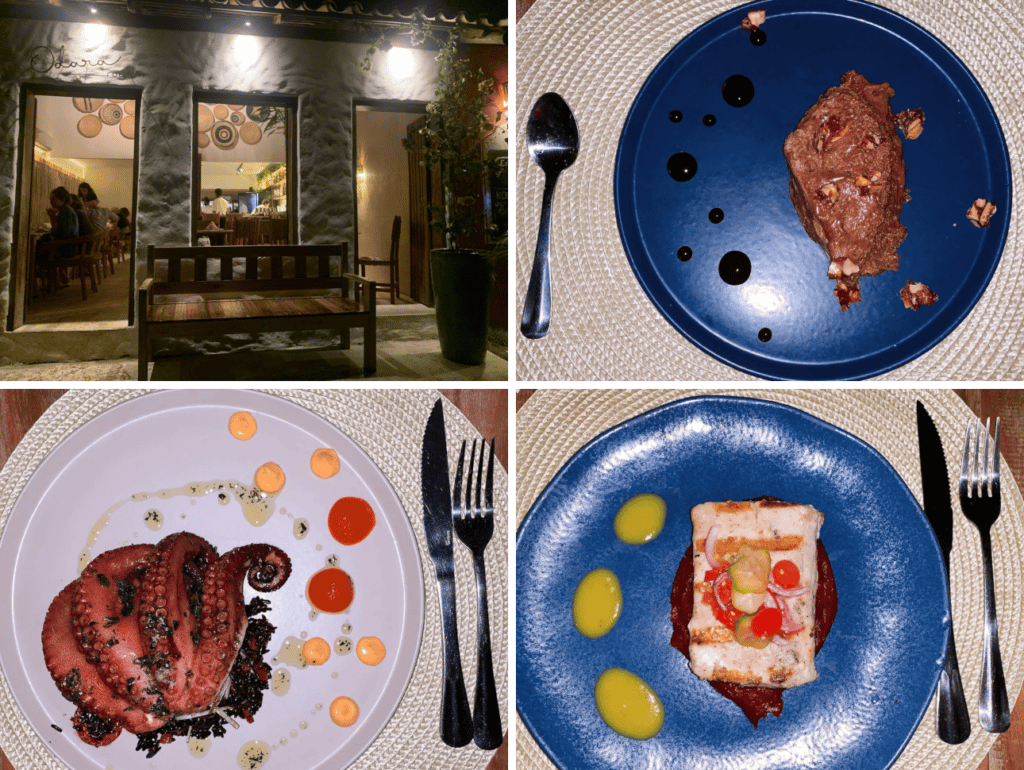 Restaurante Odara
Boteco do Pará
Boteco do Pará (Instagram) has outdoor tables in the shade of the trees, beautiful lanterns hanging from the branches, and it’s always packed. It’s famous for its stingray pastel (R$12.00) and its house craft IPA (R$30.00). It gets especially busy at sunset, since it sits right on the riverbank.
There are other dishes too, like moquecas (ranging from R$130.00 for fish to R$170.00 for octopus), fish baked in a clay tile (R$190.00), and shrimp bobó (R$125.00), which can serve up to 3 people.
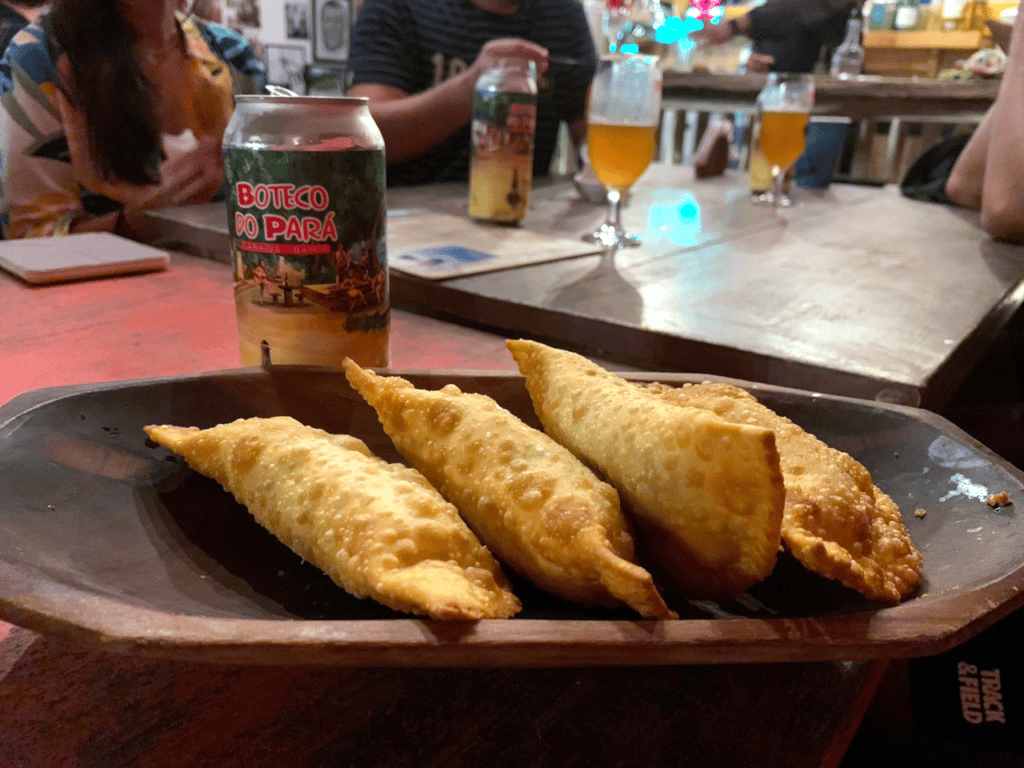 Stingray pastel at Boteco do Pará
Gabriela Bar e Panela (Tapioca Caraíva)
Tapioca Caraíva changed its name and is now called Gabriela Bar e Panela (Instagram), and beyond the region’s famous tapiocas, they now serve full dishes too.
We ordered the Maní tapioca (R$27.00), filled with shrimp, and the Sertão (R$27.00), with carne seca and coalho cheese, which was our favorite, plus a sweet one, the Azedinho Doce (R$25.00), with dulce de leche and lime zest, which was delicious!
Their dishes include several stroganoff varieties (R$45.00), small pans with baião de dois (R$45.00), galinhada (R$45.00), Arroz do Mar (R$60.00), plus pasta and pizza options.
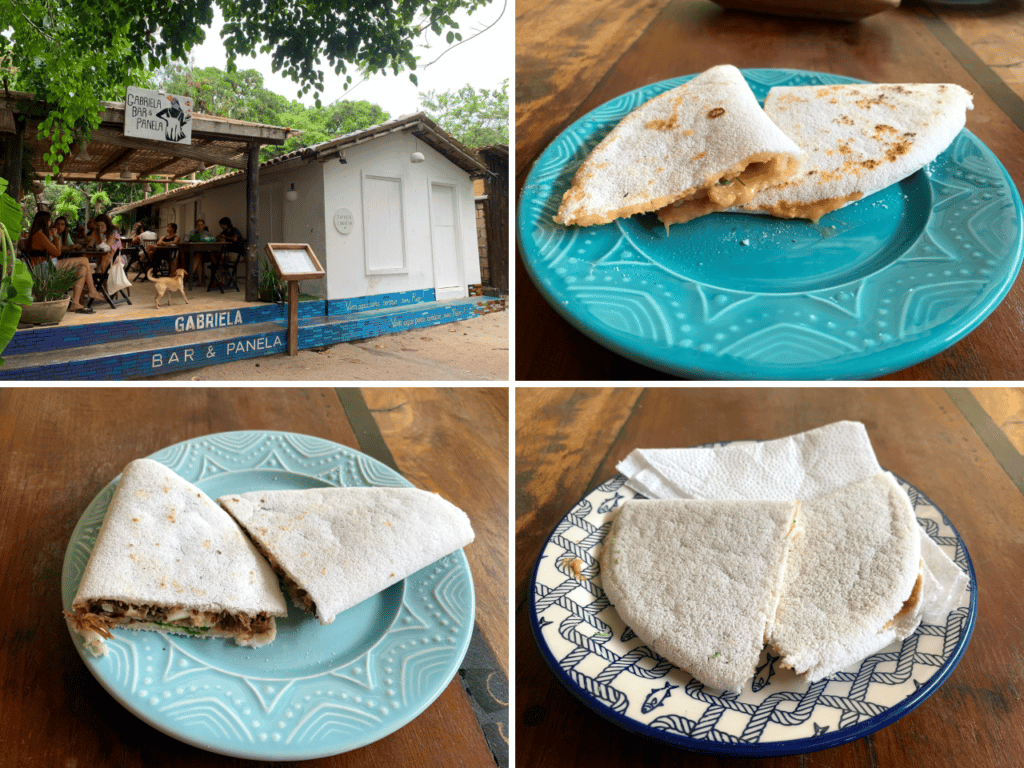 Tapiocas at Gabriela Bar e Panela
Beco da Lua
At Beco da Lua, there’s a great spot for a gin — we’d recommend checking it out.
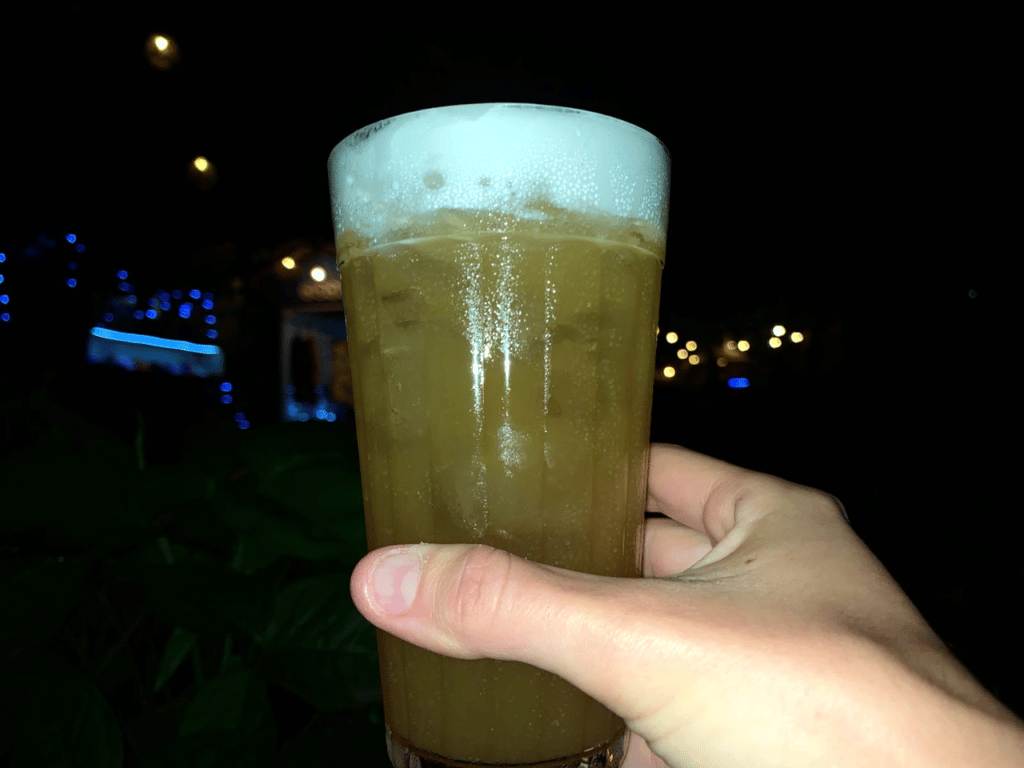 Gin at Beco da Lua
Read the original version in Portuguese on A Bela e o Bigode.