What to Do in Espírito Santo do Pinhal
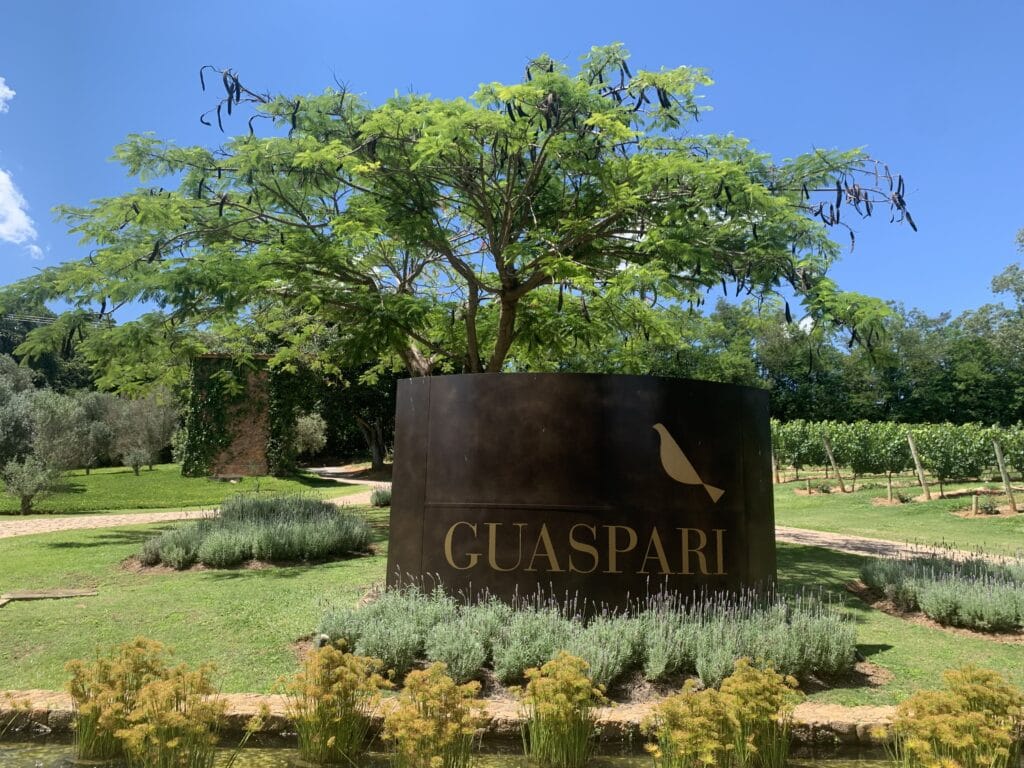
Espírito Santo do Pinhal is known as the “Brazilian Tuscany” and also as the “State Capital of Coffee,” surrounded by coffee plantations and vineyards, the main one being Vinícola Guaspari. The town sits in the Mogiana region, in the Serra da Mantiqueira, in São Paulo state.
We came to explore the region specifically because of the winery, and we found plenty of other things to do in town. According to locals, several coffee farms are being converted into wineries, with more than fifteen expected to start producing wine in the coming years.
The municipality was founded in 1849 by Italian settlers who took advantage of the era to grow coffee. The entire territory once belonged to a single property, the Fazenda do Pinhal, a former Sesmaria land grant, which began being settled in 1877 and later grew into a village.
How to Get to Espírito Santo do Pinhal from São Paulo
By car, follow the Rodovia dos Bandeirantes toward Campinas, then the Rodovia Governador Doutor Adhemar Pereira de Barros, 198 km from the capital (roughly a 2.5-hour drive).
By bus, you can go through the Tietê bus terminal with Viação Santa Cruz, which covers the route in about 4 hours.
What to Do in Espírito Santo do Pinhal
The town splits into two kinds of itineraries: rural tourism and historic downtown tourism, plus a few other attractions, all worth exploring, since many colonial-era townhouses from the coffee baron era have been designated landmarks and remain well preserved. There are also several churches worth visiting, both for their architecture and religious history.
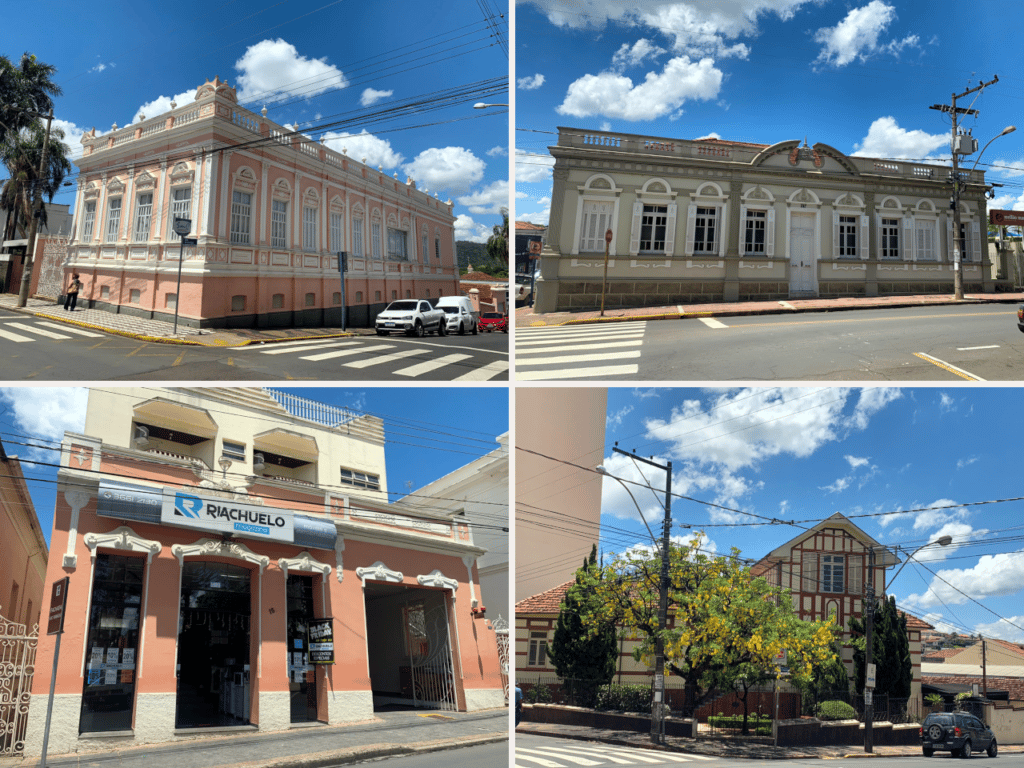 Colonial townhouses
Rural Tourism
Even though these spots are in the rural area, they’re roughly 15 to 20 minutes from downtown, so they’re actually pretty close.
Vinícola Guaspari
Vinícola Guaspari was the whole reason for our trip, thanks to its great wines, and it’s currently the darling of Brazil’s wine scene, since it’s won several international awards, including from the British magazine Decanter, which awarded it gold medals for best Syrah in 2012 and 2016.
Its story began in 2006, when the first vines were planted, and by 2008, wine was being produced by hand. They use the double pruning method, where the harvest happens in winter, during July and August, just like the wineries in São Bento do Sapucaí.
The farm used to grow coffee and was converted into a winery. Winery tours run on weekends, with a tasting of four house labels, paired with naturally leavened bread and artisan Pardinho cheese. Bookings are made through the official website, where you’ll find pricing and hours, though it’s hard to book given the demand. It took us about three months, so we’d recommend checking the site regularly to catch new date openings.
Another option is booking the winebar, which serves snacks, letting you order the label of your choice to taste — this also requires booking in advance.
Under the direction of agricultural engineer Fabrícia Gennari Zuccherato, Guaspari has grown into a producer of quality wine, coffee, and olive oil — though the olive oil isn’t currently available, since the plantation caught a fungus and the olive trees had to be replanted.
We loved the visit, and we’d recommend going, since the winery is beautiful and the wines are excellent!
Vinícola Guaspari
Vinícola Innvernia
Innvernia is a winery just getting started, with a fun, unique concept, where you can plant your own vine, along with morning-toast and sunset-toast tours. They’re also building a lavender field and sunflower plantation.
The owners, Marcelo and Eduardo Cruz, are extremely friendly and showed us their plans, which will be genuinely grand, including a hotel, restaurant, and tasting tours. They plan to build an old-style Italian village, expected to be ready in about 2 years.
We had the privilege of tasting wines still aging in barrels, stored using a method similar to camphor storage, once used to age wine in ancient times — and it was my favorite.
A winery that’s set to grow significantly, already in the wine-production stage, and a big promise for the market. Bookings through the official website.
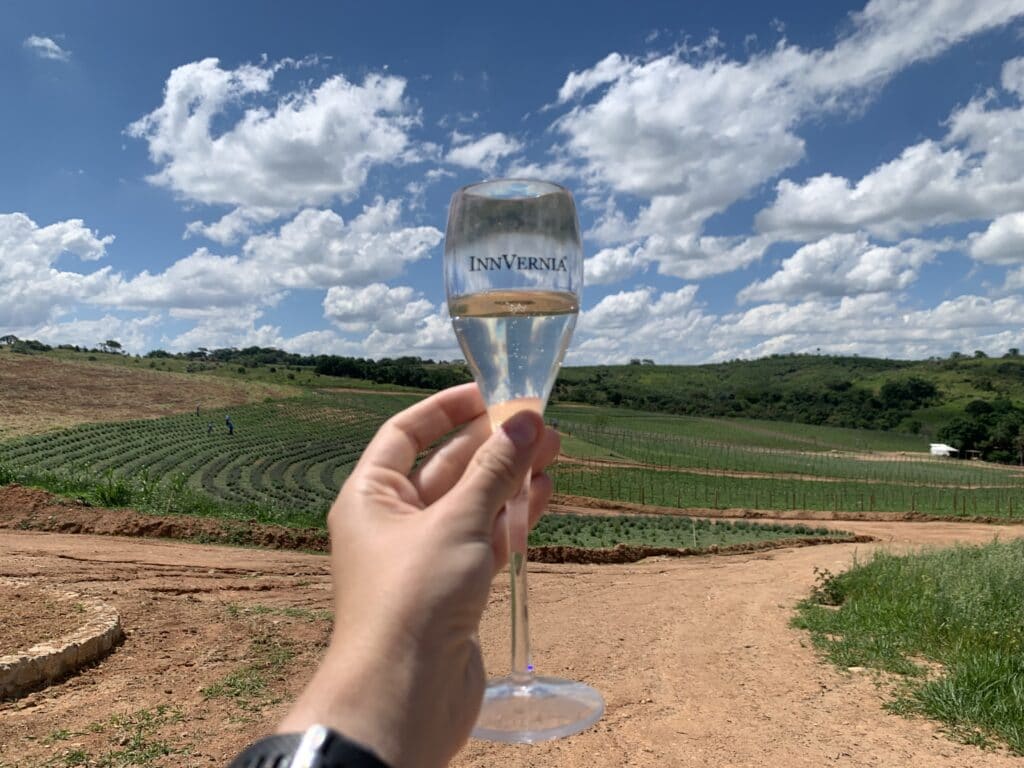 Vinícola Innvernia
Other Wineries
Two other wineries we passed, both still under construction, are Ammana and Miranthus. We made a quick stop at the latter, and the view over the town is wonderful, since it sits at the municipality’s highest point. But both are still in the very early stages of construction.
Do Genoma à Xícara
Andreia, a genuinely lovely local coffee producer, runs the “Do Genoma à Xícara” (“From Genome to Cup”) project. The tour breaks down into three parts.
The first part of the visit is downtown, at the Palácio do Café, where she tells the story of coffee’s importance to the town. The second part takes you to see the crop fields, which we found the most fun part, since she reenacts the whole process, from the clothing worn to how coffee is picked, handled, cleaned of impurities, and roasted.
Finally, the third part is touring the old main house and threshing grounds, packaging and extraction methods, wrapping up with a tasting of the cloth-filtered coffee, paired with cake and warm bread. More information and bookings via Instagram or by phone at (19) 999211272.
The tour lasts 2:30 to 3 hours, and you’ll need to drive your own car between stops — we thought it was well worth it.
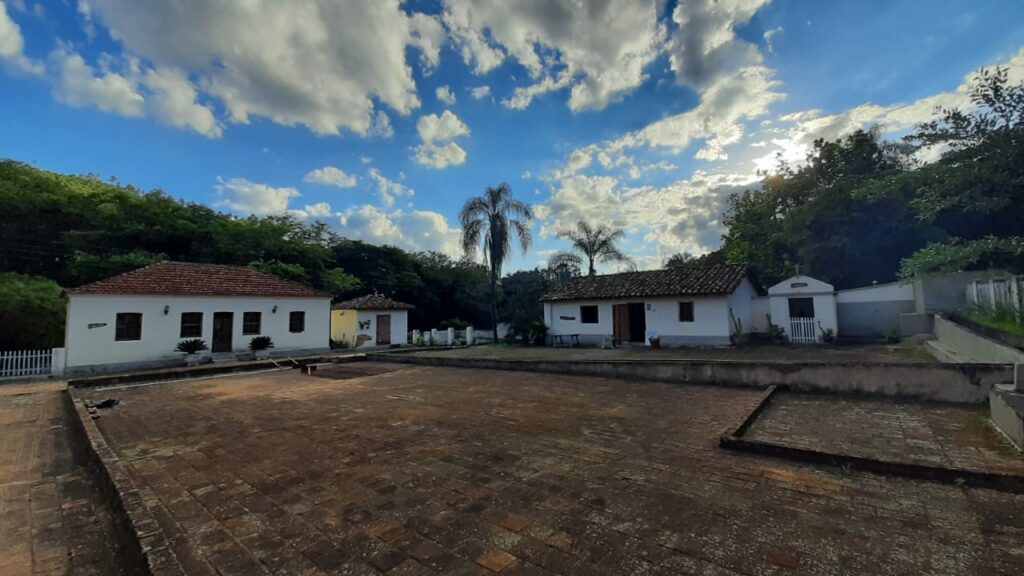 Threshing grounds, “Do Genoma à Xícara”
Fazenda Retiro Santo Antônio, or Kaynã
Kaynã comes from Tupi-Guarani, meaning “forest dweller,” and the farm started in 2004 — we loved Jefferson, the owner. He focuses his production on sustainable food, tourism, and shopping, like his stone-mill cornmeal, using a mill from the 1950s, producing corn with low pesticide levels.
The cornmeal recipe became so well-known that it’s now sold at ATA, at the Mercado de Pinheiros, owned by chef Alex Atala, of the restaurant DOM. The property also grows coffee, presented alongside the cornmeal during tours lasting about 1 hour, bookable through the official website.
The property is also undergoing renovation, adding a space to enjoy cake, coffee, and beer, expanding the site’s tourism offerings even further.
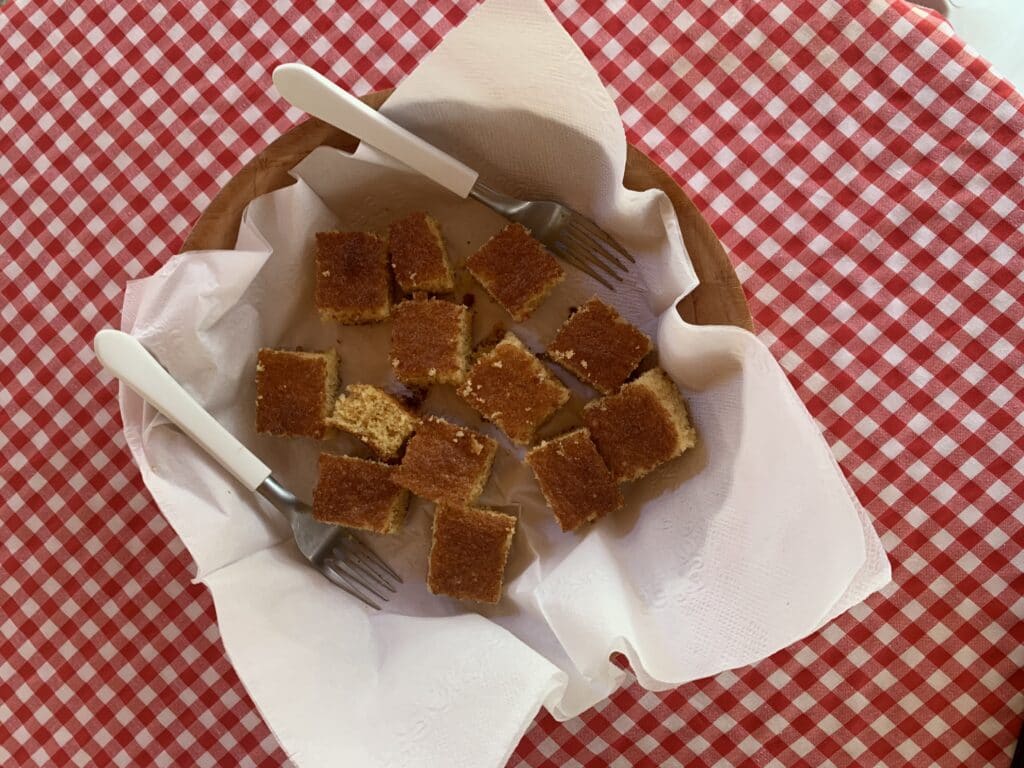 Cornmeal fritter from Fazenda Kaynã
Historic Downtown Espírito Santo do Pinhal
As mentioned, the historic downtown is well preserved and worth exploring.
Theatro Avenida Pinhal
Theatro Avenida, opened in 1927, is a privately owned building, and because of that it spent years closed, before being restored and reopened in 2009, when the city government bought the property, restoring its elegance and once again making it an important cultural hub. Check the schedule on the venue’s official page.
When we visited, it was closed, so we weren’t able to see inside, but the photos are beautiful.
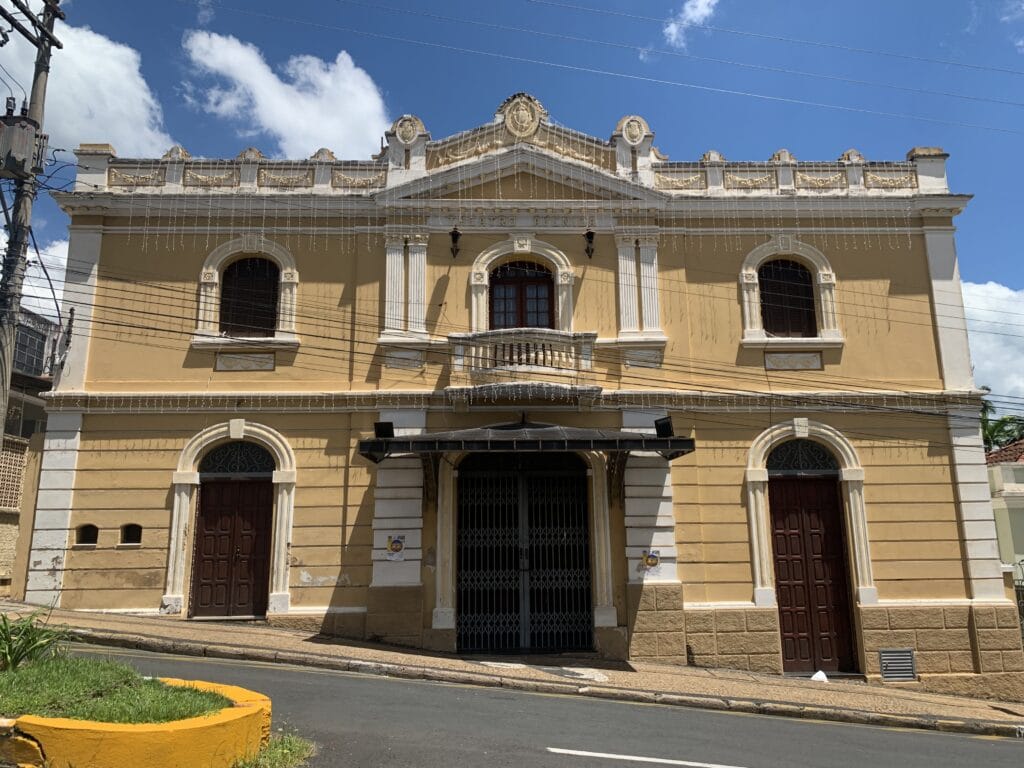 Theatro Avenida
Praça da Independência
Praça da Independência is typical of an interior town square, with the Igreja Matriz and townhouses around it, along with old buildings, a bandstand, clean and well shaded. The Igreja Matriz’s interior is simply unmissable, with paintings covering nearly every wall, including the dome. Its wooden altar is beautiful and absolutely worth seeing.
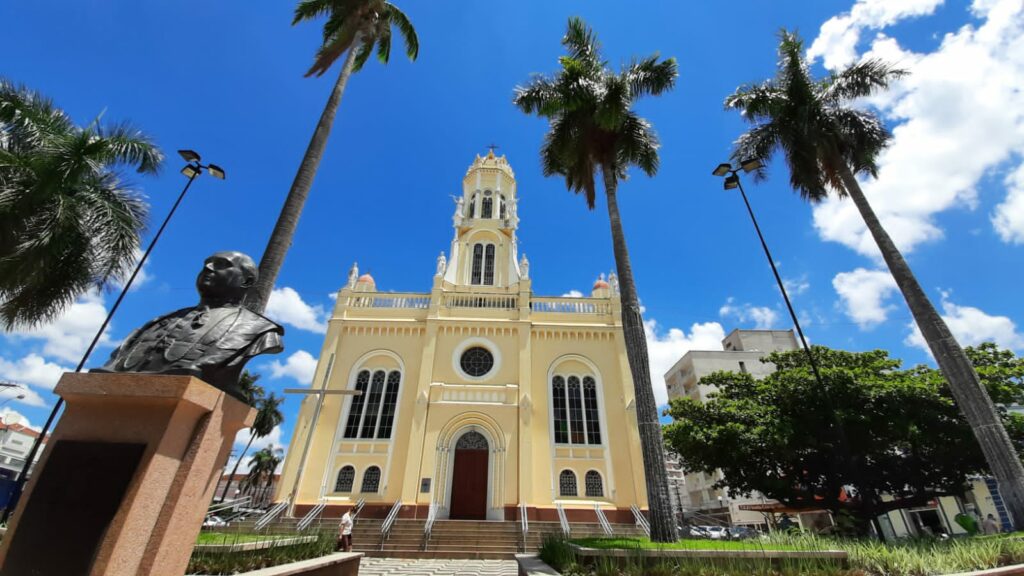 Praça da Independência
Palácio do Café
The Palácio do Café is an imposing building on Praça Rio Branco. It used to be a cemetery, and was transformed in 1890 into a prestigious public building, later serving as City Hall for several years before becoming a space dedicated to the crop then known as “black gold.”
Right out front stands a bronze statue by Lecy Beltran, “O Colhedor de Café” (“The Coffee Picker”), honoring coffee farmers and the traditional sieve technique used to clean the beans.
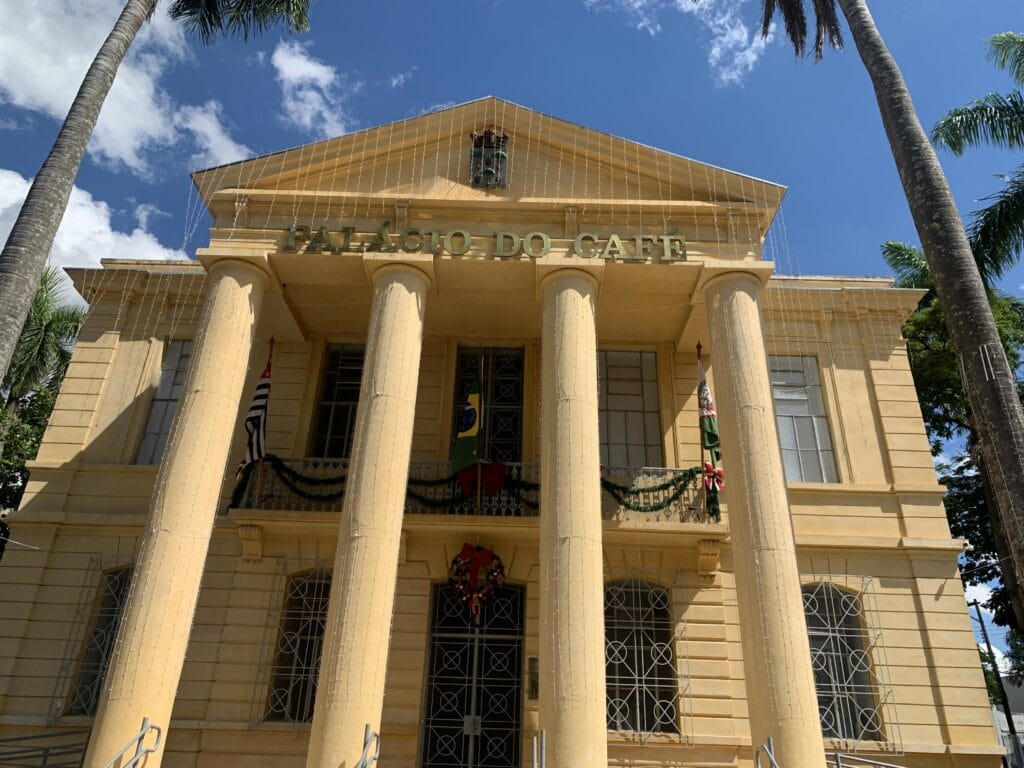 Palácio do Café
Other Attractions in Espírito Santo do Pinhal
Lago Municipal de Pinhal
Lago Municipal de Pinhal is one of the town’s main attractions, a great option for relaxing and enjoying nature. It has a track around it for running, walking, or biking. It’s also a great spot to bring kids, since it has a playground.
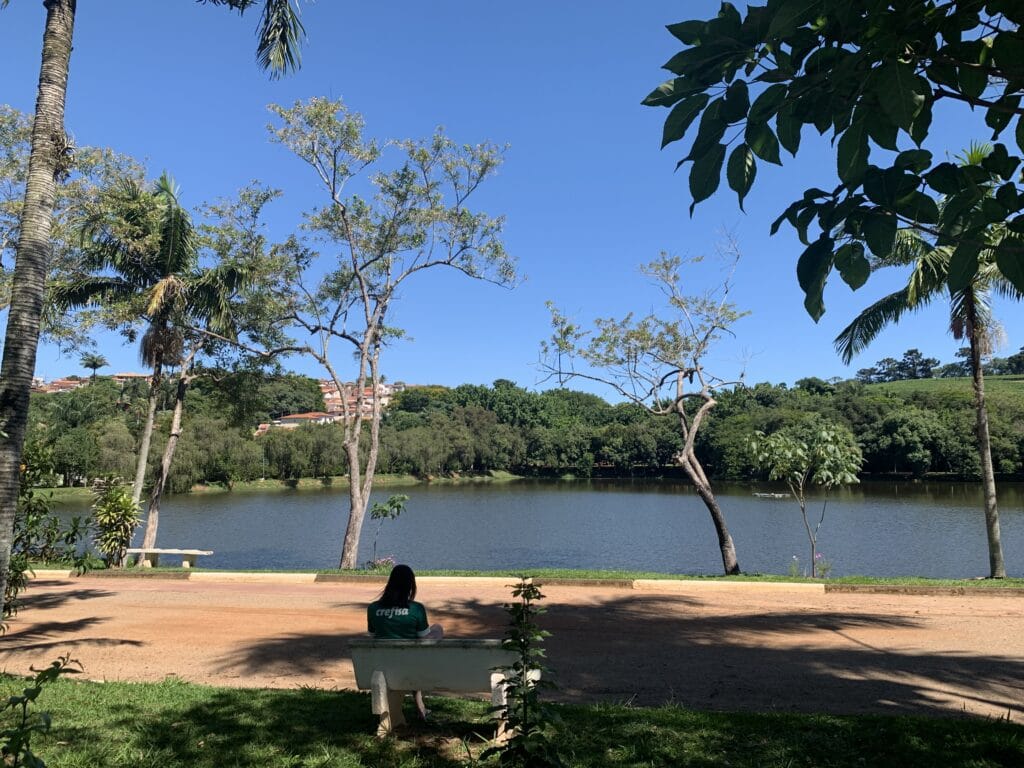 Lago Municipal de Pinhal
Old Train Station
Coffee brought the railroad to the region, fueling business and regional growth. The rail line no longer exists, but the old station has been revitalized, with plans to turn it into a cultural center, with shops and cafés.
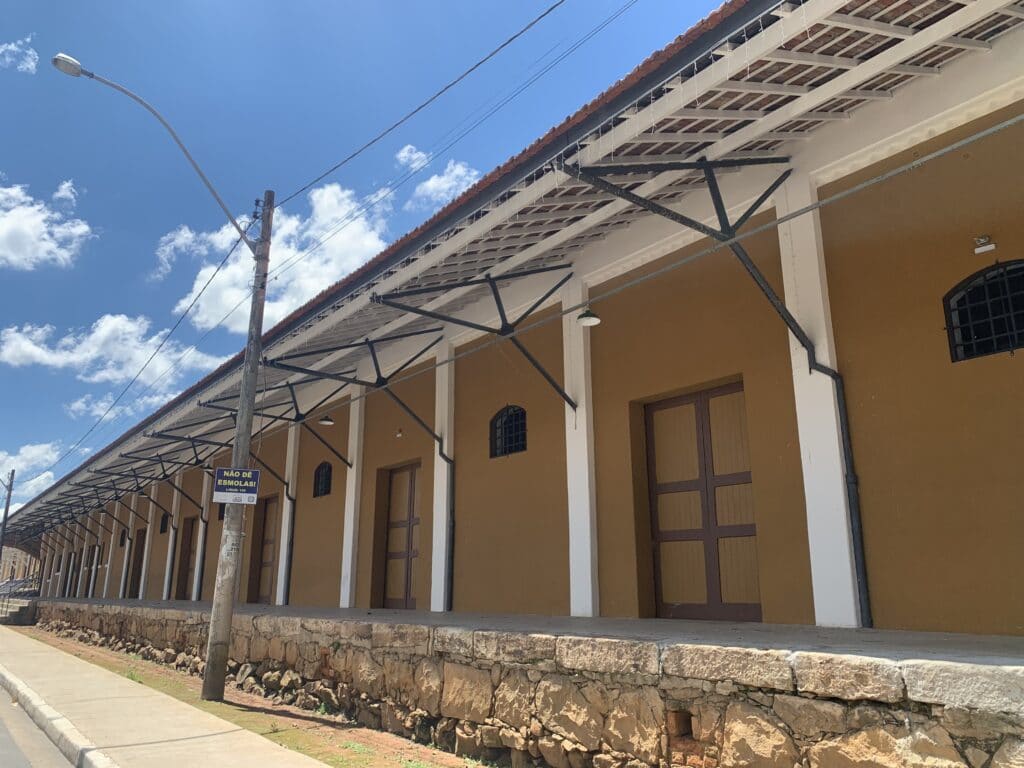 Train station
Cristo Redentor, Espírito Santo do Pinhal
Located in the Monte Alegre neighborhood, this Cristo Redentor is a replica of the original monument in Rio de Janeiro. Only worth a photo, though, since it’s now surrounded by houses and hard to see clearly.
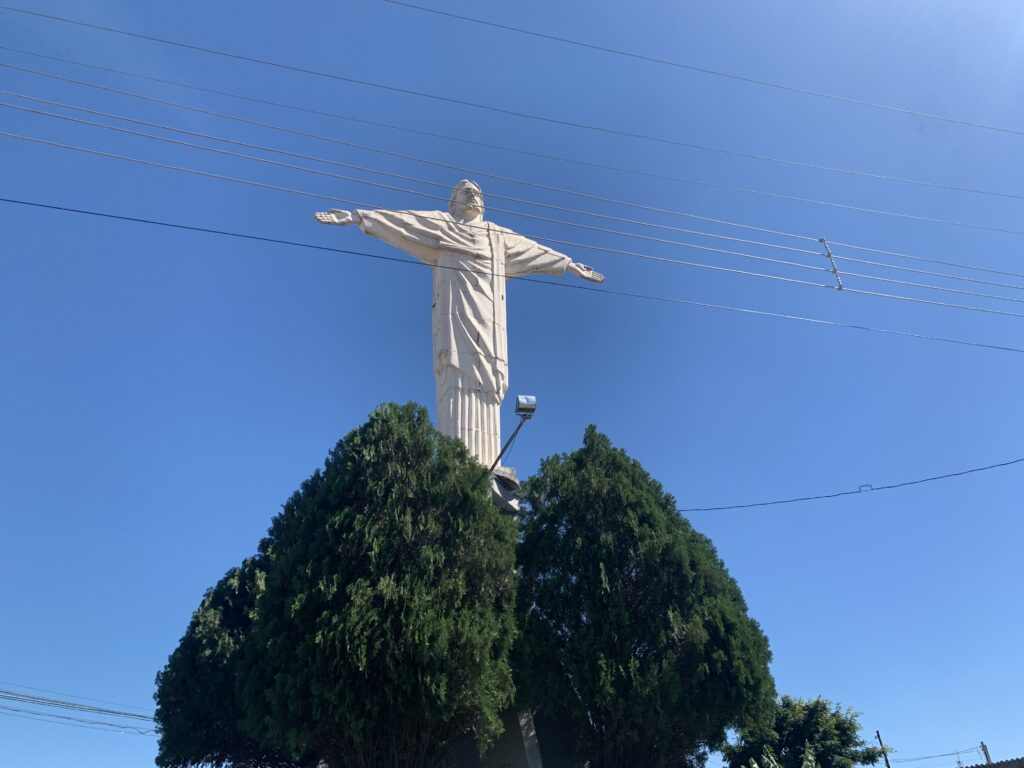 Cristo Redentor, Espírito Santo do Pinhal
Santuário de Santa Luzia
Located in the Santa Luzia neighborhood, this sanctuary draws plenty of devotees of the saint. In December, the Festa de Santa Luzia takes place, and many visitors come to town specifically to give thanks to the patron saint.
Worth a photo and a visit.
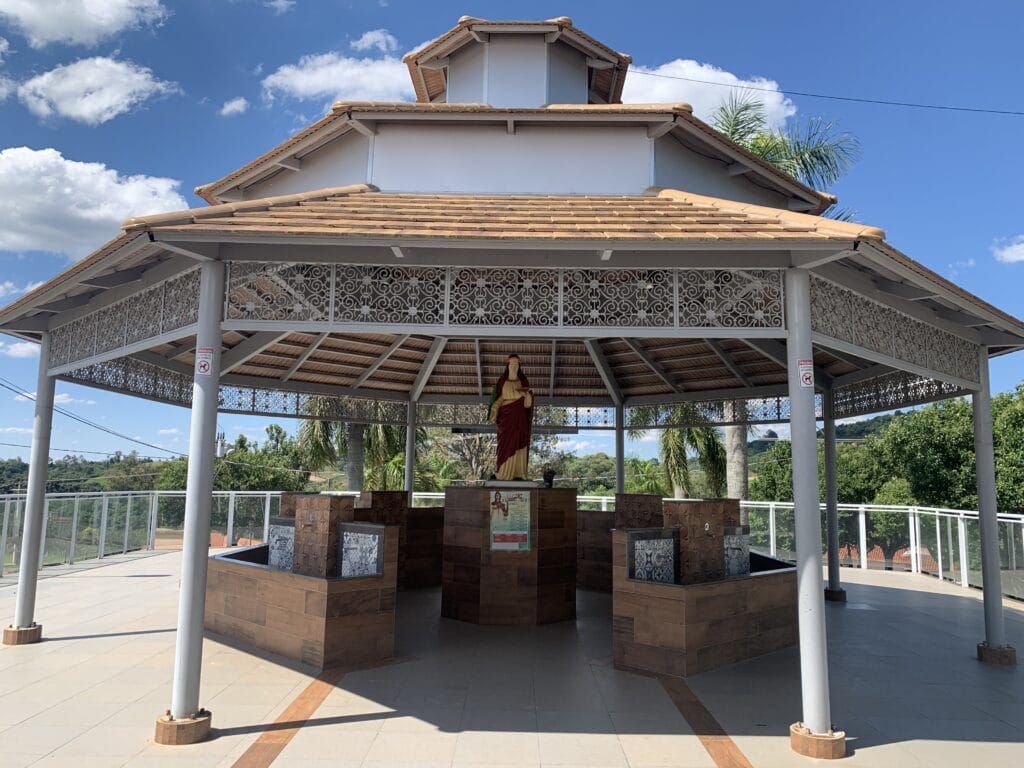 Santuário de Santa Luzia
Empório Rural Paganini & Palermo
Located across from the Santuário de Santa Luzia, this is, without question, a great spot for coffee. There are also several hammocks to relax in. The owner, Lurdinha, is an absolute sweetheart and extremely helpful, happy to share great tips about the region.
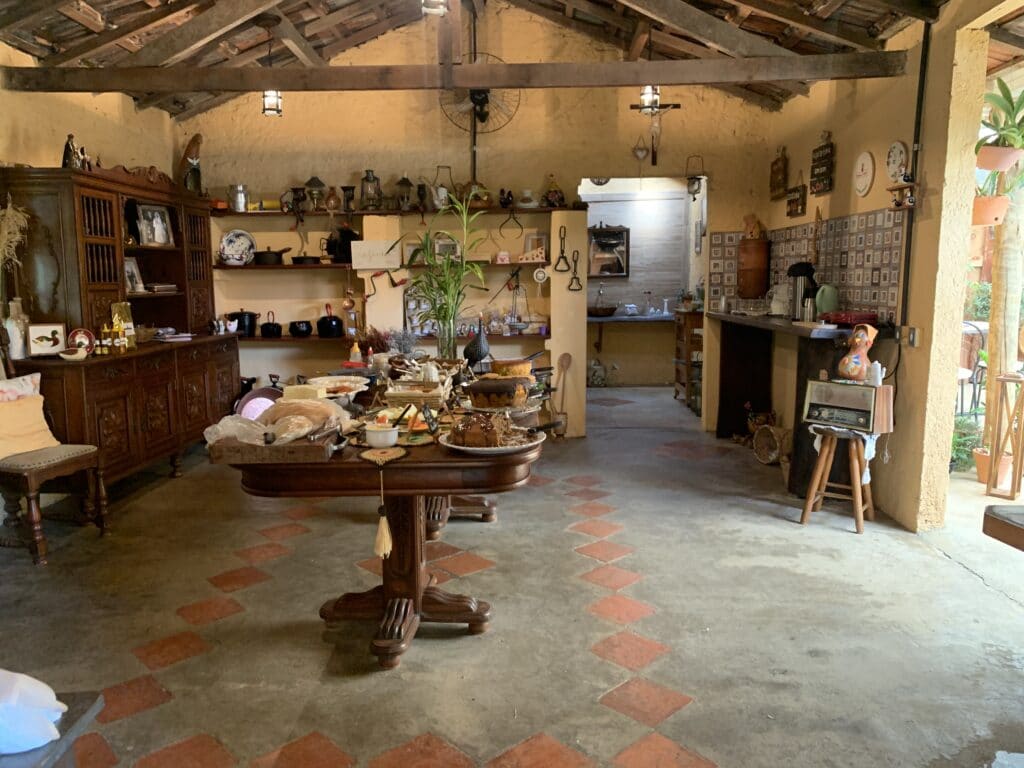 Empório Paganini & Palermo
Where to Stay in Espírito Santo do Pinhal
There aren’t many lodging options in the area — we ended up staying at Pousada Villa dos Poetas, which has a great location right downtown.
Pousada Villa dos Poetas
A charming inn located downtown (website), with a spacious room and equally roomy bathroom. Free parking is available, though when we arrived, we were disappointed to be told that we needed to have picked up the parking key by 6 PM, and since we arrived at 7 PM, that was no longer possible.
We asked to contact the inn’s owner, since we hadn’t been warned ahead of time, but we never got a response. After waiting more than two hours, we ended up just going to sleep. Without question, we found this a genuine oversight, especially since we visited the weekend of the Copa Libertadores final. Because of that, downtown was chaotic, packed with fans and fireworks.
Breakfast is quite simple, with limited options, though it manages to be sufficient and good quality.
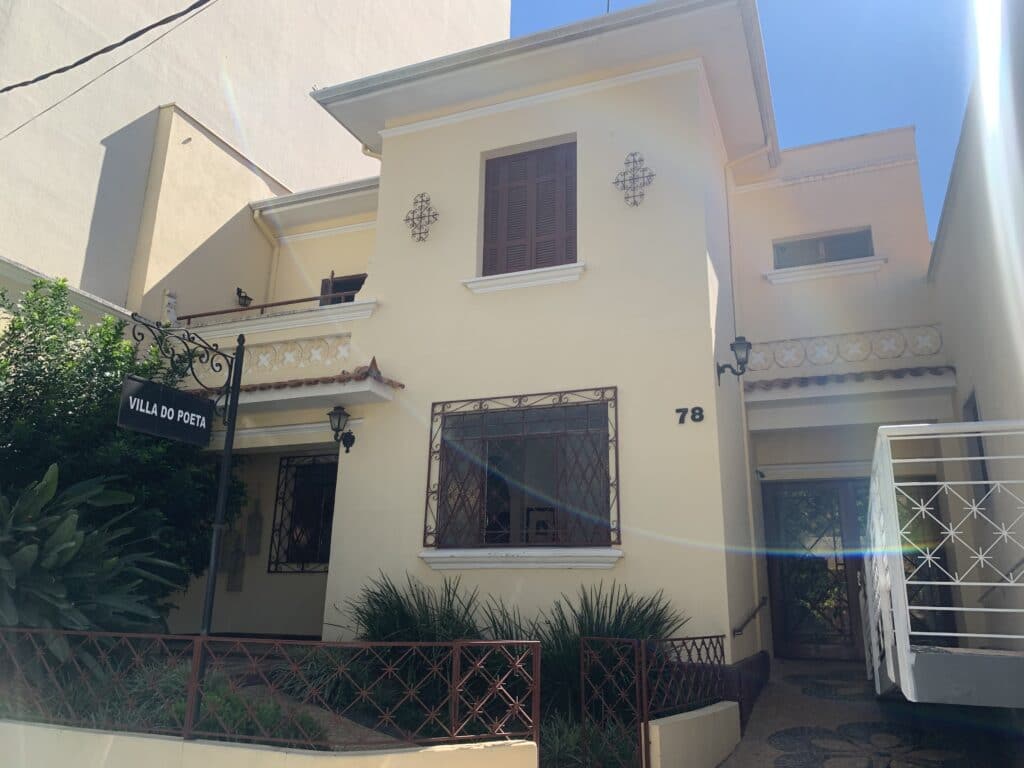 Pousada Villa dos Poetas
Where to Eat in Espírito Santo do Pinhal
Opção Trattoria
Considered the town’s best restaurant, Opção Trattoria (website) is eclectic, with a wide-ranging menu aligned with modern cuisine.
Everyone who ordered pasta loved the restaurant, but I ended up ordering the Cupim (R$78.00), which came out a bit dry. Andrey went with the Duck Confit with blackberries (R$96.00), which was a bit burnt. But we did like the dessert, a chocolate mousse (R$18.00), since it came out nice and creamy.
To eat here, you’ll need to book ahead, since it’s quite popular. We think we might’ve just had bad luck, since we’ve heard plenty of praise for this spot.
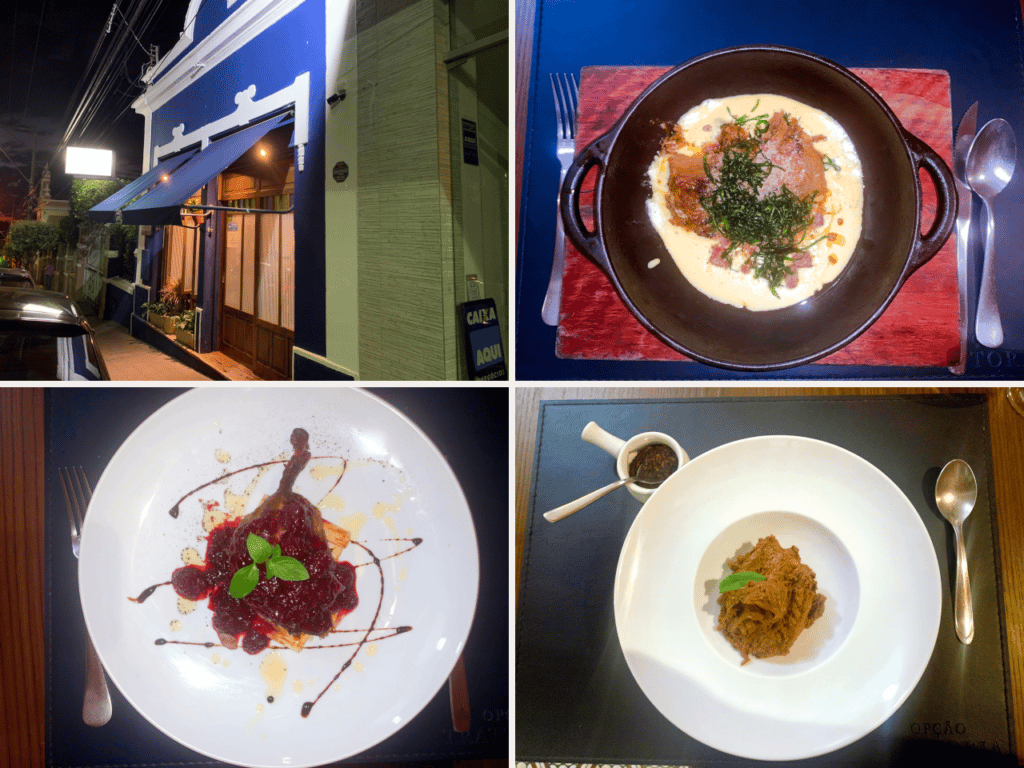 Opção Trattoria
Restaurante Celeiro Pinhal
Restaurante Celeiro Pinhal (Instagram) is a fixed-price self-service spot, serving wood-fired cooking typical of the Minas Gerais interior, with every kind of dish on offer.
There’s a table for salads, another for sides and meat, one for pasta, and finally, one for dessert.
Open for Sunday lunch, and we really enjoyed the food. Priced at R$52.00 per person.
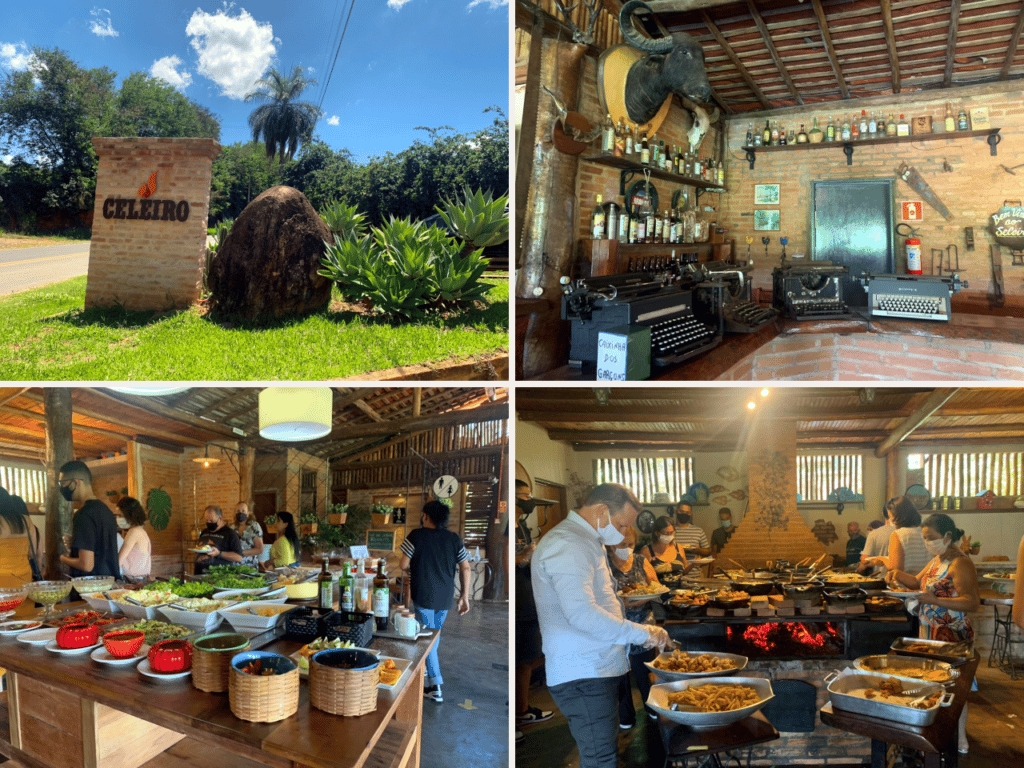 Restaurante Celeiro Pinhal
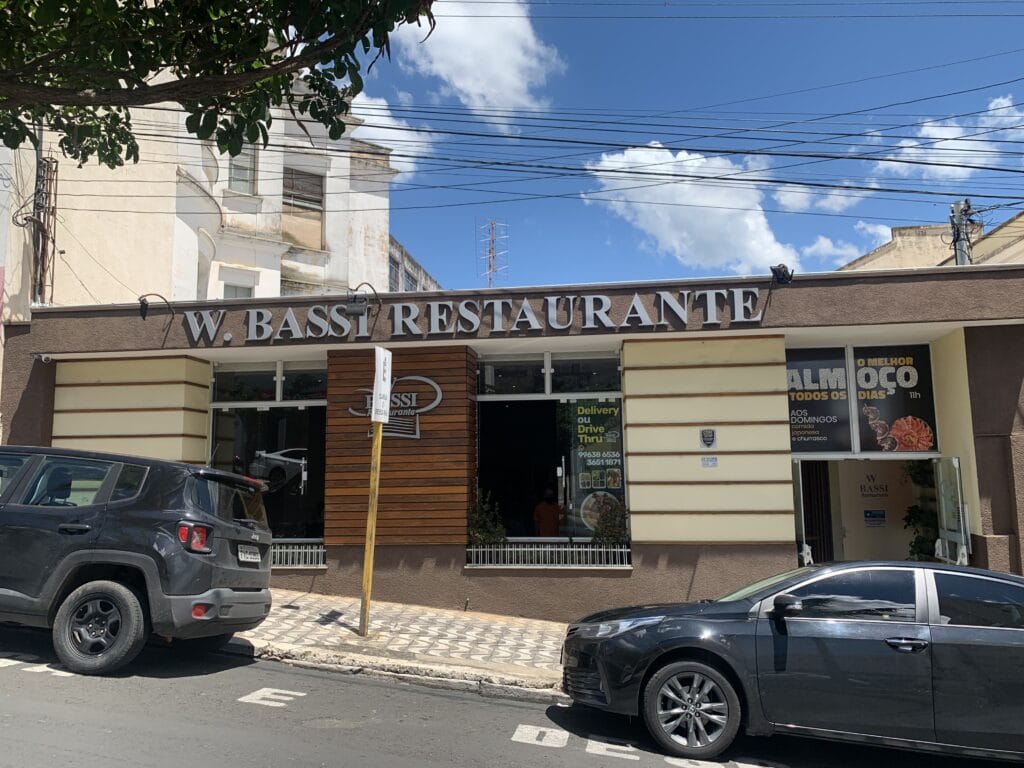
W. Bassi Restaurante
This is a per-kilo restaurant located downtown, with tasty, varied food. If your outings are close together, it’s absolutely worth it, since you can grab a good, quick lunch. It’s right next to Theatro Avenida.
 W. Bassi Restaurante
Read the original version in Portuguese on A Bela e o Bigode.