What to Do in Campinas: A One-Day Guide
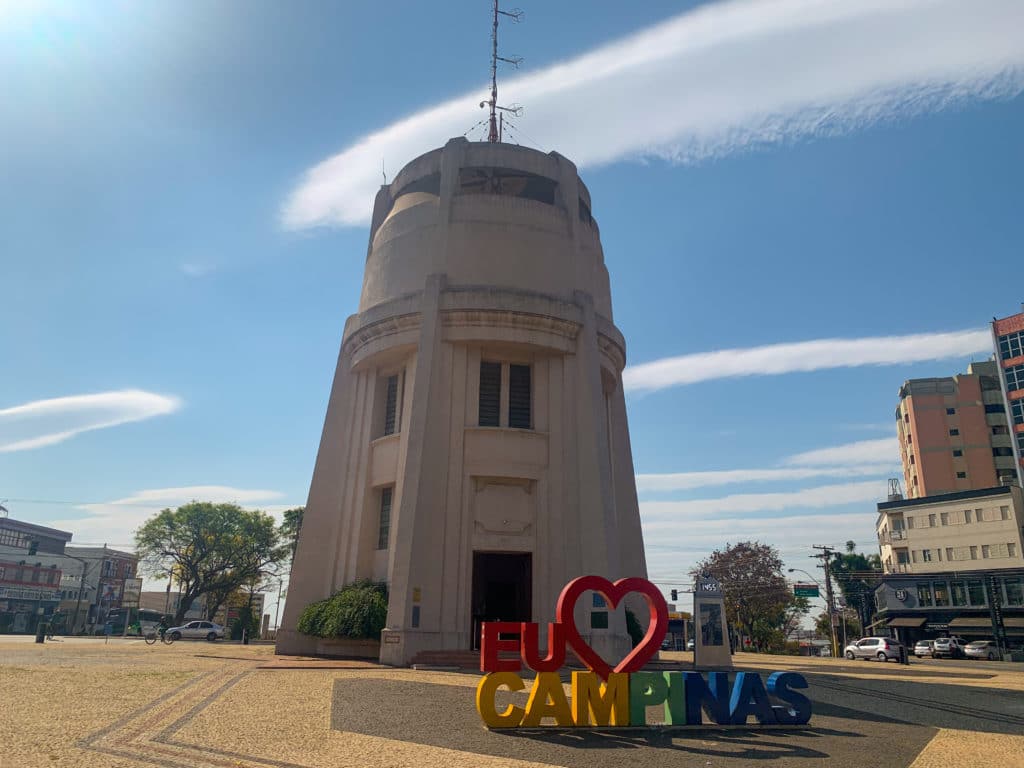
Located 98 km from the state capital, Campinas is the third most populous city in São Paulo state, behind only Guarulhos and the capital itself.
Given its major growth over the years, it also became known as the “Princesa d’Oeste” (Princess of the West), since it sits west of the state capital.
And even though it’s an industrial hub, the city has plenty of interesting attractions worth visiting.
- History of Campinas
- When to Go to Campinas
- Getting to Campinas
- What to Do in Campinas
- Where to Eat in Campinas
History of the City
The village emerged in the first half of the 18th century as a rural district of Vila de Jundiaí, and because of that, it became a required stopover for the Bandeirante expeditions heading to the gold mines in the interior.
Settlement began between 1739 and 1744, following the arrival of Captain Francisco Barreto Leme do Trado from Taubaté. On July 14, 1774, in a temporary chapel, the first mass was celebrated, officially founding the Freguesia Nossa Senhora de Conceição de Campinas. Later, on December 5, 1842, it was elevated to city status under the name Campinas.
Agriculture played a major role in the city’s history, thanks to its fertile red soil. The first crop grown here was sugarcane, followed later by coffee. In short order, the coffee economy sparked a new wave of growth for the city. In 1872, driven by coffee farming and the construction of the Companhia Paulista railway, Campinas became one of the largest cities in Brazil.
With the collapse of the coffee economy in the 1930s, Campinas’s economy shifted toward industry and services. The city then welcomed immigrants from around the world, drawn by the arrival of a new industrial base.
With the construction of major highways, like the Rodovia Anhanguera (1948), the Rodovia dos Bandeirantes (1978), the Rodovia Santos Dumont (1980s), and the Rodovia Dom Pedro I, which became the main route to the REPLAN oil refinery, Campinas established itself as a major highway hub.
Finally, starting in 1998, the services, retail, research, high-tech, and logistics sectors gained prominence.
When to Go to Campinas
You can visit year-round, though fall and winter bring the dry season and milder temperatures, running from April through October — and we really enjoy traveling during this window.
Spring and summer bring higher temperatures and rain, which can occasionally spoil your plans, though the sunlight makes for beautiful photos.
Getting to Campinas
If you’re not coming from São Paulo, nearby Indaiatuba is home to Viracopos Airport, also known as Campinas Airport.
If you’re coming from São Paulo, though, there are two route options: the Rodovia Anhanguera or the Rodovia Bandeirantes.
What to Do in Campinas
Trem Campinas–Jaguariúna
Run by ABPF (Associação Brasileira de Preservação Ferroviária), which maintains locomotives built between 1958 and 1960, marking the era of transition from steam to what was then modern diesel power.
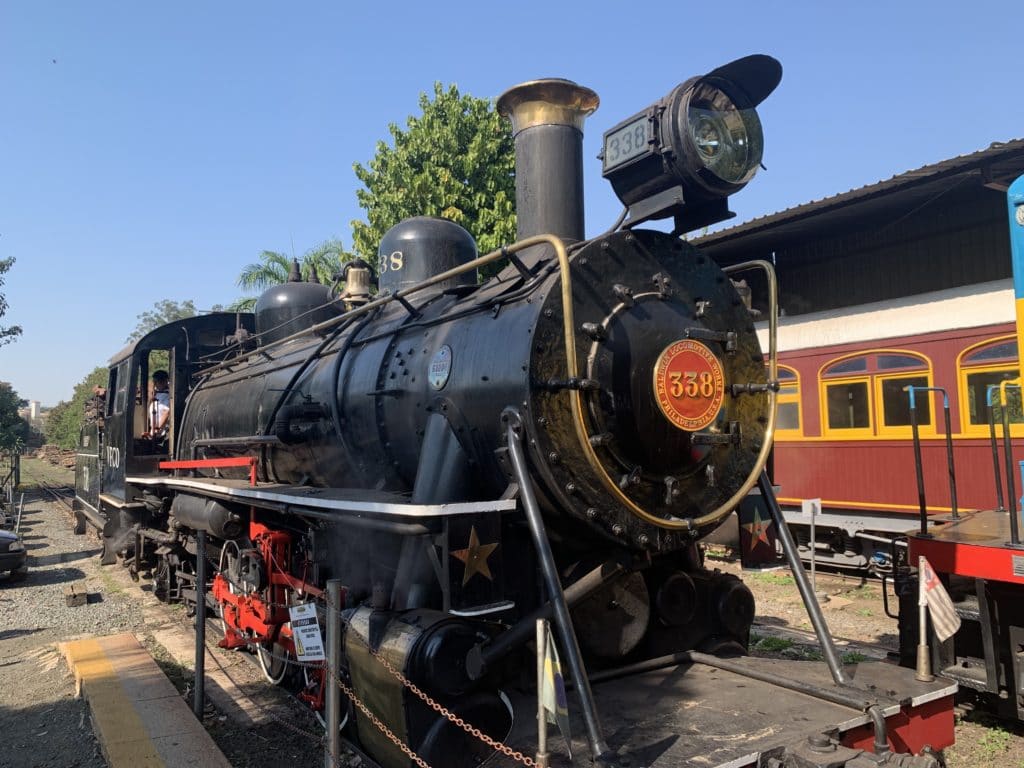
The cars have been recovered and restored in the railway’s original colors, and you’ll find railway equipment from various eras, generations, and models — a diverse collection recognized worldwide.
The old cars are pulled by a steam locomotive along an authentic 19th-century railway. The route to Jaguariúna covers about 45 km, and depending on your ticket, you can enjoy coffee along the way while hearing the history of the railway and the towns, since guides explain everything.
Pulled by a locomotive that once belonged to the Companhia Mogiana de Estradas de Ferro, the train has four cars, all once part of the Estrada de Ferro Sorocabana line. The first is the dining car, where we sat, followed by São Paulo-Paraná, Companhia Paulista de Estradas de Ferro, which is where we sat on the return trip, and finally, Viação Férrea do Rio Grande do Sul.
Our Experience on the Campinas Maria Fumaça
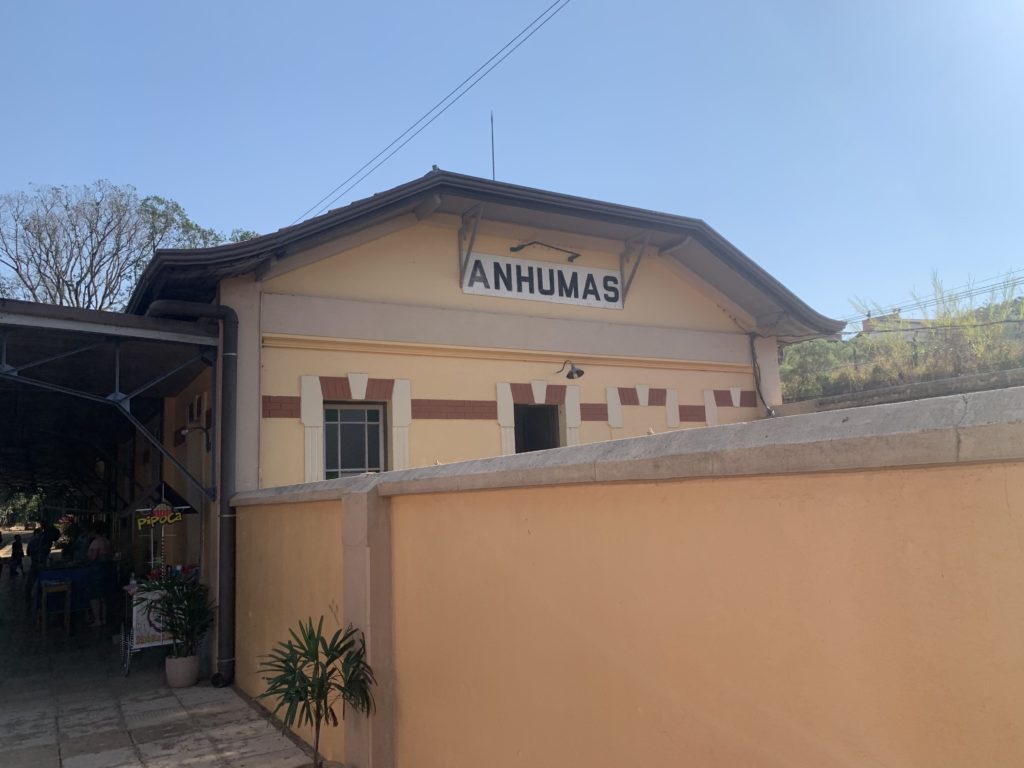
We caught the 10:10 AM train, departing from Estação Anhumas, in Campinas, heading to Estação Jaguariúna — though the operator asks that you arrive by 9 AM, when the ticket office opens to exchange your ticket. Along the way, we passed beautiful scenery of coffee farms and other crops, crossing two bridges over the Atibaia and Jaguari rivers.
Breakfast is served buffet-style, following safety protocols like the use of gloves. Drinks are served table by table, keeping the whole ride moving quickly and pleasantly!
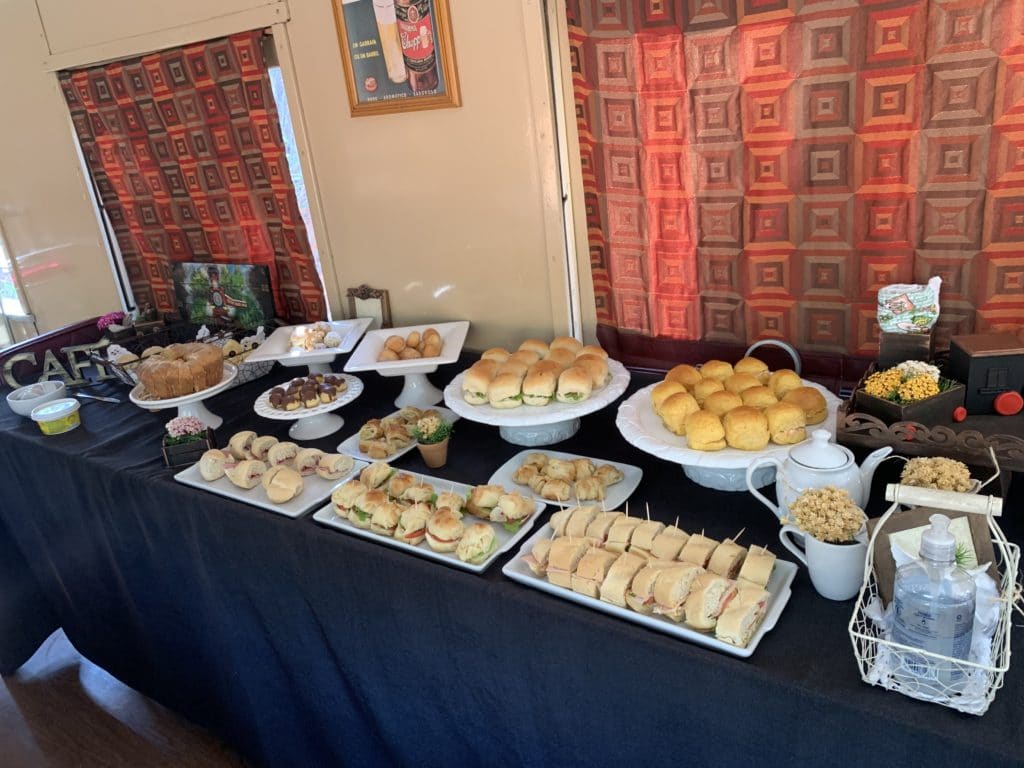
The train passes through five stations, departing from Anhumas and continuing through Pedro Américo, Tanquinho, Carlos Gomes, before finally reaching Jaguariúna. Because of the pandemic, though, you can’t get off at any station except Jaguariúna.
Once you arrive in Jaguariúna, passengers can explore the station, visit a market with crafts and local specialty products, and then have lunch at restaurants near the station. The locomotive stays there for about 1 hour before heading back to Campinas, arriving around 2 PM.
Throughout the ride, various souvenirs are sold, like the dishware used at breakfast, t-shirts, dish towels, fridge magnets, and more.
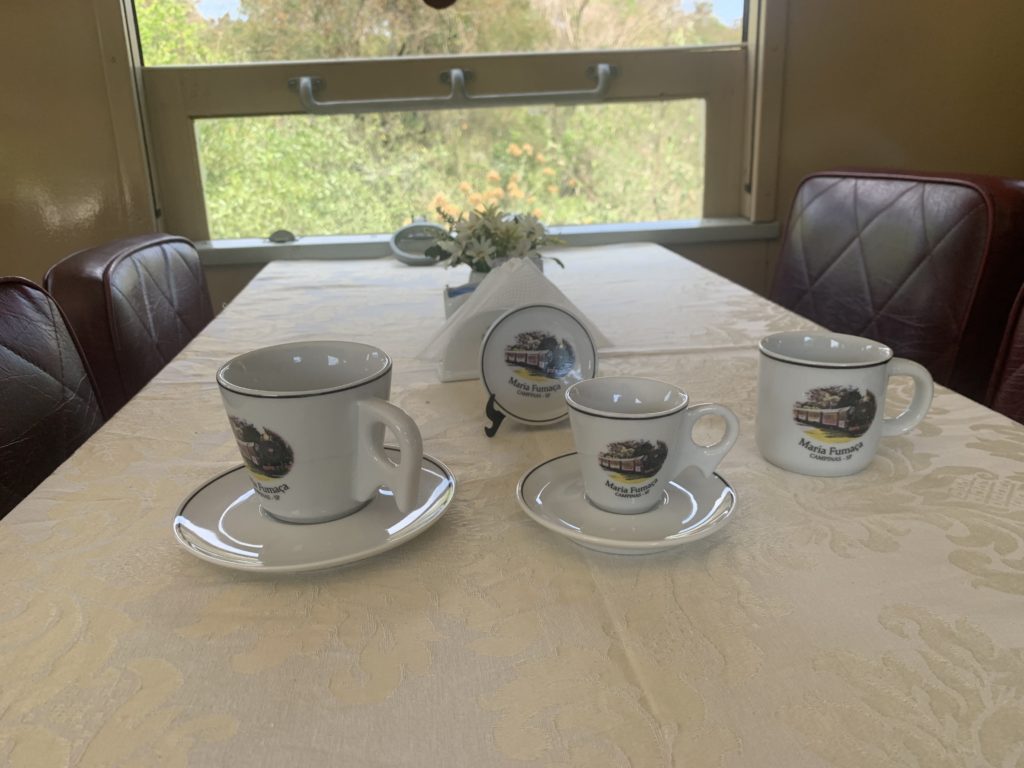
We really enjoyed having breakfast on the train, and we thought it was a genuinely fun experience — hope you enjoy it too.
Location: Rua Dr. Antônio Duarte da Conceição, 1501.
Hours: check the website for departure times.
Pedreira do Chapadão
This spot has not just walking and running trails, but also a skate park, an outdoor gym, playgrounds for kids, a waterfall running down the old quarry, and a huge lawn for picnicking or relaxing. On Saturdays, there’s a farmers market selling houseplants.
Also known as Praça Ulysses Guimarães, there’s a silhouette sculpture of him visible right at the park’s entrance.
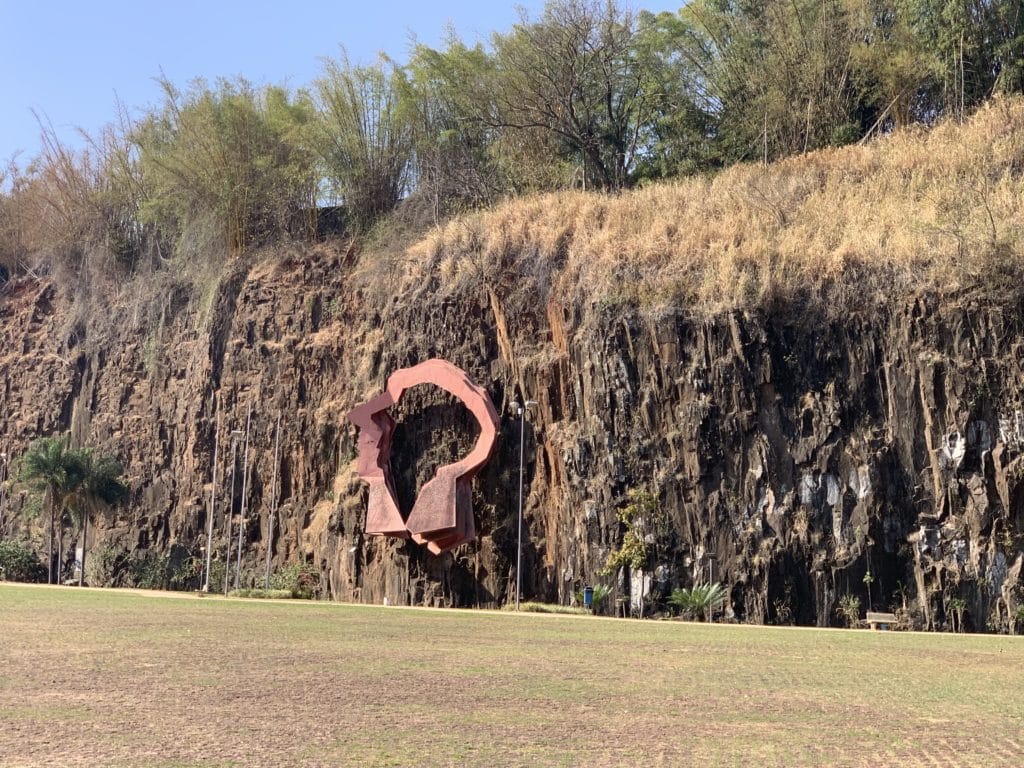
Location: Rua Dr. Alcides Carvalho, s/n.
Admission: free.
Hours: 6 AM to 10 PM.
Lagoa Taquaral, or Parque Portugal
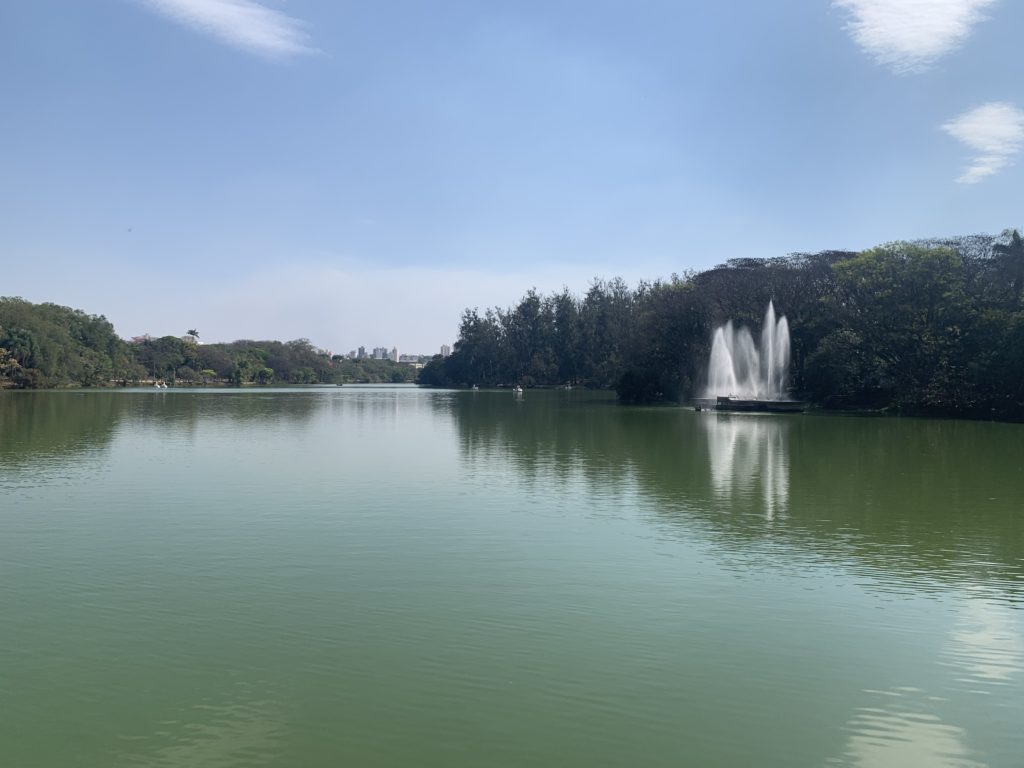
This park is enormous, great for running, biking, and taking a paddle boat out on the lake. You can also do stand-up paddleboarding here.
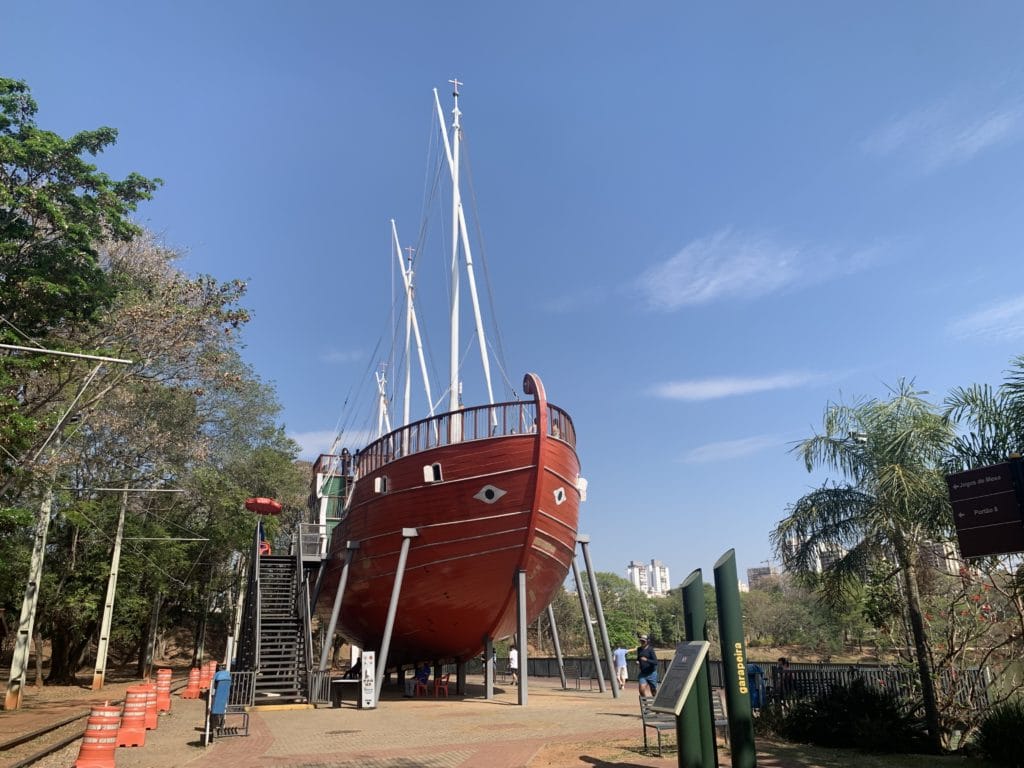
Near the entrance, there’s a replica of the Anunciação caravel, Pedro Álvares Cabral’s ship, which you can go inside — genuinely the park’s main attraction.
Worth noting, for anyone traveling with kids: around the park, there are several shops selling food and drinks, so you won’t need to worry about feeding them.
The park also has attractions like the Municipal Planetarium and the Concha Acústica amphitheater, both used for performances, along with the Museu do Esporte.
Location: Avenida Heitor Penteado, 1671.
Admission: free.
Hours: 5 AM to 10 PM.
Parque Bosque dos Jequitibás
This is a genuinely enchanting spot. A surviving stretch of Atlantic Forest in the middle of the bustling city center, created in the 1880s, it’s one of the city’s largest and oldest recreational areas.
Inside the park, you’ll find the Municipal Aquarium, the Casa dos Animais Interessantes, a small zoo, the Museu de História Natural, the Teatro Carlito Maia, geared toward kids, and finally, the Casa do Caboclo, a replica of a traditional Brazilian rural home, built from wattle and daub.
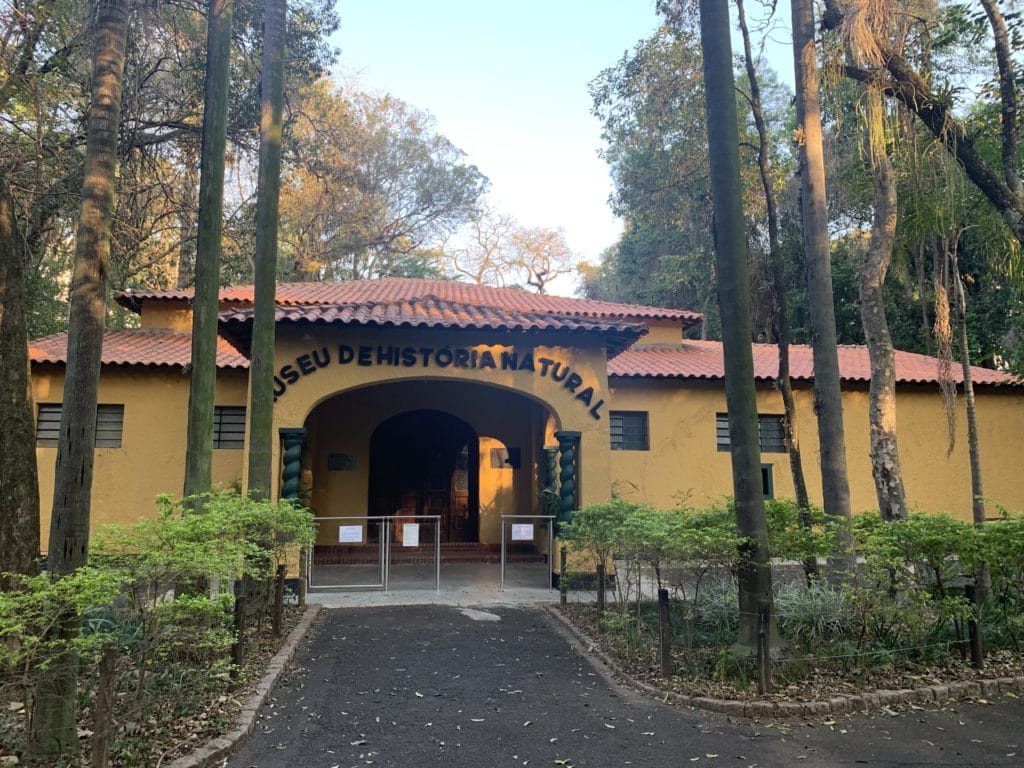
There are also shaded walking paths, a playground, and vendor stands selling both food and drinks.
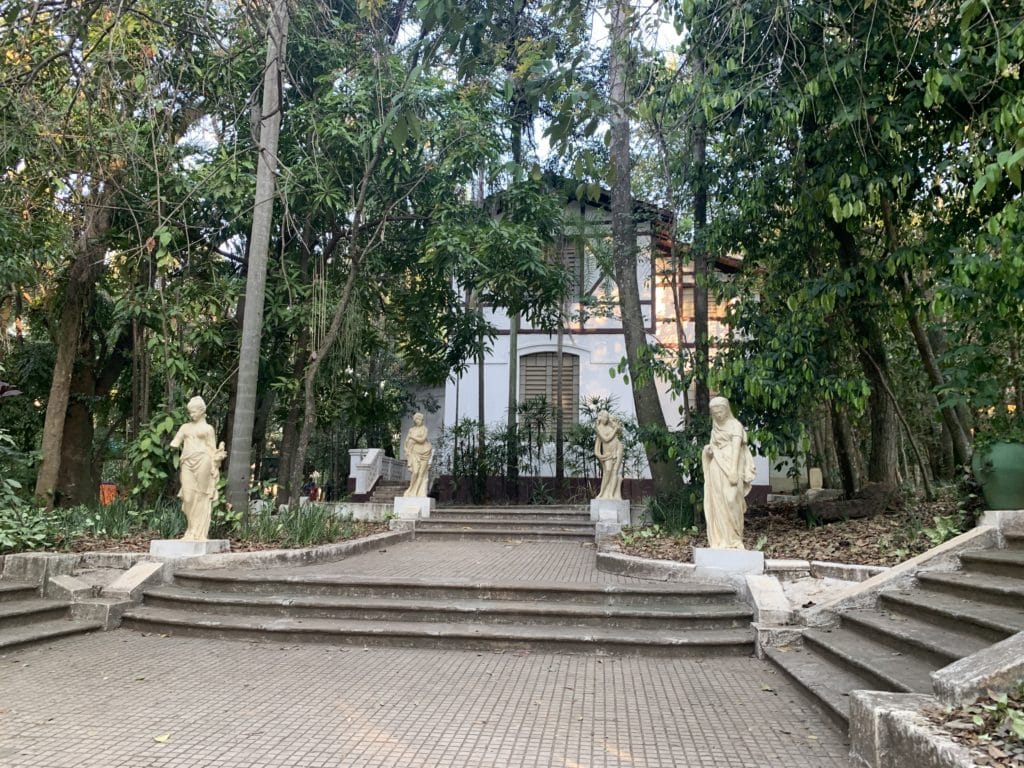
Location: Rua Coronel Quirino, 2.
Hours: Tuesday to Sunday, 6 AM to 6 PM, though attractions run Tuesday to Friday, 9 AM to 1 PM, with an admission fee. Museu de História Natural: R$5 per person.
Park admission: free.
Torre do Castelo
Torre do Castelo is one of the city’s top postcard landmarks. Built between 1936 and 1940, originally designed to hold 250,000 liters of water, it’s actually a water tower standing 27 meters tall.
You can go inside, and at the top, there’s a lookout offering views over several of the city’s neighborhoods. On the middle floor is the Museu Histórico da Sanasa, the historical museum of Campinas’s water and sewage utility.
Location: Praça Vinte e Três de Outubro, s/n.
Hours: Tuesday to Friday, 10 AM to noon and 1 PM to 5 PM. Saturday to Monday, 10 AM to noon and 1 PM to 9 PM.
Admission: free.
Catedral Metropolitana de Campinas
Opened in 1883, this cathedral took 76 years to build. Its interior is beautiful, built in Baroque and Rococo style, with a century-old organ similar to the one at Notre-Dame Cathedral in Paris, rare chandeliers, stunning stained glass, and a bell tower with six bells.
Genuinely worth going inside, though we’ll flag one caveat: since it sits downtown, be careful, as the area has a large unhoused population and can get quite crowded.
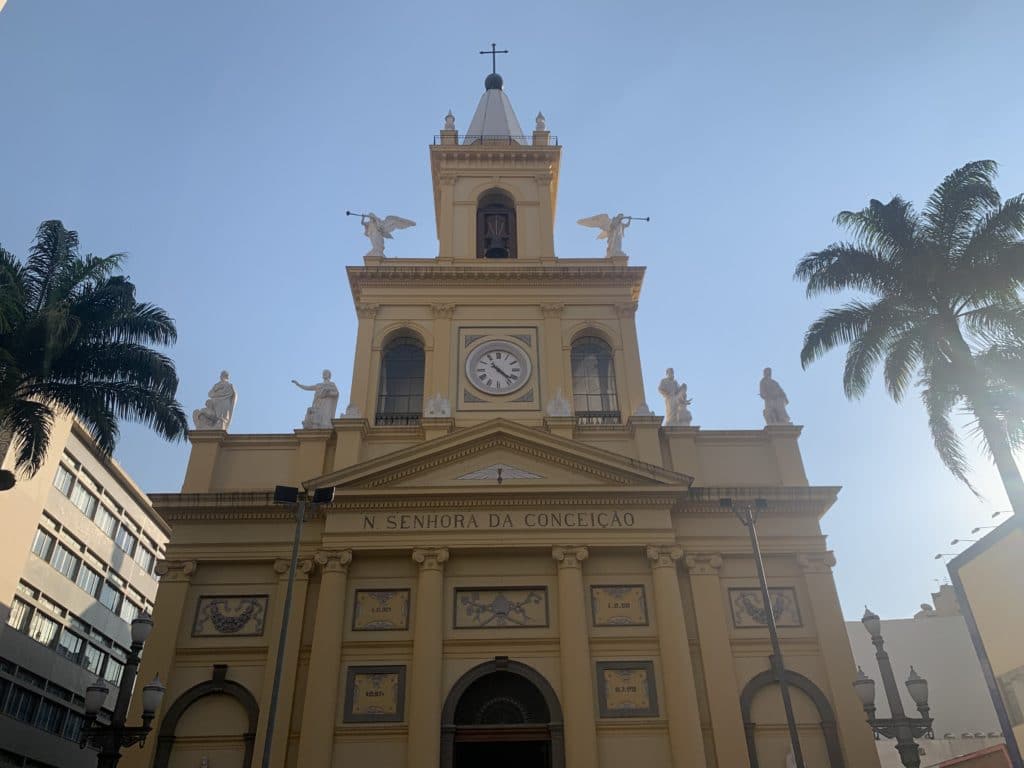
Location: Praça José Bonifácio, s/n.
Hours: Monday to Wednesday and Friday to Sunday, 7 AM to 7 PM. Thursday, 7 AM to 2 PM and 4 PM to 7 PM.
Admission: free.
Basílica Nossa Senhora do Carmo
Originally the town’s main church, around which Campinas developed, opened in 1781, this is the church we found the most beautiful in the city, thanks to its paintings.
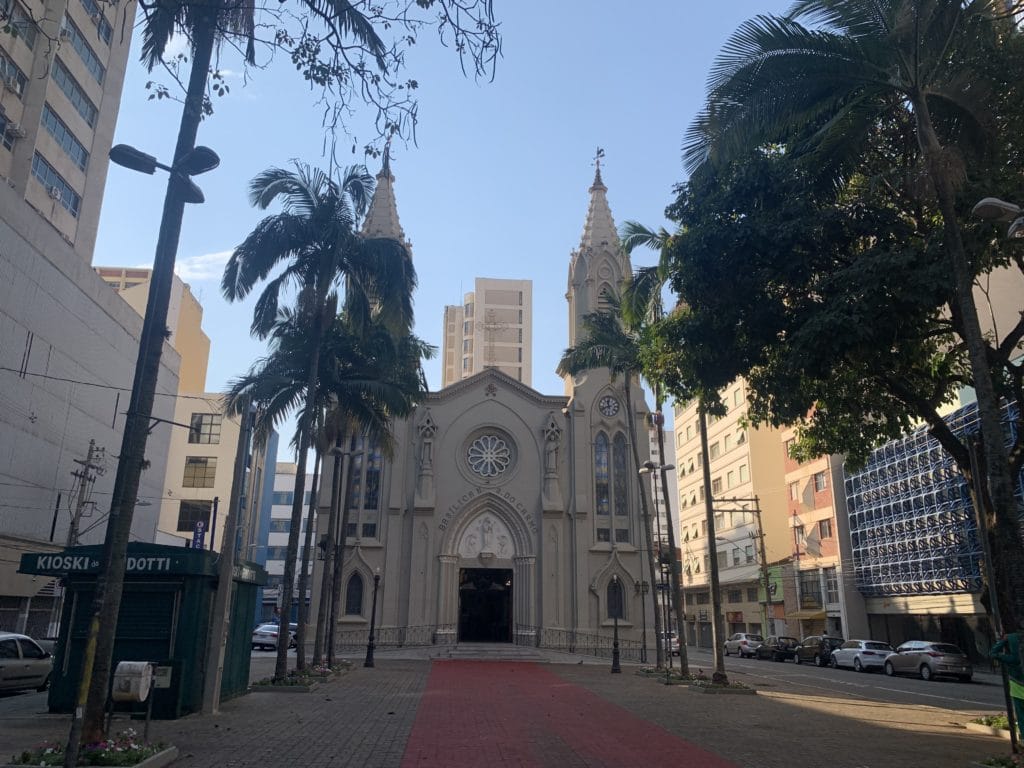
Location: Rua Barão de Jaguara, s/n.
Museu da Imagem e do Som
Founded in 1975 and housed in the Palácio dos Azulejos, the Museu da Imagem e do Som has, since its founding, preserved a collection of the city’s audiovisual history, with hundreds of pieces of image and sound production and playback equipment.
Designated a landmark by IPHAN (1967), CONDEPHAAT (1981), and Campinas’s own Council for the Defense of Artistic and Cultural Heritage (CONDEPACC) (1988).
We weren’t able to go inside because of the hours, but the exterior is completely neglected.
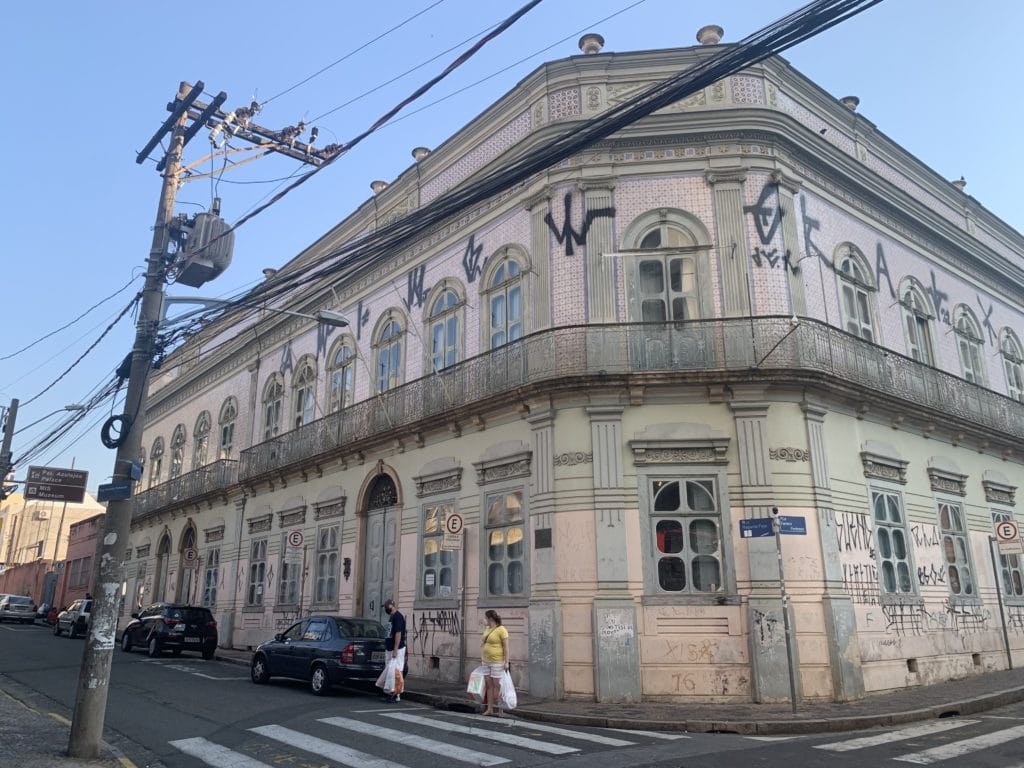
Location: Rua Regente Feijó, 859.
Hours: Monday to Friday, 10 AM to 6 PM.
Mercado Municipal de Campinas
This market is much smaller than what you’d find at São Paulo’s famous Mercadão, but it still has 143 stalls, with a wide variety of products, including vegetables, fruit, grains, spices, cheese, fish, herbs, and more. Designated a historic and cultural landmark of Campinas in 1982.
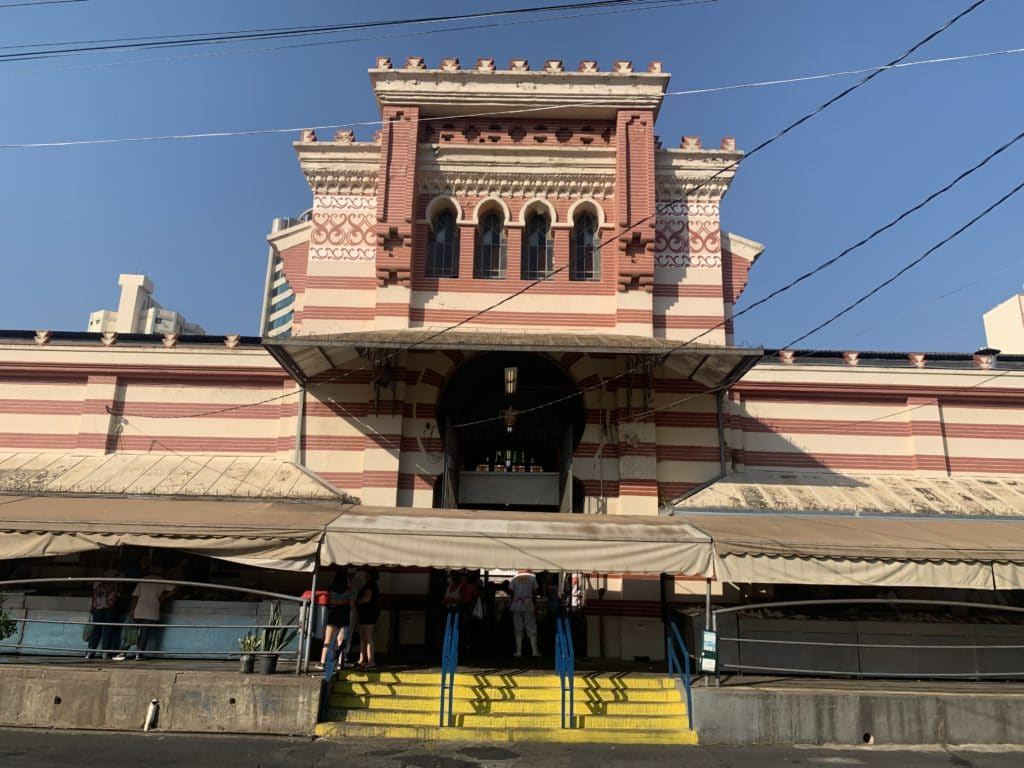
Location: Av. Benjamin Constant, s/n.
Hours: Monday to Friday, 7 AM to 6 PM; Saturday, 7 AM to 4 PM; Sunday, 7 AM to noon.
Where to Eat in Campinas
We made this a quick day trip, so we didn’t get to try many restaurants — we only had dinner at one, though it was, without question, a great choice.
Entre Taças Winebar
This is Campinas’s first wine bar (Instagram), run by co-owners Camila Serafim and Pedro Serafim. The concept follows a global trend, and without a doubt, the space is extremely pleasant.
Starter: dadinho de costela and tapioca, 6 pieces (R$19), served with an herb-olive oil sauce for the short rib and pepper jam for the tapioca.
Main course: truffled filet mignon (260 g), poached egg, and grana padano risotto, which was delicious (R$95), and Bife Ancho (260 g), béarnaise sauce, and potatoes (R$84), the meat cooked exactly to order.
Dessert: coconut foam, nut praline, and passion fruit sorbet (R$26), a great pick, and milk pudim with coffee sauce (R$26) — since I don’t like coffee, we asked for the sauce on the side, and the pudim was really tasty and soft.
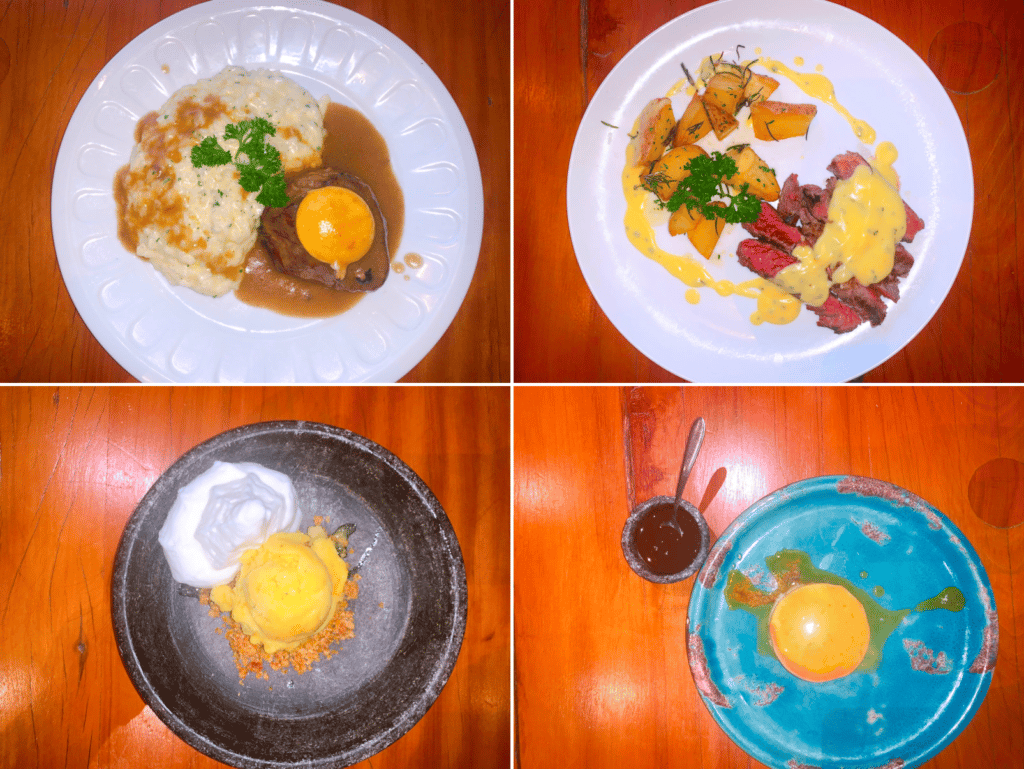
Location: Rua Dr. Emílio Ribas, 1151.
Hours: Monday to Friday, 11:30 AM to 3 PM and 6 PM to 11 PM.
Read more about towns near São Paulo in What to Do in Santos.
Read the original version in Portuguese on A Bela e o Bigode.