What to Do in Amalfi
Amalfi, which gives its name to the entire Amalfi Coast, sits at the mouth of the Valle dei Mulini. It’s bathed by a genuinely stunning sea, exactly the color everyone pictures when they think of Italian beaches.
Like most towns along the coast, it’s a cluster of white houses clinging to the rock, connected by alleys and staircases. So get ready for plenty of walking, both up and down.
Amalfi is a very small town, so you can cover it entirely in a short amount of time. The main street runs through the historic center’s square, the colorful Piazza Duomo.
The town has plenty of restaurants aimed at food lovers, and takes pride in being the birthplace of the cannelloni.
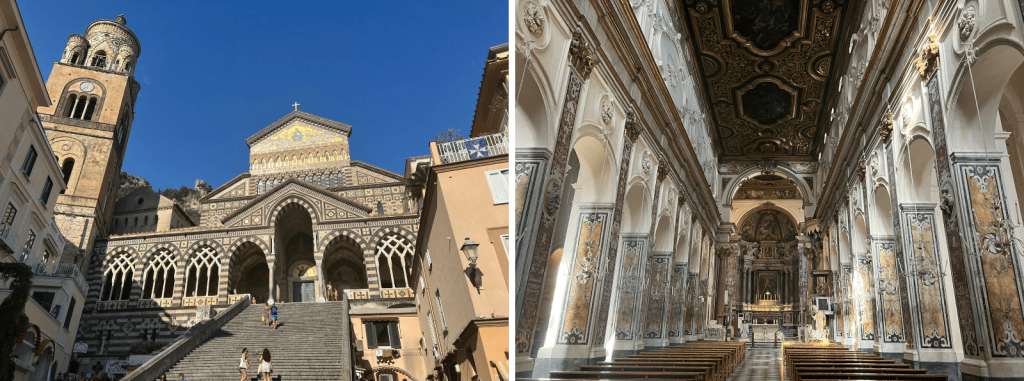
Cathedral of St. Andrew the Apostle
The square is stunning, anchored by the Cathedral of St. Andrew the Apostle, originally built in the early 11th century. It was rebuilt in the 1700s in Arab-Sicilian Baroque style, with its magnificent 1728 staircase, the bell tower dating to 1276, and a beautiful cloister.
It brings together, in one place, the Cloister of Paradise, the Basilica of the Crucifix, the Cathedral Church, and the Crypt of St. Andrew the Apostle. This crypt is Amalfi’s greatest treasure and source of pride, housing the head and bones of St. Andrew, the first disciple of Jesus.
According to history, the disciple’s body, crucified in Patras, Greece, was taken to Constantinople and later to Amalfi, by order of Cardinal Peter Capuano, tied to the Pontiff during the Fourth Crusade, arriving in the city on May 8, 1208 — an event the town still celebrates to this day.
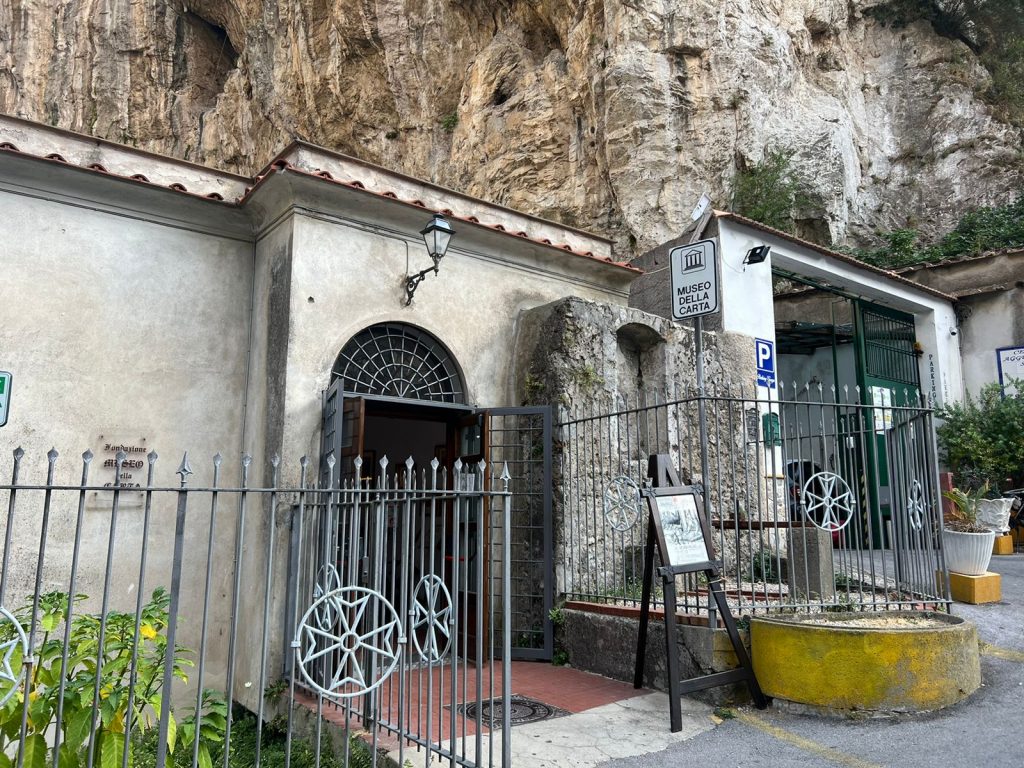
Museo della Carta (Paper Museum) in Amalfi
The Valle dei Mulini has been home to paper mills since the Middle Ages, dating to the 14th century — which is why the town has a Paper Museum (website), still home to centuries-old machines and equipment, fully restored and functional to this day.
It was converted into a museum in 1969 at the request of Nicola Milano, the mill’s owner and a member of one of the town’s well-known families.
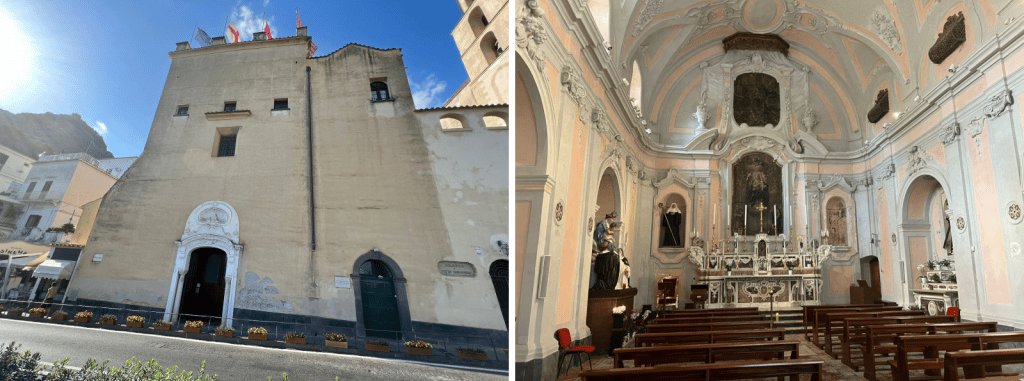
Chiesa di San Benedetto
Built in the 17th century in Baroque style, and easy to reach, right along the waterfront. It follows a single rectangular nave, congregational-hall style, topped with a refined architectural composition.
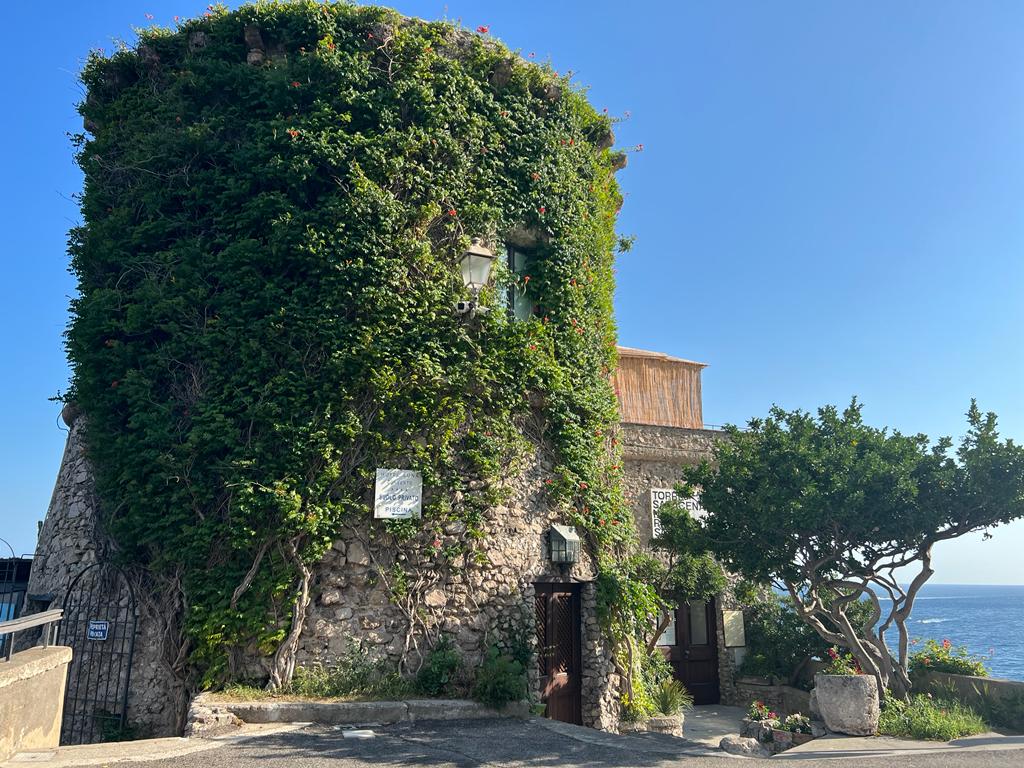
Torre Saracena
Watchtowers like this one were once used to protect the town, and in recent years, many have been converted into attractions or businesses like hotels and restaurants. In Amalfi, along the road, you can spot the Hotel Luna Torre Saracena di Andrea Barbaro, beautifully preserved.
Fontana di Sant’Andrea
This Baroque-style fountain was built in 1760 and originally installed in front of the Duomo. It was later moved to the side of the square to allow cars to pass without risking damage to the monument.
The distinctive cross supporting the sculpture of the martyr saint marks the starting point for the Festa di Sant’Andrea. This festival takes place on November 30 and June 27, with a procession through town down to the beach.
Worth noting: fountains throughout Italy carry drinkable water, which explains why you’ll often see people gathered around them.
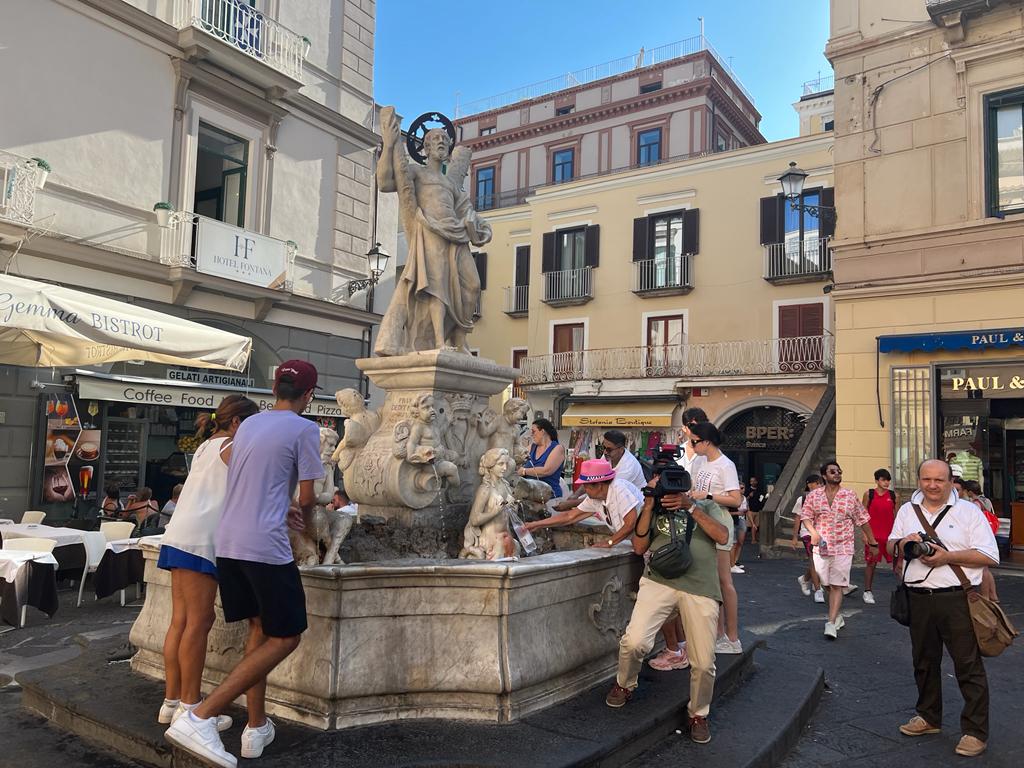
What to do in Amalfi — Shopping and Restaurants
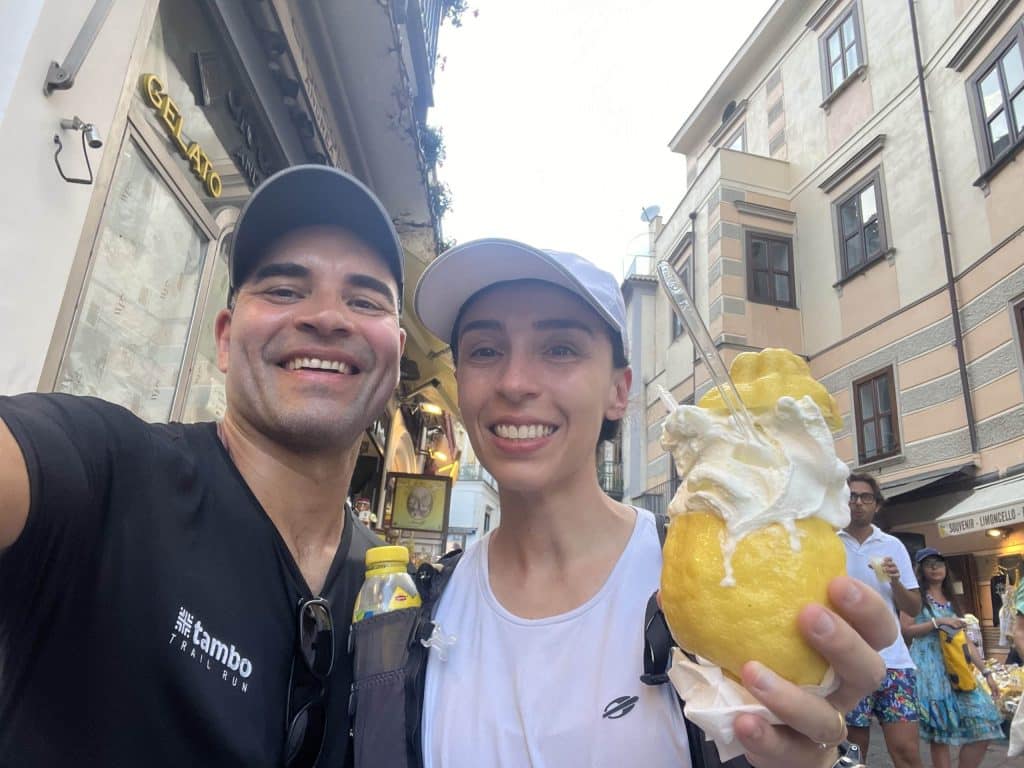
The number of restaurants and shops packed into this small square is impressive. What really caught our attention (and what we loved most about the town) was the lemon ice cream. It’s beautiful for photos and makes a great keepsake memory of the town.
Read the original version in Portuguese on A Bela e o Bigode.