What to Do in São Paulo
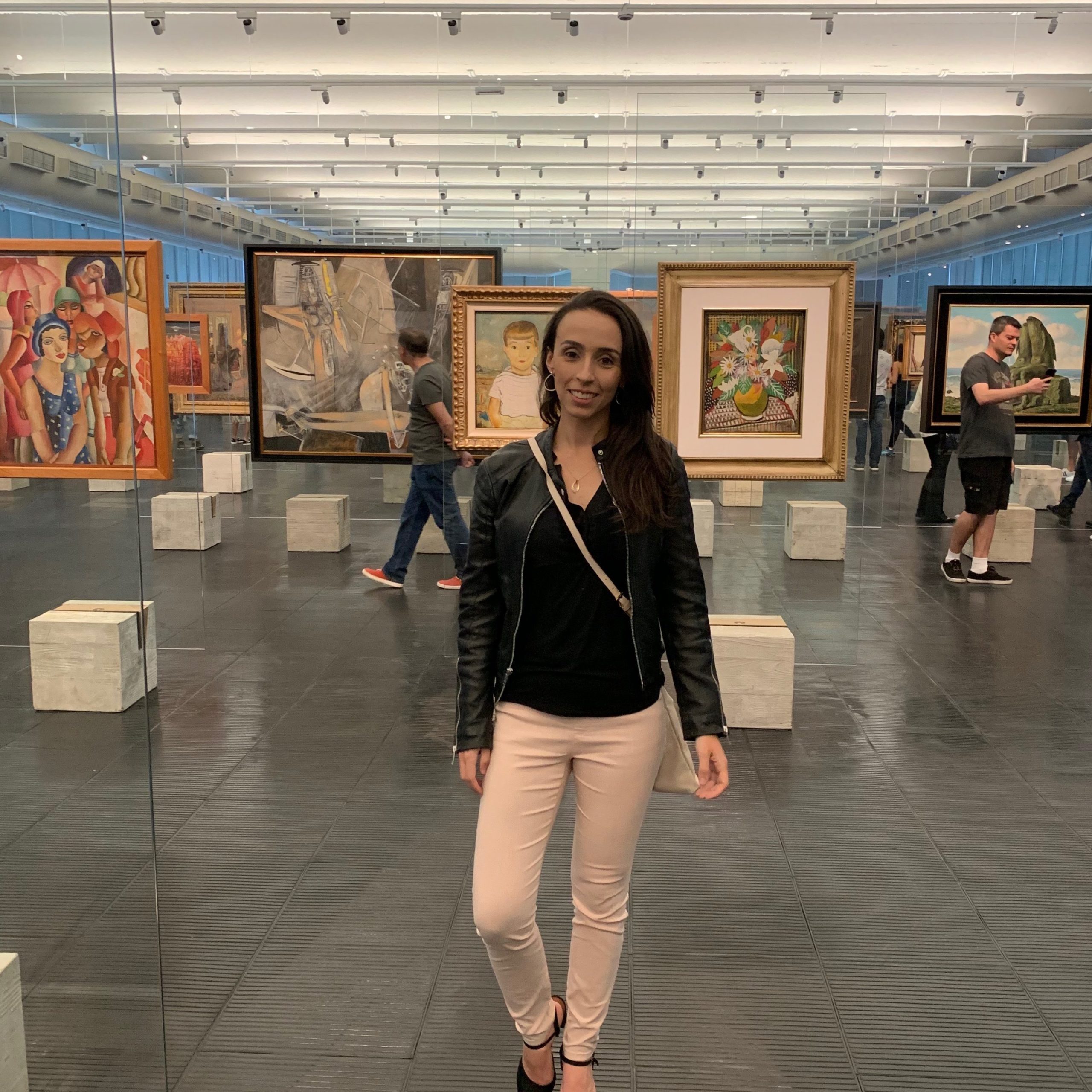
São Paulo is the city I live in and where I was born, and beyond that, it’s one of Brazil’s major capitals. The city has countless leisure options — not just museums, street fairs, churches, and parks, but also spots with sweeping views and a variety of tours through the historic downtown and other neighborhoods.
There’s always somewhere new to discover. There are outings for every kind of taste and budget, so you’ll find free programs alongside some that are extremely pricey. There are countless restaurants and bars, and we have a huge list, since we’re always discovering somewhere new.
- History of the City
- When to Go to São Paulo
- What to Do in São Paulo
- Sampa Sky
- Botanical Garden
- Churches in São Paulo
- Museums in São Paulo
- Theatro Municipal
- Galeria do Rock
- Where to Walk in São Paulo
History of the City
The city of São Paulo was founded at Pátio do Colégio, on January 25, 1554. The building was constructed by the Jesuit mission led by Fathers José de Anchieta and Manuel da Nóbrega, with the goal of converting the Indigenous populations living in the region.
The city gradually gained economic and political importance in the region, and became the provincial capital in 1815. Major growth came during the coffee boom. From there, the advance of industrialization, alongside urbanization, cemented the city’s role in the regional and national economy, and today it’s classified as a global city.
On the world stage, São Paulo is the 21st largest economy, and the 3rd largest in Latin America. The city is notable for its financial sector, home to the headquarters of some of the country’s leading national and international banks, as well as major industries, ranging from tech and communications to automakers and global agribusiness companies.
Overall, 63% of international companies with a Brazilian branch are based in São Paulo, making the city one of the country’s most important financial centers.
When to Go to São Paulo
You can visit the region year-round, though fall and winter bring the dry season and milder temperatures, running from April through October, and we really enjoy traveling during this window.
Spring and summer bring higher temperatures and more frequent rain. That can spoil your plans, but the sunlight makes for beautiful photos. São Paulo is known as the “Land of Drizzle,” and that happens more in summer.
The city earned that nickname for its tropical highland climate, and during the transitions between the seasons that define this climate type — summer and winter — a fine drizzle used to fall over the city. Late spring was especially marked by this misty rain.
What to Do in São Paulo
Sampa Sky
Located on the 42nd floor, 150 meters up, in the Edifício Mirante do Vale (website), Sampa Sky offers a beautiful view for photos from two retractable glass cabins — four layers of glass, capable of holding over 30 tons, so anyone afraid of heights can rest easy.
Opened in August 2021, this has to be on your list of São Paulo landmarks. If you’re driving around the square, the two parking lots on Rua Brigadeiro Tobias charge a flat rate of R$15 and R$13, but if you’re taking the subway, the nearest station is São Bento.
The Mirante do Vale was built by engineer Waldomiro Zarzur and architect Aron Kogan; the skyscraper was the tallest in Brazil for 48 years, before being surpassed by the Órion Business & Health Complex in Goiânia, at 192 meters, and today it’s not even the tallest in São Paulo anymore — that title belongs to a building in Tatuapé.
Sampa Sky was inspired by Chicago’s famous SkyDeck, on the 103rd floor of the Willis Tower. We don’t get vertigo or fear heights, so we loved the experience, and we think it belongs on your SP itinerary.
The wait is long even with a scheduled time — we waited an hour in the online line, at the second available slot at 9:30 AM, but the wait can run up to two hours, so plan to go without other commitments afterward. To help pass the time, there’s a café on site, and according to staff, a Corona beer bar is coming soon too.
How to Buy Tickets for Sampa Sky
To buy tickets, you need to go through the Sympla app — the website itself redirects you there too.
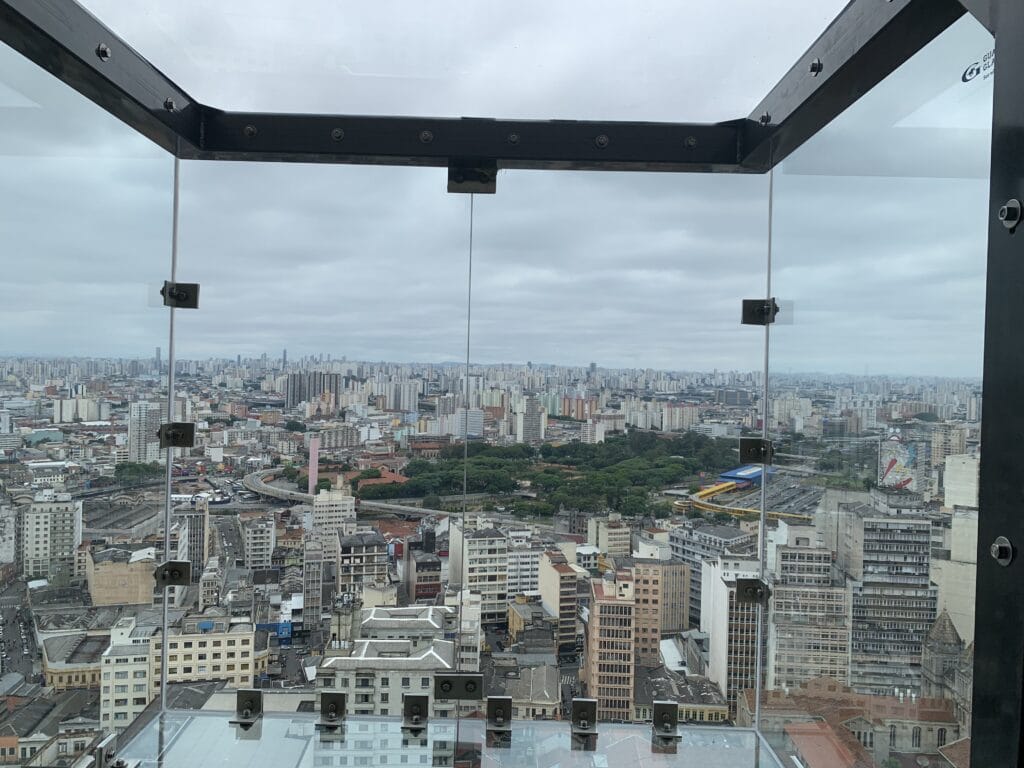 Sampa Sky
Location: Praça Pedro Lessa, 110 - Centro Histórico de São Paulo. Hours: Tuesday to Friday, 11 AM to 7 PM; Saturday, 9 AM to 7 PM; Sunday, 9 AM to 4 PM. Admission: ticket $80.00, but check the app for any changes.
Jardim Botânico de São Paulo
São Paulo’s Botanical Garden was founded in 1928, after an invitation extended to Brazilian naturalist Frederico Carlos Hoehne to launch a botanical project in the Água Funda region.
Before that, the area supplied water to the Ipiranga district. That same year, Frederico created the Orquidário de São Paulo, considered the garden’s founding milestone. It was only in 1938, though, with the creation of São Paulo’s Department of Botany, that the space was officially established.
The garden is also home to the Instituto de Botânica and the Museu Botânico de São Paulo. It also sits geographically within the Parque Estadual das Fontes do Ipiranga.
The place is beautiful, with its royal palms, gardens, and greenhouses — well worth spending an afternoon there.
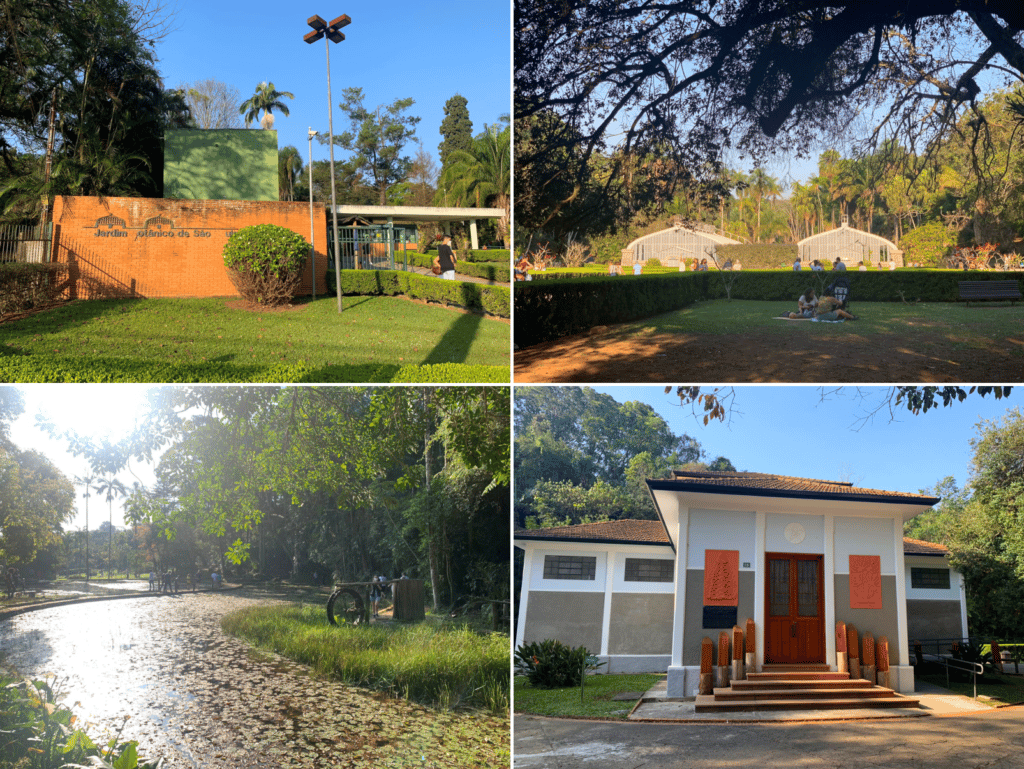 Jardim Botânico
Location: Avenida Miguel Estéfno, 3031 - Vila Água Funda. Hours: Tuesday to Sunday, 9 AM to 5 PM. Admission: $10.00 full price, R$5.00 half price, free for kids up to 4.
Churches in São Paulo
São Paulo has several churches, but two downtown are especially famous, and we recommend visiting both.
Catedral da Sé
Known as Catedral Metropolitana de São Paulo or Catedral da Sé, this is the cathedral of the Archdiocese of São Paulo. It has two patron saints, Our Lady of the Assumption and Saint Paul.
Despite having a Renaissance-style dome, the Catedral Metropolitana de São Paulo is the fourth-largest Neo-Gothic temple in the world. The cathedral is the main temple of the parish of Nossa Senhora da Assunção de São Paulo, established August 10, 1591.
After that, a Baroque-style cathedral was built in 1745, completed in 1764, but demolished in 1912 to make way for the new cathedral. The construction of the new cathedral, however, wasn’t completed until 1954, delayed for years because of World War II and long waits for materials to arrive in Brazil.
The church offers an interior tour for R$60.00. To book one, contact Luciane at (11) 98453-2687 to schedule your visit. During the tour, you’ll learn the church’s full history, its symbolism, visit the crypt, and climb the towers up to the bells. It’s a fantastic tour, and we highly recommend doing it to better understand the history of the church and of Brazil during the coffee era.
The cathedral also hosts a brunch once a month, though you’ll need to contact the church ahead of time to reserve a spot.
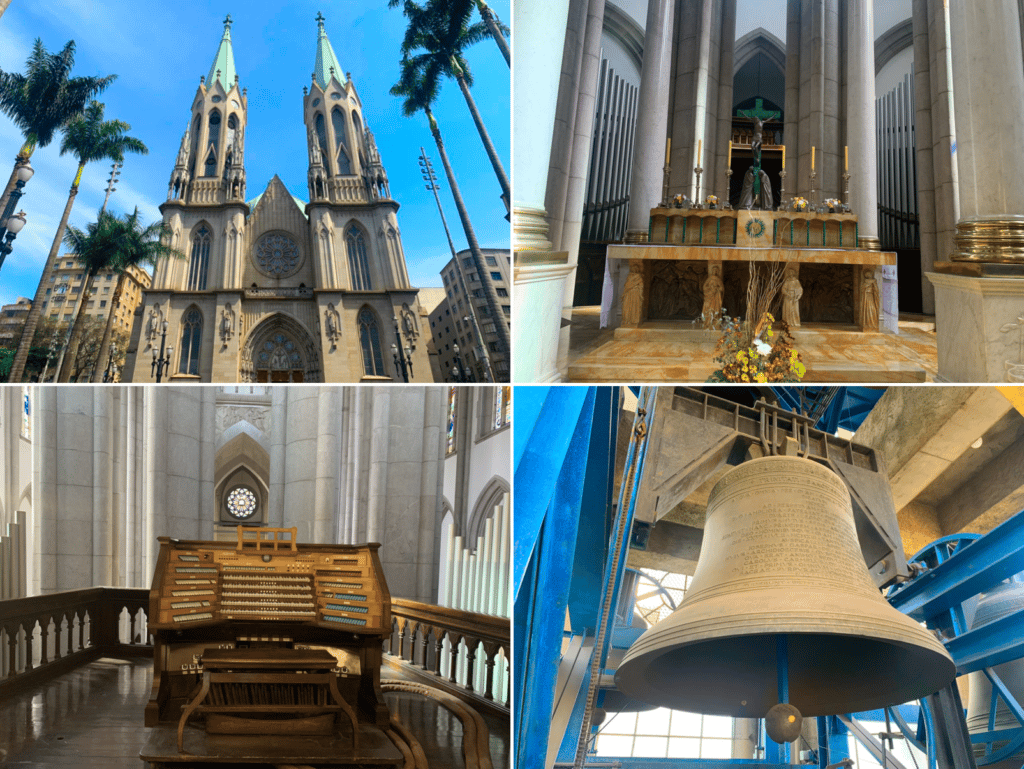 Catedral da Sé
Location: Praça da Sé - Sé. Hours: Monday to Sunday, 8 AM to 6 PM. Admission: free, just to see the church.
Mosteiro de São Bento
For me, this is without question the most beautiful church in the city. The site is a complex made up of the Basílica Abacial Nossa Senhora da Assunção, the Colégio de São Bento, and the Faculdade de São Bento. Its current structure began construction between 1910 and 1912, designed by German architect Richard Berndl (1875-1955).
About 45 monks live at the Monastery, devoting their lives to the tradition of “ora et labora” (pray and work). It also hosts a monthly brunch, along with a guided tour of the whole complex. I’d recommend attending Sunday Mass, which is sung in Latin, quite different from what we’re used to.
At the monastery, the monks sell bread they bake themselves, and it’s absolutely worth trying!
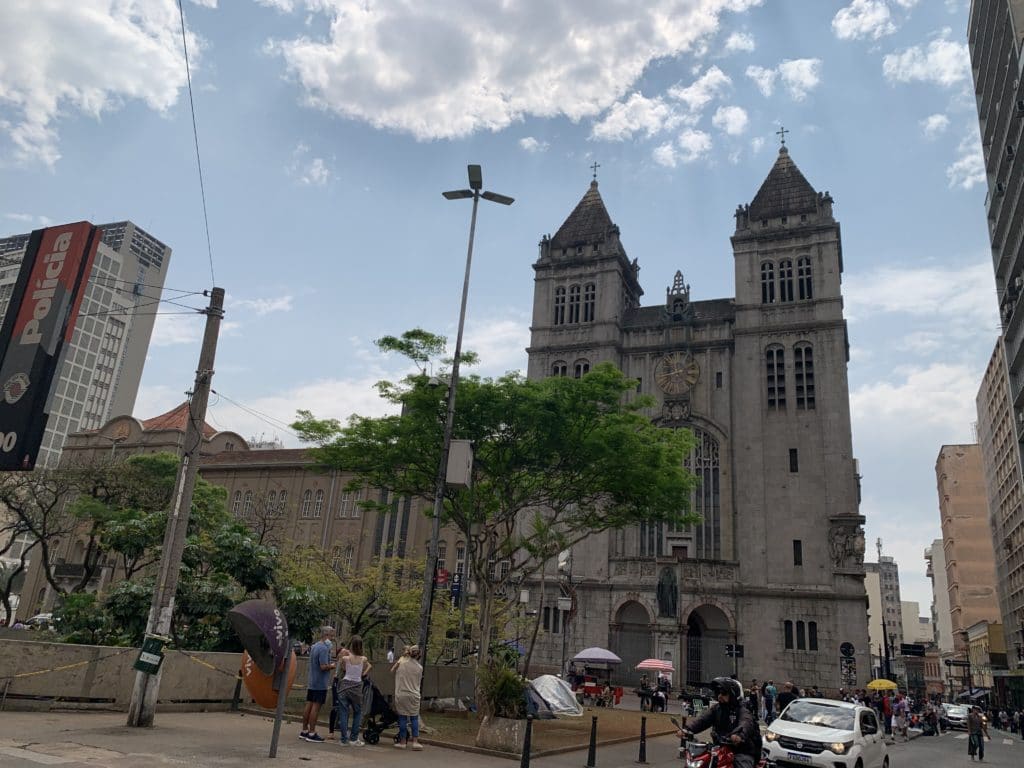 Mosteiro de São Bento
Location: Largo São Bento, s/n - Centro Histórico. Hours: closed because of the pandemic, with only the bakery open for pickup. Admission: free.
Museums in São Paulo
São Paulo is a city bursting with culture, so there are museums scattered throughout the city, and we’ll cover a few we’ve visited.
Casa das Rosas
Casa das Rosas (website and Instagram), also known as the Espaço Haroldo de Campos de Poesia e Literatura, is a classic French-style mansion built in 1935.
The space is dedicated to a range of cultural events, with a focus on literature and poetry. It’s one of the remaining buildings from the era characteristic of the early development along one of the city’s main avenues, one of the few from that period still standing.
In 1985, the property was designated a landmark by CONDEPHAAT (the Council for the Defense of Historic, Artistic, Architectural and Tourist Heritage), and the house has been under restoration since October 2021, with the work on display in the house’s garden.
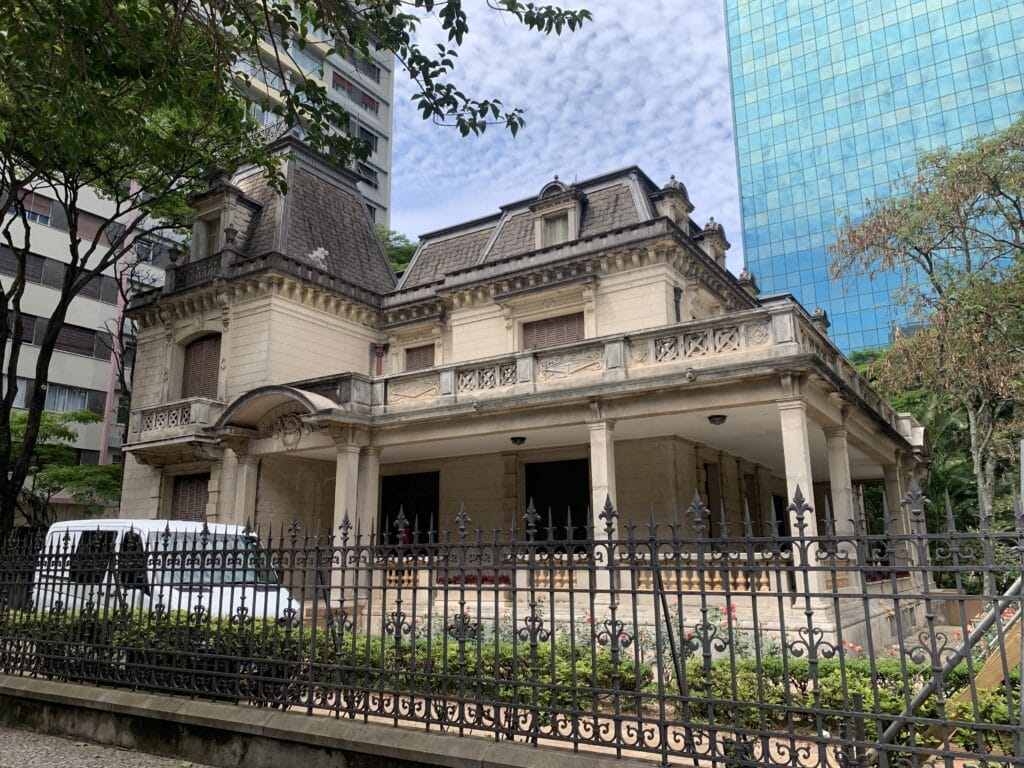 Casa das Rosas
Location: Avenida Paulista, 37 - Bela Vista. Hours: Wednesday to Saturday, noon to 4 PM. Admission: free.
Japan House
Opened in April 2017, this is an international initiative of the Japanese Government to show the world a vision of modern Japan. The project also has locations in London and Los Angeles.
The façade was designed by renowned Japanese architect Kengo Kuma, 36 meters wide and 11 meters tall, made from 630 pieces of hinoki wood (a cypress native to Japan), fitted together by five artisans brought directly from Japan.
The technology extends to the restroom too, with a high-tech toilet from Japanese brand Toto, self-cleaning, with a heated seat and button-controlled cleaning jets.
The exhibitions are temporary and last around two months, cycling through several shows over the course of the year, held on the ground floor and third floor.
The space also has a shop selling Japanese products on the first and second floors, a café serving Japanese sweets on the first floor called Café Sabor Mirai, and a Japanese restaurant on the third floor called Aizome.
As if all that weren’t enough, behind Japan House stands one of the most prestigious murals by artist Eduardo Kobra, on the Edifício Ragi. The mural honors Brazilian architect Oscar Niemeyer, standing 52 meters tall and 16 meters wide, highlighting the geometric, colorful shapes that reference the architect’s works, like Copan, Pampulha, the Museu Oscar Niemeyer, and the Palácio do Planalto, adding even more beauty to the spot.
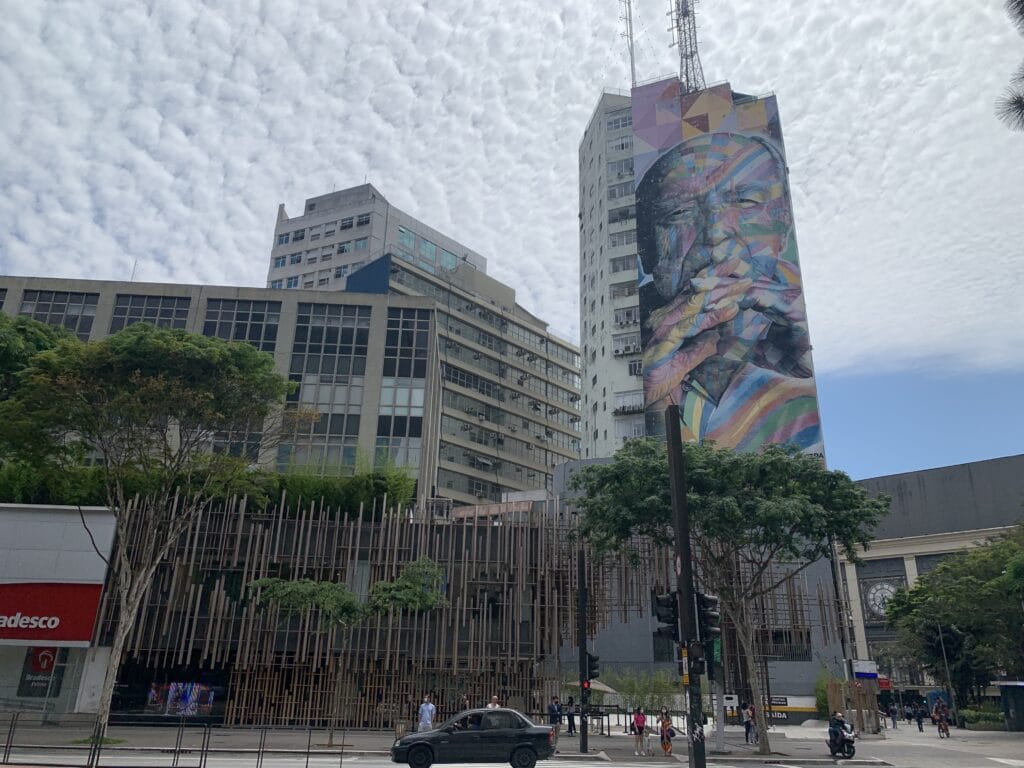 Japan House
Location: Avenida Paulista, 52 - Bela Vista. Hours: Tuesday to Friday, 10 AM to 6 PM; weekends, 9 AM to 7 PM. Admission: free.
Café Sabor Mirai
We went in the morning, so we had coffee there and tried different café items — Wagashi-Yokan Sakura (sweet potato) and Wagashi-Yokan Koi (fish-shaped), plus a matcha cake, all priced at R$15.00 each. What we liked best was the cake; the others had different flavors and textures, well worth trying too.
Wagashi
Wagashi (和果子) is the name given to the artistic, traditional sweets of Japanese confectionery. Introduced to Japan during the Yayoi period through Chinese influence, though the term “Wagashi” came later, during the Meiji period, even as the sweets became popular during the Edo period (1603-1867).
These sweets were served at banquets for the aristocracy and imperial court, paired with tea (matcha). Today, they appear at various dates and events across Japan, like New Year’s (Oshougatsu), weddings, funerals, Otsukimi (moon viewing), Hinamatsuri (Doll Festival), and even as offerings to deities at temples.
Today, Wagashi is made from mochi, dango, azuki beans, fruit, and other natural ingredients, and considered healthier than conventional sweets.
Wagashi Yokan is one of the most popular sweets in Japan, with a jelly-like texture, made from kanten extracted from seaweed — this is the one we tried, though there are other types too, like monaka and manju.
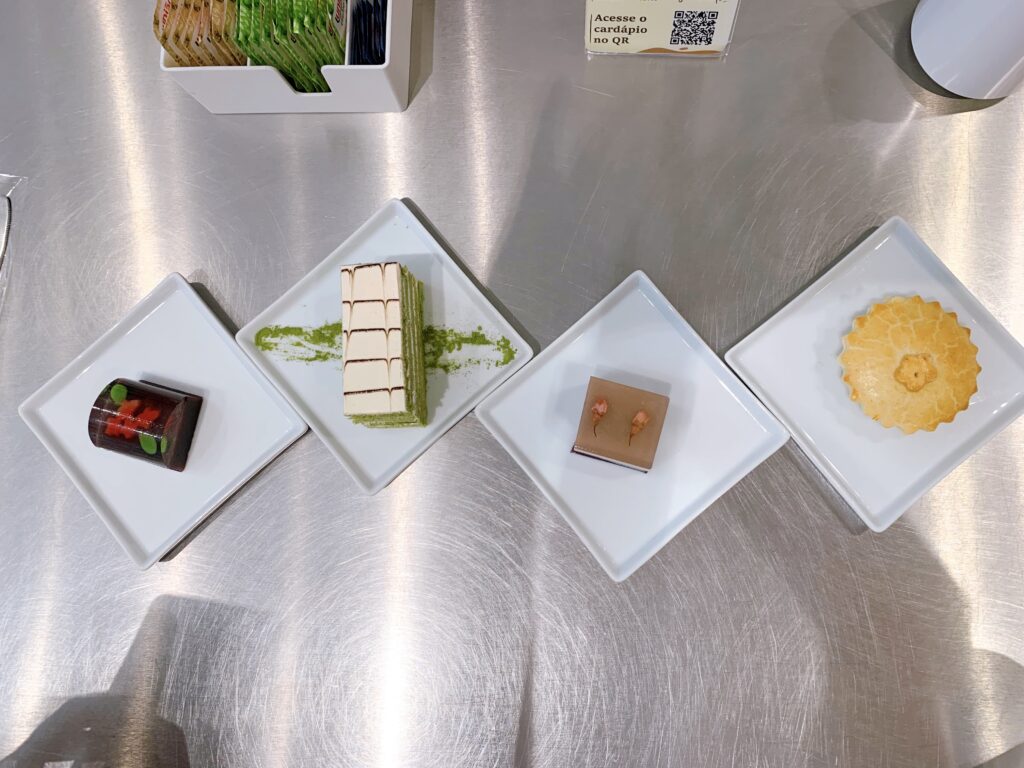 Japan House café
MASP - Museu de Arte de São Paulo Assis Chateaubriand
One of Brazil’s most important cultural institutions (website). Since November 7, 1968, it’s been located on Avenida Paulista, in a building designed by Italian-Brazilian architect Lina Bo Bardi specifically to serve as its home.
The building is famous for its span of over 70 meters, held up by four enormous pillars, engineered by José Carlos de Figueiredo Ferraz.
The building is considered a major example of Brazilian Brutalist architecture and one of the most iconic landmarks in São Paulo, and as a result, it’s protected as a landmark by all three heritage authorities: IPHAN, Condephaat, and Conpresp.
Founded in 1947 on the initiative of Paraíba native Assis Chateaubriand, MASP holds the most important and comprehensive collection of Western art not just in Latin America, but across the entire southern hemisphere.
It holds works from the Italian and French schools, along with an extensive section of Brazilian art and smaller collections of African and Asian art, decorative arts, archaeological pieces, and more, totaling around 8,000 pieces in its permanent collection, plus fantastic temporary exhibitions.
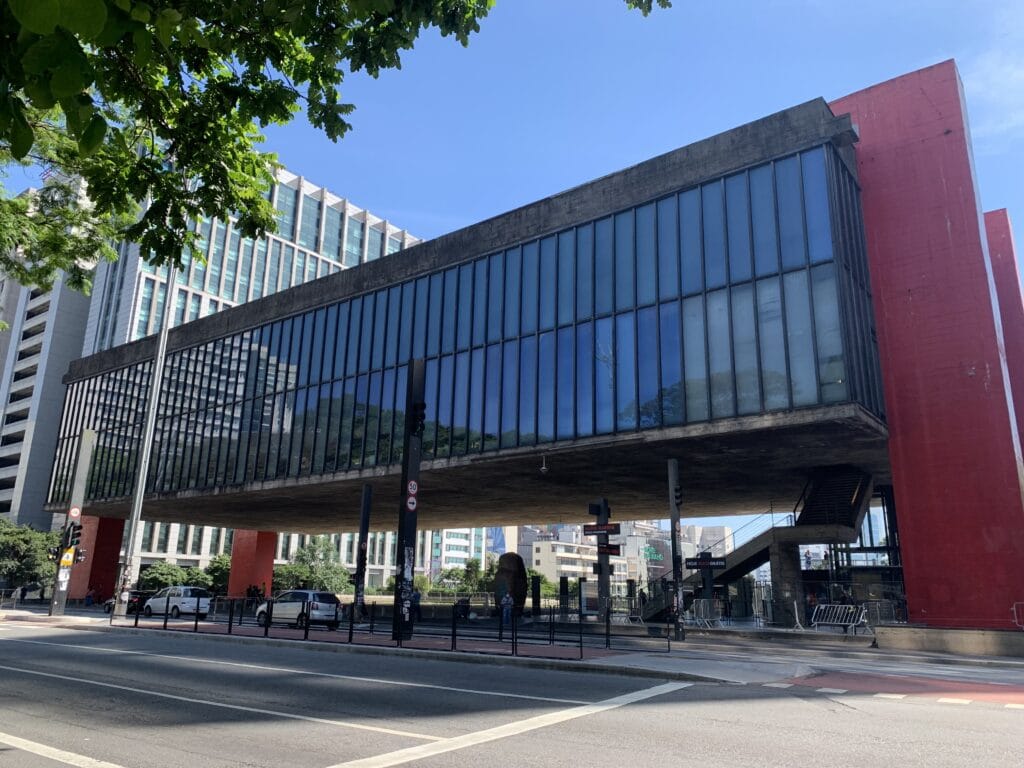 MASP São Paulo
MASP
Location: Avenida Paulista, 1578 - Bela Vista. Hours: Tuesday to Sunday, 10 AM to 6 PM. Admission: free every Tuesday; price varies by exhibition.
Pinacoteca de São Paulo
The Pinacoteca do Estado de São Paulo (Instagram) is one of Brazil’s most important art museums. The building was constructed in 1900, in the Jardim da Luz, designed by Ramos de Azevedo and Domiziano Rossi to house the Liceu de Artes e Ofícios. It’s São Paulo’s oldest art museum, founded in 1905 and officially recognized as a state public museum since 1911.
With more than ten thousand pieces, covering mostly the history of 19th- and 20th-century Brazilian painting. A genuinely interesting stop for your itinerary, with both permanent and traveling exhibitions.
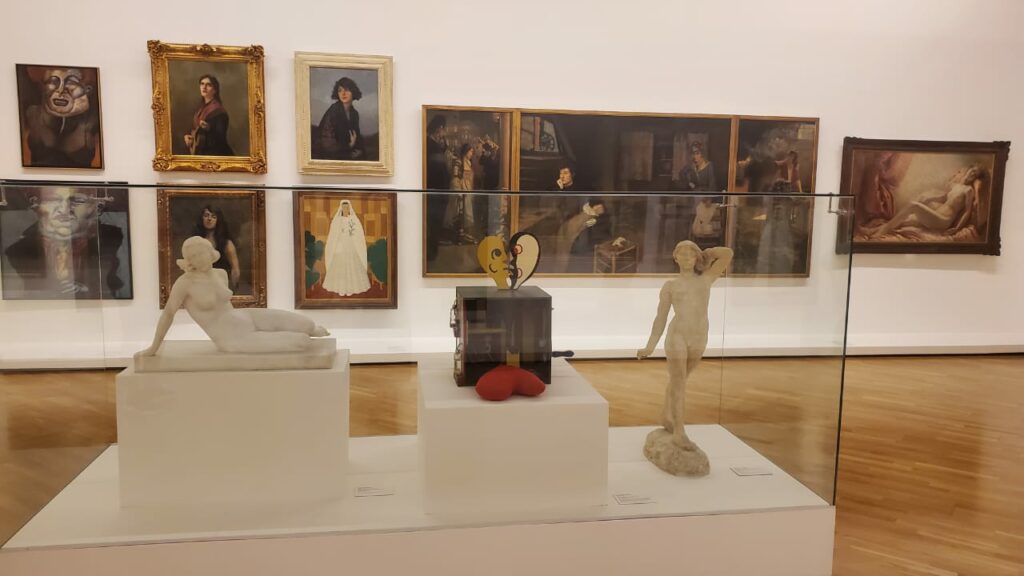 Exhibition at the Pinacoteca
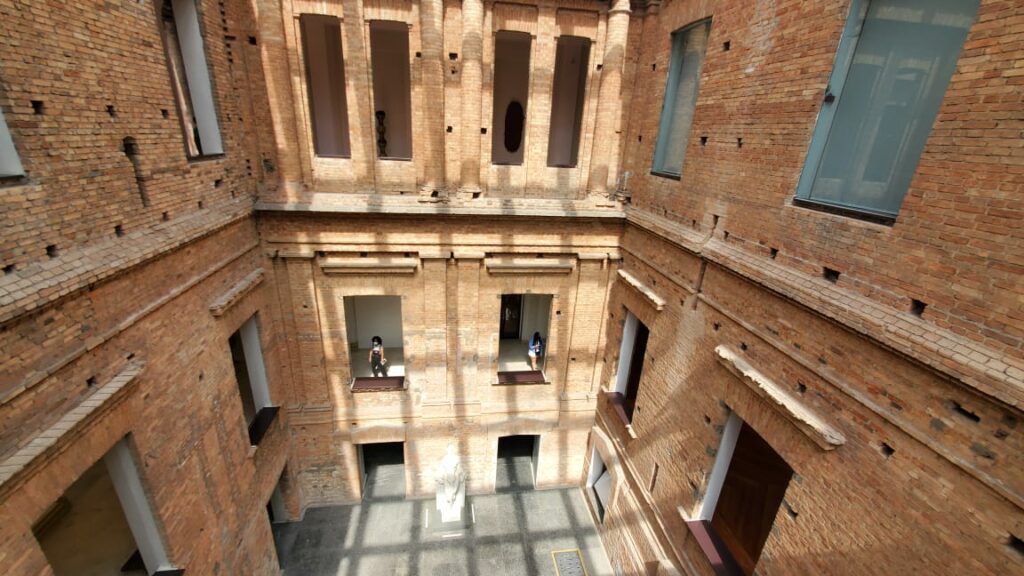 Pinacoteca hallways
Location: Praça da Luz, 2 - Luz. Hours: Wednesday to Monday, 10 AM to 6 PM. Admission: R$20.00 full price, R$10.00 half price.
Farol Santander
The Edifício Altino Arantes was inspired by the Empire State Building, and it’s certainly one of the country’s tallest buildings, a postcard landmark for the city, with a lookout at the top. It sits near the São Bento subway station.
The city’s third-tallest skyscraper, with 35 floors, was built in 1939 to serve as headquarters for the Banco do Estado de São Paulo, better known as Banespa. Today, though, it goes by the name Farol Santander. It reopened to the public in 2018 and today is a major cultural center, hosting several permanent and temporary exhibitions.
The building’s permanent exhibition, titled “Espaço Memória,” spans the second, third, and fifth floors. There, visitors get a glimpse of what daily life was like for bankers, through furniture from the 1950s.
The fourth floor continues “Espaço Memória,” with panoramic panels forming a 360° View by Vik Muniz.
Floors 19 to 20 and 20 to 24 hold temporary exhibitions, while the 26th floor offers a panoramic view of the city.
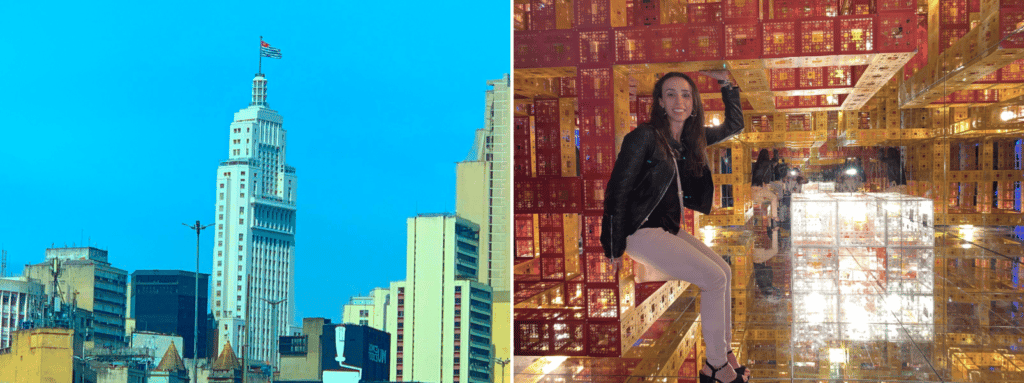 Farol Santander
 Panoramic view from Farol Santander
Bar do Cofre
In the basement is Bar do Cofre, a beautiful, fun spot, great for photos, since it occupies the old Banespa vault, complete with its doors and drawers once used to store customers’ valuables.
 Bar do Cofre
Location: Rua João Brícola, 24 - Centro Histórico. Hours: Monday to Sunday, 9 AM to 8 PM. Admission: buy tickets through the Sympla app; Bar do Cofre requires a phone reservation in advance.
Pateo do Collegio
This is the founding site of São Paulo, where the very first structure was built, when Father Manuel da Nóbrega, along with José de Anchieta and the Society of Jesus, established a settlement to convert the Indigenous population.
The complex includes not just the Museu Anchieta, where you can see maps tracing the city’s development, but also the Auditório Manoel da Nóbrega, the Galeria Tenerife, Praça Ilhas Canárias, the Igreja Beato José de Anchieta (which holds José de Anchieta’s femur), the Cripta Tibiriçá, and the library. Guided visits are available.
It’s a great tour, covering three floors: the crypt, the museum, and an upper floor with artifacts from churches across Brazil. There used to be a café where you could try bread made using the same recipe the Jesuits used in the 16th century, but unfortunately it closed because of the pandemic, with reopening expected next year.
All the lighting you’ll see in the period street lamps still runs on gas to this day.
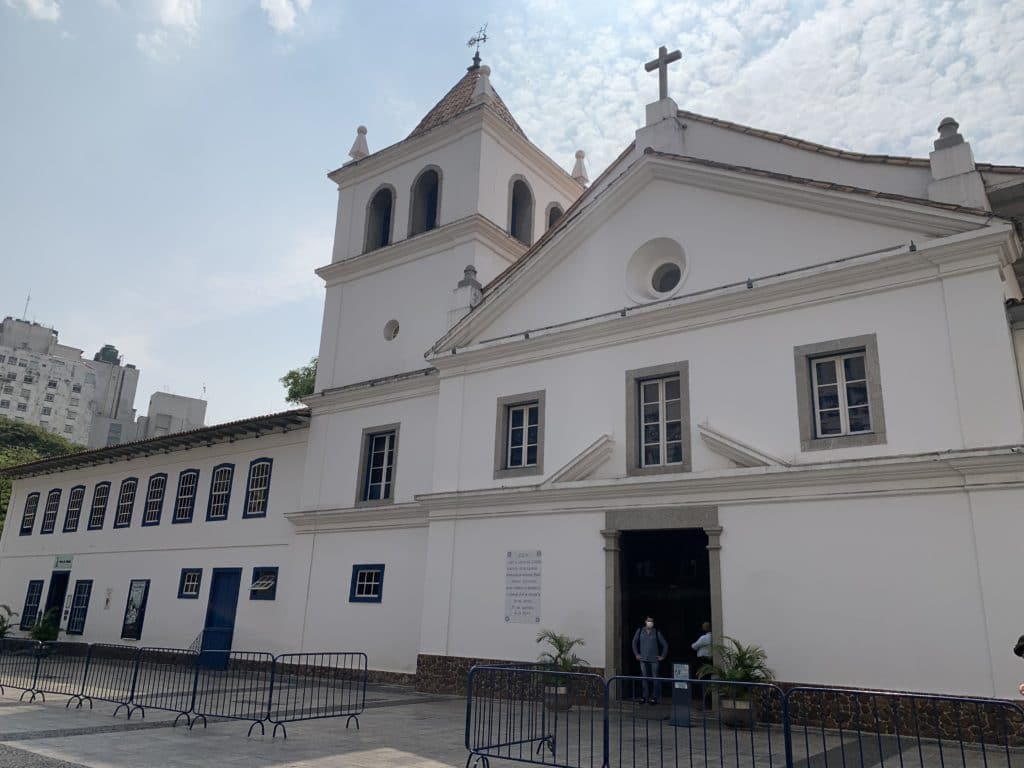 Pateo do Collegio
Location: Praça Pateo do Collegio, 2 - Centro Histórico. Hours: Tuesday to Saturday, 9 AM to 4:45 PM. Admission: R$8.00 for adults, R$2.00 half price or seniors, paid on site.
Glória Imortal dos Fundadores de São Paulo
This work sits directly in front of Pateo do Colégio, honoring those who took part in founding the Colégio and the Vila de São Paulo. Created by Italian sculptor Amadeo Zani, it sat in storage for a long time before being installed at Pátio do Colégio in 1925.
It tells the story of the missionaries, the Indigenous people who lived there, and important figures from the era.
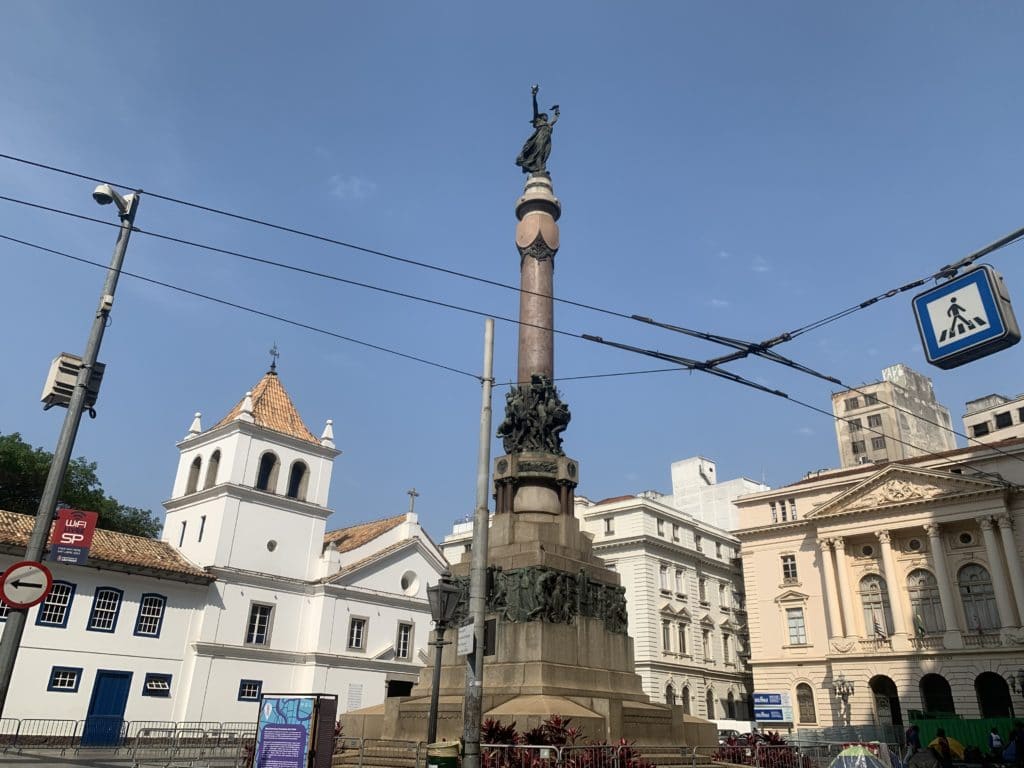 Glória Imortal dos Fundadores de São Paulo
Museu da Cidade de São Paulo / Solar da Marquesa de Santos
Museu da Cidade de São Paulo
Located between the parking lots and Pateo do Collegio, you’ll likely walk right past it, so don’t skip it — it’s part of the Museu da Cidade de São Paulo.
The house, also called the Casa da Imagem, is one of the units of the Museu da Cidade de São Paulo, dedicated to housing cultural programming around photography, publications, and exhibitions that highlight the museum’s photographic side.
Built on the site of a former 17th-century wattle-and-daub house, this house was built around 1880 by Benedito Antônio da Silva as his residence. Today it houses a museum of traveling exhibitions, and when we visited, they were in the middle of changing the exhibition, so we weren’t able to go inside.
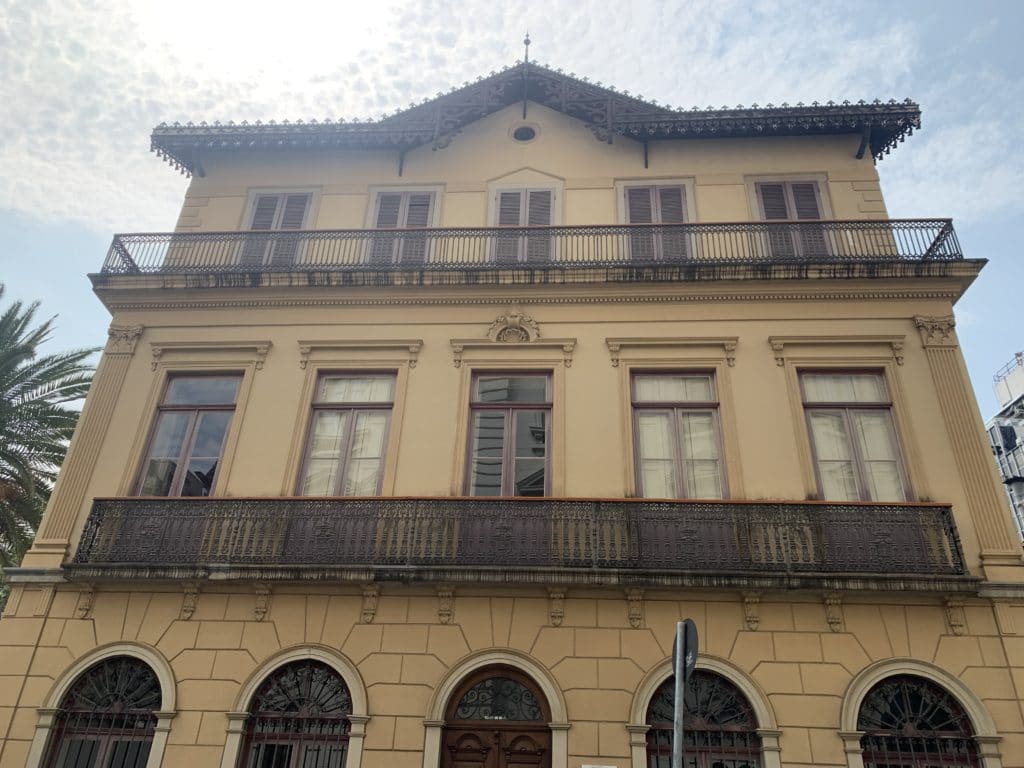 Museu da Cidade de São Paulo
Solar da Marquesa de Santos
An example of an 18th-century residence, once home to Domitila de Castro Canto e Melo, known as the Marquesa de Santos. Inside, the Marquesa’s story is told from her first marriage, through her seven-year affair with Emperor Dom Pedro I, to her final marriage and children.
A genuinely curious place to visit, with a permanent exhibition, and another exhibition being set up at the time of our visit as well.
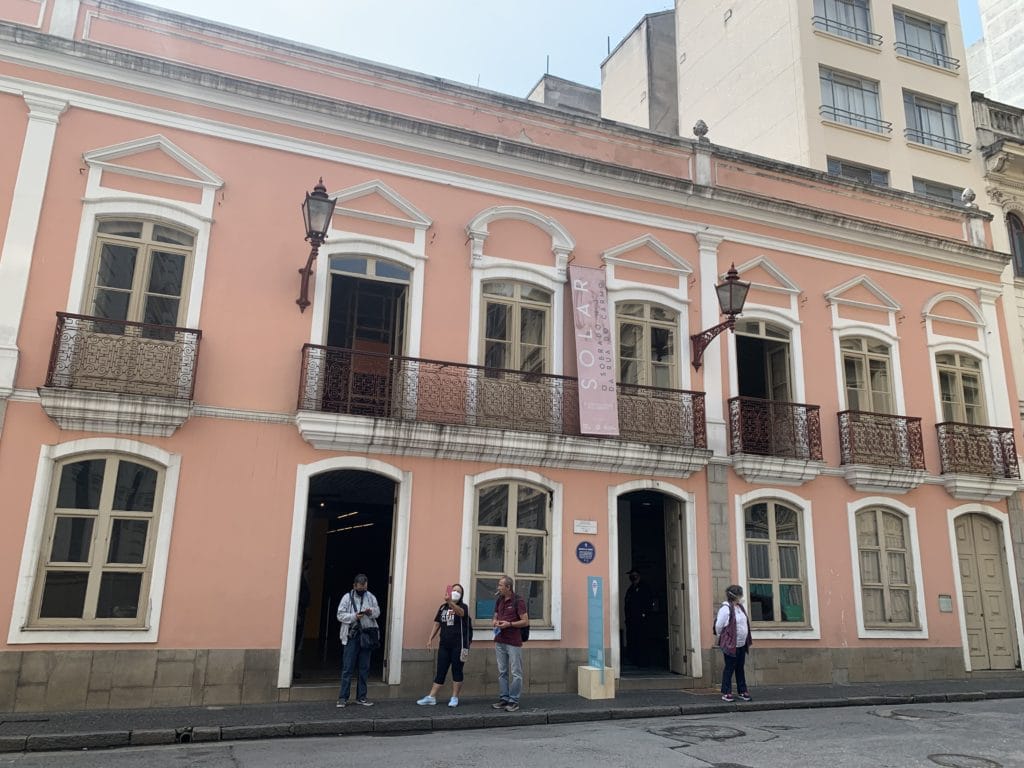 Solar da Marquesa de Santos
Beco do Pinto
This is a passageway between the Solar da Marquesa de Santos and the Museu da Cidade de São Paulo, used during the colonial period for people and animals to pass through, since it connected the Sé lake to the Tamanduateí floodplain. Its name honors Brigadeiro José Joaquim Pinto de Moraes, the previous owner of the Marquesa de Santos’s house, and together they form a historic, architectural, and cultural complex.
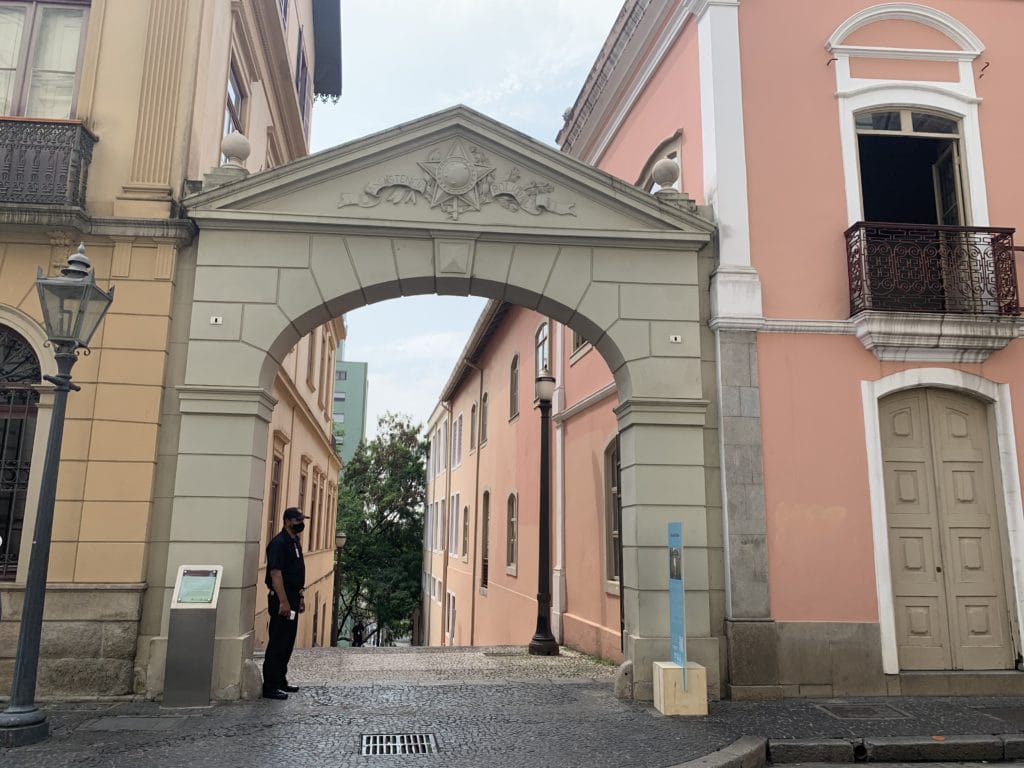 Beco do Pinto
Location: Rua Roberto Símonsen, 136 - Centro Histórico. Hours: Tuesday to Sunday, 11 AM to 3 PM. Admission: free.
Centro Cultural Banco do Brasil
Built in 1901 and renovated between 1923 and 1927 by architect Hippolyto Pujol Junior to serve as the headquarters of the Banco do Brasil, since 2001 it’s housed the Centro Cultural do Banco do Brasil, and it’s one of the most complete cultural spaces in São Paulo.
It hosts a range of temporary exhibitions; check the schedule here.
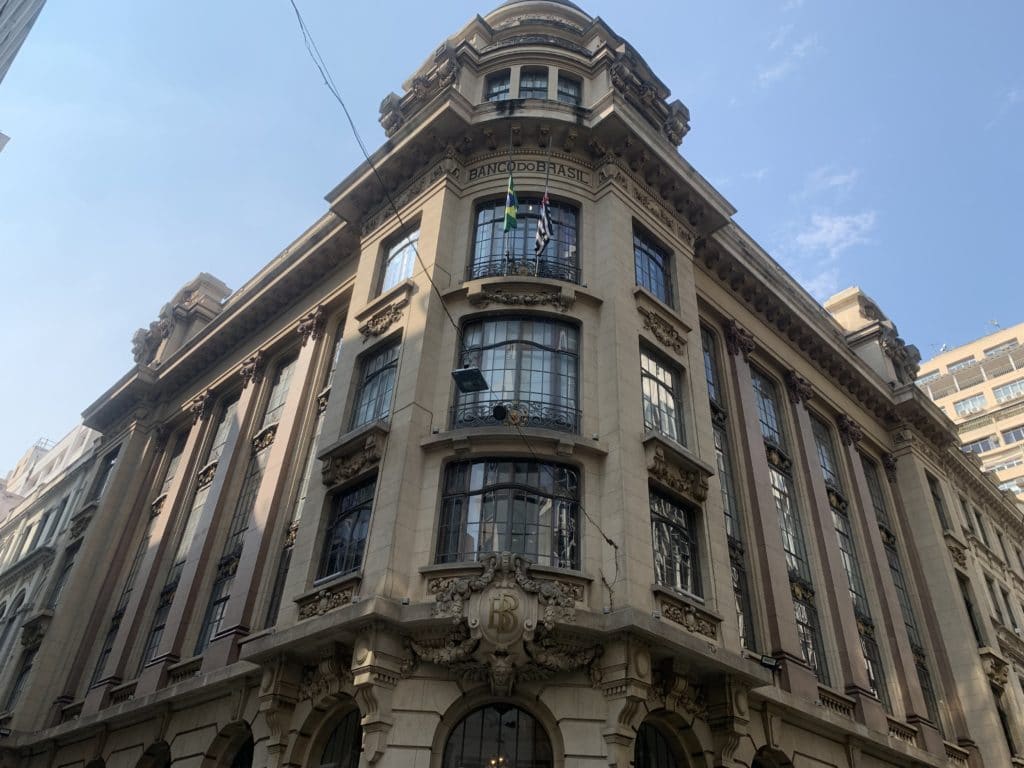 Centro Cultural Banco do Brasil
Location: Rua Álvares Penteado, 112 - Centro Histórico. Hours: Monday to Sunday, 9 AM to 6 PM, closed Tuesdays. Admission: free.
Theatro Municipal
One of Brazil’s most important theaters, opened in 1911 to meet the desire of the era’s São Paulo elite, who wanted the city to stand alongside the world’s great cultural centers.
The Theatro is beautiful and luxurious, and since September 14, 2021, it has once again offered guided tours, which can be booked 24 hours before your visit, with ticket sales opening at 10 AM through this link.
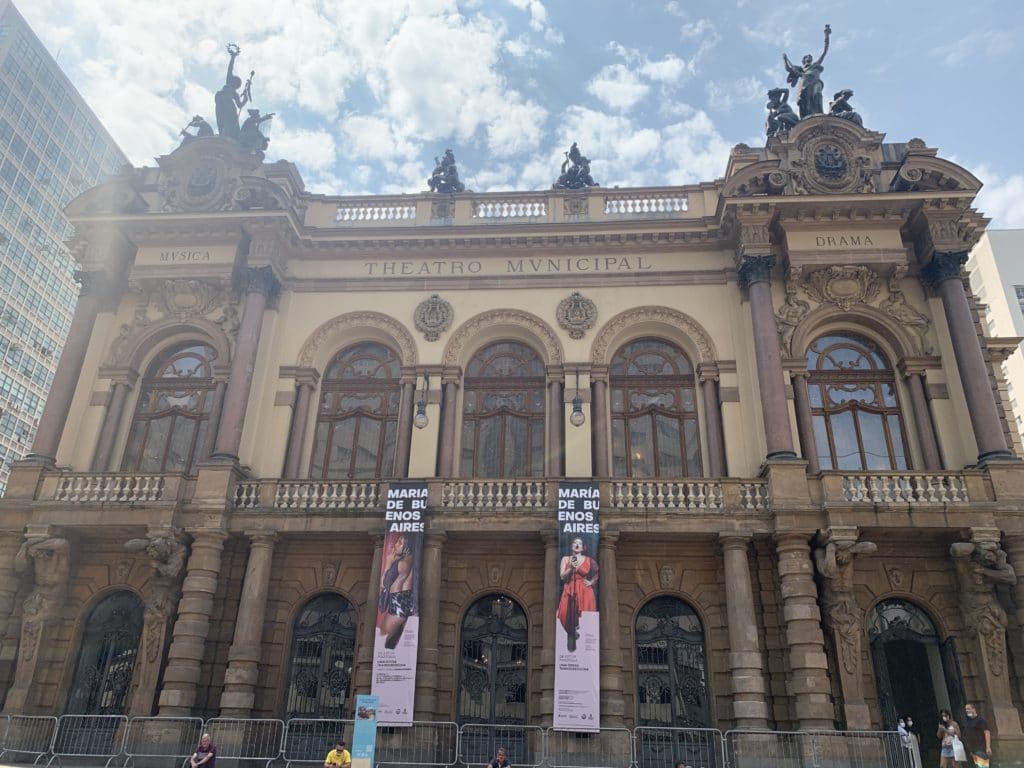 Theatro Municipal
Bar dos Arcos
In the theater’s basement is a bar known as Bar dos Arcos, which is really beautiful. We recommend booking ahead to visit. One fun fact: there’s a ball pit, and without a doubt, the food and drinks are excellent too.
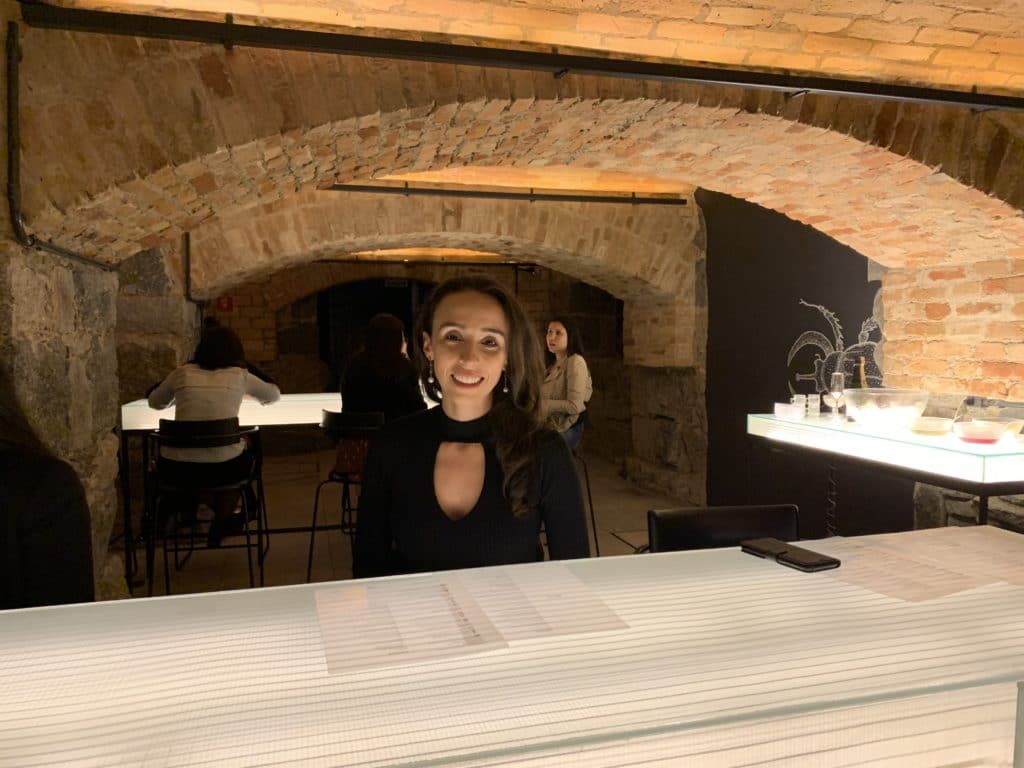 Bar dos Arcos
 Ball pit
Location: Praça Ramos de Azevedo, s/n - República. Hours: during visiting hours and performances. Admission: varies by show or performance.
Galeria do Rock
Centro Comercial Grandes Galerias is a shopping center with all kinds of shops, mostly selling rock and hip hop merchandise, along with skate gear, tattoo shops, and bars in downtown São Paulo. Built in 1962 and opened in 1963.
Worth swinging by, even just to snap a photo.
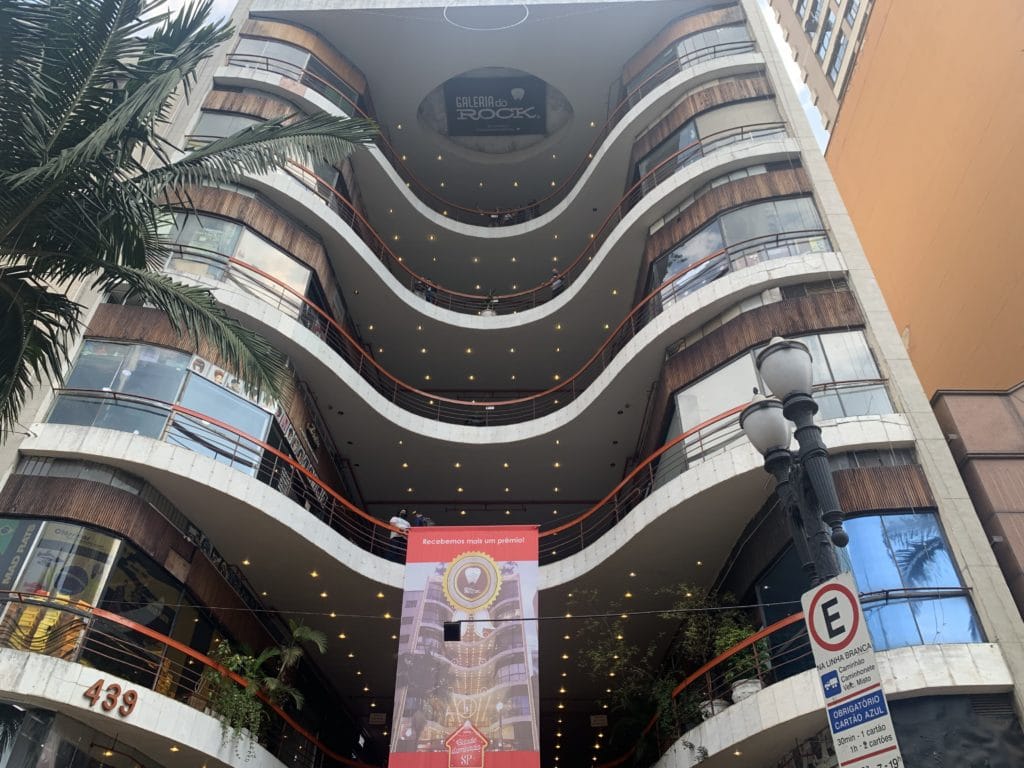 Galeria do Rock
Location: Avenida São João, 439 - República. Hours: Monday to Friday, 9 AM to 7 PM; Saturday, 9 AM to 6 PM. Admission: free.
Where to Walk in São Paulo
The city has several spots well worth walking through to get a feel for local culture and understand just how eclectic the city really is.
Avenida Paulista
This is certainly the main avenue — the financial, cultural, and entertainment hub of the city, where you’ll find huge skyscrapers, some of the best restaurants, and every kind of person, each with their own religion, beliefs, and style, making for the greatest possible cultural diversity.
It sits on the boundary between the Centro-Sul, Central, and Oeste districts, in one of the city’s highest-elevation areas, known as the Espigão da Paulista.
You’ll also find several spots we’ve already covered here, like MASP, Japan House, and Casa das Rosas.
Every Sunday, the avenue closes to cars for pedestrians, with people selling all kinds of things on the street and putting on performances along the way, though during the week you can still walk its wide sidewalks or the central bike lane — this belongs on your list.
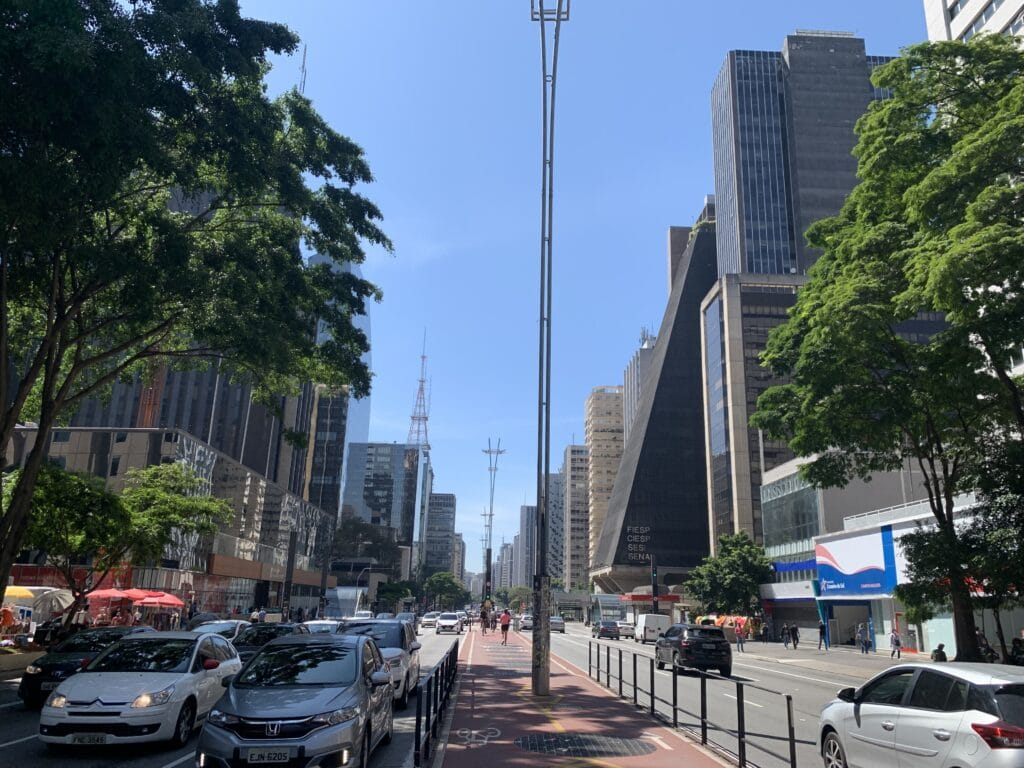 Avenida Paulista
Vale do Anhangabaú
Situated between Praça da Bandeira and Avenida São João. This is a public space commonly thought of as a park, traditionally the site of events like public demonstrations, political rallies, performances, and popular shows.
Since it’s downtown, it’s always good to stay alert in the area — when we visited, there were people skateboarding and biking around.
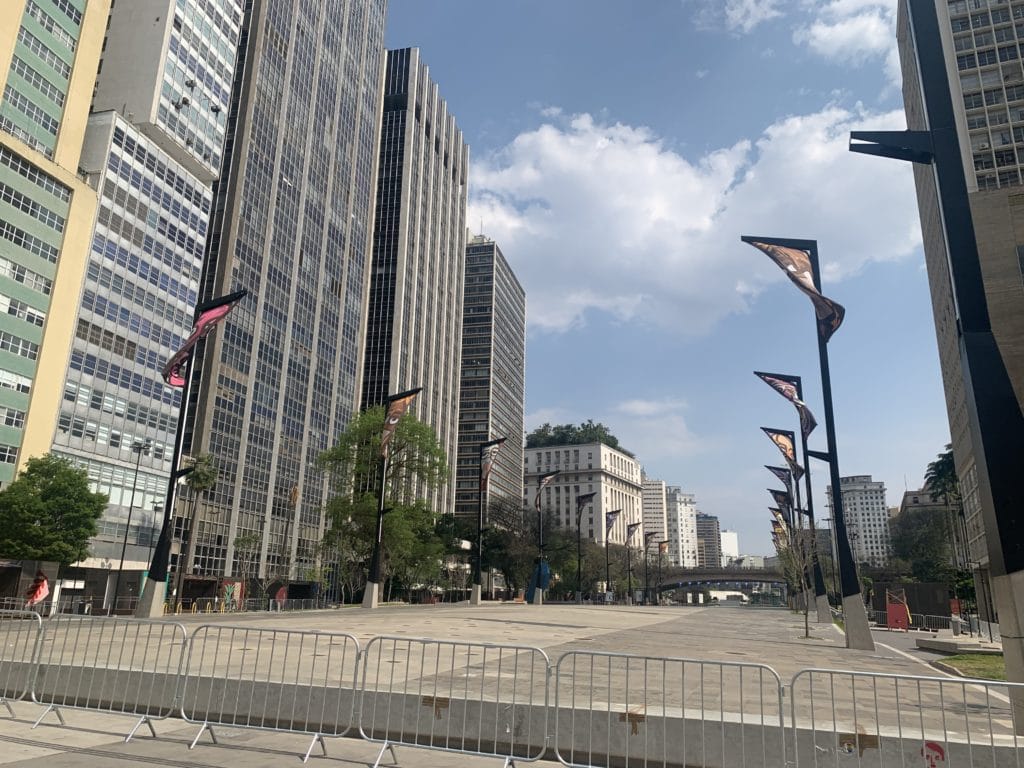 Vale do Anhangabaú
Rua 25 de Março
Rua 25 de Março sits in downtown São Paulo, next to Mosteiro de São Bento and Santander, right in the historic heart of the city. We’d recommend getting there by subway or bus, not just because parking is difficult, but also because of the crowds and traffic in the area.
Most shops are open Monday to Friday, 8 AM to 6 PM, and Saturdays, 8 AM to 1:30 PM.
The area is great for buying decorations, party supplies, costume jewelry, artificial flowers, and imported goods in general, regardless of quality or origin.
The street is genuinely wild, with street vendors and small stalls all along the sidewalk, each selling their own products, and people bumping into each other constantly, in addition to the shops inside mini shopping centers.
Tip: it’s a crowded area, so watch out for pickpocketing and theft — don’t wear anything valuable, and keep your money somewhere out of sight.
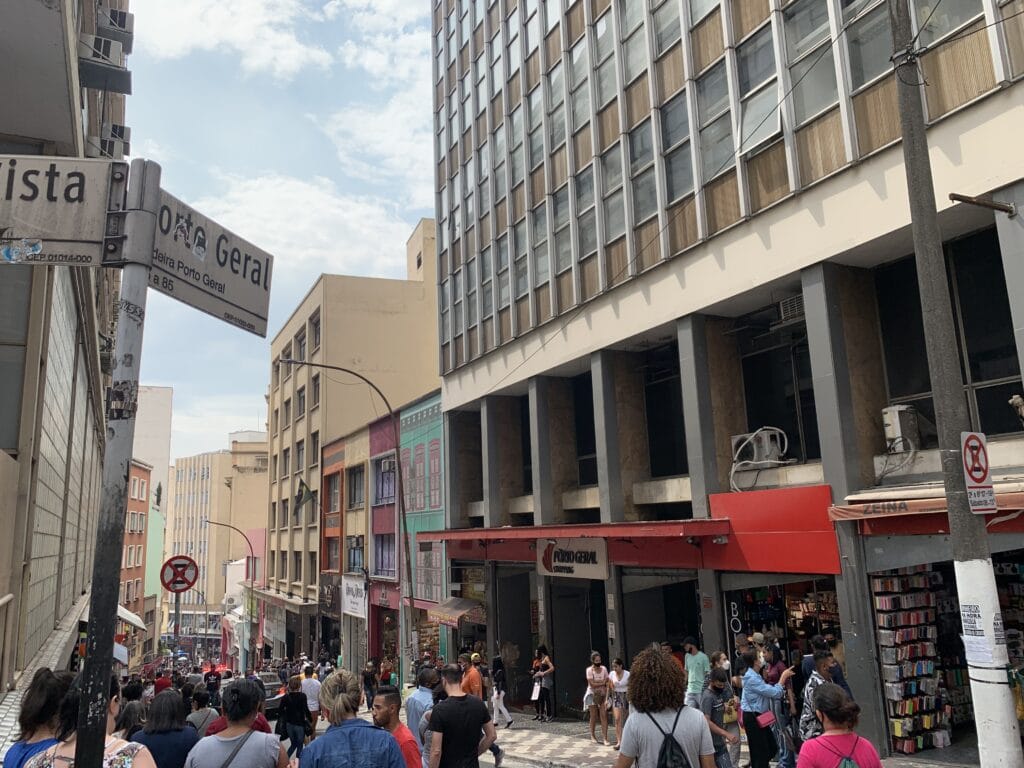 Rua 25 de Março
Bairro da Liberdade
The Liberdade neighborhood is São Paulo’s Japantown, marked by a tall red torii gate at its entrance, with lanterns decorating the streets.
There’s a wide range of dining options, including sushi bars, ramen shops, and yakisoba stalls, as well as Chinese and Korean restaurants.
There are several gift shops too, and the supermarkets sell kimonos, cookware, and imported Asian delicacies — and our main tip is, without question, to visit the Feira da Liberdade, held every Sunday. There, you’ll find not just accessories and crafts, but also some tasty snacks. Beyond that, most of the streets in the area fill up with pedestrians and vendors, showing off some of the neighborhood’s wonderful cultural diversity.
Our blog has several food recommendations in the area, like Aska Lamen, We Coffee, and others.
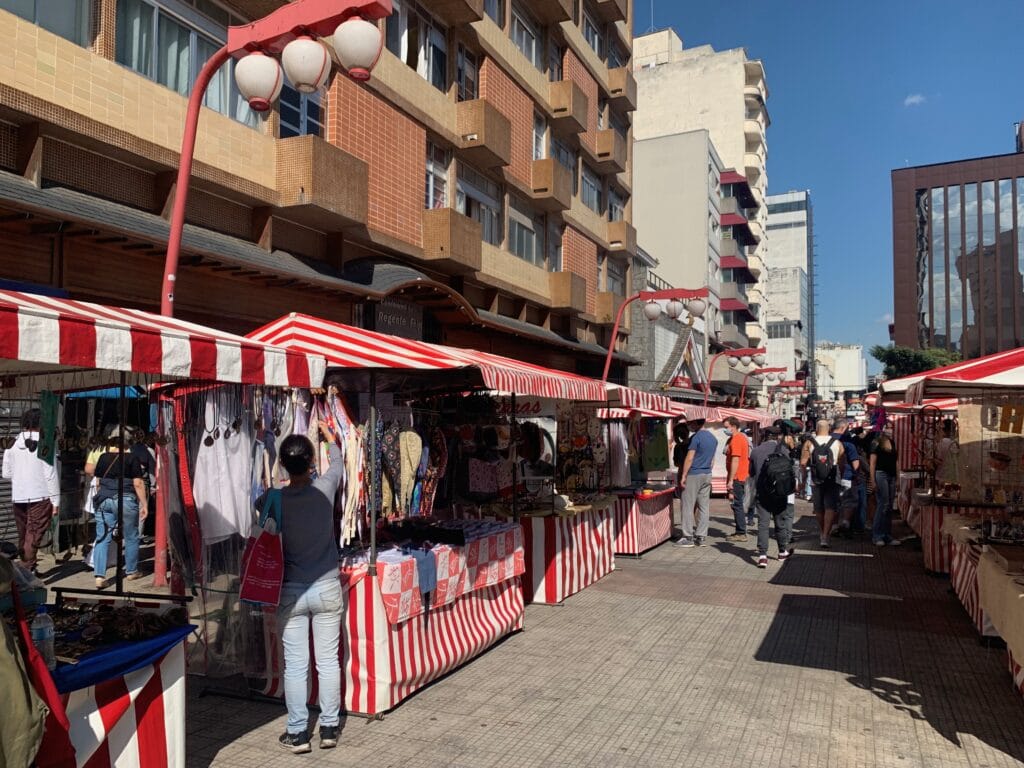 Fair in the Liberdade neighborhood
Walking the Minhocão on Sundays
The Elevado Presidente João Goulart, formerly named Elevado Presidente Costa e Silva and popularly known as the Minhocão (“Big Worm”), is an elevated expressway in São Paulo connecting the Praça Roosevelt area, downtown, to Largo Padre Péricles, in Barra Funda, spanning 2.8 km.
The Minhocão closes to traffic on Sundays and turns into a leisure walkway. Its weekend closing hours were recently extended: since July, vehicle traffic stops at 3 PM on Saturday and doesn’t resume until 6:30 AM Monday, making it a beautiful place to see building murals and walk with a view of Farol Santander in the background.
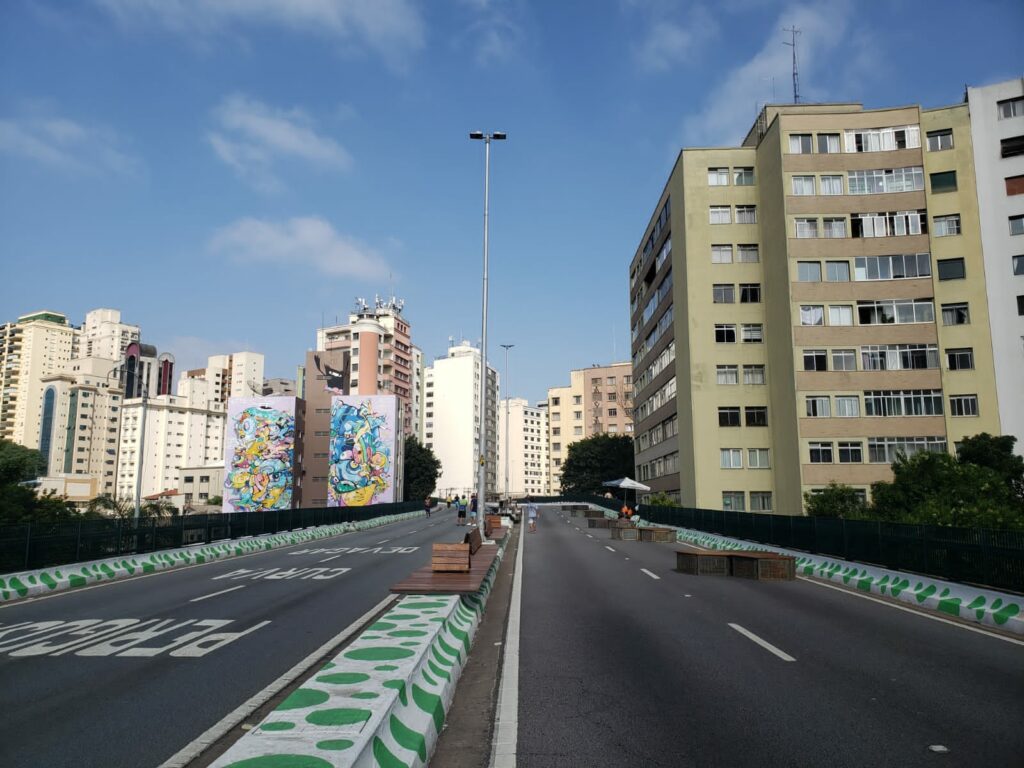 Minhocão on a Sunday
Antique Fair at Praça Benedito Calixto
Every Saturday, the Benedito Calixto fair (Instagram) takes place, with around 320 vendors offering all kinds of goods — everything from furniture and household items to vinyl records, stamps, and antique coins. The fair has run since 1987 and is a cultural and tourist landmark in São Paulo, well worth a visit.
There’s also handicrafts and other items for sale. Visitors can also enjoy a variety of snacks or take a break at one of the nearby restaurants, like Baiano de Dois (in Portuguese), a wonderful spot for Northeastern Brazilian cuisine.
Another popular draw is the Chorinho na Praça event, also held Saturdays from 2:30 PM to 6:30 PM. And finally, for book lovers, every other week starting at 2 PM, there’s the Autor na Praça event, with book launches, author signings, talks, and discussions.
Praça Benedito Calixto is waiting to give you a relaxing afternoon, where you can hunt for antiques, buy handicrafts, snack on something tasty, and even catch some live music.
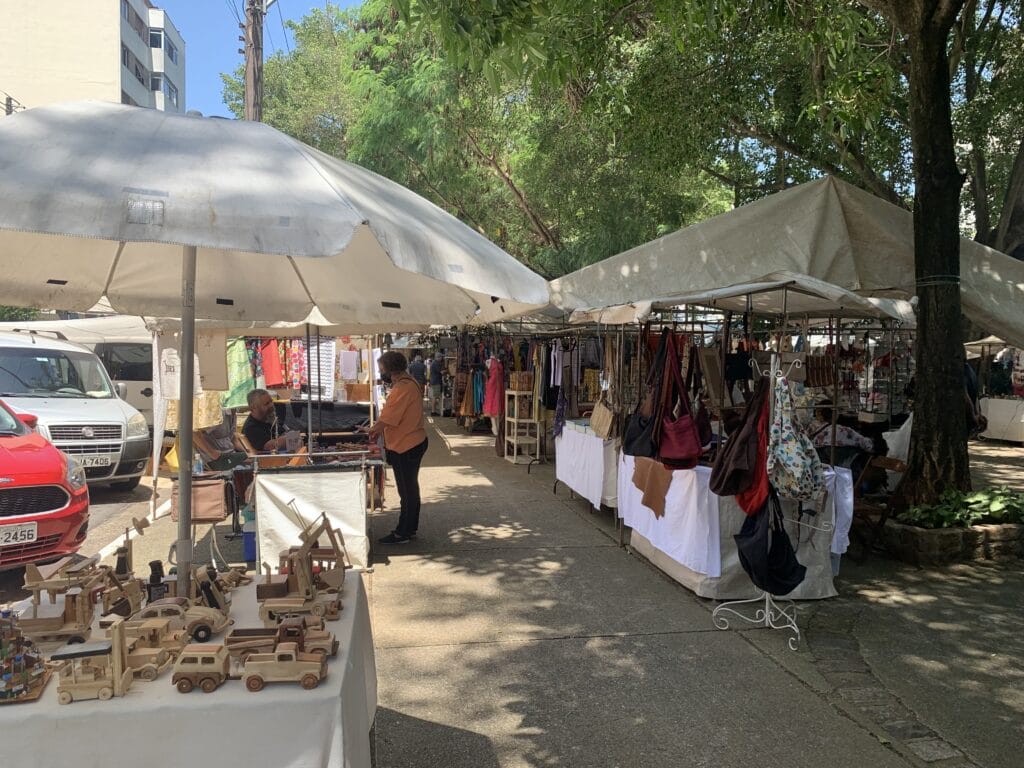 Antique fair at Praça Benedito Calixto
Enjoyed it?! Then read about where to eat downtown in Sorveteria do Centro and Bar Salve Jorge.
Read the original version in Portuguese on A Bela e o Bigode.