What to Do in Paranapiacaba
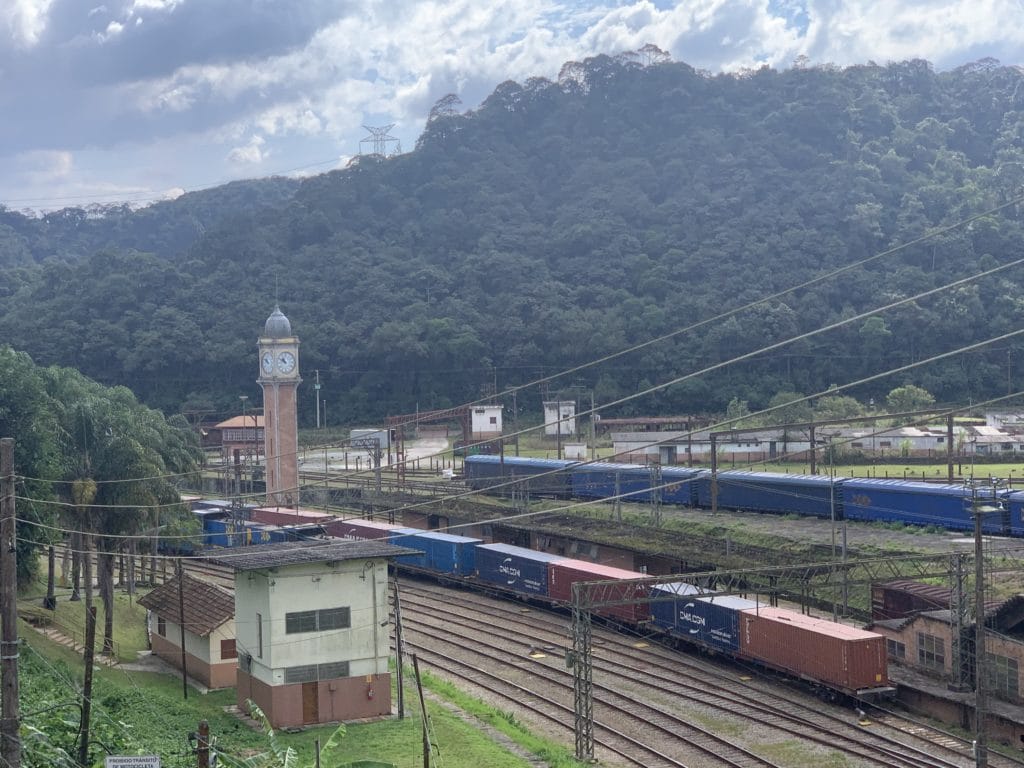
Paranapiacaba was founded to serve as an operational and residential control center for employees of the São Paulo Railway company. This English-owned railway operated the lines that carried cargo and passengers between the interior of São Paulo state and the port of Santos, in both directions.
Even though it’s far from downtown São Paulo, the Vila de Paranapiacaba sits in the ABC region, part of the municipality of Santo André.
History of Paranapiacaba
To start, there’s no way to tell the village’s story without covering the construction of the Santos-Jundiaí railway.
The Santos-Jundiaí railway traces back to after 1946, when the English monopoly on the São Paulo Railway Company (SPR) ended. The line opened in 1867, connecting the São Paulo towns of Santos and Jundiaí, passing through the city of São Paulo along the way.
In short, the railway project was championed by the Baron of Mauá, a major Brazilian industrialist, who convinced the imperial government of just how important the railway would be in linking São Paulo to the port of Santos.
Because of an 800-meter elevation change across 8 kilometers of the Serra do Mar, experts at the time considered the project practically impossible. So Mauá brought in one of the top specialists in the field: British railway engineer James Brunlees.
When Brunlees came to Brazil to carry out the project, he brought in engineer Daniel Makinson Fox, who had already gained experience building railways through the mountains of northern Wales.
Origin of the Name Paranapiacaba
The name has Indigenous Tupi roots, meaning “from where you can see the sea,” combining paranã (sea), epîak (to see), and aba (place).
During construction of the railway and its station, an English clock was installed, since this was a hallmark of the great railway stations of industrial Britain.
The English residents are no longer part of the village, though — all that remains are the ruins of their houses, designated landmarks by IPHAN, brown-hued and distinctive in style.
What to Do in Paranapiacaba’s Upper Village
To reach the town, we’d recommend setting your GPS to the church, where, about 200 meters away, there’s a parking lot, and from there you continue on foot. The first landmarks you’ll come across are the cemetery and the church.
The town splits into an upper section and a lower section, connected by a footbridge.
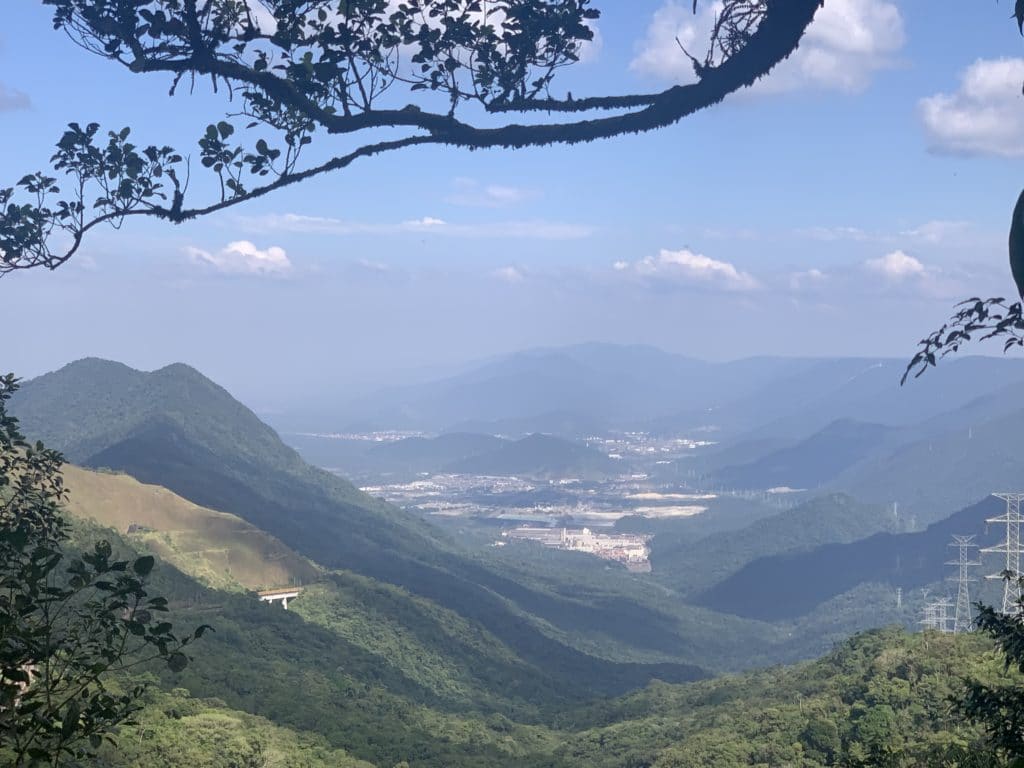
Once you’re parked, there’s a lookout worth visiting for a view of Cubatão, though it faces away from the town itself.
Mirante Vale do Rio Mogy
From this lookout, you can see the railway line and the Baixada Santista coastal region. It’s part of a stretch of the Caminho do Peabiru, also known as the “Trilha dos Tupiniquins,” which once connected the Pacific and Atlantic Oceans.
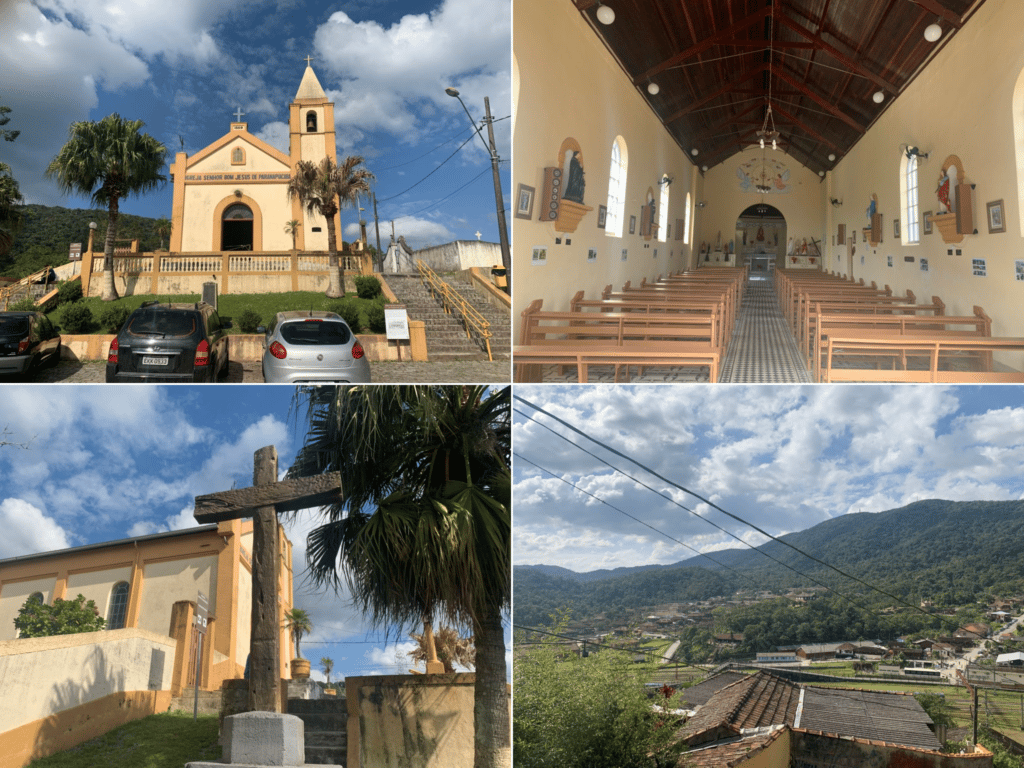
Igreja do Bom Senhor de Paranapiacaba
Built in 1889, this small chapel in Paranapiacaba sits atop the hill, in the upper village. Behind it stands Morro do Cruzeiro, a cross erected in 1941 to commemorate visits by a group of missionary priests to the village — from there, you’ll find a lookout with a view over the railway station and the village’s little downtown.
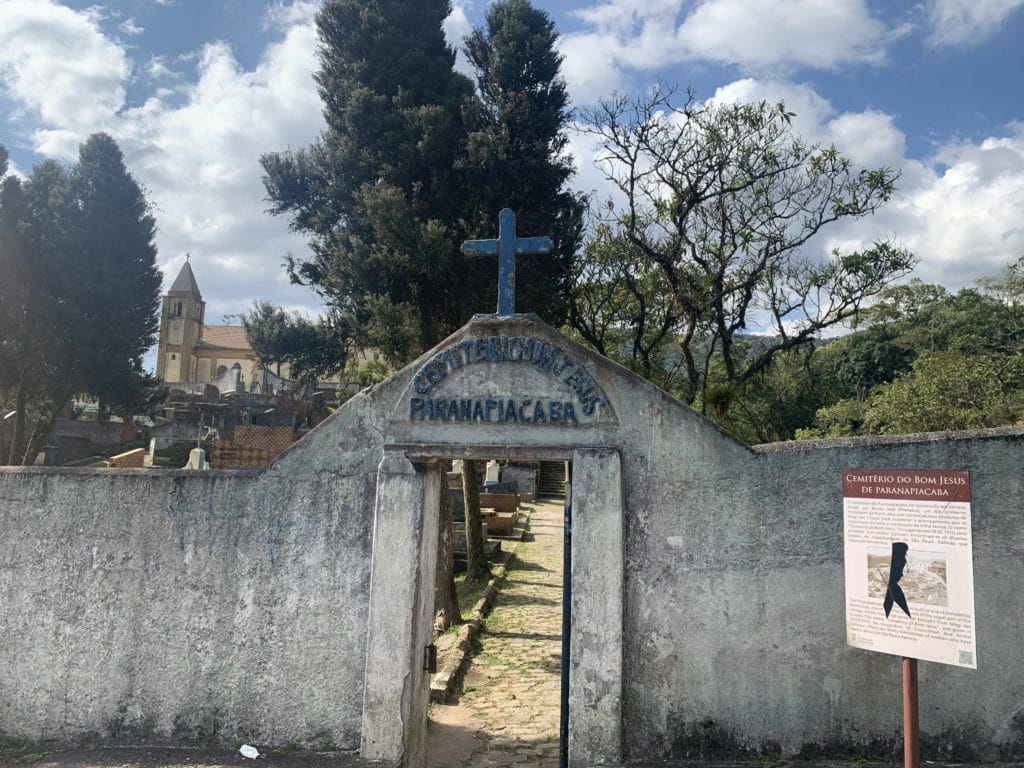
Cemitério do Bom Jesus de Paranapiacaba
Built by Bento José (nicknamed “ponteiro”), one of the first residents of the upper village and a merchant from Mogi das Cruzes. It took its name in 1910, and you’ll find several gravestones of São Paulo Railway workers who died in service here.
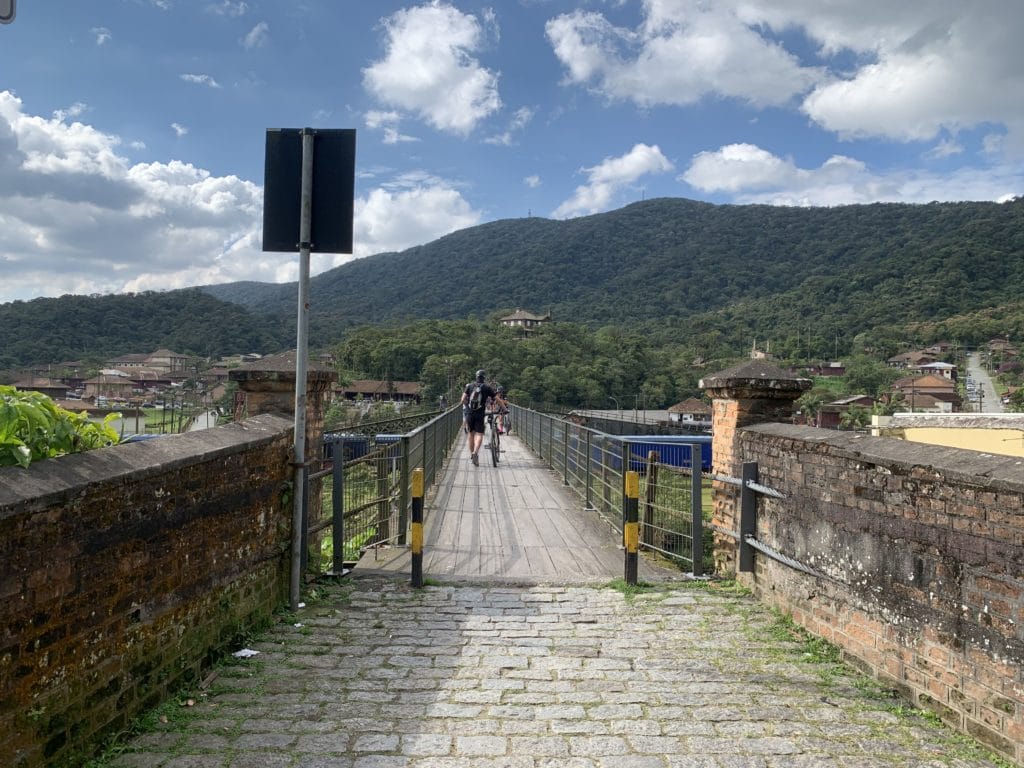
Passarela Metálica
Built in 1889, this metal footbridge let pedestrians cross safely, avoiding the risky practice of walking along the railway tracks.
What to Do in Paranapiacaba’s Lower Village
Every attraction in town was closed because of the COVID-19 pandemic, so we could only photograph them from outside.
Big Ben Clock
This tower dates to 1898, featuring the design of the English clockmaker John Walker, and it’s all that survived a fire in 1981. You can see it from the crossing between the upper and lower villages.
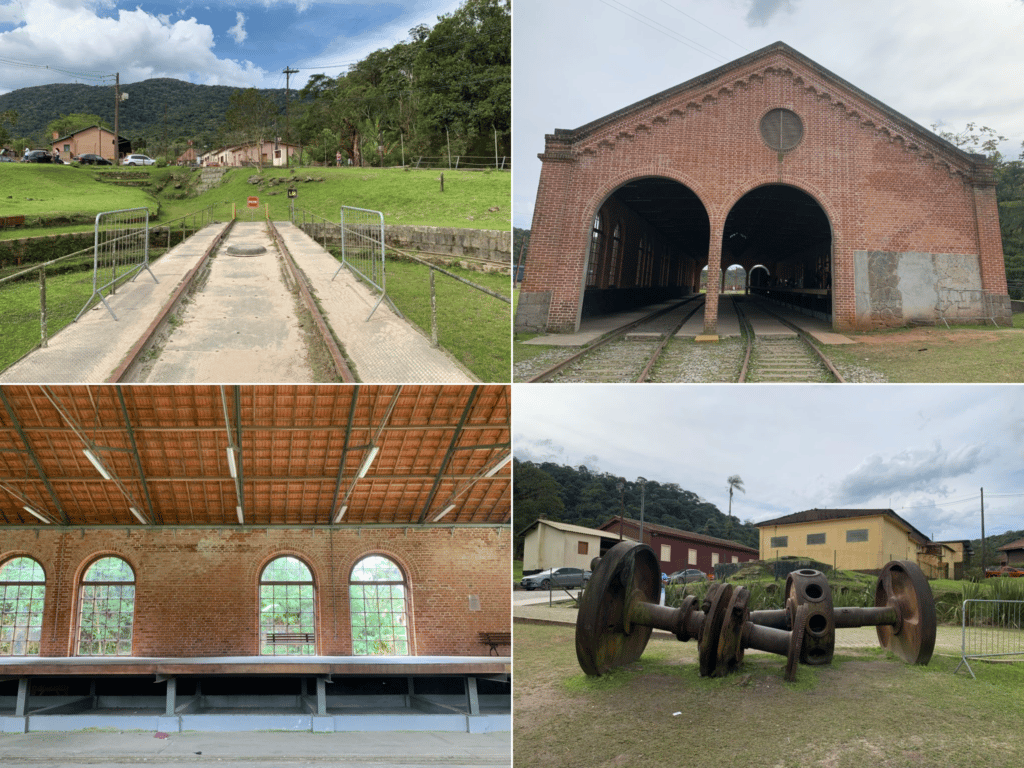
And to get closer to the clock, we’d definitely recommend heading to Viradouro, the mechanism used to reverse the direction of the locomotive.
Viradouro
This spot is really fun to walk around, with a view of the station and the end of the rail line, making for some beautiful photos.
Tourist Express Train to Paranapiacaba
We found that there’s a Sunday tour, fairly affordable, running by train to Paranapiacaba operated by CPTM, departing from Estação da Luz — though as of this writing, there’s no timeline for when the tours will resume.
Tickets used to cost R$44 per person, or R$77 for one person plus a companion, with progressive discounts for larger groups — though we’re not sure if prices have changed since, so it’s best to check the CPTM website directly.
Museu Ferroviário de Paranapiacaba
This open-air museum sits between the railway tracks. There’s also a steam train ride, though we didn’t find any information on whether it’s currently running or its price.
Museu Castelo de Paranapiacaba
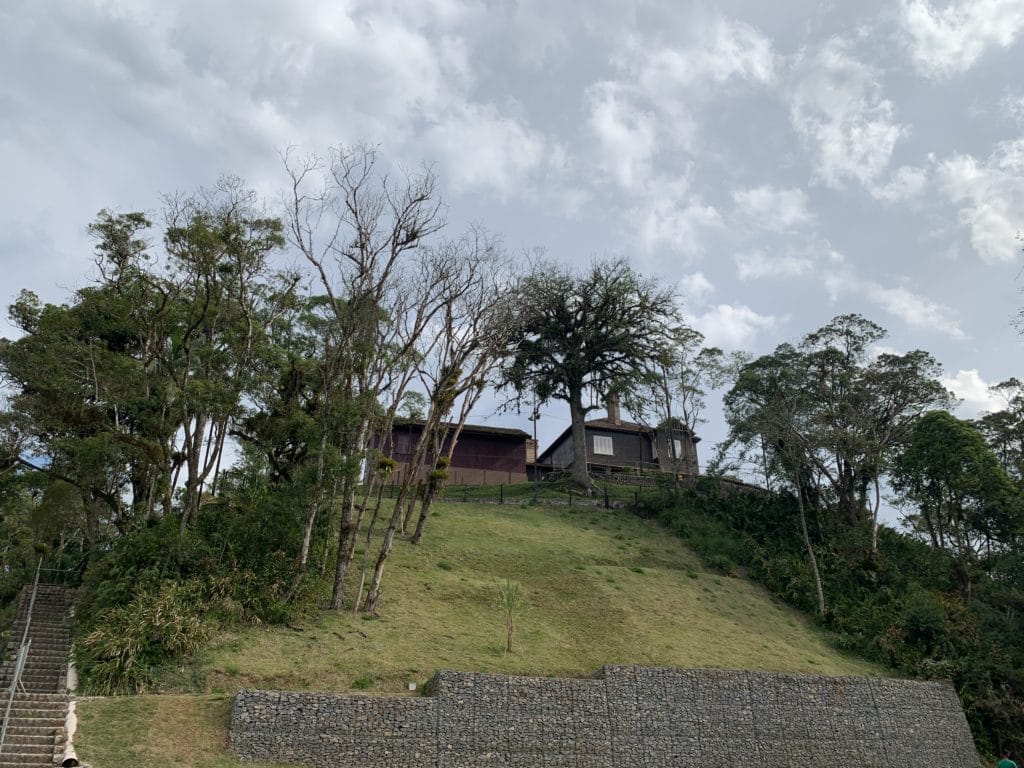
Built in 1897 as the residence for the Chief Engineer of the Paranapiacaba railway, with a privileged view over the village. The building has gone through several renovations but keeps its original character, and it now holds exhibitions. You can only reach the gate, though.
Parque Nascentes de Paranapiacaba
The city government created this Municipal Natural Park in 2003, as a conservation unit protecting the natural resources and biodiversity of the Atlantic Forest — visiting requires hiring an accredited guide.
Inside the park is the Núcleo Olho D’Água natural springs, where water is collected through channels built by the English, running along the Gravatás and Hortênsias trails.
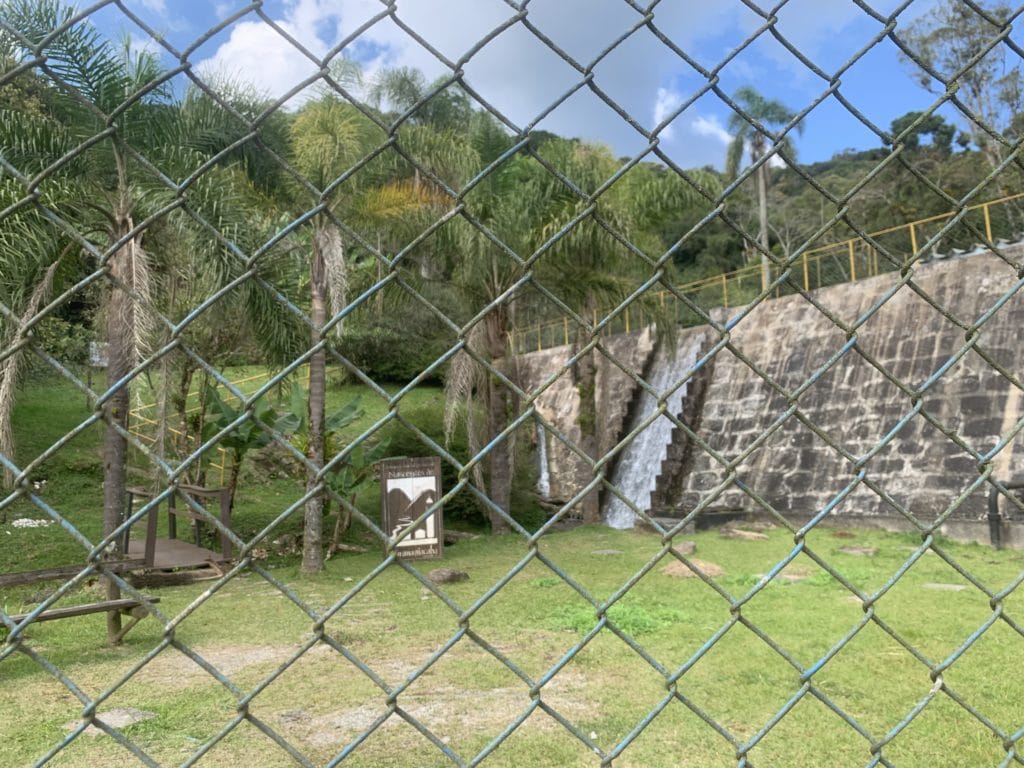
Club União Lira Serrano
Founded in 1936. On the ground floor, there’s a hall with a stage for cultural performances as well as leisure activities like Carnival, plus two box seating areas, a billiards table, and a carom billiards table. Upstairs, there’s a games room, a trophy room, and administrative offices.
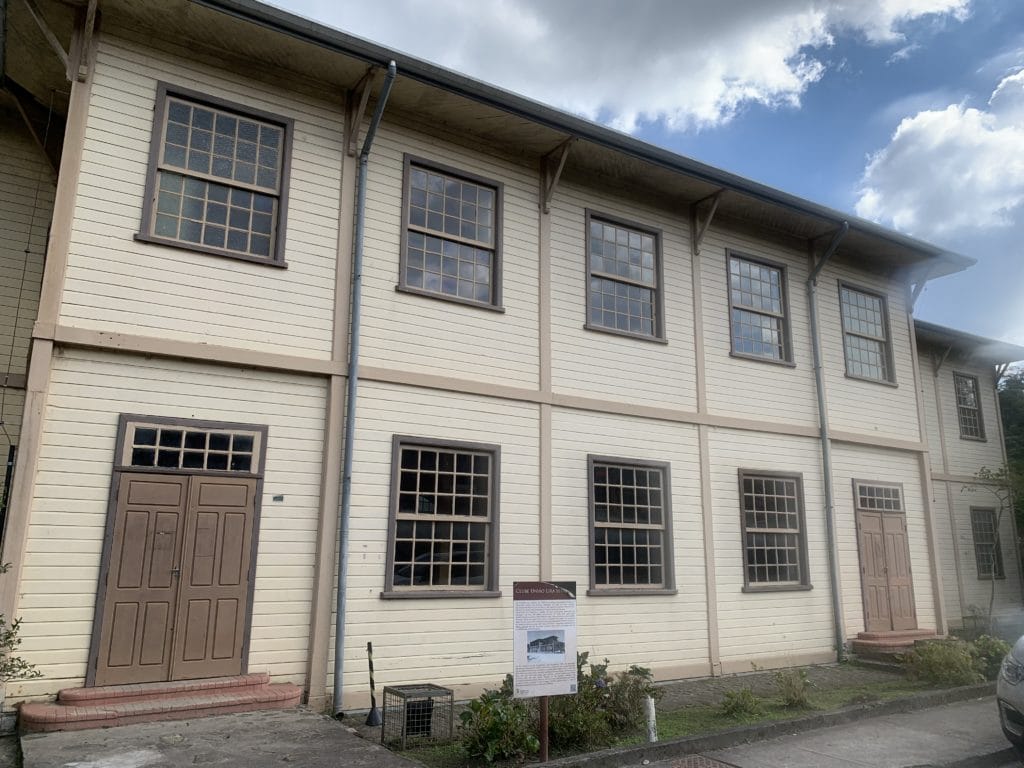
Casa Fox
These are examples of worker housing for the railway, built in the late 19th century, named in honor of engineer Daniel Makinson Fox, who came to Brazil to build the railway.
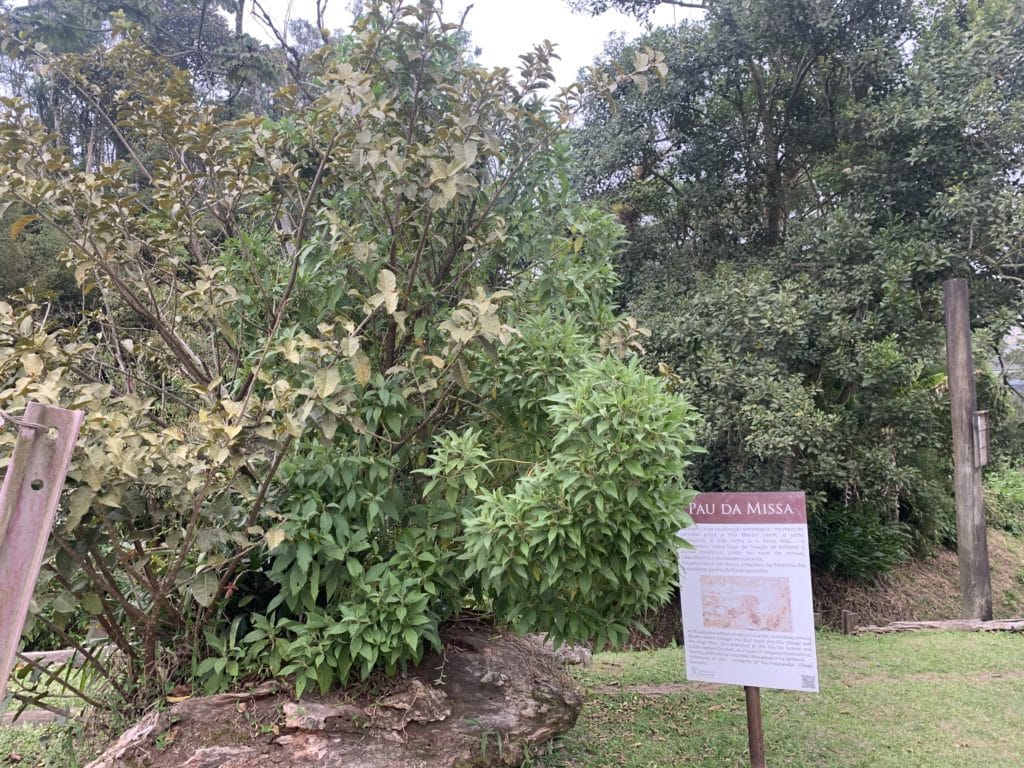
Pau da Missa
In front of Viradouro stands a eucalyptus tree, right at the crossing point between the Vila de Martin Smith, the railway yard, Vila Velha, and the upper village — which made it a natural spot for posting notes and public announcements, and today it stands as a symbol of local residents’ shared memory.
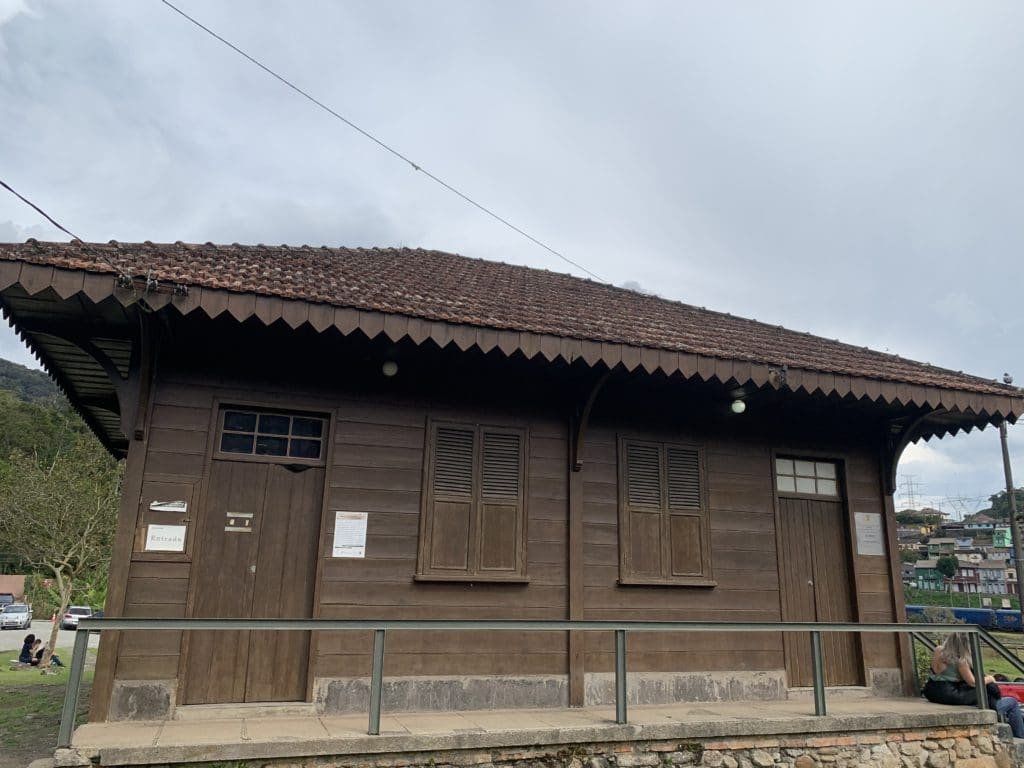
Mercado de Paranapiacaba
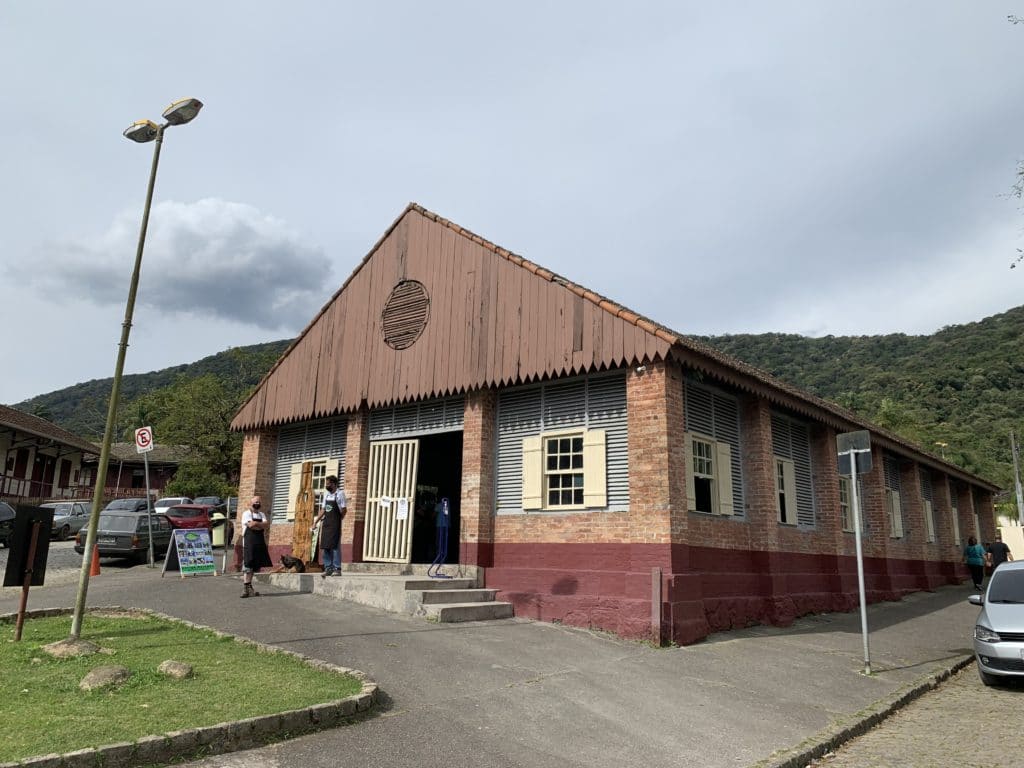
The São Paulo Railway Company built this building in 1899, originally home to a market selling goods and food. In 2003, the city government restored the building.
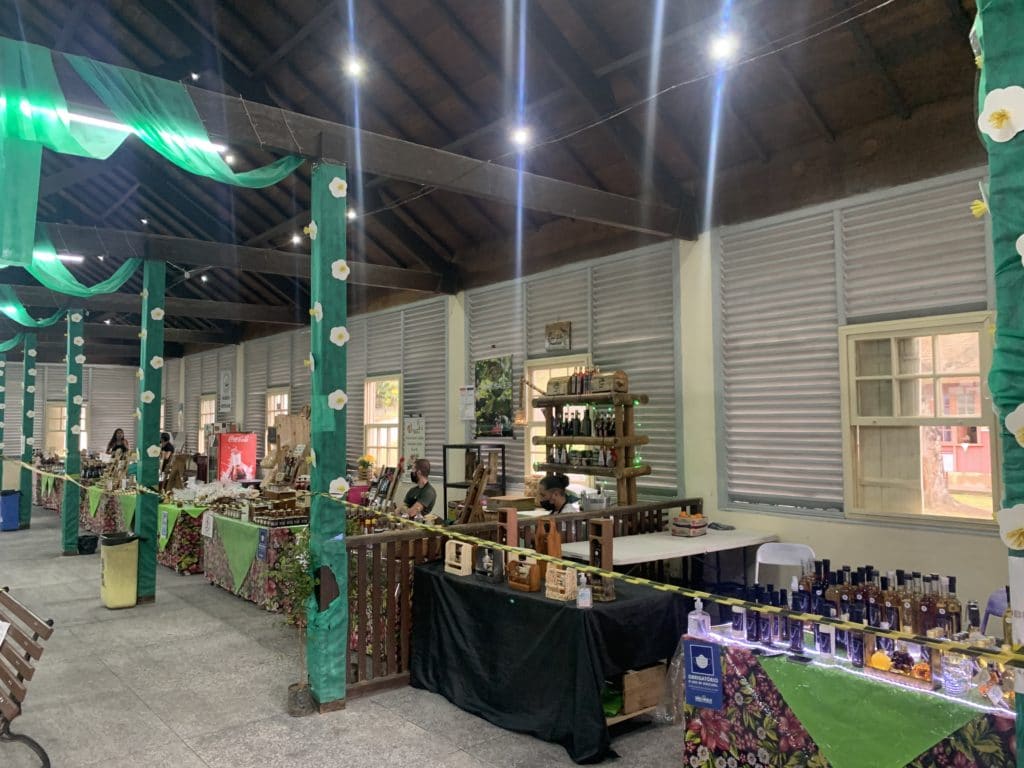
Today, it hosts a market selling products made from cambuci, a fruit that grows on the cambucizeiro, a tree native to the Atlantic Forest along the São Paulo stretch of the Serra do Mar. To me, this fruit resembles a lemon, though it’s a bit sticky, and it’s well worth trying.
There are traditional products too, including jam, beer, liqueur, cachaça, and cocada, among others.
Serrano Athletic Club
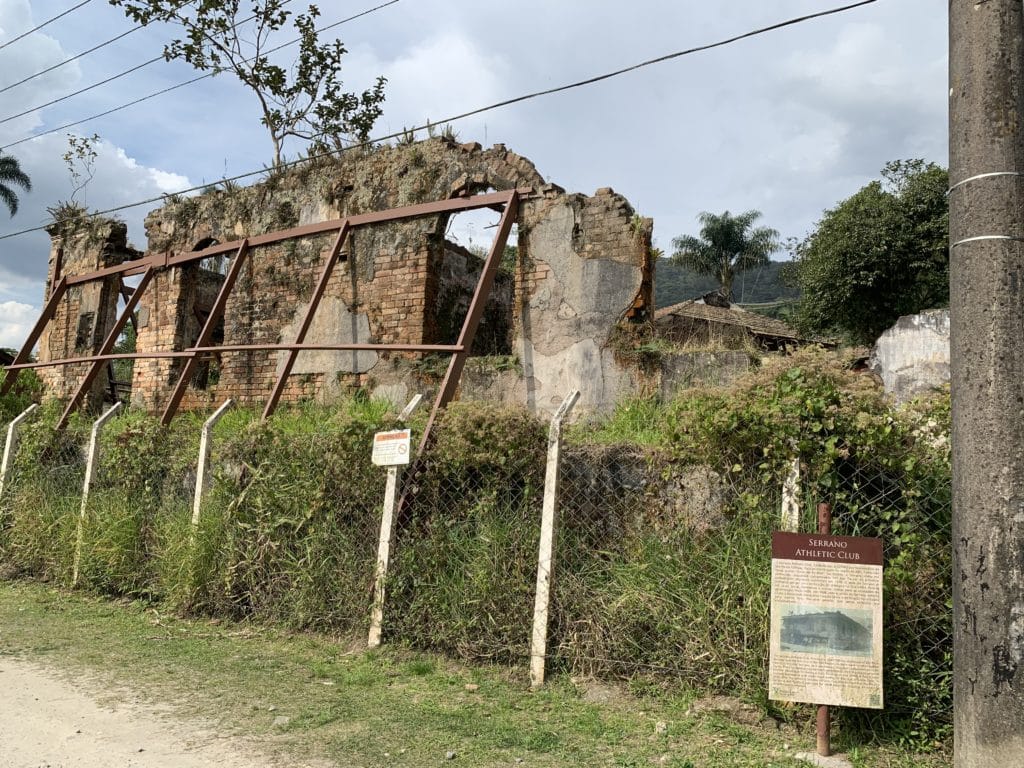
Founded in 1903, this was the first club in the ABC region, home to a soccer team called Serrano, which competed in São Paulo state championships. It was originally a masonry building in Vila Velha, and Serrano later merged with Clube Lyra da Serra, after which the building was repurposed. Today, only ruins remain.
Centro de Documentação em Arquitetura e Urbanismo
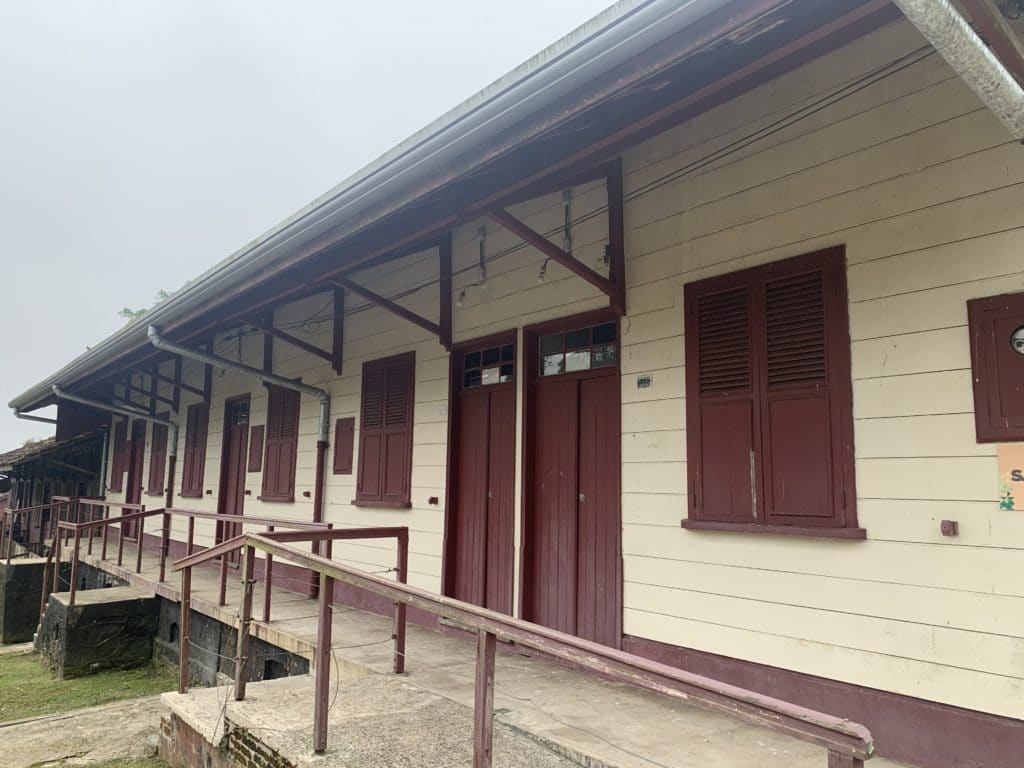
A cluster of four houses showcasing the village’s construction methods, and, without question, in great condition.
Largo dos Padeiros
This is where the town’s commercial activity was centered, once home to the old railway station. It gets its name because the village’s bakers would gather here, waiting to hand off their goods to workers living up in the Serra do Mar.
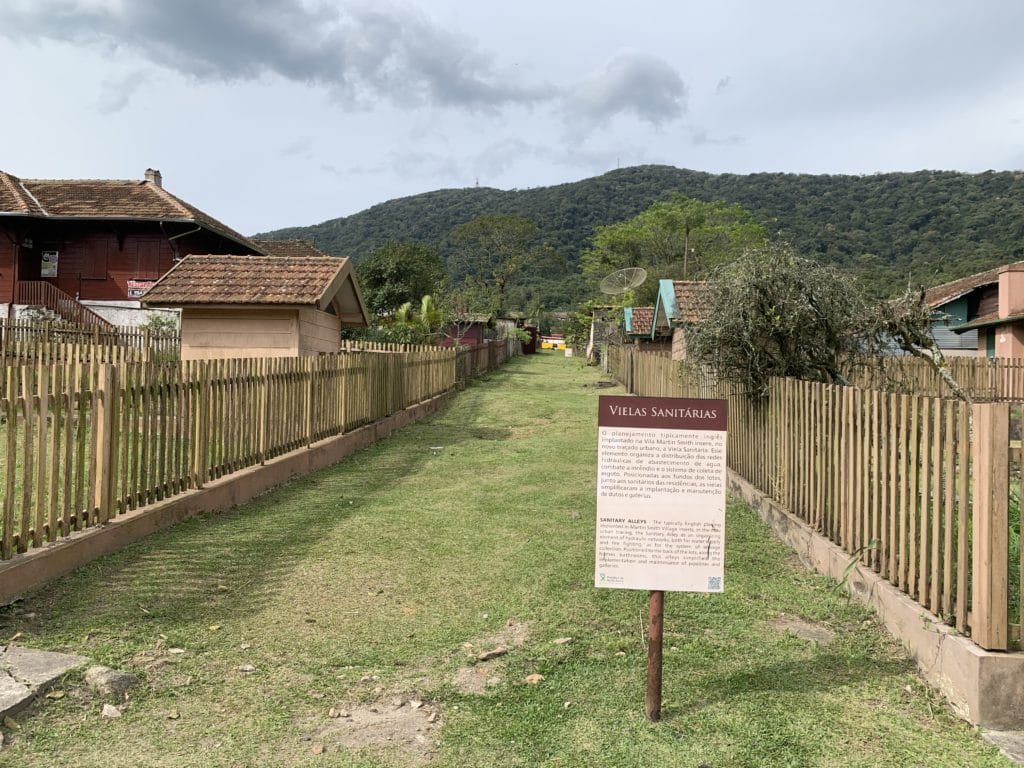
Vielas Sanitárias
An English urban design feature introduced in Vila Martin Smith as part of the new city layout — these sanitary alleys. They ran behind the lots, making it easier to install and maintain water and sewage lines.
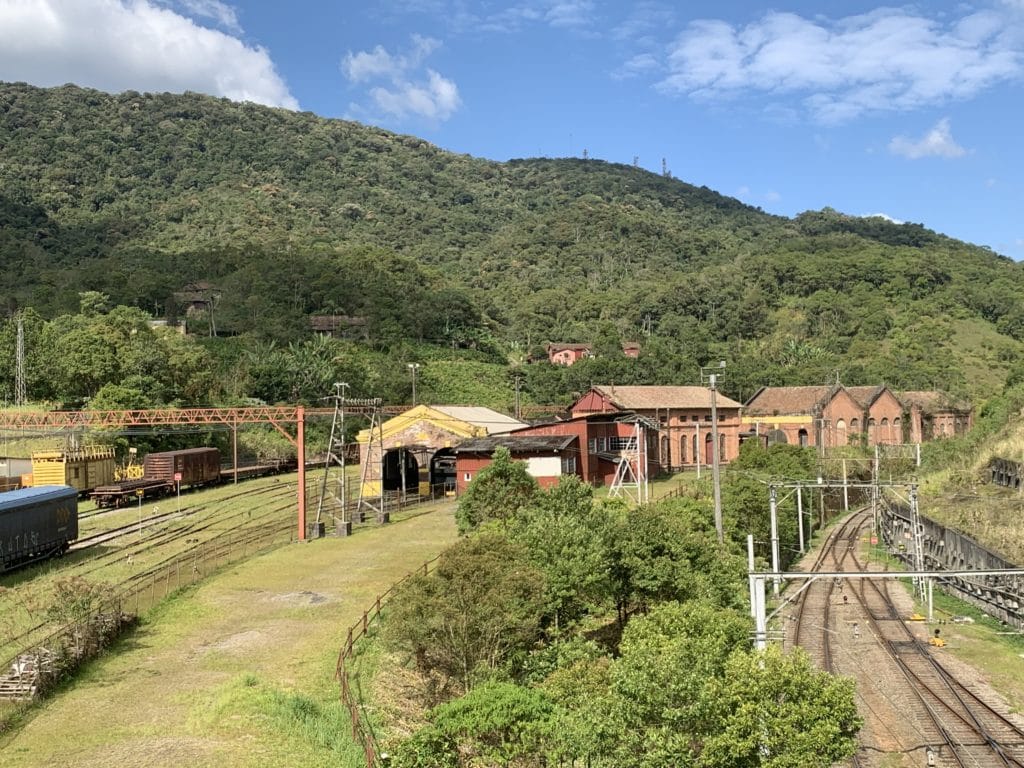
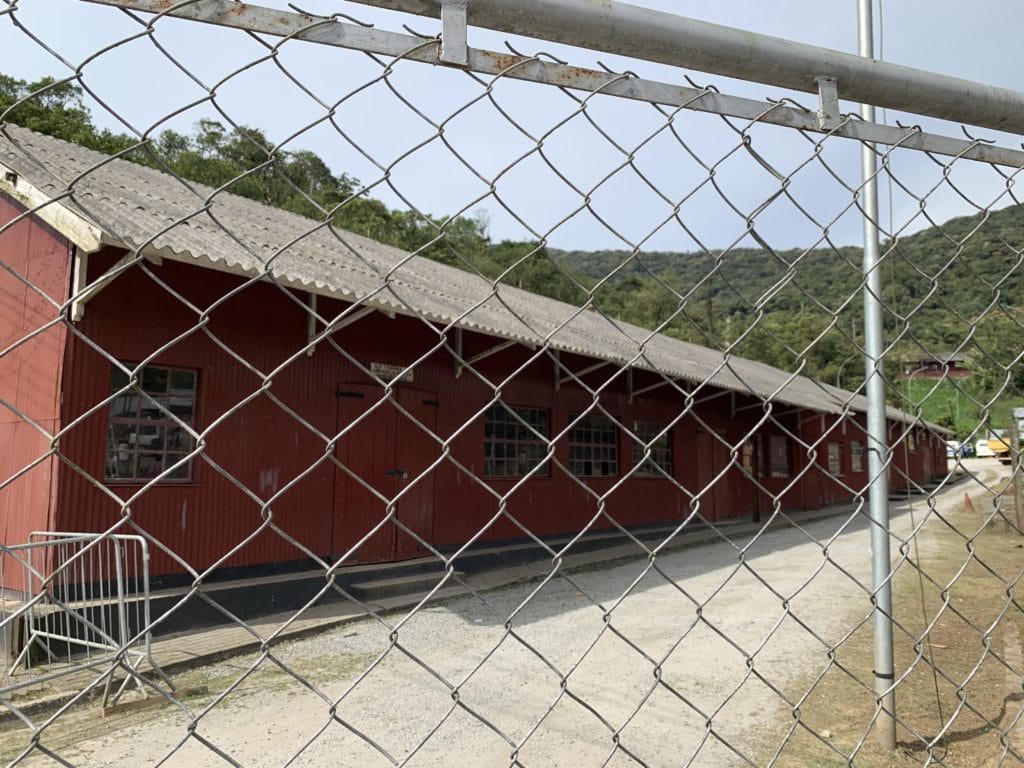
Galpões Ferroviários
Warehouses specifically built for general maintenance work and training new railway workers.
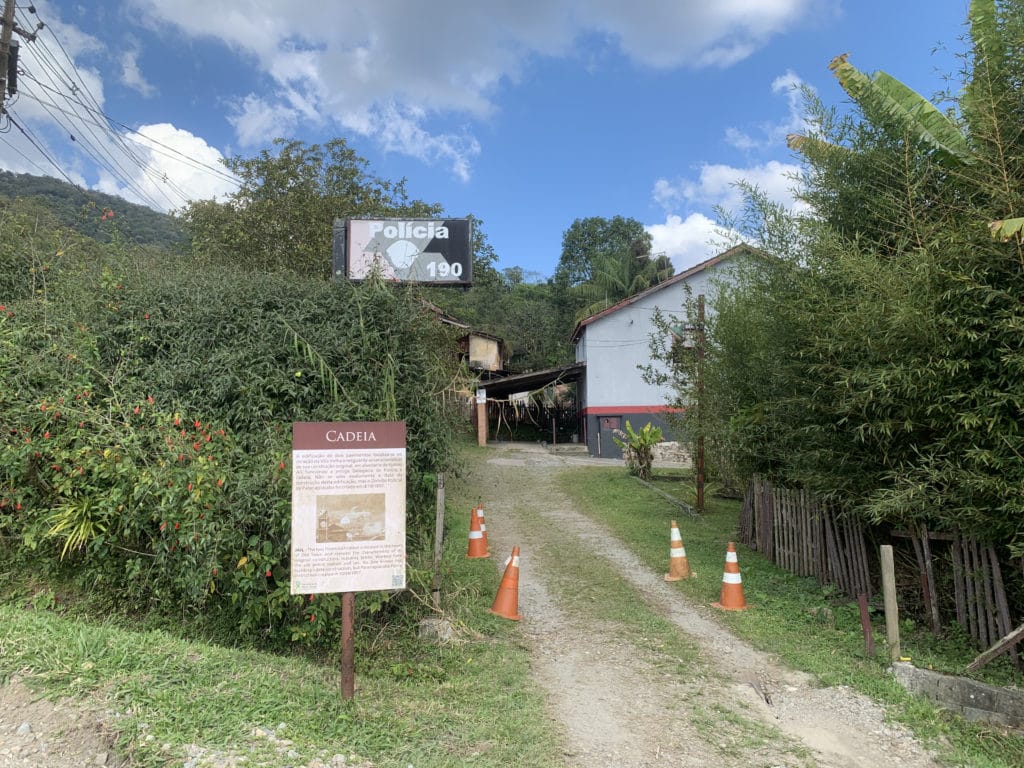
Cadeia
A masonry and brick building, once the old police station and jail — the construction date is unknown, but the police district itself was established on 10/4/1897.
Pharmacia São Silvestre
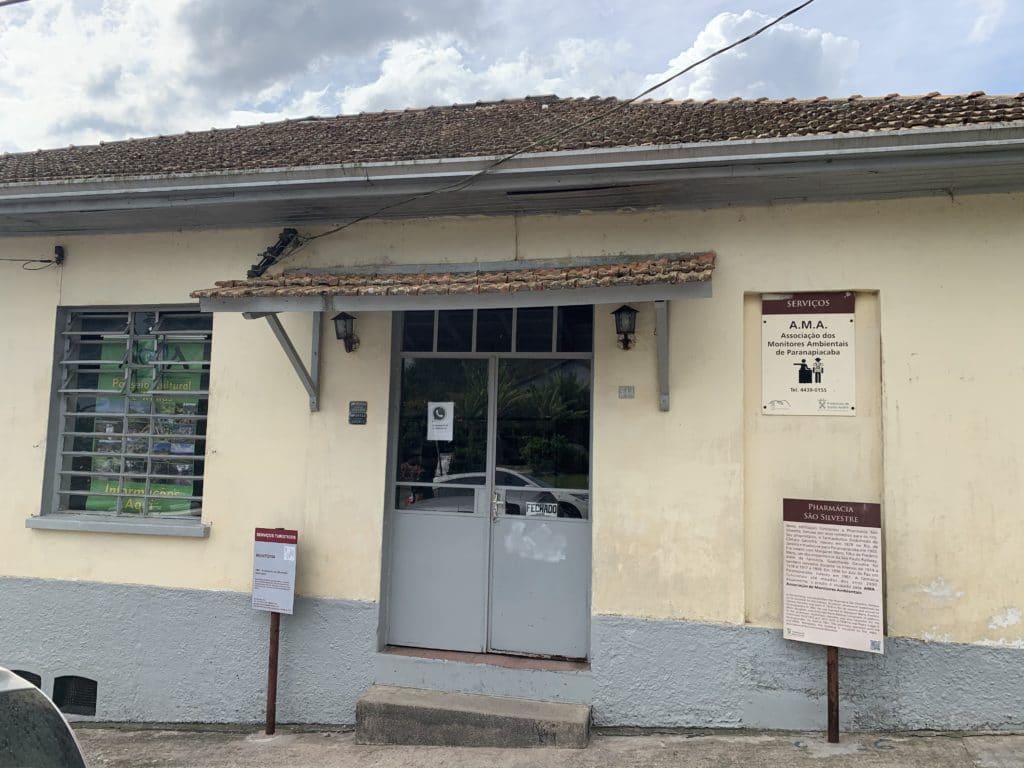
Famous for its kidney remedies. Owner Godofredo da Camara Genofre was born in Rio de Janeiro in 1978, moved to town in 1903, and later served as city councilman and justice of the peace. The pharmacy operated until around 2000, and today the building houses AMA — Associação dos Monitores Ambientais.
Trails in Paranapiacaba
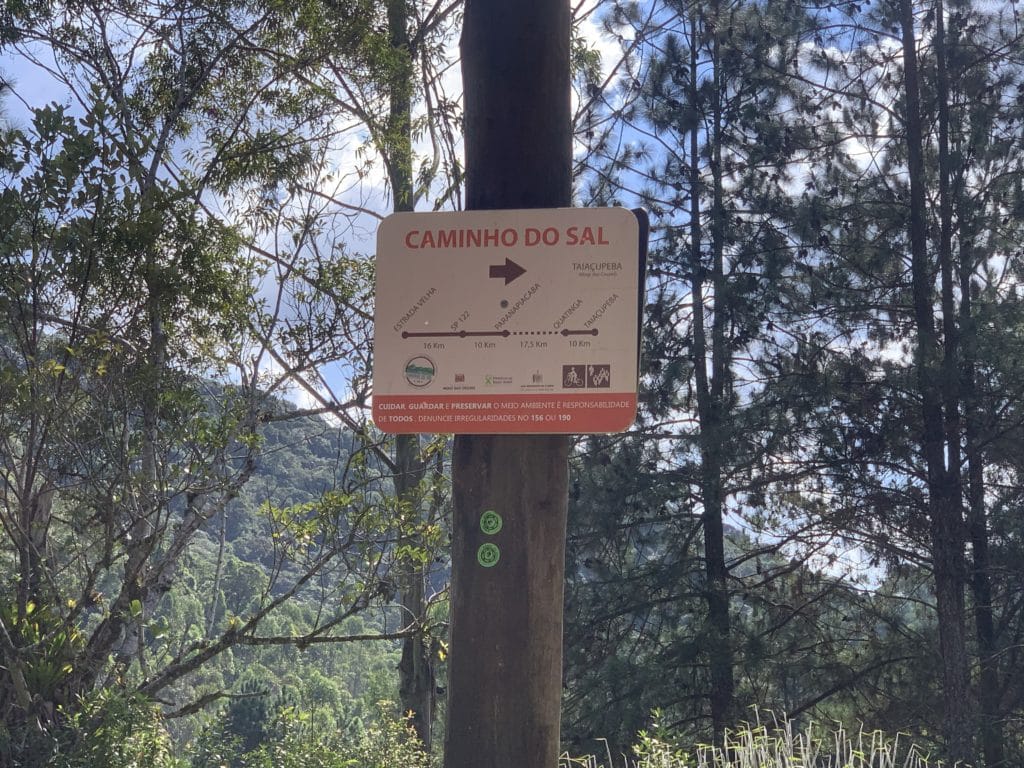
Our whole visit to town was built around starting to explore the trails in the area, and we hiked part of the Trilha do Sal, covering only 10 km round trip — though the full trail runs 27 km one-way, all the way to the village of Taiaçupeba, along with a funicular crossing we’re still hoping to check out.
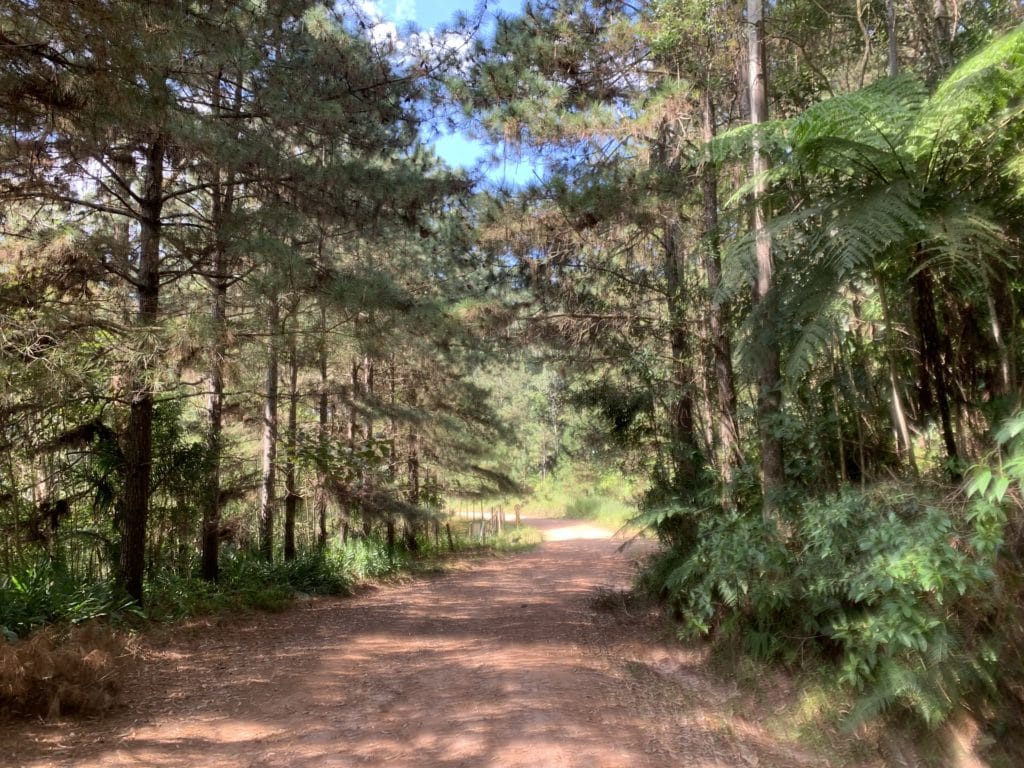
The trail follows a wide dirt road, alternating between climbs and descents, and it’s genuinely great for training.
Track powered by Wikiloc
Where to Eat in Paranapiacaba
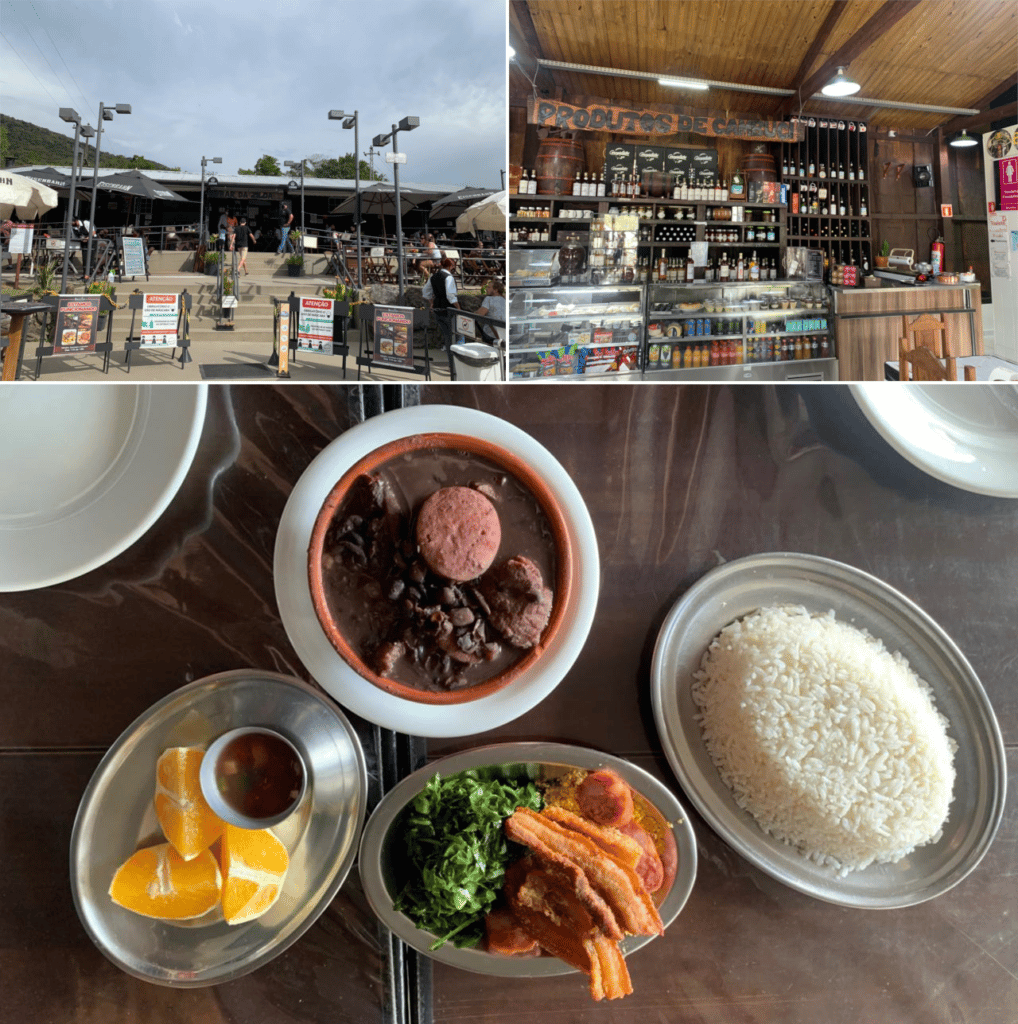
There are several restaurants and spots serving home-style food, both à la carte and self-service, and we ended up eating at Bar da Zilda.
Bar da Zilda
It was Saturday, so naturally we went with our favorite dish, feijoada, in a really pleasant setting, and we really enjoyed the food. The spot also sells cambuci products.
Instituto AUA
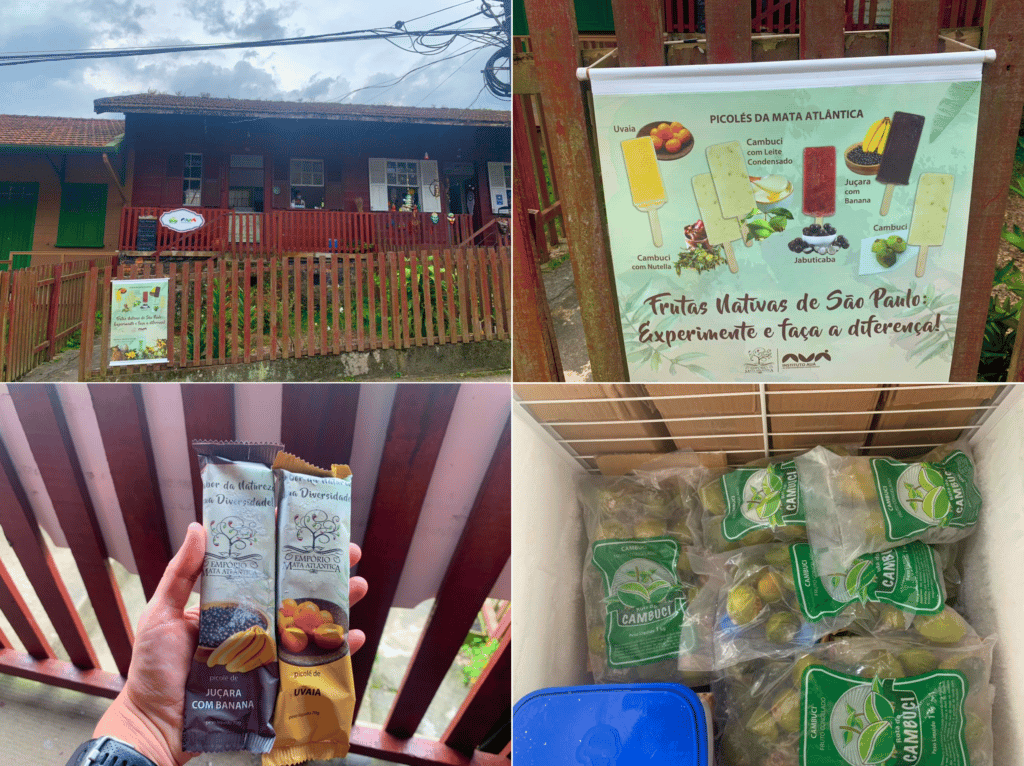
After lunch, since we wanted something sweet, we stopped at an ice cream shop, run by an owner from Bertioga, selling ice cream and popsicles in really distinctive fruit flavors, under a brand called Picolés da Mata Atlântica.
We tried two flavors, jussara palm with banana and uvaia, and we liked both — the first genuinely resembled açaí, both in color and flavor, and the second was really creamy.
The shop also sells frozen cambuci for making juice at home, making it a great spot to check out.
Read more tips in Where to Eat in Campos do Jordão.
Read the original version in Portuguese on A Bela e o Bigode.