What to Do in Bento Gonçalves, RS
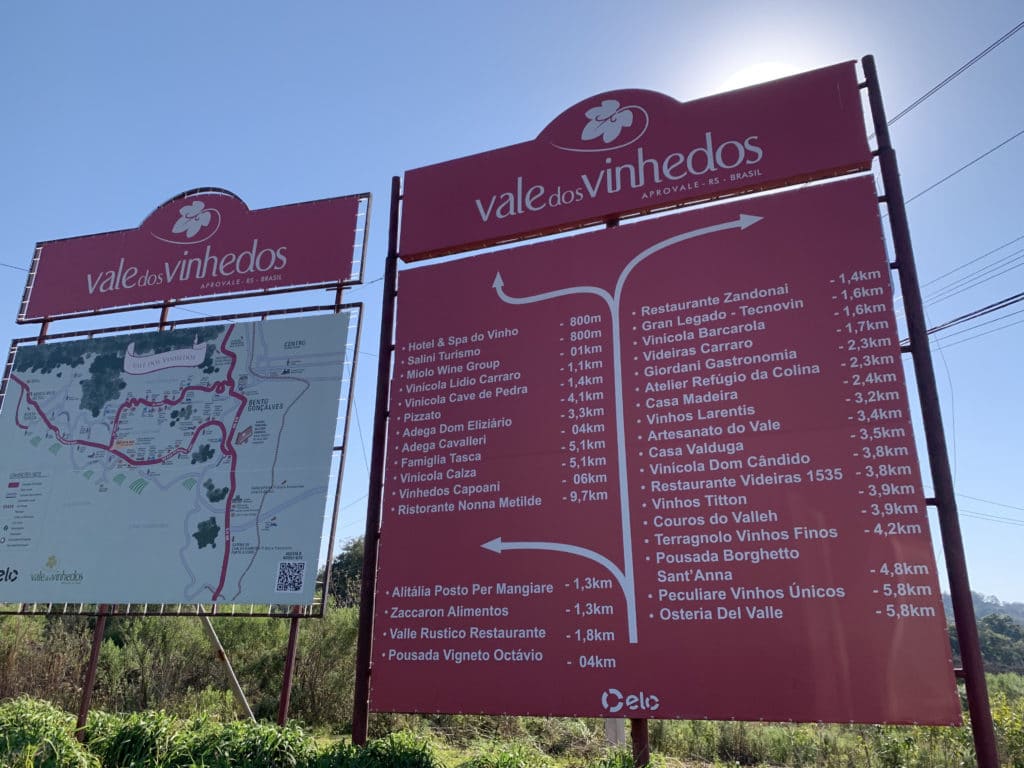
Bento Gonçalves is a town known as Brazil’s wine capital, and it genuinely lives up to that with an intense concentration of wine tourism. It’s also where the first Italian immigrants first grew grapes on Brazilian soil.
There are five official tourist routes: Caminhos de Pedra, Vale dos Vinhedos, Cantinas Históricas, Vale do Rio das Antas, and Encantos de Eulália, all clearly signposted and easy to follow.
When to Go to Bento Gonçalves, RS
The town can be visited year-round, but the scenery is at its best between September and April, especially from late January through early March, when the grape harvest is underway and the vines are full of fruit.
In winter, the vines lose their leaves and look less striking, but it’s still a great time to tour the wineries and sample wine in the Vale dos Vinhedos.
Getting to Bento Gonçalves
Located 120 km from the Porto Alegre airport, or the Caxias do Sul airport, just 42 km from Bento Gonçalves. To get there, we rented a car and drove from Porto Alegre.
If you’d rather, you can also start your trip from the city of Caxias do Sul, about 45 km away, roughly a 45-minute drive. Caxias has its own airport, so check what’s available in your area.
Where to Stay in Bento Gonçalves
We ended up booking a house through Airbnb, though there are several hotels in the area, which were quite expensive given the time of year we visited. Since we were traveling with another couple of friends, splitting a house was well worth it.
What to Do in Bento Gonçalves
With beautiful, lush scenery, immigrant history, and major wineries set against the mountains, Bento is, without question, a beautiful destination to visit. It can be a standalone trip, but you can also extend it to nearby towns like Garibaldi (15 km), Gramado (120 km), Canela (108 km), and others, depending on how much time and distance you have.
There’s a wide range of things to see, from historic buildings to valleys and parks, not to mention the wineries, which are, without a doubt, the most sought-after excursions.
- Wineries
- Steam Train Ride
- Parque Cultural Epopeia Italiana
- Historic Center
- Where to Eat
- Where to Buy Chocolate
Wineries in Bento Gonçalves
The wineries are the town’s biggest draw, in the area known as the Vale dos Vinhedos, considered the country’s largest producer of wine and sparkling wine.
You’ll find wineries of all different sizes in the region, from small producers to large-scale operations.
Most offer tours, letting you walk through the vineyards, follow the production process, and finish with a wine tasting, running about an hour to an hour and a half.
The wineries are spread across the five tourist routes, and I’ll write about the ones we visited and their respective areas, since not all of them sit within the Vale dos Vinhedos itself: Miolo, Casa Valduga, Aurora, Torcello, Dom Cândido, Cave do Sol, Pizzato, Almaúnica, Geisse, and Salton.
Vale do Rio das Antas
This route follows the BR-470, the highway connecting Bento Gonçalves to Veranópolis, crossing the Serra do Rio das Antas.
The road offers beautiful scenery, with the Vale da Ferradura do Rio das Antas lookout and the Ponte dos Arcos standing out. The route also has wineries like Cainelli, Casa Bucco, and finally, Salton, which is the one we visited and it was well worth it.
Vinícola Salton
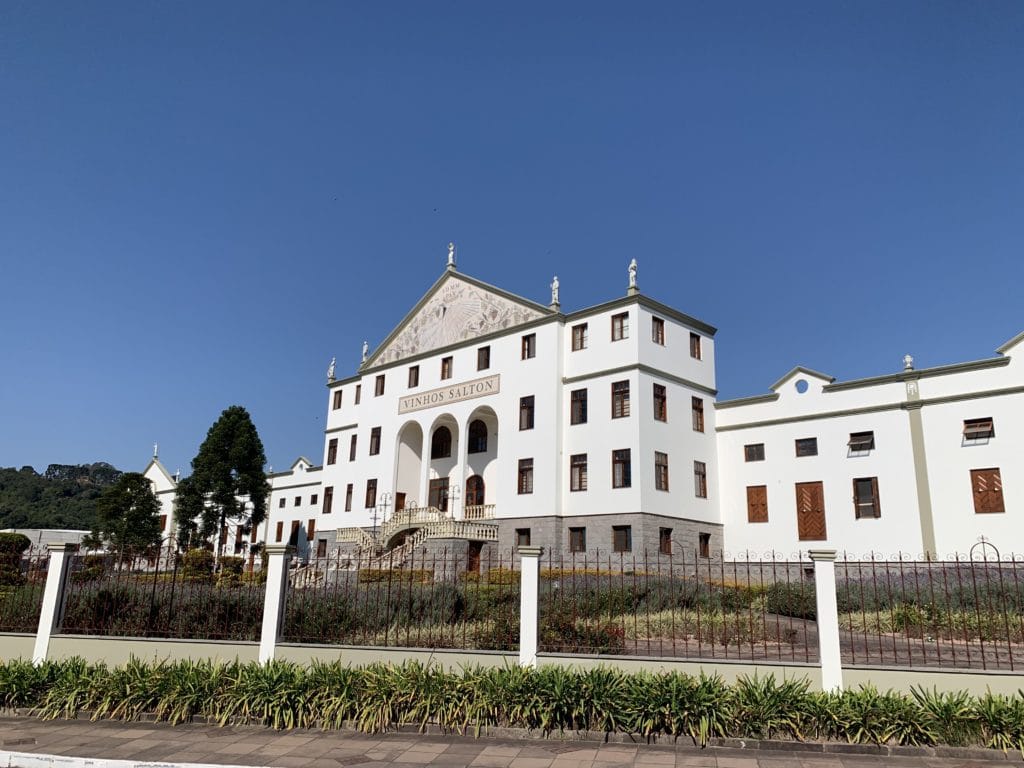
In short, the winery’s story begins in Italy, in 1878, when Antonio Domenico Salton left the town of Cison di Valmarino, in the Veneto region, for Brazil, in search of a better life.
Shortly after arriving in Brazil, he settled in the Italian colony of Vila Isabel, known today as Bento Gonçalves. The company was formally established in 1910, when brothers Paulo, Ângelo, João, José, César, Luís, and Antônio turned their father’s work into a proper business.
Today, the winery is considered the largest wine-production complex in the Americas.
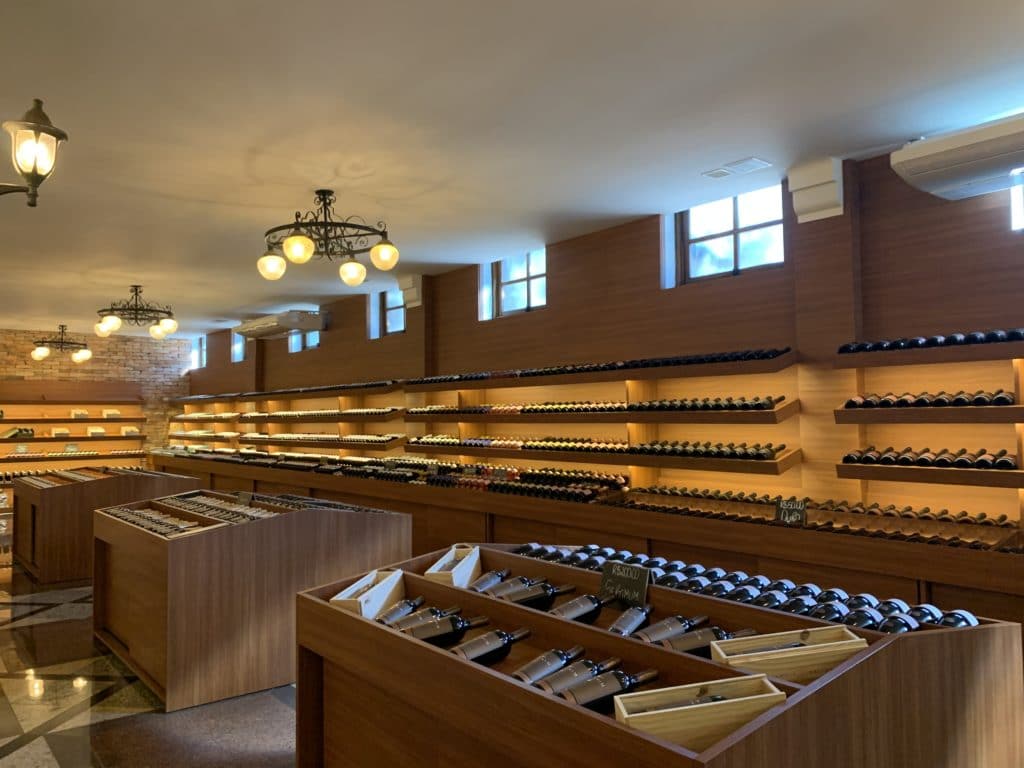
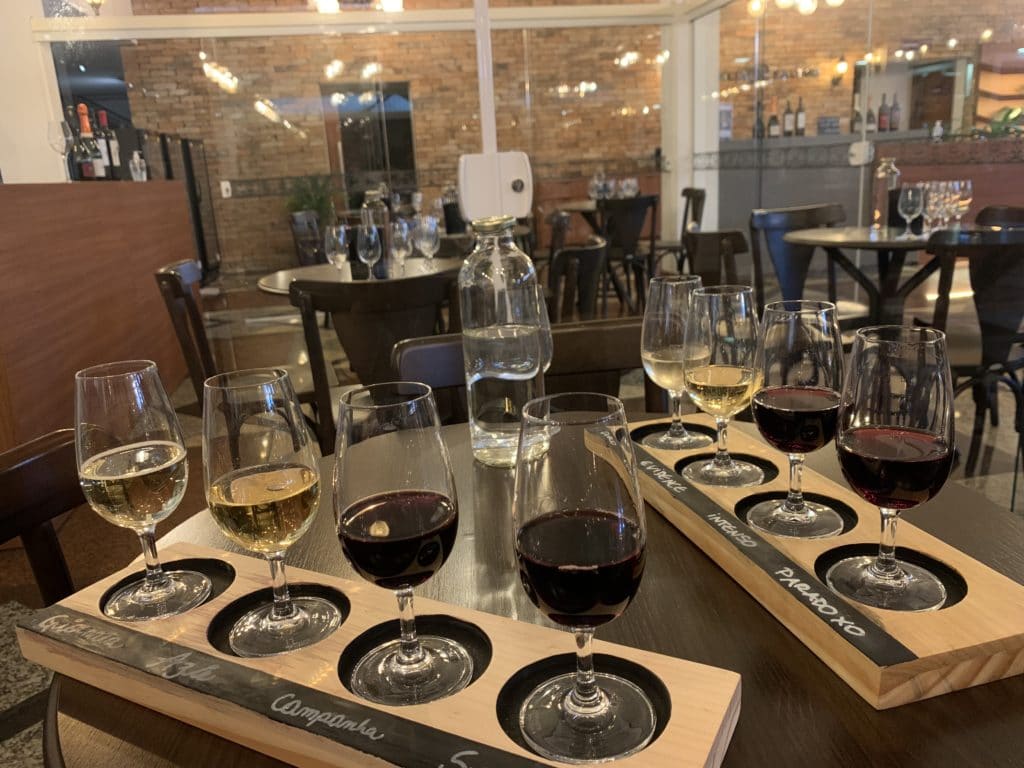
The company has won numerous international awards and certifications, and we went to see it for ourselves and taste its wines and sparkling wines. At the shop, there are two tasting menus, each with two wines and two sparkling wines — a younger, lighter line for R$25, and a more award-winning line for R$55, offered until 4 PM, with no reservation required.
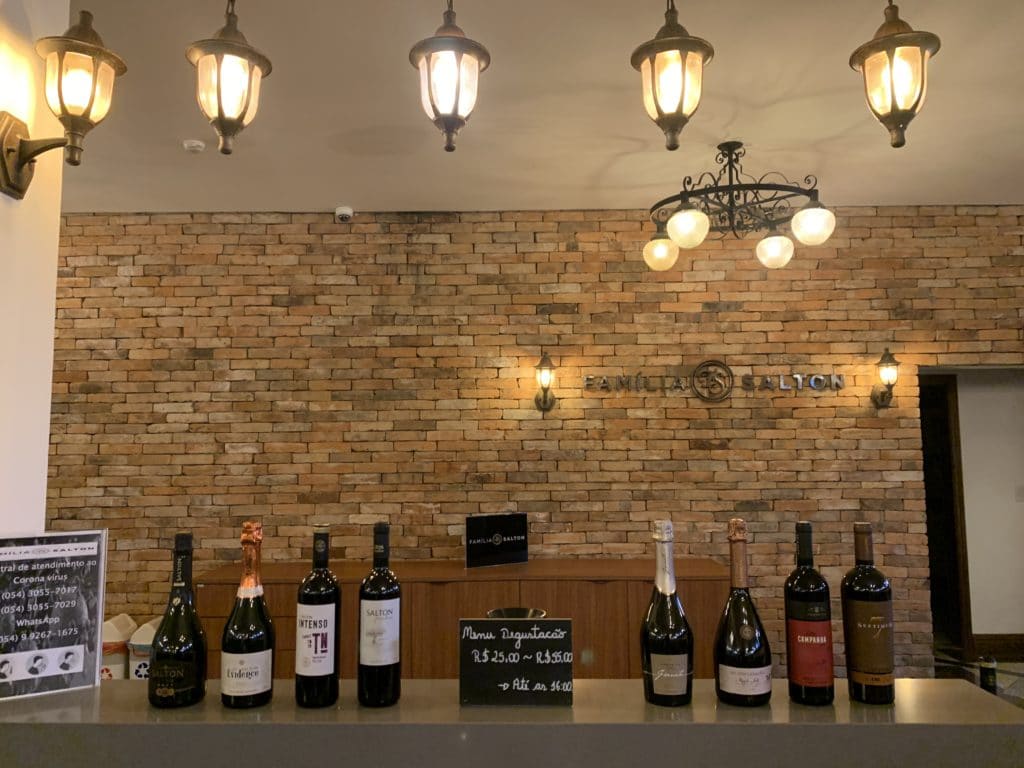
We liked both, though the second was more complex in flavor — well worth trying both if you get the chance, and the tasting includes a presentation of the wines along with a bit of their history.
Vale dos Vinhedos
The Vale dos Vinhedos represents the historic, cultural, and culinary legacy left behind by the Italian immigrants who arrived in the Serra Gaúcha in 1875.
It gets its name from the vine-covered valleys, painting an ever-changing, gorgeous landscape across the four seasons.
Along the way, you’ll find much more than just wineries — hotels, inns, restaurants, bistros, art studios, and shops selling colonial-style cheese, sweets, and jams.
Vinícola Cave do Sol
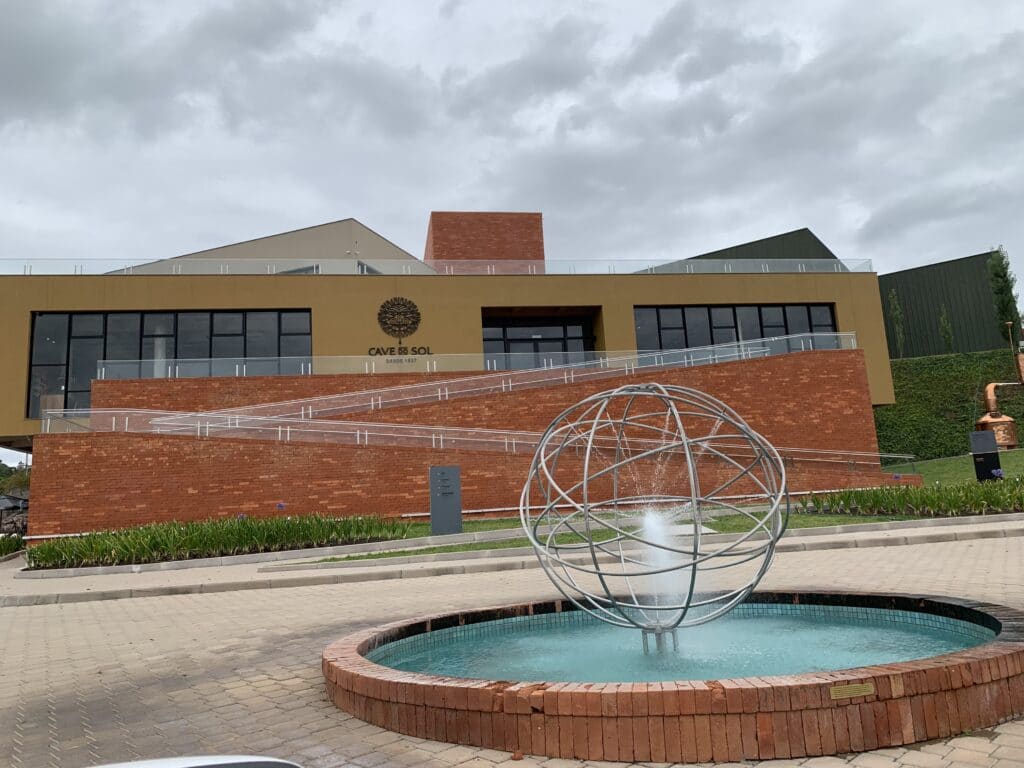
This winery is genuinely striking for how imposing its building is in the area. There’s a tour and tasting available, and once you pay for the tasting, the tour comes included — but since we were short on time, we only did the tasting.
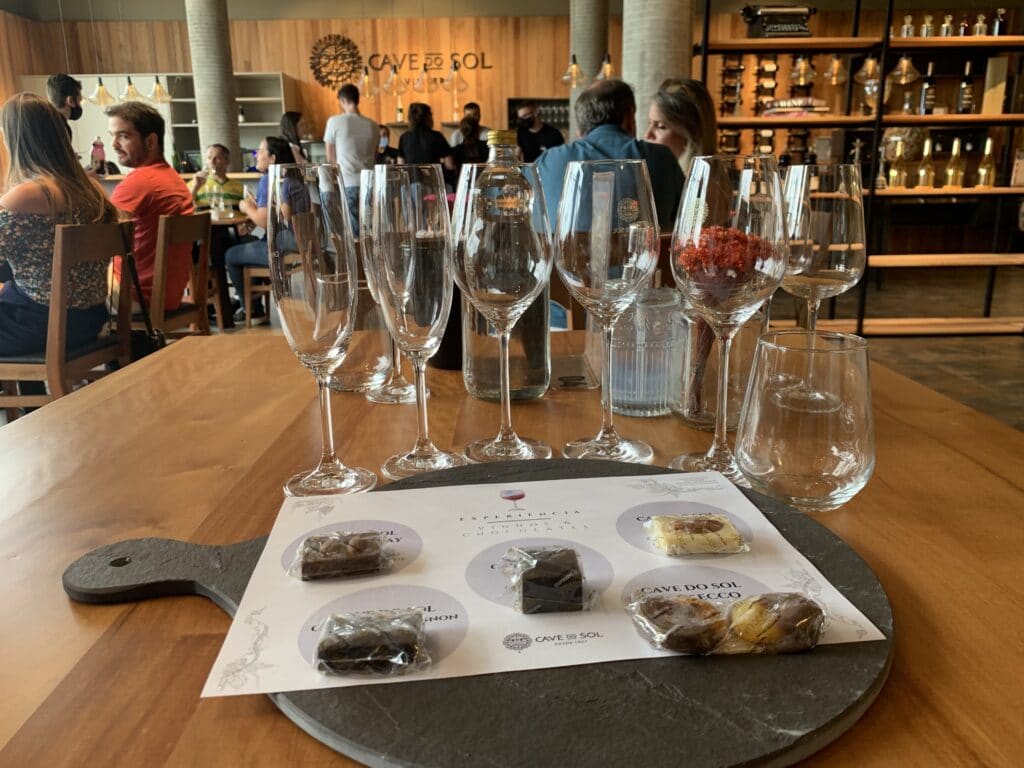
They offer three different tasting options, and we ended up doing two, both excellent, including one paired with chocolate — we’d recommend it, since the wines are tasty and pairing them with chocolate works beautifully, using chocolates from Mondi, a local chocolate maker.
Casa Valduga
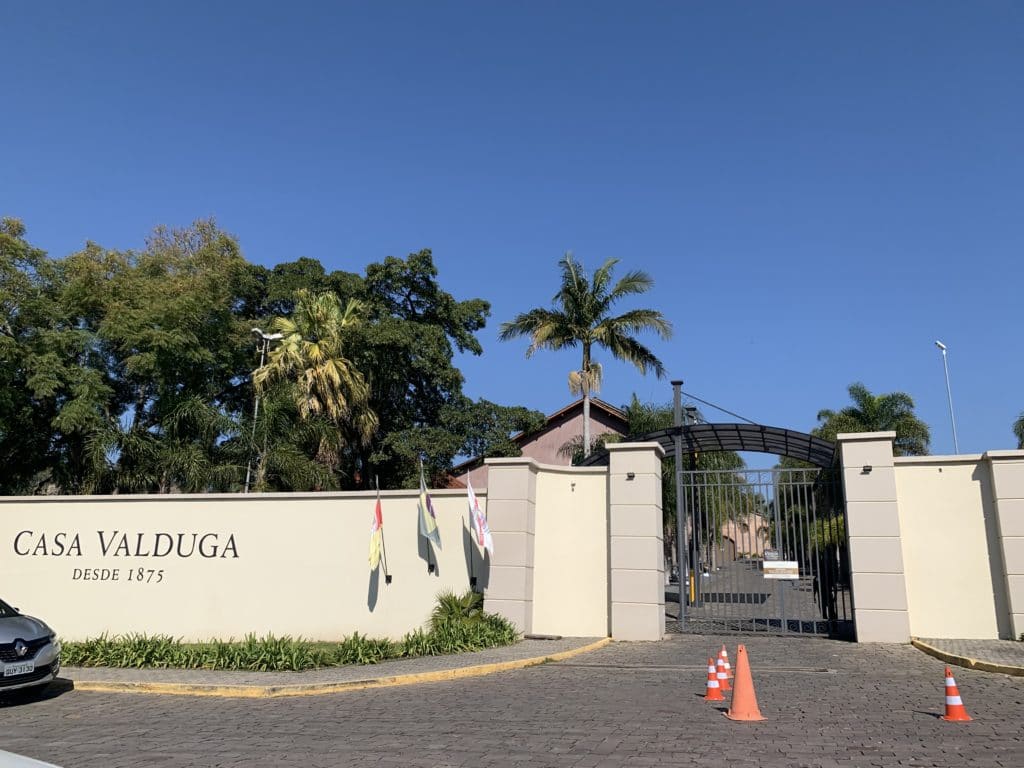
In 1875, the first member of the Valduga family arrived in Brazil. Coming from the city of Rovereto, in northern Italy, they grew their first vineyards.
140 years and four generations later, patriarch Luiz Valduga set out to build the best winery in Brazil, and the family business carries that same passion for grapes to this day. It’s now run by brothers Erielso, Juarez, and João Valduga.
Today, it’s one of the region’s largest producers, and I’d recommend booking the tour through their website — buy ahead of time to guarantee your spot, since the place is beautiful and genuinely comprehensive. We loved walking among their wines and sparkling wines, and on site, there’s also Restaurante Maria Valduga, well worth a rodízio-style pasta lunch.
Today, the company includes its own wines, plus Casa Madeira, producing jams, spices, and teas, Nero, its sparkling wine line, the craft brewery Leopoldina, and finally, beauty products under Vinotage.
Delicatessen Casa Madeira
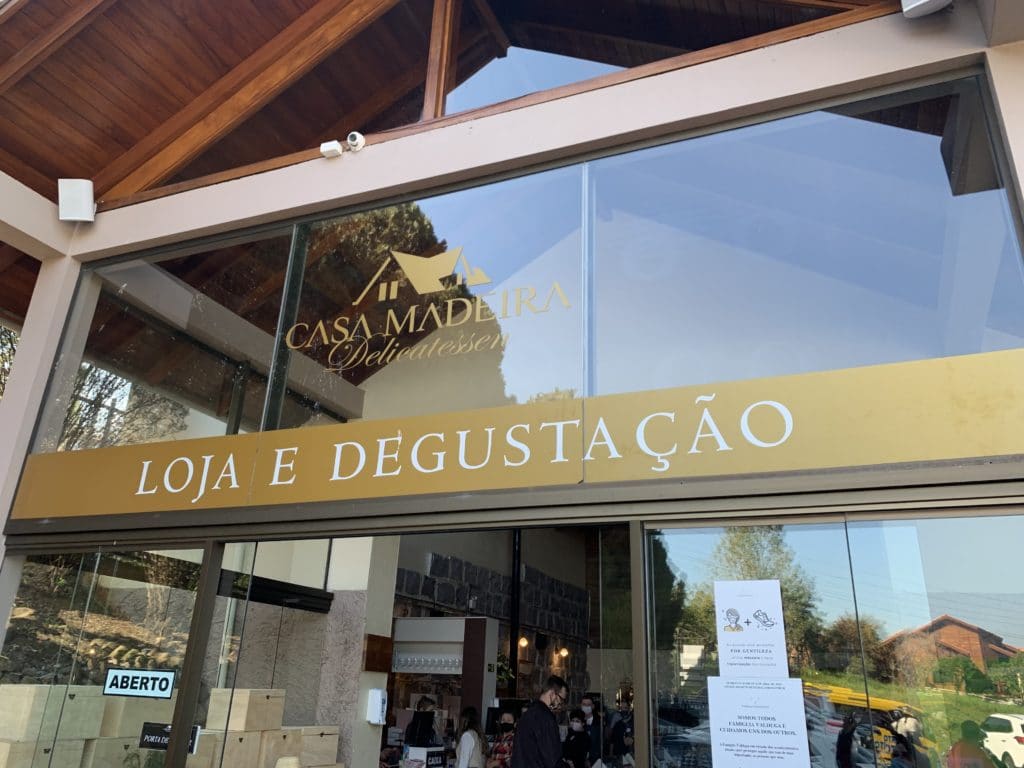
This shop dates back to Marco Valduga, in the late 19th century. Atop one of the hills of Linha Leopoldina, a solid stone cellar was built to serve as storage during the grape harvest.
In 1926, immigrants added a floor above the cellar, and from then on, the site became known as Casa Madeira. Later, in 1992, Casa Valduga acquired the property and has preserved its historic character ever since.
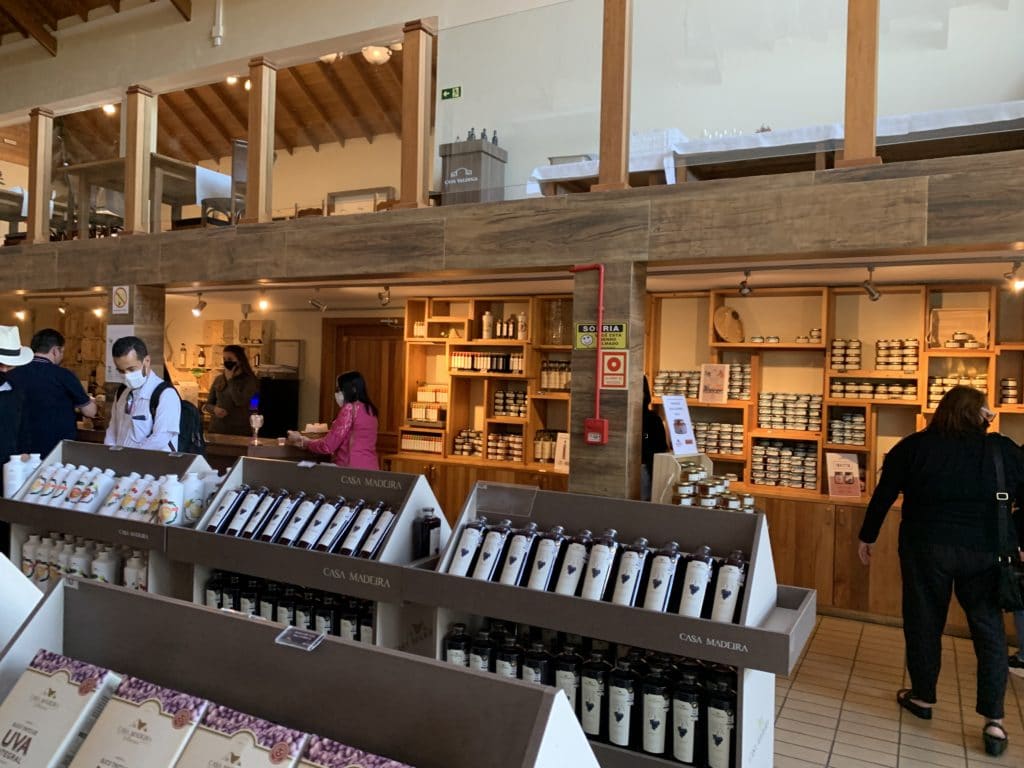
Its most important product is whole grape juice, though it also produces artisanal preserves: jams in a range of flavors, spreads, balsamic creams, and hot sauces, along with iced teas. We bought a bit of everything, since the shop is genuinely well stocked and the products are excellent — you can also do a tasting in the shop.
Vinícola Dom Cândido
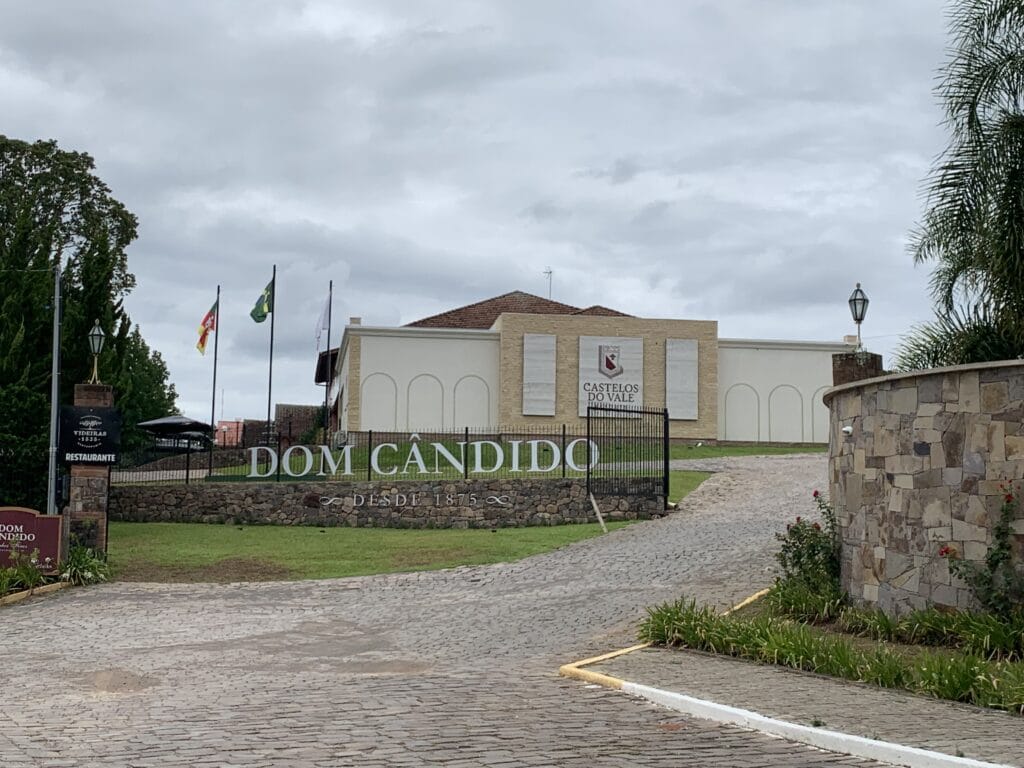
Right next to Casa Valduga, Vinícola Dom Cândido stands out for its impressive building. Founded in 1986 by Cândido Valduga, who started by planting the first vines to make wine for the family’s own consumption. Over time, though, the surplus began being sold commercially.
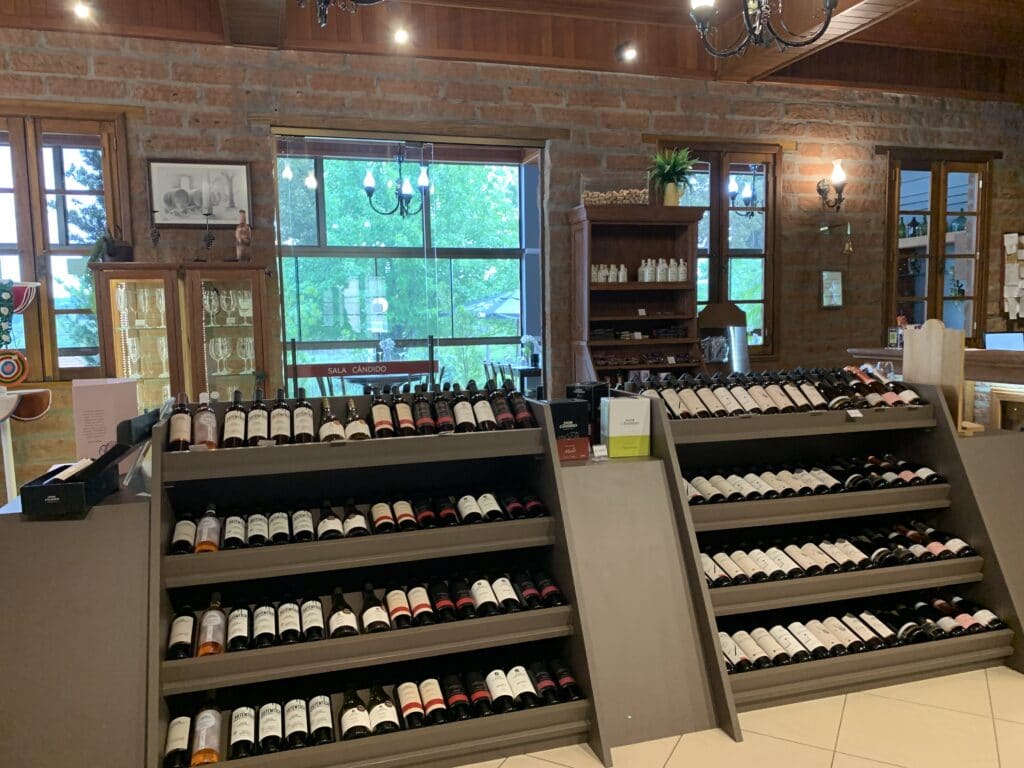
We did the tasting, which was nice, with two different options — but what really surprised us at this winery was Restaurante Videiras 1535, which is simply delicious!
The restaurant serves an Italian Sequence, run like a rodízio, with starters (salami, cheese, brustolada, pien, colonial bread, parmesan cheese, and capeletti soup), salad, four different pasta varieties, four different risotto varieties, grilled meats, and dessert, all for R$98 — and we thought it was genuinely well worth it.
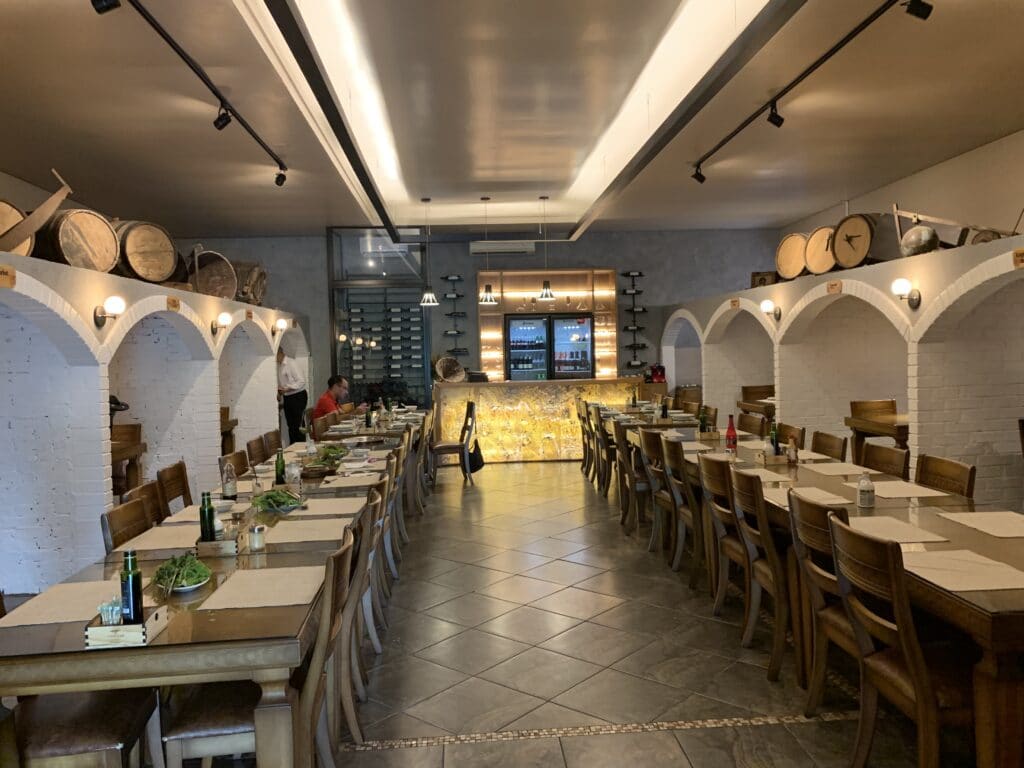
Vinícola Miolo
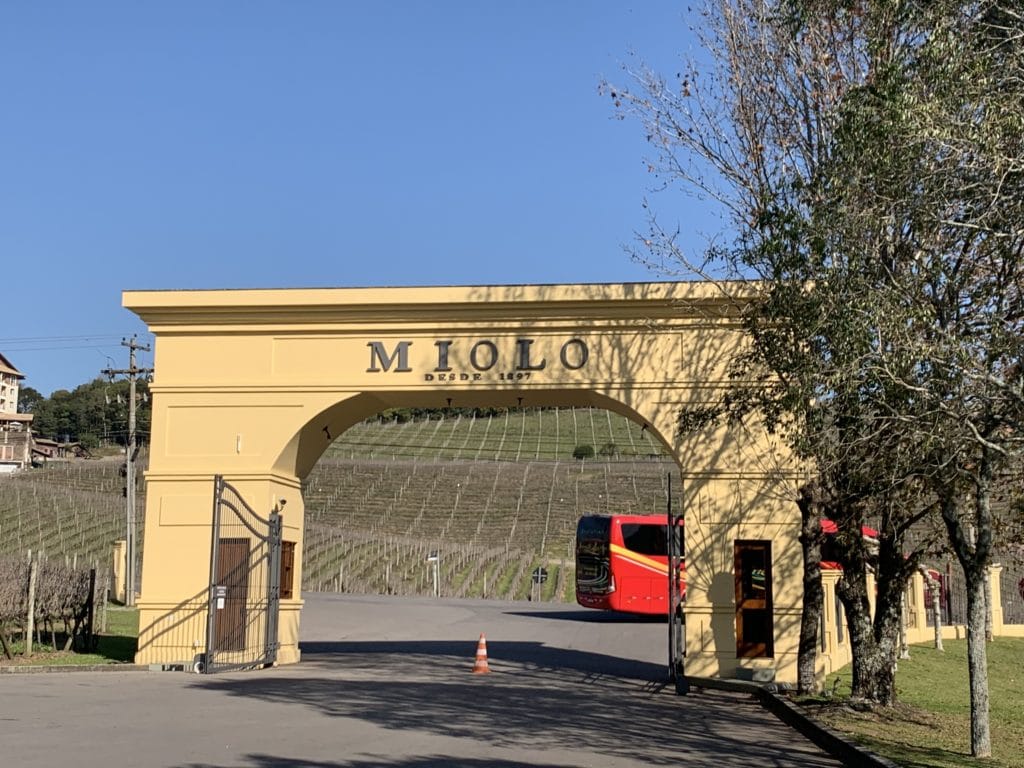
In 1897, Giuseppe Miolo arrived in Brazil from Piombino Dese, in the Veneto region, later moving to Bento Gonçalves, where he traded his life savings for a plot of land in the Vale dos Vinhedos, known as Lote 43.
In the late 1980s, a crisis in the wine cellars made it harder to sell fine grapes, and as a result, starting in 1989, the Miolo family began producing their own wine to sell in bulk to other wineries.
Founders of the Wines of Brasil project, the Miolo Wine Group is Brazil’s largest wine exporter, and as a result, the most internationally recognized.
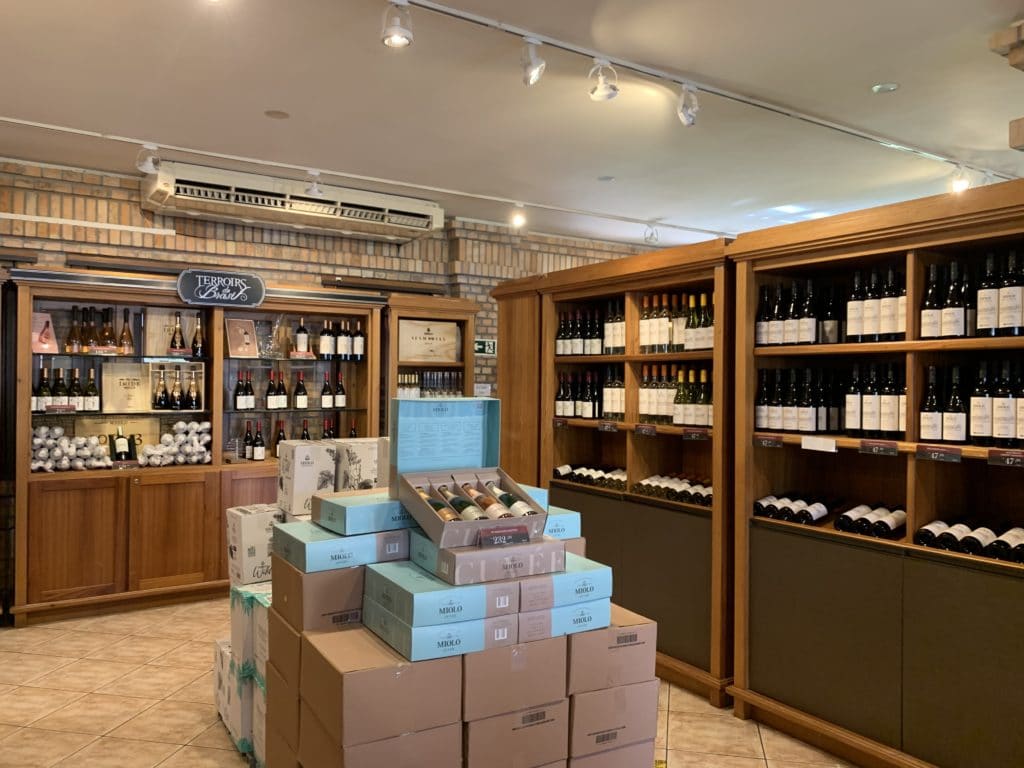
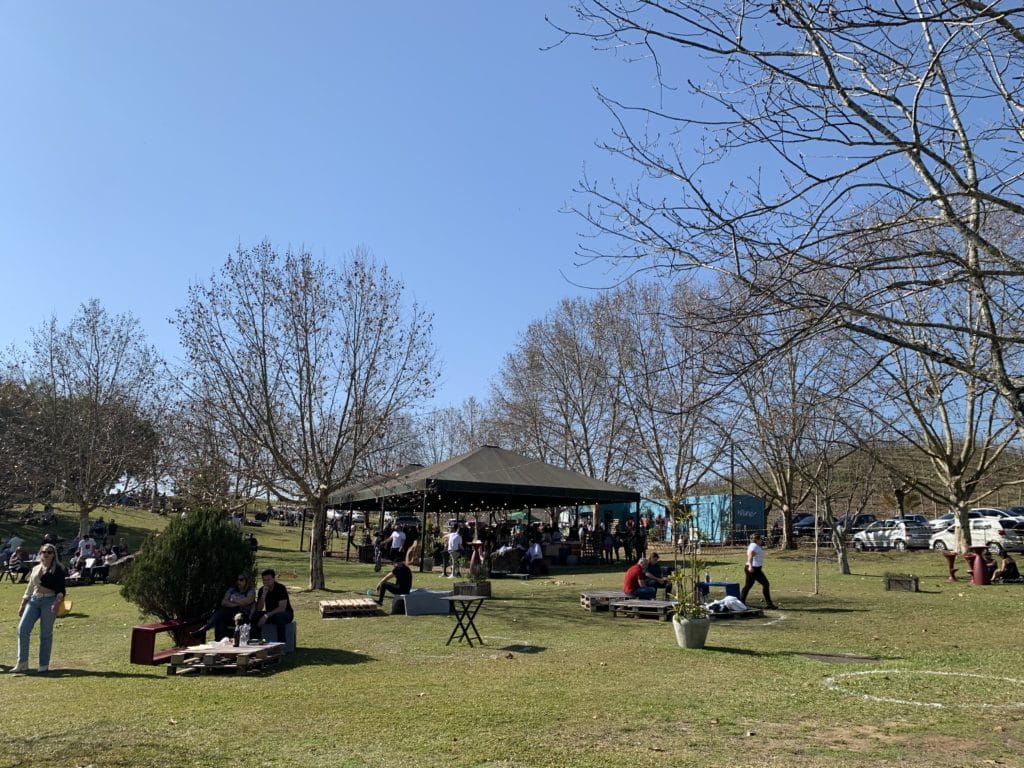
At Miolo, we’d recommend the wine bar, set in a beautiful giant garden, a great spot to relax with a glass of wine and enjoy the space — sunset here is beautiful and well worth catching.
Vinícola Pizzato
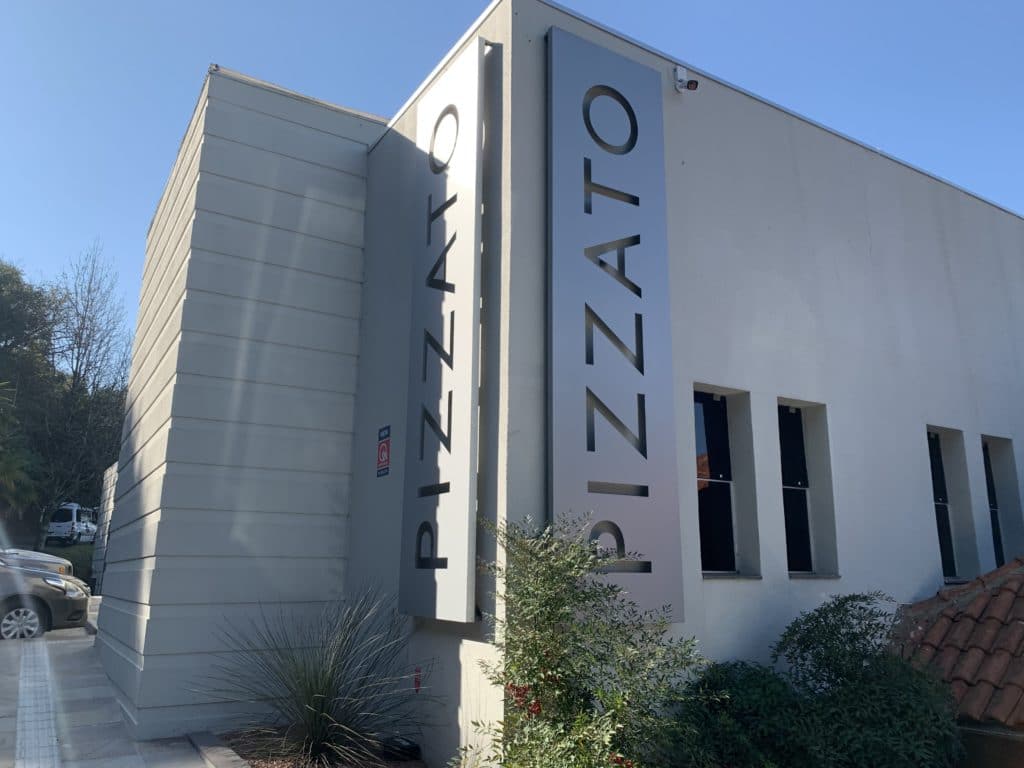
The Plínio Pizzato family established the winery in 1999, though they’d already been growing vines since Antônio Pizzato immigrated to Brazil from the Veneto region of Italy in the late 1800s.
Family members handle the entire process, from growing the grapes to producing and selling the wine.
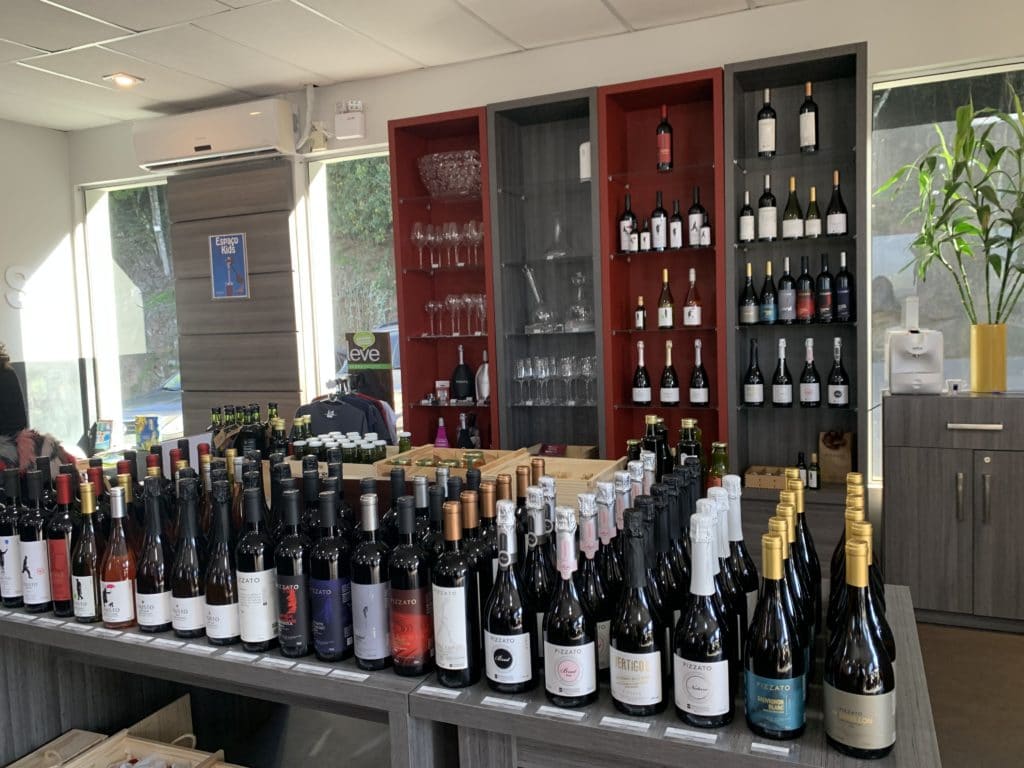
Here, we did a tasting that requires an advance reservation. The space is small but extremely pleasant, with modern architecture, and service was excellent. They have two wine lines — Fausto, younger and fruitier, and Pizzato, more concentrated and complex, made from older vines and more aged wine.
The tasting includes a detailed explanation of the production process and each individual wine and sparkling wine sampled, and the shop sells every wine the winery makes.
Vinícola Almaúnica
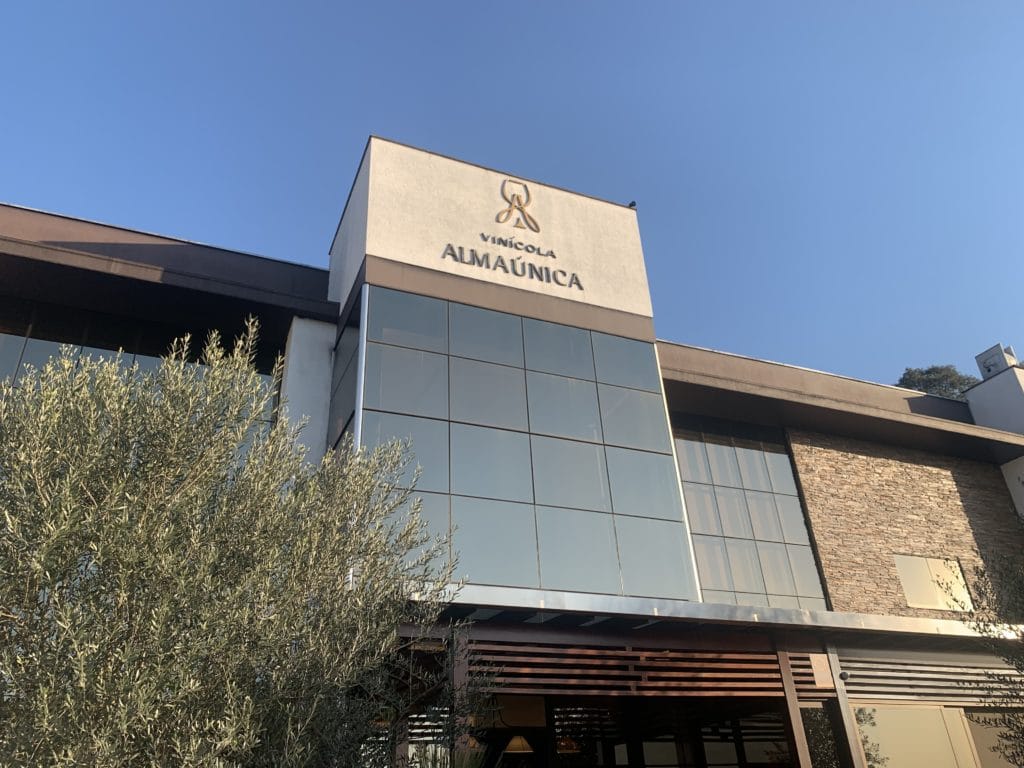
Founded in 2008 by twin siblings Magda and Márcio Brandelli, the fourth generation of winemakers in their family — though the story actually began in 1887, when Italian immigrant Marcelino Brandelli arrived in Brazil and started planting the first vines.
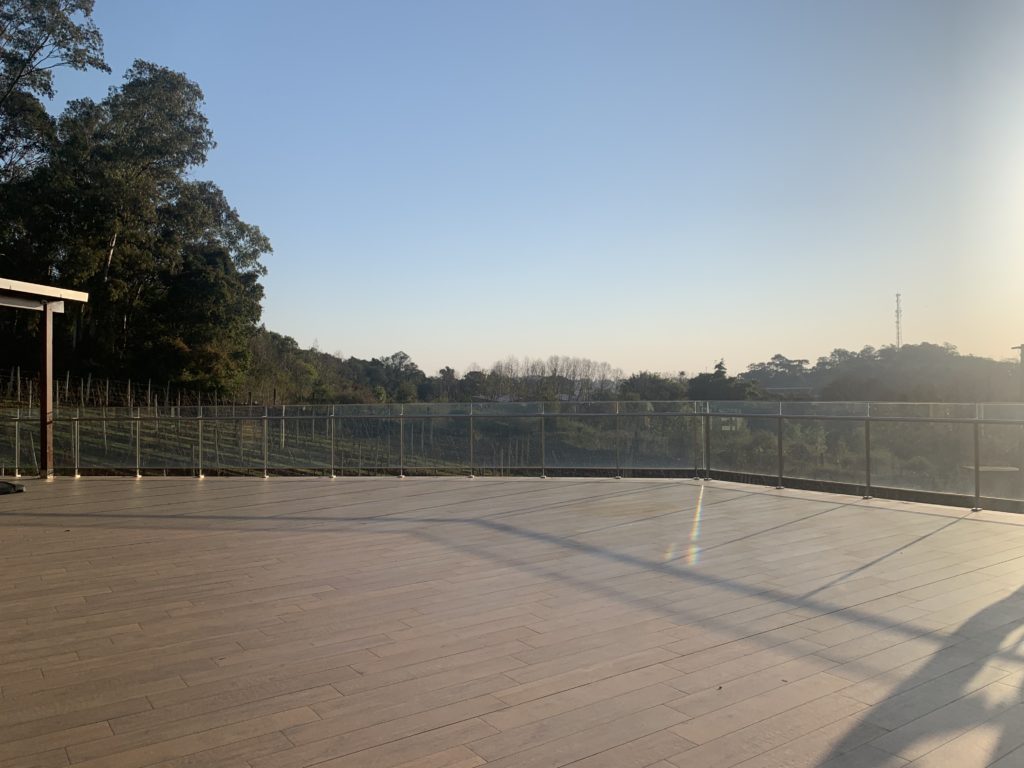
The place is beautiful, with a glass deck, without question a great spot to catch the sunset, framed by beautiful views over the vineyards. Here, we bought and drank a glass of wine on site while waiting for the sun to set.
Vinícola Aurora
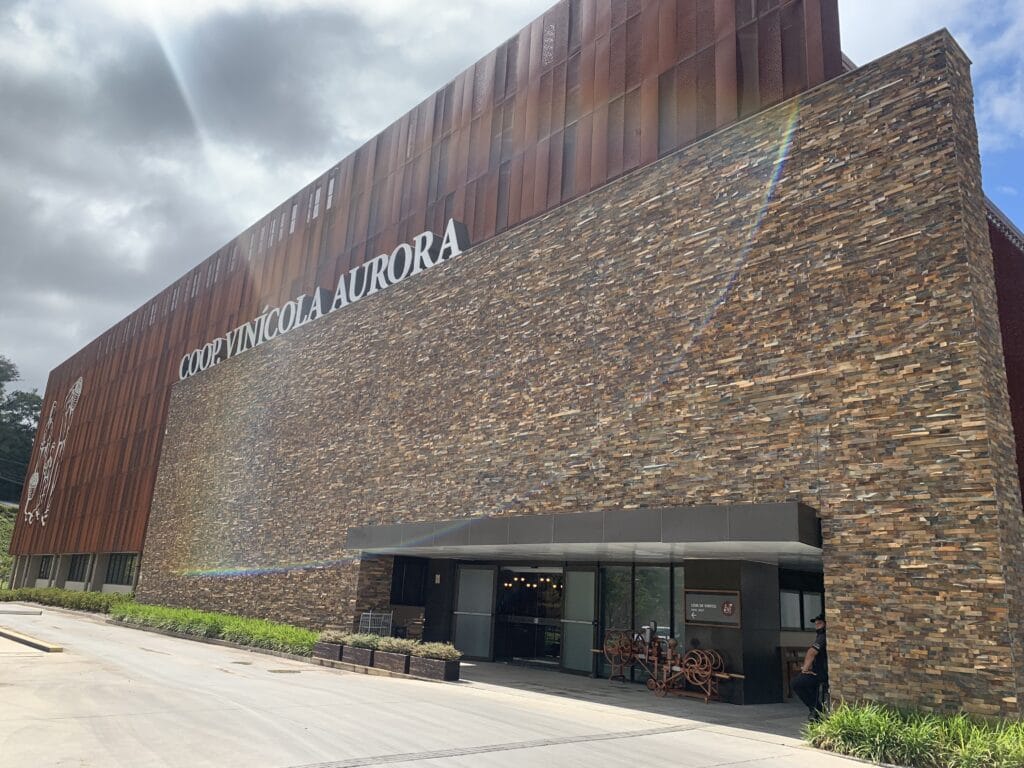
Unlike the others, this winery operates as a cooperative, receiving wine from several producers across the region. Its story began in 1931, when sixteen grape-growing families from Bento Gonçalves came together, eventually growing into the largest operation of its kind in Brazil — today, more than 1,100 associated families are part of it.
The winery is large and offers a free tour, along with three different tasting options, which do come at a cost, ranging from simpler wines to more complex ones paired with chocolate, priced from R$60 to R$90 — genuinely worth visiting. The chocolates are from Mondi, a local chocolate maker.
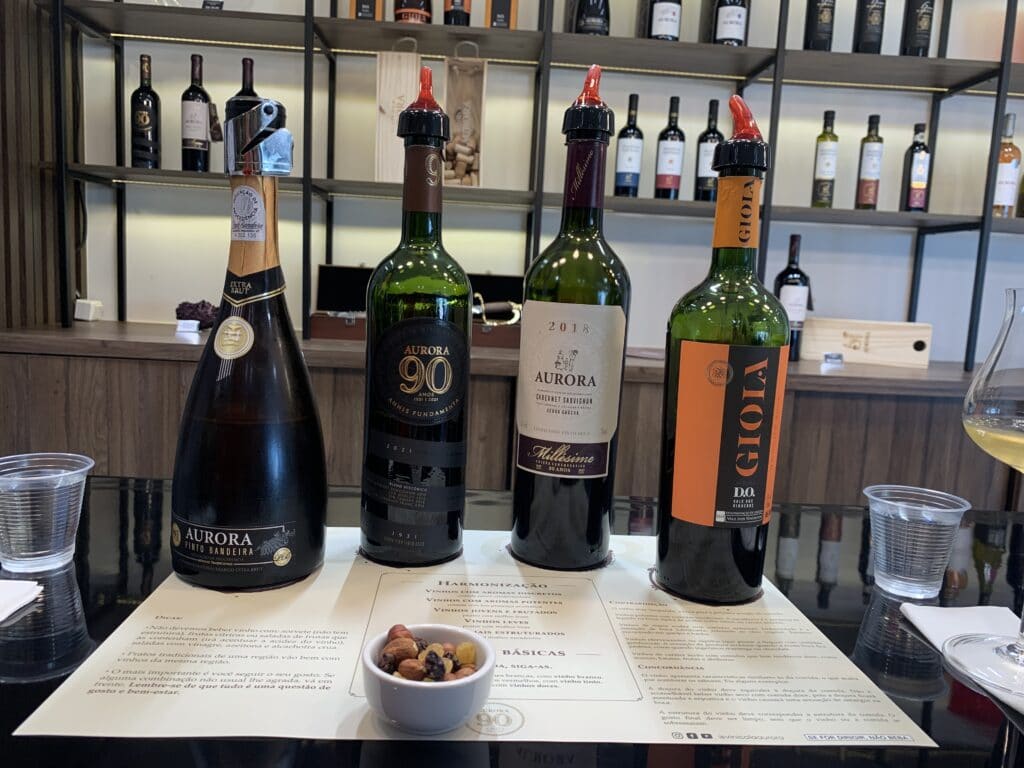
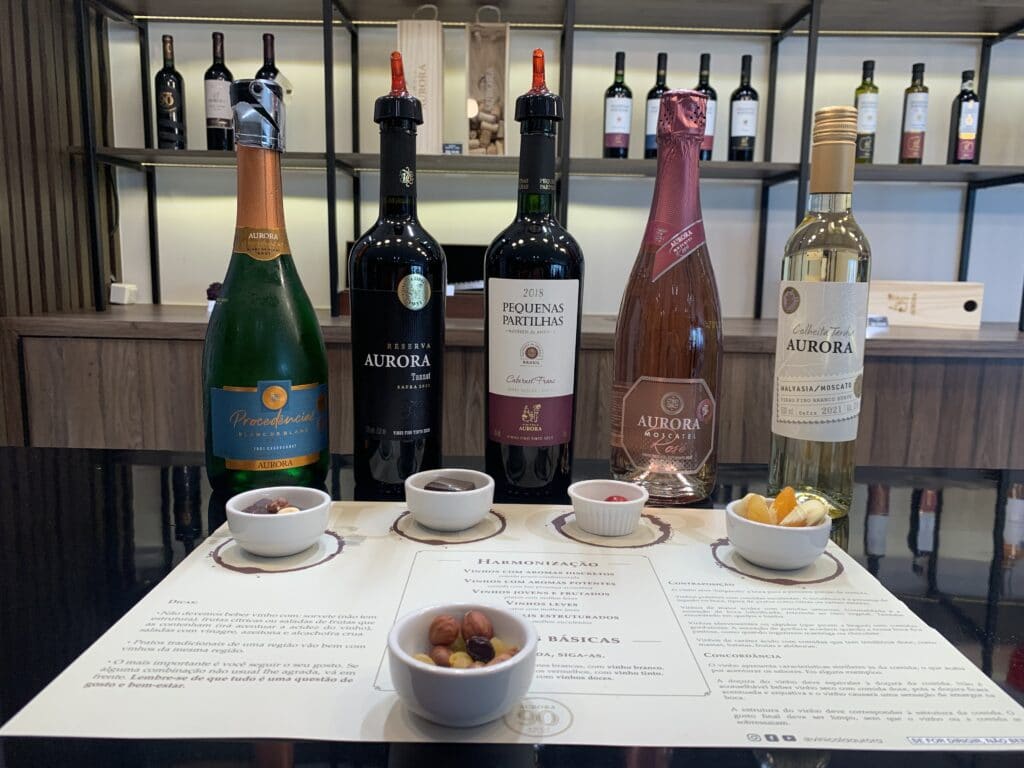
They carry a wide range of wine and sparkling wine labels, along with three different types of grape juice, including organic options — and it’s also one of the earliest wineries to open, at 8 AM, making it a great place to start your day of touring.
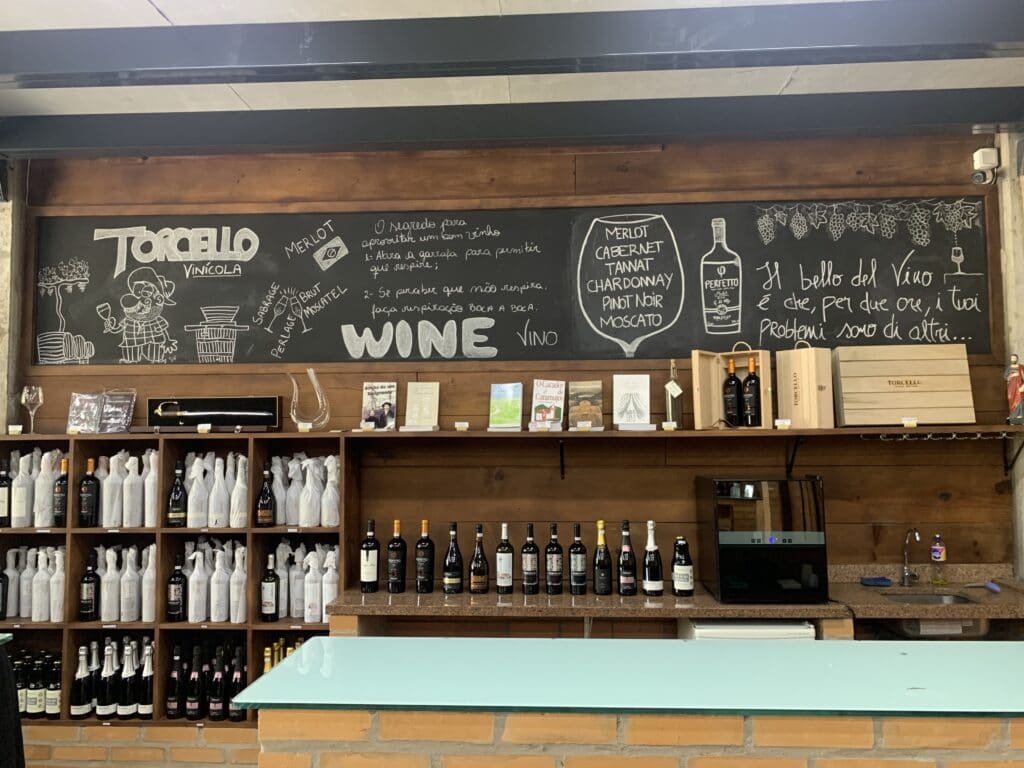
Vinícola Torcello
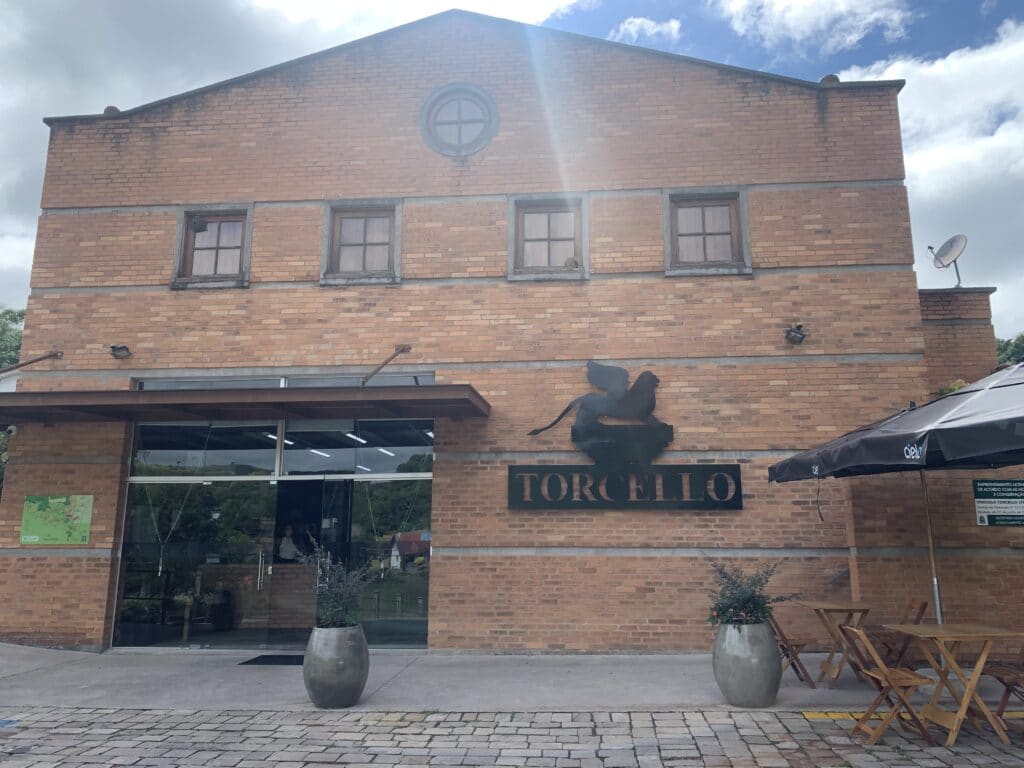
The name Torcello comes from a small Italian island near Venice. Its symbol also traces back to Venice — the Winged Lion of St. Mark, guardian of law, a symbol of power and a divine messenger. So the symbol reflects the Winged Lion’s protection over the winery’s wines.
The winery is small, but it has a beautiful garden. There are also 3 different tasting options, and we went with the R$120 one, featuring the house’s best wines — genuinely, all of them are delicious, and we’d especially highlight the Chardonnay white wine, whose label is beautiful, decorated with a butterfly, and of everything we tried, it was our favorite — we’d recommend including it in your tasting.
There’s a guided tour available, though it needs to be scheduled ahead, or you’ll need a group of at least 4 people to start one — we opted just for the tasting.
Caminhos de Pedra
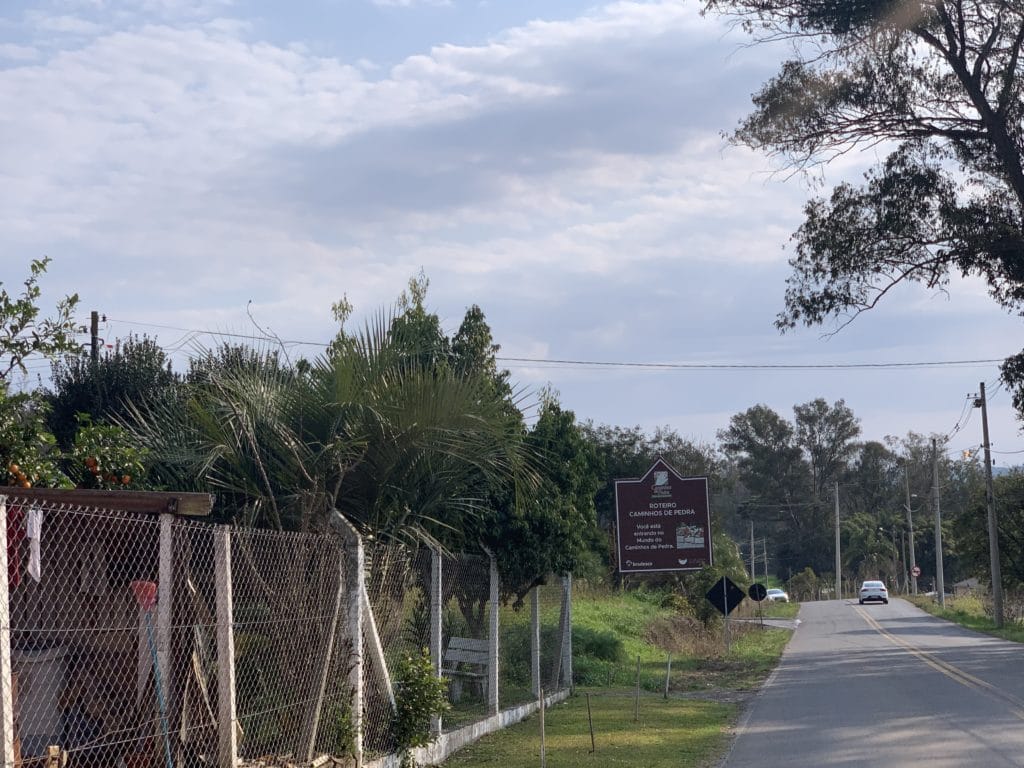
On the second day, we decided to head out of the Vale dos Vinhedos and visit the wineries along the Caminhos de Pedra, a project launched in 2000, named for its typical Italian-style stone architecture, with cellars built entirely from basalt stone.
Built without support beams or cement bonding. The door and window arches follow Etruscan-Roman architectural style. The upper level, made of solid brick masonry, houses the descendants of Italian immigrants from Belluno, who arrived here in 1875. These buildings still stand along the route to this day.
The route runs 12 km, starting just 6 km from downtown, heading toward Pinto Bandeira.
Família Geisse
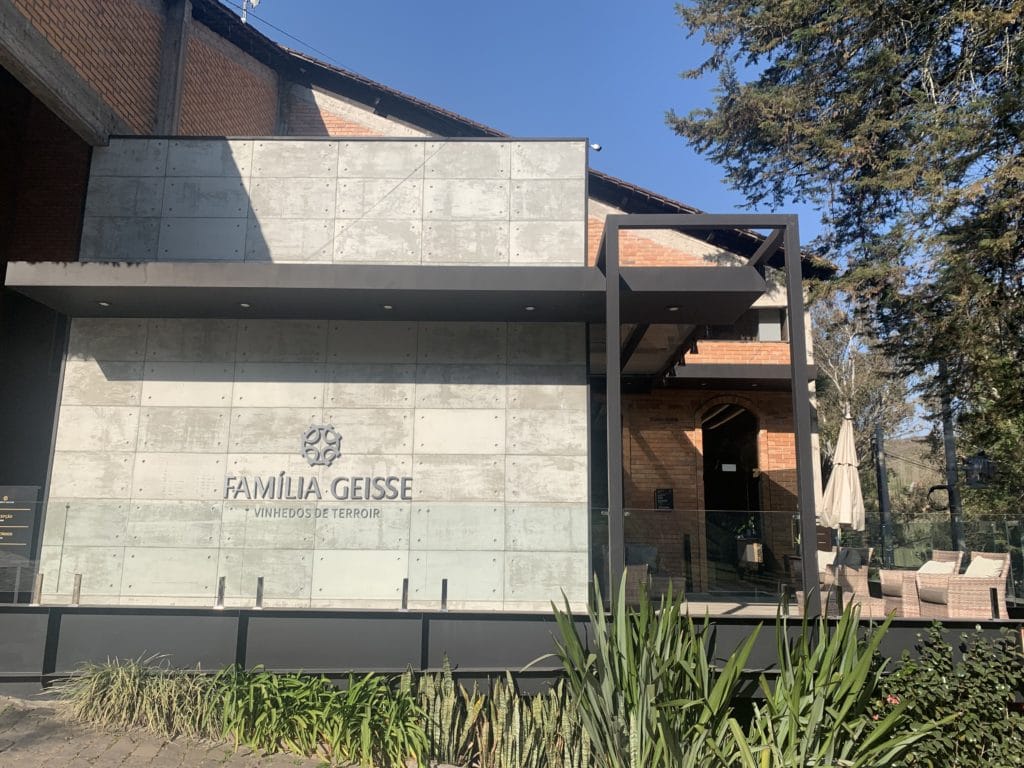
Located in Pinto Bandeira, this winery was founded in 1979 by Chilean agronomist and enologist Mario Geisse, who came to Brazil in 1976, hired to run Moët & Chandon’s Brazilian operations.
Within his first years there, he realized the southern region had huge potential for growing high-quality grapes, especially for sparkling wine production, and that’s how the winery started.
Honestly, this was, without question, the most beautiful spot of all the ones we visited. The Open Lounge is small, but carries an air of sophistication and is extremely pleasant — and to me, its small size is exactly what gives it that charm, making it feel like a more exclusive spot. We’d recommend booking ahead or arriving early to secure a seat for the day.
The winery also offers the Terroir Experience, a private or group off-road tour through the property in a 4x4 vehicle. This needs to be booked in advance, since it’s in high demand, running Monday through Sunday, with pricing varying based on group size.
The 4x4 winds through trails, waterfalls, and vineyards, with stops for tasting along the way, while the guide shares the winery’s history and how the grapes are grown.
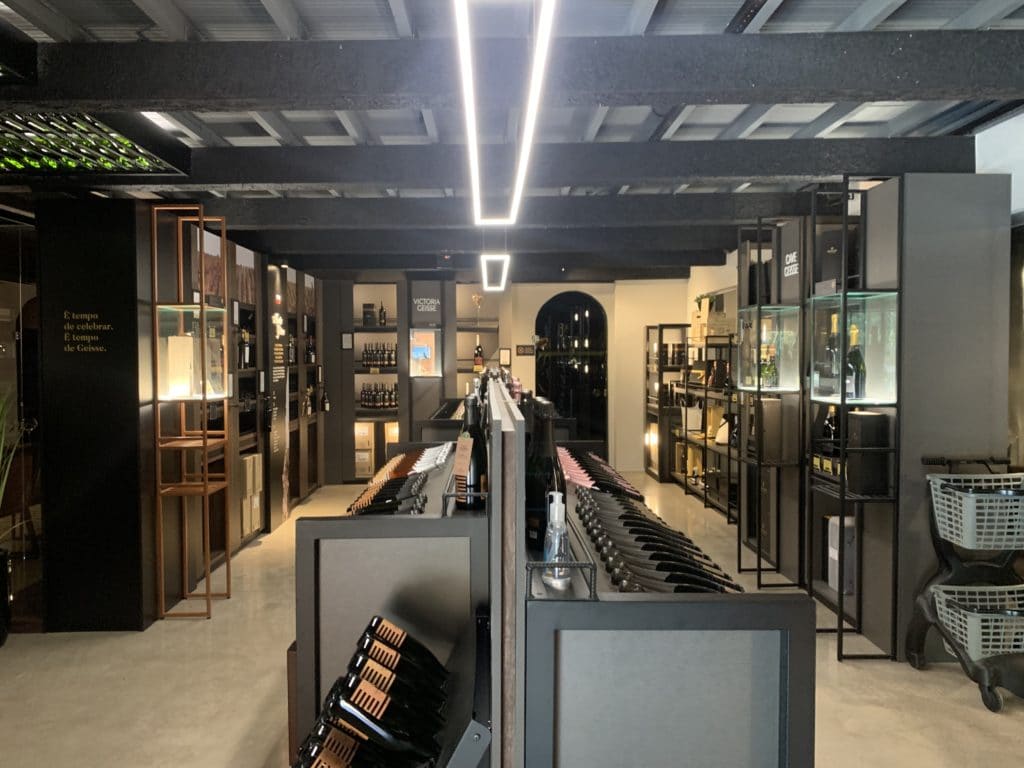
The shop also deserves a mention — beautiful and thoroughly modern, resembling the interior of a spaceship. Both the wines and sparkling wines here are excellent too.
Cascata dos Amores
On the way to Vinícola Família Geisse, you’ll pass a lookout next to Pousada Fornasier, on VRS 855, km 10 — we’d recommend stopping for the view. Depending on the time of year, you might also spot small trees with pink blossoms, peach trees, genuinely stunning.
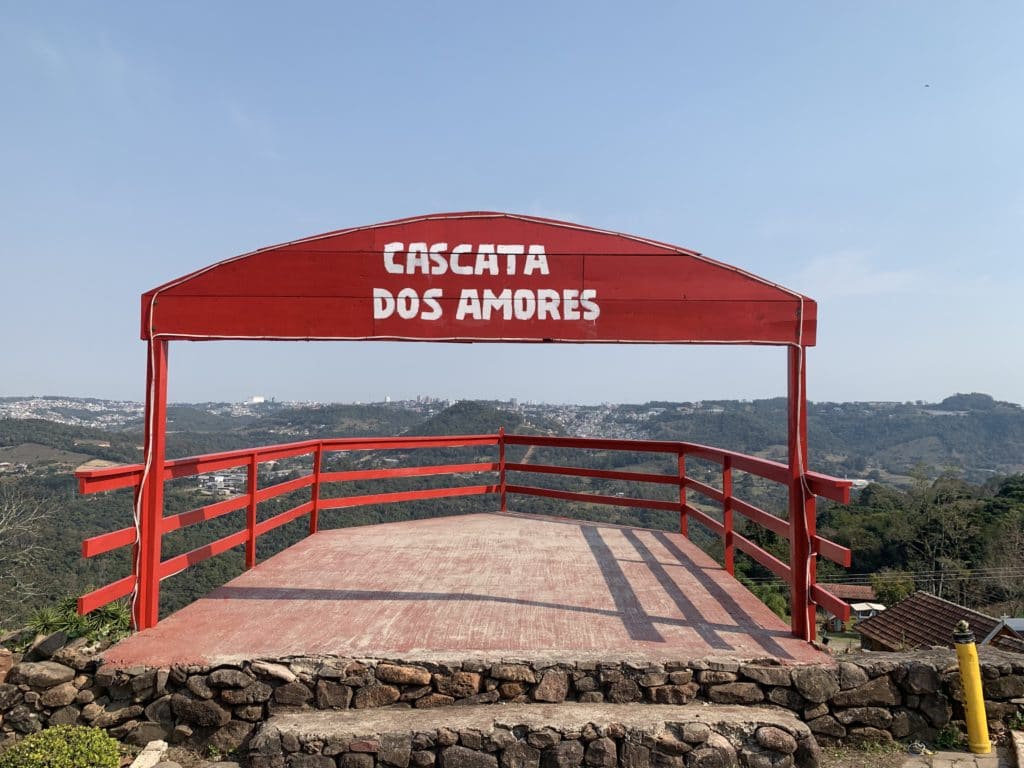
Just be careful, since access is along a curve. The lookout is open to the public, free of charge. Cascata dos Amores is genuinely beautiful, dropping 50 meters, easy to spot from a distance.
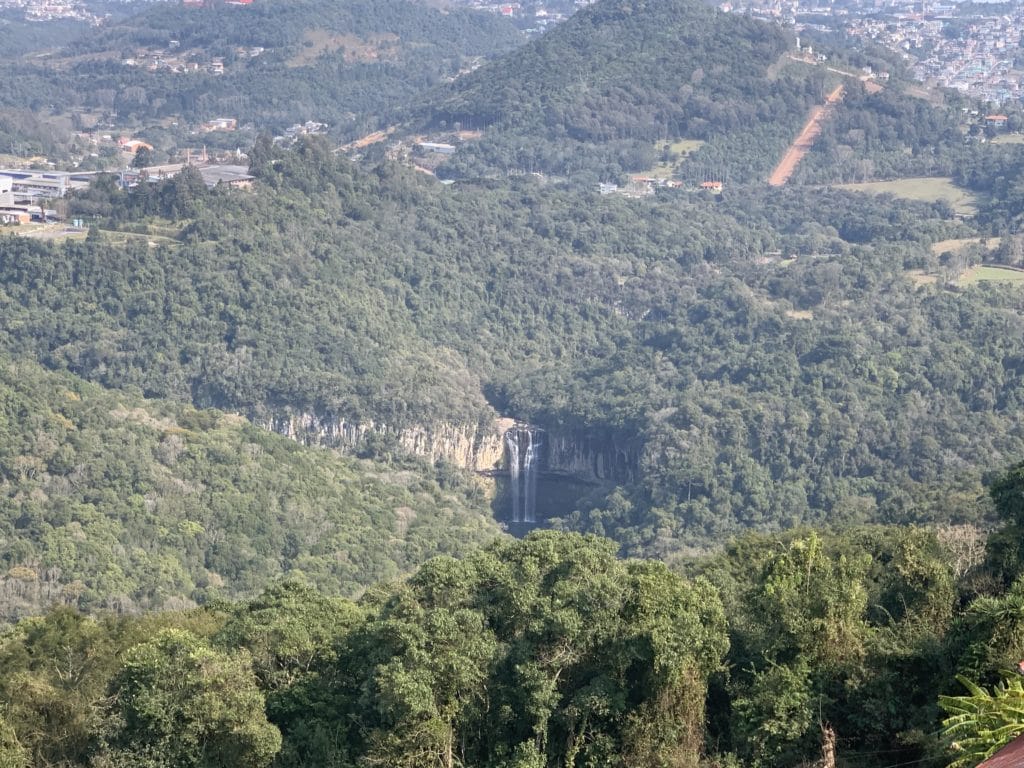
If you want to reach the waterfall itself, it’s about 3 km round trip, taking around an hour — we didn’t do this trail ourselves, but we’ve read accounts that, unfortunately, the area around the waterfall tends to collect debris carried down by the river.
Steam Train Ride
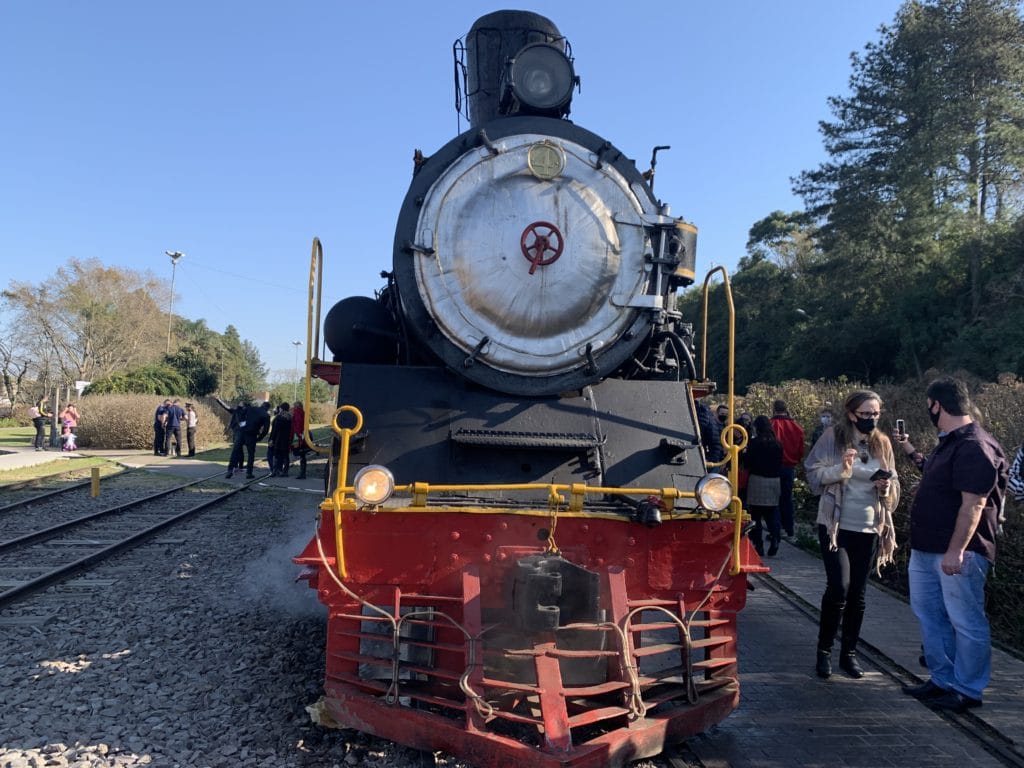
To start, the Maria Fumaça steam train ride, running from Bento Gonçalves to Carlos Barbosa, is one of the town’s biggest attractions.
Aboard a 1950s-era steam locomotive, the ride covers 23 kilometers between Bento Gonçalves and Carlos Barbosa, at a speed of 20 to 25 km/h, taking roughly an hour and a half. There’s a stop at the Garibaldi station, the best spot to grab a photo in front of the train — but move quickly, since the best photo spot is in high demand.
The scenery along the way is beautiful, with vineyards visible throughout the region — but the highlight of the ride is the live Italian and gaúcho dance and music performances that take place inside the train cars, entertaining passengers along the way.
Italian music, gaúcho music.
Beyond that, they also serve tastings of wine, sparkling wine, and grape juice from local wineries, making the ride that much more interesting and fun, with a cup holder above your seat.
After reaching Carlos Barbosa, the return trip to Bento Gonçalves is by bus, much faster, taking about thirty minutes. All told, the full experience runs between two and two and a half hours.
The ride also includes admission to the Parque Cultural Epopeia Italiana, with prices varying depending on what you choose to do on the train and the time of year you go.
We’d recommend buying tickets in advance. The ride is run by Giordani Turismo, which runs tours across the Serra Gaúcha — you can buy tickets either through their website or by phone.
Parque Cultural Epopeia Italiana
Buying the Maria Fumaça ride in Bento Gonçalves automatically includes admission to the Parque Cultural Epopeia Italiana.
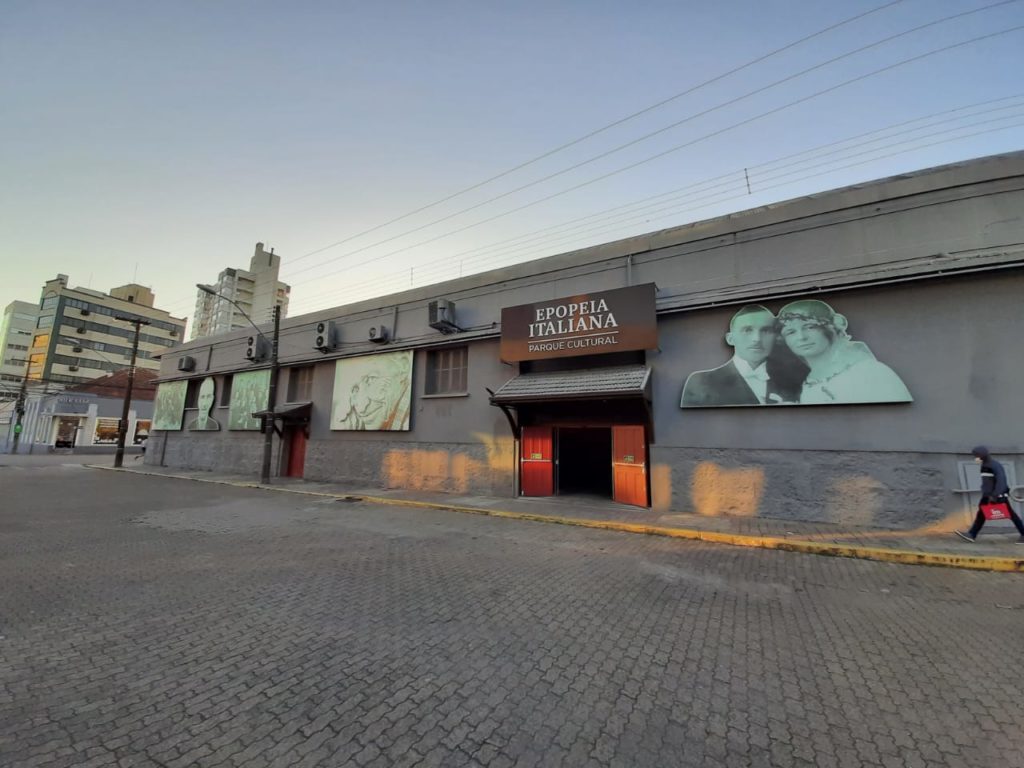
Located right next to the train station, this themed park offers a theatrical performance telling the story of an Italian immigrant couple, Rosa and Lázaro Giordani.
During the visit, you’ll see period clothing and advertisements, walking through the sets inside a huge warehouse — and overall, we enjoyed the experience.
Clothing on display at Epopeia Italiana.
Historic Center of Bento Gonçalves
In the morning, on our way to catch the Maria Fumaça, we walked through the historic center — here are our tips on the area.
Pórtico Pipa
Located at the main entrance to town, one of Bento Gonçalves’s postcard landmarks.
Built in 1985, standing 17 meters tall, it symbolizes the wooden barrels (pipas) widely used to produce and store the wine made in the region.
There’s a tourist information booth here, open during business hours, where you can pick up a map of the town.
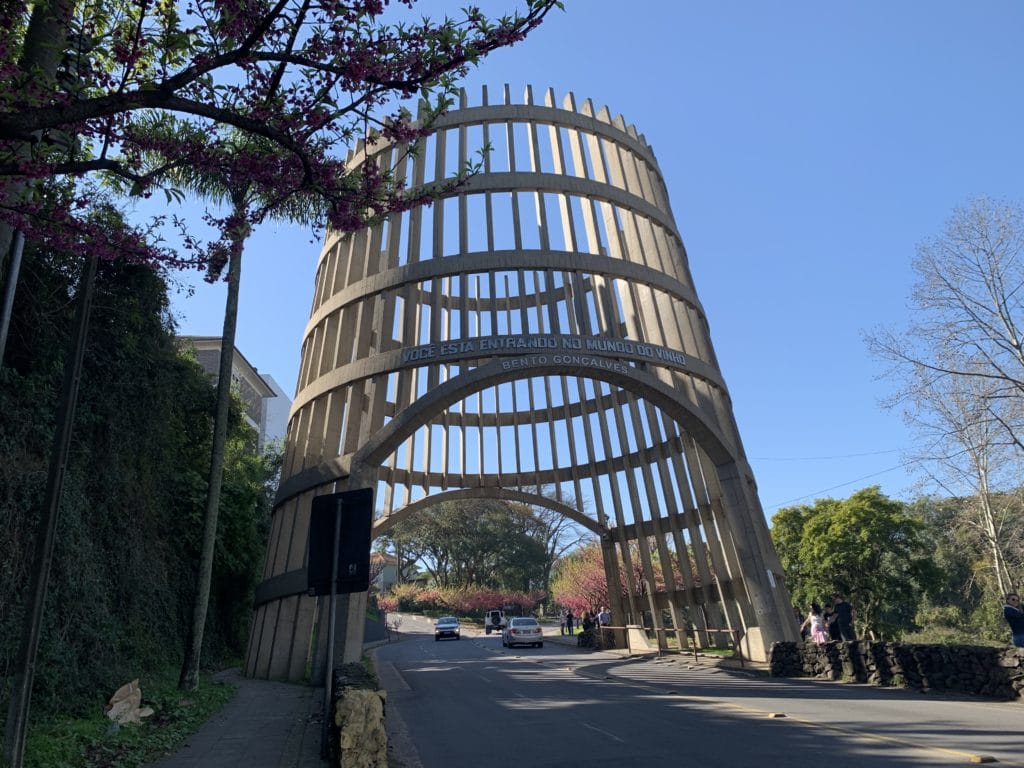
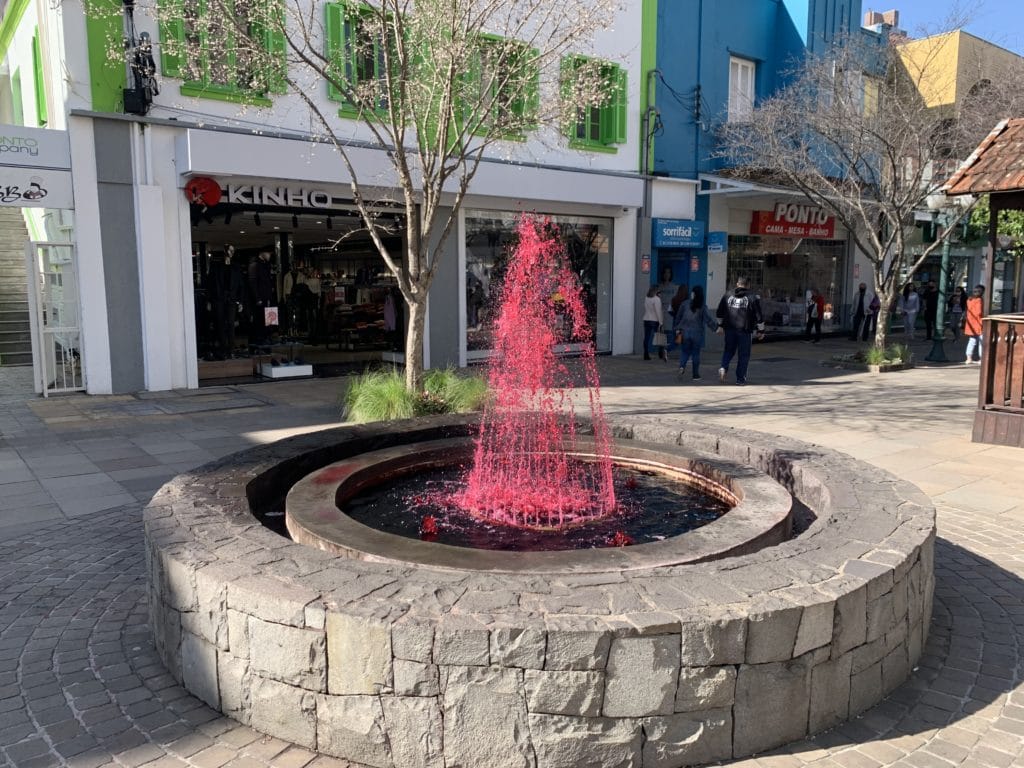
Via del Vino and Chafariz de Vinho La Fontana
Located on Rua Marechal Deodoro, Via del Vino is the stretch where you’ll find the municipality’s oldest buildings, once the heart of the town’s social and economic life.
The street has a boardwalk, and facing Bento Gonçalves’s city hall sits ‘La Fontana,’ a fountain that spouts water dyed the color of red wine.
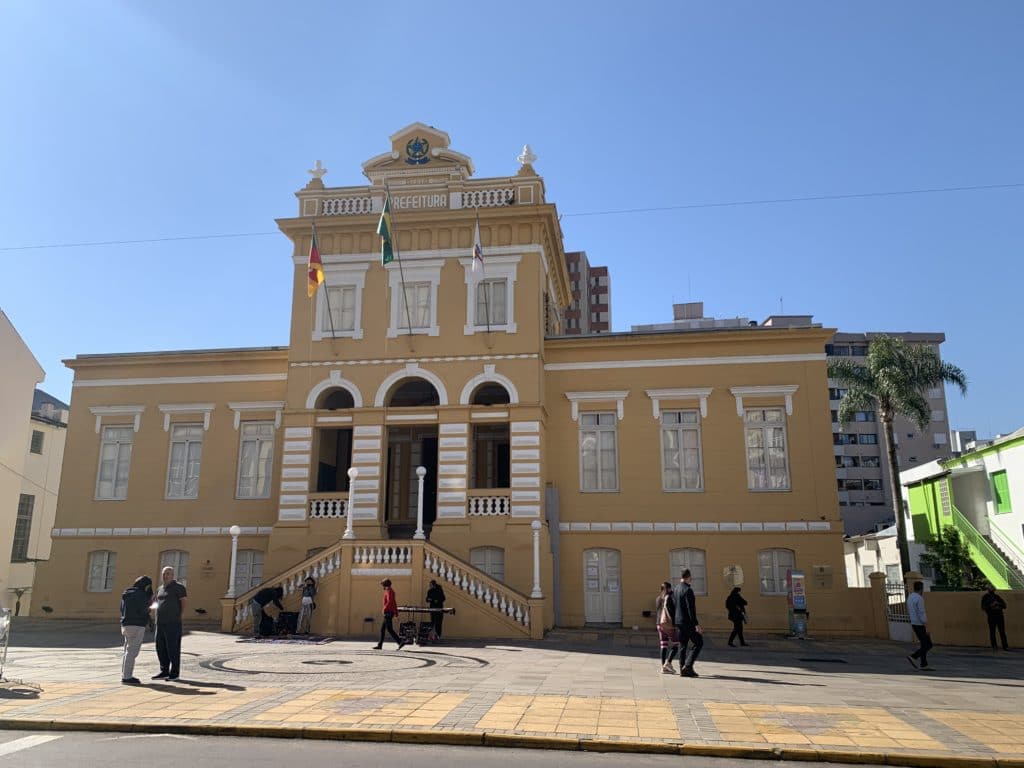
Bento Gonçalves City Hall Building
The city hall building was built in 1901. The state government sent architects to design the building that would house the local government — the same architects who designed Porto Alegre’s city hall.
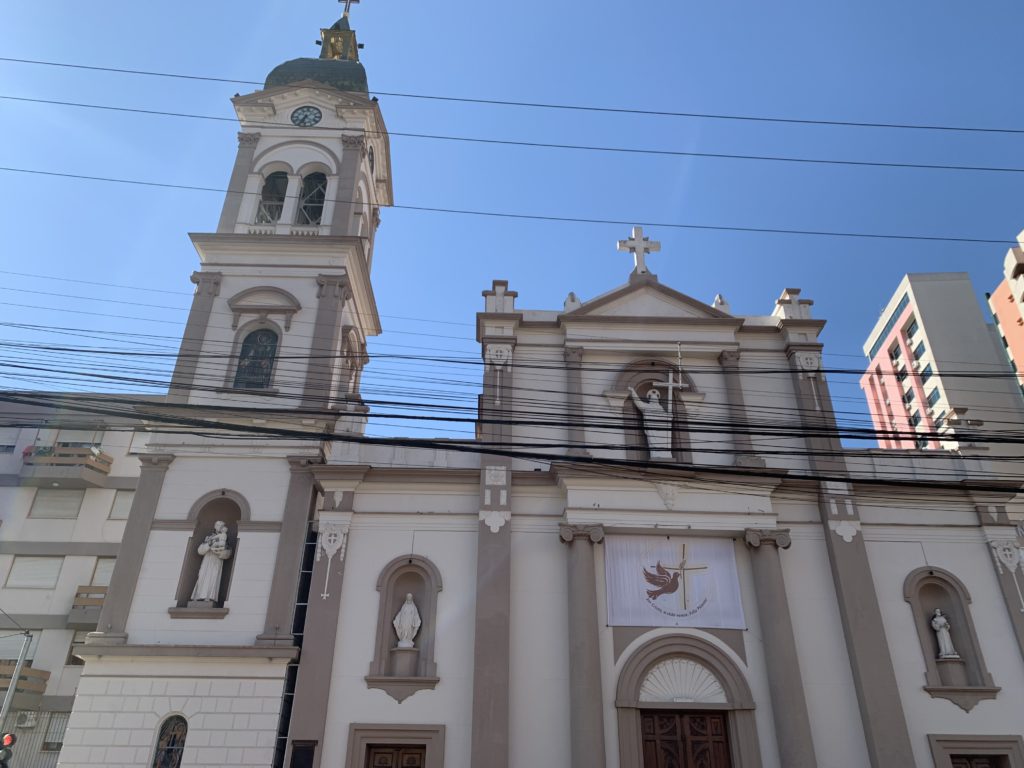
Igreja de Santo Antônio
Built between 1890 and 1894, following several renovations, along the same boardwalk as the Fonte de Vinho. The “matchmaker saint” is the town’s patron, and the church’s interior is genuinely beautiful.
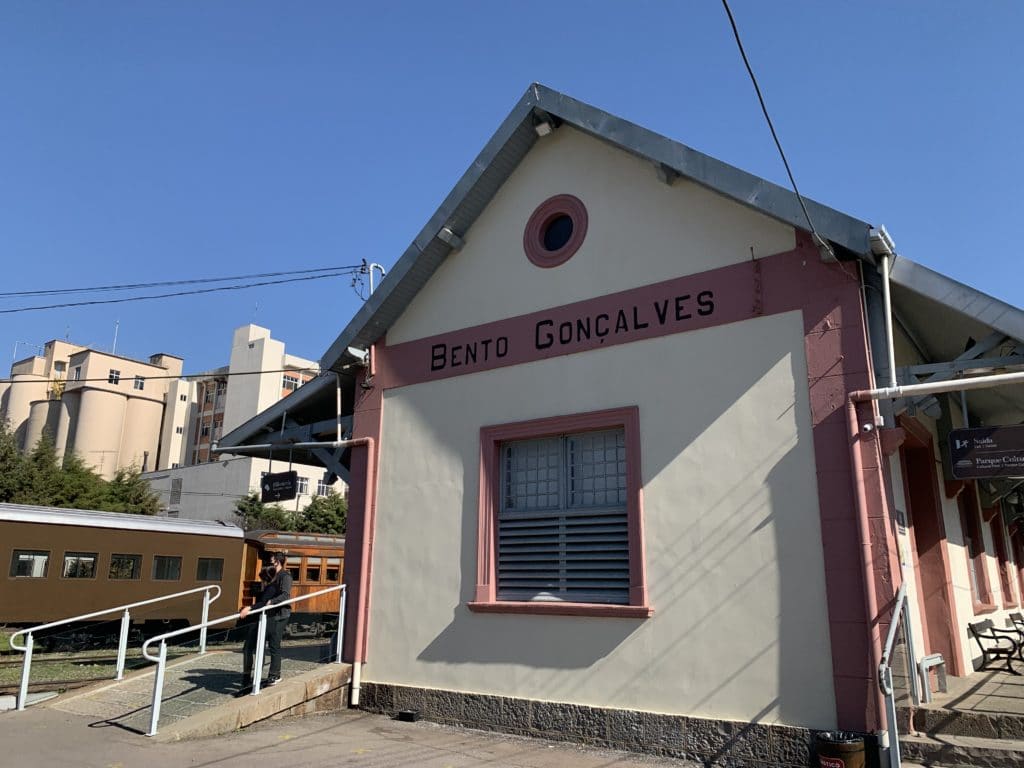
Estação Ferroviária de Bento Gonçalves
Opened in 1919, Bento Gonçalves’s train station operated passenger trains until 1976. Starting in 1993, it became home to the “Maria Fumaça” tourist ride, running from Bento Gonçalves to Garibaldi and Carlos Barbosa.
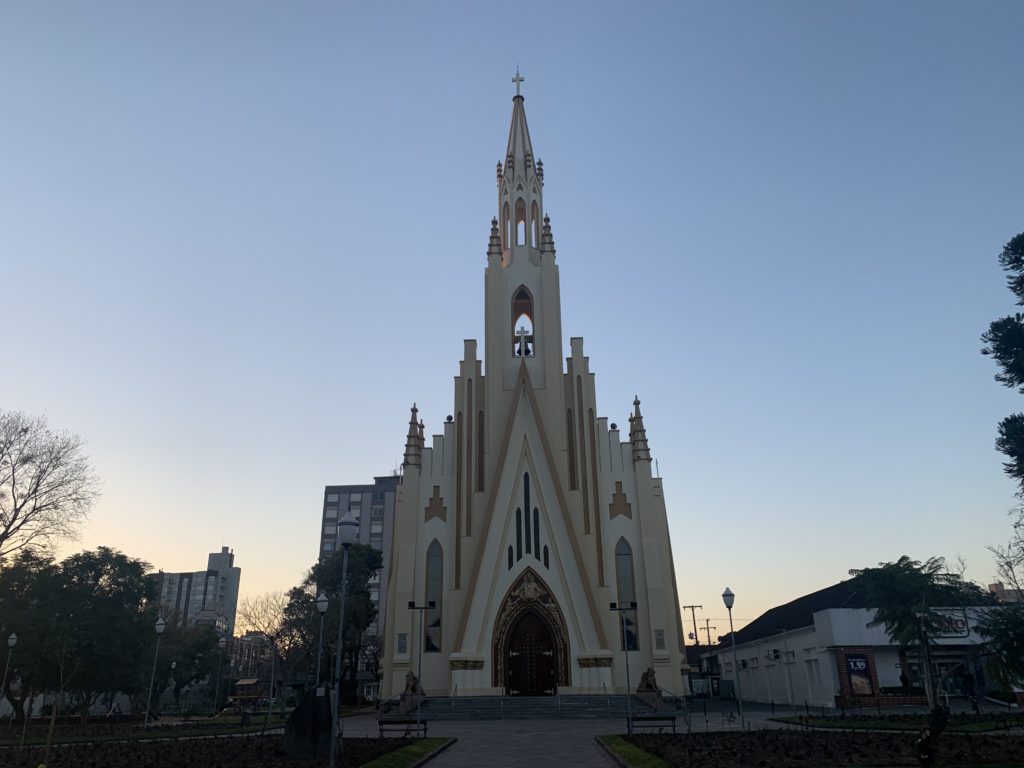
Igreja Cristo Rei and Praça das Rosas
Igreja Cristo Rei opened in 1954, though its towers weren’t finished until 1978. Built in a modern Gothic style, its interior features a 40-meter-high vault and 3 altars, dedicated to Nossa Senhora de Fátima.
The church sits on Praça das Rosas, which has a play area for kids.
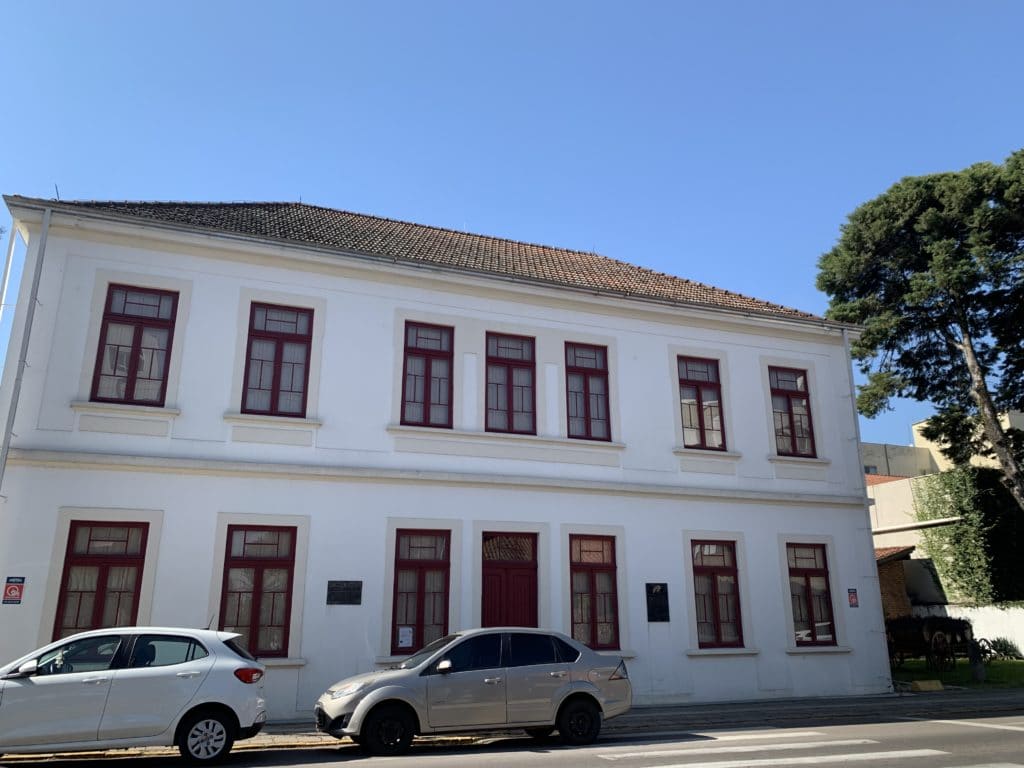
Museu do Imigrante de Bento Gonçalves
Housed in a building constructed in 1913, designated a historic landmark, this museum was founded in 1974 to showcase the history of Italian immigration.
The building has two floors and seven themed rooms, with a historic collection of more than 15,000 pieces of regional culture. We weren’t able to visit, since it was closed when we went.
Free admission, open Tuesday through Saturday, 8 AM to 11:45 AM and 1:30 PM to 5:45 PM.
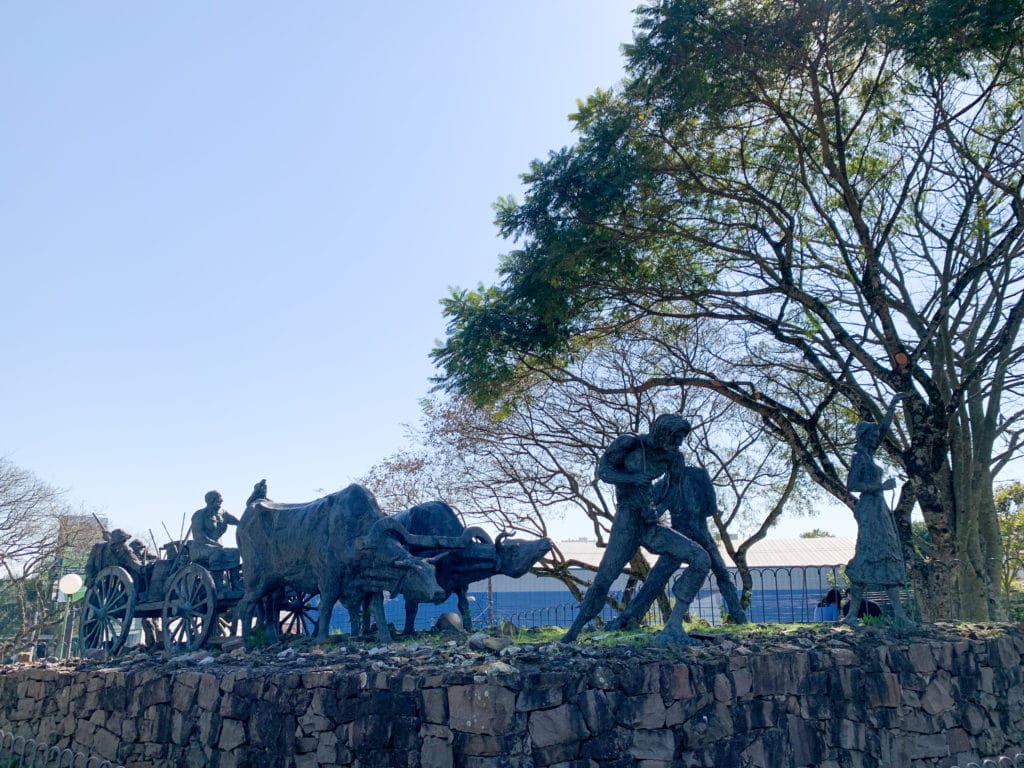
Igreja São Bento and Monumento ao Imigrante
Igreja São Bento, opened in 1984, is shaped like a wine barrel, and its interior decor, including the stained-glass windows, is themed around grapes and wine.
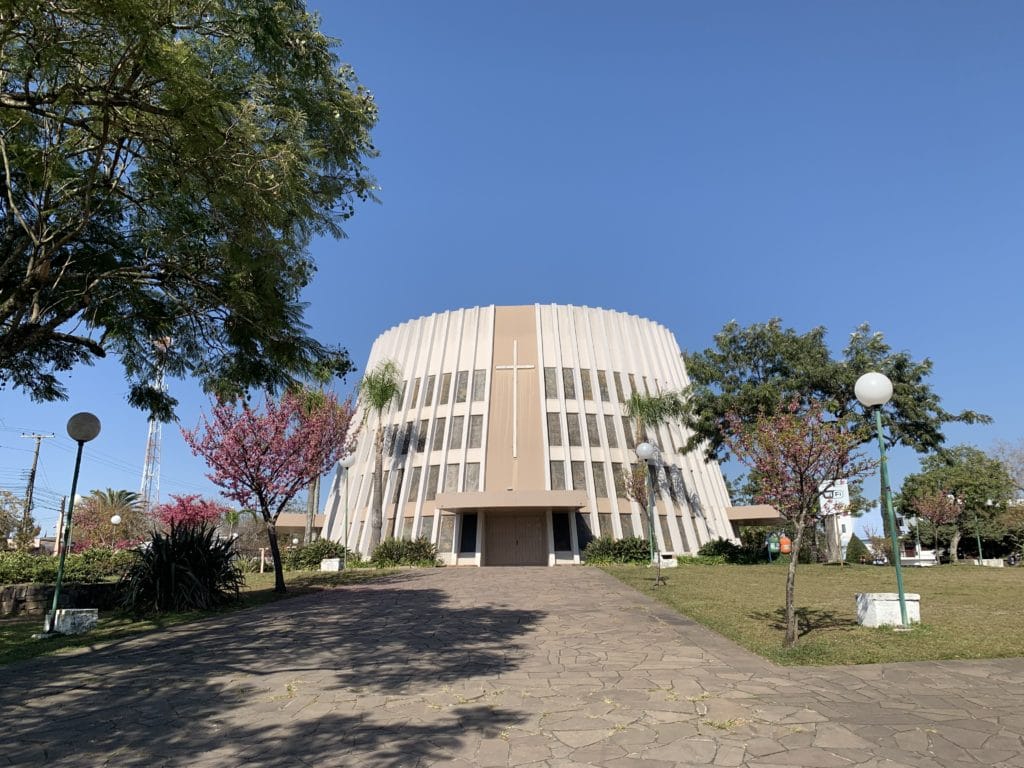
In the same square, you’ll also find the monument honoring Italian immigrants, a genuinely beautiful spot.
Where to Eat in Bento Gonçalves
The area has a wide range of restaurants, most serving Italian and German food — every place we ate at was wonderful, so here are our tips.
Vitiaceri Casa das Cucas
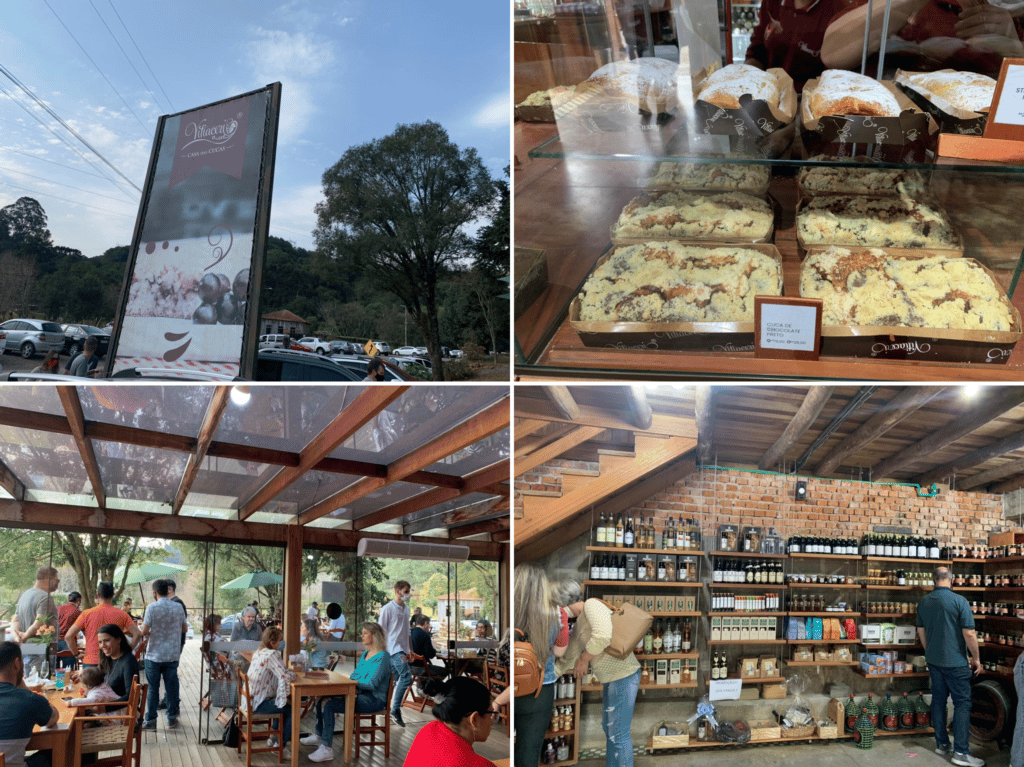
Along the Caminhos de Pedra route, we’d recommend stopping at the shop Vitiaceri Casa das Cucas.
For anyone who loves dessert, or wants to try one. I loved the cuca I ordered, chocolate and strawberry, served warm.
Cuca is a sheet cake made with eggs, wheat flour, and butter, topped with sugar — similar to Streuselkuchen, a traditional German cake.
The shop is spacious, with seating available, and it’s entirely glass-walled.
Casa Angelo Restaurante
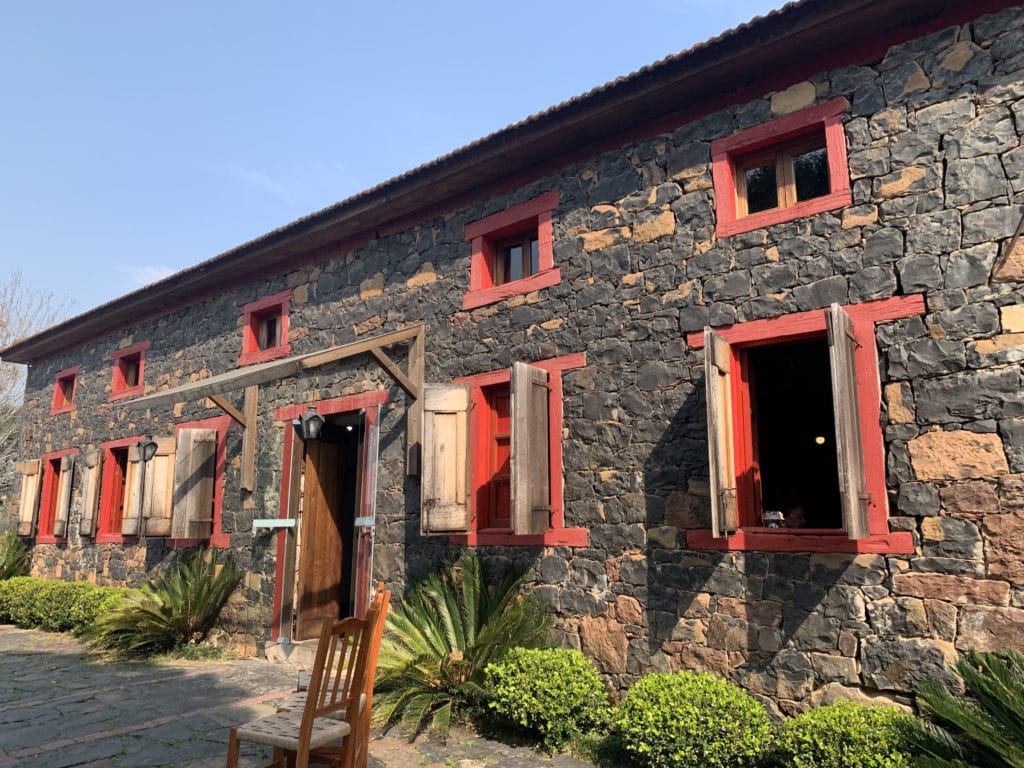
Located on Estrada para São Pedro, 26, along the Caminhos de Pedra, this is a rodízio-style restaurant with a sequence of pasta, risottos, and grilled meats — open only for lunch, until 3 PM, with a fixed price for the food that doesn’t include drinks, though dessert is included.
The building dates to 1889, built from irregular black basalt stones bonded together with a mix of hay, wheat straw, and clay. The red-framed windows add even more character to the striking building.
Starters include fried polenta and colonial sausage, along with a traditional capeletti soup.
Risottos: Italian salame, salmon, goat cheese, and Sicilian lemon.
Meats: rib rack, lamb ribs, picanha, spatchcock chicken, and more.
Pasta: tortelli in rosé sauce, spaghetti, and others.
Desserts: pudim and sagu, both available to eat as much as you’d like.
The restaurant is simple and small, but don’t let that fool you, since even as a rodízio, the food is wonderful, and service is excellent, especially from Lavousier, who was our waiter.
Caldeira Restaurante Bar
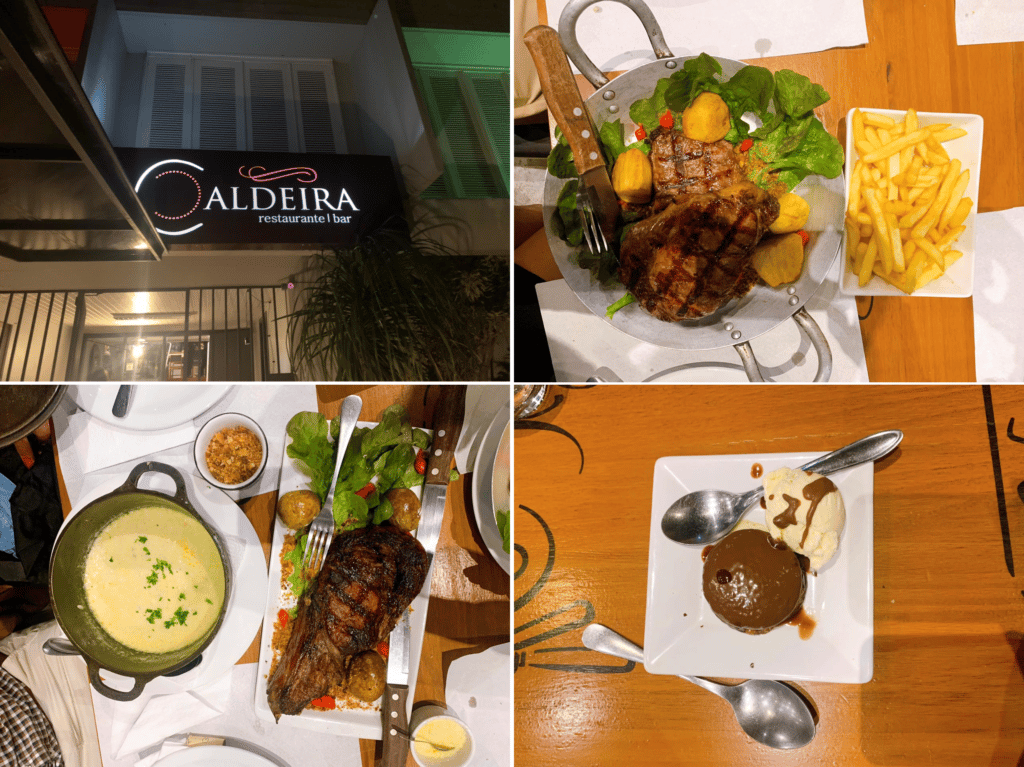
Located at Tv. Antônio Ducati, 138, Cidade Alta. A restaurant specializing in meat, with a contemporary style.
We really want to highlight the warmth of the service here, from the moment we walked in the door until we left — everyone was extremely polite, and the owner, Rafael, came over to introduce himself and was genuinely a delight to talk to.
The food is also really tasty, and worth noting, the meat came cooked exactly to order, and portions are generous, so come hungry. The sides were also generously served.
Dessert: we ordered the warm pão de mel with ice cream, which was also delicious!
So we’d recommend adding this one to your list!
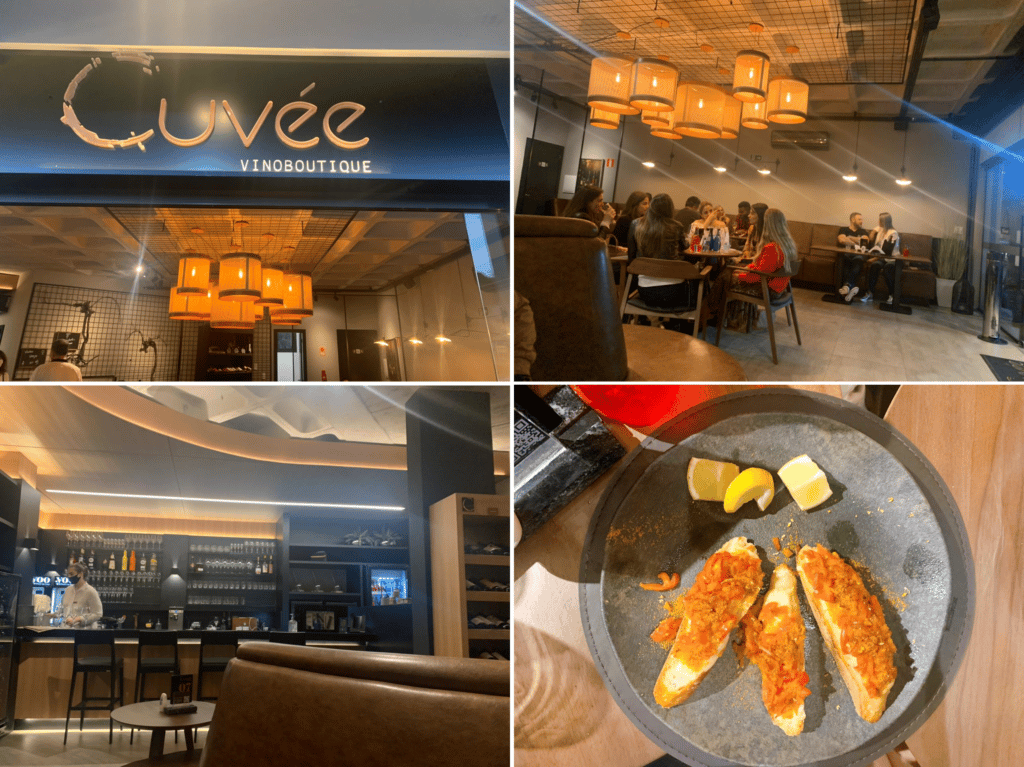
Cuvée Vinoboutique
Located on Rodovia ERS 444, Km 19.1, No. 4060, Sala 05. A space celebrating the best of Brazilian wine, with several labels available, along with snacks for an afternoon of conversation.
A modern, relaxed atmosphere, with both an outdoor and indoor area — but given the cold, we chose to stay inside.
We ordered a glass of wine and mozzarella bruschetta with tomato and lemon zest, and the combination was great, especially paired with good conversation.
So this is a good tip for a spot to grab a glass of wine in the late afternoon.
Where to Buy Chocolate in Bento Gonçalves
We have two tips for local chocolate shops to try — both are on the wine route, so they’re close to each other.
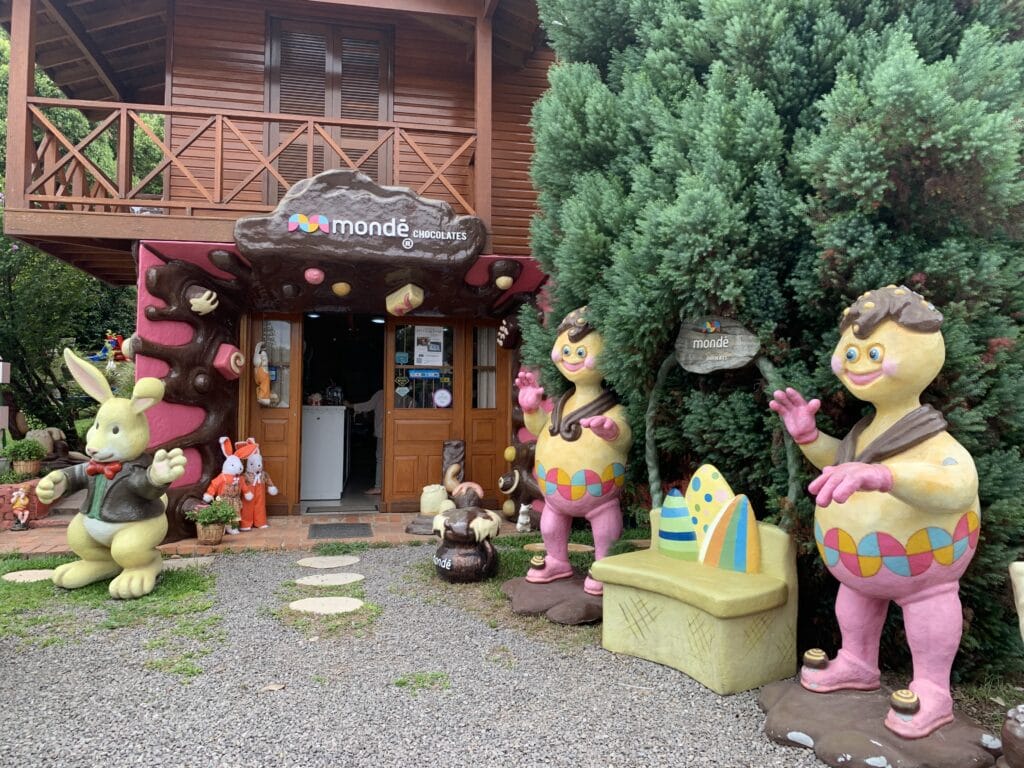
Monde Chocolates
This is the first shop and factory in the Vale dos Vinhedos. Genuinely fun, since it has a kids’ area for children to enjoy. They sell several types of chocolate bars and also make chocolate fondue with strawberries, which, without a doubt, looks wonderful.
Their chocolate is served in the tasting pairings at Aurora and Cave do Sol, which made us curious to check it out ourselves — and we loved it!
Devorata Trufas Artesanais
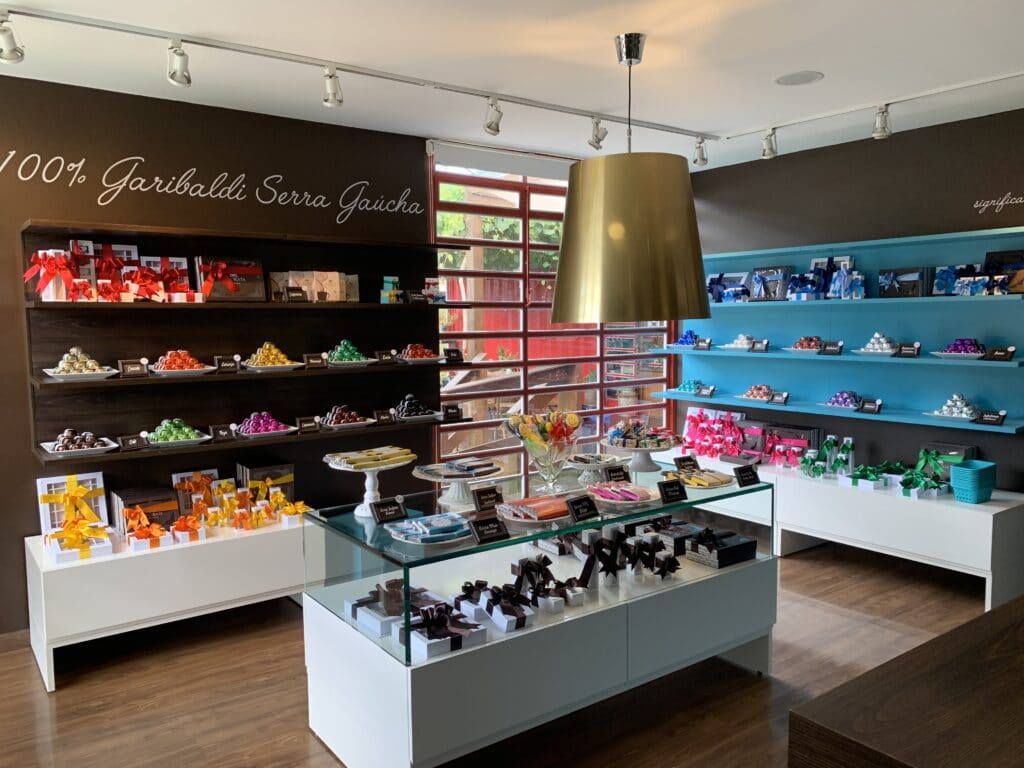
In 1987, at the old Oficina de Chocolate in Porto Alegre, truffles sparked Jurema Milani’s interest in the art of chocolate-making.
Today, this shop is entirely dedicated to truffles in a range of flavors, also selling chocolate bars that are incredibly creamy. The shop is small and charming, located right across from Vinícola Torcello, and without question, genuinely worth a visit!
La Vigna Especialidades Regionais
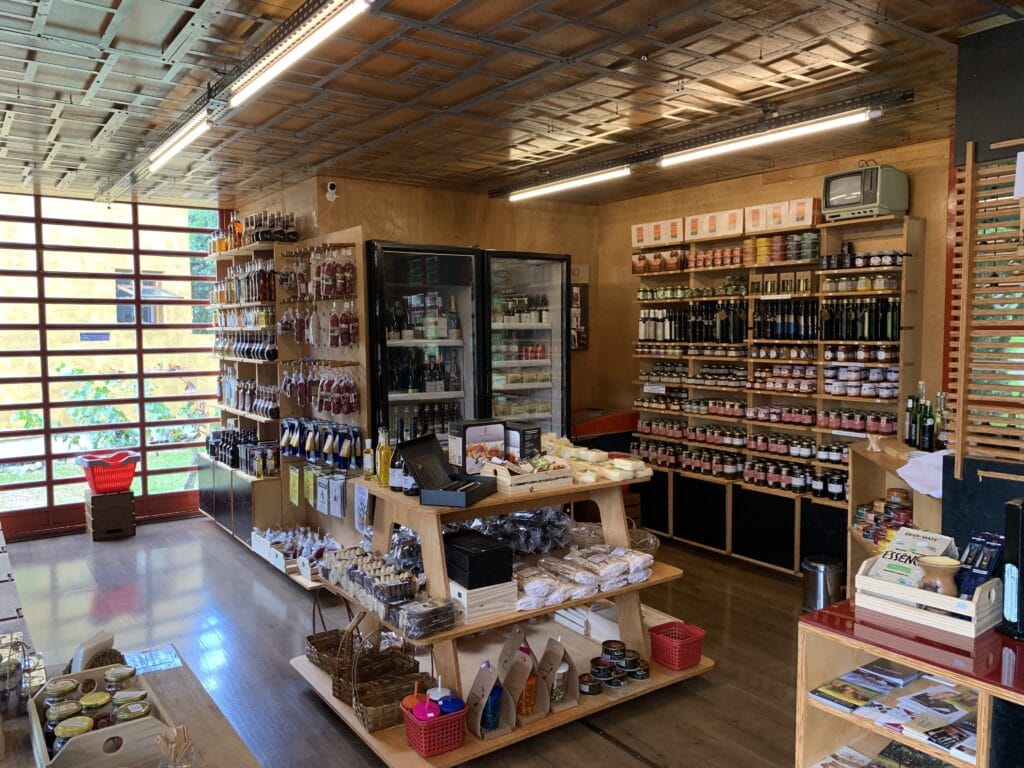
We’ll also leave a tip for this shop, since we genuinely think it’s worth visiting — the cheese, salami, and jam sold here are really tasty, and we thought the prices were fair. It sits right next to Devorata Trufas Artesanais.
Find more travel tips in Embu das Artes.
Read the original version in Portuguese on A Bela e o Bigode.