A Day in Holambra: Brazil's Flower Town
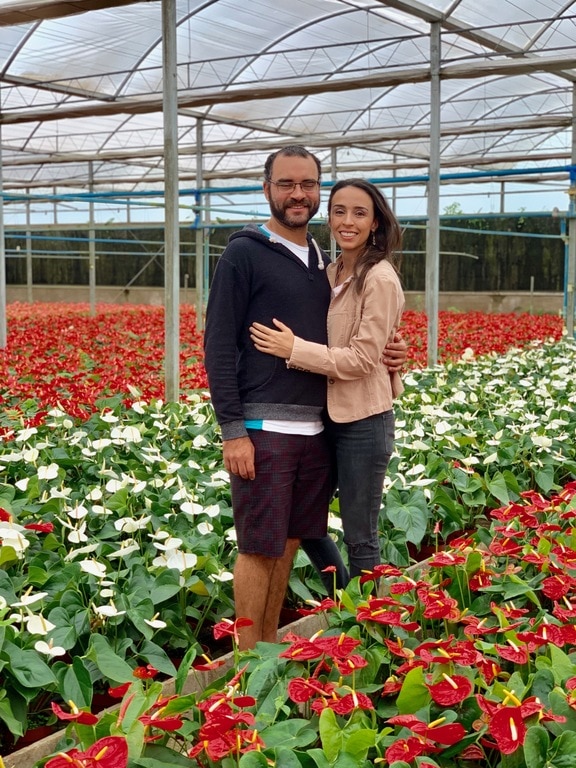
Holambra is a beautiful town of about 14,000 people, close to the city of São Paulo. You can easily do it as a day trip, or if you’d rather soak in the calm of a small town, we’d recommend staying the whole weekend!
The town keeps a strong Dutch tradition alive — not just in flower farming, but in its cuisine too, and we loved getting to know it.
Getting to Holambra from São Paulo
- Take the Bandeirantes highway (SP-348) to the km 84 exit for the José Roberto Magalhães Teixeira highway (SP-083). This road merges into the Dom Pedro I highway, and at exit 133, continue toward the Campinas–Mogi Mirim highway/Governador Doutor Adhemar Pereira de Barros highway (SP-340), following signs for Jaguariúna/Holambra/Mogi Mirim. Google Maps route
- Alternatively, take the Bandeirantes highway and switch to the Anhanguera; at km 86, take the José Roberto Magalhães Teixeira highway (SP-083), which merges into the Dom Pedro I highway. At exit 133, follow the Campinas–Mogi Mirim highway (SP-340) toward Jaguariúna/Holambra/Mogi Mirim. Google Maps route
Pros and cons:
- Bandeirantes only (134 km / 1h40m) — more lanes.
- Bandeirantes + Anhanguera (128 km / 1h40m) — fewer lanes.
What we chose: Bandeirantes only, since it meant fewer road changes and less risk of taking a wrong turn — the trip took 2 hours, including one quick stop.
What to do in Holambra
Flower farm tours
- Real Turismo and Theo Turismo
- Flowers on view: cut gerberas, chrysanthemums, daisies, and anthuriums
- R$45 per person
- Bus tour
- 1 hour long
As soon as we arrived in town, we booked a flower field tour — companies drive you out to the working flower farms, and the whole thing is well organized and a lot of fun.
Most of the year they grow the flowers listed above, but there’s also a season for sunflowers, planted between May and August; they take about two months to bloom and last another two to three weeks. Since timing varies, it’s worth contacting the tour company directly for specifics.
Another fun fact — a great time to visit is during Expoflora, a flower fair running since 1991, held every September, with traditional dancing and food.
Theo Turismo
We chose Theo Turismo over the timing — their tour started at 10 AM versus Real’s 9:30 AM, and since we were coming from São Paulo, we were worried about running late.
At the flower shops, you’ll find flower jams, flower ice cream, local souvenirs, and Dutch-style caramel cookies. We tried the rose ice cream, though it wasn’t really to our taste.
We picked up some flower jam as a gift for Andrey’s mom — both of us loved it! Definitely worth trying, since the region produces it locally.

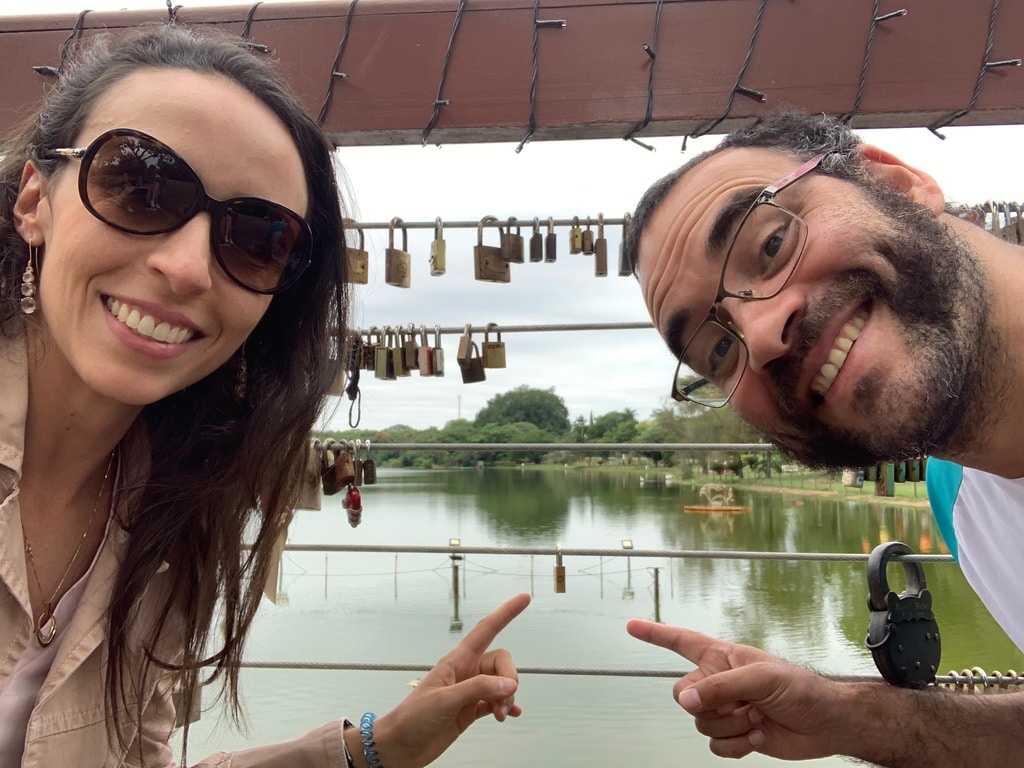
Deck do Amor (“Lovers’ Deck”)
Deck do Amor sits across from the Zoet en Zout dessert shop and Vitória Régia lake, on Praça dos Coqueiros. The tradition here is to attach a padlock and toss the key into the water (bring your own lock — the ones sold nearby are overpriced). We bought ours at a restaurant across from the deck.
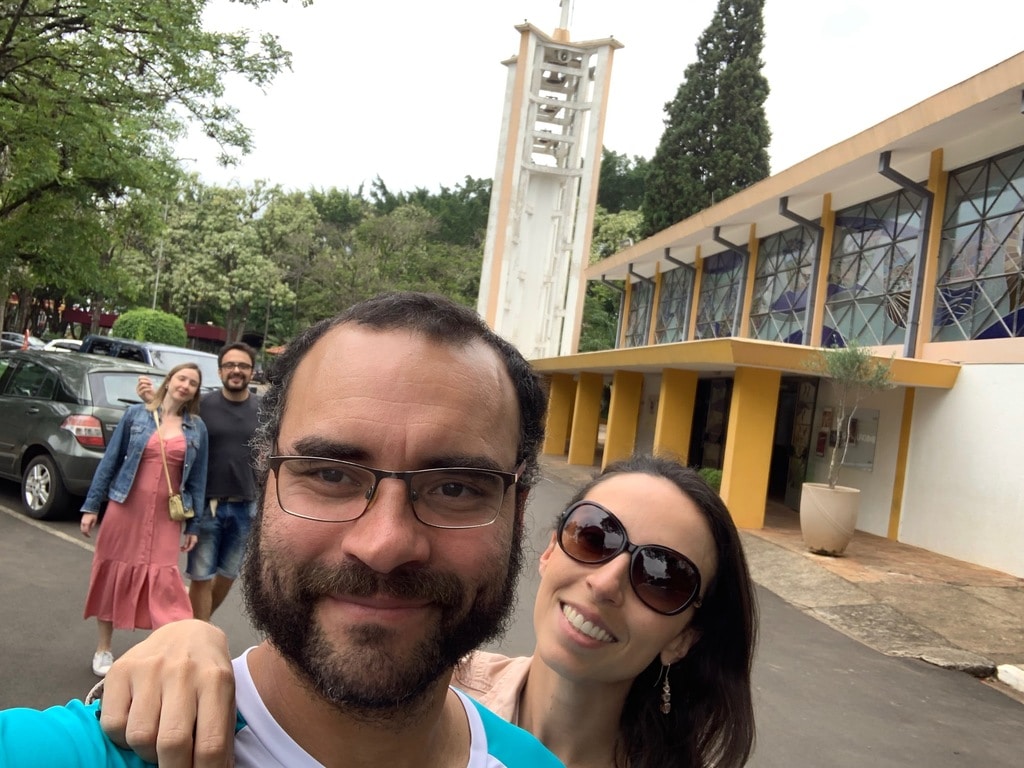
Igreja Matriz do Espírito Santo
We stopped by the main parish church — small, but well worth a visit, since the stained glass was made by a local artist. According to local history, the Dutch settlers wanted to preserve the community’s Catholic identity. Entry and parking are both free.
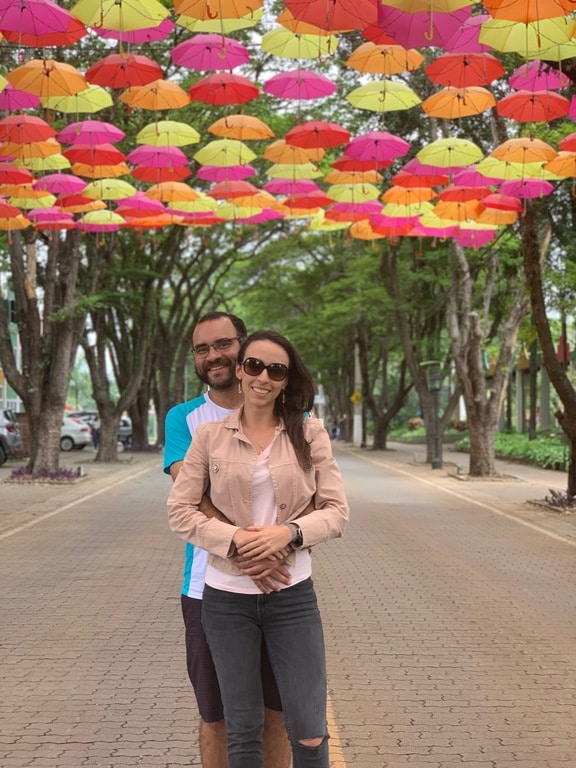
Umbrella Street in Holambra
On the way to the windmill, we passed a street covered in hanging umbrellas. We’d seen this kind of installation before, but still stopped the car for photos! It’s on Alameda Maurício de Nassau, near number 670, between the church and the windmill.
You’ll also find umbrella streets in Passa Quatro, MG (in Portuguese, on the original blog) and in Penedo, RJ, in the Santa’s Village district.
Moinho Povos Unidos (Windmill)
- 38 meters tall
- The largest windmill in Latin America
- Entry: R$10 per person
- Free parking
At the end of the street stands the Povos Unidos windmill. As you climb the floors, banners tell the history of windmills around the world. On the second-to-last floor, you get a view over the town, and on the top floor, a guide explains how the gears actually work. Just outside the windmill, there’s a small artisan market selling sweets and handicrafts.

Where to eat in Holambra
For lunch, we headed to Rua Dória Vasconcelos, where most of the restaurants are clustered. We went back and forth between Casabela and Matin Holandesa, and ended up picking Casabela since we had a bigger group and it’s self-service, which is quicker and easier.
Casabela Restaurante
- À la carte and self-service
- Pleasant atmosphere
- Brazilian and Dutch food
The food was really good, and I loved the carrot purée! Both restaurants serve traditional Dutch fare alongside other options.
Doceria Zoet en Zout
- Dutch-style sweets shop
- Highly recommended
- Beautiful, delicious desserts
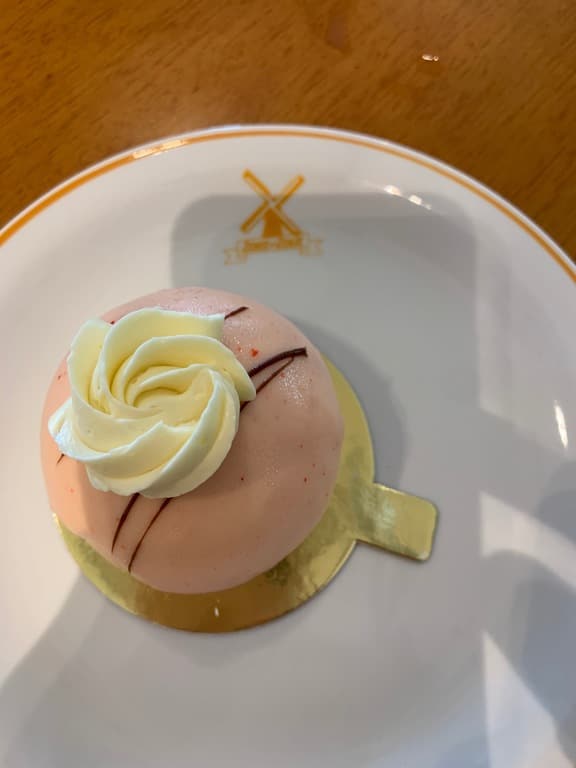
Afterward, we stopped at Zoet en Zout for traditional Dutch sweets, some made with actual flowers.
Everything we tried was delicious, and the presentation was beautiful! I had the rose-flavored one, since it’s their best seller — and it was really tasty!
You can sit inside the shop or right in front of Vitória Régia lake, with Deck do Amor just across the water.
One more Holambra tip
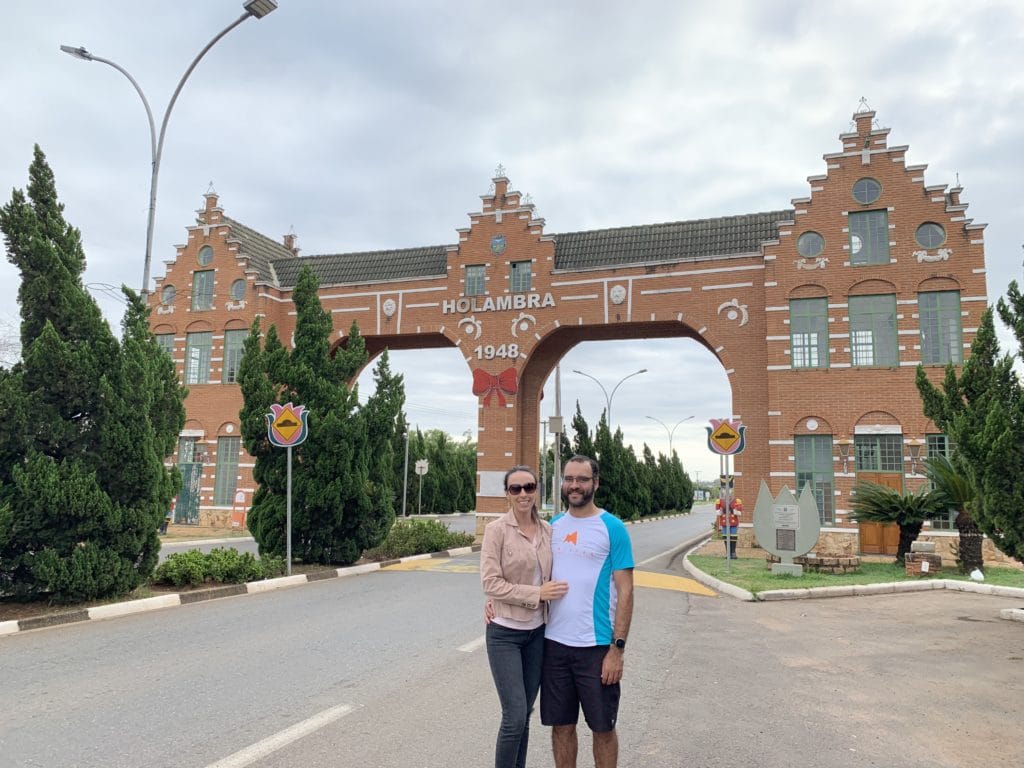
Before heading back to São Paulo, we passed through the town’s arched gateway. One more tip: near the arch there’s a craft brewery, Straat Bier, which brews beer with flowers — we didn’t make it there ourselves, but it’s worth trying! We were too worn out by that point, but it’s a solid tip for next time.
Holambra’s Entrance Gate
Read the original version in Portuguese on A Bela e o Bigode.