What to Do in Praiano
Praiano, much like Positano, is a charming seaside town at the base of Monte Tre Pizzi, with light-colored houses, balconies overflowing with flowers, and a maze of narrow, winding streets wrapping around the steep hillside.
Despite being a smaller village, it sits between the larger, busier towns of the Amalfi Coast — Positano is 7 km away, and Amalfi just 6 km. It’s also connected by bus and ferry to Sorrento, Positano, and Amalfi.
This spot was once chosen as the summer residence of the powerful Doges, rulers of the Maritime Republic of Amalfi, thanks to its calm Mediterranean waters and stunning views.
Parrocchia di San Gennaro in Praiano
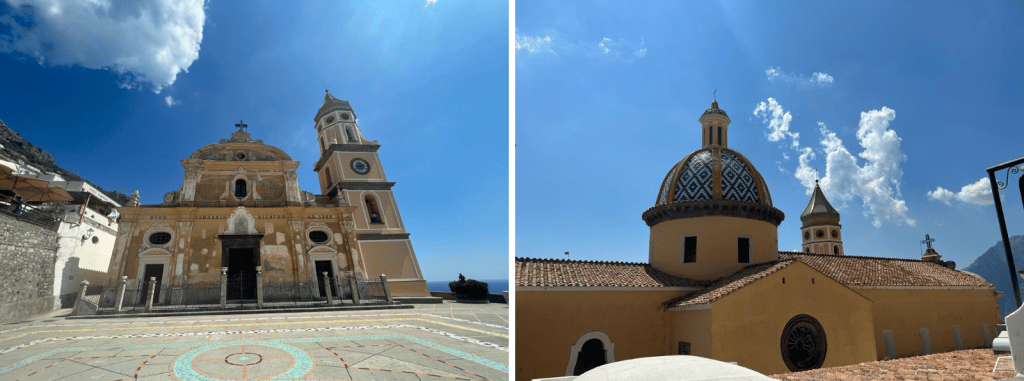
The original church (Facebook) was founded in 1300, under the patronage of the noble Amalfi families Corsario and D’Alagno, until 1859, when the place of worship was handed over to the people of Praiano.
After that transfer, the church was demolished and later rebuilt, though it wasn’t completed until 1602, giving it the architectural features you see today.
Fiordo di Furore
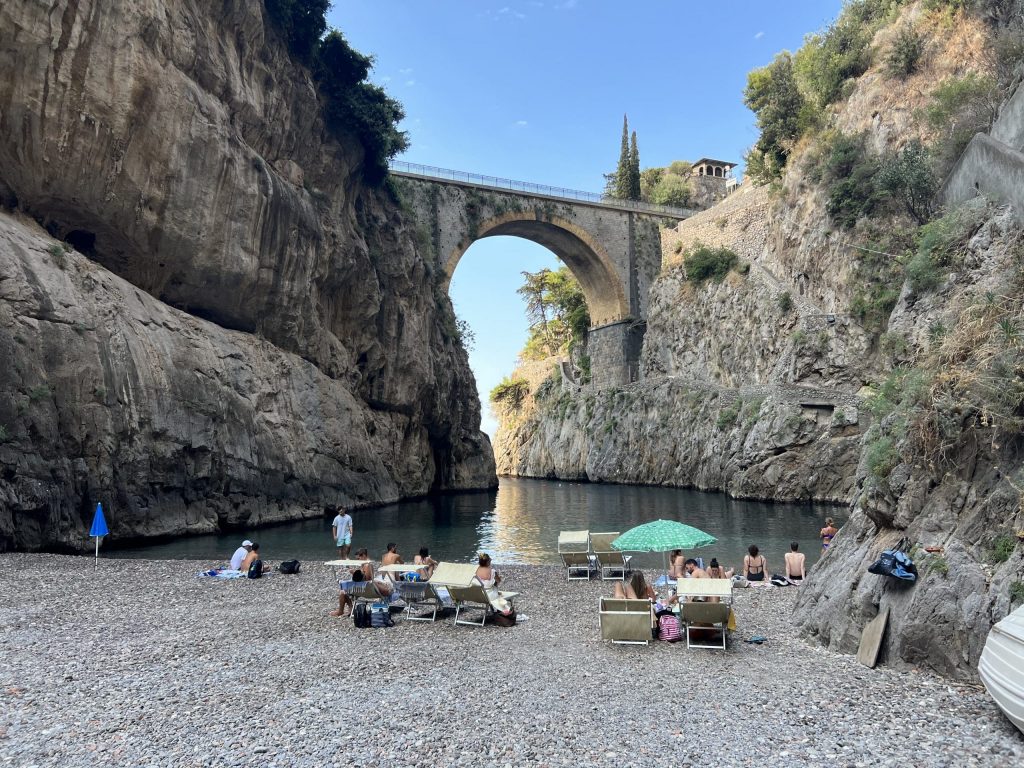
One of the most photogenic beaches on the entire Amalfi Coast, the Fiordo di Furore. Its viaduct, along with the blue-and-green sea below, is one of the beach’s defining symbols. The arched bridge stands about 30 meters tall, creating an unforgettable scene.
Most of the beach is made up of pebbles, and the site is lacking in infrastructure — no food stands or seating rentals — but it’s still beautiful to visit.
Convento di Santa Maria a Castro
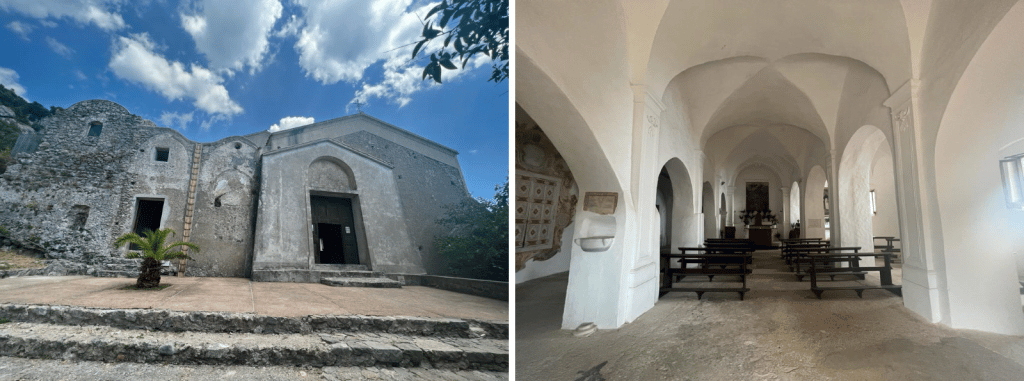
The church and convent of Santa Maria a Castro, built on a hill 364 meters above sea level, are famous for their views and for a large, well-preserved 15th-century fresco of the Madonna delle Grazie.
We reached the convent by hiking down from Positano along the Sentiero degli Dei (Path of the Gods).
Torre a Mare in Praiano
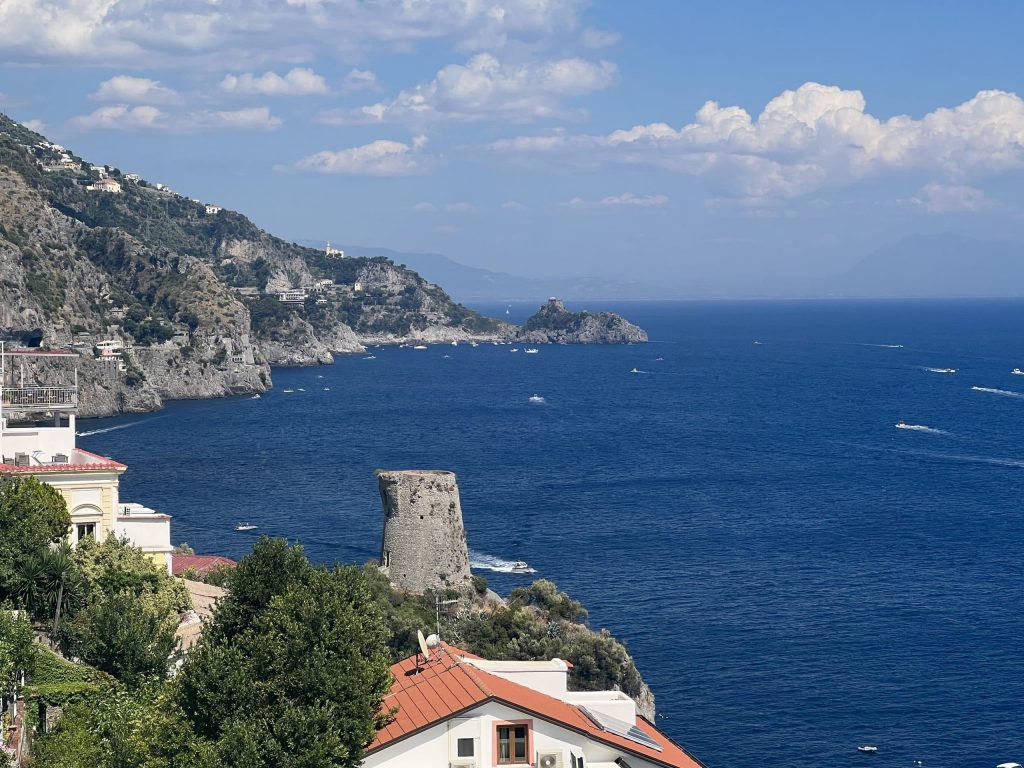
Torre a Mare is a medieval structure, part of a series of fortified towers along the coast once used to defend against pirate attacks.
Marina di Praia
The small Marina di Praia is one of Praiano’s most popular attractions. Enjoy the beach, or rent diving gear to explore the marine life. Diving here is a year-round activity, with a dedicated dive center right on the beach.
Chiesa di San Luca Evangelista
This church holds real significance, since St. Luke is its patron saint. The Baroque-style building was constructed in 1588, though the original church dates back to the early 12th century. It features an 18th-century faience floor, marble altars, and a silver bust of St. Luke.
Read the original version in Portuguese on A Bela e o Bigode.