What to Do in Florianópolis
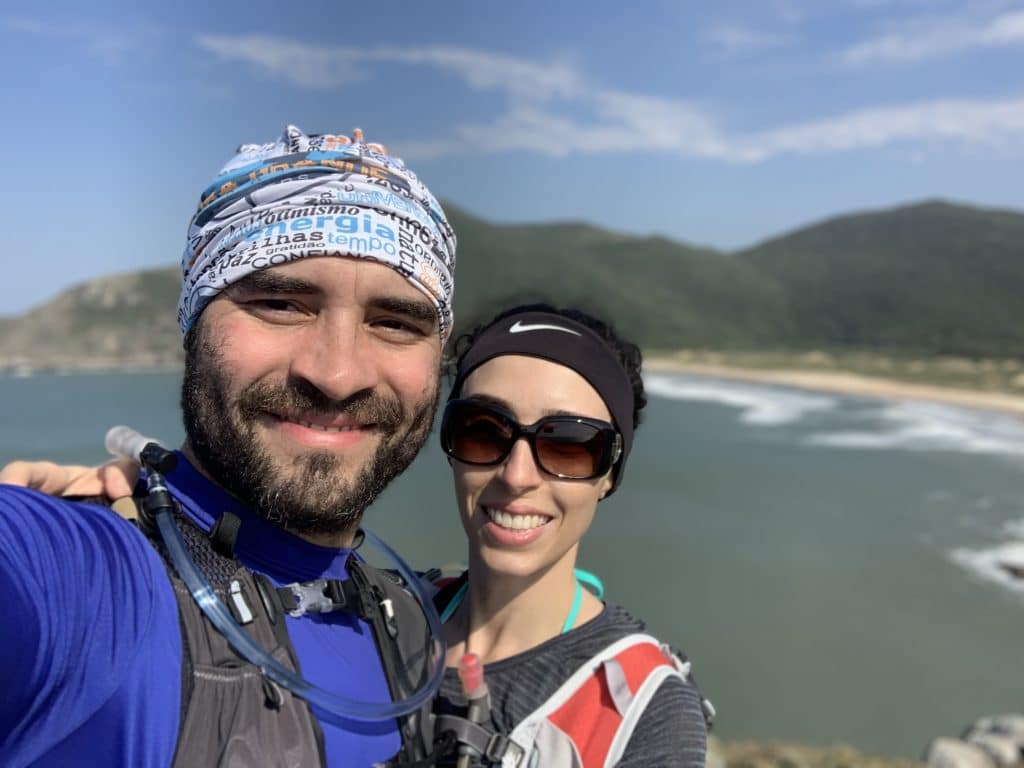
Florianópolis is an island in southern Brazil with absolutely stunning beaches, part of Santa Catarina state — the mainland side has its own fame and beauty too, and however you like to explore, you’ll find plenty of beaches and trails to enjoy.
The city has beaches for every taste, a varied food scene built around seafood, and its own local dialect spoken by the “manezinhos” (as locals are known) — full of fun expressions, like “cambas” (meaning “go ahead”) or “tu dix” (an expression of surprise).
There’s no shortage of attractions, tours, trails, lookout points, and other sights — and the best part about Floripa is that a lot of it is free or very cheap. Your main expenses end up being transportation and food.
The island has 500,000 residents and serves as the capital of Santa Catarina state. It’s also known as the “Island of Magic,” since Portuguese settlers who first arrived started noticing things that unsettled the local population.
The main legend involves witches in the region who supposedly scared fishermen, stole their boats, and messed with their nets. There are other legends too — like the one about Ilha do Arvoredo and its Gruta do Monge (Monk’s Cave), where a monk supposedly appeared to fishermen from Ponta das Canas and Canasvieiras, taught them remedies, and then vanished, among other tales.
When to visit Florianópolis
This is a city you can visit year-round. Here’s a quick breakdown to help you pick the best time for your trip.
Summer (December and January) and Carnival: the city is packed with tourists and the ocean water is at its warmest, but expect heavy traffic and a higher chance of rain.
February, March, and April: fewer tourists, so less traffic, and the water is still pleasant — plus prices drop, making this a great window to explore the island.
Winter: little rain, but quite cold, especially when the south wind blows through.
Where to stay in Florianópolis
Florianópolis is a huge island, so we’d recommend staying close to whatever you plan on visiting. We chose Hotel Daifa for its central location, which made it easy to reach the spots we wanted to see, with decent breakfast and a decent room.
What to do in Florianópolis
Trails in Florianópolis
If you love hiking between beaches, Florianópolis is your kind of place — there are trails for every taste, and we’ll walk through two we did, with all the details.
Lagoinha do Leste Trail
- Moderate difficulty
- The full circuit is actually three separate trails
- Praia Matadeiro to Lagoinha do Leste: 6 km (one way), 313 m elevation gain
- Climbing up to Pedra do Surfista and Pedra da Coroa: 1.6 km round trip, 204 m elevation gain
- Lagoinha do Leste to Pântano do Sul: 2.29 km (one way), 201 m elevation gain — the easiest section
- Pântano do Sul to Praia do Matadeiro: 4 km on flat ground, which we covered by road
- There are three food and drink stalls along the way, though they were closed during the pandemic
- Bring your own water and food
- Free trails
- Free street parking at Praia do Matadeiro
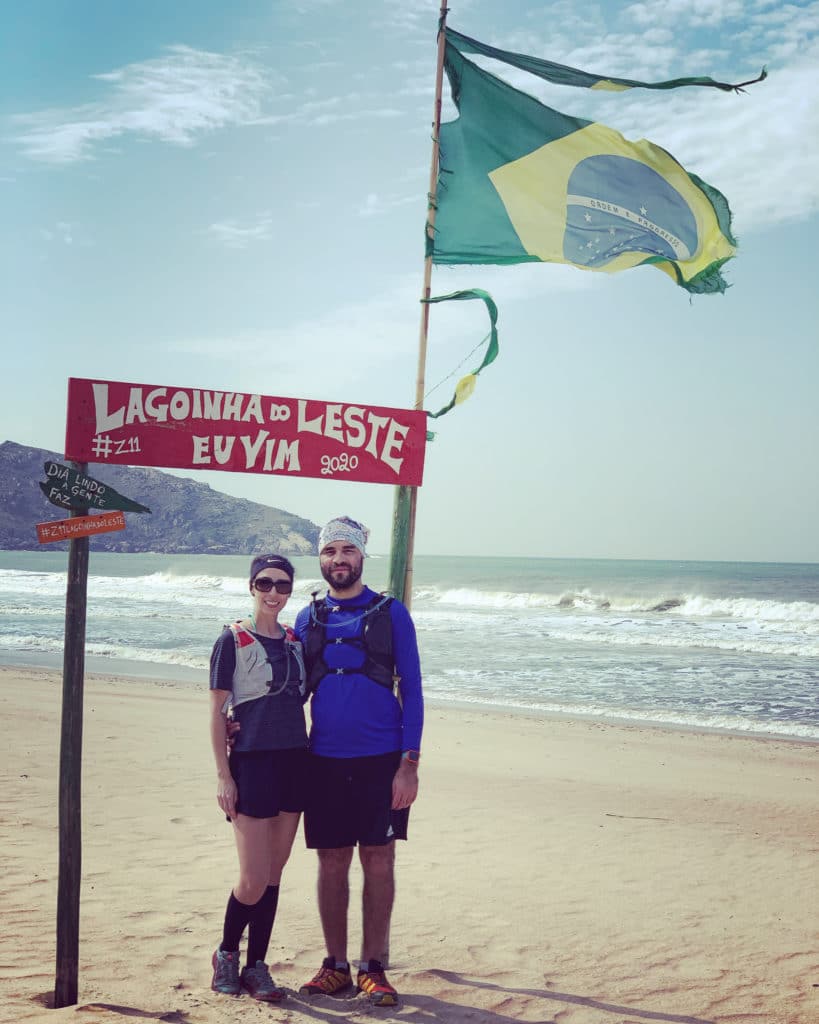
First trail — Praia do Matadeiro to Lagoinha do Leste
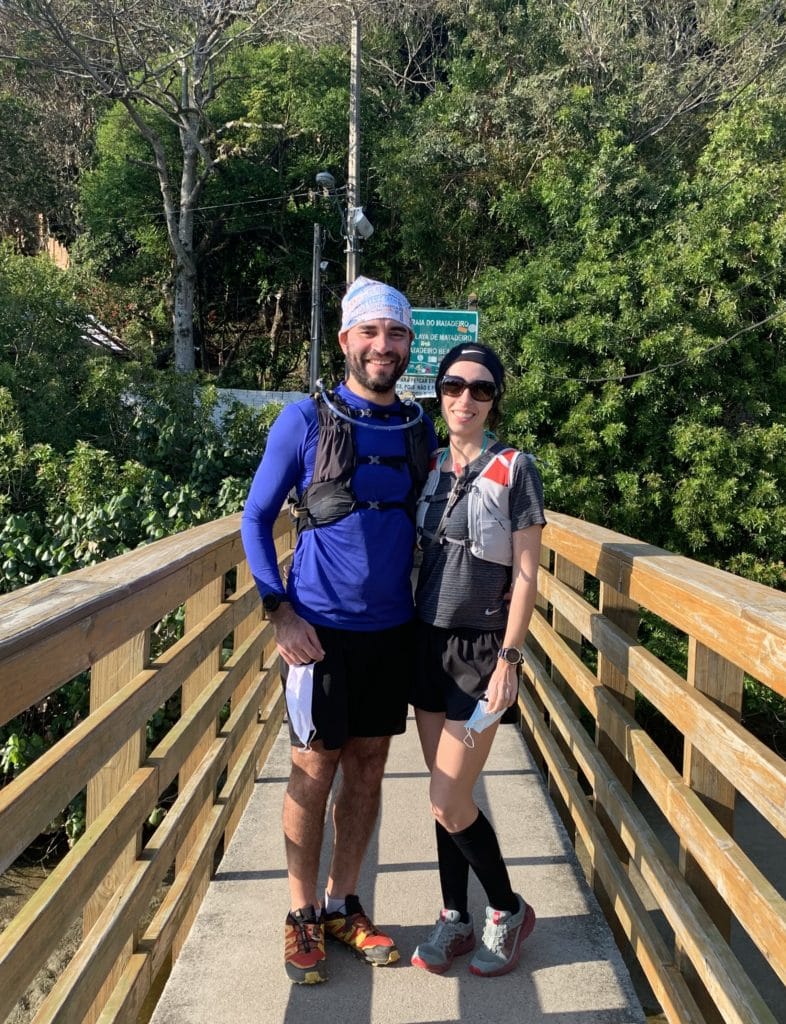
Starts on a well-marked, arrow-signed path right after you cross the bridge at the beach — the first stretch has tall rocks, single track, and tree cover, so you’re in the shade for more than half the walk.
Then the view opens up into a gorgeous scene, with the ocean staying on your left the whole way — though you’ll be out in the sun here, with only low ground vegetation for cover.
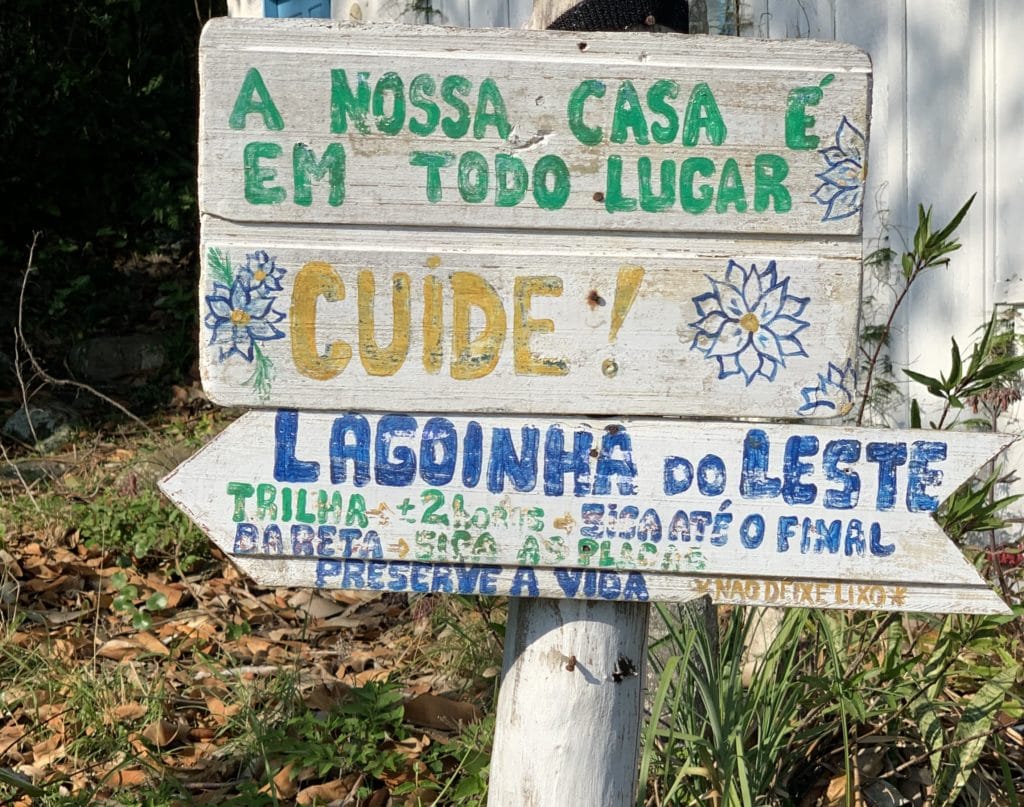
Track powered by Wikiloc
Second trail — Pedra do Surfista and Pedra da Coroa
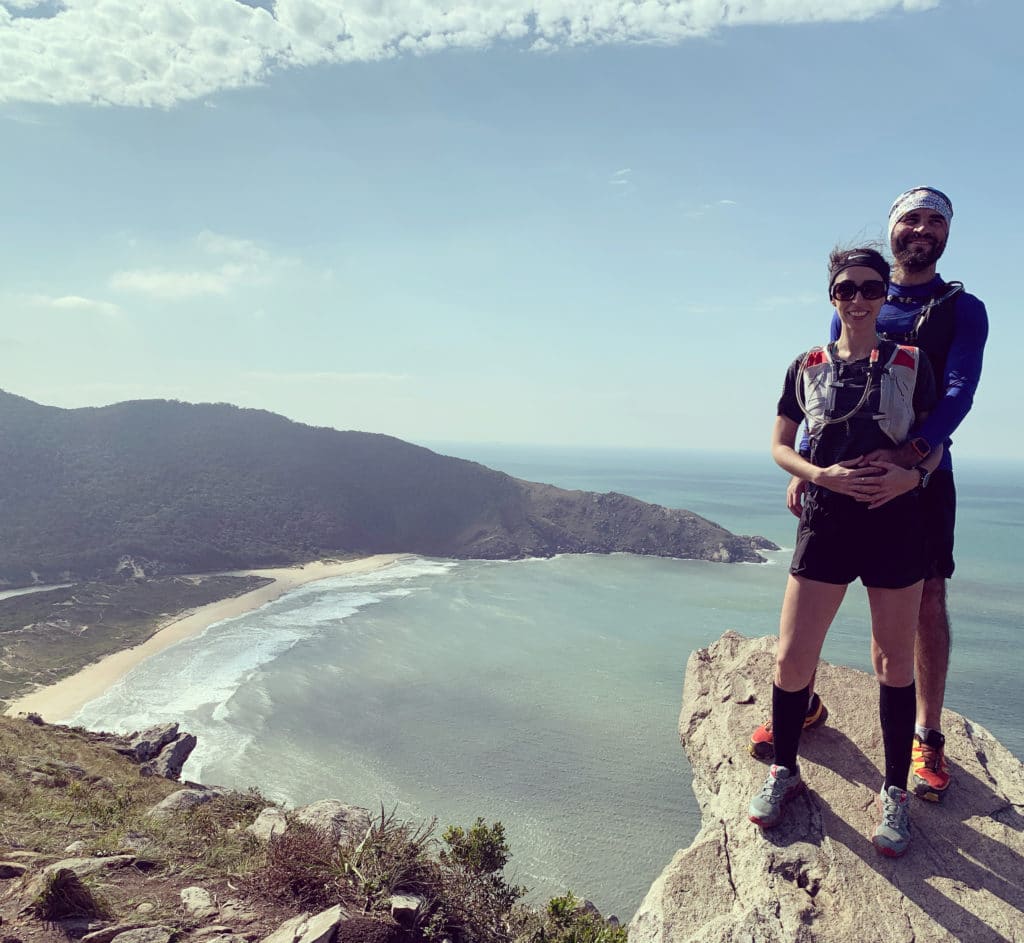
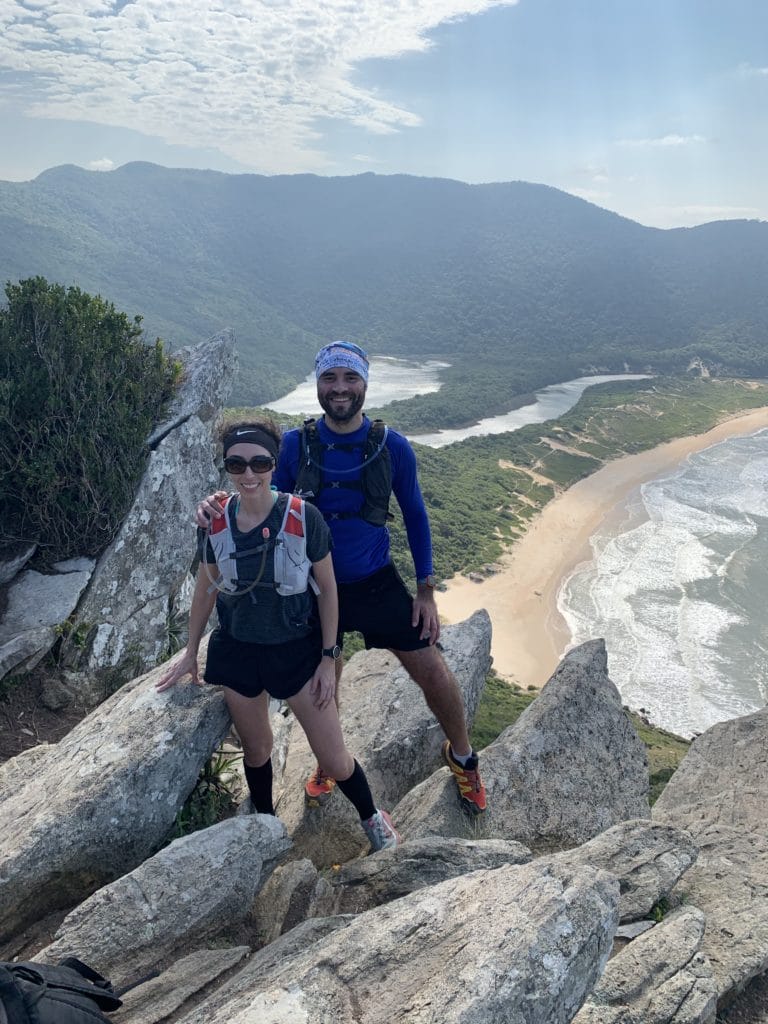
This one climbs up over rocks and is noticeably steeper and more technical, but it’s 100% worth it for the view up top. The first stop is Pedra do Surfista, overlooking the beach, and 150 meters further along is Pedra da Coroa, which is trickier to photograph since it sits right on a cliff edge.
You’ll need to climb up and back down the same way, since the trail continuing toward Pântano do Sul is heavily overgrown and risky to navigate — signage is sparse and the path isn’t very clear.
Track powered by Wikiloc
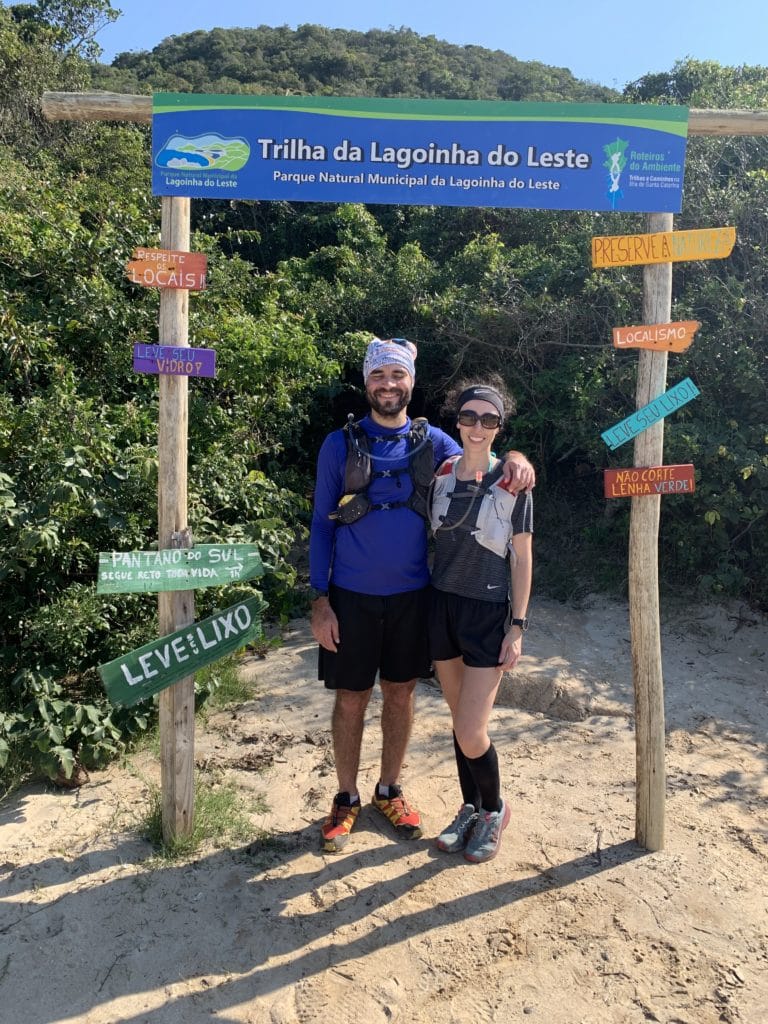
Third trail — Lagoinha do Leste to Pântano do Sul
The route back via Pântano do Sul is the easiest of the three — sandy ground with stairs built in, so you barely notice the climb, and tall trees provide shade the whole way. A genuinely pleasant walk.
Once you arrive, we’d recommend lunch at Bar do Arantes, a fun spot known for the notes covering its ceiling.
Track powered by Wikiloc
Fourth stretch — Pântano do Sul to Praia da Armação
We’d left our car at Praia da Armação, so we ran the last 4 km back to it. We ended up chatting for a while first — if digestion takes a while for you too, grab an Uber instead, since it’s a short ride.
Track powered by Wikiloc
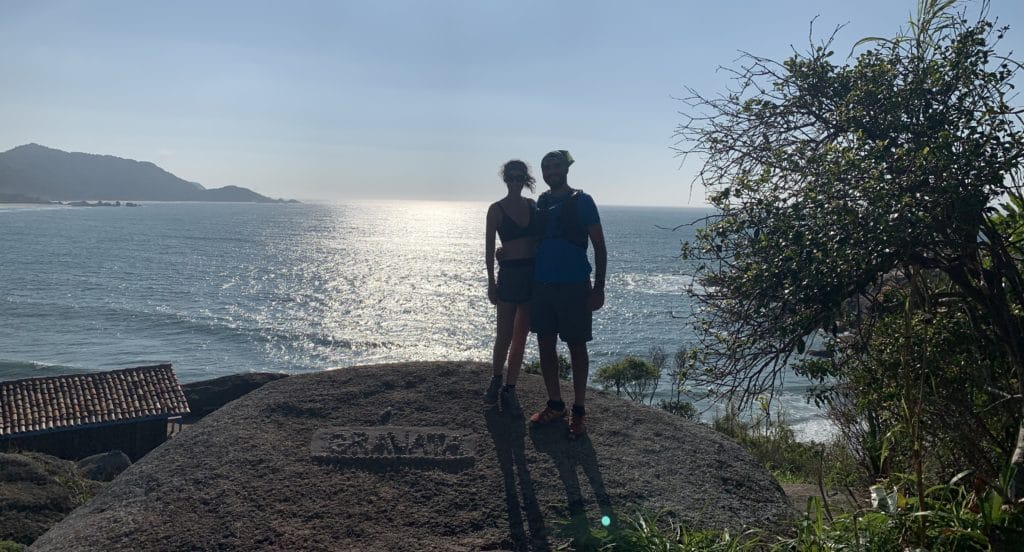
Caminho dos Pescadores (Trilha do Gravatá)
- Easy, short trail
- Leads to the beautiful Praia do Gravatá
- 4 km round trip
- Free
The trail starts on Rodovia Jorn. Manoel de Menezes, number 334, almost directly across from Sunset Backpackers Hostel.
We also tried tackling another trail leading to Praia da Joaquina, but with limited time and a flight to catch, we decided not to risk it — worth keeping in mind for your own trip, and ours next time too.
Track powered by Wikiloc
Morro da Cruz
- Lookout point
- Parking available, though watch for informal “parking attendants”
- Free entry
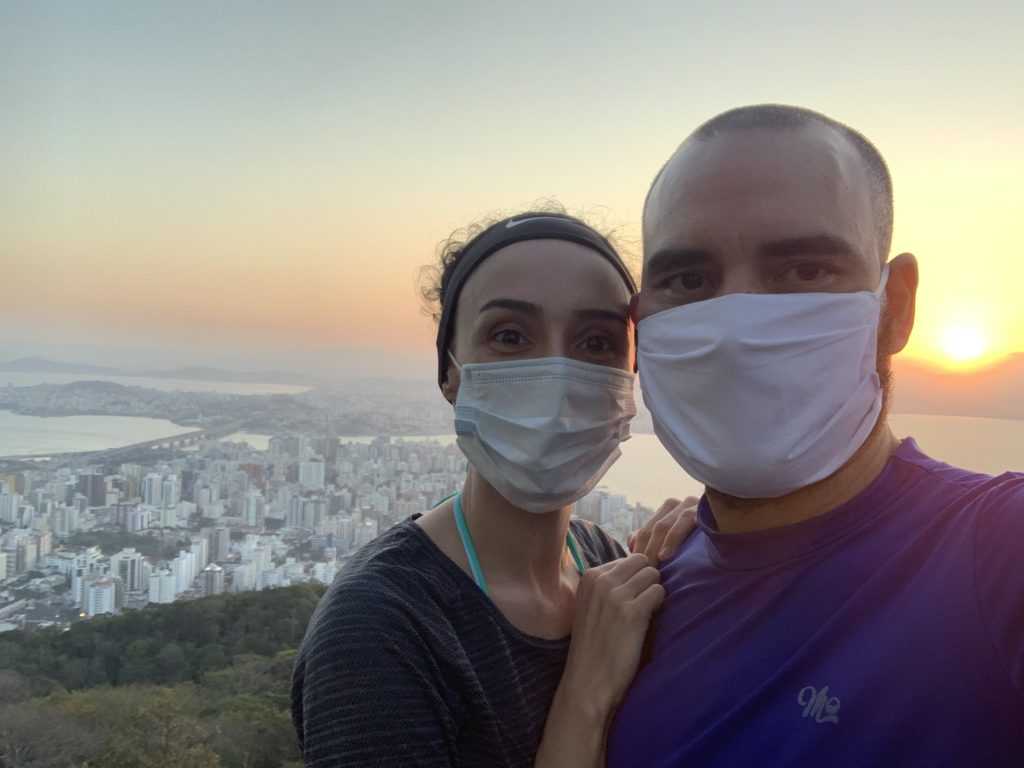
Honestly, this spot is unmissable — of every lookout we visited, this was hands-down the most beautiful. The view takes in the downtown area and the three bridges connecting the island to the mainland. Definitely worth timing your visit for sunset.
You can drive yourself, take an Uber from downtown, or catch a bus — there’s a line that drops you right at the entrance.
Mirante da Lagoa in Florianópolis
- Located on Morro da Lagoa
- Between downtown and the eastern beaches
- Free entry and parking
Worth a stop for the view over Praia da Joaquina and its sand dunes. We continued on to Lagoa da Conceição beach and parked on Avenida das Rendeiras to walk to the trail — turns out you can actually park right in front of it, which we didn’t realize at the time.

Santo Antônio de Lisboa
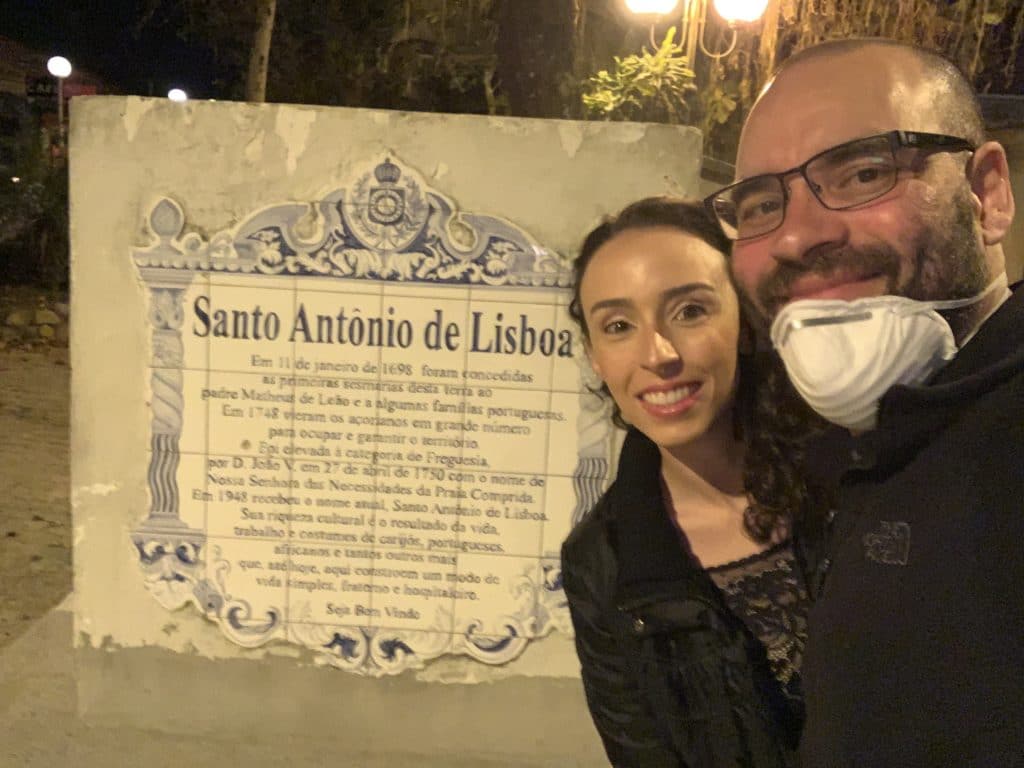
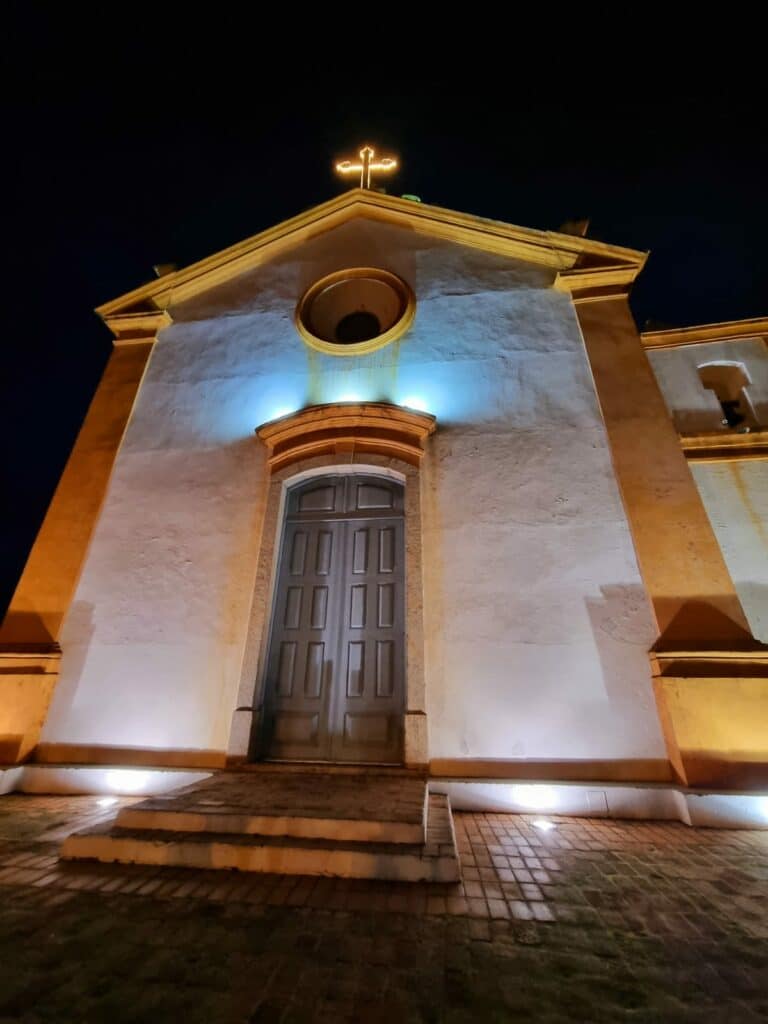
One of Florianópolis’s oldest neighborhoods, with restaurants, craft shops, and historic homes from the Azorean-Portuguese colonial era — most restaurants here serve Portuguese food.
Take some time to walk the charming streets — we’ve heard the sunset here is beautiful. We weren’t hungry for dinner during our visit, but there are plenty of wonderful restaurant options in the area.
Downtown Florianópolis
Where you can dig into the city’s history and see where it all began.
Mercado Municipal de Florianópolis
- Restaurant stalls
- Shared seating, food-court style
- Parking on the side of the market
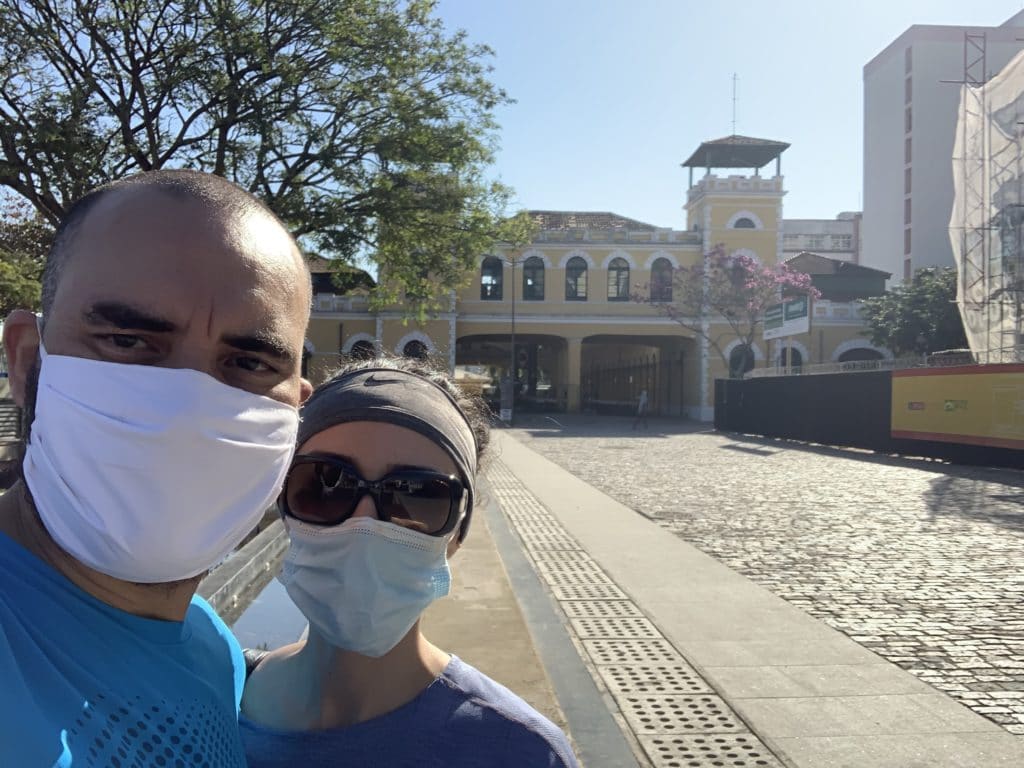
Located downtown, close to the bus terminal and station, the Mercado Público de Florianópolis stands out for its sheer number of bars and restaurants. Most have menus built for two, though prices run a bit higher than average.
Memorial ao Miramar
Once served as a dock for old boats, and was historically a popular gathering spot in the city — the first two columns here tell a bit of its history.
Praça XV de Novembro and the Centenary Fig Tree
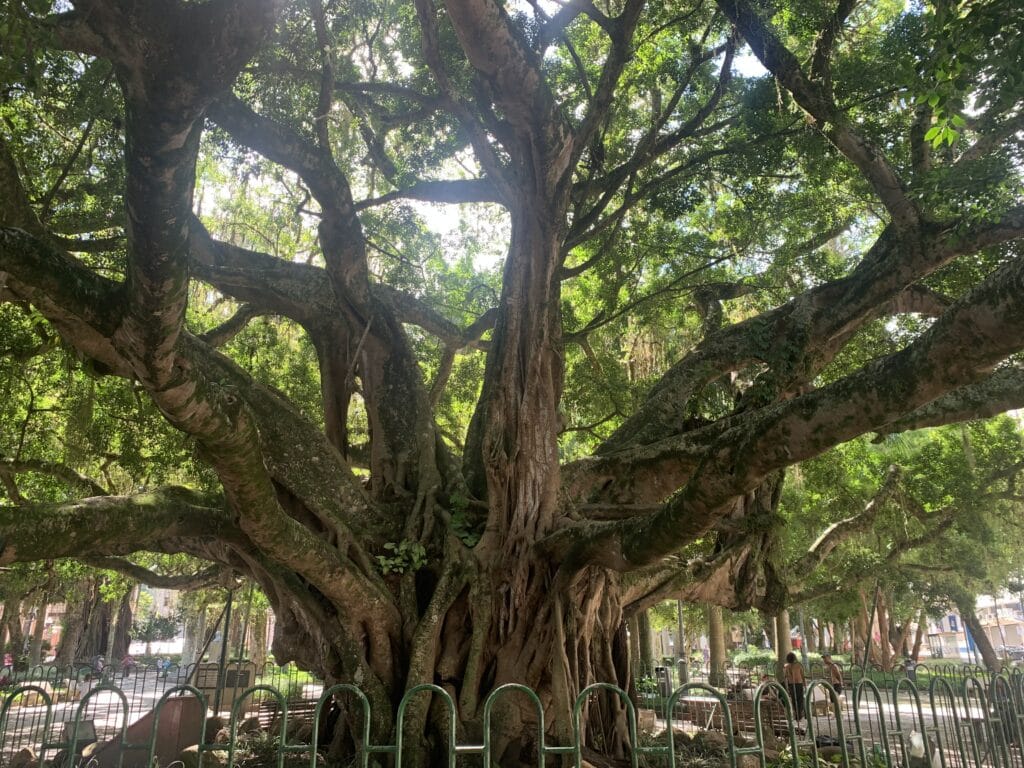
Planted in 1871 and moved to the square in 1891, this tree carries several superstitions, tied to the number of laps you walk around it to bring luck in marriage and relationships. Being tourists ourselves, we walked around it seven times for a lasting relationship, per a waiter’s advice at the Mercado Municipal — whatever number you hear, it’s worth doing.
Behind the tree, in the center of Praça XV de Novembro, sits the town’s bandstand, occasionally opened to the public during local festivities, with Florianópolis Cathedral just beyond it.
Florianópolis Cathedral
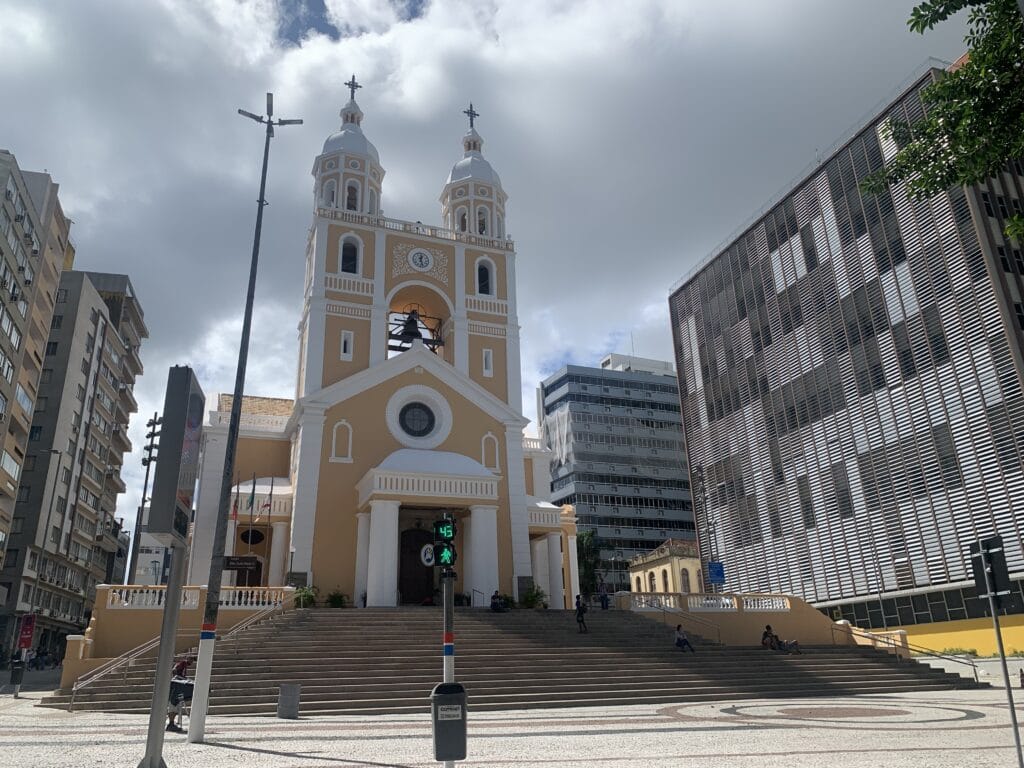
Sitting atop the square and its staircase, dating back to 1678, originally named Catedral de Nossa Senhora do Desterro and protected as a state and municipal heritage site. We weren’t able to go inside due to the pandemic.
Palácio Cruz e Souza
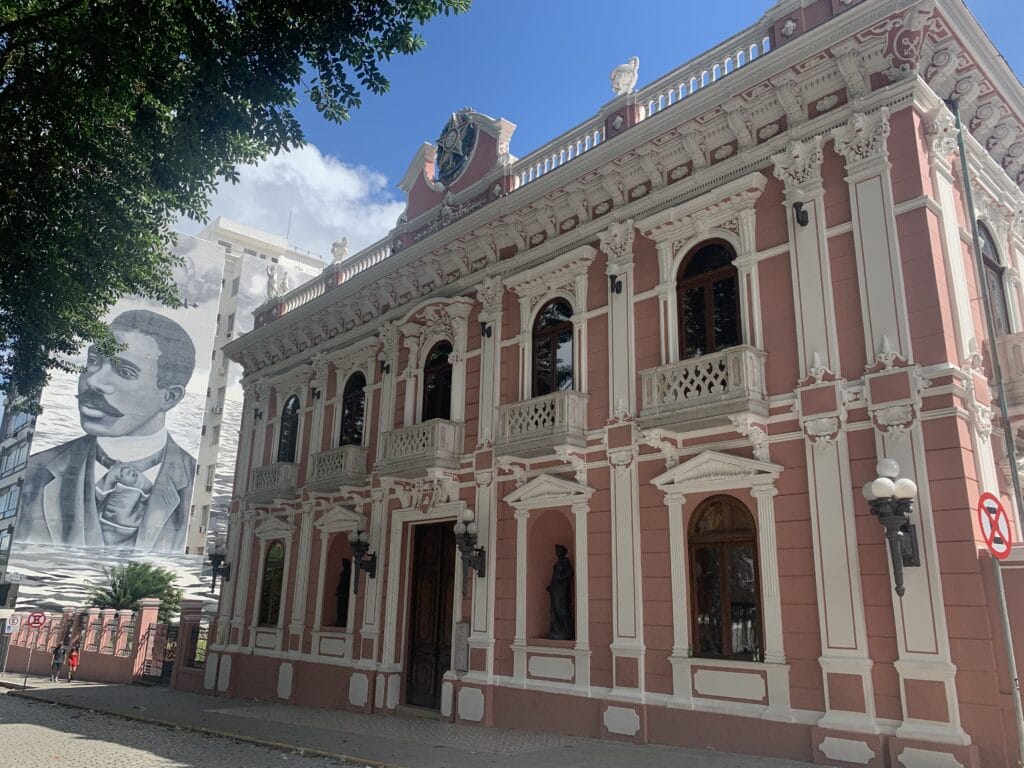
A striking, well-preserved pink building, once the seat of Santa Catarina’s state government and visited by Emperors Dom Pedro I and Dom Pedro II. Today it houses the Santa Catarina Historical Museum, with a permanent exhibit upstairs featuring paintings, furniture, and decor from the era it was built.
Museu de Florianópolis
Absolutely worth a visit — the Museu de Florianópolis is fully interactive, and we loved learning more about the city’s history. It’s also fascinating to see old maps and how the city has changed over the years.
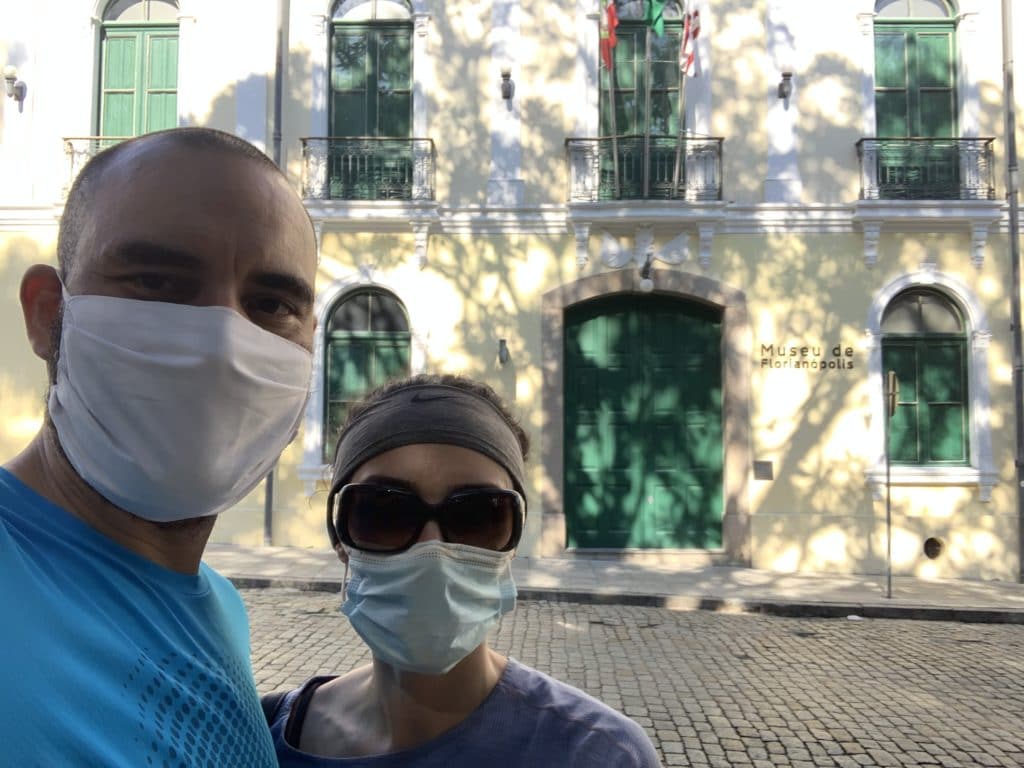
From downtown, we checked out and got ready to head back to São Paulo — but it was a fantastic weekend all around.
Read more about our trip in where to eat in Florianópolis.
Read the original version in Portuguese on A Bela e o Bigode.